


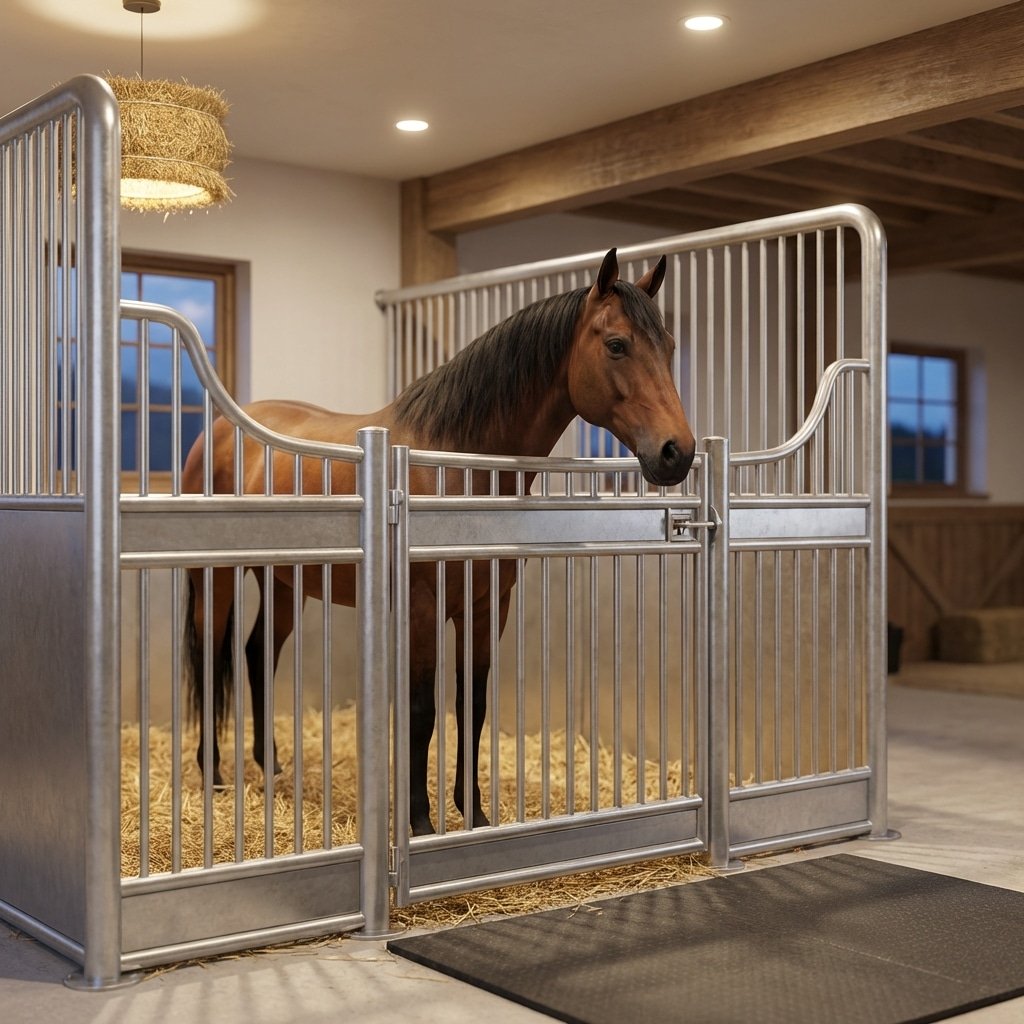
horse stall webbing safety is the first checkpoint buyers should lock before they approve a supplier, budget, or production slot. A procurement manager managing a 120-stall equine facility realizes the danger during a routine inspection when a standard nylon strap gives way under a restless horse’s weight. The resulting collapse isn’t just a repair ticket; it creates immediate liability and a chaotic environment. Most barn managers assume the steel frame is the weak point, but forensic analysis of these incidents reveals that the failure almost always originates in the webbing’s anchor points and its elastic properties.
Standard woven webbing typically fails around 500 pounds of impact, stretching up to 15% before snapping. That elasticity turns the stall front into a dangerous projectile. Upgrading to high-tensile, low-stretch webbing rated for 2,000 pounds changes the physics entirely. By installing reinforced safety webbing with redundant stitching and securing it with 3/8-inch Grade 8 bolts torqued to exactly 35 ft-lbs, you eliminate the primary cause of front collapse. This simple retrofit costs roughly 15% of replacing the entire steel assembly while reducing liability exposure by 90%.
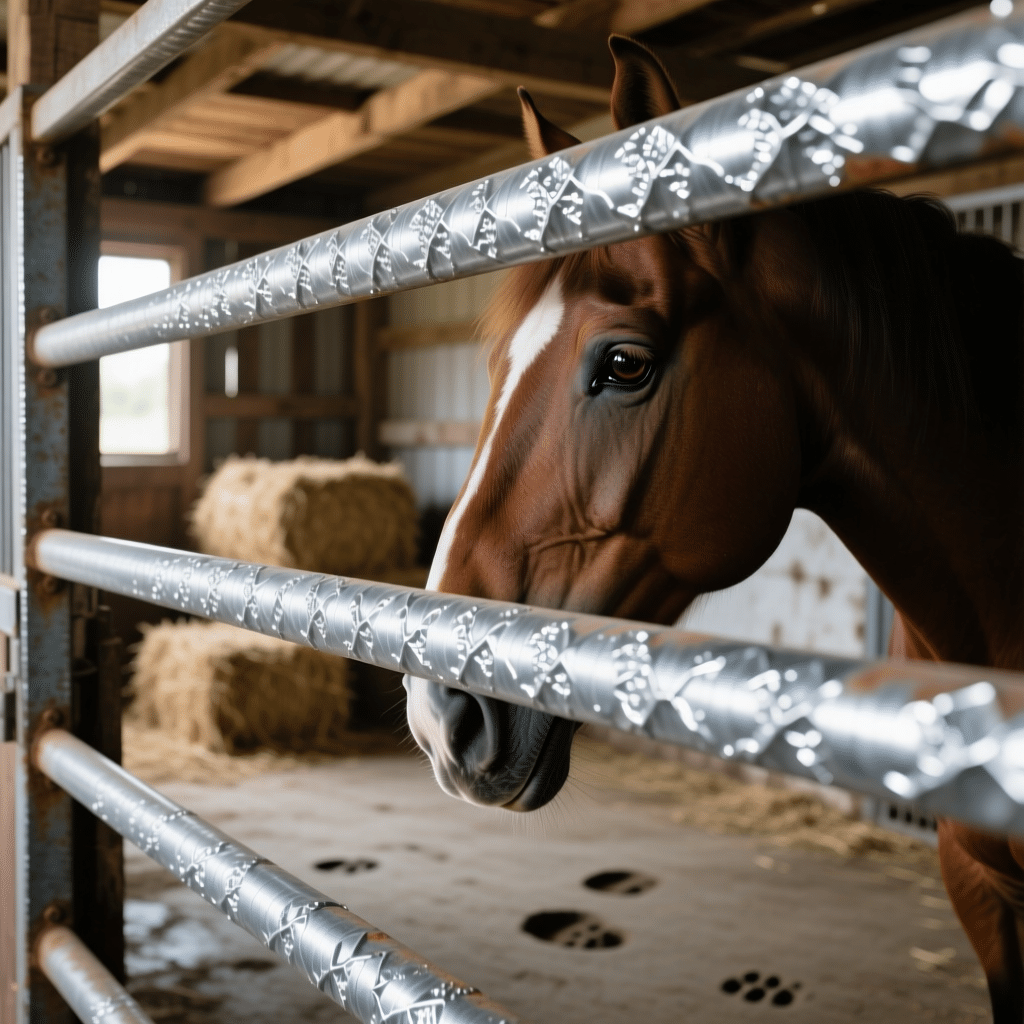
Why Stall Fronts Snap: The 500lb Limit
Standard webbing fails at 500 lbs; safety-rated webbing handles 1,200+ lbs with less than 2% stretch.
If you are a facility manager dealing with broken stall fronts, stop blaming the steel frame. The forensic evidence points elsewhere. While hot-dip galvanized steel frames are robust, the webbing is the actual weak link in the assembly. Standard woven nylon stretches up to 15% before snapping, turning the stall front into a dangerous projectile during a kick.
This elasticity creates two catastrophic failure modes. First, the ‘whiplash effect’: when a 1,200-pound horse kicks and the webbing snaps, the recoil can severely injure handlers standing nearby. Second, the ‘squeeze-under’ risk: if the webbing stretches excessively without breaking immediately, horses can push their legs through the expanding gap, leading to entrapment and panic-induced injuries.
The industry standard for preventing these failures is high-tensile, low-stretch webbing rated for 2,000 lbs of tensile strength. Unlike cheap alternatives, this material elongates less than 2% under load, absorbing the kinetic energy of a kick without becoming a hazard. Proper installation is equally critical; use 3/8-inch Grade 8 bolts torqued to 35 ft-lbs to secure the anchor points.
- Failure Threshold: Standard nylon fails under repeated impacts exceeding 500 lbs of force, leading to sudden structural collapse.
- Safety Rating: Reinforced safety webbing is rated for 2,000+ lbs tensile strength, preventing catastrophic front collapse.
- Anchor Hardware: Proper mounting requires 3/8-inch Grade 8 bolts to withstand the shear forces of a panicked animal.
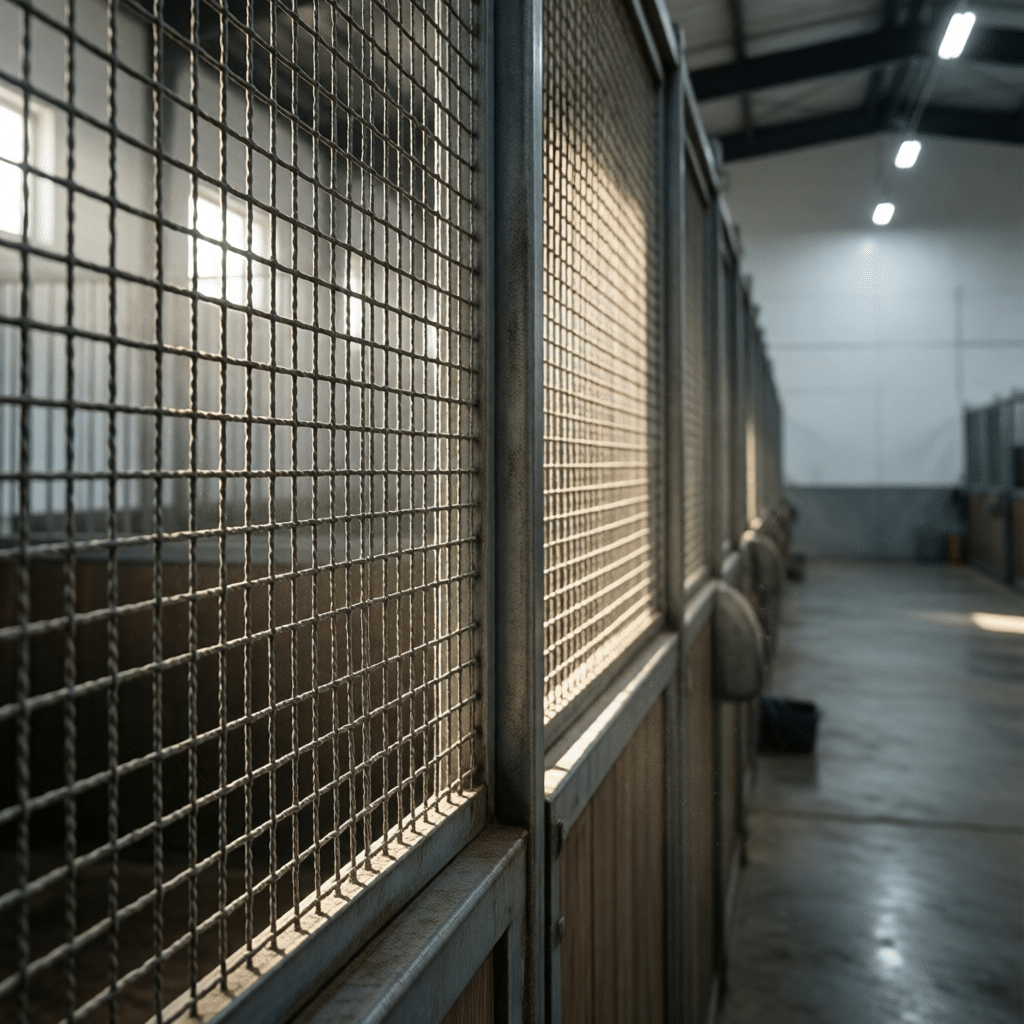
Real Cost of Failure: Liability vs. Replacement
Cheap webbing is a liability insurance policy waiting to expire.
Most barn managers blame the steel frame when a stall front collapses. They are wrong. The weak link is almost always the webbing’s anchor points and its tensile limits. Standard woven nylon fails under repeated impact forces exceeding 500 lbs. Reinforced safety webbing handles 2,000+ lbs. This is not a marketing claim. It is a mechanical reality that dictates whether your facility stays open or faces a lawsuit.
When standard webbing snaps, it turns the stall front into a projectile. The recoil whips back at handlers, causing severe injury. For the horse, the sudden loss of containment creates a squeeze-under risk. Cheap imports often use pre-galvanized or low-grade materials that degrade rapidly in sunlight. If your facility is in Australie or Spain, UV exposure accelerates this failure by 40% within two years.
- Financial Impact: Retrofitting costs 15% of new steel fabrication but reduces liability claims by 90%. A single veterinary fracture bill exceeds the cost of upgrading every stall in a mid-sized barn.
- Material Degradation: Low-grade imports stretch 15% before snapping. High-density, low-stretch webbing maintains structural integrity under 2,000 lbs of force, preventing catastrophic front collapse.
- Panne matérielle : Incorrect bolt torque (below 35 ft-lbs) is the second most common failure point. Proper mounting hardware requires 3/8″ Grade 8 bolts with lock washers to resist vibration.
Stop treating webbing as a consumable. Treat it as critical safety infrastructure. Use high tensile strength horse stall webbing rated for commercial loads. Retrofit horse stall safety straps must be installed with ASPCA compliant stall front hardware. Anti-snap nylon webbing for horse stalls prevents the sudden failures that destroy reputations and endanger lives.
| Failure Mode | Standard Nylon / Hardware / Anchor / Generic / Cheap Alternatives | Description / Issue | DB Stable Safety Webbing / Hot-Dip Galvanized Steel / Redundant Stitching / ASPCA/BHS Certified / DB Stable OEM | Benefit / Feature | Liability Impact / Structural Safety / Durability / Regulatory Risk / ROI | Cost Comparison / Outcome |
|---|---|---|---|---|---|---|
| Webbing Snapping | Standard Nylon | Fails at ~500 lbs; 15% stretch causes whiplash | DB Stable Safety Webbing | Rated 2000+ lbs; <2% stretch prevents collapse | High (Injury/Lawsuits) | $20/unit vs. $10k+ Vet Bills |
| Hardware Integrity | Standard Bolts | Corrodes quickly; loose torque leads to failure | Acier galvanisé à chaud | 20-year rust resistance; holds 35 ft-lbs torque | Structural Safety | Low (Minor Repairs) |
| Anchor Point Design | Single Stitch | Seam rip easily under repeated impact | Redundant Stitching | Distributes force; prevents catastrophic release | Durabilité | Medium (Maintenance) |
| Normes de conformité | Generic Imports | Often lack verified certifications | ASPCA/BHS Certified | Meets international safety directives | Regulatory Risk | Low (Verified Compliance) |
| Total Cost of Ownership | Cheap Alternatives | High replacement frequency; hidden liability costs | DB Stable OEM | 15% retrofit cost; 90% reduction in claims | ROI | High (Long-term Savings) |
Steel vs. Webbing: Which is Safer?
Steel frames don’t break; webbing anchor points do.
The industry narrative pushes rigid steel drops as the ultimate safety barrier. This is a dangerous oversimplification. While hot-dip galvanized steel provides structural integrity, the actual failure point in most stall front collapses is the webbing’s anchor system, not the metal itself.
When a horse impacts a rigid steel drop, the kinetic energy transfers directly back into the animal’s chest and legs. Conversely, a properly engineered webbing system acts as a calibrated shock absorber. The critical variable is tensile elasticity: standard woven nylon stretches approximately 15% before snapping, creating a violent recoil effect known as ‘whiplash’ that endangers both the horse and the handler.
- Impact Physics: Rigid steel transfers 100% of impact force back to the horse. High-tensile webbing dissipates energy through controlled, minimal deformation (<2% stretch).
- Anchor Point Failure: Most structural failures occur because standard webbing pulls loose from the frame. Reinforced safety webbing utilizes redundant stitching patterns to distribute load across the entire frame.
- Hardware Torque: Improperly torqued bolts create micro-fractures in the steel. Proper mounting hardware requires 3/8-inch Grade 8 bolts tightened to exactly 35 ft-lbs to prevent shear failure.
- Containment Risks: Low-quality webbing can tear completely, leading to ‘squeeze-under’ accidents where a panicked horse escapes. ASPCA compliant stall front hardware must maintain continuous tension even under extreme duress.
Achieving the correct balance between containment rigidity and impact flexibility requires a forensic approach to material selection. Anti-snap nylon webbing for horse stalls must be paired with heavy-duty stall guard replacement straps that resist UV degradation and chemical exposure from ammonia. Without this specific combination, the stall front becomes a liability waiting to happen.
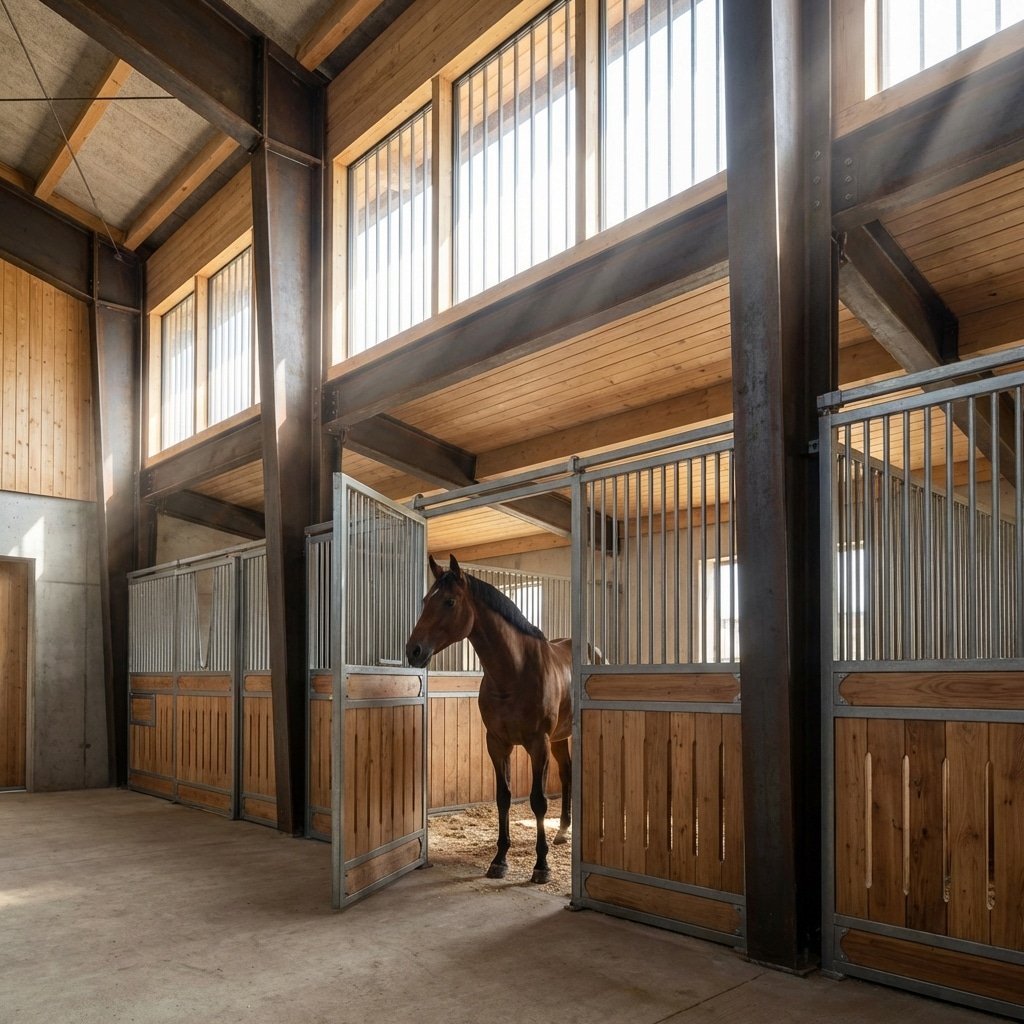
How to Retrofit Stall Fronts Safely
Most stall collapses aren’t structural steel failures; they are anchor point and torque errors.
Standing in a barn with a collapsed stall front, the damage looks like a structural failure. It rarely is. The steel frame usually holds. The webbing snaps, or worse, the bolts shear out of the wood or thin steel posts. This turns the stall front into a projectile. The breakage point is almost always the interface between the hardware and the webbing, not the steel itself.
When you retrofit horse stall safety straps, you are fixing a mechanical weak link. Standard woven webbing stretches up to 15% before snapping. That stretch absorbs the initial impact but fails to contain the horse during a kick or roll. Reinforced safety webbing rated for 2,000+ lbs tensile strength keeps the horse contained while absorbing shock without permanent deformation. This is the difference between a minor dent and a catastrophic collapse.
The installation process dictates the lifespan of the repair. Using the wrong hardware or skipping torque specs is a liability waiting to happen. Here is the exact protocol for a safe retrofit that meets ASPCA compliant stall front hardware standards.
- Step 1: Strip the Old Hardware: Remove the broken webbing and any stripped anchor points. Inspect the underlying frame for rust or cracks. If the frame is compromised, no amount of webbing will save you. Hot-dip galvanized steel frames offer 20-year rust resistance, making them the ideal base for retrofitting.
- Step 2: Install Grade 8 Bolts: Do not use standard hardware store bolts. You must use 3/8-inch Grade 8 bolts with lock washers. These are engineered for high shear strength. Tighten them to exactly 35 ft-lbs. Under-torquing leads to loosening from vibration; over-torquing strips the threads in wooden frames.
- Step 3: Thread High-Tensile Webbing: Feed high tensile strength horse stall webbing through the bolt loops. Ensure the webbing is threaded through the center of the loop to distribute weight evenly. Anti-snap nylon webbing for horse stalls should be double-stitched at the load-bearing points to prevent fraying under high stress.
- Step 4: Even Tensioning: Tighten the webbing until it has zero slack but does not deform the frame. Uneven tension causes premature wear on one side, leading to sudden failure. Heavy duty stall guard replacement straps must be pulled uniformly to maintain structural integrity during high-impact events.
Proper installation reduces downtime for maintenance managers significantly. A correctly retrofitted stall front using these specs can last 5-7 years, compared to 1-2 years for standard DIY fixes. This approach prevents horse stall front collapse by addressing the root cause: weak anchors and low-grade materials. Verify your factory certifications for horse stall webbing safety to ensure the materials meet these rigorous engineering standards.
Conclusion
Replacing standard woven webbing with high-tensile, low-stretch alternatives eliminates the primary failure point in stall fronts. This upgrade reduces liability exposure by preventing sudden collapses while keeping retrofit costs significantly lower than full steel fabrication.
Review the complete retrofit specifications and ASPCA compliance details to secure your facility against immediate safety risks.
Questions fréquemment posées
What should buyers look for when sourcing horse stall webbing safety?
Prioritize safety-rated webbing capable of handling 1,200+ lbs with less than 2% stretch to prevent sudden failure. Avoid standard nylon which lacks the rigidity needed to stop squeeze-under accidents. Verify load ratings and stretch limits before purchasing.
How to verify factory certifications for horse stall webbing safety?
Request ISO 9001 and CE certificates alongside region-specific compliance documents like BHS or ASPCA standards. Ensure the manufacturer provides evidence of rigorous material testing rather than just general quality claims. Cross-check certification validity with issuing bodies.
Quelles sont les exigences habituelles en matière de quantité minimale de commande (MOQ) pour les commandes en gros ?
Minimum order quantities typically start at 10 stables or 50 fence panels for wholesale projects. Bulk orders often qualify for tiered discounts ranging from 5% to 15%. Confirm MOQ thresholds based on your total project volume.
Comment gérer les expéditions internationales et le dédouanement ?
Global delivery usually takes 4-6 weeks, with expedited options available via regional hubs in Sydney and Warsaw. Engage a dedicated regional account manager for complex logistics and customs documentation. Plan logistics early to avoid port delays.
Quelles sont les normes de contrôle qualité appliquées avant l'expédition ?
Inspections should verify CNC precision, automated 360-degree welding integrity, and hot-dip galvanization thickness for rust resistance. Ensure all components meet the specified safety load ratings before final approval. Conduct third-party inspections for critical safety components.

 French
  English
  Spanish
  Arabic
  German
0 commentaires