


Meeting EU Animal Welfare standards is not optional; non-compliance with directives like 98/58/EC results in failed inspections. For builders and yard managers, this risk translates into costly retrofits, project delays, and potential operational shutdowns.
This analysis explains how specific engineering choices meet these legal mandates. We examine how ‘Cast-Proof’ design prevents injury and how open-grill construction achieves passive ‘Stack Effect Ventilation,’ ensuring your facility is compliant from day one.
The Law: EU Directive 98/58/EC Explained
EU Directive 98/58/EC establishes a legal ‘duty of care’ for animal owners, mandating all reasonable steps to prevent injury and setting minimum standards for accommodation.
Core Principles: The ‘Duty of Care’ for Animal Welfare
This directive isn’t just a suggestion; it’s a binding legal framework. It places a mandatory “duty of care” on anyone who owns or keeps farmed animals. The central requirement is to take ‘all reasonable steps’ to ensure the welfare of animals under their supervision.
The law’s main goal is proactive prevention. It focuses on stopping unnecessary pain, suffering, or injury before it happens. This applies to all aspects of care, including accommodation, feeding, and general management for all farmed vertebrate species, creating a baseline standard across the EU.
Practical Application: How ‘Cast-Proof’ Design Meets Welfare Standards
These legal principles directly impact how we engineer stables. The directive’s requirement for safe accommodation isn’t just about space; it’s about eliminating hazards. A horse getting “cast” (stuck against a wall) is a prime example of an injury that proper design can prevent.
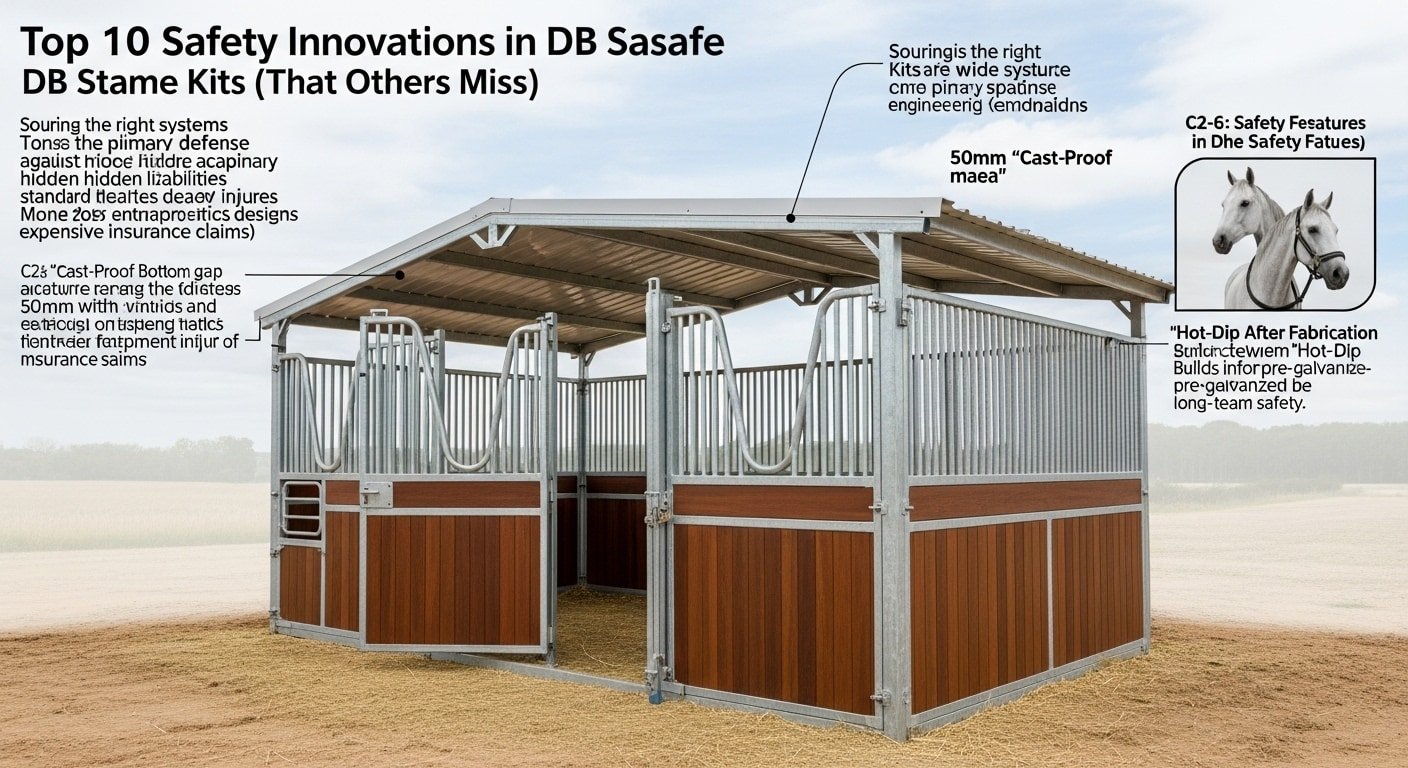
Our ‘Cast-Proof Design’ directly addresses this mandate. By engineering front and partition panels with a minimal bottom gap of approximately 50mm, we eliminate the risk of a horse’s legs getting trapped when rolling. This isn’t an optional feature; it’s a direct engineering response to the directive’s core requirement to prevent injury.
Minimum Stall Size Requirements (Wither Height Formulas)
EU regulations use formulas based on a horse’s wither height and body length to mandate stall sizes, ensuring animals have space to stand and move naturally.
| Dimension Parameter | EU Minimum Requirement |
|---|---|
| Stall Length | At least 40 cm greater than the horse’s length (nose to tail). |
| Stall Width | At least 40 cm greater than the horse’s maximum body width. |
The EU’s Formula-Based Approach to Stall Sizing
European Union regulations for animal welfare are not based on guesswork. They use a horse’s own anatomy—specifically its wither height and body length—to calculate the minimum required stall dimensions. This formula-based system ensures every animal has adequate room for natural movements like standing, turning, and lying down without restriction.
The core rules are straightforward. The stall’s internal length must be at least 40cm longer than the horse’s total length. Likewise, the width must provide at least 40cm of clearance beyond the animal’s widest point. These aren’t suggestions; they are mandatory minimums for legal compliance.
Engineering Safety Within Regulatory Dimensions
Meeting the EU’s dimensional rules is just the starting line. True animal welfare is engineered into the details, not just the floor plan. A stall can meet the minimum size requirements on paper but still pose significant safety risks if designed poorly.
This is why DB Stable’s engineering focuses on features that directly address common injuries. Our ‘Cast-Proof Design’ incorporates a minimal bottom gap of approximately 50mm between the partition and the floor. This small detail is critical. It prevents a horse from getting its legs trapped underneath the panel when rolling, a situation that can lead to panic and severe injury. This is a practical safety measure that complements, and arguably surpasses, simple compliance with dimensional regulations.
Equip Your Facility with Climate-Proof Stables
Ventilation Mandates: Achieving Necessary Air Changes
Starting in 2026, EU laws require specific ventilation to manage air quality in horse stables. Smart stable design with open-grill fronts is essential for natural compliance.
The 2026 Mandate for Air Quality Control
As of 2026, new EU-aligned animal welfare regulations become fully enforceable. These rules mandate that all livestock facilities, including horse stables, must provide ventilation that meets the physiological and behavioral needs of the animals. This isn’t just a suggestion; it’s a legal requirement.
The regulations focus on the effective management of the indoor microclimate. Facility owners are responsible for controlling air quality, humidity, and temperature within the barn. The primary goal is to reduce respiratory stress on the horses and prevent the circulation of airborne pathogens that thrive in stale, damp environments.
Achieving Airflow with Stack Effect Ventilation
Meeting these mandates doesn’t necessarily require expensive mechanical systems. The right stable design can achieve compliance passively. DB Stable’s open top grill designs, for example, are engineered specifically to promote natural “Stack Effect Ventilation.”
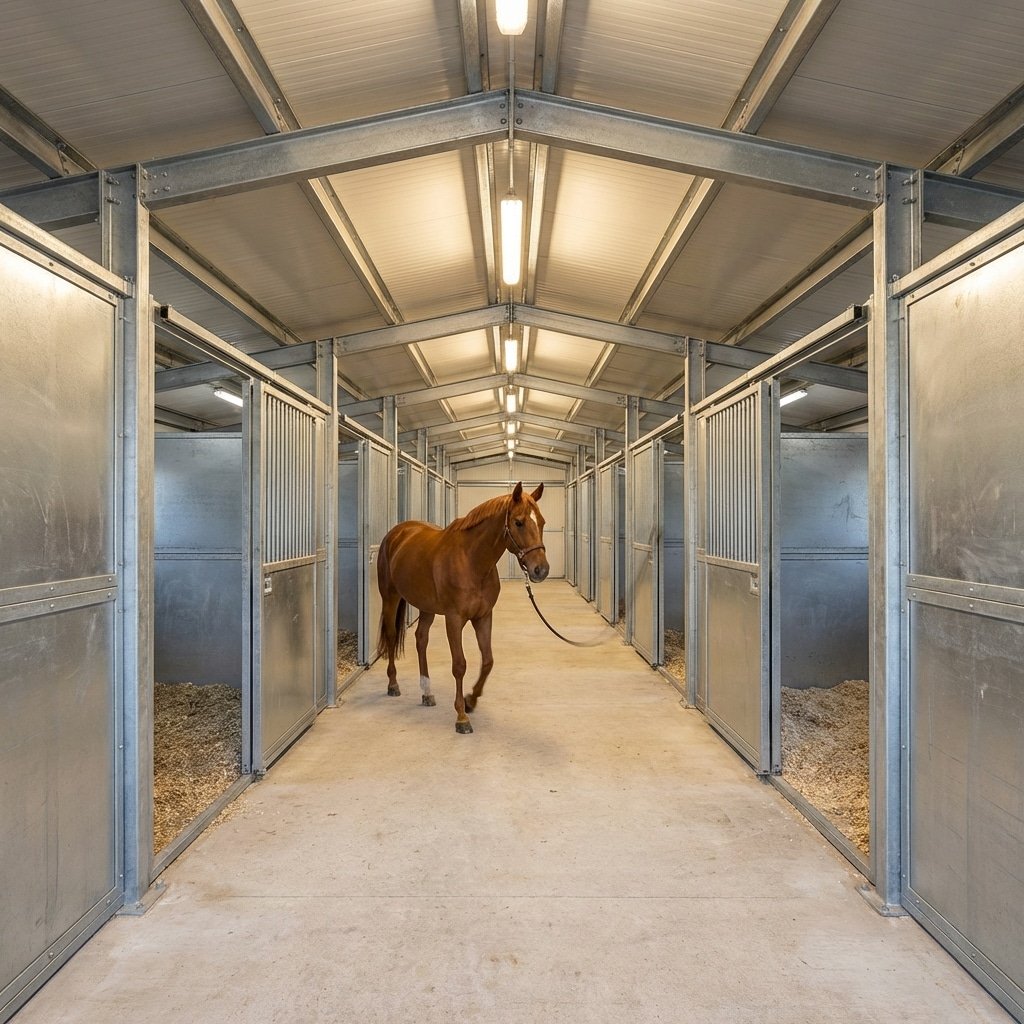
This system works on a simple principle of physics. A horse generates significant body heat and moisture. This warm, stale, and humid air naturally rises. Our high open grills provide an unobstructed exit path for this contaminated air to escape the stall.
As the warm air exits at the top, it creates a pressure difference that pulls cooler, fresh air into the stall from lower levels and aisleways. This creates a constant, gentle cycle of air replacement without drafts, ensuring the stable’s microclimate remains healthy and compliant.
Social Contact Rules: Why Solid Isolation is Now Illegal
New EU regulations for 2026 restrict long-term solid isolation for horses. Stalls must now allow safe social contact through designs like open-grill partitions to support equine well-being.
The Principle of Equine Social Welfare
Horses are fundamentally social herd animals. Housing them in complete isolation can lead to significant stress, anxiety, and behavioral problems like weaving or cribbing. This isn’t just a best practice anymore; it’s becoming a regulatory standard. Upcom
ing animal welfare regulations, set for 2026, shift focus to the mental health of stabled horses, mandating that housing conditions provide opportunities for safe social interaction.
Open Grill Partitions: The Design for Safe Socialization
The challenge is balancing social needs with safety. This is where engineered design comes in. DB Stable partition walls use an ‘Open Top Grill’ construction to directly meet these new welfare requirements. This design allows neighboring horses to see, hear, and safely touch one another, satisfying their social instincts without the risk of kicks or aggressive behavior associated with full-body contact. This approach not only supports mental well-being but also improves barn airflow through what we call “stack effect ventilation,” contributing to better respiratory health.
DB’s EU-Compliant Yoke and Half-Mesh Designs
DB Stable’s Yoke and Half-Mesh fronts meet EU welfare mandates by enabling safe social contact. Built with hot-dip galvanized Q235B steel, they prevent isolation and ensure structural safety.
European animal welfare directives, like EU 98/58/EC, set a high bar for housing. They focus on species-specific needs, making designs that prevent total isolation a non-negotiable requirement. Our Yoke and Half-Mesh fronts are engineered specifically to meet these rules.
Solid walls create isolation, leading to stress and behavioral problems. The open-grill construction of our Yoke and Half-Mesh fronts directly addresses EU mandates that require facilities to accommodate the social nature of horses.
- The design allows horses to safely see, smell, and make physical contact with neighbors, reducing herd anxiety.
- By preventing complete isolation, these fronts help mitigate common stable vices like cribbing or weaving.
- This approach directly fulfills the legal requirement to provide for the species-specific social needs of equines.
Material Standards for Safe and Durable Interaction
Compliance isn’t just about design; it’s about structural integrity. An open front must be strong enough to handle constant interaction without failing. We use specific materials and processes to guarantee safety and longevity.
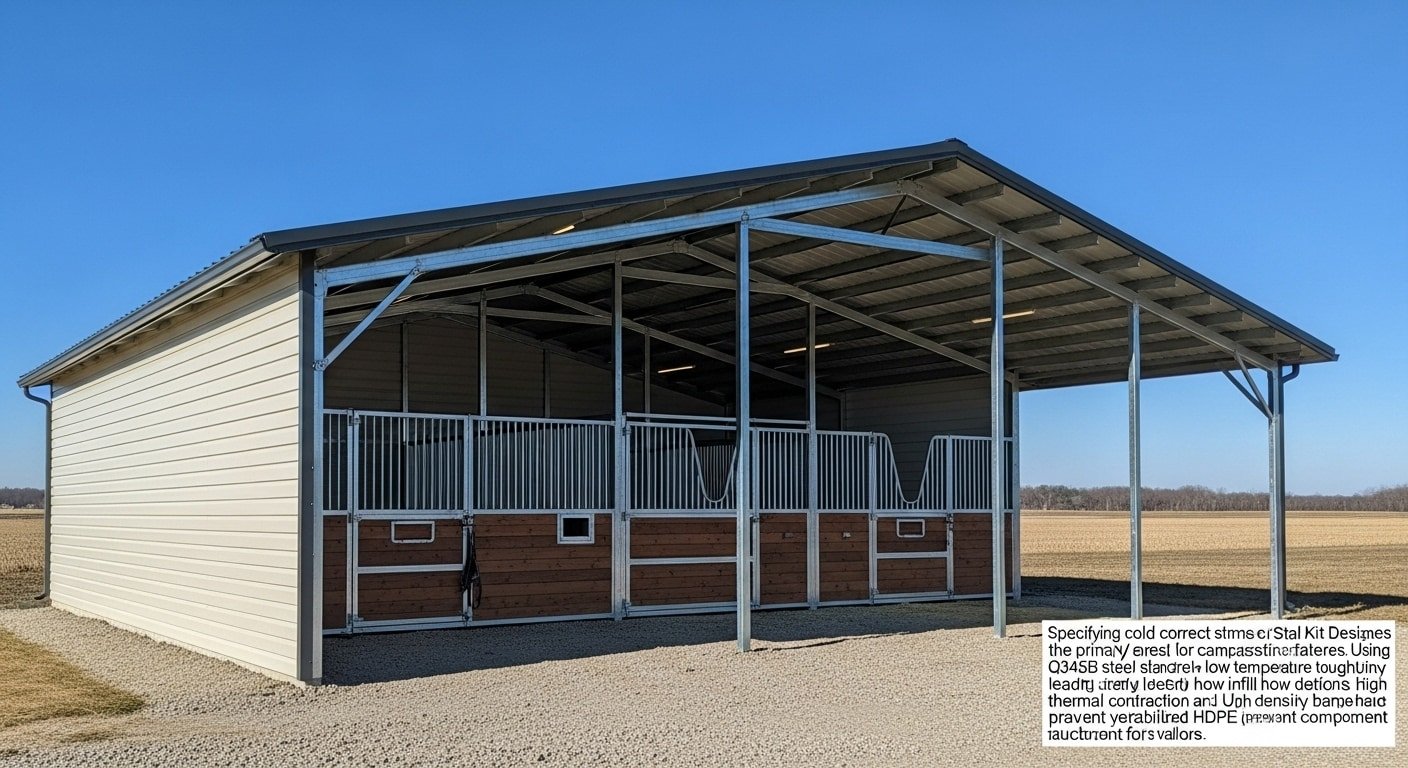
- Structural Steel Framework: We use Q235B structural steel, engineered to absorb kicks and pressure without deforming. This isn’t decorative tubing.
- ISO 1461 Compliant Galvanization: The entire panel is welded first, then Hot-Dip Galvanized. This “After Fabrication” process ensures complete rust protection, even on the welds, conforming to BS EN ISO 1461.
- ‘Cast-Proof’ Safety Gaps: The bottom gap is engineered to be minimal—approximately 50mm—to prevent a horse from getting a leg stuck while rolling.
Questions fréquemment posées
What are the core EU laws for keeping horses?
The primary law is Council Directive 98/58/EC, which sets general welfare standards to prevent unnecessary suffering. Specific regulations also govern transport, requiring rest periods after long journeys and limiting the transport of pregnant mares and young foals. Movement between countries is managed under the Animal Health Law, which requires proper identification and certification.
What is the minimum legal stable size in Europe?
There is no single legally mandated minimum size for horse stalls across the EU. The widely accepted industry best practice and recommendation is a loose box of at least 3.66m x 3.66m (12ft x 12ft). This size ensures a horse has adequate room to lie down, stand up, and turn around comfortably.
Are fully enclosed, solid-wall stalls illegal in Europe?
No, standard solid-wall horse stalls are not illegal. EU prohibitions on enclosed stalls are species-specific, targeting systems like sow gestation crates and veal crates. Modern equine standards do, however, strongly encourage designs that allow for social contact and ventilation, making fully isolated stalls less common.
Does EU law require a specific ventilation rate for stables?
EU regulations do not set a specific numerical value for air changes per hour. The law is performance-based, meaning the ventilation system must be effective enough to control humidity, manage heat, and remove harmful dust and ammonia to ensure good air quality for respiratory health.
What type of stall front is best for horse socialization?
Stall fronts that allow horses to see each other and their surroundings are best. Designs featuring open grilles, mesh, or yokes are ideal. They promote visual contact and interaction, which can reduce stress and boredom, while still keeping the horses safely contained in their stalls.
Réflexions finales
Choosing stables on price alone is a gamble against EU animal welfare laws. A failed inspection or an injured horse directly threatens your reputation as a trusted supplier. Our systems are not just built to house animals; they are engineered with ‘Cast-Proof’ safety and ISO 1461 galvanization to pass inspections and protect your business.
Compliance is proven in the engineering, not just on a spec sheet. Request our full technical catalog to verify the material grades and safety features for yourself. Our team can then prepare a distributor-level quote, including container load plans that protect your freight margins.

 French
  English
  Spanish
  Arabic
  German
0 commentaires