


Unloading a 2,500 lb bundle of 12-foot horse stall panels is not your average forklift job. A standard lift can quickly become a serious safety incident if the load’s center of gravity shifts, pushing your machine past its tipping point. This isn’t just about weight; it’s about balance and physics.
This guide outlines the essential safety procedures for moving long, heavy pallets. We’ll explain how to calculate your forklift’s reduced capacity when the load center extends beyond the standard 24 inches, why 8-foot fork extensions require base forks of at least 64 inches, and the proper techniques for widening tines and using a spotter to prevent accidents.
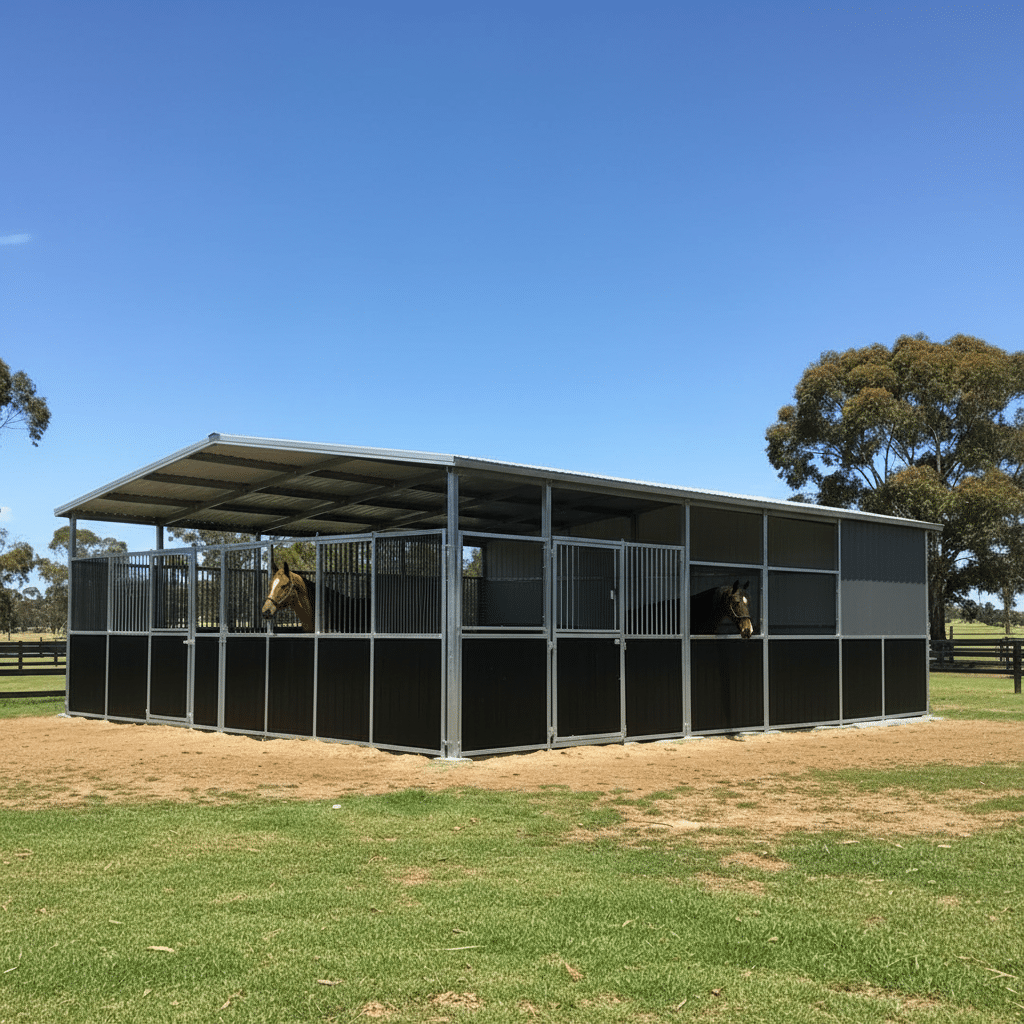
Center of Gravity: The “See-Saw” Effect
A forklift operates like a see-saw with the front axle as the pivot point. The load’s weight and its distance from the axle (the load center) must be balanced by the forklift’s counterweight. Exceeding the rated load center dramatically reduces lifting capacity and risks a forward tip-over.
| Load Center | Example Rated Capacity | Stability Implication |
|---|---|---|
| 24 in (610 mm) | 3,550 lb | Standard rating for a typical 48-inch pallet. |
| 36 in (914 mm) | Significantly Reduced | Increased forward moment reduces safe lift weight. |
| 48 in (1219 mm) | Drastically Reduced | High tip-over risk; capacity is severely derated. |
The Front Axle as the Fulcrum
A counterbalanced forklift functions exactly like a see-saw, with its front axle serving as the fulcrum or pivot point. The load on the forks and the truck’s rear counterweight exist on opposite sides of this pivot. To maintain stability, the moment created by the counterweight must always exceed the moment created by the load. This balance is maintained as long as the combined center of gravity (truck plus load) stays within the stability triangle—an area defined by the two front wheels and the rear axle pivot point. If dynamic forces or an improperly positioned load cause the combined center of gravity to shift forward past the front axle, the machine will tip over.
How Load Center Affects Lifting Capacity
Load center is the horizontal distance from the vertical face of the forks to the load’s center of gravity. A forklift’s lifting capacity is not a single number; it is directly tied to this distance. Manufacturers typically rate capacity based on a standard load center, often 24 inches (610 mm) to accommodate a standard 48-inch pallet. As the load center increases, the forklift’s safe lifting capacity decreases sharply. For instance, a forklift rated to lift 3,550 lbs at a 24-inch load center will have a much lower capacity if the load is bulky and its center of gravity shifts to 36 or 48 inches. This relationship is detailed on the forklift’s data plate, which operators must consult to avoid exceeding the machine’s limits for any given load.
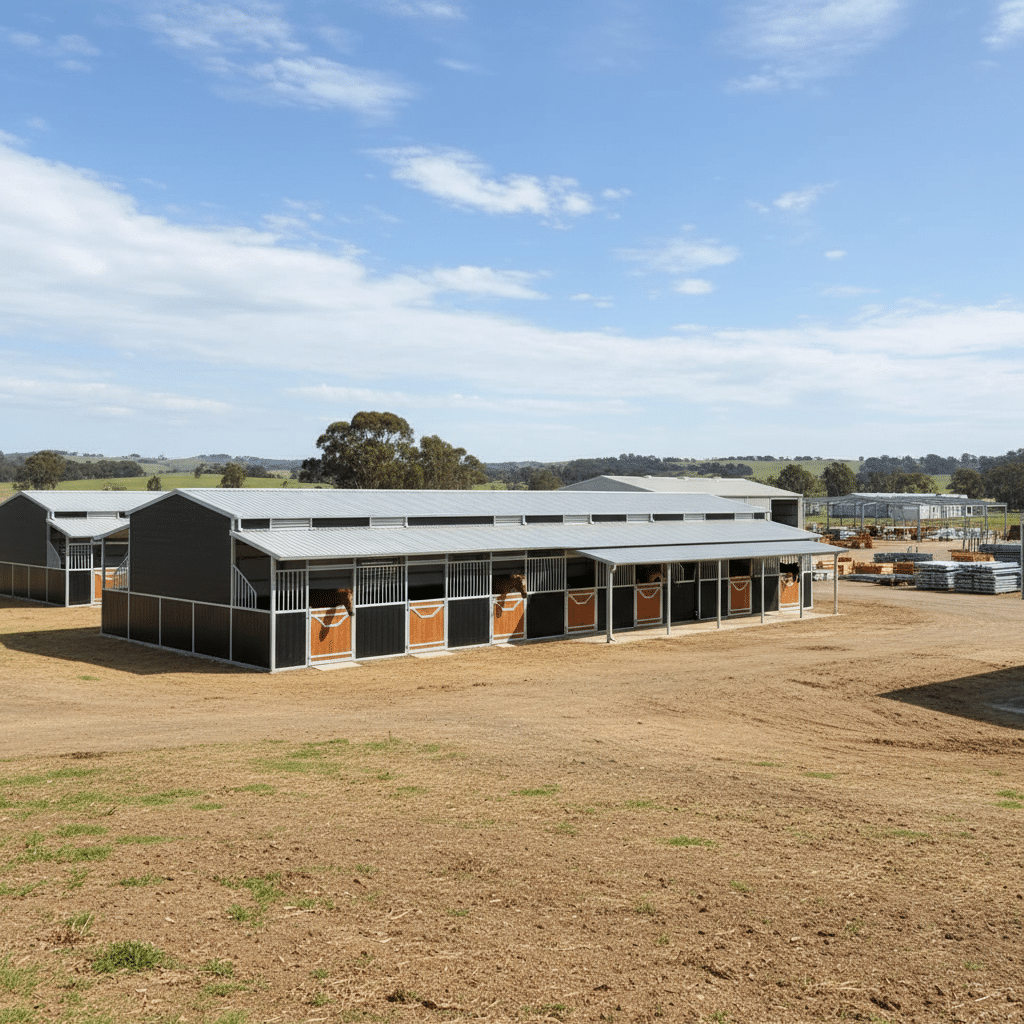
Why You Need 8ft Fork Extensions
Using 8ft fork extensions allows you to safely lift oversized loads like 8-12ft stall panels that are too large for standard forks. Their use is strictly regulated by OSHA, requiring base forks of at least 64 inches, a significant reduction in the forklift’s rated load capacity, and an updated data plate.
Extending Reach for Oversized Loads
Using 8-foot fork extensions makes it possible to handle wide materials, such as 8-foot to 12-foot horse stall panels, that would be unstable on standard 42 or 48-inch forks. The extra length provides the reach needed to properly balance and secure a large load, which prevents the risk of tipping or slippage during transport. This allows an operator to engage the load correctly so the forks do not extend more than two-thirds of the way through it, which maintains overall stability.
Load Capacity Derating and Compliance Rules
When you add fork extensions, your forklift’s lifting capacity is significantly reduced. This happens because the extensions shift the load’s center of gravity farther from the forklift mast. The new, lower capacity must be professionally recalculated and clearly marked. Following safety standards is not optional. According to ANSI B56.1 and OSHA, fork extensions cannot be more than 1.5 times the length of the original forks. This means to use 96-inch (8ft) extensions, your forklift must have base forks that are at least 64 inches long.
The extensions also need approval from the forklift manufacturer. OSHA standard 1910.178 requires that the forklift’s data plate be updated to show the new, derated capacity when using the attachment. For heavier items, Super Duty extensions made of hot-rolled steel plate offer higher capacities, like 8,000 lbs at a 48-inch load center, but all safety regulations still apply.
| Safety Requirement | Rule for 96″ Extensions | Governing Standard |
|---|---|---|
| Base Fork Length | Must be at least 64 inches long. | ANSI B56.1 (1.5x Rule) |
| Load Capacity | Must be derated (reduced) from the original capacity. | Physics of Load Centers |
| Data Plate | Must be updated to reflect the new, lower capacity. | OSHA 1910.178 |
The “Spread” Strategy: Widening the Tines
The ‘Spread’ strategy involves setting forklift tines as wide as possible to create a larger base of support. This distributes the weight of oversized or heavy loads more evenly, significantly reducing the risk of tipping and enhancing overall stability during transport and unloading.
Why a Wider Spread Prevents Tipping
Positioning the tines as wide as the load permits creates a larger base of support, which makes the forklift much more stable. This technique is especially important when handling wide, heavy, or non-palletized items like horse stall panels, stacks of lumber, or large machinery.
A wider spread distributes the load’s weight more evenly across the forks. This distribution lowers the combined center of gravity for the forklift and its load, dramatically reducing the risk of a dangerous sideways tip-over. While standard pallet spacing is around 43 inches, you should always adjust the tines to the maximum practical width for the specific load to improve safety.
Tine Specifications and Proper Adjustment
Most forklifts use hook-mounted tines that you can manually slide along the carriage. After positioning them, always lock the tines in place using their spring-loaded pins before lifting any load. Standard tines typically range from 4 to 7 inches in width and 1.5 to 2.5 inches in thickness, providing the necessary strength to handle heavy materials.
For loads that are wider than your forklift’s carriage, you can use specially designed blade extensions. These accessories clamp onto your existing tines to create a wider and more stable platform. It’s also vital to perform regular safety checks. You should inspect the fork heel for wear, as just a 10% reduction in its original thickness can decrease the safe lifting capacity by as much as 20%.
Expertly Engineered Stables, Custom-Built for Your Climate.

Spotters: Never Unload Alone
Using a spotter during unloading is a vital safety practice. The forklift operator’s view is often blocked, and a spotter acts as a second set of eyes to manage pedestrians, watch for blind spots, and ensure clear communication, fulfilling requirements outlined in standards like OSHA’s 29 CFR 1910.178.
Managing Blind Spots and Pedestrians
A spotter’s primary job is to maintain a direct line of sight into the operator’s blind spots. This is especially important when a large load obstructs the forward view or when the forklift is backing up. The spotter is also responsible for creating and enforcing a pedestrian exclusion zone, directing truck drivers and other ground personnel to remain clear of the forklift while it operates. This practice helps prevent accidents by keeping people out of the immediate hazard area.
Effective coordination depends on clear communication. The operator and spotter must use pre-arranged hand signals and verbal cues to direct movements safely and precisely. Having a spotter present directly addresses guidance from safety authorities like CCOHS, which requires operators to stay alert for pedestrians in the work area. The spotter acts as a dedicated lookout, allowing the operator to focus on maneuvering the load.
A Key Part of Regulated Safety Plans
Employing a spotter is a formal administrative control that strengthens the engineering controls used for safe unloading, such as wheel chocks and dock plates. This layered approach helps facilities meet the requirements of OSHA’s powered industrial trucks standard (29 CFR 1910.178), which mandates that employers must protect pedestrians from forklift traffic. The spotter also helps verify that all pre-operation safety checks are complete, including confirming that the trailer is securely chocked before the forklift enters.
In complex or unpredictable environments like barn aisles with uneven ground or nearby animals, a spotter becomes essential. They manage hazards that fall outside the operator’s immediate focus, watching for sudden movements or changing conditions. By providing this critical support, the spotter ensures that the unloading process remains controlled and safe, even in challenging settings.
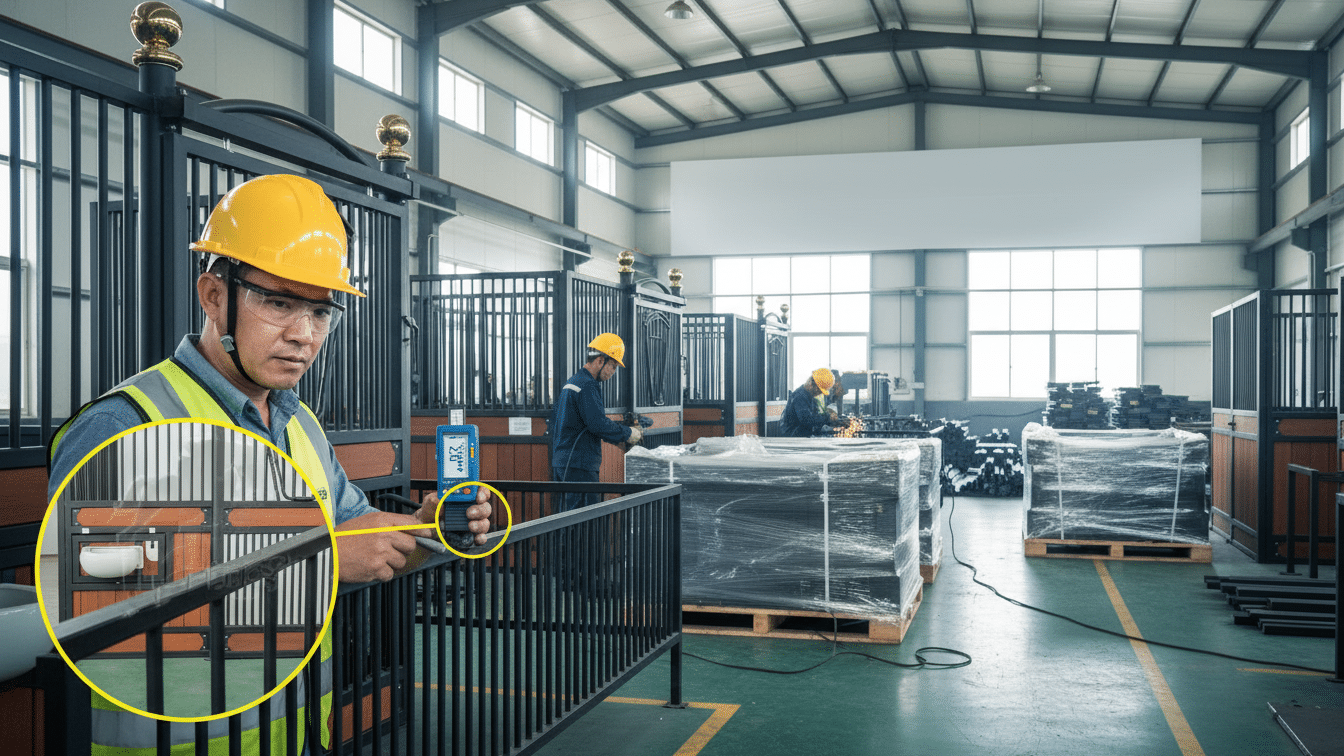
Lifting from the Side vs. End
Lifting a horse stall from its end keeps the load’s weight centered and stable, aligning with the forklift’s rated capacity. Lifting from the side, or shifting the load sideways, moves the center of gravity horizontally, creating a dangerous risk of tipping the forklift over sideways.
End Lifting: The Stable Approach
Lifting a load from its end properly aligns it with the forklift’s standard 24-inch (600 mm) load center. Forklift manufacturers calculate the machine’s rated capacity based on this measurement. This method keeps the combined center of gravity securely within the forklift’s stability triangle, which prevents instability and ensures the lift operates within its designed safety limits.
Side Lifting: The Danger of Tipping Sideways
When you lift a long load from its side, you introduce a horizontal shift in the load’s center. Using a sideshifter attachment with a heavy load creates the same hazardous effect. This sideways force generates lateral instability, pushing the forklift’s combined center of gravity outside its stability triangle. Because the machine is designed for front-to-back balance, not side-to-side, this puts the forklift at an extremely high risk of a sideways tip-over.
Final Thoughts
Handling a 12-foot pallet safely is more than just a routine lift. It requires a clear understanding of forklift physics, particularly the load’s center of gravity. You create a stable lift by using the right equipment, like 8-foot fork extensions, and adjusting the tines to their widest practical point. A spotter is also a non-negotiable part of the team, providing the extra visibility needed to navigate blind spots and manage the work area.
Each of these strategies—from calculating load centers to working with a spotter—is a critical layer of protection against a tip-over. Ignoring a single step, such as lifting a long load from its side or failing to update the data plate for extensions, creates a serious risk of an accident. These practices are based on established safety standards designed to protect operators, equipment, and anyone on the ground.
Frequently Asked Questions
Do I need fork extensions to unload stall panels?
You need fork extensions when your current forks cannot support at least two-thirds of the load’s length. Any extensions must be manufacturer-approved and sized to no more than 150% of your original fork length, complying with standards like ISO 13284. For long loads like stall panels, this is often a requirement.
How heavy is a typical bundle of horse stalls?
A bundle of 4 to 6 portable horse stall panels typically weighs between 1,500 and 2,000 lbs. A specific 4-stall bundle can weigh around 2,500 to 2,600 lbs, since each individual 12×12 stall setup is about 640-650 lbs.
Can I just drag the pallet off the truck with the fork tips?
No. Dragging or “bulldozing” pallets is an unsafe practice and violates OSHA rules. You must always lift the pallet by placing the forks fully under the load before moving it.
Is a skid steer strong enough to unload horse stalls?
Yes, in most cases. Typical skid steers have a rated operating capacity (ROC) between 1,250 and 4,200 lbs. Large-frame models can handle over 3,000 lbs, which is generally enough to lift a bundled pack of horse stalls.
Where is the center of gravity on a forklift load?
On a standard forklift, the load’s center of gravity is assumed to be 24 inches from the vertical face of the forks. The combined center of gravity of the forklift and its load must remain inside the machine’s stability triangle to prevent tipping.
Can I unload the stall panels by hand instead of using a machine?
No. Unloading heavy, bundled materials like stall panels must be done mechanically with the forklift. Attempting to unload by hand is not permitted under safety guidelines due to the high risk of crushing injuries or equipment tip-over.



 English
  Español
  Français
  العربية
  Deutsch
0 Comments