


Stable latches are a critical failure point that directly impacts both liability and operational safety. Choosing a simple gravity latch over a secure plunger system might seem cost-effective, but it exposes a facility to risks ranging from animal injury claims to non-compliance with fire evacuation standards.
This analysis benchmarks both latch types against key performance metrics. We evaluate mechanisms on their reliability for one-handed emergency operation, corrosion resistance using 304 Stainless Steel components, and secure integration within a kick-proof steel stable system.
The Critical Role of Flooring in Equine Joint Health
Proper stable flooring is essential for equine joint health, providing critical cushioning to reduce daily impact, improve circulation, encourage rest, and offer stable footing to prevent injuries.
Impact on Shock Absorption, Circulation, and Recovery
Cushioned surfaces are non-negotiable for absorbing shock, reducing the daily grind on a horse’s knees, hips, and hocks. Better flooring also improves blood circulation in the legs, which helps manage discomfort and lowers the risk of joint issues. A supportive, comfortable floor encourages horses to lie down more often. This allows for restorative REM sleep, which is critical for joint recovery.
Surface Materials and Their Health Consequences
Hard, unforgiving surfaces like bare concrete can actively worsen joint pain and inflammation, a major problem for any horse with arthritis. Rubber matting and specialized orthopedic systems provide a cushioned, non-slip alternative that supports joints and prevents dangerous falls. Good flooring is also easy to keep clean. Preventing moisture and bacteria buildup is key to protecting sensitive joints from irritation and infection.
Top Brands for EVA Mats, Poured Rubber, and Pavers
The market splits between flexible interlocking systems for easy installation and permanent poured-in-place surfaces designed for high-traffic commercial use.
When sourcing equine and commercial flooring, the providers generally fall into two categories: those offering modular, interlocking products and those specializing in permanent, poured surfaces. Each type serves a distinct purpose, from portable stable solutions to custom-designed playground flooring.
| Core Product Type | Aplicación ideal | Característica principal | |
|---|---|---|---|
| Prime Paver | Interlocking Rubber Pavers | Equestrian facilities, horse stables | 100% recycled rubber construction |
| The Rubber Company | EVA Foam Tiles | Gyms, play areas, stables | Lightweight, portable, and superior cushioning |
| Surface America | Poured-in-Place Rubber | Playgrounds, high-traffic zones | Customizable thickness and long warranty |
| Adventure Turf | Poured-in-Place Rubber | Playground and recreational facilities | Durable two-layer system from recycled material |
| Mats Inc. | Interlocking Rubber Pavers | Horse barns, patios, playgrounds | Slip-resistant and weather-resistant design |
Modular systems from companies like Prime Paver and The Rubber Company offer flexibility and easier installation. Poured-in-place solutions from Surface America and Adventure Turf provide a more permanent, custom finish with better durability for demanding commercial environments. The choice depends entirely on whether the project prioritizes flexibility or long-term resilience in a fixed location.
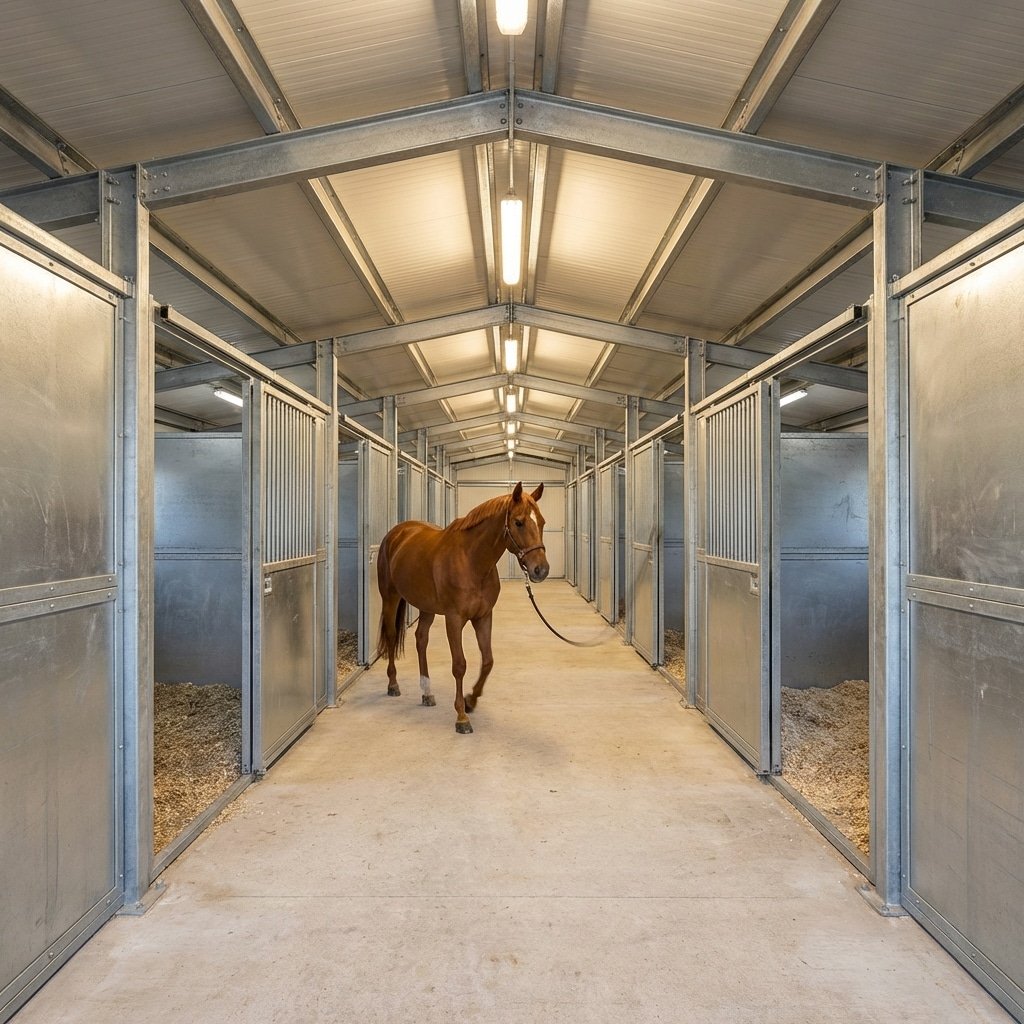
Custom Stables with 20-Year Durability

The Shipping Reality: Why Rubber Freight Kills Budgets
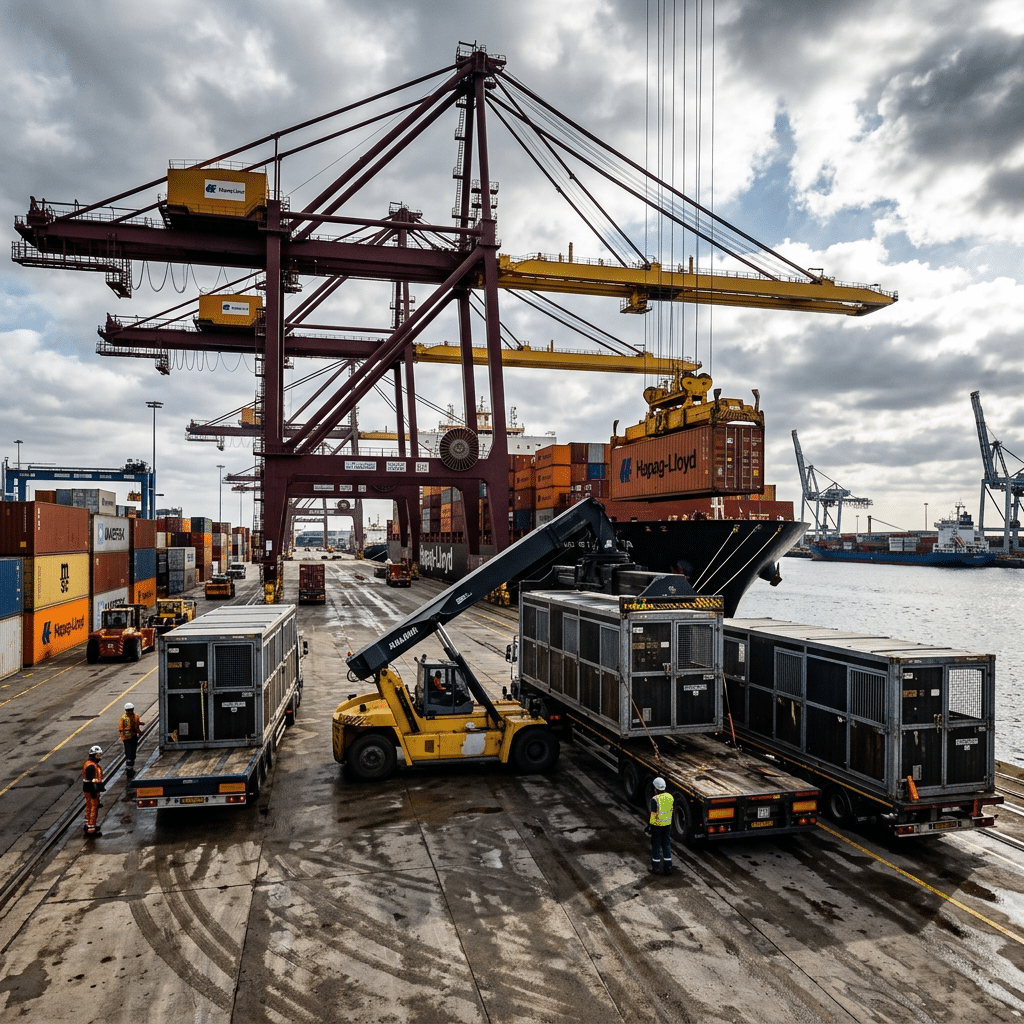
Shipping welded stables is expensive due to wasted container space. Our flat-pack system loads over 60% more sets per container, slashing freight costs and protecting distributor profit margins.
The Problem with Volumetric Freight Costs
Fully welded stable panels are a logistical nightmare. They ship as large, hollow structures that create massive amounts of empty, unusable space inside a shipping container. Freight carriers charge based on this volumetric space, not the actual weight. This makes bulky, non-stackable items like pre-assembled stables extremely costly to ship, eating directly into project budgets.
Our Solution: The High-Density Flat-Pack System
We engineered our system specifically to solve this budget killer. Instead of shipping air, we ship value. The DB Stable flat-pack system fundamentally changes the logistics equation for our B2B clients.
- Massive Loading Density: A standard 40HQ container fits just 12-15 traditional welded stable sets. Our flat-pack system allows you to load 30-45 series in the exact same container.
- Direct Profit Protection: This 60%+ increase in loading efficiency directly cuts the freight cost per unit. This isn’t just a minor saving; it’s a core strategy that protects your profit margins on every order.
- Safe and Secure Transit: All components are methodically secured to steel pallets. This prevents damage during shipping and ensures your team can unload everything safely and efficiently at the destination.
DB’s “Profit Protection”: Co-Loading Mats with Steel Flat-Packs
Our flat-pack stables let distributors fit 30-45 sets in one container, not just 15. This cuts freight costs over 60% and protects your profit margin.
The High Cost of Shipping Empty Air
Shipping fully welded horse stables is a financial drain. The pre-assembled panels are large, awkward, and can’t be stacked efficiently. This design flaw creates a massive amount of unusable empty space inside a standard shipping container.
Distributors pay for the entire container volume, not just the portion filled with product. Every cubic meter of empty air is a direct hit to your landed cost, eating away at the profit margin before the inventory even arrives.
The Flat-Pack Advantage: Fitting 40 Sets Instead of 15
Our steel flat-pack system solves this problem. By shipping the components neatly stacked on steel pallets, we can load a single 40HQ container with 30 to 45 complete stable sets. A competitor shipping traditional w
elded stables can only fit 12 to 15 sets in the same space.
This extreme density cuts your per-unit freight costs by over 60%. It also creates a strategic opportunity for our distributors. The significant space and weight capacity saved allows you to co-load other dense products, like rubber horse mats, into the same container. You’re not just saving money on shipping stables; you’re maximizing the revenue from every container you import.
Minimum Thickness Standards: Never Go Below 17mm
While 17mm is a decent benchmark for mounting hardware on panels, a stable’s real safety comes from its steel frame. We mandate a 2.0mm minimum wall thickness to stop kicks.
The 17mm Benchmark for Latch and Panel Hardware
The 17mm figure you often hear about relates specifically to the thickness of infill panels, like wood or HDPE. It’s not about the structural steel. This measurement became a practical industry guideline because it’s the minimum depth needed to securely mount hardware without it failing or loosening over time.
- It provides enough material for flush-pull latches and catches to get a solid grip, preventing them from vibrating loose.
- This thickness ensures doors and panels have enough substance to close reliably and keep hardware from being easily damaged.
Structural Integrity: Our 2.0mm Minimum Steel Wall Thickness
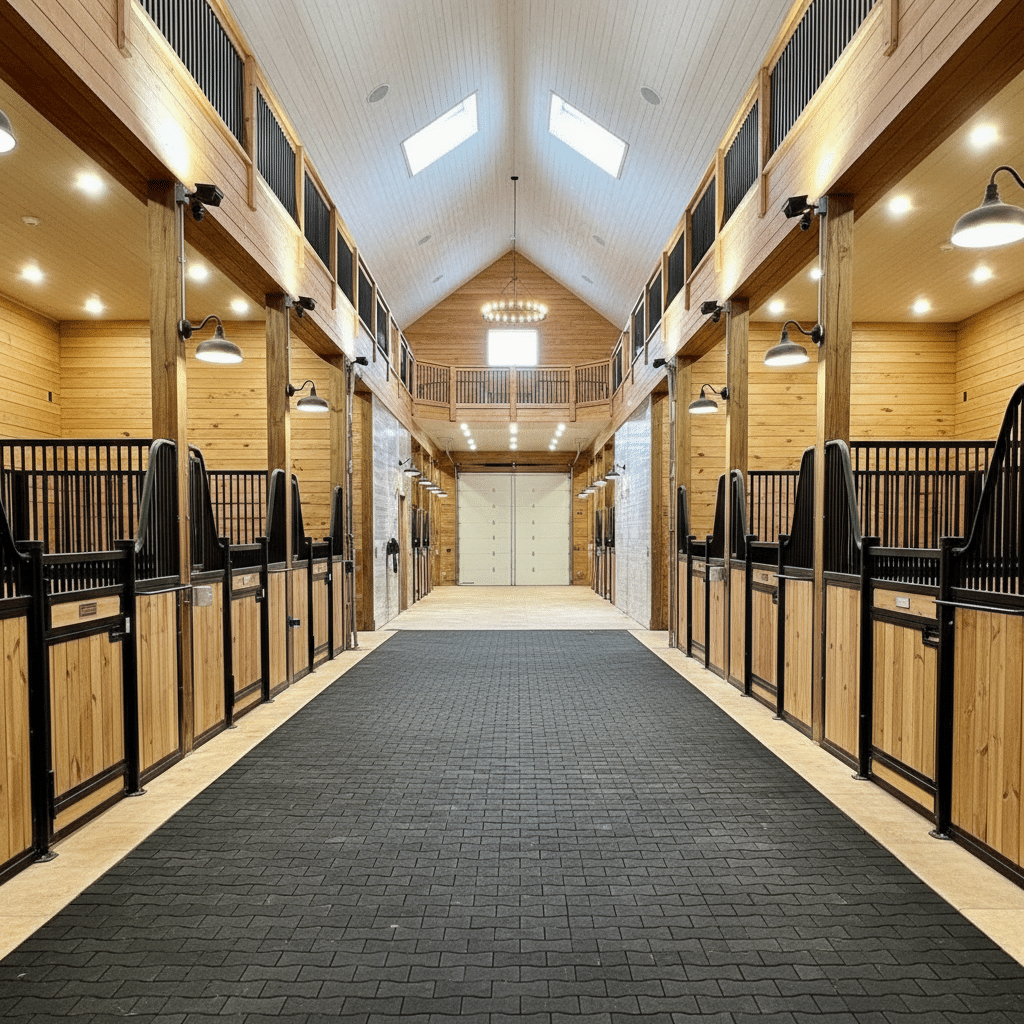
Panel thickness is one thing, but the frame is what actually stops a stable from collapsing under pressure. We focus on the engineering, not just the hardware mounting. That’s why we build our frames with a non-negotiable minimum steel thickness that far exceeds what’s needed for a simple latch.
- All our Q235B steel framework has a wall thickness of 14-Gauge, which measures between 2.0mm and 2.5mm. We never use thinner tube.
- This is the standard required to deliver our Kick-Proof Guarantee. It prevents dangerous dents and structural failure from a powerful kick.
Preguntas frecuentes
What is the recommended minimum thickness for horse stall mats?
The minimum recommended thickness for a standard horse stall is 20 mm, or approximately 3/4 inch. This thickness provides sufficient cushioning and durability for daily use, reduces the amount of bedding needed, and is less likely to curl or shift compared to thinner 1/2 inch mats.
What is the best material for horse stall mats?
Vulcanized rubber is the superior material for horse stall mats. It is durable, non-absorbent, and provides excellent shock absorption to protect a horse’s joints. Its moisture-resistant properties prevent the growth of mold and bacteria, ensuring a more hygienic environment.
Are interlocking mats better than single-piece straight-edge mats?
It depends on the application. Interlocking mats are ideal for custom or irregularly shaped areas as they are easy to install and replace. However, large, straight-edge mats offer a more seamless surface with fewer gaps for bedding to get trapped in, making them a better choice for large, rectangular stalls.
How can our business reduce costs when shipping accessories like rubber mats?
For heavy items like stall mats, the most effective cost-saving strategy is co-loading. This involves combining your cargo with goods from other shippers into a single container. You only pay for the space you use, which significantly lowers per-unit freight costs compared to shipping a partially empty container yourself.
Reflexiones finales
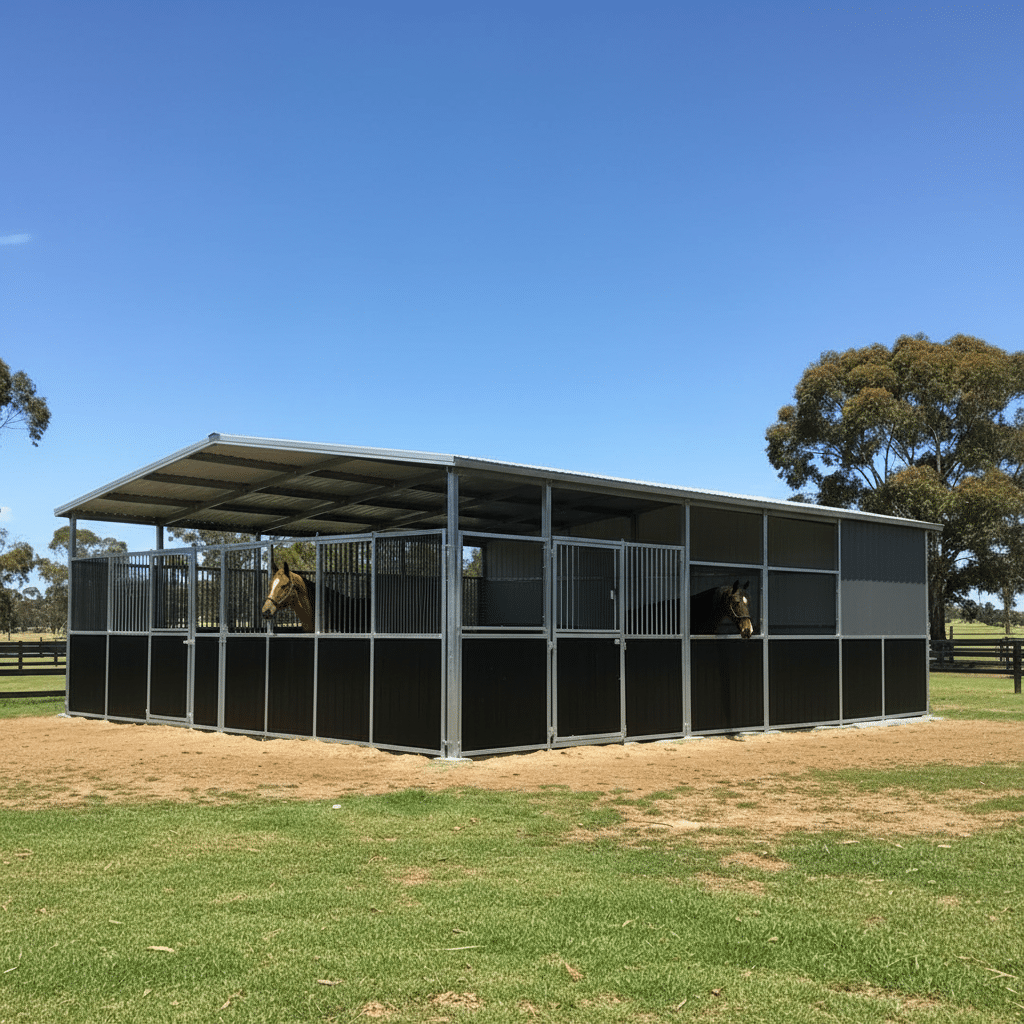
Sourcing based on unit price alone is a trap; the real cost is in the freight. Our flat-pack system and guaranteed 2.0mm steel thickness protect your profits and your reputation from logistical waste and structural failure. This is how successful distributors build a reliable, high-margin product line.
Don’t guess on quality—verify it. We recommend starting with a trial order to test our flat-pack efficiency and Kick-Proof Guarantee firsthand. Contact our team to request our full catalog and discuss your OEM/private label requirements.

 Spanish
  English
  French
  Arabic
  German
0 comentarios