


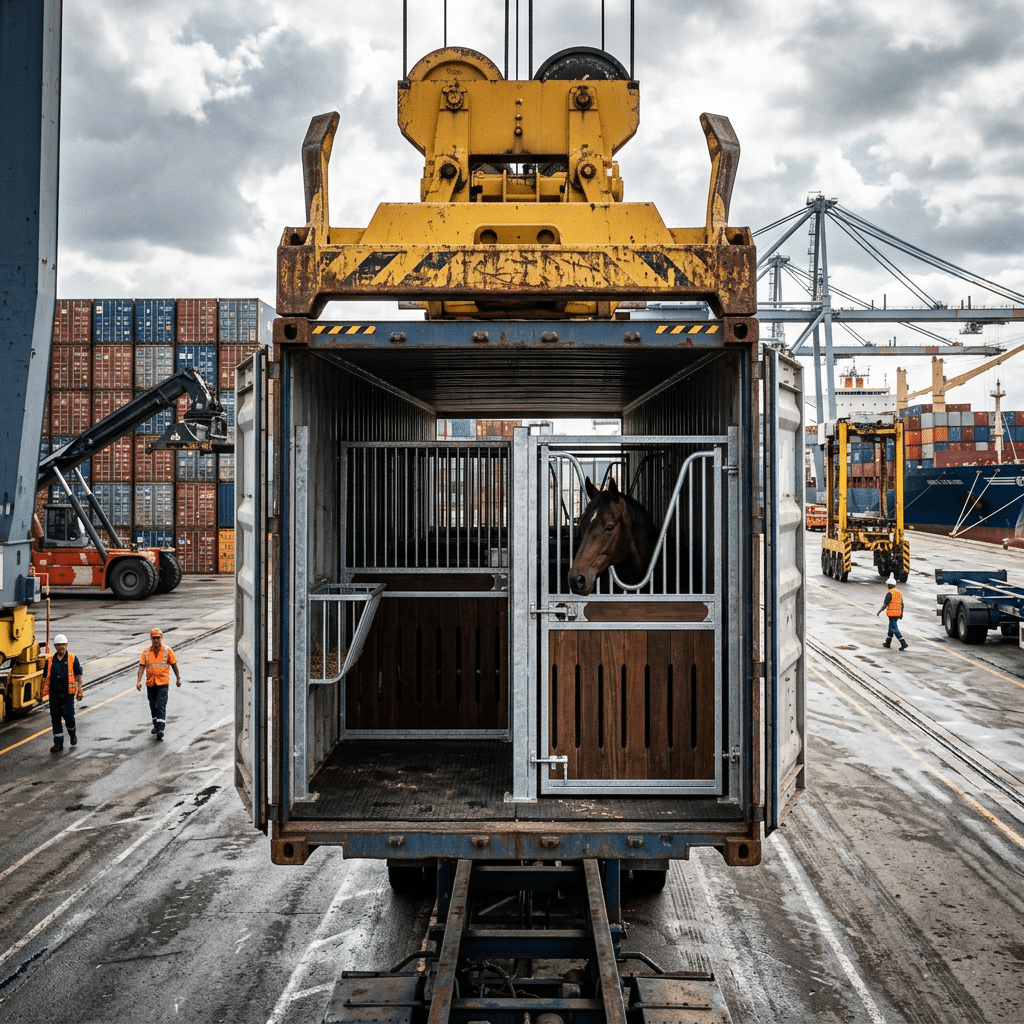
Decisions on rust/galvanizing for horse stall gates directly impact total cost of ownership and warranty claims. A coating that fails in high-salinity coastal air or at critical weld points forces expensive product replacements and erodes distributor margins.
This analysis provides a data-driven comparison, benchmarking finishes against the BS EN ISO 1461 standard. We evaluate coatings on verifiable zinc thickness—a minimum of 70-85 microns—and the use of a ‘Hot-Dip After Fabrication’ process, which is critical for protecting welds from corrosion.
¿Qué debes tener en cuenta a la hora de elegir un fabricante internacional?
Look for certified quality systems (ISO 9001), production reliability, and transparent total costs. Verify material-specific standards like ISO 1461 for galvanizing to ensure product longevity.
Core Evaluation Criteria for Supplier Vetting
Skip the marketing fluff and focus on the metrics that actually impact your business. A reliable partner can be assessed on a few key, non-negotiable criteria.
- Quality Management Systems: Verifiable certifications like ISO 9001 are the starting point, not the finish line. Ask for internal quality reports and documented defect rates. This tells you if their processes are consistent or just for show.
- On-Time Delivery (OTD): A factory’s claimed capacity is meaningless without proof. Check their historical OTD performance; anything below 98% is a red flag. You need a partner who can handle demand spikes without disrupting your timeline.
- Total Cost of Ownership (TCO): The unit price is a trap. The real number includes freight, duties, inventory holding costs, and potential warranty claims. A cheap product with high hidden costs will drain your margin.
- Financial & Regulatory Stability: Do your homework. Run a credit check to confirm financial stability and verify their compliance with local labor and environmental laws. A factory that cuts corners on regulations will eventually cut corners on your product.
El papel de las certificaciones ISO 9001 e ISO 1461
Certifications aren’t just wall decor; they are objective proof of a manufacturer’s commitment to process control. For structural steel fabrication, two standards are critical: ISO 9001 for process quality and ISO 1461 for durability.
An ISO 9001 certificate means the manufacturer has a documented Quality Management System. It confirms they use consistent, repeatable processes for everything from raw material inspection to final product sign-off. This reduces the risk of random, out-of-spec deliveries that create headaches for your assembly teams.
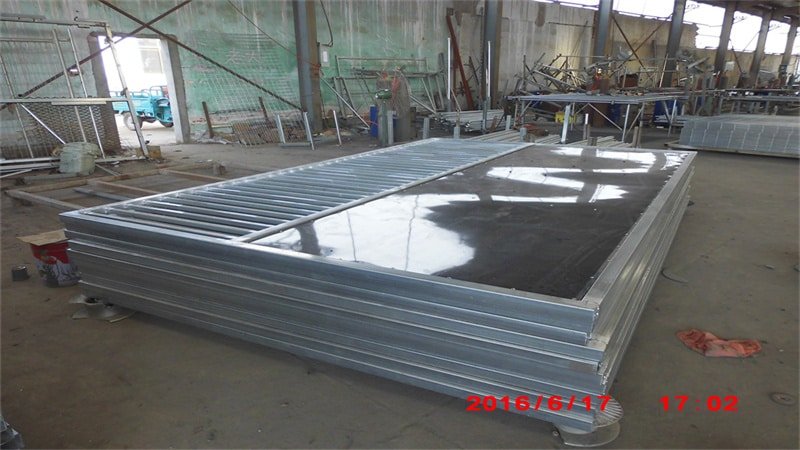
ISO 1461 is the global standard for hot-dip galvanizing, and it’s non-negotiable for long-term rust protection. It dictates a minimum zinc coating thickness based on the steel’s thickness. For example, we ensure our components conform to BS EN ISO 1461, achieving an average coating of over 70 microns on tubing and over 85 microns on thicker steel. This provides verifiable, long-term protection against corrosion, unlike cheaper pre-galvanized materials that fail at the weld points.
¿Cuáles son las principales marcas de Estados Unidos y Australia?
The market is split between established US custom fabricators and Australian firms focused on durable, modular systems using corrosion-resistant steel for harsh climates.
When sourcing horse stable components, it’s critical to understand the key players in major markets like the US and Australia. Each country has established manufacturers with distinct specializations, from high-end custom work to robust, weather-resistant modular systems. The following table outlines some of the most recognized brands in these regions.
| Marca | Country | Specialty | Key Features / Market Position |
|---|---|---|---|
| Norton Gates Pty Ltd | Australia | Racing & Equestrian Equipment | Manufacturer of starting gates and related track equipment for the Australian racing industry. |
| Guerilla Steel Stables | Australia | Modular Steel Stables | Uses Duragal® alloy-coated steel frames (50mm RHS) with a focus on long-term cost of ownership. |
| Simtrack | Australia | Synthetic & Sand Racetrack Surfaces | Specialist in the design, installation, and maintenance of all-weather racing and training tracks. |
| Steriline Racing | Australia | Starting Gates & Racetrack Equipment | Global supplier of race day equipment, known for its starting gates and running rails. |
| Lucas Equine Equipment | EE. UU. | Custom High-End Stalls | Over 40 years of experience; operates from a large Kentucky facility specializing in custom work. |
| J&E Grill Manufacturing | EE. UU. | Prefabricated & Custom Stall Doors | Over 35 years in business; offers a wide range of customizable options in both wood and steel. |
| Cashmans | Australia | Horse Fencing & Rural Products | Major supplier of steel fencing, gates, and handling equipment for the agricultural sector. |
Engineered Stables for 20+ Years of Use
¿Por qué elegir un fabricante OEM directo, como DB Stable?
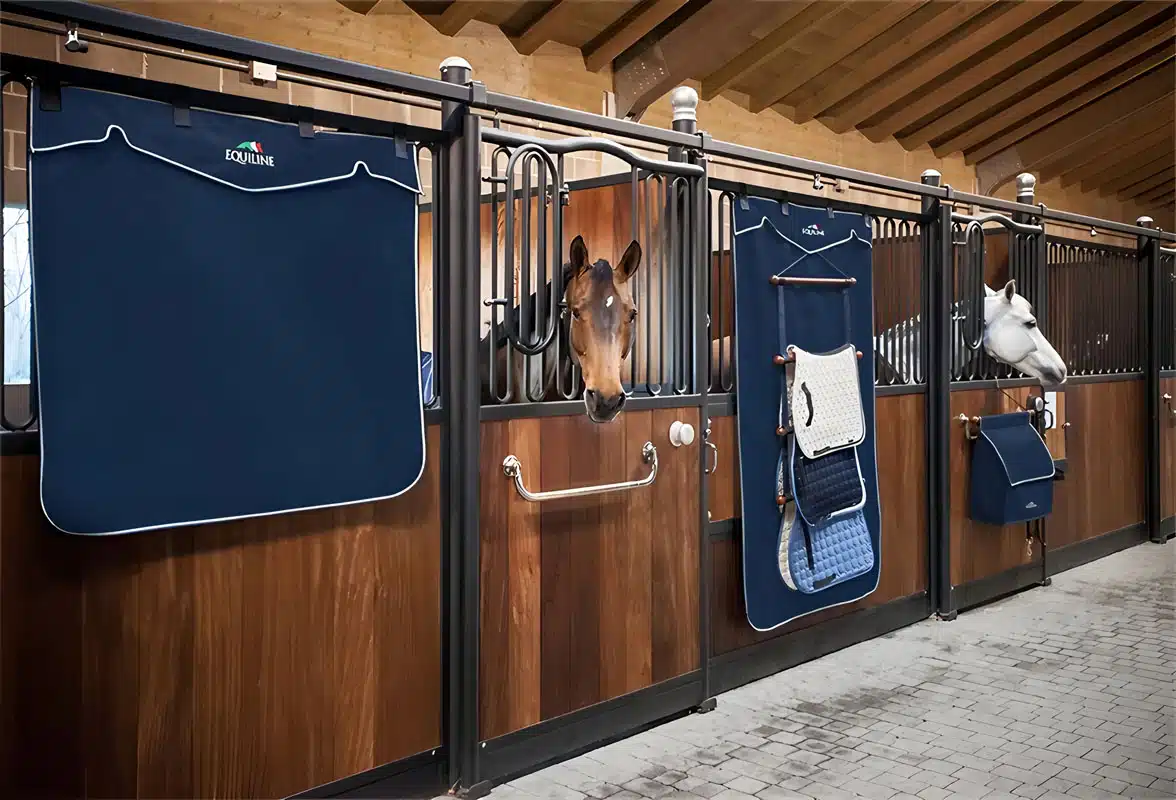
Working with a source factory gives you direct control over quality standards and material specs. It also delivers huge logistical savings that protect distributor margins.
When you partner with a factory-direct Original Equipment Manufacturer (OEM), you bypass the layers of traders, agents, and importers that add cost and create uncertainty. You get direct access to the engineering team and full transparency into the production process, ensuring the product you specified is the product you receive.
Direct Control Over Quality and Material Standards
Going direct eliminates supply chain guesswork. You’re no longer hoping that a third-party supplier relayed your technical requirements correctly. Instead, you have a clear line of communication to verify every detail, ensuring the final product is fit for your specific market.
- Verify Material Specifications. You can demand specific steel grades like Q345B for projects in cold climates, which prevents brittle fractures from horse kicks in freezing temperatures. This level of control is impossible when buying off-the-shelf.
- Ensure Adherence to Certifications. A direct relationship allows you to confirm that production meets international standards. You can audit certifications like ISO 9001 for quality management and, crucially, BS EN ISO 1461 for proper hot-dip galvanization after fabrication.
- Address Specific Market Needs. Communicate directly with the engineering team to solve regional challenges. For Australian distributors, this means ensuring UV-stabilized HDPE infill. For European partners, it means designing to meet strict animal welfare standards.
Logistical Advantages That Protect Your Profit Margins
The unit price of a stable is irrelevant if freight costs erase your margins. Inefficient packing is a hidden tax on distributors. An experienced OEM designs the product *and* the logistics with your profitability in mind. This is what we call ‘Profit Protection’.
- Optimized Container Space. Our purpose-built Steel Pallet Flat-Pack system was designed to maximize every square meter of a shipping container. Products are not loaded loosely; they are securely stacked for safe and dense transport.
- Dramatically Increased Load Capacity. A standard 40HQ container can fit only 12-15 sets of traditionally welded, bulky stables. Our flat-pack system allows you to load between 30 and 45 stable sets into the same container.
- Over 60% Savings on Sea Freight. By more than doubling the load quantity, you cut the per-unit shipping cost significantly. This saving goes directly to your bottom line, giving you a major competitive advantage on landed cost.
¿Cumple tu proveedor con las normas ISO 1461 sobre galvanizado?
ISO 1461 sets the global standard for zinc coating thickness, adhesion, and finish. Verifying a supplier meets these minimums is critical for long-term rust protection.
ISO 1461 is not just a certificate on a wall; it’s a specific set of technical benchmarks that guarantees how long a steel product will last outdoors. When buying something like horse stables, which are constantly exposed to moisture and ammonia, this standard is the only real proof of rust protection. A supplier who can’t provide clear data against this standard is a major red flag.
Core Compliance Criteria for Galvanizing
The standard is straightforward and focuses on three measurable outcomes. Any reputable galvanizer must meet these points for every batch.
- Espesor mínimo del recubrimiento: The standard mandates specific minimum zinc coating depths based on the thickness of the steel. This typically ranges from 45 to 85 microns (μm). Thicker steel requires a thicker protective coating.
- Adhesion and Appearance: The zinc coating must be uniform and continuous. When viewed from a standard distance, it cannot have defects like blisters, sharp points, or uncoated areas that would compromise its protective function.
- Renovation Limits: Any small uncoated areas that need a touch-up (like with a cold galvanizing spray) must not exceed 0.5% of the total surface area of the part.
Verifying Zinc Thickness: The Critical Metric
The simplest way to check a supplier’s compliance is to ask for their specific zinc thickness data. Vague claims of “hot-dip galvanized” are meaningless without the numbers to back them up. At DB Stable, our products are certified to ISO 1461, and we provide test reports confirming our coating thicknesses.
- Stable Tubing (3-6mm steel): Our tubing has an average coating of over 70 microns, meeting the ISO 1461 requirement for this steel gauge.
- Structural Steel (>6mm steel): Thicker structural parts, like hinge plates and posts, have an average coating that exceeds 85 microns.
- Manufacturing Process: We use a ‘Hot-Dip Galvanization After Fabrication’ process. This means we build the complete stable panel first, then we dip the entire welded structure into molten zinc. This process fully protects the welds—the most common rust points on cheaper, pre-galvanized products.
¿Cómo se elige a la pareja adecuada?
Look for certified manufacturers with a true B2B model. Assess their technical specs, material quality, and logistics, like efficient flat-pack shipping, to protect your project costs.
Evaluating Technical Capabilities and Material Quality
The product’s safety and durability come down to the manufacturer’s technical standards. Don’t just accept claims; you need to verify the engineering details. A reliable partner will be transparent about their materials and processes because they know it sets them apart from cheaper, low-quality alternatives.
Your evaluation checklist should cover three main areas: the steel itself, the rust protection process, and the certifications that prove compliance.
- Steel Grade and Wall Thickness: Confirm they use structural steel like Q235B (ASTM A36 equivalent) as a minimum. For cold climates, a partner should offer Q345B for its superior low-temperature toughness to prevent cracks from kicks. Wall thickness should never be less than 2.0mm.
- Rust Protection Method: The gold standard is Hot-Dip Galvanization After Fabrication. This means the entire panel is welded first and then dipped in zinc. This process, compliant with ISO 1461, ensures a zinc coating of over 70-85 microns and provides real long-term protection, unlike pre-galvanized tubes that rust at the weld points.
- Third-Party Certifications: A manufacturer must provide current ISO 9001 (Quality Management) and ISO 1461 (Galvanizing) certificates. These aren’t just paperwork; they prove a commitment to a repeatable, high-quality production system.
- Warranties and Customization: Ask about their structural and finish warranties. A confident manufacturer stands behind their product. Also, check their ability to handle custom designs, which shows engineering depth beyond standard production.
Analyzing Business Model and Logistics Support
A great product is useless if the business model and logistics erode your margins. For distributors and project managers, how a manufacturer operates is just as important as what they build. You are looking for a partner, not just a supplier.
Focus on their commercial structure to ensure alignment with your business goals. A true B2B partner invests in systems that protect your profitability and make your operations smoother.
- Verify the B2B OEM/ODM Model: You need a source factory, not a rebranded retailer. A direct OEM/ODM relationship means you get factory pricing, direct access to engineering for custom projects, and avoid paying markups meant for individual buyers.
- Investigate the Packaging System: This is a major cost driver. Traditional fully-welded stables allow only 12-15 sets in a 40HQ container. A partner with an efficient Flat-Pack System can load 30-45 sets. This single detail can cut your sea freight cost per unit by more than half.
- Clarify MOQ Policies: A professional manufacturer will have a tiered MOQ structure. They should offer a small trial order (3-5 stables), a project-level order (a 20GP container), and a full distributor order (a 40HQ container). This flexibility shows they understand the different needs of their partners.
Preguntas frecuentes
Are you the direct manufacturer?
Yes, DB Stable is a source factory specializing in B2B OEM/ODM manufacturing. Unlike brands that sell directly to individuals, our focus is on supplying distributors and large-scale projects with high-quality, standardized stable systems engineered for safety and durability.
How can I verify your ISO certification?
You can verify our certifications by requesting the official documents from us. We hold ISO 9001 for our quality management system and, critically, ISO 1461 for our hot-dip galvanizing process. You can then confirm the certificate number with the issuing accreditation body to ensure its validity and scope.
What is your Minimum Order Quantity (MOQ)?
Our MOQ is structured to support our B2B partners. We offer a trial order of 3-5 stables for initial evaluation. For projects, the minimum is a 20GP container (about 10-15 sets), and for our distributor partners, a standard order is a 40HQ container (30-45 sets), which maximizes freight savings.
Can you manufacture a custom or private label design?
Absolutely. As an OEM/ODM manufacturer, producing private label designs is a core service. We work with our B2B clients to build stable systems that meet their specific branding and feature requirements, using our proven framework of Q235B/Q345B steel and infill options like HDPE or bamboo.
Do you offer exclusive distributor agreements?
We handle exclusivity agreements on a case-by-case basis. Our goal is to build strong, long-term partnerships. Depending on the market, sales volume, and mutual commitment, we are open to discussing exclusive arrangements to protect our distributors’ investments and market share.
How do you handle quality control for rust protection?
Our primary defense against rust is our strict adherence to the ‘Hot-Dip After Fabrication’ process. We weld all components using black steel first, then dip the entire finished panel into molten zinc. This method guarantees a coating of over 70 microns, compliant with the BS EN ISO 1461 standard, ensuring complete protection, especially at the critical weld joints.
Reflexiones finales
While pre-galvanized or powder-coated options offer a lower initial price, they expose distributors to warranty claims when welds inevitably rust. Adherence to the ISO 1461 ‘Hot-Dip After Fabrication’ standard is non-negotiable for protecting your brand against corrosion issues. This is the difference between a one-time sale and a long-term, profitable partnership.
Verify the engineering before you commit to a container. Request our ISO 1461 test reports and technical drawings to confirm the specifications. When you’re ready, our flexible MOQ allows for a small trial order to evaluate the quality in person.

 Spanish
  English
  French
  Arabic
  German
0 comentarios