



The round vs square stall posts debate is a critical engineering decision, not an aesthetic one. Specifying the wrong profile directly impacts structural integrity under impact. A single kick can lead to post deformation or fracture, creating immediate animal safety hazards and triggering costly warranty claims or replacements that damage a distributor’s reputation.
This engineering analysis benchmarks the impact deflection of 114mm round profiles against the rigidity of 50mm x 50mm RHS posts. We examine how steel selection, specifically the low-temperature toughness of Q345B, determines the true safety rating and long-term durability of a puesto system.
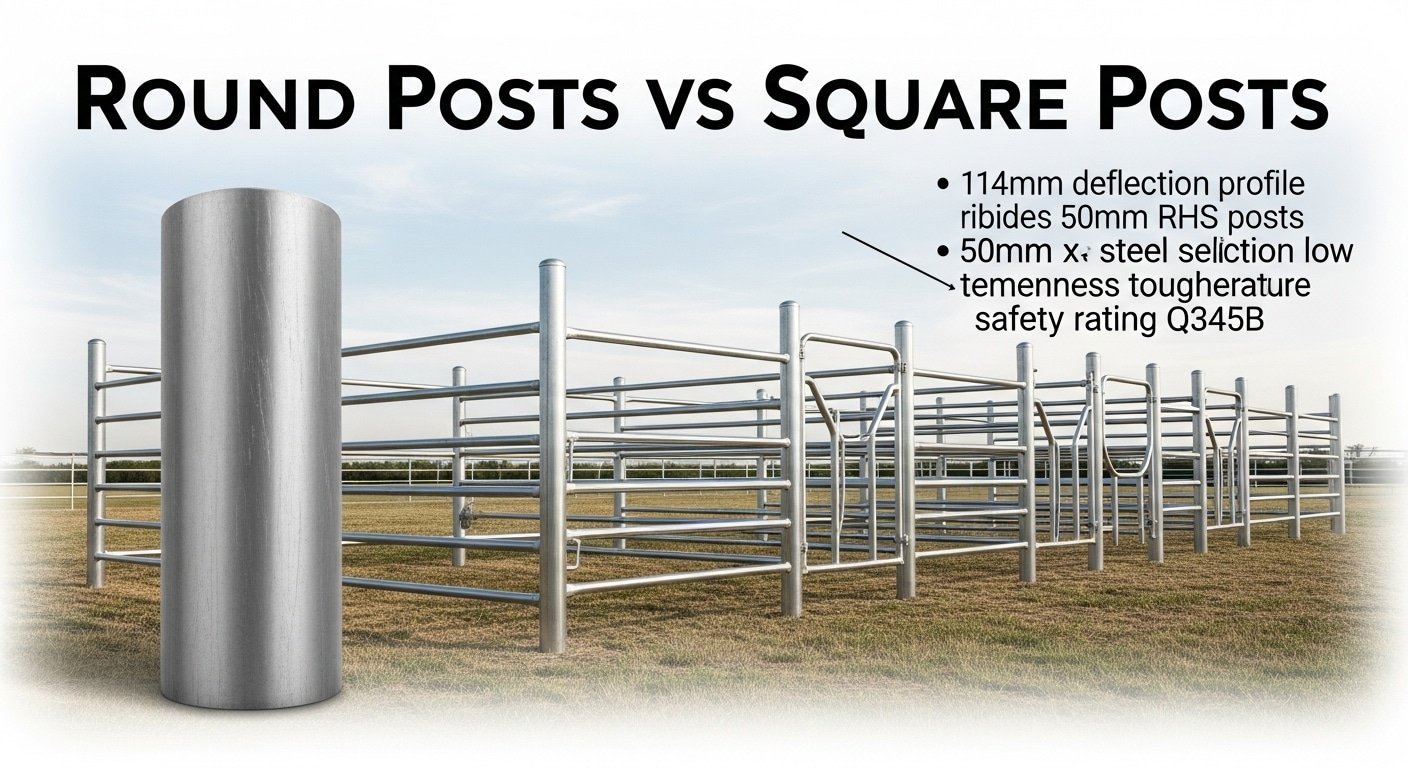
Round vs. Square Posts: Is It Just About Looks?
Round posts deflect impact better, while square posts simplify manufacturing and hardware connections. The choice is a trade-off between impact safety and ease of installation.
How Shape Affects Impact Resistance
The choice is based on fundamental engineering. A round post’s curved surface helps dissipate a direct impact, like a kick, by spreading the fuerza around its circumference. This significantly reduces the chance of a dent or bend at a single point. A square post’s flat surfaces meet force head-on. This concentrates stress along the impact line, providing rigidity but making it more susceptible to localized deformation.
Practical Considerations for Installation
The profile shape directly impacts manufacturing efficiency. Square profiles, like our standard 50mm x 50mm RHS posts, provide flat surfaces that simplify welding and bolting. This ensures partición panels and door hardware fit flush with minimal prep work. Round posts, such as our 114mm option, often require specialized connectors or coping to create secure, seamless joints with other frame components, adding complexity and cost to the fabrication process.
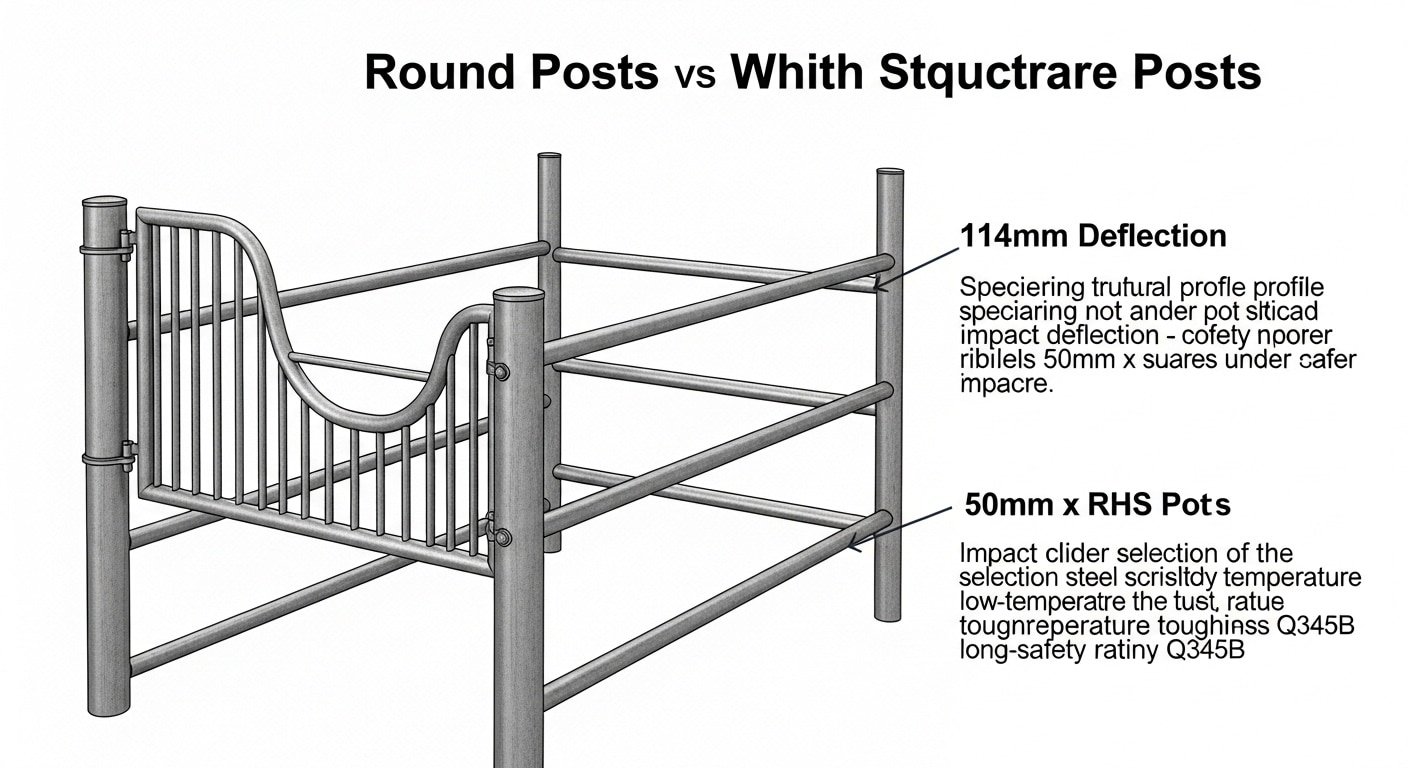
Why Do 114mm Round Posts Deflect Impact Better?
A round post’s curved surface distributes kick force over a wider area, preventing stress concentration. This design encourages glancing blows, reducing direct impact and risk to the horse.
How a Curved Surface Dissipates Force
Round profiles have no corners, which are natural weak points where stress concentrates and failures begin. When a horse kicks a round post, the impact energy redirects tangentially around the circumference instead of absorbing squarely on a flat surface. This engineering principle makes the post far less likely to dent or deform from sudden, high-force impacts.
Material Toughness: The Q345B Steel Advantage
Shape helps deflect force, but the steel itself must resist fracture. Our optional Q345B steel offers superior low-temperature impact toughness, preventing brittle fractures from powerful kicks in climas fríos. The combination of a 114mm round profile and high-strength Q345B steel is what stands behind our “Kick-Proof Guarantee.”
Custom Horse Stables Engineered for Durability.
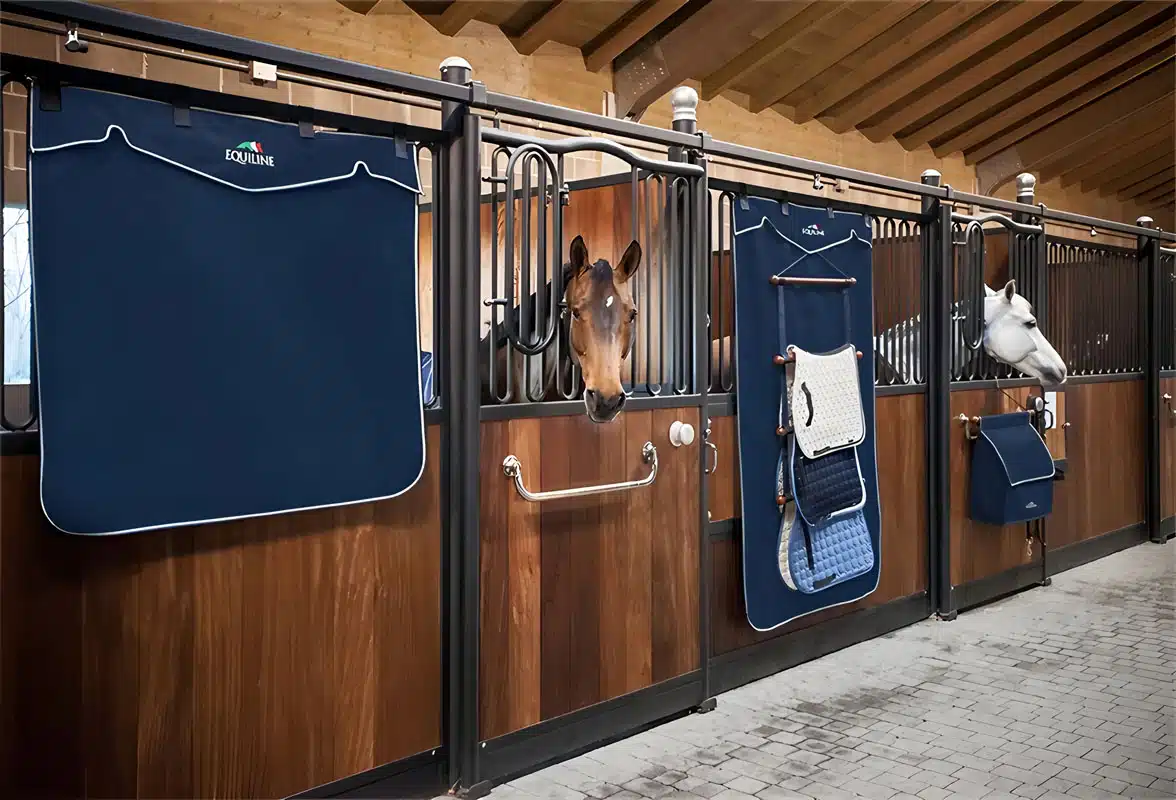

Why Do Beautiful Barns Often Fail Functionally?
Beautiful barns fail when opciones de diseño prioritize aesthetics over function. This leads to poor ventilation, bad drainage, and materials that can’t handle equine use, compromising horse health.
Overlooking Ventilation and Drainage Fundamentals
The most expensive barn can become a health hazard when core operational needs are ignored. Horses produce significant moisture and ammonia, which requires a robust system to manage. When architectural ambition overrides equine science, the structure itself begins to work against the animals it houses.
- Poor Ventilation: Traps moisture and ammonia gas, directly increasing the risk of respiratory disease.
- Inadequate Drainage: Leads to chronic mud, mold growth, and insect infestations that undermine hoof health and overall hygiene.
- Low Ceilings: A common aesthetic choice that severely restricts airflow and creates an injury risk for a rearing horse.
The Solution in Design: Promoting Stack Effect Ventilation
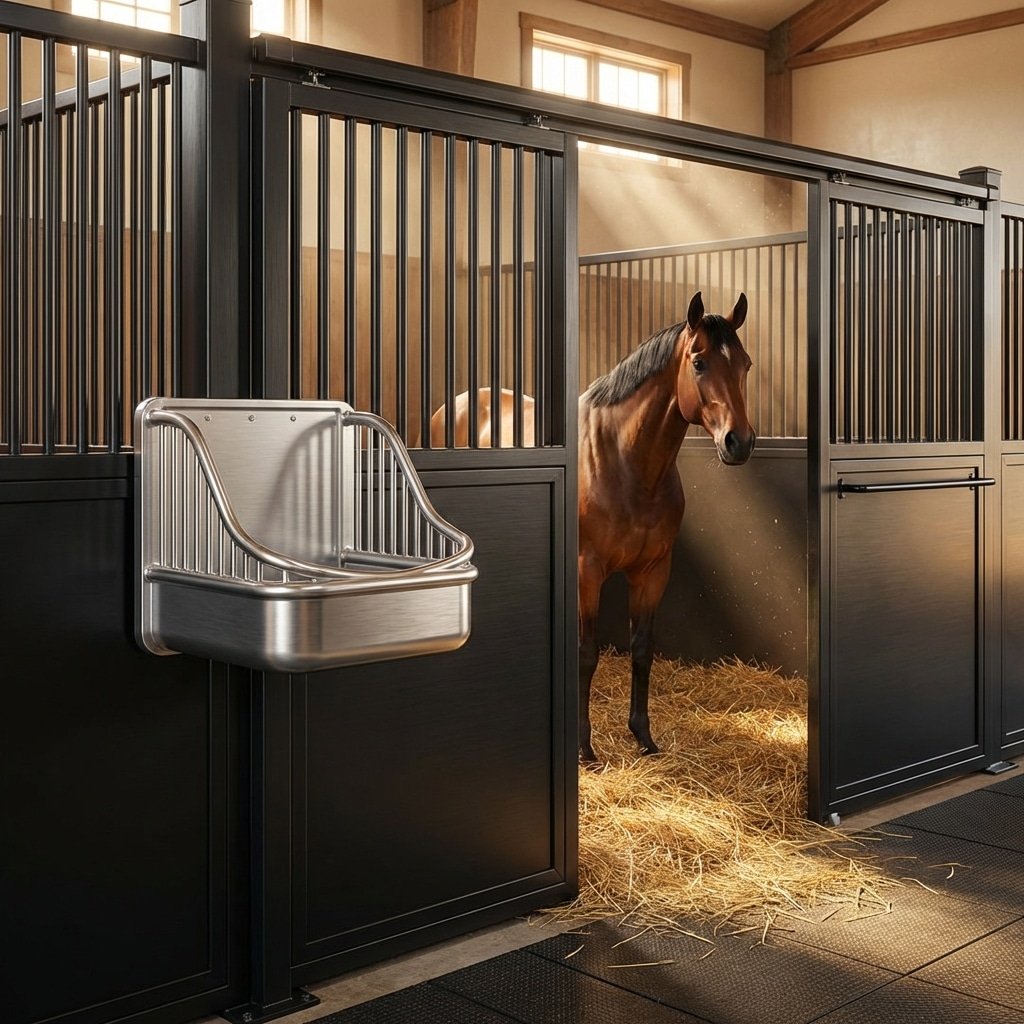
A healthy stable environment isn’t an accident; it’s an engineered outcome. The solution lies in designing systems that work with physics to ensure constant air exchange. Stable fronts with an open-top grill design are not just for looks—they are a critical component of a functional ventilation system.
This design promotes “Stack Effect Ventilation.” Warm, moist, ammonia-laden air naturally rises. The open grill allows it to escape into the aisle, where it continues upward and out through roof vents. This process actively pulls fresh, cool air into the puesto from below, creating a continuous, healthy cycle. This engineered airflow is a key feature that prevents the functional failures seen in purely aesthetic diseños.
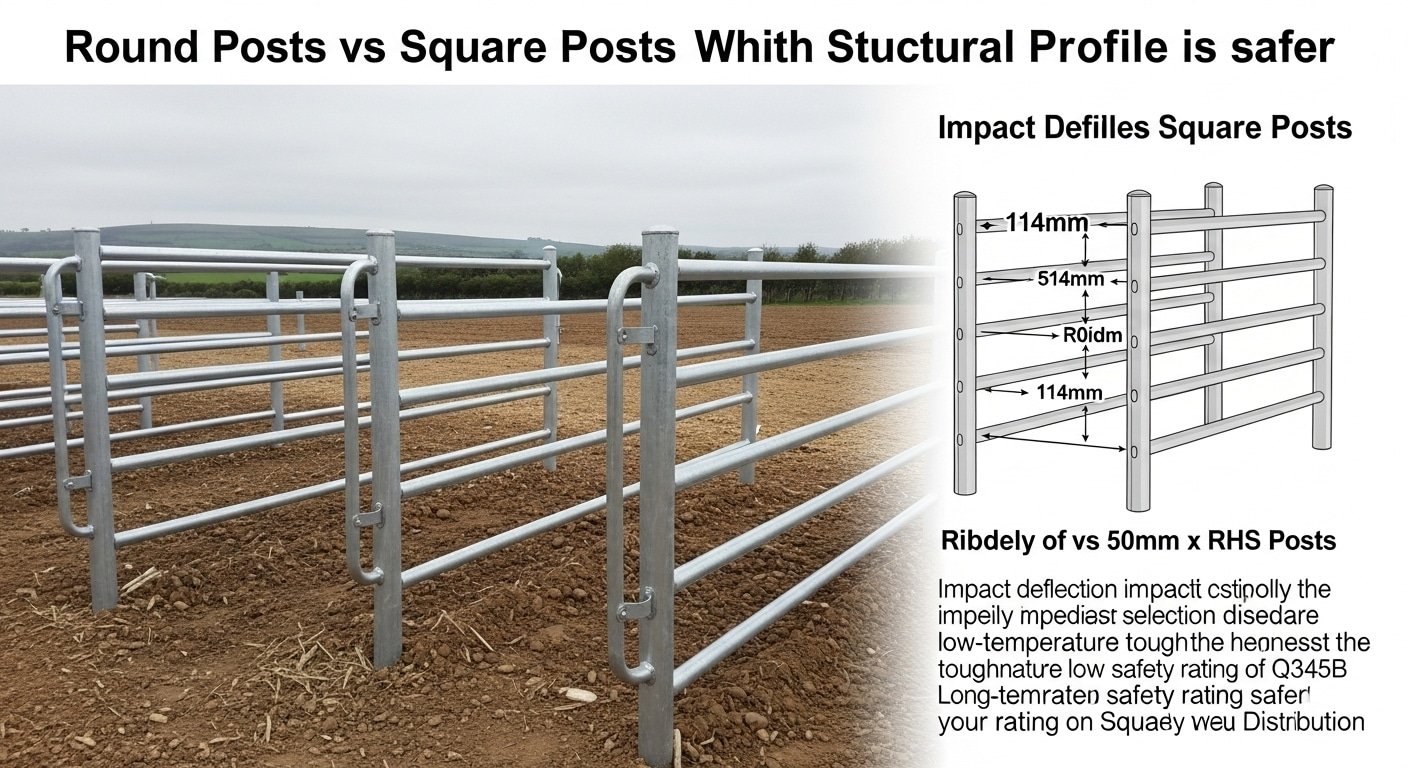
Top 10 Barn Design Mistakes to Avoid in 2026
Top mistakes are poor site planning, bad ventilation, and improper materials. Neglecting drainage, undersizing stalls, and using failing steel treatments lead to premature rust and costly failures.
| Error común | Consequence & Correct Approach |
|---|---|
| 1. Poor Site Planning | Consequence: Chronic mud, water pooling, and foundation damage. Building in a low-lying area without assessing natural drainage is a recipe for disaster. Approach: Build on higher ground. Grade the site so water flows away from the foundation and paddocks. |
| 2. Inadequate Ventilation | Consequence: Ammonia buildup, moisture, mold, and respiratory illness in horses. Sealing a barn too tightly traps harmful air. Approach: Design for the “stack effect.” Use ridge vents, eave openings, and open-grill stable fronts to pull fresh air in low and exhaust stale air high. |
| 3. Undersized Stalls & Aisles | Consequence: Increased risk of injury. Horses can get cast in small stalls, and narrow aisles (<12 ft) prevent safe handling and emergency vehicle access. Approach: Adhere to a 12’x12′ minimum for stalls and a 12 ft absolute minimum for aisles. Anything less compromises safety for a trivial ahorro de costes. |
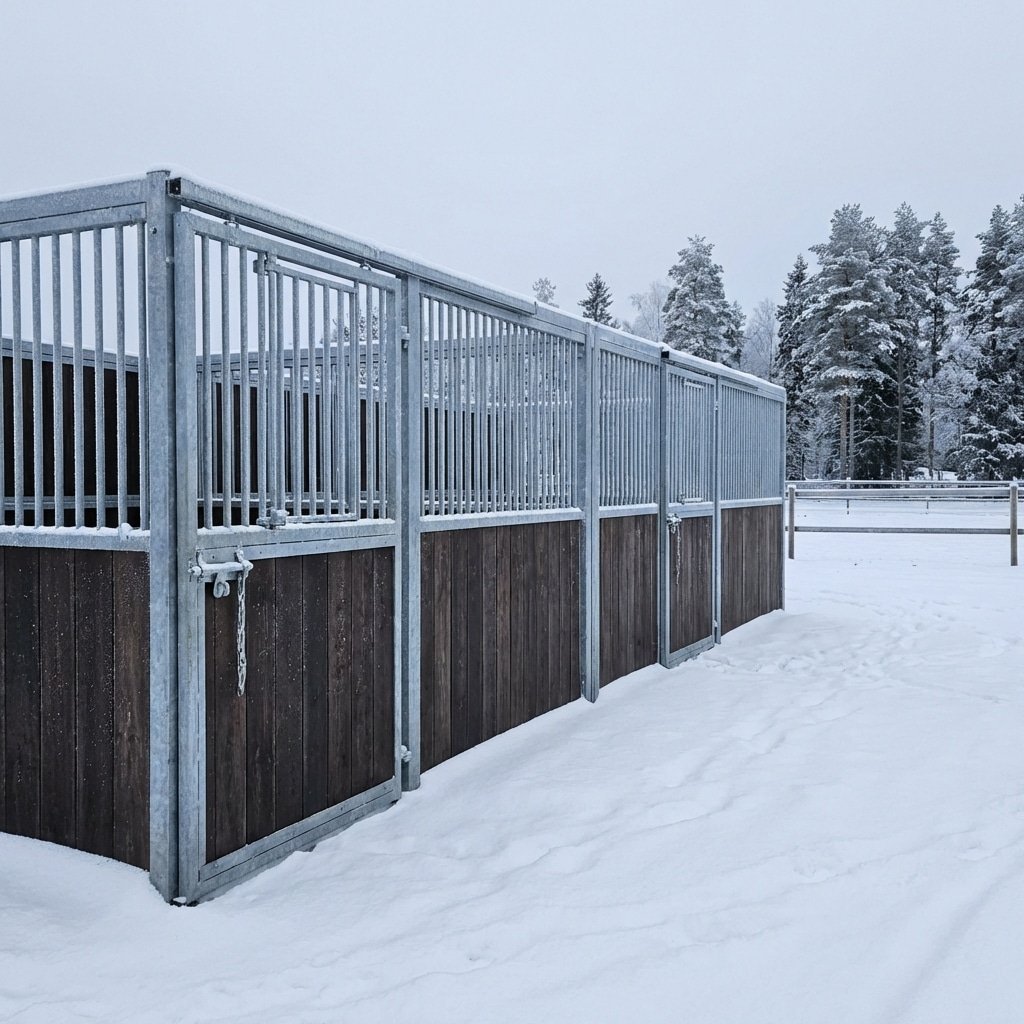
| 4. Improper Material Selection | Consequence: Premature rust, rot, and constant maintenance. Using pre-galvanized tubes (welded first, leaving seams exposed) or untreated wood is a common failure point. Approach: Specify materials fit for purpose. Use steel that is galvanizado en caliente *after* fabrication, ensuring 100% zinc coverage. For cold climates, specify Q345B steel for its low-temperature impact toughness. |
| 5. Ignoring Future Expansion | Consequence: Getting locked into a layout that can’t grow with your needs. This forces costly and disruptive retrofits later. Approach: Design with a modular mindset. Position the barn on the property to allow for adding a new wing or more puestos without demolishing existing structures. |
| 6. Flawed Lighting Strategy | Consequence: Spooky, dark corners stress horses and create unsafe working conditions. Centered aisle lighting creates harsh shadows in stalls. Approach: Layer lighting. Maximize natural light with skylights but supplement with protected, wall-mounted fixtures inside stalls to eliminate shadows. |
| 7. Low Ceilings | Consequence: Head injuries for horses (Poll Evil) and severely restricted airflow, which defeats the ventilation system. Approach: A 12-foot clear height is the standard. For larger horses, 14 feet is safer. This is a non-negotiable safety dimension. |
| 8. Poor Storage Planning | Consequence: Inefficiency and safety hazards. Hay, tack, and tools cluttering aisles obstruct workflow and create fire risks. Approach: Integrate storage. Design dedicated, easily accessible rooms for feed and tack. For hay, a separate, nearby structure is the safest solution to reduce fire risk. |
| 9. Incorrect Barn Orientation | Consequence: Either a wind tunnel in winter or a stagnant air box in summer. Facing doors directly into prevailing winds is a common error. Approach: Position the barn’s length perpendicular to prevailing winds. This allows for cross-ventilation through doors and windows without creating a direct draft on the horses. |
| 10. Neglecting Aisle Drains | Consequence: Wet, slippery, and unhygienic aisle floors. Hosing down the aisle becomes a major chore that creates a bigger mess. Approach: Install strategically placed drains. A gently sloped concrete aisle with channel drains running to the exterior keeps the central workspace dry, safe, and easy to clean. |
Reflexiones finales
Choosing a square post saves on initial cost, but the 114mm round post with Q345B steel is the standard for eliminating safety liabilities. Specifying materials engineered to deflect impact protects your reputation from costly failures. This commitment to structural integrity is what builds long-term dealer trust.
Don’t guess on quality—verify our engineering. We recommend starting with a trial order to test our ISO 1461 galvanization and weld finish firsthand. Contact our team to get the technical drawings and plan your next container load.
Preguntas frecuentes
What materials do you use for your horse stables?
Nuestro stable frames are constructed from high-strength Q235B structural steel, with an optional upgrade to Q345B for superior low-temperature toughness in cold climates. For infill, we offer two premium choices: UV-stabilized HDPE para un mantenimiento cero and impact absorption, or high-density strand-woven bamboo, which is extremely durable and moisture-resistant.
How are your stables protected against rust?
We use a ‘hot-dip after fabrication’ process. The entire steel panel is fully welded first and then submerged in molten zinc, conforming to ISO 1461 standards. This method provides a much thicker and more complete coating, over 70 microns, than using pre-galvanized tubing. This ensures long-term rust prevention.
Are the stables delivered assembled or as a kit?
Nuestro stables are shipped in an efficient flat-pack system on steel pallets. This design significantly reduces envío volume, allowing you to fit 30-45 sets in a single 40HQ container, which protects your profit margins on freight. Each system includes all pre-cut infill planks and a complete 304 stainless steel kit de herramientas for installation.
¿Qué incluye un juego estable estándar?
A complete set includes one stable front panel with a door, one side partition panel, all necessary pre-cut HDPE or Bamboo infill planks, and a full hardware kit with 304 stainless steel bolts and connectors. We also include a can of cold galvanizing spray for any touch-ups needed after installation.
What makes your galvanization process superior for rust protection?
We perform galvanización en caliente *after* all welding and fabrication is complete. This ISO 1461 process coats the entire steel structure, including welds, in a zinc layer over 70 microns thick. It prevents rust at critical connection points, a common failure point in stables made from pre-galvanized tubes.
¿Cuáles son las opciones de relleno para las paredes del establo?
We offer two main options. The first is 28-32mm UV-stabilized HDPE for zero maintenance and high impact absorption. The second is 28-38mm high-density strand woven bamboo, which is three times harder than oak and naturally resistant to mold and rot.
How does your flat-pack system benefit distributors?
Our steel pallet flat-pack system lets distributors load 30-45 stable sets into a single 40HQ container. This is more than double the capacity of traditionally welded stables, which significantly cuts sea freight costs and protects our distributors’ profit margins.
Do you offer steel options for extremely cold climates?
Yes. For regions with harsh winters, we recommend upgrading to Q345B steel. This low-alloy, high-strength steel has superior low-temperature toughness, preventing the frame from becoming brittle and fracturing from horse kicks in freezing conditions.
Can I use a 10ft aisle to save money?
We strongly recommend against it. While a 10-foot aisle saves floor space, it is a significant safety hazard in a working horse barn. A 12-foot aisle is the professional minimum required for a horse to turn around safely without risk of injury or getting cast. Narrow aisles also restrict the use of machinery (like tractors or spreaders) and create dangerous bottlenecks when handling horses. Saving square footage here often results in operational inefficiency and increased accident liability.
Where should the feed room be located?
The feed room should be easily accessible but away from the main barn environment. Position it near entry points for efficient feed delivery and daily tasks. A practical design includes two doors—one opening into the barn and another on an exterior wall for direct delivery access. Placing the room near barn ends creates direct paths that minimize walking distance during feeding. This placement directly impacts workflow, so it should be integrated into the initial diseño de graneros.
Do I need a drain in the aisle?
It depends on your specific use. According to OSHA, if wet processes are used, drainage must be maintained. If your aisle will see water, cleaning runoff, or other liquids, you need proper drainage. Local códigos de construcción may also require it. Always consult your local inspector to confirm what is mandated for your application. Even if it’s not required by code, installing drainage prevents water damage, simplifies cleaning, and maintains safer working conditions by eliminating standing water.
How high should the ceiling be?
The minimum ceiling height for boxes para caballos is 8 feet, but 10-12 feet is the professional standard. For larger horses like warmbloods, 14 feet is recommended for extra safety. Nothing should protrude below the minimum height, including lights and trusses. Stall partition walls should be at least 7.5 feet high to stop horses from getting a leg over the wall. A rearing horse can strike its head on ceilings lower than 12 feet, and low ceilings also inhibit air circulation. Protect lighting fixtures with wire guards and mount them tight to the ceiling.
Should stall doors face the prevailing wind?
Ideally, stall doors face the prevailing wind to promote natural ventilation in warmer months, but you have to balance this with winter wind protection. Facing prevailing winds allows for cross-ventilation, which keeps air fresh. In colder months, the priority is minimizing unwanted wind. Good barn design uses adjustable systems, like Dutch doors or curtains, to adapt to conditions. The key is balancing summer cooling needs with winter draft protection.
Is natural light enough?
Natural light is essential for horse health, providing UV for vitamin D production and helping regulate their natural cycles. It also cuts electricity costs. But it’s rarely enough on its own. You need supplemental artificial lighting for safety, especially since horses adjust poorly from bright sun to dim interiors. Shadows can also make cleaning and observation difficult. The best approach combines windows, skylights, and well-placed electric lights to cover all conditions.

 Spanish
  English
  French
  Arabic
  German
0 comentarios