


Every arena fence is a wind machine. The same rail-and-post line that reads as a boundary on a still morning becomes, in a gale, a surface the wind pushes on with everything it has — and all of that push ends up at the posts. Arena fencing wind resistance is therefore not a product feature you can buy off a shelf; it is the outcome of three linked decisions: how much surface the fence presents, how many posts share the load, and how each post transfers that load into the ground. Get one decision wrong on an exposed site and the fence tells you about it, usually in the worst week of the year.
This guide is for buyers specifying arena fencing on exposed sites — coastal, ridge-top, or open plains where regional wind design is a fact of life. DB HorseStable supplies economical galvanized horse fence panels and UV-resistant PVC arena fencing to nine export markets, from Australian and Spanish sites where 40°C UV exposure leads the specification, to British and New Zealand sites where wind and rain compete for it. The wind-exposed conversation below is the one that precedes most of those orders.
Key takeaways
- Wind load is area × pressure: the fence’s presented surface (solid rails, mesh, or PVC panels) times the site’s design wind pressure — every square meter of fence is a sail that delivers force to the posts.
- Post spacing is a load-sharing decision: wider spacing means fewer posts but more fence area and more load per post; tighter spacing spreads the same wind across more foundations.
- Open profiles shed wind: rails and mesh let some pressure through; solid PVC arena panels catch all of it — solid fencing on an exposed site must be engineered for it, not assumed.
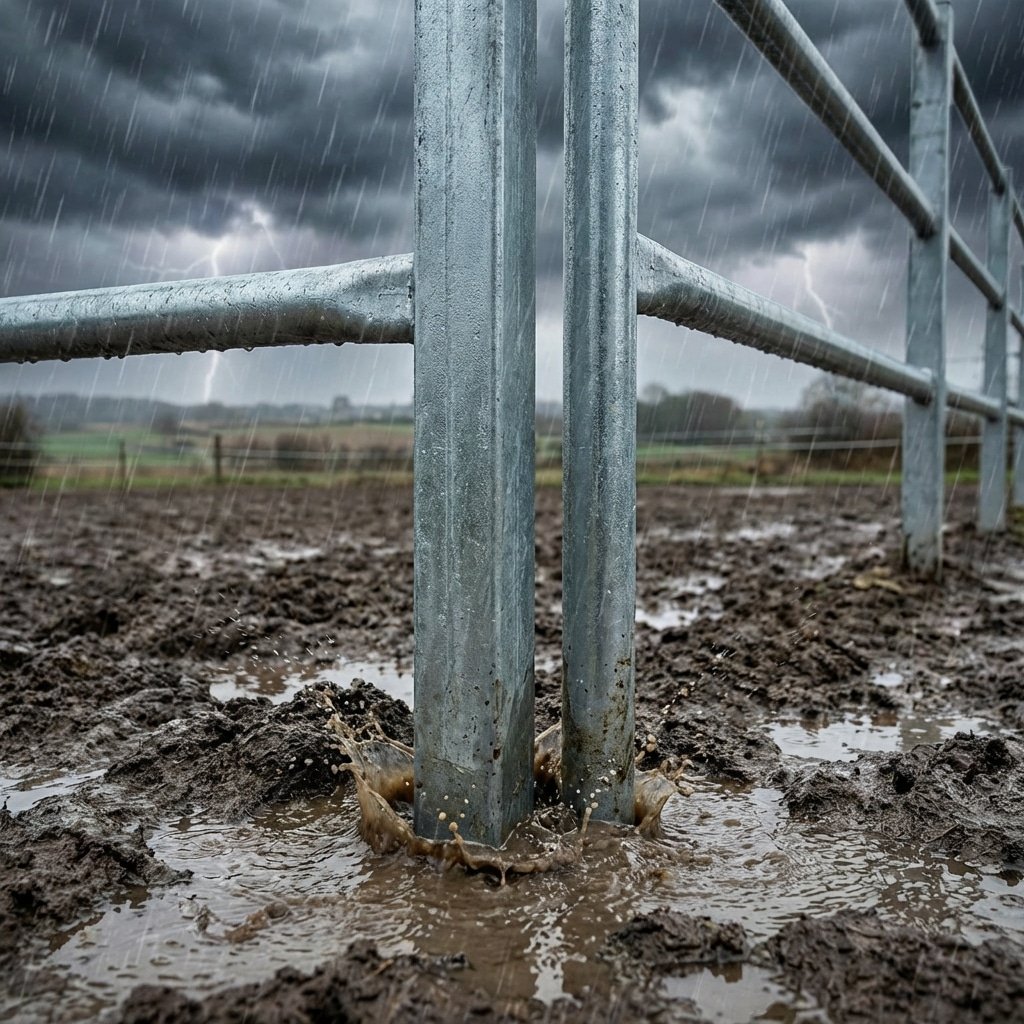
- Steel specification is the corrosion half of the story: hot-dip galvanized fencing carries a 20-year rust-resistance service life, which matters most exactly where wind and rain arrive together.
- The design wind pressure is a local number: it comes from your regional wind code and site exposure — not from the fence catalog — and the structural check belongs to an engineer working from your site data.
- Order logistics support the schedule: fence panels start at a 50-panel minimum order with four-to-six-week global delivery.
How Wind Load Actually Reaches a Fence Post
Start with the physics, because it explains every specification decision that follows. Wind exerts pressure, and pressure over an area produces force. The force a fence must resist equals the design wind pressure multiplied by the area of fence the wind sees: a taller fence catches more area, a solid fence catches all of it, and an open rail or mesh profile lets part of the flow through. Whatever force the fence collects travels through the rails and connections into the posts, and from each post into the ground.
That last step is where exposed-site fences fail. The post is a lever: force applied at the height of the fence line becomes a bending moment at ground level, and the ground resists through the embedment of the post (or its base plate and footing). A post set shallow in loose soil is a lever waiting for a storm. A post set to depth in competent ground, or on a properly sized concrete footing, is a foundation. Nothing about the fence above ground changes that arithmetic — which is why wind-resistance conversations always end underground.
The Post Spacing Trade-Off
Post spacing looks like a cost decision — fewer posts, lower bill — but mechanically it is a load-allocation decision. Think of the fence line as a team carrying a load that scales with its own length. Wider spacing means each post carries the wind load collected from a longer stretch of fence, plus longer unsupported rail spans. Tighter spacing spreads the same total load across more posts and more foundations, shortens the spans, and gives the line redundancy: one weak post matters less when its neighbors are close enough to share.
The trade runs both ways. Tighter spacing costs more in posts and footings and gives the arena more vertical visual rhythm — a real consideration on camera-facing competition arenas. Wider spacing reads cleaner and budgets lighter, and on sheltered sites it is often the right call. The error is exporting the sheltered-site spacing to the exposed site unchanged: the spacing that worked in the valley fails on the ridge, not because the product changed, but because the load per post did.
Post spacing is set by the site’s wind exposure and the fence’s presented area — never copied from a sheltered reference job.
Fence Profiles: Open vs Solid in Wind
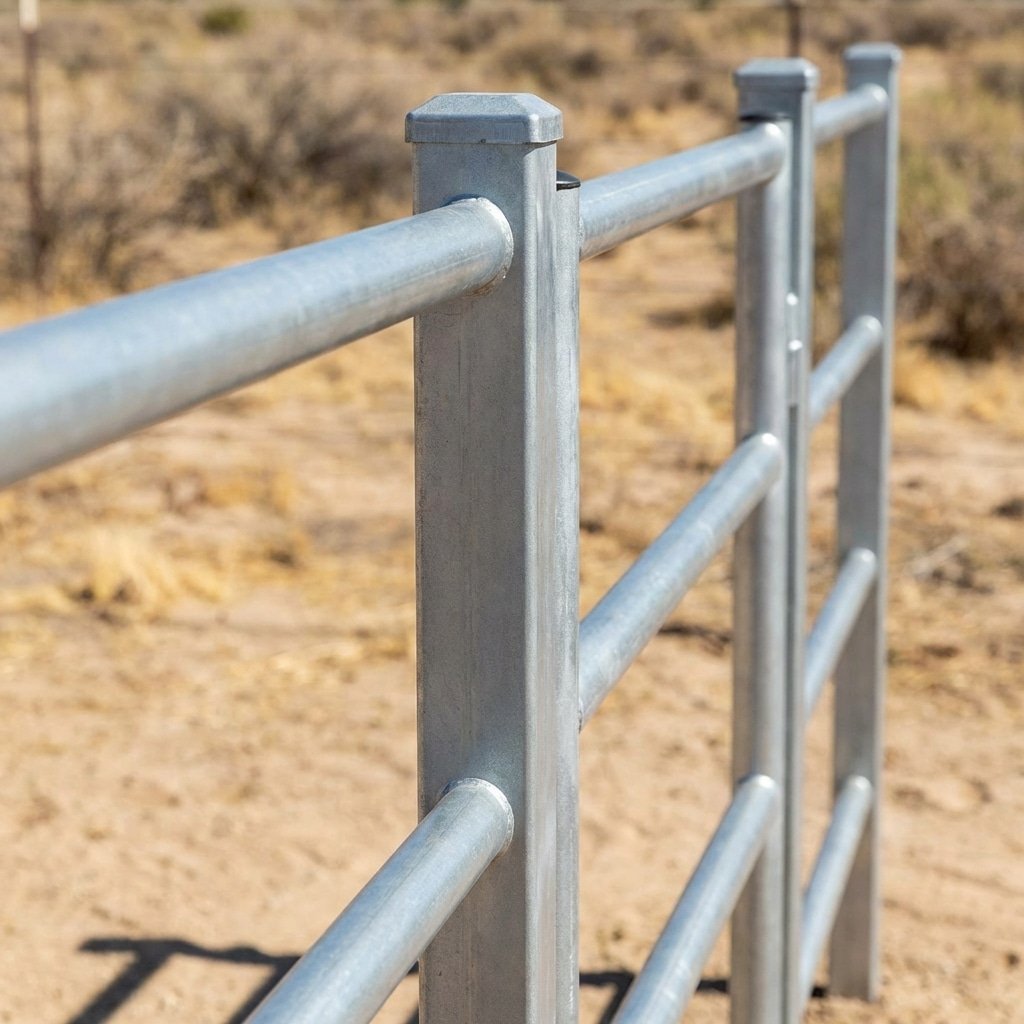
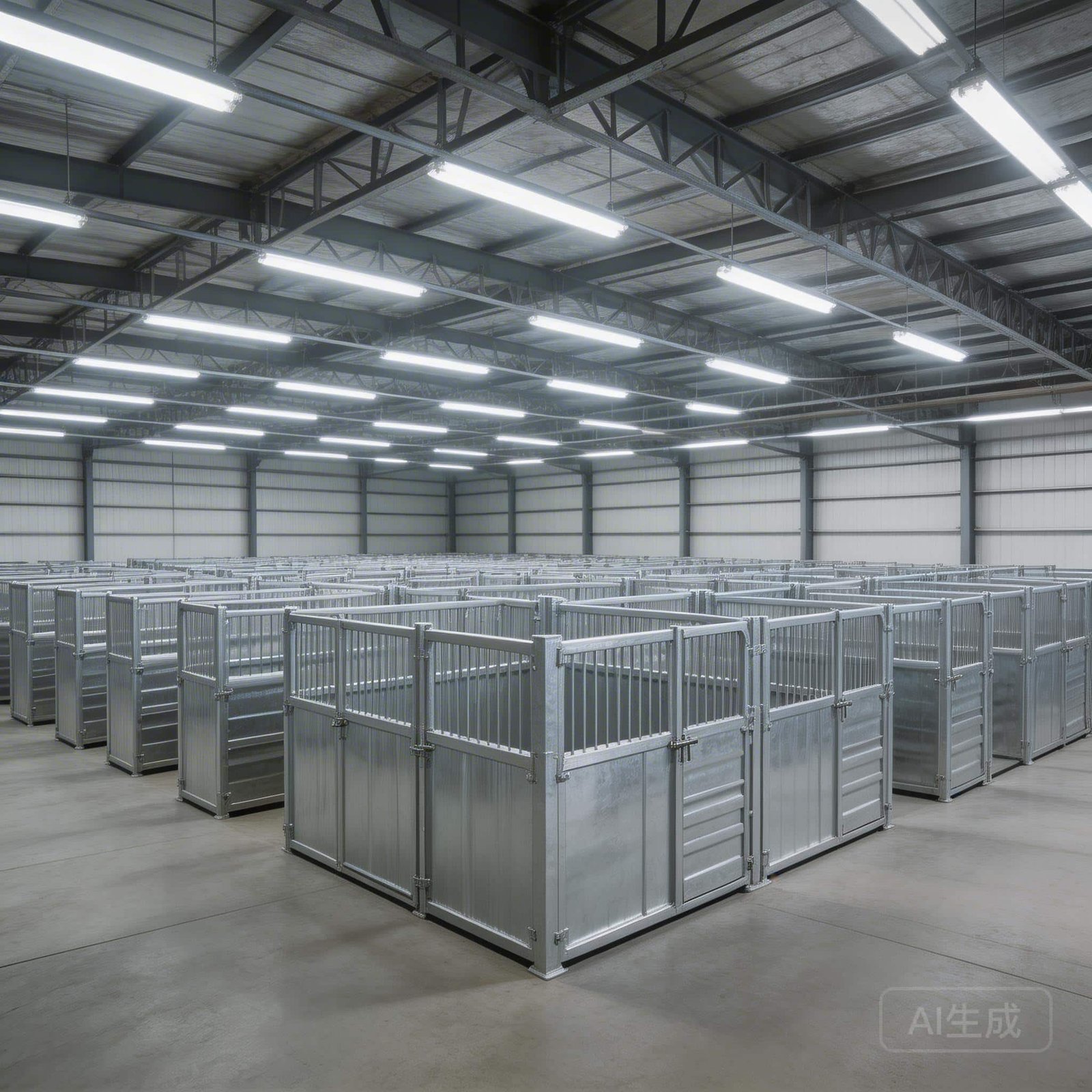
The profile decides how much of the wind the fence actually meets. An open profile — round or oval rails with air gaps between them, or a welded mesh — lets part of the flow pass through, which lowers the force on every post downstream of the decision. The economical galvanized horse fence panel, built on rails and mesh, lives at this end of the spectrum: it contains horses, reads visually as a fence line, and presents a modest fraction of solid area to the wind.
The solid profile is the PVC arena panel: continuous surface, no through-flow, maximum containment and maximum visual impact — and, on the wind ledger, maximum load. None of that makes PVC the wrong choice; on riding arenas it is often exactly right, because a solid boundary concentrates the horse’s attention on the rider and blocks outside distraction. It makes PVC a choice that must be engineered for its site: on an exposed arena, solid panels mean closer post spacing, deeper or larger footings, and a wind conversation with the supplier before the order. Our guide to UV-resistant PVC fencing for hot climates covers the material side of the same product decision.
Running the Wind Load Calculation
The calculation itself is a structured conversation, and running it in order prevents the usual mistakes. It has four inputs and one output:
- Site exposure: open plains, ridge, coastal frontage, or sheltered — the terrain category that your regional wind code assigns to the location.
- Design wind speed or pressure: the local code value for the site’s exposure and return period — a local number, obtained from the code or the engineer, never from a fence catalog.
- Fence geometry: height and total length of the line, and the presented area per panel — solid or open profile.
- Post and foundation specification: post section, embedment depth or footing size, and the spacing being evaluated.
The output is a check: does the load collected by each post, applied as a bending moment at ground level, stay within what the post-and-foundation combination can resist for the site’s soil? On the open-profile galvanized line, the collected force is often modest enough that standard post details pass with margin. On solid PVC paneling on an exposed site, the same calculation frequently forces the design toward tighter spacing or bigger footings — which is the calculation doing its job. Two boundaries on this section: the pressure values are local-code territory, and the structural sign-off is an engineer’s stamp, not a supplier’s opinion. A manufacturer who supplies the geometry and the panel specs is a good partner; a manufacturer who waves away the wind question is telling you what the after-sales season will look like.
Materials That Survive Wind Plus Weather
Wind rarely arrives alone. On the sites that need the wind calculation most — coastal and open country — wind comes packaged with salt spray, driving rain and freeze-thaw cycles, which is why the material specification is the second half of wind resistance. A fence that stands through the gale but rusts at the post bases has only half-survived it. Hot-dip galvanized steel is the baseline for exactly this reason: the zinc layer protects the steel at the welds and cut ends where paint fails first, and it carries a 20-year rust-resistance service life. For buyers who want to read the fine print on steel specifications, our steel gauge guide covers what the thickness numbers mean and where the quiet downgrades hide.
For PVC arena fencing, the weather half of the specification is UV resistance — the difference between panels that hold their color and impact strength for a 15-year service life and panels that chalk and embrittle in a fraction of that. The two halves of the specification travel together: on an exposed arena, order the panel for its wind engineering and the material for its weather, or you will meet each failure separately.
Preguntas frecuentes
Does tighter post spacing always make a fence more wind-resistant?
It spreads the wind load across more posts and foundations, which usually does — but post depth and footing size matter as much. A dense line of shallow posts still fails at ground level.
Are solid PVC arena panels a bad idea on windy sites?
No — they catch the full wind load, so they need engineering for it: closer spacing or larger footings on exposed sites. Specified with the wind calculation done, solid PVC performs well and concentrates the horse’s attention on the work.
Where do I get the design wind pressure for my site?
From your regional wind code or a local structural engineer — it depends on location, terrain exposure and return period. It is a local number; no fence supplier can supply it for you.
Why galvanized steel for wind-exposed fencing?
Because wind sites are also weather sites. Hot-dip galvanizing protects the steel where paint fails first — welds and cut ends — and carries a 20-year rust-resistance service life through salt spray, driving rain and freeze-thaw.
What is the minimum order and lead time for fence panels?
Fence panel orders start at 50 panels, with four-to-six-week global delivery — schedule the post setting and footings to the same timeline so the crew is not waiting on steel.
Conclusión
Wind resistance is not a feature of arena fencing — it is the arithmetic of presented area, load sharing and post foundations, checked against a local design pressure and signed off where engineering sign-offs belong. Open galvanized profiles and solid PVC panels both serve exposed arenas well when the wind conversation happens before the order and the material specification is built for the weather that arrives with the wind.
Bring your site’s exposure, fence height and layout to the specification table — review the horse fence panel range and request the panel geometry you need for the wind calculation. The math costs an afternoon; skipping it costs the fence.

 Spanish
  English
  French
  Arabic
  German
0 comentarios