
Galvanized horse panels fail from the outside in. The steel tube is not the problem — the zinc layer on it is what stands between your paddock fence and the rust that ends its life, and every paddock asks a different amount of that zinc. A panel line that lasts twenty years on a dry inland property can start showing rust bloom at the panel joints in a fraction of that time on a coastal block, a wet-climate yard, or a paddock where the ground line stays damp through winter. Corrosion zones are how buyers match the coating to the property instead of paying for rust they never needed to accept.
This guide is for farm owners, equestrian centers and dealers specifying galvanized horse fence panels from the DB HorseStable line — economy galvanized panels for paddocks and yards, hot-dip galvanized steel with a 20-year rust protection specification, exported across nine markets including Australia, New Zealand, the United States and Europe. The regional cases below come straight from that business: 40°C UV exposure in Australia and Spain, wet high-drainage climates in the United Kingdom and New Zealand, and -10°C frost loading in Poland.
Key Takeaways
- The coating is the product: hot-dip galvanized steel carries a 20-year rust protection specification in this line, and the corrosion zone your property sits in decides how hard that 20 years gets tested.
- Coastal salt air is the aggressive zone. Properties within salt-spray reach face the fastest zinc consumption, so panels there earn the closest inspection and the strictest coating specification.
- The ground line is the quiet killer. Moisture, manure and soil contact at the panel base attack the coating where nobody looks — specify the base condition and check it seasonally.
- Joints rust first. Galvanizing builds a continuous zinc layer, but tight overlapping joints where zinc cannot fully reach are the natural thin points of any panel — inspect them at delivery and monitor them through the panel’s life.
- Match the climate cases: 40°C UV markets (Australia, Spain), wet high-drainage markets (United Kingdom, New Zealand) and -10°C frost markets (Poland) each stress panels differently.
- Order the system, not the panel: fence panel MOQ in this line is 50 panels, with tiered volume discounts of 5-15% — enough scale to specify the right coating class for every zone on the property.
How Zinc Protects a Paddock Panel — and How It Gets Spent
Hot-dip galvanizing protects steel two ways at once. The zinc layer physically blocks moisture and air from the steel surface, and where the layer does get scratched, the surrounding zinc sacrifices itself electrochemically to protect the exposed steel. That double action is why a galvanized panel line carries a 20-year rust protection specification, and why small scratches on a healthy coating stay protected by the surrounding zinc instead of blooming into rust spots.
But zinc is a consumable. Chlorides, constant moisture and soil acids spend the layer, and once it is spent at a point, the steel under that point oxidizes like any bare steel. The consumption rate is not random — it follows the environment the panel lives in. That is the entire basis of corrosion zoning: the same panel specification serves a dry inland paddock and a coastal one very differently, and the buyer’s job is to know which property they are fencing.

Corrosion Zones: Reading Your Property Before You Order
Zoning a property for fence specification is simpler than it sounds, because corrosion follows three gradients. The first is salt: distance from the sea is the single strongest predictor of zinc consumption, and properties within salt-spray reach of the coast — the exact reach varies with prevailing wind and shoreline — live in the aggressive zone. The second is moisture: ground that stays wet, drains poorly or holds winter damp attacks the panel base continuously. The third is abrasion: sandy soils, tracked gates and livestock pressure strip coatings mechanically where the chemical attack is already fastest.
Map the property into zones on that basis. The paddock on the ridge with free-draining soil is a mild zone; the low paddock that ponds in winter is a moderate-to-aggressive zone; the coastal day yard facing the salt wind is the aggressive zone that decides whether the coating specification on the order was serious. One order can serve several zones — what changes is where the most protected panels go and how each zone gets inspected afterward.
Climate Cases from the Export Map
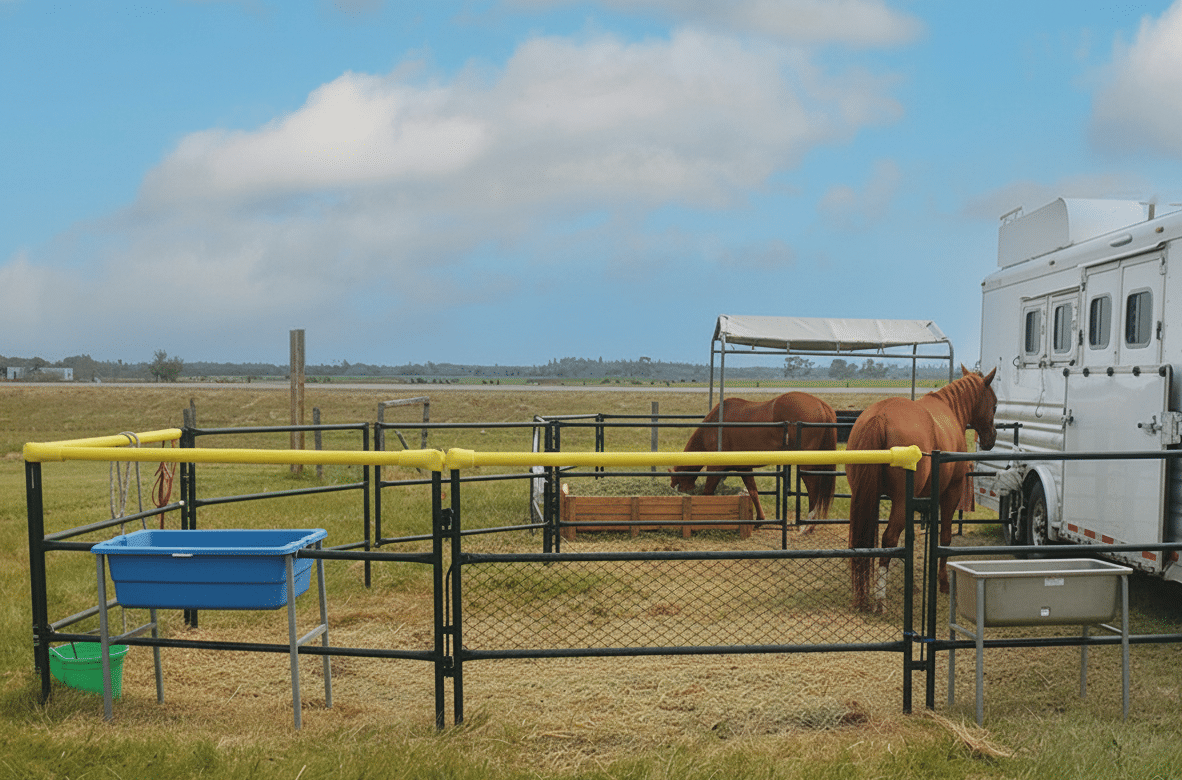
The nine markets this line serves read like a corrosion-zone catalog. Australia and Spain take the UV case: 40°C heat, intense sun and, on coasts, salt exposure — the climate brief for those markets runs to UV-resistant materials and heat-tolerant structures, and the steel side of that brief is a coating rated for the same regional duty. The United Kingdom and New Zealand take the wet case: high-drainage design and BHS-compliant planning exist there precisely because water is the working enemy, and wet plus salt on coastal UK and NZ properties is the toughest consumption combination the line faces.
Poland takes the frost case: -10°C winters mean freeze-thaw cycling that works coatings at the ground line, plus road salt where panels run along laneways. The United States, Germany, France and Denmark mix all three depending on region — which is why the specification conversation should always start with the property, not the country. Our guide to UV-resistant PVC horse fencing in 40°C climates covers the plastic side of the same map; galvanized steel panels and PVC rails are the two fence lines this manufacturer builds for exactly these regional cases.
Inspecting Galvanized Panels at Delivery and Beyond
A galvanized panel tells the truth at delivery if you know where to look. The coating should show the even matte-gray of spangled zinc across frames and rails, with heavier, rougher build on exposed welds and drainage points — that unevenness on open surfaces is the process working correctly, not a defect. The thin points hide elsewhere: in tight overlapping joints and corners where molten zinc cannot fully reach, delivery is the moment to catch a coating that missed a joint before the panel goes into service. Transport damage is the other delivery check — a gouged rail or scraped tube that has cut through the zinc is a warranty conversation on the loading dock, not a rust spot waiting to be discovered next year.
After installation, inspection is seasonal and zone-weighted. Walk the aggressive zones after each winter: check the ground line for coating loss where soil and manure contact the tube, look for white oxidation bloom that signals zinc working hard, and touch up any deep scratches with zinc-rich coating before the steel underneath gets a foothold. Panels that connect on pins and clamps add one more check — the connection hardware takes the wear and the corrosion first, and our guide to horse fence panel connection systems covers keeping those joints sound so the panels keep transferring load the way the run was designed to.
Specifying Coating for the Zone, Not the Brochure
- Zone the property before the order. Mark the coastal, wet and abrasive paddocks; the coating conversation with your supplier should name each zone, not just a panel count.
- State the market case. Buyers in 40°C UV markets, wet high-drainage markets and -10°C frost markets have different primary enemies — say which one yours is.
- Ask how the hot-dip specification is verified. The 20-year rust protection rests on the galvanizing process; ask what coating verification the supplier offers and what it covers.
- Protect the ground line in the plan. Set panels on free-draining ground, keep the base clear of soil and manure build-up, and note the base condition in your seasonal inspection.
- Inspect at delivery, maintain seasonally. Overlapping joints, missed-coating spots and transport gouges at the dock; ground line and hardware through the years — the pattern is the same in every zone, only the frequency changes.
- Use the order scale deliberately. Fence panels run from an MOQ of 50 with 5-15% tiered volume discounts, so a multi-zone property can specify its most protected panels for the aggressive zones inside one order.
Preguntas frecuentes
How long do galvanized horse panels last outdoors?
The hot-dip galvanized steel in this line carries a 20-year rust protection specification. How close a paddock gets to that figure depends on its corrosion zone — coastal salt, ground-line moisture and abrasion all spend the zinc faster.
Do galvanized fence panels rust at the beach?
Salt spray is the most aggressive zone for zinc coatings. Coastal properties should expect faster coating consumption than inland sites and should monitor panels seasonally, especially at the overlapping joints and the ground line.
Why do fence panels rust at the welds first?
When people say a panel rusts at the welds, the points that go first are the tight overlapping joints, not the exposed weld beads. Where tubes lap and molten zinc cannot fully reach, the coating is thinnest and the first rust appears, while open weld beads usually carry a heavier coating. Check joints and exposed weld areas at delivery and again through the panel’s working life.
Can scratched galvanized panels be repaired?
Small scratches in the zinc are protected by the surrounding coating and can be touched up with zinc-rich coating; deeper gouges that expose bare steel should be repaired promptly so the sacrifice mechanism keeps working on your side.
What is the MOQ for galvanized horse fence panels?
Fence panels in this line start from an MOQ of 50 panels, with tiered volume discounts of 5-15% on larger orders — enough scale for a multi-zone property to specify deliberately within one order.
Conclusión
A galvanized paddock panel is a 20-year zinc budget, and the corrosion zone decides the spending rate. Zone the property first — salt, moisture, abrasion — then match the specification, the placement and the inspection routine to each zone rather than treating the farm as one flat brochure case.
Start the specification with the horse fence panel line, name your zones in the order conversation, and read our guide to arena fencing on wind-exposed sites if your aggressive zone comes with weather as well as salt — the same planning logic covers both.

 Spanish
 English
 French
 Arabic
 German
0 comentarios