


Every training facility that hosts competitors eventually faces the same equipment question: what does “FEI standard” actually require of a jump, and is the equipment in the catalog built to it? The label gets attached loosely — to any painted rail on two uprights — but behind it sits a real body of rules. The Fédération Equestre Internationale (FEI), the governing body of international equestrian sport, publishes Jumping Rules that govern how obstacles are built, marked, and measured at its competitions, and those rules have shaped what serious training venues expect. This guide covers the materials and course-compliance principles behind FEI standard horse jumps, so you can evaluate what you buy against what the rulebook demands.
Two boundaries up front. First, FEI rules govern FEI competitions — national federations apply their own rulebooks, usually derived from similar principles, so confirm the rules in force for your level. Second, exact figures such as cup heights per class change with rule editions, so this guide gives the structural logic and points you to the current rules for the numbers that matter on show day.
Key Takeaways
- “FEI standard” means built to FEI Jumping Rules principles: correct obstacle geometry, clean knockdown behavior, and marking conventions — not a fixed set of dimensions.
- Safety is the core requirement: rails rest loosely in cups so a horse that hits the obstacle dislodges it rather than meeting rigid resistance; nothing sharp or protruding is acceptable.
- Flags set direction: red flag on the right, white on the left from the direction of approach, per long-standing FEI convention.
- Heights and spreads differ by class and level: check the current FEI Jumping Rules rather than a remembered number.
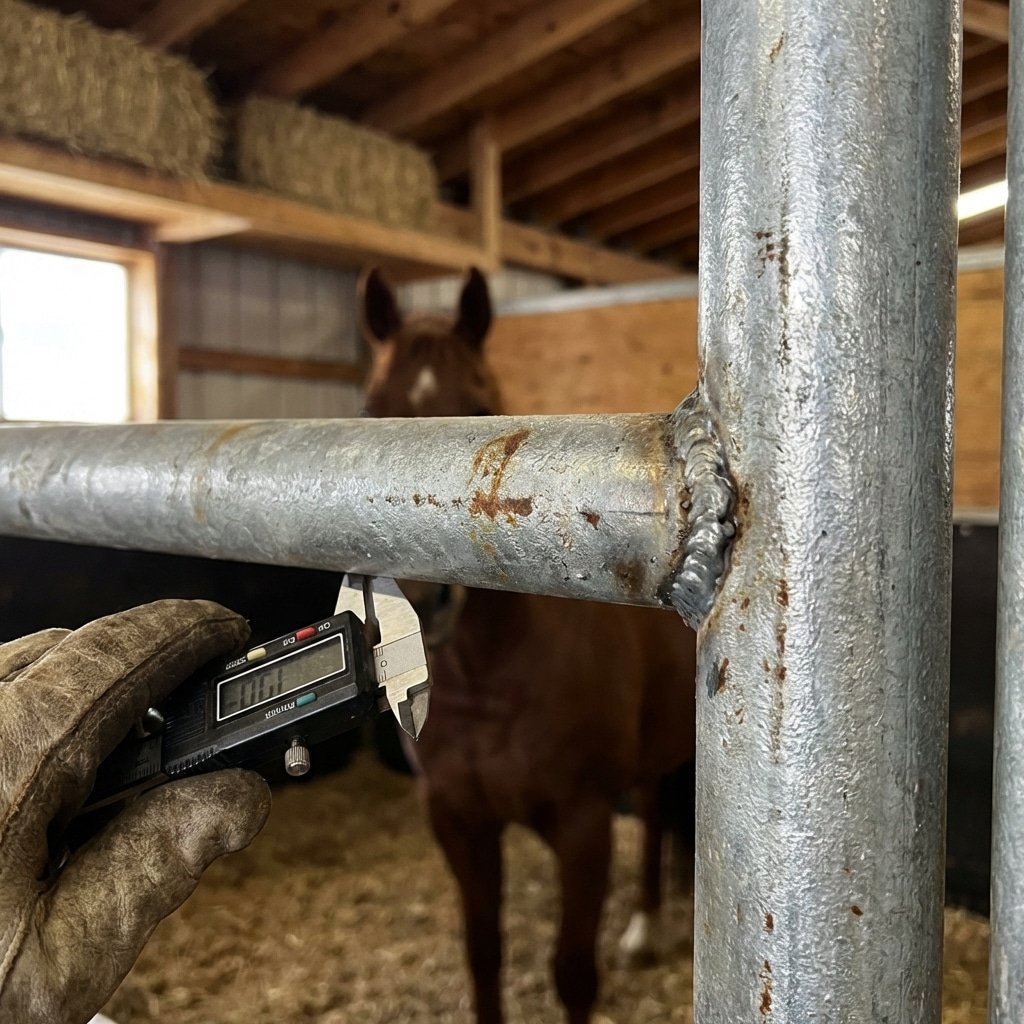
- Materials decide training life: hot-dip galvanized steel frames carry around 20 years of rust protection on this manufacturer’s jumps, while timber poles and UV-stable finishes decide how the obstacle behaves after seasons outdoors.
What “FEI Standard” Means When You Buy Jumps
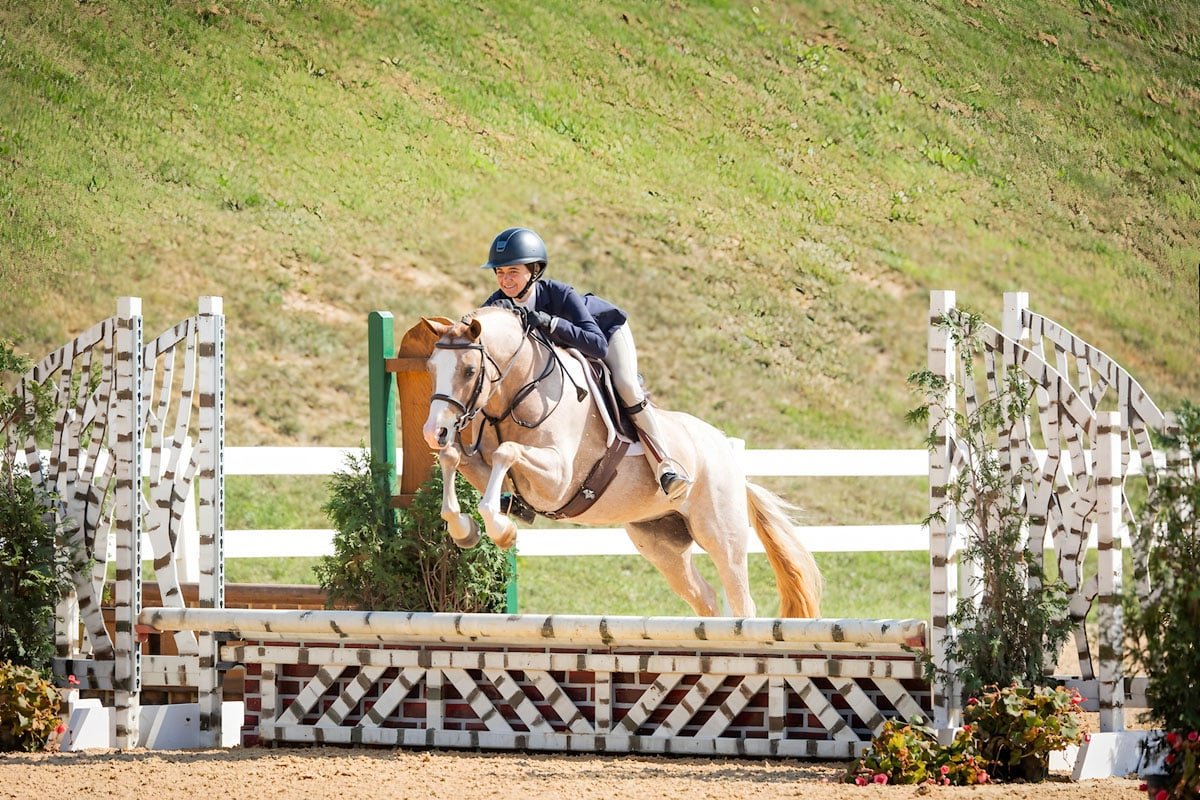
At an FEI event the equipment is not a suggestion — the Jumping Rules define how obstacles may be constructed, how they behave when struck, and how the course is measured and marked, and ground juries inspect courses against those rules before a horse enters the ring. A jump that cannot pass that inspection never carries a class.
When a manufacturer labels training equipment “FEI standard,” the honest meaning is that the equipment embodies those construction principles — sound geometry, safe dislodgement, correct proportions — so a venue can school over obstacles that ride like the ones at sanctioned shows. The label is a design commitment, not a certification: there is no plaque to hang on a wing. Your job is to check whether the commitment shows up in the build.
Anatomy of a Show Jump: Poles, Wings, Cups and Flags
A competition obstacle is a system of parts, and each part has a job. The uprights — wings, in show jumping vocabulary — are the vertical side frames that carry the cups. The cups support the rails at set heights, the rails or poles span the wings, and a ground line pole in front of the base helps the horse read the obstacle on approach. Wall and plank fillers sit between the wings to present a solid face without adding knockdown risk.
Two obstacle families dominate every course. The vertical (upright) is a single fence face: rails stacked in one plane. The spread fence — an oxer in its common form — puts two verticals one in front of the other, so the horse must clear height and width at once. How wide and how high depends on the class and level: these are exactly the numbers that change between rule editions, so pull them from the current FEI Jumping Rules rather than a supplier’s brochure.
Direction is marked, not implied. FEI convention places a red flag on the obstacle’s right side and a white flag on its left, seen from the direction of approach — the pairing that orients riders across the whole course. Venues that internalize flag discipline early save their riders from the habit of schooling jumps “either way,” which show rings never permit.
The Safety Principle: Everything Must Fall Away Cleanly

The rule that separates show jumping equipment from ordinary fencing is knockdown behavior. A competition obstacle must give way when struck: rails sit loosely in their cups so a brushing leg dislodges the rail instead of dragging the horse down. A rail that jams in its cup converts a four-fault mistake into a rotational fall. When you evaluate jumps, strike a rail with your hand at cup height — it should drop free, every time.
The same logic governs everything else on the obstacle. No sharp edges, no protruding bolts, no filler elements that can trap a leg. Modern rules have pushed this further with frangible technology — cups and fittings engineered to release under abnormal impact — which FEI has progressively required for certain obstacle types. Which devices apply to which obstacles is a live rulebook question; if your venue hosts sanctioned classes, verify the current requirement before ordering.
Test every jump by feel before you buy: a rail that will not drop cleanly from its cup is not a show jump, whatever the catalog says.
Materials: Steel Frames, Timber Poles and Weather
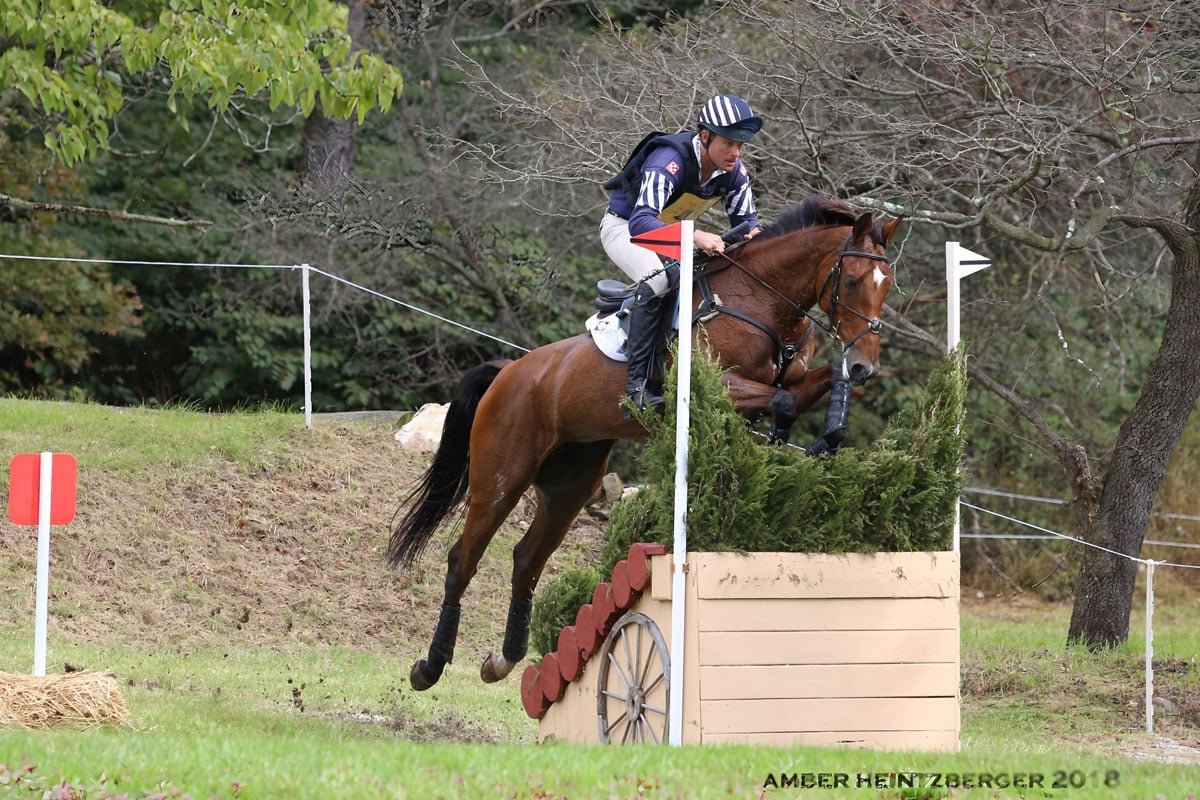
A training jump lives outdoors and gets hit every day, so materials decide whether your course looks professional in year five or like a yard sale. Wings carry the structural load, and galvanized steel earns its keep here: hot-dip galvanizing bonds a zinc coating to the steel that this manufacturer rates for 20 years of rust protection, which matters in rainy Britain and New Zealand as much as in the high-UV summers of Australia and Spain. Powder-coated color over the galvanized layer keeps wings visible without hiding the corrosion protection underneath.
Poles are traditionally timber, and good ones balance weight and feel: heavy enough to stay put in the wind, light enough to fall away when struck. Painted patterns do more than decorate — bold, high-contrast striping helps horses read the top rail against the background, which is why competition poles are painted at all. UV-stable finishes keep stripes from fading after a season of summer sun; ask any supplier how their paint handles prolonged UV exposure, and treat a vague answer as an answer.
Stability is the last material question. Wings need feet and weight that keep an obstacle upright in the wind your arena actually experiences — the same logic that governs riding arena fencing applies to wings standing free on open footing. A wing that tips when a rail is knocked is a hazard wearing competition colors.
Course Compliance: From Training Track to Show Ring
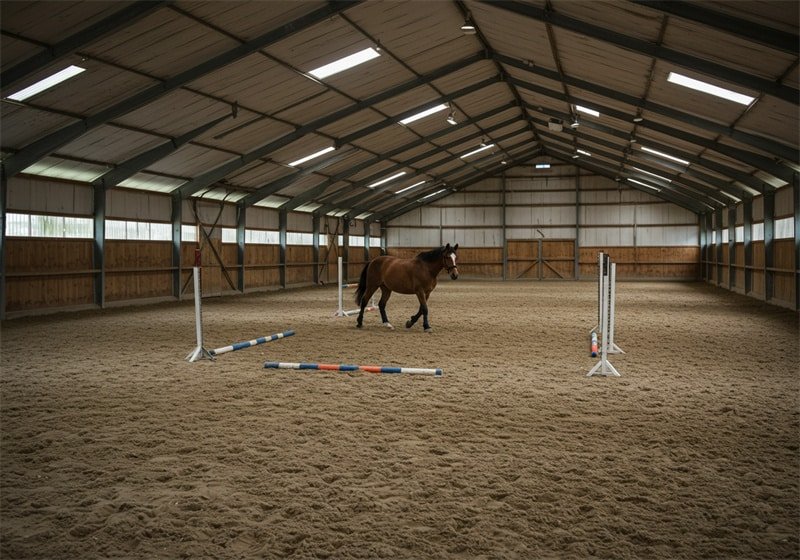
A compliant course is measured, not eyeballed. Course designers set obstacle heights and spreads to the class rules, then set the distances between obstacles to the horses’ expected stride — related distances ride on a set number of strides, and a few centimeters change how a line jumps. At FEI events the course is inspected before competition and the ground jury can require changes. At your venue the discipline is the same: measure your lines, keep a written plan, and build with equipment whose cup positions can be set precisely and repeatably.
Equipment supports that discipline or fights it. Wings with graded cup holes let you set heights by position rather than by eye; cups that lock at a set height keep a course honest through a week of schooling; and modular fillers let you change the question without rebuilding the obstacle. At sanctioned shows, technical delegates and stewards check the course against the applicable rules and pull equipment that cannot meet the mark — for training venues, the practical step is to keep the current FEI Jumping Rules bookmarked and school riders over obstacle sizes from that document, not from memory.
Sourcing Jumps That Survive Daily Training
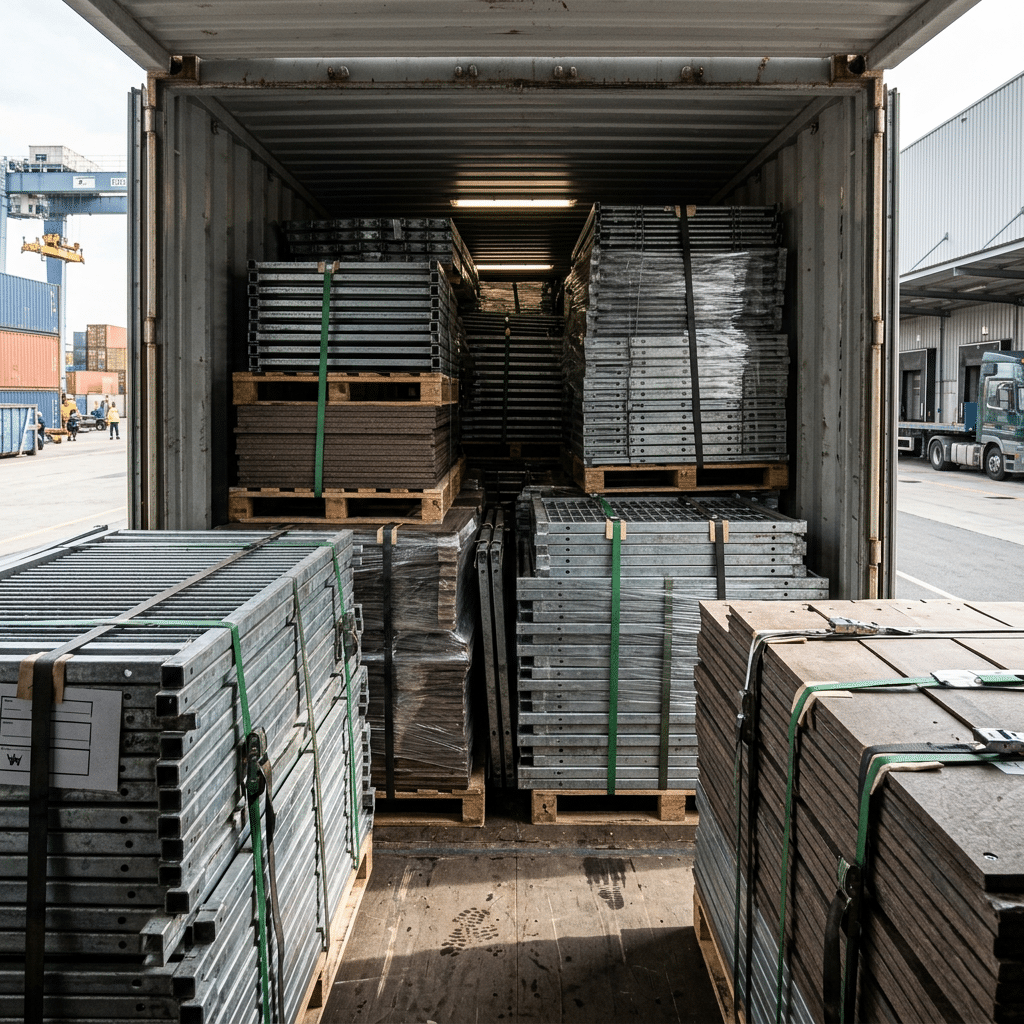
Training equipment gets more repetitions in a month than a show course sees in a season, so buy it like the working machinery it is. DB HorseStable builds FEI standard show jumps as part of a training equipment line that also covers horse walkers with Italian motors and lunging pens, with global delivery in 4-6 weeks and 1-2 week expedited shipping from regional warehouses in Sydney and Warsaw where stock allows.
When you compare suppliers, apply the tests from this guide in order: strike a rail and watch it drop; check the frame’s galvanization story in writing; ask how the paint handles UV; and ask whether cup positions are graded and repeatable. A manufacturer who answers those four questions plainly is one you can hand a course plan to. For facilities pairing jump schooling with fitness work, the horse walkers with Italian motors sizing and roof options are worth planning in the same project cycle.
Conclusión
FEI standard horse jumps are defined by behavior, not paint: rails that fall away cleanly, geometry that matches the level being schooled, flags and marking conventions that mirror the show ring, and materials that hold up through years of outdoor training. Those four traits are checkable in an afternoon with your hands and a tape measure.
If you are planning a new training setup or upgrading a course, pull the current FEI Jumping Rules for the level your riders target, then hold every quote against the four tests above. The equipment that passes all four stays in service when the others have been replaced.
Preguntas frecuentes
What makes a horse jump “FEI standard”?
It means the equipment is built to the construction principles of the FEI Jumping Rules: correct obstacle geometry, loose rails that dislodge cleanly when struck, safe materials with no protrusions, and compatible marking conventions. It is a design standard to verify in the build, not a certification label.
Why do show jumps have red and white flags?
The flags mark the direction of approach under long-standing FEI convention: red on the obstacle’s right side, white on its left as seen by the rider. They define which way the obstacle must be jumped and orient the whole course.
What materials should FEI standard jumps be made of?
Galvanized steel wings for structural life — hot-dip galvanizing on this manufacturer’s frames is rated for 20 years of rust protection — with timber poles painted in high-contrast, UV-stable patterns. Stability and safe knockdown behavior matter more than any single material choice.

 Spanish
  English
  French
  Arabic
  German
0 comentarios