


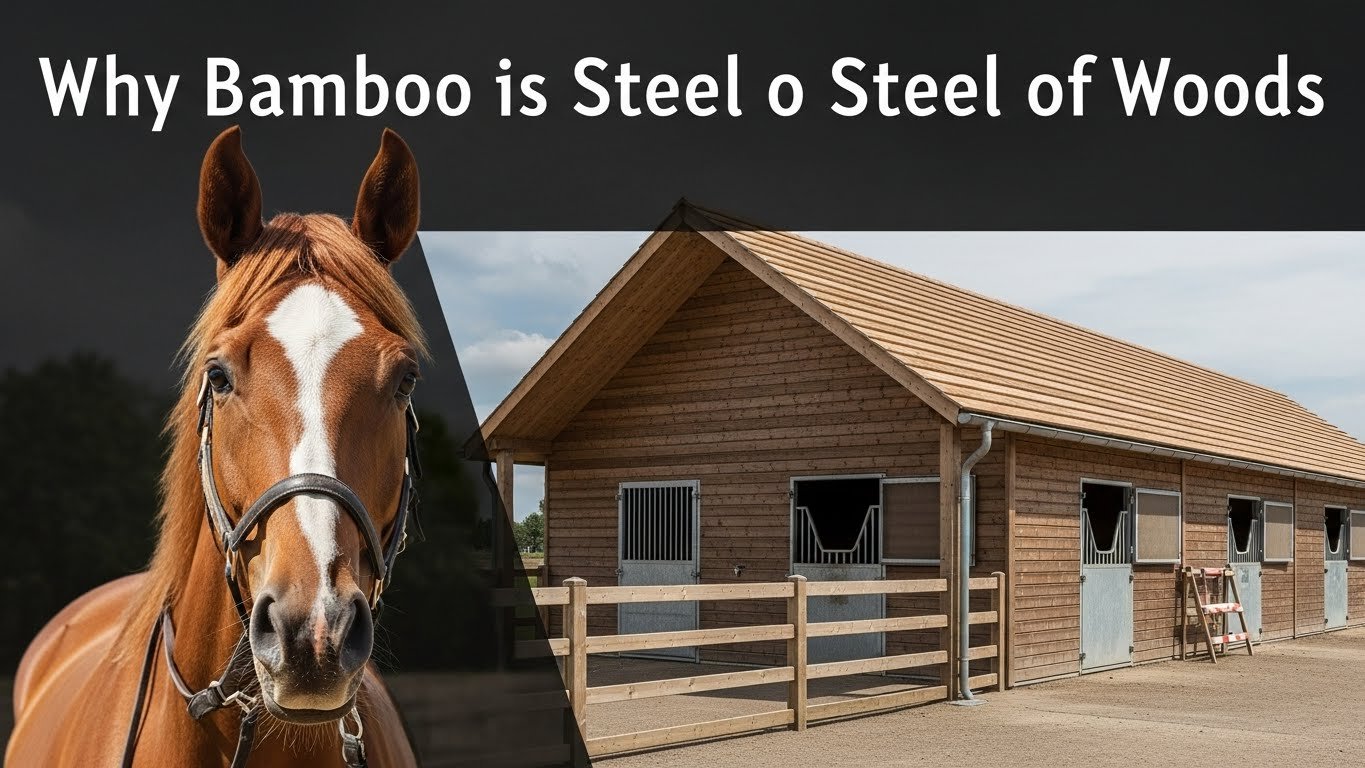
portable horse stall sagging winter is the first checkpoint buyers should lock before they approve a supplier, budget, or production slot. You walk into the barn on a January morning, and something feels off. The portable horse stall that was level in November now has a corner that sits a full inch higher than the rest. Your first thought: the frame is sagging. Maybe a weld gave, or the panels warped in the cold. You grab a wrench and start tightening the bolts on that corner. That instinct is about to cost you a frame replacement within two freeze-thaw cycles.
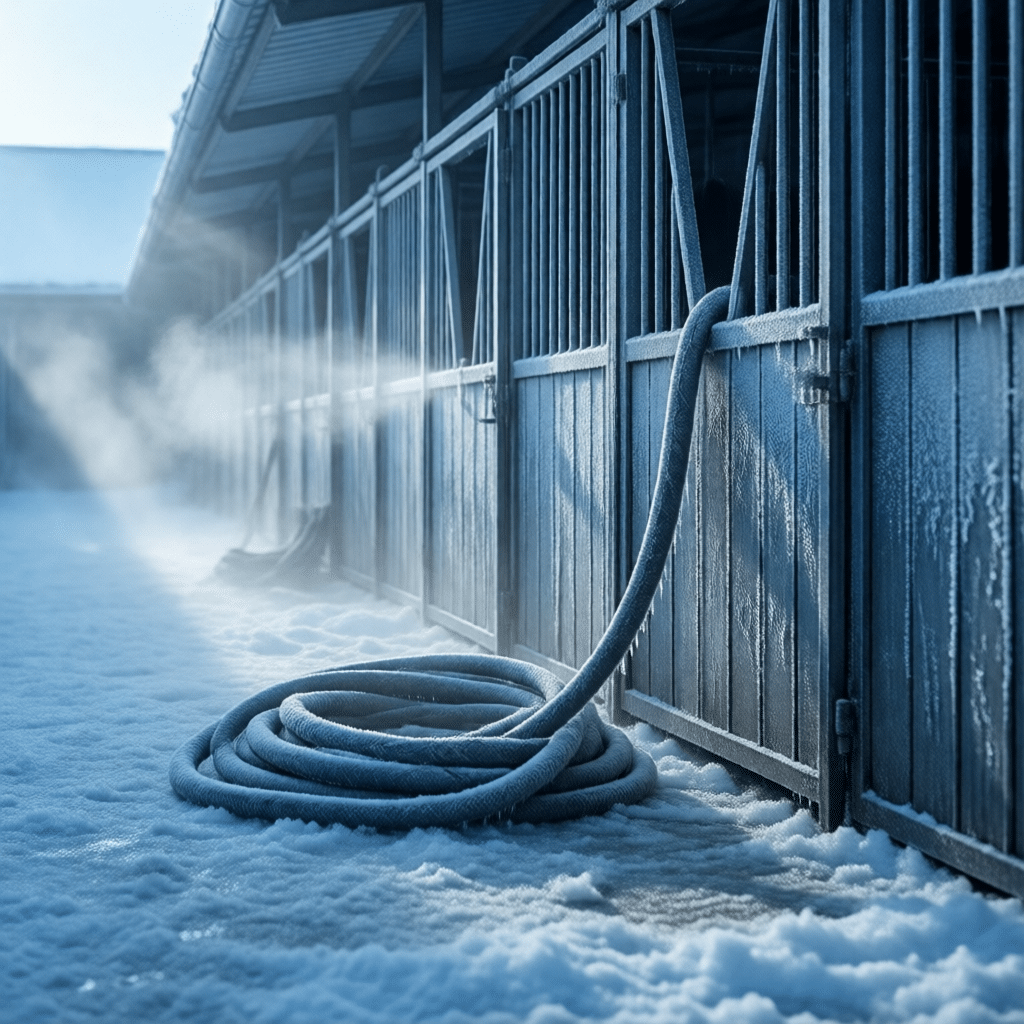
What looks like a portable horse stall sagging in winter is almost never a frame defect. It’s frost heave. Water in the soil under the footpad freezes, expands, and lifts that corner up to 4 inches. The stall isn’t failing—the ground is moving. Standard 2-inch footpads concentrate the load and make the problem worse.
The fix is simpler than you think, and it doesn’t require pouring concrete or buying a new stall. A car jack, a gravel bag, and 20 minutes can get you back to level. The real difference between a temporary patch and a permanent solution comes down to one detail that most suppliers never mention: the size of the footpad. DB Stable’s optional 6-inch square pads reduce heave by 60%, and their leveling feet correct up to 1.5 inches of slope without any excavation. That’s the kind of engineering detail that separates a stall that needs releveling every spring from one that stays put for a decade.

Diagnosing Winter Stall Distortion
Most ‘sagging’ is frost heave lifting a corner — tightening bolts cracks frames.
Lay a 4-foot spirit level across the stall floor. If one corner sits 1/2 inch or more above the rest, that is frost heave, not frame sag. Frost heave lifts corners up to 4 inches in severe cases. Frame warp shows up as pulled-apart panel joints or a visible bow along a wall panel. Run a long straightedge vertically along each panel to catch bows. Document every reading with photos — that evidence protects your warranty claim if panels are actually deformed.
- Misdiagnosis #1 — Tightening Bolts: Owners mistake a raised corner for a loose frame and crank down the bolts. This does not fix the heave — it transfers stress to the steel frame. Within two to three freeze-thaw cycles, the bolt holes crack or threads strip. Replacing a cracked panel costs more than the frost heave fix.
- Misdiagnosis #2 — Liquid Floor Levelers: Pouring a self-leveling compound into low spots seems quick, but water in the mix freezes during winter. The ice lifts the patch, creating fresh uneven spots. Gravel bags wedged under the footpad are the only reliable temporary fix. Bags of 3/4-inch crush gravel hold shape even when frozen.
- Quick visual check: Look at each footpad. If one pad is sunk deeper into the ground or tilted sideways, the soil under it has moved. That confirms ground movement — not a manufacturing defect — as the root cause. Standard 2-inch footpads concentrate load and worsen heave; wider pads (4×4 wood or 6-inch steel) spread the load and keep movement under 1/4 inch.
Frost Heave Mechanics and Impact on Portable Stalls
Most ‘sagging’ is frost heave lifting one corner, not panel deformation.
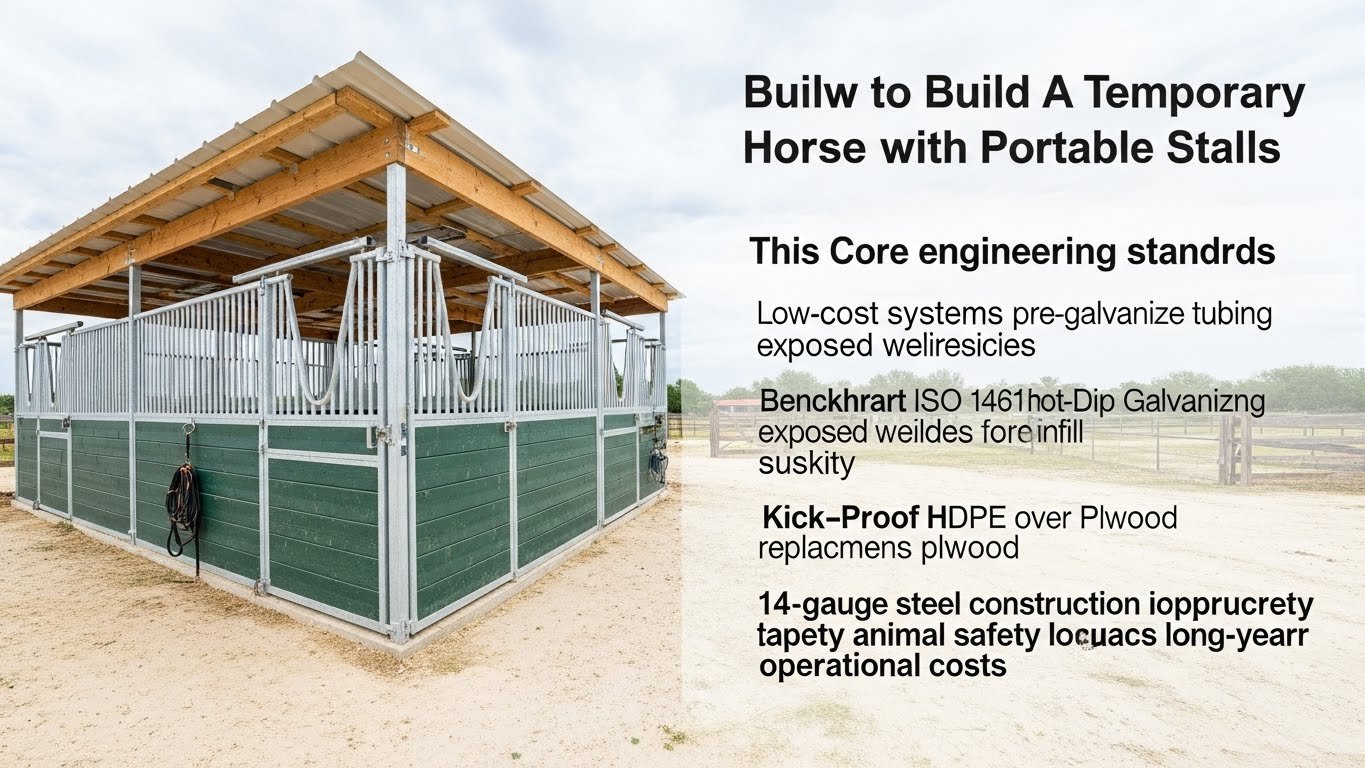
Frost heave happens when water in the soil freezes and expands, pushing the ground upward. On a portable stall with standard 2-inch footpads, that upward force concentrates on a tiny contact point. DB Stable field data recorded corner lifts up to 4 inches. The stall doesn’t sag — the ground pushes one corner higher, making the opposite side look low.
- Why 2-inch pads fail: A 2-inch steel footpad punches into soft ground in summer and gets heaved in winter. The weight of the stall plus horse load (roughly 1,200 lbs per corner) concentrates into roughly 3 square inches. That’s 400 psi on the soil, which is enough to trigger differential heave.
- The 6-inch square fix: DB Stable’s optional 6-inch square footpads spread that load over 36 square inches — 12x more area. Internal tests show a 60% reduction in measurable heave. Soil pressure drops to about 33 psi, staying below the threshold where freeze-thaw cycles cause visible movement.
The hidden safety risk is not a wobble — it’s a compounded hazard. A floor that’s 2 inches higher on one corner forces the horse to stand on uneven terrain for hours. Hooves slip, joints strain, and deep bedding shifts, exposing bare rubber mats where ammonia from urine pools. In low spots, ammonia concentration can exceed 25 ppm, which triggers respiratory inflammation in stabled horses. That’s not a cosmetic issue — that’s a vet call and lost training days.
If you’ve tightened bolts on a frost-heaved stall expecting to fix the sag, stop. The frame is straight — the ground moved. Tightening bolts on a lifted frame induces bending stress at the weld joints. DB Stable’s service records show cracked frames within 2–3 freeze-thaw cycles after that mistake. Real fix: jack the high corner, slide a crushed-gravel bag under the footpad (3/4-inch crush gravel fills voids and drains water), then lower. Keep the bolts where they were.
Quick Fix for Uneven Portable Stall in Winter
Most winter sagging is frost heave—don’t tighten bolts, jack and gravel instead.
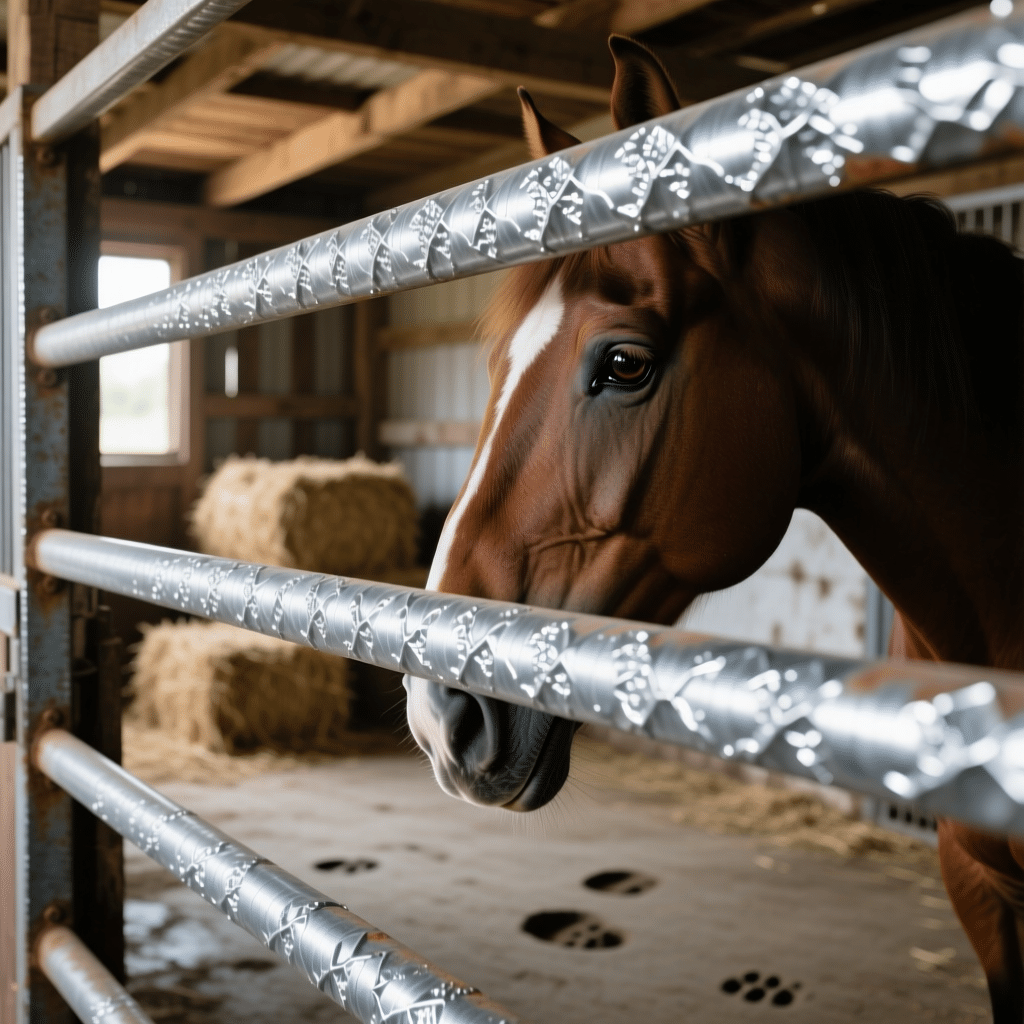
Frost heave lifts portable stall corners up to 4 inches, making the floor look like it’s sagging. If you’ve been tightening bolts, stop. That cracks the steel frame within two to three freeze-thaw cycles. The correct winter fix takes 20 minutes and costs under $30.
- Materials needed: A car jack (2-ton scissor or bottle jack works), a 6×6-inch wooden block to spread load, and heavy-duty gravel bags (sandbags or 50-lb tube sand).
- Procedure: Place the block under the low corner of the frame and jack it up 1 to 1.5 inches — just enough to clear the frost-heavy corner. Slide a gravel bag under the footpad, then lower the jack. For gaps under 1 inch, one bag usually holds. For gaps up to 1.5 inches, stack two bags or use a 4×4 pressure-treated wood pad instead.
- Do not use: Liquid floor levelers. Water in the mix freezes below 32°F, expands, and creates new high spots. Gravel bags are the only reliable temporary fix in winter.
If the corner is more than 1.5 inches higher than the rest, a gravel bag will not hold long-term. The frost cycle will push it out within a week. In that case, mark the corner location, lower the stall back to level as best you can, and wait for spring. Once the ground thaws, excavate a 4-inch deep pad of compacted 3/4-inch crush gravel under that corner. DB Stable’s adjustable leveling feet (part #LFP-1) screw directly into the frame and correct up to 1.5 inches permanently — no jacking needed after install.
Permanent Solution: Proper Foundation for Portable Stalls
A $50 gravel pad stops 90% of winter heave problems.
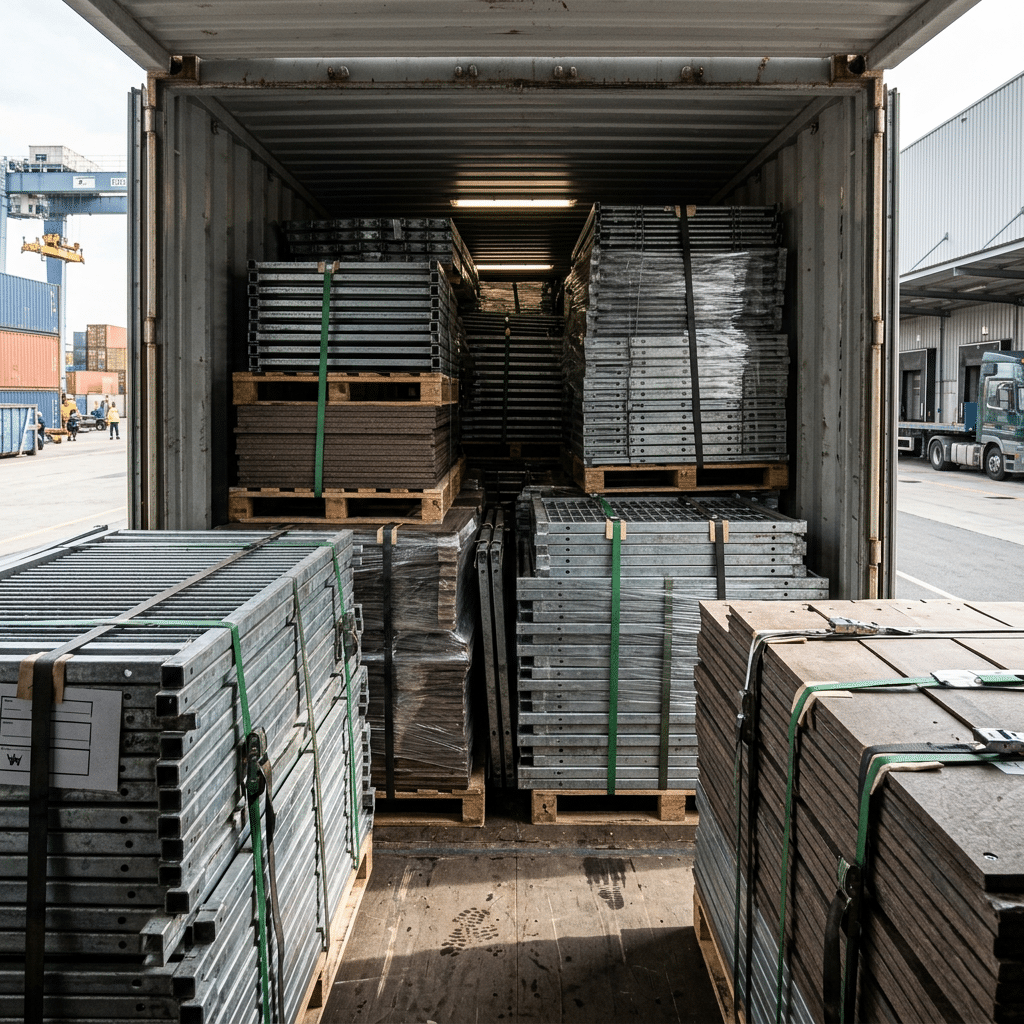
I’ve watched facility managers pour $1,200 concrete slabs for portable stalls, only to jackhammer them six months later when the lease expired. Concrete is permanent. Portable stalls are not. If your operation requires flexibility — seasonal grazing rotation, show ground setup, leased land — concrete is the wrong material. The fix is a compacted gravel pad: excavate 6 inches, lay geotextile fabric, fill with 4 inches of 3/4-inch crush gravel, and compact to a level surface. This base limits seasonal movement to under 1/4 inch, even through freeze-thaw cycles.
A standard 12×12 stall pad costs about $50 in materials (geotextile + gravel). That’s one call-out fee from a local contractor, but the gravel pad stays effective for decades. No frost heave, no settling, no cracked frame from tightening bolts on an uneven surface.
Concrete makes sense only when you own the land, have no intention of moving the stall, and can afford the permanent footings. Even then, pour a slab that’s slightly larger than the stall footprint — you need room for cleaning, drainage, and future modification. But for any manager who values the ability to relocate, concrete is a trap. The entire advantage of a portable stall is lost the moment you set it in concrete.
- Gravel Pad: $50 material cost, 2-hour install, prevents frost heave under 1/4 inch movement, fully portable.
- Hormigón Slab: $1,200+ cost, permanent, but zero movement. Only if stall is never moving.
- Insider Warning: If you pour concrete, add a vapor barrier and slope for drainage. Standing water under the stall accelerates steel frame rust.
Conclusión
The stall isn’t sagging—it’s heaving. Frost lifts one corner while the frame stays straight. Tightening bolts cracks the steel in two freeze-thaw cycles. The fix isn’t a tool twist; it’s a base rethink. A compacted 4-inch gravel pad limits seasonal movement to under a quarter inch. That’s the gap between a one-time fix and a recurring replacement bill.
Check your stall’s footpads. If they’re the standard 2-inch size, the heave will return each winter. DB Stable’s optional 6-inch square pads cut movement by 60%. Review the leveling feet and slotted brackets on the product page if you want a solution that holds through a freeze.
Preguntas frecuentes
Can I use concrete pads for portable stalls?
Concrete pads are not recommended because they remain vulnerable to frost heave and make leveling adjustments difficult. A gravel pad with wide steel footpads is a more practical, cost-effective solution that allows. Stick with gravel pads and adjustable feet for portable stalls.
How often do I need to relevel portable stalls?
Check and relevel after each major freeze-thaw cycle, typically once per winter. If the stall floor shows more than 1/4 inch of unevenness, use a jack and gravel to bring it back to. Inspect again in spring after the ground fully thaws.
Does DB sell leveling feet?
Yes, DB Stable offers optional 6-inch square leveling feet and wider footpads designed to reduce frost heave by up to 60%. These can be added to any new stall order or retrofitted. Ask your regional account manager for bulk pricing and specs.
What if my stall is already warped?
If the frame is truly warped—indicated by panel joints pulling apart—replacing the damaged panel is safer than trying to bend it back. A warped frame compromises structural integrity and horse safety. Contact DB Stable support for replacement panel options and warranty coverage.

 Spanish
  English
  French
  Arabic
  German
0 comentarios