



When your powder-coated steel components start to rust or peel, the problem isn’t the topcoat—it’s what’s missing underneath. A standard, single-coat finish looks good initially but lacks the foundation to prevent corrosion. For any equipment exposed to the elements, the real measure of powder coating durability lies in the primer.
Here, we’ll explain the two-coat process that creates a truly durable finish. We’ll cover how an epoxy zinc primer with 85-90% zinc content provides sacrificial protection for the steel underneath. You’ll learn what separates a high-performance coating—one that can endure over 2000 hours of salt spray testing—from a standard finish that can’t.
What is an Epoxy Zinc Primer?
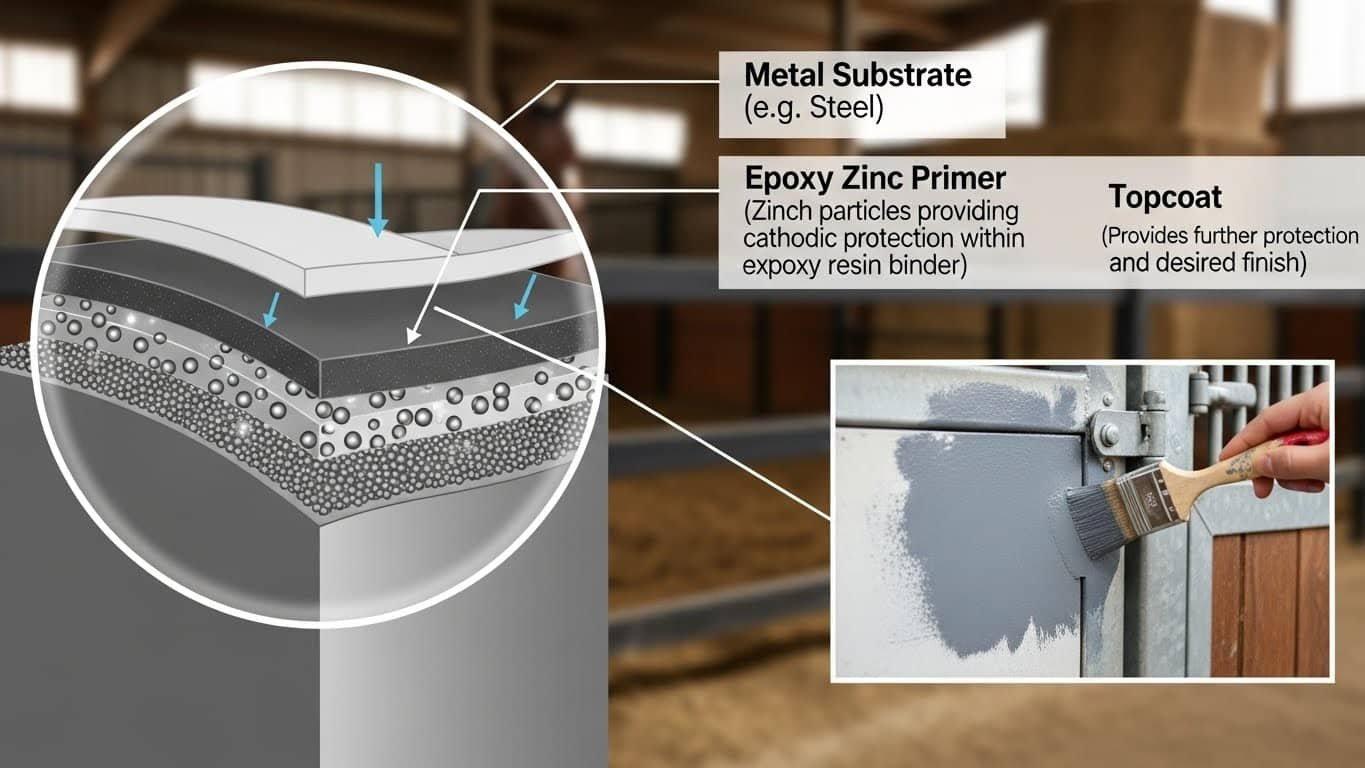
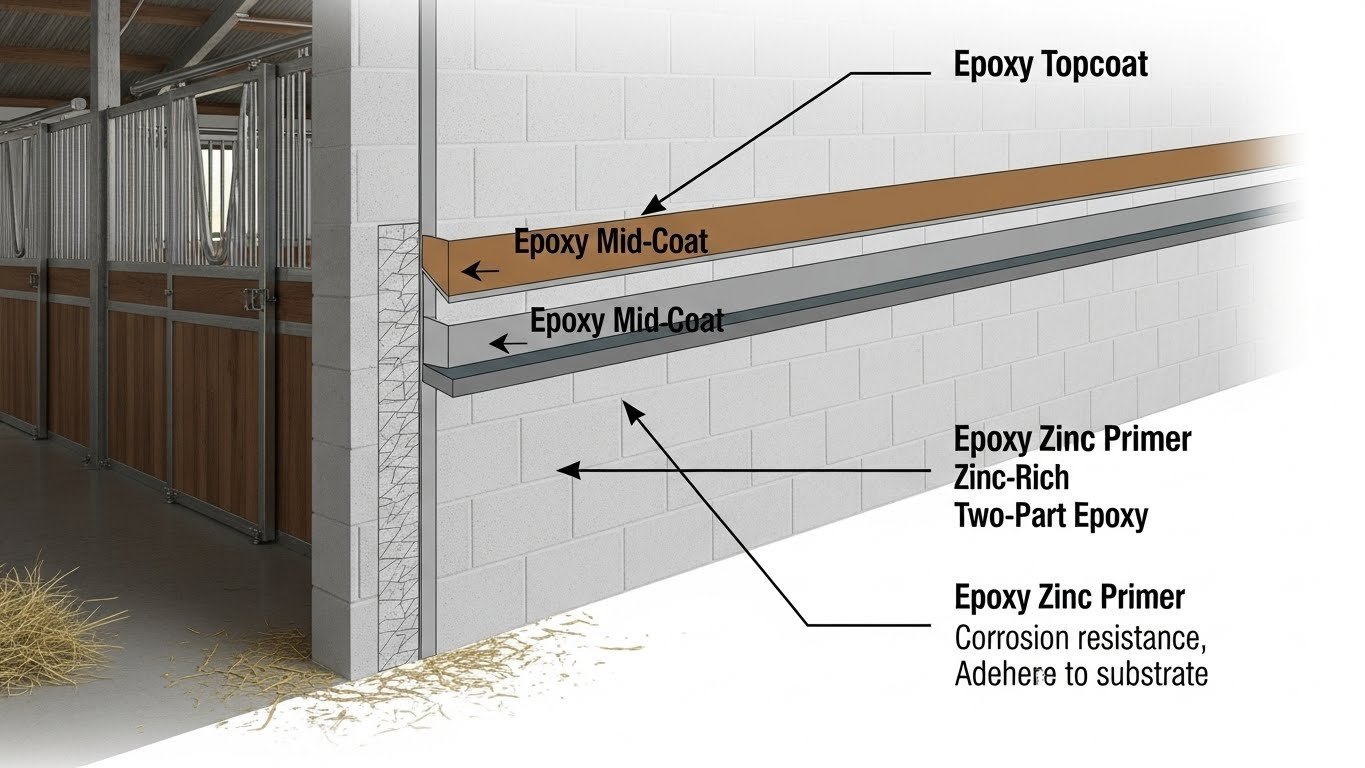
An epoxy zinc primer is a two-component coating with a very high concentration of zinc dust, typically 85-90% by weight. It is applied directly to prepared steel to provide cathodic (galvanic) protection, where the zinc sacrificially corrodes to protect the steel from rust, making it ideal for harsh environments.
How It Works: Cathodic Protection
An epoxy zinc primer protects steel through a process called cathodic protection. The coating contains a high concentration of fine zinc dust, which establishes an electrical connection with the steel substrate. When exposed to moisture and oxygen, a galvanic cell is formed. Because zinc is more electrochemically active than steel, it acts as a sacrificial anode, corroding preferentially to protect the steel cathode from rusting. This mechanism makes it the essential first layer in multi-coat systems designed for severe corrosive environments, such as offshore platforms, chemical plants, and bridges.
Key Specifications and Performance Metrics
The performance of an epoxy zinc primer is defined by its technical specifications. A high-quality formulation must contain a high percentage of zinc dust in its dry film, typically 85-90% by weight, to meet standards like SSPC-Paint 20, Type II. For effective protection, it is applied to a specific dry film thickness (DFT), usually between 50 and 100 micrometers (2-4 mils). The coating’s durability is verified through rigorous testing, such as enduring over 2000 hours in a salt fog simulation (ASTM B117) without significant blistering or creepage. Additionally, a high pencil hardness rating, often 5H (ASTM D3363), indicates a tough, abrasion-resistant surface ready for subsequent topcoats.
The 2-Coat Process (Primer + Color)
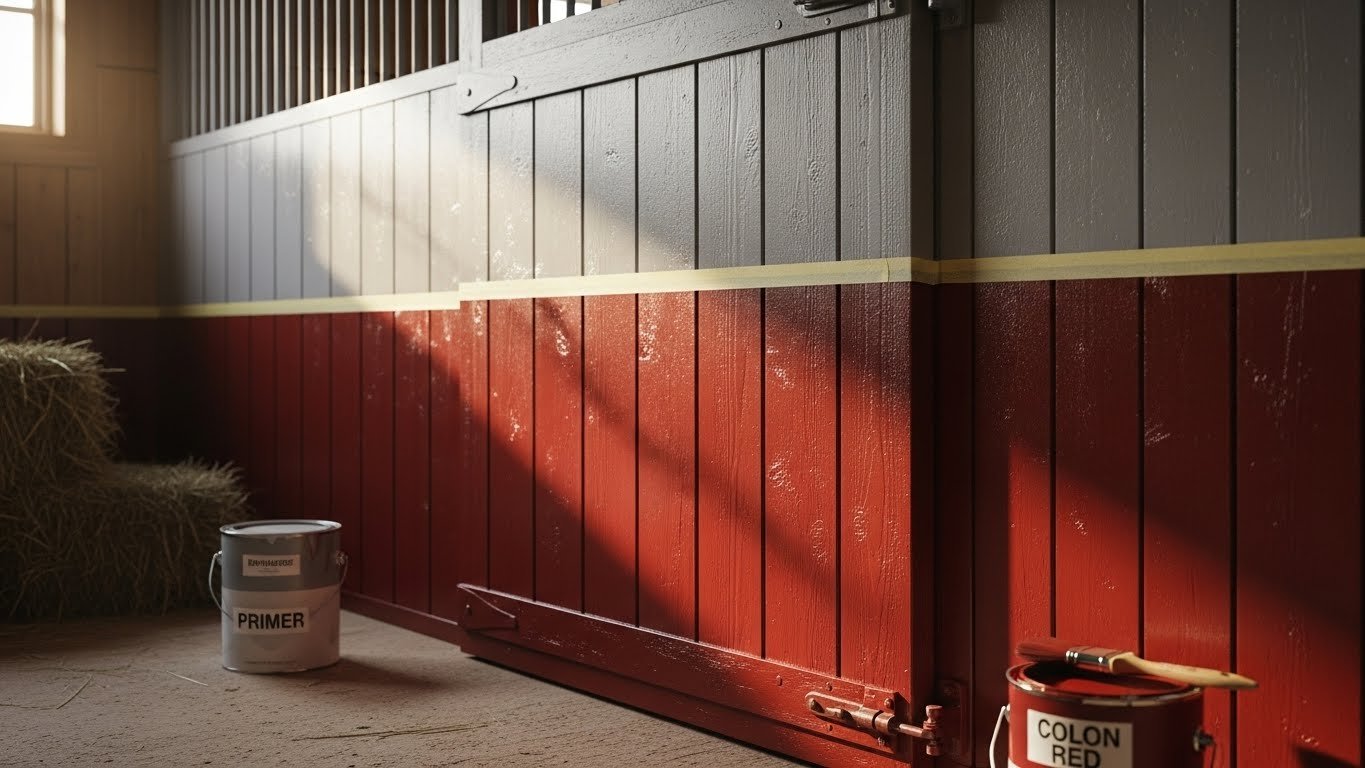
The 2-coat process involves applying an epoxy zinc primer, partially curing it to a gel state, and then applying the final color topcoat. Both coats are then fully cured together, creating a strong chemical bond that significantly enhances corrosion protection and prevents paint peeling on steel parts.
Achieving Chemical Adhesion with Partial Curing
The process begins by applying an epoxy zinc primer and partially curing it until it reaches a gel state. This step creates a sticky, receptive surface that is critical for establishing a strong chemical bond between the primer and the topcoat, rather than just a simple mechanical one. Proper inter-coat adhesion is essential for long-term durability and prevents delamination, which occurs when the color coat peels away from the primer. To ensure the bond is not weakened by surface contamination, the topcoat must be applied within 12 hours of the primer application.
Curing Temperatures, Times, and Application Specs
Specific technical parameters are required for a successful two-coat finish. The primer is first partially cured at 392°F (200°C) for about 2-3 minutes to achieve the ideal gel state. Before the color topcoat is applied, the component is cooled to a temperature between 175-200°F (79-93°C) to facilitate even electrostatic deposition. The entire two-coat system is then fully cured according to the powder manufacturer’s data sheet, typically for 10-15 minutes at 400°F. For a flawless finish, the part’s ground resistance must remain at or below 1 megohm, which prevents application defects like uneven coating or back ionization.
| Process Step | Technical Specification | Purpose |
|---|---|---|
| Primer Partial Cure | 2–3 minutes at 392°F (200°C) | Reaches a gel state for chemical adhesion with the topcoat. |
| Cooling | Cool part to 175–200°F (79–93°C) | Ensures even electrostatic deposition of the color coat. |
| Full System Cure | 10–15 minutes at 400°F (204°C) | Completely cross-links and hardens both coats together. |
| Grounding | ≤ 1 megohm resistance | Prevents defects and ensures a uniform powder application. |
![horse Stables Not All Powder Coat Is Equal The Importance of [Zinc Primers] (2)](https://dbhorsestable.com/wp-content/uploads/2025/12/horse-Stables-Not-All-Powder-Coat-Is-Equal-The-Importance-of-Zinc-Primers-2.jpeg)
How to Test Quality (Scratch Test)
A scratch test evaluates a powder coating’s hardness by applying controlled force with a standardized tool, like a graphite pencil (ASTM D3363). Passing the test requires the coating to resist scratching or marring, which confirms its ability to withstand everyday friction and wear.
| Standard | Requirement | Test Method |
|---|---|---|
| ASTM | Resist scratching from a specific pencil grade | ASTM D3363 (Pencil Hardness Test) |
| GSB International | Withstand a 20 N load without failure | Scribe needle with 0.50 mm tip |
| Qualicoat | Achieve a minimum indentation score of 80 | EN ISO 2815 (Buchholz Indentation Test) |
The Pencil Hardness Test Method
The most common way to test scratch resistance is the pencil hardness test, specified by ASTM D3363. This method provides a simple yet effective way to simulate everyday wear. An inspector uses a set of calibrated pencils with varying graphite hardness grades, applying them to the coated surface at a fixed 45-degree angle. The test begins with softer pencils and moves to progressively harder ones until one scratches or gouges the finish. The coating’s hardness rating is the highest grade it can resist without damage, giving a clear indicator of its ability to withstand friction from tools, equipment, and general use.
Key Industry Standards and Metrics
Beyond the pencil test, major quality assurance organizations define specific, measurable criteria for scratch resistance. For example, the GSB standard requires a powder coating to endure a 20 Newton (N) load from a scribe needle with a 0.50 mm hemispherical tip. The Qualicoat standard uses a different approach, EN ISO 2815, which measures the coating’s resistance to indentation and requires a minimum score of 80. These specific tests fall under broader quality frameworks like ASTM D3451, which standardizes practices for testing powder coatings. This ensures that results are consistent and repeatable across different facilities and manufacturers.
Horse Stables Engineered for Any Climate, Built for a Lifetime.
![horse Stables Not All Powder Coat Is Equal The Importance of [Zinc Primers] (1)](https://dbhorsestable.com/wp-content/uploads/2025/12/horse-Stables-Not-All-Powder-Coat-Is-Equal-The-Importance-of-Zinc-Primers-1.jpeg)
Final Thoughts
A powder coat’s true strength isn’t just its color, but the system beneath it. Applying a high-zinc epoxy primer before the topcoat creates a finish that actively fights rust through cathodic protection. This two-coat process isn’t simply an extra step; it is the foundation for a durable, long-lasting coating that resists peeling and failure, especially in demanding environments.
Understanding the difference between a single coat and a two-coat system empowers you to make better choices. Details like salt spray hours, pencil hardness ratings, and proper curing procedures are what separate a standard finish from a premium one. When a manufacturer details their use of a zinc primer and a two-coat process, it shows a commitment to a finish engineered for performance, not just appearance.
Frequently Asked Questions
Why does powder coat peel?
Powder coat typically peels from inadequate surface preparation, like oils or contaminants left on the steel. Other causes include improper curing, incorrect film thickness, or environmental breakdown from UV light and salt. To prevent issues, the steel’s temperature should not exceed 40°C (104°F) before coating.
What is the best finish for horse stalls?
Powder coating over hot-dip galvanized steel is the industry standard for horse stalls. This combination offers the best rust resistance, durability against impact, and safety for horses, often coming with long-term rust-free warranties.
What is a zinc primer?
A zinc-rich primer is a protective base coat applied to steel before powder coating. It contains a high percentage of zinc (75-89%) to provide cathodic corrosion protection. It is a key component for achieving high-performance corrosion resistance, typically applied at a thickness of 3-5 mils (75-125 µm).
Can you touch up powder coating?
Yes, but repairs must be done with specific liquid coatings according to industry standards. Architectural repairs, for instance, require a compatible liquid paint that must dry for at least 72 hours at 18–27°C (65–80°F) before testing its adhesion.
How thick should powder coating be?
For durable service, powder coating thickness is typically between 2–4 mils (50–100 µm). A minimum of 2.5–3.0 mils (about 60–75 µm) is recommended for most applications to ensure proper coverage and protection.
What makes a powder coat ‘outdoor rated’?
An outdoor-rated powder coat must meet specific durability standards, such as AAMA 2604 or 2605. The highest rating, AAMA 2605, certifies that the finish can withstand 10 years of Florida sun exposure and 2000 hours of salt spray testing with minimal color fade or corrosion.


 English
  Spanish
  French
  Arabic
  German
0 Comments