
Maximizing B2B Distributor ROI is impossible when your supplier competes with you for sales. This channel conflict, combined with high freight costs on bulky welded products, creates unwinnable price wars that systematically erode your margins and make inventory planning unsustainable.
This analysis outlines a profit protection model built on two principles: a strict B2B-only sales policy and flat-pack engineering. We evaluate how loading 30-45 stable sets per 40HQ container, versus the typical 12-15, provides a structural cost advantage that preserves your local market profitability.
The Distributor’s Dilemma: Competing with Your Supplier
A supplier selling direct to the public creates unwinnable price wars that erode distributor margins and trust. We operate on a strict B2B-only model to protect our partners.
The Conflict of Direct-to-Consumer Sales
The core problem is simple: more manufacturers are bypassing their distribution networks to sell directly to end-users online. This move pits you, the distributor, against the very factory that supplies your inventory. You are forced to compete on price with a source that has an unbeatable cost advantage.
This creates an unsustainable price war. You can’t win when the manufacturer can sell at a price close to your wholesale cost. The result is a race to the bottom that destroys your margins and makes long-term planning impossible. It also fundamentally breaks the trust that a real partnership requires to function.
Our B2B-Only Commitment: A Profit Protection Policy
DB Stable operates exclusively as a B2B OEM/ODM manufacturer. We are a source factory, not a retailer. We do not sell to individual horse owners, we don’t run an e-commerce store, and you will never find our products listed on Amazon under our name.
This isn’t just a preference; it’s a core policy designed to protect your business. We will never compete with you for a sale in your market. This commitment ensures that your margins are secure and that the investment you make in stocking and selling our products builds your business, not ours. It’s a straightforward model that creates a stable and genuinely profitable partnership.
DB’s “Profit Protection” Policy: We Only Do Wholesale
Our wholesale-only model prevents channel conflict, and our flat-pack engineering cuts freight costs. This dual approach protects your margins and local market.
Our B2B-Only Commitment: We Never Sell Direct
The biggest risk for any distributor is competing against their own supplier. When a manufacturer sells directly to end-users online, they create unavoidable price pressure and erode their partners’ business. We see this as a broken model. Our policy is simple: we are exclusively a B2B OEM/ODM source factory. We only work with distributors and large-scale project managers. You will never have to compete against us in your own market.
How Flat-Pack Engineering Maximizes Your Container Margins
International freight is the single largest variable cost in this industry. A few extra units per container can be the difference between a profitable shipment and a losing one. We engineered our proprietary DB Flat-Pack System specifically to solve this problem. Instead of shipping bulky, fully-welded stables that waste space, our system packs efficiently onto steel pallets. The impact on your bottom line is immediate and significant.
| Metric | Traditional Fully-Welded Stables | DB Flat-Pack System |
|---|---|---|
| Container Loading Capacity | 12-15 sets per 40HQ | 30-45 sets per 40HQ |
| Freight Cost Impact | Extremely high cost-per-unit | Saves over 60% on freight |
This logistics efficiency means you can import more than double the product for roughly the same shipping cost. It gives you a structural cost advantage, protects your profit margins, and allows you to offer more competitive pricing in your local market without sacrificing profitability.
Globally-Trusted Stables Engineered for Any Climate.
Margin Math: The 40HQ Flat-Pack Advantage
Shipping stables flat-packed allows a 40HQ container to hold 30-45 sets, versus just 12-15 welded sets. This 2-3x density increase directly lowers your per-unit freight cost.
Calculating Per-Unit Freight Cost
The math is simple. Ocean freight for a 40HQ container is a fixed cost. Whether you load 10 items or 40 items inside, you pay the same lump sum to the shipping line. By maximizing the number of stable sets loaded into that container, you divide that fixed cost across more units. This directly reduces the landed cost for each set, increasing your profit margin from the start.
DB’s Loading Capacity vs. Traditional Welded Stalls
Here’s the difference in practical terms. Most suppliers ship fully welded stalls, which wastes a huge amount of container space. Our flat-pack system, shipped on steel pallets, is engineered for density.
- Traditional Fully Welded: A 40HQ container fits only 12-15 sets.
- DB Stable Flat-Pack System: A 40HQ container fits 30-45 sets.
This isn’t a small improvement. Packing two to three times more product into a single shipment can cut your per-unit freight costs by more than 60%. This is a structural cost advantage that protects your margins before the product even reaches your warehouse.
White-Labeling (OEM): Building Your Own Local Brand
White-labeling lets you sell our factory-engineered horse stables under your own brand. It’s a faster, lower-risk way to build local brand recognition on a foundation of certified quality.
The Strategic Path from Distributor to Brand Owner
Competing on price alone is a losing game for distributors. An OEM partnership is the direct path away from razor-thin margins and toward building a defensible business. By creating your own brand, you c
ontrol the narrative, own the customer relationship, and build an asset with long-term value. This is how you shift from being a reseller to being the recognized name in your market.
- Enter the market fast. You skip the massive capital investment and long timelines required to set up your own manufacturing.
- Build real brand equity. Owning the brand fosters customer loyalty in your region, making you the go-to supplier instead of just another option.
- Focus on what you do best. You can pour your resources into sales and marketing, not the complexities of production schedules and supply chain logistics.

Your Brand Built on Our Engineering Standards
A private brand is only as strong as the product behind it. Shoddy manufacturing will destroy your reputation before you even get started. We provide the certified, verifiable engineering that gives your brand instant credibility. You get to build a reputation for quality without building a factory.
- We don’t compete with you. Our business is strictly B2B OEM/ODM. We are your silent factory partner, focused entirely on supporting our distributors’ brands.
- Sell with certified proof. Your products are backed by our ISO 9001 (Quality Management) and ISO 1461 (Hot-Dip Galvanizing) certifications. These aren’t just claims; they are audited standards.
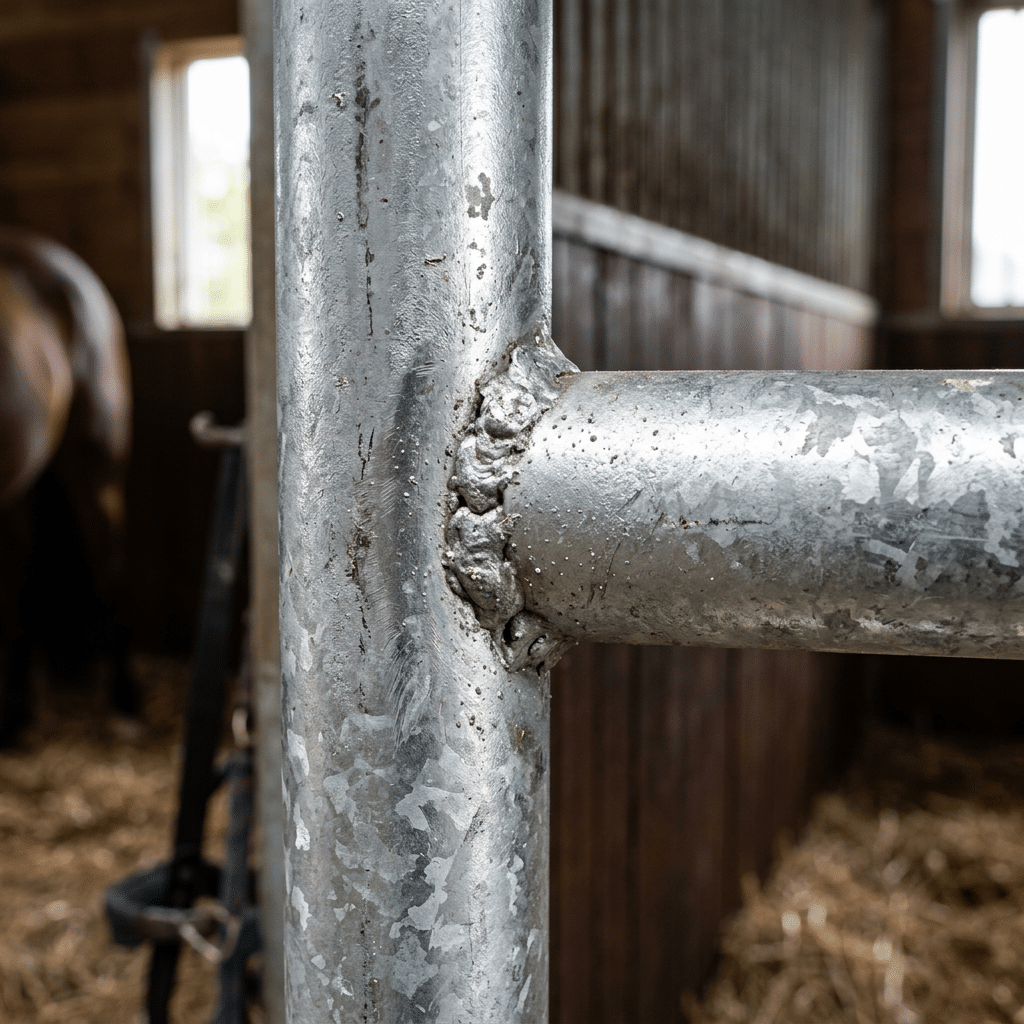
- Offer a core quality promise. Our ‘Hot-Dip After Fabrication’ process is a key selling point. We weld everything first, then galvanize the entire structure. This guarantees superior, long-lasting rust protection you can confidently put your name on.
Lead Times and Inventory Planning (35-45 Days)
Our 35-45 day lead time is a stable window for your inventory planning. It’s the time needed to schedule our ‘Hot-Dip After Fabrication’ galvanizing for maximum rust protection.
Why Predictable Lead Times are Key for Distributors
The time between placing an order and receiving it directly impacts your cash flow. When a manufacturer gives you an unreliable schedule, you’re forced to carry expensive safety stock to avoid telling your
own customers “we’re out.” That extra inventory just sits there, tying up capital that could be used elsewhere.
A consistent production schedule is the bedrock of efficient inventory management. It lets you forecast accurately, manage your cash, and confidently promise delivery dates to your clients. Without it, you’re just guessing.
Our 35-45 Day Cycle: Scheduling for Quality Galvanization
Our standard production time is 35 to 45 days. This isn’t a random number—it’s the exact window we need to properly schedule work with our specialized, ISO 1461 certified galvanizing plants. We don’t use shortcuts like welding pre-galvanized tubes, which leaves welds exposed to rust.
Instead, our “Hot-Dip After Fabrication” process means every single steel component is welded and fabricated *first*, then submerged in molten zinc. This guarantees a complete protective coating of over 70 microns, even on the welds. This deliberate scheduling prevents bottlenecks and gives you a reliable timeframe for your own logistics planning.
Frequently Asked Questions
How do I become a distributor for DB Stable?
You establish a direct B2B partnership with us. Since our products aren’t regulated agricultural goods, the main requirements are having a registered business and the logistics capacity to manage container-level shipments. We’re looking for dedicated, long-term partners in key markets.
What is the Minimum Order Quantity (MOQ)?
Our MOQ is flexible to fit different business sizes. A trial order can be just 3-5 stables. A typical project order is a 20GP container holding 10-15 sets. For full distributor pricing and the best freight value, the standard order is a 40HQ container with 30-45 sets.
Can I sell the stables under my own brand name?
Yes. We are an OEM (Original Equipment Manufacturer) factory. We provide white-label services so you can build your own brand in your local market. This is a core part of our distributor support strategy.
What is the production lead time for a full container?
The standard lead time for a container is 35-45 days. This isn’t arbitrary; it covers manufacturing, quality checks, and scheduling with the galvanizing plant. This time is necessary to properly apply the hot-dip galvanization that ensures long-term rust protection.
Do you drop-ship directly to individual customers?
No. Our business model is exclusively B2B. We only work with distributors and on large-scale projects. We do not sell or ship to individual end-users. This policy protects our distributors’ businesses and maintains clear, predictable sales channels.
Final Thoughts
Generic welded stalls offer a low factory price, but that number is misleading. Our flat-pack system cuts landed costs by over 60%, directly protecting the profit margin you actually keep. This logistical advantage is the real difference between competing on price and owning your market.
The numbers on paper are clear, but feeling the quality is what closes the deal. Request a detailed quote or start with a small trial order to see the engineering and finish for yourself. Our team is ready to discuss your market and map out a white-label strategy that builds your brand.

 English
  Spanish
  French
  Arabic
  German
0 Comments