



Barn condensation is often misdiagnosed as a simple roof leak, but the real damage is the toxic air quality it creates. Trapped moisture super-concentrates ammonia gas from urine-soaked bedding, directly leading to equine asthma, lung damage, and recurring veterinary costs.
Correcting this isn’t about patchwork fixes; it’s about physics. Effective air exchange depends on “Stack Effect Ventilation,” a principle built into stable design. This analysis shows how open-grill stall partitions are essential for this system to work, allowing caustic air to rise and exit.
Why Is My Barn Roof Dripping in Winter?
Your barn roof is dripping because of condensation. Warm, moist air from your horses rises, hits the cold roof, and turns back into water. Proper airflow is the fix.
The Science of Condensation on a Cold Roof
The dripping you see is a simple physics problem. Warm air can hold much more moisture than cold air. Inside a barn, sources like livestock respiration and body heat constantly produce warm, humid air. A single horse can release nearly two gallons of moisture into the air every day.
This moisture-heavy air naturally rises. When it makes contact with the cold interior surface of the roof—especially a metal roof in winter—its temperature plummets. As the air cools, it can no longer hold all that moisture. It hits its dew point and releases the excess water as droplets, which collect on the roof and drip down.
How “Stack Effect” Ventilation Reduces Moisture
You can’t stop horses from breathing, but you can stop the moisture from building up. The key is consistent air exchange, aiming for 6-8 complete air changes every hour. This requires a barn designed for airflow, not just shelter.
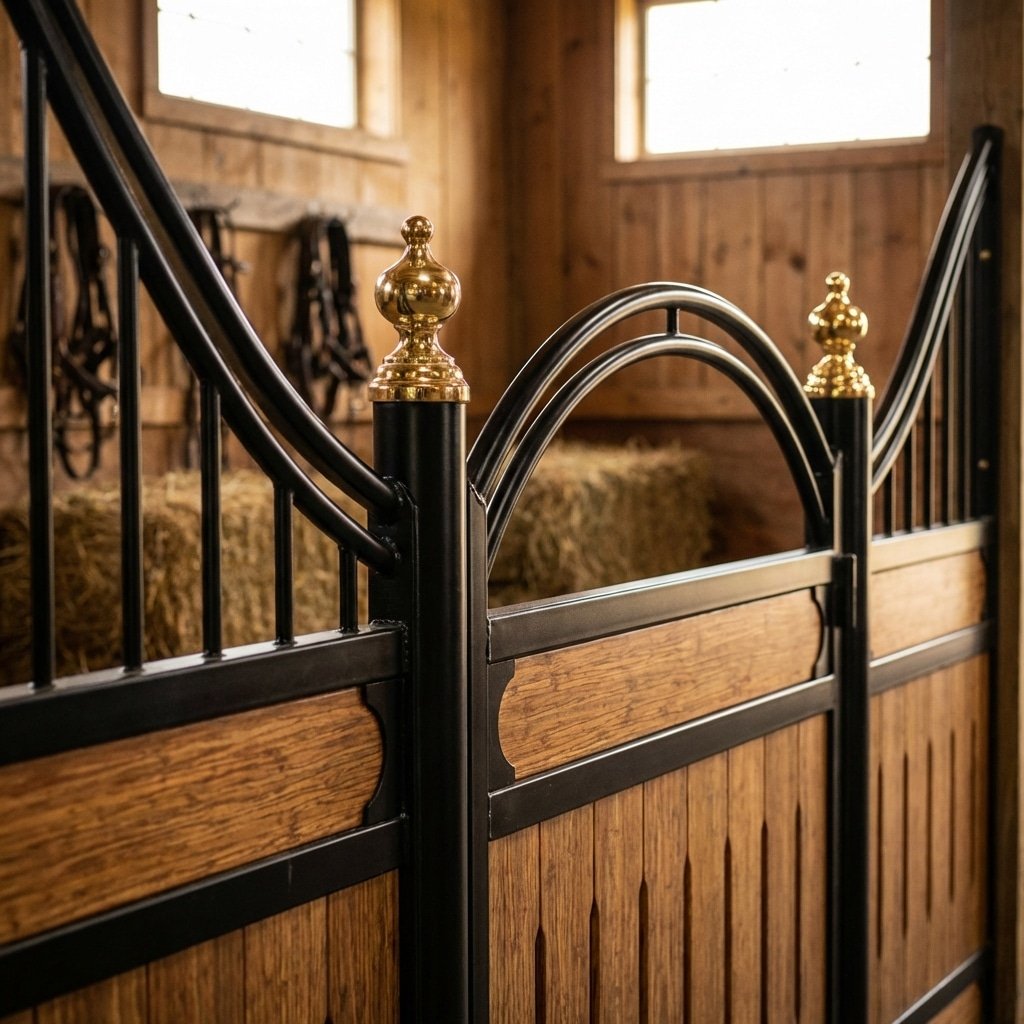
This is where internal stable design becomes critical. Solid stall partitions block airflow, trapping damp, heavy air at the ground level. Open-grill stall partitions are essential for enabling vertical airflow, a principle we call ‘Stack Effect Ventilation’. This design allows the warm, damp air to rise unimpeded from the stall level up towards roof vents. As it exits, it pulls in cooler, drier air from below, creating a constant, natural cycle that keeps moisture from ever condensing on the roof.
The Toxic Mix: Condensation + Ammonia = Equine Asthma
In poorly ventilated stables, condensation traps and concentrates ammonia gas from urine-soaked bedding. Horses inhale this moist, caustic air, which directly damages lung tissue and worsens equine asthma.
How Ammonia Gas Harms Equine Respiratory Health
Ammonia is a caustic gas that forms when bacteria decompose the urea in horse urine. In stalls with poor airflow, this gas becomes highly concentrated right at the horse’s breathing level. The gas actively burns the delicate tissues in a horse’s respiratory tract and eye membranes. This chemical burn causes airway inflammation, increases mucus production, and can trigger severe allergic-type reactions.
The concentration levels found in real-world stables are alarming. Research shows ammonia levels in stalls can spike to 228 parts per million (ppm). To put that in perspective, respiratory problems in other animals are known to begin at just 10 ppm. Horses are breathing air that is over 20 times more toxic than the established safety threshold.
The Role of Open-Grill Stalls in Air Quality
Proper stable design is the most effective tool for managing airborne toxins. Stall fronts and partitions with open-grill designs are engineered to promote vertical airflow, a principle we call “Stack Effect Ventilation.” Solid walls trap air, but open grills allow it to circulate freely between stalls and throughout the barn.
This design is critical because warm, ammonia-laden air is less dense and naturally rises. The open grills provide an escape path, allowing the toxic air to move up and out of the stall instead of getting trapped. This constant air exchange is fundamental to diluting harmful gas concentrations and reducing the ambient moisture that makes the problem worse.
Horse Stables Engineered to Last 20+ Years

Passive Ventilation: Ridge Vents and Eave Gaps
A balanced system of ridge and eave vents creates a natural convection cycle. Cool, dry air enters low at the eaves, while warm, moist air exhausts high at the ridge, preventing condensation.
A properly ventilated barn doesn’t rely on fans alone. The most effective systems are passive, using the laws of physics to move air continuously without any mechanical assistance. A balanced setup with vents at the roof’s peak (ridge) and its lowest edge (eaves) is the foundation for managing moisture and preventing condensation drip from the ceiling.
The Convection Cycle of Roof Ventilation
The entire system runs on a simple principle of natural convection, also known as the stack effect. It’s a self-regulating cycle that doesn’t require any moving parts.
- Cool, dry air enters the structure through continuous gaps or vents located at the eaves (soffits).
- As this air warms from the heat and moisture generated by horses and daily activities, it becomes less dense and naturally rises.
- The ridge vent at the roof’s highest point provides a constant exit for the warm, humid air, completing the cycle and pulling more fresh air in from below.
Open-Grill Stalls Support the Stack Effect
While roof vents manage the attic, airflow *within* the barn is just as critical. Solid stall partitions create dead zones, trapping ammonia-laden air and humidity at the horse’s breathing level. This defeats the purpose of good roof ventilation.
Open-grill stall designs are engineered to prevent this. The grilles allow air to circulate freely between stalls and move vertically, feeding into the barn’s overall stack effect that pushes stale air up and out. This “Stack Effect Ventilation” isn’t an optional upgrade; it’s a standard safety feature across DB Stable’s Economy and Professional series.
The “Stack Effect”: Why Open-Grill Stall Partitions Matter
The stack effect provides natural, cost-free ventilation. Open-grill partitions are essential for this process, letting air circulate between stalls to stop moisture and ammonia buildup barn-wide.
| Feature | Solid Stall Partitions | DB Stable Open-Grill Partitions |
|---|---|---|
| Airflow | Blocked, creating isolated dead zones | Unrestricted horizontal circulation |
| Moisture Control | Traps humid air, causing condensation | Allows moisture to join the rising air column |
| Ammonia Levels | Concentrates at stall level | Dispersed and exhausted effectively |
| Ventilation Scope | Limited to aisles and individual stalls | Enables barn-wide air exchange |
How Natural Airflow Removes Stale Air and Moisture
The stack effect is a simple principle of physics that works 24/7 inside a barn. Air warmed by a horse’s body heat and respiration becomes less dense and naturally rises toward the roof. Every horse adds roughly two gallons of moisture to the air daily just through respiration, making this warm air heavy with humidity.
This rising column of warm, wet air creates a subtle pressure difference inside the building. It continuously draws fresh, cooler, and drier air into the barn from lower openings, like eave vents. At the same time, it pushes the stale, moisture-laden air out through upper vents, such as ridge vents. This creates a constant, slow-moving cycle of air exchange without any need for mechanical fans.
The Role of Open-Grill Partitions in Barn-Wide Circulation
The stack effect only works if air can move freely. Solid stall walls act like dams, blocking all horizontal airflow at the horse level. This design flaw creates isolated dead zones inside each stall where moisture, ammonia, and airborne pathogens concentrate. The natural ventilation system is effectively broken, limited only to the central aisle.
DB Stable’s open-grill partition design is the solution. It allows air to circulate freely between stalls and into the main air column of the barn. This ensures the stack effect functions across the entire structure, not just in open spaces. Every stall benefits from the continuous removal of stale air, dramatically reducing condensation on cold surfaces and keeping ammonia levels in check for better respiratory health.
Managing Moisture from Wash Bays
Wash bay management requires proper drainage to contain water and using materials like hot-dip galvanized steel that resist constant corrosion in high-humidity environments.
A wash bay is one of the most destructive environments in any equestrian facility. The constant presence of water, cleaning agents, and high humidity creates a perfect storm for material degradation and safety hazards. Managing this moisture isn’t just about cleanup; it’s a critical design and engineering challenge.
The Importance of Effective Drainage and Airflow
You have to control moisture at its source. The first line of defense is a well-designed drainage system. Floors must be sloped to robust drains to prevent water from pooling. Standing water is not only a slip hazard but also accelerates the breakdown of concrete and attacks the base of any steel structures.
Getting rid of liquid water is only half the battle. Humid air causes condensation on every cool surface, from ceilings to equipment. Effective ventilation, either through passive design or active air exchange systems, is necessary to pull that damp air out of the building. This simple step reduces the constant moisture film that leads to mold and rust.
Why Hot-Dip Galvanization is a Non-Negotiable Standard
Standard painted or pre-galvanized steel will not survive in a wash bay. The combination of water and chemicals quickly finds any weak point, especially at welds and cut edges, and rust begins immediately. This isn’t just an aesthetic problem; it’s a structural failure waiting to happen.
The only reliable solution is using steel components that undergo **Hot-Dip Galvanization After Fabrication**. This process involves welding the entire panel or structure first, then dipping the complete unit into molten zinc. The result is a total metallurgical bond that coats every surface, inside and out, with a protective zinc layer exceeding 70 microns thick. This method, which adheres to the BS EN ISO 1461 standard, ensures that even the welds and edges are fully protected, preventing rust from ever getting a foothold.
Frequently Asked Questions
How can I prevent condensation in my horse barn?
Preventing condensation requires a combination of insulation, vapor barriers, and ventilation. Insulation keeps interior surfaces from getting cold, vapor barriers block moisture, and a proper ventilation system with ridge and eave vents allows humid air to escape before it turns into water droplets.
What causes the strong ammonia smell in horse stalls?
The ammonia smell is produced when bacteria break down the urea found in horse urine. This process happens most quickly in damp, poorly ventilated areas where urine gets trapped under stall mats or in deep bedding, allowing bacteria to multiply and convert the urea into ammonia gas.
What is the best ventilation system for a horse stable?
The most effective system uses the natural ‘stack effect.’ By installing a continuous ridge vent at the roof’s peak and open eave vents where the walls meet the roof, you allow warm, moist air to rise and exit naturally. This pulls fresh, cooler air in from below, ensuring constant air exchange.
Why does an open-grill stall design improve air quality?
Open-grill stall fronts and partitions are critical for barn-wide ventilation. They allow fresh air moving through the aisle to circulate freely into each stall, which helps dilute ammonia, remove dust, and assist the overall ‘stack effect’ by ensuring warm air can rise unimpeded towards roof vents.
Can a barn be too airtight?
Yes, an airtight barn without a planned ventilation system can trap moisture and ammonia. Without a designated path for humid air to escape, condensation will form on colder surfaces like metal roofing, leading to dripping, rust, and potential mold growth. Controlled ventilation is essential for a dry, healthy barn.
Final Thoughts
The choice isn’t just about managing moisture; it’s about managing business risk. While pre-galvanized steel offers a lower initial price, our Hot-Dip After Fabrication (ISO 1461) standard eliminates rust claims and protects your reputation. Stalls engineered for “Stack Effect Ventilation” solve your customers’ problems, making you the expert supplier.
Verify our engineering firsthand. We recommend a trial order of 3-5 stables to confirm the fitment, finish, and logistical advantages of our flat-pack system. Contact our team to get a quote and discuss your dealer or project requirements.

 English
  Spanish
  French
  Arabic
  German
0 Comments