


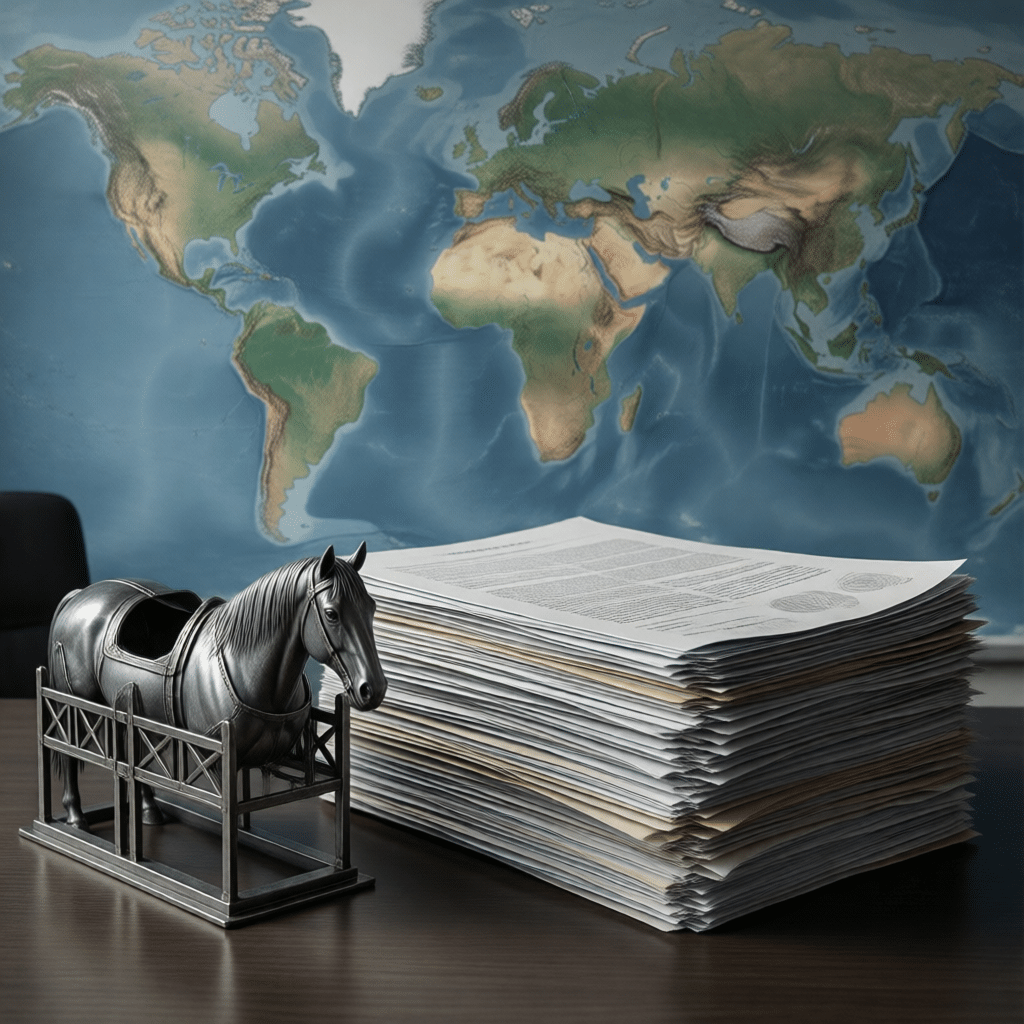
Calculating the Retrofit ROI clarifies the choice between funding endless repairs and making a single capital investment. Continuously patching rusted welds and rotted wood guarantees a perpetual drain on your maintenance budget while compounding safety risks from failing equipment.
This analysis provides a checklist to identify key failure points like compromised welds and wood rot. We contrast the lifecycle cost of temporary fixes with systems built using Hot-Dip Galvanization after fabrication, establishing the financial case for when replacement is the only logical investment.
The “Sunk Cost Fallacy” in Barn Maintenance
The sunk cost fallacy is pouring money into failing stalls because you’ve already spent so much. A better decision ignores past costs and focuses on future value.
When Good Money Follows Bad Repairs
It’s a common story. A facility manager has already spent a significant amount patching up old stalls—re-welding rusted bars or replacing a few rotted planks. The thought of starting over feels like a waste of that initial investment, so they keep funding temporary fixes.
But sound financial decisions look forward, not backward. The money already spent is gone. The only question that matters is: what is the best use of capital *now* to secure the lowest operating cost and highest safety for the future?
Clinging to past expenses just delays the inevitable. This mindset guarantees that maintenance bills will continue to climb and, more importantly, it creates compounding safety risks from failing equipment.
A One-Time Investment to End the Repair Cycle
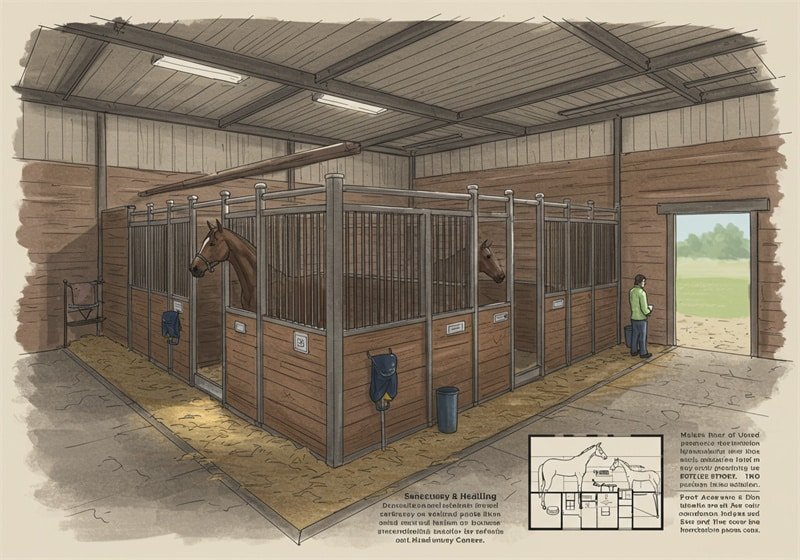
This is where engineered systems change the financial equation. Instead of constantly fighting corrosion, our **Hot-Dip Galvanization After Fabrication** process creates a protective zinc coating over 70 microns thick. This isn’t a temporary paint job; it’s a metallurgical bond that stops the rust that necessitates frequent repairs.
The same logic applies to infill. Instead of replacing, sealing, and repairing broken wood planks year after year, choosing our **’Zero Maintenance’ HDPE** infill completely removes that task from the operational budget. It doesn’t rot, splinter, or require painting.
This approach shifts the investment from a recurring, unpredictable operational expense to a single capital expenditure. You get a predictable, long-lifespan asset instead of a constant drain on your maintenance budget.
The Checklist: Wood Rot, Rusted Welds, and Sagging Doors
Wood rot, rusted welds, and sagging doors are the top signs of structural failure. These checks tell you when simple repairs are no longer enough for safety.
Identifying Common Failure Points in Traditional Stables
Knowing where to look saves money and prevents accidents. Most barns fail in predictable ways due to constant exposure to moisture and mechanical stress. A quick inspection can reveal whether you’re facing a minor fix or a major safety issue.
- Check wood infill boards for any softness, dark discoloration, or mold. These are clear signs of rot that compromise the stall’s integrity.
- Inspect all welded joints on gates and frames. Bubbling paint or obvious red rust means the steel is corroding from the inside out.
- Test door tracks and hinges. Any stiffness, grinding, or misalignment indicates the door is sagging, which creates a serious safety hazard for both handlers and horses.
The Advantage of Hot-Dip Galvanization After Fabrication
Rusted welds are the number one failure point in low-cost stables. The problem starts when manufacturers use pre-galvanized tubing. The welding process burns off the protective zinc coating at every joint, leaving the steel exposed and vulnerable to rust from day one.
Our process is fundamentally different. We build the entire steel frame with raw structural steel first, and only then do we dip the completed structure into molten zinc. This “hot-dip after fabrication” method seals every weld, corner, and crevice, conforming to BS EN ISO 1461. The resulting zinc coating is over 70 microns thick, providing lifetime rust protection at the points where other stables fail.
Global Stables Engineered for 20-Year Durability
The “Fronts Only” Upgrade: A Cost-Effective Mid-Point
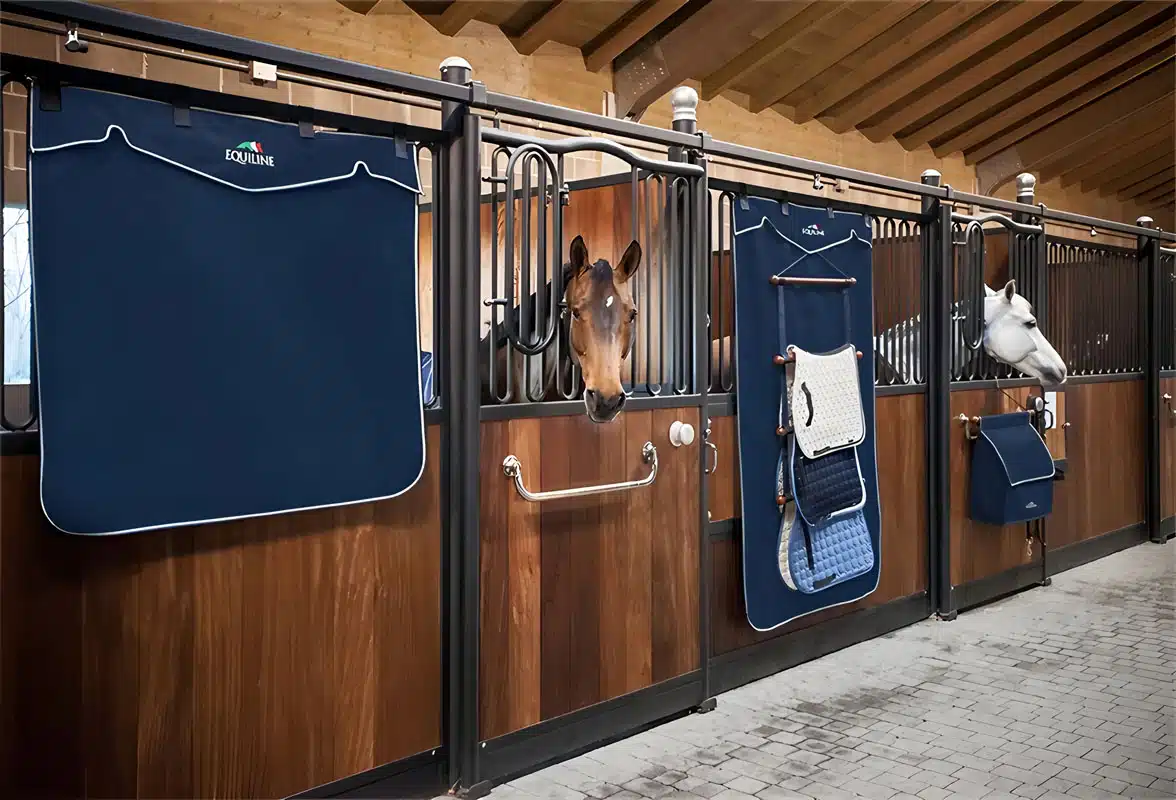
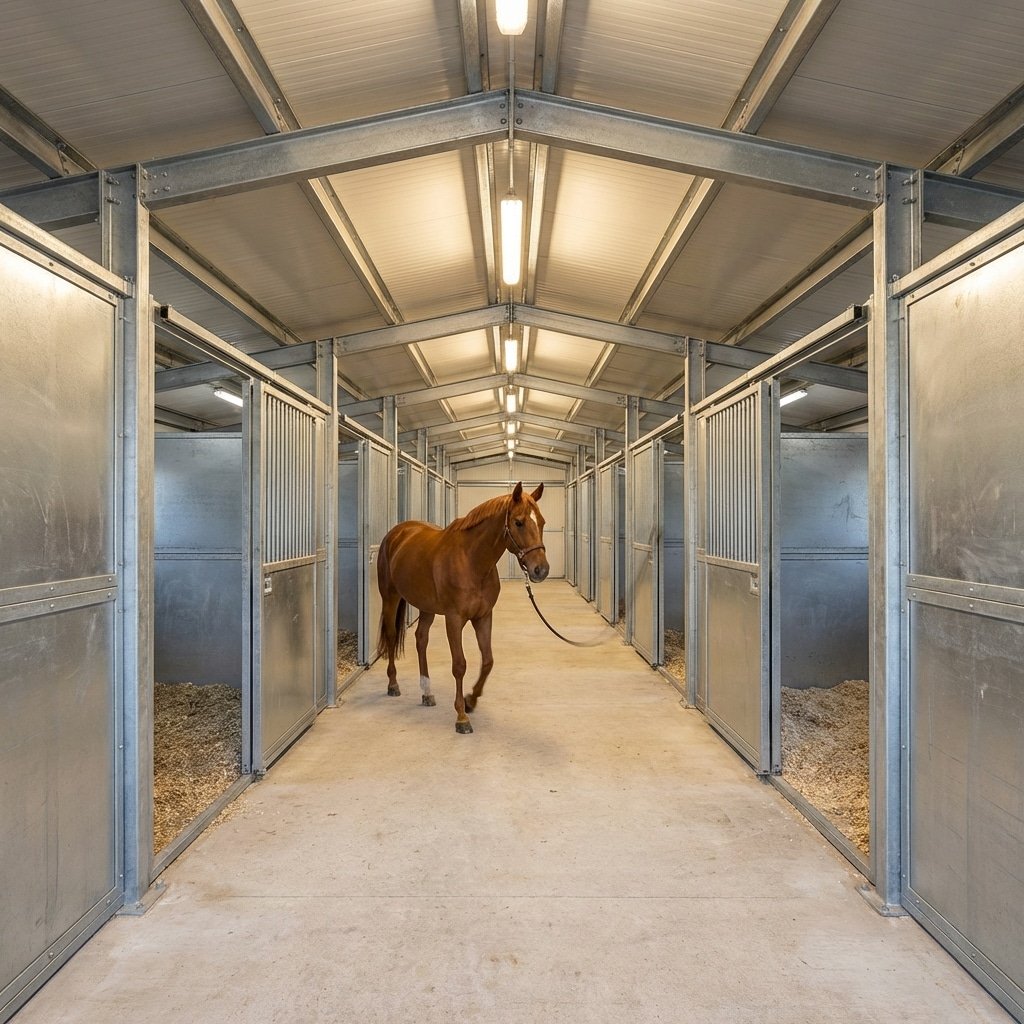
A “fronts only” upgrade replaces worn stall fronts with new steel systems while keeping the existing partitions. It delivers the biggest visual and safety boost for a fraction of a full rebuild cost.
| Metric | “Fronts Only” Upgrade | Full Stall Rebuild |
|---|---|---|
| Cost Investment | Low to Moderate | High |
| Operational Downtime | Minimal (Days) | Significant (Weeks) |
| Visual Impact | High (Transforms barn aisle) | Total Transformation |
| Safety Improvement | Targets highest-risk areas | Comprehensive |
The Logic: Concentrating Budget on High-Wear Components
Many barn owners think they need a full demolition to fix an aging facility. That’s usually not true. The “fronts only” strategy focuses investment where it matters most, delivering an outsized return by addressing the parts of a stable that take the most abuse and have the biggest impact on safety and appearance.
- It targets the most heavily used components: the doors, latches, tracks, and feed openings that fail first.
- You get a complete visual transformation of the barn aisle without the unnecessary cost and labor of replacing perfectly functional partition walls.
- It immediately eliminates the most common safety hazards, such as rusted welds, splintered wood frames, and failing hardware on old fronts.
Engineered for Retrofitting: The DB Stable Front Panel System
This approach works because modern stall systems are engineered specifically for this scenario. The goal is to minimize on-site fabrication and make the installation straightforward, even in older barns with non-standard posts or uneven floors.
- Each stall front arrives as a complete, pre-assembled panel. The door, track system, and all hardware are integrated, ready to connect directly to your existing posts.
- The system includes a universal hardware kit with **304 Stainless Steel** connectors and heavy-duty anchor bolts for a secure fit to wood, steel, or concrete posts.
- We build every panel with structural steel that is **Hot-Dip Galvanized after fabrication** per ISO 1461. This ensures every weld and cut is fully protected, preventing rust and guaranteeing the new fronts will outlast the rest of the barn.
OEM Customization: Fitting New Steel to Old Sheds
OEM customization builds steel stable parts for old sheds with non-standard dimensions. This avoids costly field modifications and extends the building’s life with precision-engineered components.
The Challenge of Non-Standard Barn Dimensions
Older barns and agricultural sheds rarely stick to modern standard measurements. You’ll find inconsistent post spacing, sloped concrete floors, and misaligned connection points that make retrofitting a serious challenge. Trying to force standard, o
ff-the-shelf panels into these unique spaces never works cleanly.
This approach almost always leads to expensive field adjustments. On-site cutting, grinding, and welding are required to make parts fit, which compromises the structural integrity and destroys the protective galvanized finish. That rework not only adds significant labor costs but also invites premature rust.
Manufacturing Custom Panels for a Seamless Fit
As a B2B OEM source factory, we solve this problem by producing stable fronts and partitions to the exact specifications of a given retrofit project. By working with precise measurements from the existing structure, we engineer components that bolt in cleanly without any on-site fabrication.
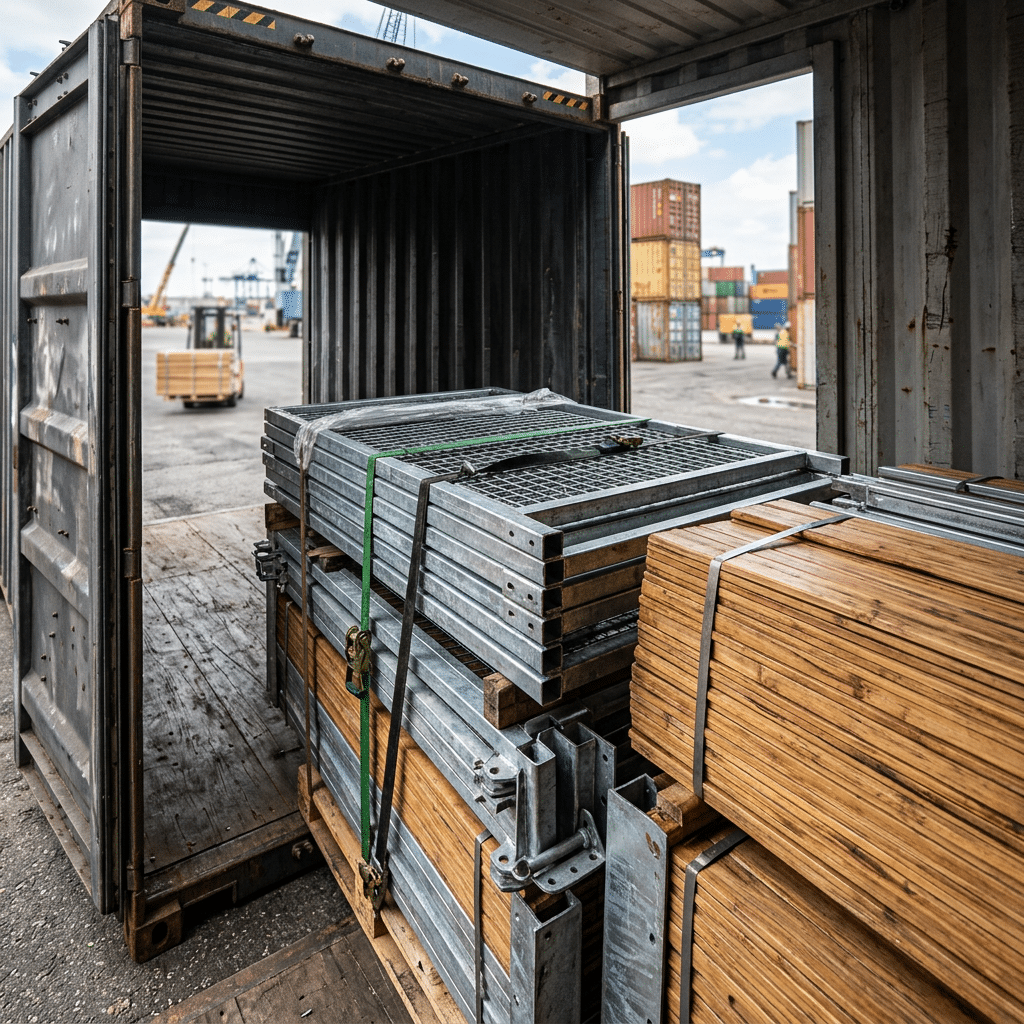
Our steel pallet flat-pack system delivers the complete solution to the job site. Each kit contains the pre-fabricated Q235B steel frames and pre-cut infill boards. This method ensures a perfect fit, maintains the integrity of the hot-dip galvanized coating, and eliminates the time and expense of field modifications.
Boosting Boarding Rates with a Facelift
Upgrading worn-out stable fronts to modern, safe systems enhances a facility’s perceived value. This allows owners to attract premium clients and command higher boarding rates.
How Aesthetics Influence Perceived Value
A potential client’s first impression is everything. A barn that looks clean, modern, and rust-free immediately signals high standards of care and a commitment to safety. This visual proof justifies premium pricing before you even start talking abou
t services.
Visible signs of neglect like rotted wood, bent bars, or peeling paint create immediate objections. Eliminating these issues doesn’t just improve looks; it builds the trust required for a client to accept higher boarding fees without hesitation.
Premium Finishes for a High-End Look
For facilities aiming for the top of the market, the finish is critical. Our Royal Series offers a dual-protection finish that combines a hot-dip galvanized base with a tough powder coat. This system delivers lasting color and superior rust prevention, maintaining that high-end look for years.
Custom details also set a facility apart. Options like brass finials and European-style arched fronts create a bespoke appearance that differentiates your barn from local competitors. This professional image is what high-paying clients are looking for.
Frequently Asked Questions
Is it worth repairing old horse stalls versus replacing them?
The choice between repair and replacement comes down to the extent of the damage. Minor repairs on stalls that are still structurally sound can be a practical short-term fix. But if you’re dealing with significant rust or wood rot, a full replacement with a modern, low-maintenance system is almost always a better long-term investment. It cuts down on future maintenance labor and reduces the risk of injuries and vet bills caused by failing equipment.
How much should I budget to replace a stable front?
The budget for a new stable front varies widely based on materials. Basic wood or pre-galvanized steel are cheaper upfront but will require constant upkeep and early replacement. A better approach is to invest in systems with hot-dip galvanized steel frames and durable infills like HDPE or high-density bamboo. The initial cost is higher, but they offer far greater longevity and safety, paying for themselves over time.
Can new stall fronts be installed onto existing barn walls?
Yes, installing new fronts onto existing walls is a very common way to upgrade a barn. As long as your current walls are structurally sound, most modern stall systems are engineered to connect directly to them. If a wall isn’t suitable or you’re starting a new line of stalls in an open space, a starter post is used to anchor the first panel independently.
What are the primary cost factors in a barn renovation?
The biggest expenses in any barn renovation are typically structural. This includes work on the foundation, a new roof, and major components like doors and windows. The quality of the materials you select for these items will drive the total cost. The new stall system itself is a major component, and your choice of materials there will significantly influence the final budget and long-term value of the project.
Beyond boarding fees, how can a stable generate more income?
Upgrading your facility with high-quality, safe, and visually appealing stalls lets you justify higher boarding rates. A renovated barn also creates new revenue opportunities. You can begin offering premium services like professional training or grooming, or rent the improved space to outside trainers for clinics and educational events. Better facilities attract a higher-paying clientele who value safety and aesthetics.
Final Thoughts
Choosing stalls based on price alone leads to early failure and warranty claims. Our commitment to Hot-Dip Galvanization After Fabrication (ISO 1461) protects your reputation by eliminating rusted welds. This level of engineering ensures the products you sell enhance your brand, not damage it.
The next step is to verify our engineering for yourself. We build custom panels to your project’s exact dimensions, ensuring a perfect fit for any retrofit. Contact our team to get a quote for a trial order or discuss your OEM requirements.

 English
  Spanish
  French
  Arabic
  German
0 Comments