


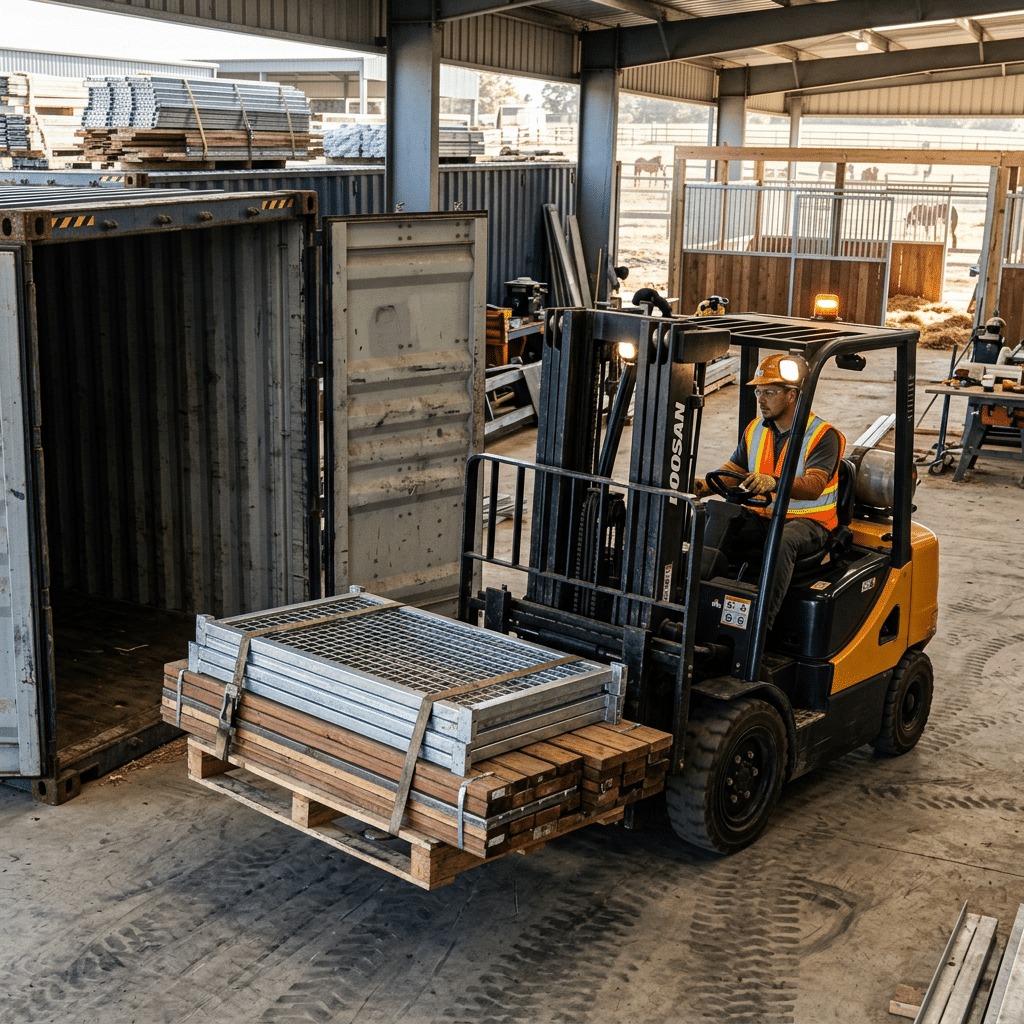
Installation labor cost is the most volatile expense in stable construction, often consuming 40% of the budget with on-site fabrication. Hiring local contractors introduces hidden expenses from overtime, fire-watch safety requirements, and the long-term liability of unprotected welds, directly eroding project margins.
This analysis compares that high-risk model to an engineered kit. We show how a complete flat-pack system, manufactured to the ISO 1461 galvanizing standard, replaces specialized welders and compresses a 14-day fabrication timeline into a predictable three-day assembly.
The Hidden Expense: On-Site Fabrication Labor
On-site fabrication costs go far beyond the hourly wage, including hidden expenses like payroll taxes and tool depreciation. This makes an engineered stable kit a more predictable solution.
Calculating the True Cost of a Fabricator
The hourly rate you pay a local welder is just the starting point. The actual cost to your project gets inflated by expenses that don’t appear on the initial quote. These factors are why custom-built projects frequently go over budget.
The total labor burden includes several layers of cost:
- Wages and Overtime: This is the base hourly pay plus any overtime, which is common on projects with tight deadlines.
- Mandatory Overheads: Payroll taxes, insurance, and benefits can easily add 25% or more on top of the base wage.
- Job-Site Expenses: This covers consumables like welding gas and grinding discs, plus the depreciation of tools brought to the site.

How a Flat-Pack System Controls Labor Expenses
An engineered, flat-pack stable system changes the equation. It replaces the unpredictable costs of raw fabrication with a straightforward assembly process. Our system is designed to remove the variables that inflate labor budgets.
- Complete Kit Delivery: Every component arrives together on a steel pallet. Your crew isn’t wasting time sourcing missing parts or waiting for separate deliveries.
- Full Hardware Included: The system includes a complete hardware kit with all necessary 304 Stainless Steel bolts and connectors. This eliminates trips to the hardware store.
- Pre-Cut Infill: HDPE or Bamboo infill planks are delivered pre-cut to size. This removes the labor-intensive work of measuring, cutting, and fitting boards on-site.
The Risk of On-Site Welding (Fire & Rust)
On-site welding creates major fire hazards from sparks and long-term rust issues at unprotected welds. The required safety protocols significantly increase labor costs and project timelines.
The Hidden Labor of Fire Prevention
Welding on-site isn’t just about joining metal; it’s a major logistical and safety undertaking. A single welding spark can travel over 35 feet, creating a massive hazard zone that requires meticulous preparation. Every piece of combustible material, from hay and wood shavings to stored supplies, must be removed or shielded with fire-retardant covers. This preparation adds hours, or even days, to the project timeline.
The costs also include dedicated personnel. Safety regulations often mandate a fire watcher on-site during all welding operations. This person’s only job is to watch for stray sparks. Their labor doesn’t end when the welder stops; they must remain on watch for at least 30 minutes after completion to ensure no smoldering embers ignite a fire. This is non-productive labor that you still have to pay for.
How ‘Hot-Dip After Fabrication’ Stops Rust at the Source
The biggest long-term failure of on-site welding is rust. When metal is welded, the extreme heat burns off any protective coating, leaving the raw steel at the weld seam completely exposed. This is where corrosion begins. Painting over it is a temporary fix at best.
Factory-based manufacturing avoids this entirely. We weld all stable panels using bare Q235B structural steel first. Then, the entire completed panel—including every weld, corner, and crevice—is submerged in a bath of molten zinc. This process, called Hot-Dip Galvanization After Fabrication, creates a full protective layer that conforms to the strict ISO 1461 standard. The resulting zinc coating of over 70 microns ensures the vulnerable weld seams are sealed, eliminating the entry point for rust and guaranteeing a much longer structural life.
Durable Horse Stables for Any Climate
The Modular Advantage: “Adult Lego” Assembly
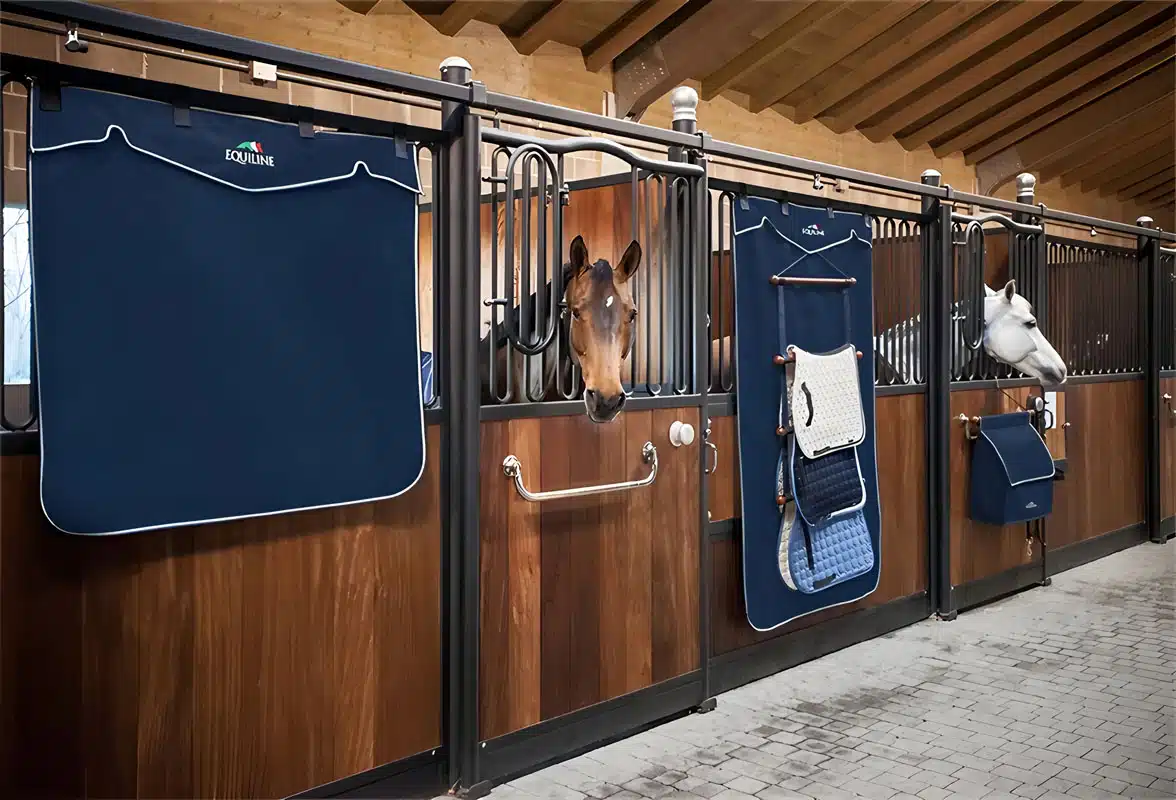
Our horse stables ship as pre-fabricated kits. This design cuts on-site labor by eliminating welding and more than doubles container capacity, directly protecting distributor profit margins.
The biggest hidden costs in any stable project are on-site labor and logistics. Traditional, fully-welded stables require specialized tradesmen and are incredibly inefficient to ship. We solved this by designing a modular system that arrives as a complete, flat-packed kit. All the complex fabrication is done with factory precision, so installation on-site becomes a straightforward assembly process using basic tools. This isn’t just about convenience; it’s a strategic approach to reduce project costs and protect our distributors’ profits from unpredictable expenses.
Shifting On-Site Complexity to Factory Precision
On-site welding is a major bottleneck. It introduces fire risks, requires certified welders who are expensive and hard to find, and adds significant time to any project. Our modular system moves this entire process into our controlled factory. Every component is manufactured to tight tolerances, ensuring a perfect fit every time. This fundamentally changes the on-site requirements.
- It eliminates the need for specialized on-site labor like welders and fabricators, bypassing skilled labor shortages.
- Every component is pre-fabricated with precision, guaranteeing consistent quality and fit that on-site work can’t match.
- Assembly only requires basic tools like an impact driver, not heavy industrial equipment or welding rigs.
The Flat-Pack System for Maximum Logistics Efficiency
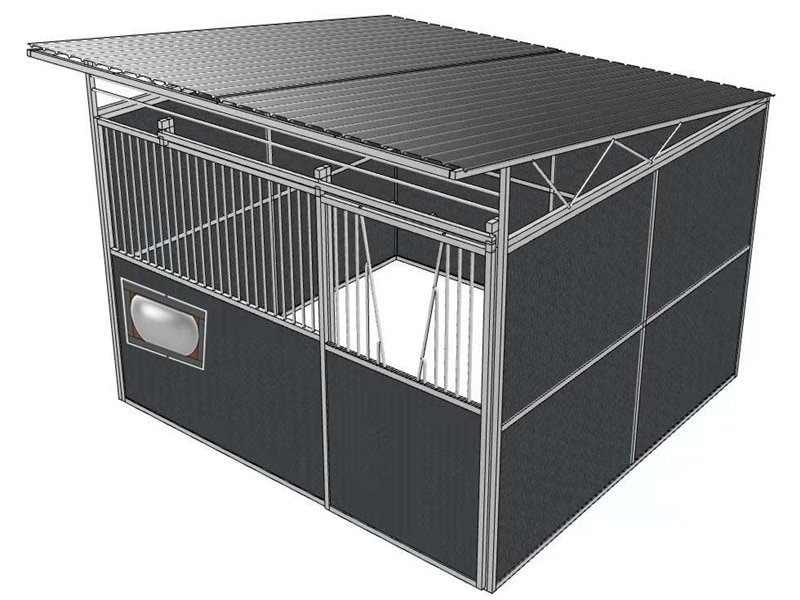
Freight costs can destroy the profitability of an import business. A standard 40HQ container can only fit about 12 to 15 fully welded stable sets. Our flat-pack system allows us to load between 30 and 45 sets into that same container. This isn’t a minor improvement; it’s a massive reduction in the per-unit shipping cost that we pass on to our partners. The system is designed from the ground up for safe and efficient handling.
- All components are packed securely onto steel pallets, which prevents damage and lost parts during transit and makes unloading simpler.
- The design enables loading 30-45 stable sets per 40HQ container, a 100%+ increase over traditional welded units.
- The complete kit includes everything needed for assembly: pre-cut HDPE or Bamboo infills and all necessary 304 Stainless Steel hardware.
Time Study: 3 Days (Kit) vs. 14 Days (Contractor)
A DB Stable kit installs in about 3 days, while traditional on-site contractor fabrication takes 14+ days. This 75% reduction in labor directly cuts project costs and disruption.
| Metric | DB Stable Kit (3-Day Install) | Traditional Contractor (14-Day Install) |
|---|---|---|
| Installation Time | Approx. 3 days for two people | 14+ days |
| Required Skills | Basic DIY skills with standard tools | Skilled welders and metal fitters |
| On-Site Fabrication | None. System is 100% bolt-together. | Extensive cutting, welding, and grinding required |
| Cost Impact | Dramatically reduced labor expense | Labor accounts for 25-40% of total project budget |
Labor as a Primary Project Expense
On any stable build, labor is a massive part of the budget, often hitting 25-40% of the total cost. When a contractor team is on-site for 14 days or more to cut, fit, and weld steel panels from raw stock, you are paying skilled tradesmen for every single hour. Those labor costs accumulate quickly and can easily inflate the final project price beyond initial estimates.
The DB Stable Flat-Pack System Advantage
Our system eliminates that entire cost variable. Every stable arrives on a secure Steel Pallet Flat-Pack. All steel panels are precisely manufactured, and the HDPE or Bamboo infill planks are pre-cut to size. The whole structure assembles with the included Installation Kit, which contains all necessary 304 Stainless Steel hardware. There is zero on-site welding or custom fabrication needed. This is how a two-week fabrication job turns into a simple three-day assembly.
Tools Required: Impact Drivers vs. Welders
Building a stable from raw steel requires specialized welders, grinders, and certified labor. A DB Stable modular kit needs just one primary tool: an impact driver.
On-Site Fabrication: The Welder and Grinder Toolkit
Traditional on-site stable fabrication is a manufacturing process executed in an uncontrolled environment. This approach demands a heavy-duty toolkit and a specialized, expensive labor force. The equipment list isn’t just long; it introduces significant
safety and logistical complexities to any project.
- Specialized Welding Equipment: You need industrial-grade MIG or stick welders to join structural steel. Plasma cutters are also required for precise cuts, creating a high-energy, high-risk work zone.
- Cutting and Grinding Tools: Angle grinders are essential for cutting raw steel tubing and preparing joints for welding. This generates a high volume of sparks, noise, and metal dust.
- Certified Labor and Safety Protocols: Welding isn’t a job for general laborers. It demands certified professionals who understand metallurgy and safety. On-site welding also requires stringent fire precautions, including clearing a 35-foot perimeter of combustibles and employing a dedicated fire watcher.
Modular Kit Assembly: The Impact Driver and Hardware Kit
A modular system completely changes the tool requirements and skill threshold for installation. Instead of fabricating on-site, the job becomes simple mechanical assembly. The complex, dangerous work is already done in a controlled factory environment.
- The Primary Tool: A standard cordless impact driver is the main tool needed. Its job is to quickly and securely fasten components together using the provided hardware.
- Complete Hardware Kit: Every DB Stable system ships with a dedicated Hardware Kit. It includes all necessary 304 Stainless Steel bolts, nuts, and connectors, eliminating guesswork and supply runs.
- Zero On-Site Hot Work: The entire process requires no on-site welding, cutting, or grinding. This removes the fire risk, eliminates the need for certified welders, and dramatically simplifies the installation from a safety and liability standpoint.
Frequently Asked Questions
Can I install the stable system myself, or do I need a professional?
Yes, our stable systems are designed for self-installation. If you have basic DIY experience and common tools like an impact driver and socket wrench, you can assemble the panels. Each kit comes with all necessary hardware and instructions. Having a second person helps when handling the larger panels.
Is any on-site welding required during assembly?
No, our modular stable kits are a complete bolt-together system. No welding is necessary. All components are pre-fabricated and galvanized after fabrication, so you simply connect the panels using the included stainless steel hardware. This eliminates fire risks and the need to hire a specialized welder.
What is the real advantage of ‘Hot-Dip Galvanization After Fabrication’?
This process is critical for long-term rust protection. We weld the entire steel frame first and then dip the complete panel into molten zinc. This ensures every weld, corner, and edge is fully coated, conforming to ISO 1461 standards with a coating over 70 microns thick. Competing products that weld pre-galvanized tubes leave the welds exposed and vulnerable to immediate rust.
What is the difference between your Q235 and Q345 steel options?
Q235 is our standard structural steel, suitable for most climates. For regions with harsh winters, we strongly recommend the Q345 steel upgrade. It has superior low-temperature toughness, meaning it remains ductile and resists brittle fractures from horse kicks even in freezing conditions, providing an extra layer of safety.
How does the flat-pack design benefit me as a distributor?
The flat-pack system is designed to protect your profit margins. A standard 40HQ container can fit 30-45 of our flat-packed stable sets, compared to only 12-15 sets of fully welded stables. This drastically reduces the per-unit shipping cost, making your business more competitive and profitable.
Final Thoughts
The choice isn’t just contractor versus kit; it’s about predictable profit versus hidden risk. Local fabrication exposes your projects to runaway labor costs and inevitable rust claims at the weld seams. Our factory-controlled, Hot-Dip Galvanized system eliminates these variables and protects your reputation.
Don’t just take our word on the labor savings and build quality. We recommend a small trial order to assemble a unit yourself and confirm the precision. Contact our team to get the specifications and pricing for your first container.

 English
  Spanish
  French
  Arabic
  German
0 Comments