


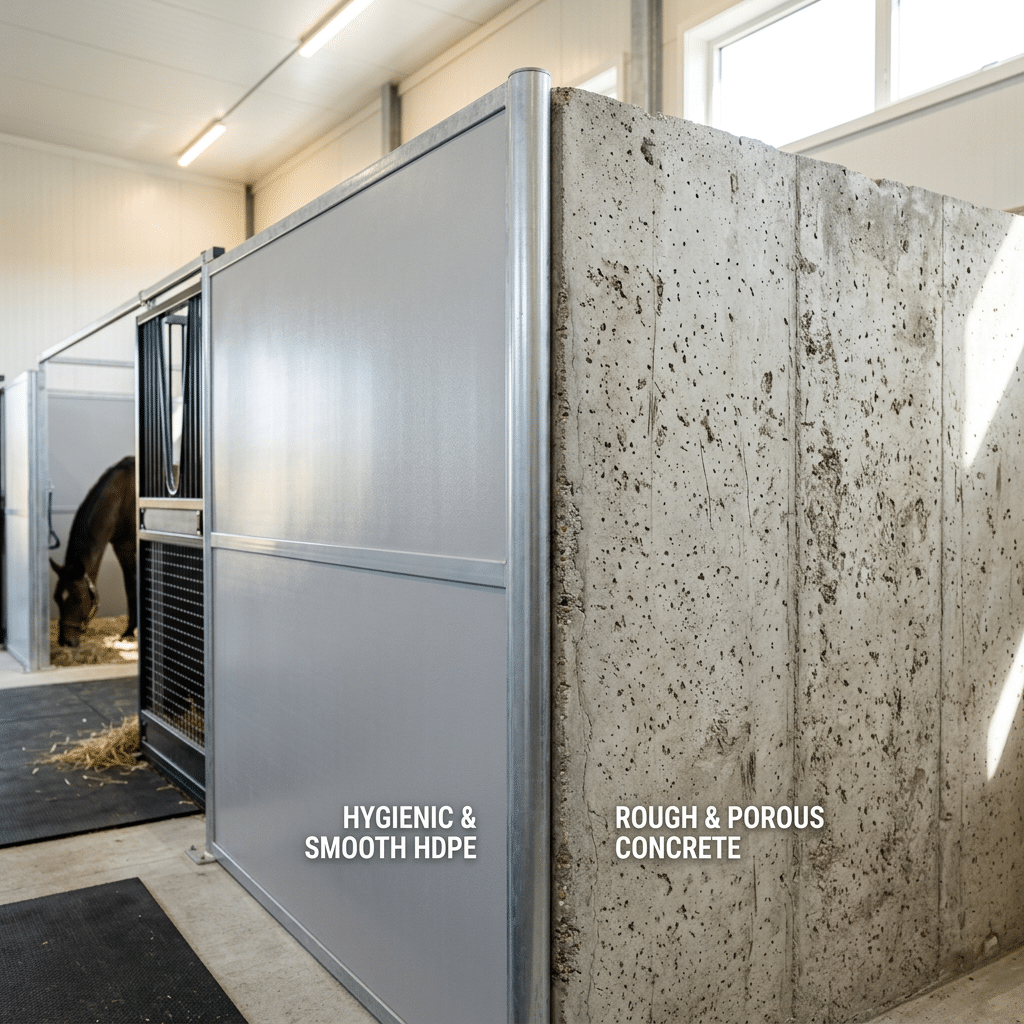
The PVC vs Steel Fencing decision often ignores a critical liability: shatter risk. While PVC offers a clean look, cold weather embrittlement means a single kick can create sharp plastic splinters and an immediate containment breach. This failure directly exposes farm owners to catastrophic vet bills and the financial liability of a loose horse.
This analysis moves past aesthetics to focus on material engineering. We evaluate steel based on its low-temperature impact toughness and verifiable rust protection under the ISO 1461 galvanizing standard. These metrics provide a data-driven framework for choosing a fence that contains assets, not just decorates a property line.
The Secret Supply Chain of Equestrian Catalogs
The equestrian supply chain is a global network starting in manufacturing hubs like Hebei. Goods move through distributors, and this layered system directly impacts customer cost and availability.
Mapping the Global Network: From Factory to Distributor
The journey for most heavy-duty equestrian equipment begins at specialized manufacturing hubs. Regions like Hebei Province in China are major players, focusing specifically on metal stable components, fencing, and structural hardware. This regional specialization creates efficiencies of scale for raw materials and skilled labor.
From the factory floor, these goods are exported to wholesale distributors. Companies like Jacks MFG or JPC Equestrian act as the crucial bridge between mass production and retail access. They buy in bulk, manage importation and warehousing, and then supply the catalogs and tack shops that end-users are familiar with.

The Distributor’s Edge: Flat-Pack Logistics for Profit Protection
Our factory-direct model is built for distributors. We focus on logistical engineering to protect their margins, because shipping air is a waste of money. Ocean freight is the single biggest variable cost in this business, and inefficient packing can destroy a distributor’s profit before the product even lands.
The DB Flat-Pack System is the solution. By shipping components on steel pallets instead of fully assembled, we fundamentally change container capacity. This simple shift in design makes a massive difference in freight costs.
- DB Flat-Pack System: A single 40HQ container holds 30-45 stable sets.
- Traditional Welded Stalls: The same 40HQ container only fits 12-15 sets.
What Makes a Good OEM Partner? (Scalability & QC)
A strong OEM partner shows scalability through efficient logistics, like high-density container loading, and proves its commitment to quality control with verifiable certifications like ISO 9001.
The Importance of Production Scalability
Your business relies on a manufacturer’s ability to handle both a ten-stable project order and a multi-container distributor order with the same reliability. Consistent lead times are not about having an empty factory; they are the result of a stable, predictable production system that works under pressure.
But the biggest factor in scalability is logistics efficiency. A partner using outdated, fully-welded designs can only fit 12-15 stable sets in a 40HQ container. This makes freight costs per unit impossibly high. A smart flat-pack system loads 30-45 sets into the same container. That single detail protects your shipping budget and your final profit margin.
Verifiable Quality Control with ISO Certifications
“Quality” is a useless marketing buzzword without proof. Real quality control comes from documented, verifiable systems that you can check. Certifications are not just about passing a test; they are evidence of a manufacturing culture built on process and consistency.
- ISO 9001 (Quality Management System): This is the operational blueprint. It proves a factory has a reliable system for handling orders, inspecting raw materials, and ensuring every product that leaves the line meets the same standard.
- ISO 1461 (Hot-Dip Galvanizing): For steel products, this standard is critical. It defines the correct process and minimum thickness for rust protection, ensuring the coating is built for longevity, not just for looks.
- Efficient Logistics as Proof: A system that flat-packs 30-45 stable sets per container is a direct indicator of process control. It demonstrates an organized, repeatable engineering and packing workflow that minimizes errors and protects the product until it reaches your warehouse.
Invest in Stables Engineered to Last

Top 5 Factories Offering White-Label Services
Leading white-label manufacturers offer specialized services globally, from skincare in China to certified organic formulations in Europe, serving diverse B2B brand requirements.
| Manufacturer | Location | Main Products | Key Strength |
|---|---|---|---|
| Metro Private Label | Guangzhou, China | Serums, skincare formulations, cosmetic solutions | Located in a major cosmetics hub with an established supply chain. |
| COSMECO | Italy | Skincare, haircare, makeup, organic formulations | Full-service solutions with COSMOS and ECOCERT certifications. |
| Made By Nature Labs | Sofia, Bulgaria | Skincare, haircare, natural and organic personal care | Extensive catalog of 400+ formulations and eco-friendly practices. |
| Vitelle Labs | Vancouver, Canada | Plant-derived cosmetics, natural formulations, spa products | Specializes in plant-based ingredients with a focus on quality. |
| Nutrix | Salt Lake City, USA | Serums, skincare formulations, private label cosmetics | Established US-based manufacturing with a strong reputation in skincare. |
Intellectual Property (IP) Protection in China
China’s courts now offer stronger IP enforcement. For B2B partners, real protection comes from clear OEM/ODM contracts that define ownership over all tooling and design rights.
Understanding the Modern IP Enforcement Climate
The narrative that IP protection in China is weak is outdated. Recent court judgments show a real commitment to protecting foreign enterprises, with courts granting significant damages and injunctions against infringers. The legal landscape has matured.
Successful legal strategies often use a dual-pronged approach. Instead of just focusing on one area, effective cases address both patent infringement and the misappropriation of trade secrets at the same time. This creates a much stronger and more comprehensive legal position.
Contractual Safeguards for Tooling and Design Rights
As a dedicated B2B OEM/ODM manufacturer, our primary concern is protecting our partners’ investments. We use explicit contracts to define ownership from day one. These agreements clearly state that our partner owns all intellectual property, including any unique tooling or molds created for their product line.
This contractual control is a central part of our ‘Profit Protection’ strategy. It isn’t just a legal formality; it’s a practical barrier that prevents a factory from producing your exclusive designs for anyone else. Your investment in unique products remains secure because the legal framework is built into our partnership agreement.
The DB Advantage: Your Brand, Our Engineering
We provide certified engineering, manufacturing, and freight-saving logistics. You sell high-quality stables under your brand, focusing on market growth without factory overhead.
Leveraging a Source Factory Model
We operate as a B2B OEM/ODM source factory. This means we don’t sell to individual horse owners; we focus exclusively on building long-term relationships with distributors and supporting large-scale projects. This model lets you market and sell premium stable systems under your own brand without the massive investment in production facilities, machinery, or specialized labor.
You get to bypass the entire headache of managing manufacturing and complex certifications. Our factory maintains the critic
al credentials that guarantee a consistent, verifiable standard for every product that leaves our doors.
- ISO 9001: Verifies our Quality Management System for consistent production.
- ISO 1461: Confirms our Hot-Dip Galvanizing process meets international anti-corrosion standards.
Engineering That Protects Your Profit Margins
Logistics costs can destroy a distributor’s profit. We designed our Steel Pallet Flat-Pack System specifically to solve this problem. Instead of shipping bulky, fully-welded stable fronts, our system packs components intelligently onto custom steel pallets. The difference in container utilization is significant.
- Traditional Welded Stables: 12-15 sets per 40HQ container.
- Our Flat-Pack System: 30-45 sets per 40HQ container.
This efficiency cuts international freight costs by over 60%. It’s a direct engineering advantage that protects your logistics margins and makes your final pricing far more competitive in the market.
Frequently Asked Questions
What is the process for starting a new equestrian equipment brand?
It starts with market research to find your audience and a unique brand story. Focus on launching with just 2-3 core products. The design process usually begins with mood boards and existing garments to create a detailed ‘tech pack’ for your manufacturer. The most critical step is finding a factory that genuinely understands equestrian products and their specific functional demands.
How does white label manufacturing work?
A factory produces a generic, unbranded product that multiple companies can buy. Each company then puts its own logo, branding, and packaging on the item to sell it as their own. It’s a way for brands to get product to market quickly without the heavy investment in R&D or building their own production lines.
What should I look for in an OEM horse stable factory?
Look for proof of quality and specialization. Check for certifications like ISO 9001 for quality management and ISO 1461 for hot-dip galvanizing standards. A good partner has deep experience in your target market, whether that’s meeting EU animal welfare standards or Australian UV resistance needs. They should have full control over their production to manage costs and quality, not just outsourcing key steps.
How can I protect my unique stable or fencing design?
You protect your intellectual property with patents. A utility patent protects a new function, like a unique latch system. A design patent protects the unique visual look of the product. The standard process is to file applications early with detailed technical drawings to secure your rights before competitors can copy the design.
What is a typical Minimum Order Quantity (MOQ) for custom stable components?
A Minimum Order Quantity (MOQ) is the smallest order a factory will accept. It varies a lot. For complex fabrications like horse stables, the MOQ is usually structured around shipping efficiency. A small trial order might be 3-5 stables. A standard project order would be a full 20GP container (about 10-15 sets), and a stock order for a distributor would be a 40HQ container (30-40 sets).
Final Thoughts
Welded pre-galvanized tubing offers a lower invoice price, but it creates a long-term liability from rust claims at the seams. Our ISO 1461 Hot-Dip After Fabrication process is the only way to protect your brand’s reputation. Quality inventory builds the dealer loyalty that protects your margins.
Verify this engineering firsthand. A trial order of 3-5 stables lets you test the material quality and assembly fit before a full container commitment. Contact our B2B team to get the technical drawings and discuss a private label partnership.

 English
  Spanish
  French
  Arabic
  German
0 Comments