


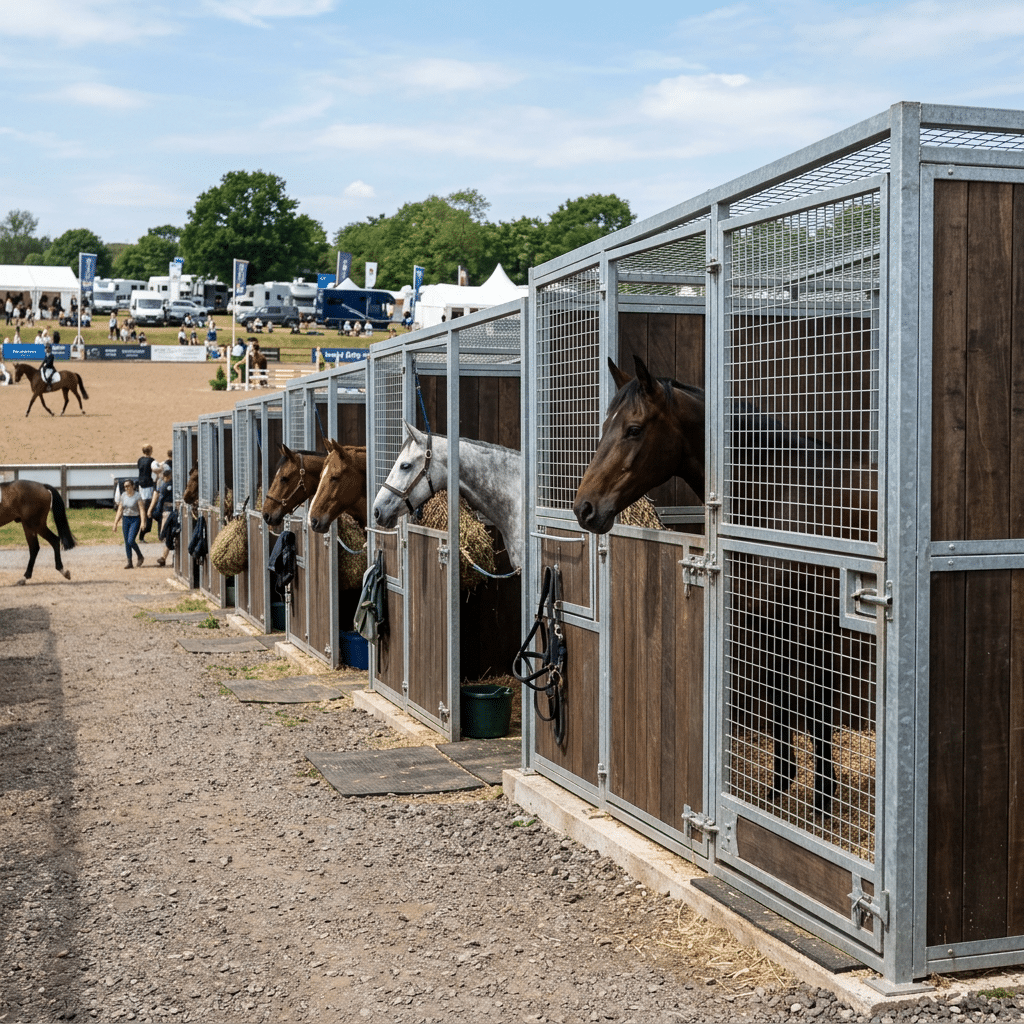
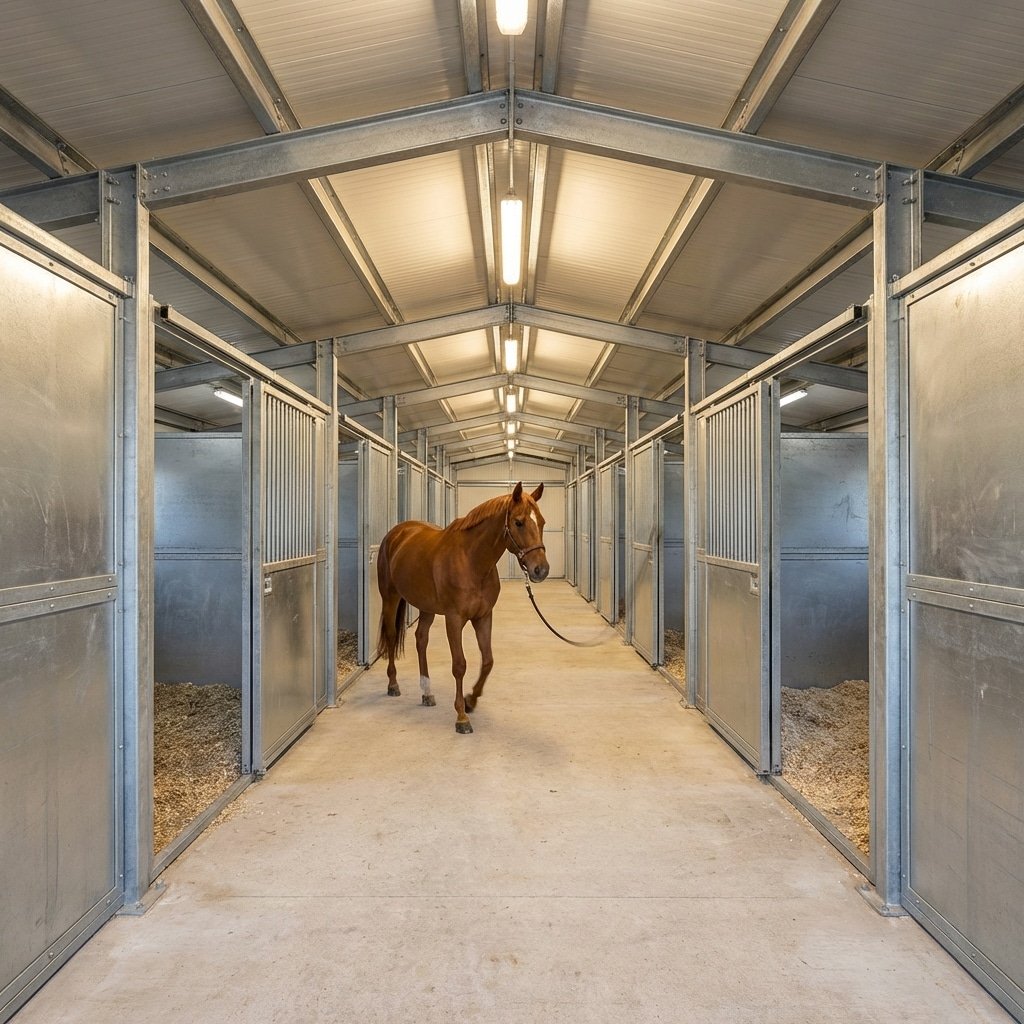
Sourcing true Hot-Dip Galvanized stables is a critical defense against the warranty claims that follow pre-galvanized product failures. Cheaper alternatives that weld pre-coated tubes burn off protection at every joint, hiding the inevitable rust points under a thin layer of paint. This manufacturing shortcut directly threatens a distributor’s margin and reputation.
This analysis benchmarks factories against the ISO 1461 standard. We evaluate suppliers on verifiable engineering—confirming the ‘Hot-Dip After Fabrication’ process and average zinc coatings over 70 microns—to provide a reliable sourcing guide for long-term structural integrity.
Global Stable Solutions Engineered for Durability

The “Pre-Galvanized” Deception in Sourcing
Many low-cost stables are built with “pre-galvanized” tubing, meaning the steel was coated *before* being welded. This shortcut burns off the protective zinc at every weld seam, leaving the most critical structural points exposed to rust. These weaknesses are often hidden under a thin layer of paint, creating a product destined for premature failure and costly claims for distributors.
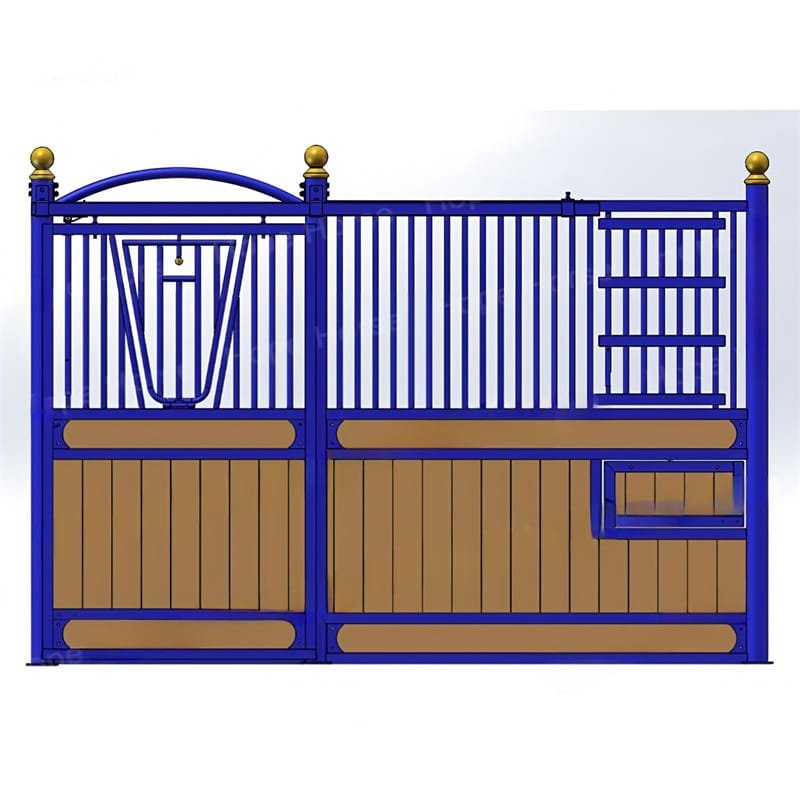
How Pre-Galvanized Tubing Creates Hidden Weaknesses
This manufacturing method uses steel tubes that were galvanized before being cut and welded into a stable panel. The intense heat from welding completely vaporizes the protective zinc coating at every joint, leaving the raw Q235B steel exposed. Some suppliers attempt to cover these burn marks with a thin layer of zinc-rich paint, but this cosmetic fix offers minimal protection and easily flakes off, exposing the vulnerable steel beneath.
The Weld Seam: The First Point of Failure for Rust
Weld seams are the most critical stress points on a horse stall, and on pre-galvanized products, they are also the most vulnerable to rust. Constant exposure to moisture and ammonia in a stable environment quickly attacks these unprotected welds, causing corrosion from the inside out and compromising the entire structure. Our approach, **Hot-Dip Galvanization After Fabrication**, is fundamentally superior. We weld the entire stable panel first from raw steel, then immerse the completed structure in molten zinc. This process coats every surface—including all seams and corners—in a uniform, protective layer that exceeds 70 microns thick, conforming to the rigorous ISO 1461 standard.
Why “Hot-Dip AFTER Fabrication” is the Only Rust Guarantee
The only way to ensure true, long-term rust prevention is to hot-dip galvanize the entire stable panel *after* all welding and fabrication is complete. This method completely seals every weld, edge, and internal surface with a thick, metallurgically bonded zinc coating. Cheaper alternatives that weld pre-galvanized tubes simply burn off the protection at the joints, creating immediate failure points.
Total Immersion: S
ealing Welds, Edges, and Internal Cavities
We first fully assemble and weld each stable panel using high-strength Q235B or Q345B structural steel. This creates all the stress points and joints before any protective coating is applied. By doing this, we guarantee the structural integrity of the frame from the start.
The entire finished panel is then submerged in a bath of molten zinc. This total immersion process allows the zinc to flow into and through hollow steel tubes, coating the interior surfaces just as thoroughly as the exterior. Most importantly, it completely seals the most vulnerable areas on any steel structure: the welds and cut edges.
This method prevents the rapid rust failures seen on cheaper products. Those products use pre-galvanized tubing, and the intense heat from welding simply vaporizes the thin zinc layer at every joint, leaving the bare steel exposed to moisture and ammonia from day one.
The Metallurgical Bond: A Harder-Than-Steel Protective Layer
Our galvanizing process strictly adheres to the ISO 1461 standard. It doesn’t just paint the steel; it creates a series of zinc-iron alloy layers that are metallurgically bonded to the base metal. This new surface is physically harder than the original steel itself, providing an incredibly durable finish.
The final coating averages over 70-85 microns in thickness, offering superior resistance to the daily abuse of a working stable. It withstands abrasion from horse kicks, scrapes from pitchforks and equipment, and damage that can occur during shipping and installation. This durability directly translates to a longer service life and fewer warranty claims for our distributors.
Even if the coating gets deeply scratched, the panel actively fights corrosion. The zinc provides sacrificial cathodic protection, meaning the zinc layer will corrode first to shield any exposed steel. This self-healing property stops rust from taking hold and spreading, ensuring the structural integrity of the stable for decades.
DB’s ASTM B117 Salt Spray Testing Protocols
Our ASTM B117 Salt Spray Test is an accelerated corrosion protocol we use to validate the long-term durability of our hot-dip galvanized steel. We expose finished components to a continuous, high-salinity fog for over 96 hours. Passing this test without red rust confirms our ISO 1461 galvanizing process provides a reliable, protective zinc barrier, giving our distributors confidence in the product’s performance, especially in demanding coastal climates.
Standard Test Conditions and Procedure
The ASTM B117 test places our hot-dip galvanized components inside a sealed chamber set to a constant 35°C. Inside, the parts are subjected to a continuous spray of a 5% sodium chloride solution. This process creates a highly corrosive environment that aggressively attacks the steel, simulating years of exposure to harsh weather in a matter of days. It allows us to verify the real-world performance of our ISO 1461 galvanizing process before any stable system leaves our factory.
Passing Criteria: What > 96 Hours (No Red Rust) Means
Our internal quality benchmark requires every galvanized component to withstand at least 96 hours in the salt spray chamber without showing any sign of red rust. This achievement is a direct confirmation that the zinc coating, which averages over 70 microns, is performing correctly. It acts as a sacrificial barrier, protecting the underlying Q235B structural steel from corrosion. For our distributors, this test data provides tangible proof of long-term durability and helps reduce warranty claims, particularly for projects in high-risk coastal markets like Australia.
Inspecting the Welds: What to Look for on Video Audits
When auditing a factory, the quality of welding is the single most important predictor of a horse stable’s lifespan. Proper weld preparation before galvanizing prevents catastrophic coating failures, while post-galvanizing inspection reveals hidden defects that lead to premature rust and structural weakness.
Critical Checks Before the Zinc Dip
The integrity of our “Hot-Dip After Fabrication” process begins with perfect welds. Before a single stable panel enters the galvanizing kettle, we verify every joint. Any oversight here guarantees a point of failure. On a video audit, you should verify that all Q235B steel joints are fully sealed with no pinholes or gaps. An opening, no matter how small, can trap cleaning fluids that later explode in the hot zinc, creating a hidden cavity where rust will grow from the inside out.
For joints that aren’t fully seal-welded by design, check that the gap is at least 2.4mm. This specific tolerance is critical for meeting the ISO 1461 standard. It allows cleaning solutions to drain completely and molten zinc to flo
w freely, ensuring full penetration and coating. Gaps that are too narrow trap corrosive acid, which is a primary cause of rust bleeding long after the product is installed.
Pay close attention to small overlapping surfaces, like where support brackets are attached to the main frame. The edges of these overlaps must be completely seal-welded. This is a common shortcut for low-cost manufacturers, but it creates a pocket that traps acid. This trapped acid will eventually seep out, staining the zinc and corroding the steel beneath, compromising both the appearance and the safety of the stable.
Post-Galvanizing Red Flags to Spot
After galvanizing, the most obvious defect to spot is a “weeping weld.” This appears as a rust-colored stain seeping out of a weld joint. It is definitive proof that the weld was incomplete before dipping, trapping fluids that are now corroding the steel from within. This is not a surface issue; it is a sign of deep, internal failure that cannot be repaired.
Scan the entire panel for any uncoated bare spots, blisters, or areas where the zinc coating is visibly flaking away. Our correct “hot-dip after fabrication” process produces a uniform, metallurgically bonded coating with an average thickness over 70 microns, per ISO 1461. Flaking or bare spots indicate poor surface preparation or contamination in the zinc bath, and they will be the first places rust appears.
Finally, look closely at the steel in the heat-affected zones immediately next to the welds. Any visible signs of micro-cracking are a major structural concern. This can indicate high residual stress in the steel, which compromises the panel’s ability to withstand impacts from a horse. This type of defect undermines the entire principle of engineering for safety and is a critical red flag.
Final Thoughts
While pre-galvanized stables seem cheaper, that initial saving disappears under the cost of rust claims and a damaged reputation. Our strict adherence to the ISO 1461 ‘hot-dip after fabrication’ standard is the only way to seal every weld from corrosion. This method protects your inventory, your margin, and your customers’ trust.
Don’t rely on photos to judge a weld’s integrity. Request our ASTM B117 salt spray test report and factory video audit to verify our process. Contact our engineering team to configure a sample stable for your own inspection.
Frequently Asked Questions
What are the best hot-dip galvanized horse stalls?
The ‘best’ stall depends on its use. Our Economy Series is perfect for farms and rental facilities that need extreme durability and zero maintenance, thanks to its HDPE infill. For professional equestrian centers wanting maximum strength and a premium appearance, we build our Professional Series with heavy-duty Q345B steel and high-density bamboo.
How can I verify a factory’s galvanizing quality?
First, ask for their ISO 1461 certification, which governs quality. Second, request specific zinc coating thickness data; we guarantee an average of over 70 microns on all tubing. Third, and most importantly, confirm they use the ‘hot-dip after fabrication’ method. A supplier who can also provide an ASTM B117 salt spray test report shows true confidence in their rust protection.
What is the difference between pre-galvanized and hot-dip galvanized stables?
Pre-galvanized tubing is already coated *before* welding. This means the welding process burns off the protective zinc at every joint, leaving it vulnerable to rust. We only use the **hot-dip after fabrication** method. The entire stable panel is welded first and then submerged in molten zinc. This process completely seals every weld, edge, and corner, creating a seamless, long-lasting rust-proof barrier.
What is the ISO 1461 standard?
ISO 1461 is the global quality standard for hot-dip galvanizing. It specifies the minimum required thickness of the zinc coating based on the thickness of the steel it protects. Our factory’s adherence to this standard ensures every stable system we produce has consistent, reliable, and long-lasting corrosion protection.
Do hot-dip galvanized stalls rust?
A correctly galvanized stall offers decades of rust-free service. The zinc coating acts as a sacrificial barrier that protects the steel. Rust will only appear if the coating is scraped or gouged down to the bare steel during heavy use or installation. That is why we include a cold galvanizing touch-up spray with every kit to easily repair any scratches and maintain total protection.

 English
  Spanish
  French
  Arabic
  German
0 Comments