


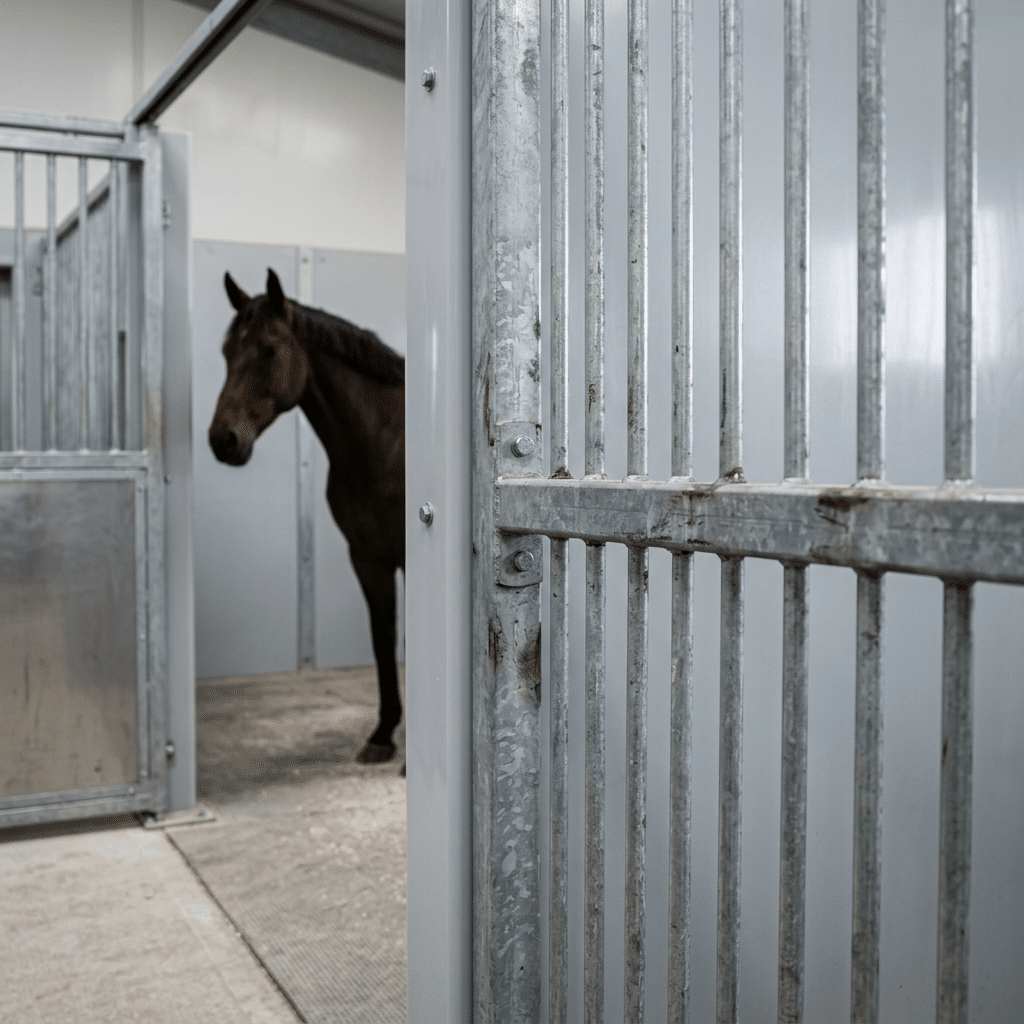
Preventing frozen auto waterers addresses only one part of winter risk; the greater danger is catastrophic structural failure when standard materials turn brittle at -20°C. A single kick against a frozen Q235B steel post can cause a brittle fracture, creating a direct path to animal injury and operational liability.
This analysis specifies the engineering required for winter integrity. We cover the critical upgrade to Q345B steel for its low-temperature toughness and the use of 50mm RHS posts as protected channels for heater wiring, ensuring both safety and reliable equine hydration in freezing climates.
The Deep Freeze: When Equine Hydration Becomes Critical
Frozen troughs block access to the 5-10 gallons of water horses need daily, raising colic risk. Extreme cold also demands materials like Q345B steel that won’t get brittle.
The Silent Threat of Winter Dehydration
When water sources freeze, the most immediate risk is impaction colic. A horse needs to drink between 5 and 10 gallons of water daily to keep its digestive system functioning properly. Frozen troughs make this impossible, creating a direct path to a serious and potentially fatal health crisis.
Horses also have a natural aversion to drinking icy-cold water, so even if the surface isn’t completely frozen, their intake drops. For facility managers, manually breaking ice all day during a deep freeze is simply not a practical or reliable solution. The problem isn’t just about providing water; it’s about providing it in a way a horse will actually drink.
Why Q345B Steel is Essential for Cold Climates
The cold affects more than just water; it impacts the structural materials of the stable itself. Standard structural steel, like Q235B, can become brittle in sub-zero temperatures. A kick that would normally be absorbed without issue can cause a brittle fracture in a frozen steel tube, creating a major safety hazard.
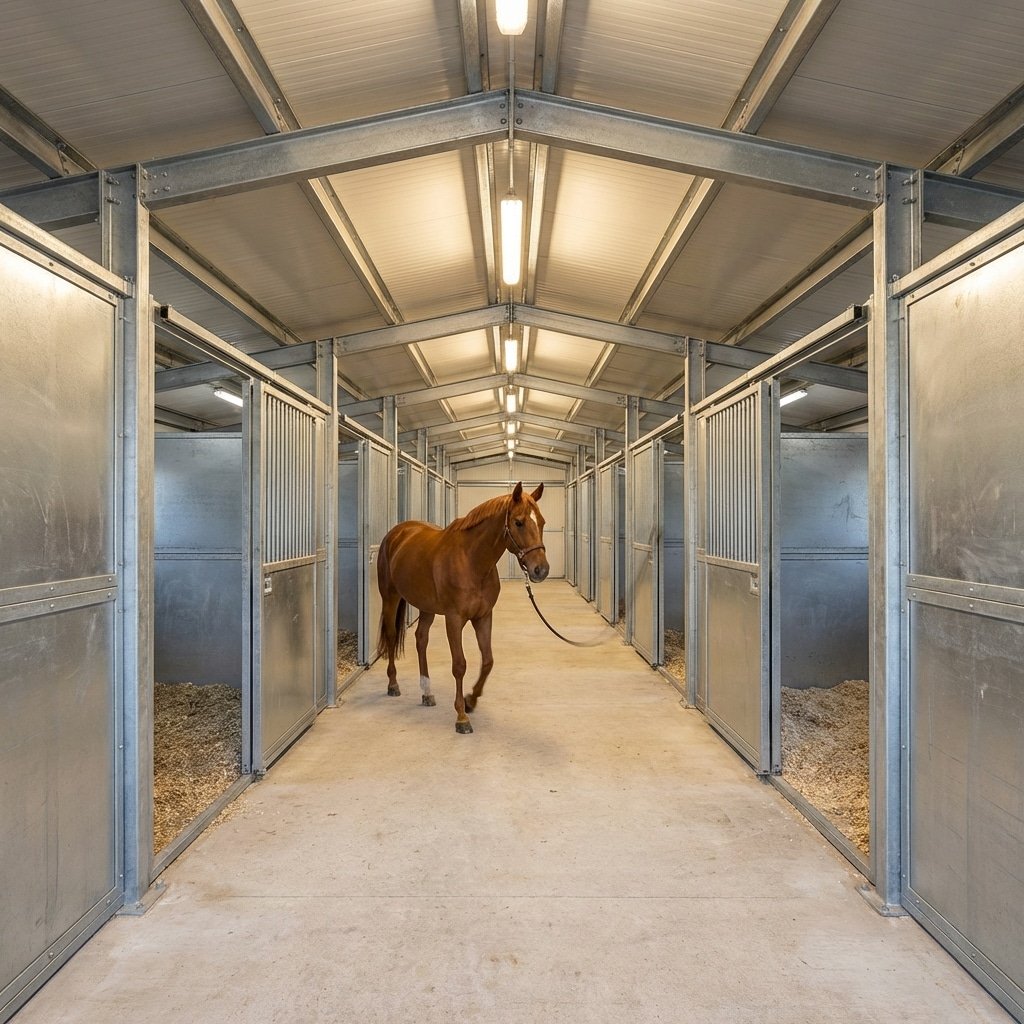
This is why we specify Q345B low-alloy, high-strength steel as our standard for stables destined for cold climates. This material has superior low-temperature impact toughness. It’s engineered to maintain its ductility and strength when it gets cold, ensuring the stable framework remains kick-proof and secure through the harshest winter conditions.
Plastic vs. 304 Stainless Steel: Surviving the Kick Test at -20°C
At -20°C, many plastics become brittle and can shatter from a horse’s kick. 304 stainless steel maintains its toughness, making it far more reliable for critical hardware.
The Risk of Brittle Fracture in Cold Weather
Many common plastics lose their flexibility in freezing temperatures. This process is known as the ductile-to-brittle transition. A plastic component that might just deform or absorb a kick
at room temperature could shatter like glass at -20°C. This failure creates sharp, dangerous fragments and compromises the entire structure.
Why 304 Stainless Steel Hardware is the Standard
The entire DB Stable Hardware Kit, including all anchor bolts, connectors, and screws, is made from 304 stainless steel. This material retains its impact toughness even in deep-freeze conditions. It ensures that critical connection points won’t fail under stress from a kick or other accidental impact, making it the only reliable choice for safety in cold climates.
Global Horse Stables Engineered for Durability

The Metallurgy Secret: Upgrading to Q345B Steel for Winter Toughness
Standard Q235B steel can fracture from a horse’s kick in freezing temperatures. Q345B is a low-alloy steel that maintains its toughness in the cold, keeping the stable frame ductile and safe.
Understanding Brittle Fracture in Cold Weather
The standard steel used in many horse stables, Q235B, has a hidden vulnerability. In sub-zero conditions, its molecular structure changes, causing a significant loss of ductility. The steel can no longer effectively absorb and dissipate the energy from a sudden impact. A strong kick from a horse—something the frame would easily handle in warmer months—can cause a catastrophic brittle fracture.
This isn’t a dent or a bend; it’s a sudden crack, creating sharp, dangerous edges inside the stall. The material’s engineering specifications confirm this risk. Q235B steel is only required to pass an impact test at room temperature (+20°C). There is no guarantee of its performance once the temperature drops below freezing.
| Attribute | Standard Steel (Q235B) | Cold Climate Upgrade (Q345B) |
|---|---|---|
| ASTM Equivalent | ASTM A36 | ASTM Grade 50 |
| Low-Temperature Performance | Poor; becomes brittle | Excellent; maintains ductility |
| Risk from Winter Impact | High risk of sudden brittle fracture | Low risk; absorbs impact safely |
| Primary Application | Temperate climates; general construction | Cold regions; structures needing winter integrity |
The Q345B Advantage: Low-Temperature Impact Toughness
To solve this critical safety issue, DB Stable offers an upgrade to Q345B steel for all its stable systems. This is a low-alloy, high-strength material (equivalent to ASTM Grade 50) specifically designed to maintain its toughness in freezing conditions. The chemical composition, including trace elements, allows the steel to remain ductile even when temperatures plummet.
This means that when a horse kicks the stable wall in the middle of winter, the Q345B frame absorbs the force just as it would in the summer. It prevents the brittle fracture that puts animals and handlers at risk. For any equestrian facility in a region with harsh winters, this material isn’t a luxury; it’s a fundamental requirement for structural safety.
Integrating Heated Waterers: Safe Wiring Channels in Steel Posts
Wiring heated waterers means running electrical lines in protective conduits. DB Stable’s 50mm x 50mm hollow steel posts serve as built-in channels, shielding wires from damage and contact.
The Mandate for Protective Conduit and Grounding
Electrical codes are not optional in stable construction. All wiring for heated systems must be run through rigid or flexible conduit to shield it from physical damage. This is a non-negotiable safety standard. Equally important is proper grounding, which creates an equipotential plane. This system prevents dangerous voltage differences across surfaces that horses can touch, eliminating the risk of stray voltage shocks.
Leveraging 50mm RHS Post
s as a Built-In Wiring Channel
DB Stable’s standard 50mm x 50mm RHS (Square Hollow Section) posts are designed to solve this problem directly. The hollow interior provides a secure, integrated channel for routing electrical wires from the ground up to the waterer. This design eliminates any need for exposed cables on the stall front. The steel post itself acts as the conduit, protecting the wiring from being kicked, chewed, or otherwise damaged by the animals, creating a far safer stable environment.
Insulation Protocols for Exposed Pipes
Preventing exposed pipes from freezing involves using materials like foam-rubber insulation sleeves or newspaper. For added protection in severe cold, electric heat tape is an effective option. Sealing nearby air leaks also reduces cold exposure and helps maintain pipe integrity.
Core Methods for Physical Insulation
The first line of defense against freezing is creating a physical thermal barrier. This is a straightforward, low-tech approach focused on trapping air and stopping cold from reaching the pipe’s surface. It’s the foundation of any winterization plan.
- Fit foam-rubber insulation sleeves over the exposed pipes. Selecting the correct diameter is critical to ensure a snug fit and eliminate air gaps that compromise performance.
- Use readily available materials like newspaper or old rags to wrap pipes. After wrapping, cover them with plastic and secure it to keep the insulation dry; wet insulation is useless.
- Seal any air-leaking holes and cracks near water pipes. Use caulk or a foam sealant to eliminate cold drafts, which dramatically accelerate heat loss from the pipes.
Integrating Electrical Heat Tape Safely
When physical insulation alone isn’t sufficient, electric heat tape provides an active heating solution. This is the right tool for pipes that have a history of freezing or are located in the most severely exposed sections of the stable.
Installation safety is paramount. In modern barns built with steel posts, run any wiring through the designated channels to protect it from physical damage or chewing. This protocol ensures a secure power source for heat tape or for fully integrated heated waterers, preventing electrical hazards in a demanding environment.
Frequently Asked Questions
How do automatic waterers prevent freezing in winter?
Automatic waterers use several methods to combat freezing. Many designs feature drainage systems that empty water below the frost line after use. Others include built-in heating elements and insulated bases to keep the water temperature above freezing. Consistent use by horses also helps, as the system refills with warmer water from the pressurized line.
What is the difference between stainless steel and plastic horse waterers?
Stainless steel waterers offer excellent durability and hygiene but have a higher initial cost and are heavier. Plastic waterers are more affordable and lightweight, making them easy to move, but may have a shorter lifespan unless they are made from high-quality, UV-stabilized materials.
Can standard Q235B steel crack in freezing temperatures?
Yes, standard Q235B steel can become brittle and is not recommended for structures in freezing climates. Its impact toughness is only guaranteed at room temperature. For cold weather applications, it is critical to use a specialized steel like Q345B, which is designed to maintain its strength and resist fracturing at low temperatures.
Is it safe to hide electrical wiring inside horse stall walls?
No, hiding wiring is not recommended. Safety standards for agricultural buildings require wiring to be surface-mounted inside a protective conduit (metal or PVC). This approach prevents moisture buildup, allows for easy inspection, and protects the wiring from damage by horses.
What are the most important steps for winterizing a horse barn?
The key priorities are sealing drafts around doors and windows, ensuring the ventilation system is working correctly to manage moisture, and protecting all water sources from freezing. This includes insulating pipes, using heat tape, or installing heated waterers to ensure horses stay hydrated.
Final Thoughts
Stocking stables built with standard Q235B steel is a commercial risk in any cold climate. The upgrade to a Q345B frame and 304 stainless hardware isn’t a premium feature; it’s the specification that protects your brand from liability claims when a kick causes a brittle fracture at -20°C. Quality inventory engineered for the climate is what builds long-term dealer trust.
Don’t leave winter safety to chance—verify our engineering firsthand. We recommend a trial order to confirm the fit, finish, and structural integrity of our cold-climate systems. Contact our team to configure a stable that meets your market’s non-negotiable safety standards.

 English
  Spanish
  French
  Arabic
  German
0 Comments