
Meeting local codes for heavy snow loads is the difference between a secure structure and a catastrophic failure. Standard, lightweight roof trusses might lower initial costs, but they expose distributors and architects to significant liability when the structure buckles, leading to costly warranty claims and reputational damage.
This data compares standard roofing against structures built with 14-gauge (2.0mm) steel trusses. We analyze how Q235B structural steel posts handle compression forces to prevent buckling, providing the evidence needed to specify buildings that meet stringent regional codes and mitigate liability risks.
The Rot Cycle in High-Humidity Environments
High humidity, cool temperatures, and poor airflow drive the rot cycle. Stable design counters this risk by using non-porous, mold-resistant infill materials like high-density bamboo and HDPE that stop moisture absorption.
How Humidity and Stagnant Air Fuel Fungal Growth
Rot and mold spores thrive when relative humidity consistently stays above 55%. This level of atmospheric moisture creates the perfect conditions for fungal spores to germinate on any suitable surface. It’s the primary environmental trigger for decay in poorly ventilated structures.
Inadequate airflow makes the problem much worse. It creates stagnant microclimates where trapped moisture from breath, manure, and the air itself cannot evaporate from walls and flooring. This persistent dampness is a key ingredient for decay.
When surfaces remain wet for 13 hours or more, fungal spores have enough time to colonize and spread. This is especially true in cooler temperatures, which slow evaporation and allow the rot cycle to take hold deep within porous materials like wood.
The Advantage of Non-Porous Infill Materials
High-density strand woven bamboo is a smart material choice for damp climates. Its composition is naturally resistant to mold and rot because the thermal manufacturing process removes the sugars and starches that fungi feed on. With a Janka hardness rating over 3000 lbf, it significantly outperforms traditional woods in both durability and moisture resistance.
HDPE infill offers a zero-maintenance solution. The material is completely non-porous and does not absorb any moisture. This physical property eliminates the fundamental condition required for fungal growth. By denying moisture a place to settle, HDPE walls simply don’t allow the rot cycle to begin.
Material Comparison for Tropical Climates
Engineered materials like strand-woven bamboo and HDPE outperform treated pine on moisture resistance, but performance depends on the specific application and environmental stressors.
| Material | Water Absorption | Key Weakness in Tropics | |
|---|---|---|---|
| Treated Pine | High (18-22% by weight) | Low (Requires active maintenance) | High moisture retention fuels fungal growth. |
| Strand-Woven Bamboo | Very Low (0.4% in 24 hours) | High (When thermally treated) | Can warp or cup with prolonged moisture exposure. |
| HDPE | Virtually Zero (< 0.01%) | Excellent (Non-porous) | Hardness and surface integrity degrade in high heat. |
Treated Pine: A High-Maintenance Choice
Treated pine is a losing battle in tropical climates. While treated to resist insects and decay, its fundamental weakness is moisture absorption. The wood can absorb 18-22% of its weight in water, creating a perfect food source and breeding ground for mold. It requires excellent, constant ventilation to even stand a chance, making it a high-maintenance and suboptimal choice for humid environments where passive mold resistance is needed.

Strand-Woven Bamboo: The High-Density Option
Strand-woven bamboo is engineered for these exact conditions. Bamboo fibers are shredded, compressed with resin under immense heat and pressure, and thermally treated. This process removes the natural sugars that attract mold and creates an incredibly dense board (around 1,200 kg/m³) with a Janka hardness over 3000 lbf—three times harder than oak. Its 24-hour water absorption rate is just 0.4%. This makes it highly resistant to rot and mold. Its only real vulnerability is prolonged, direct water pooling, which can eventually cause it to swell or warp.
HDPE: Waterproof but Not Heat-Proof
High-Density Polyethylene (HDPE) is completely waterproof. As a non-porous plastic, it doesn’t absorb moisture, so it cannot rot or grow mold. This gives it a “zero maintenance” profile for humidity and moisture. But it has a different problem in the tropics: heat. Research shows that high water temperatures—and by extension, high ambient temperatures—can reduce HDPE’s hardness and surface integrity. This performance degradation under persistent heat makes it a questionable choice for structural applications exposed to direct tropical sun.
Globally Compliant Stables, Built to Last
Airflow Design to Prevent Tropical Fungal Infections
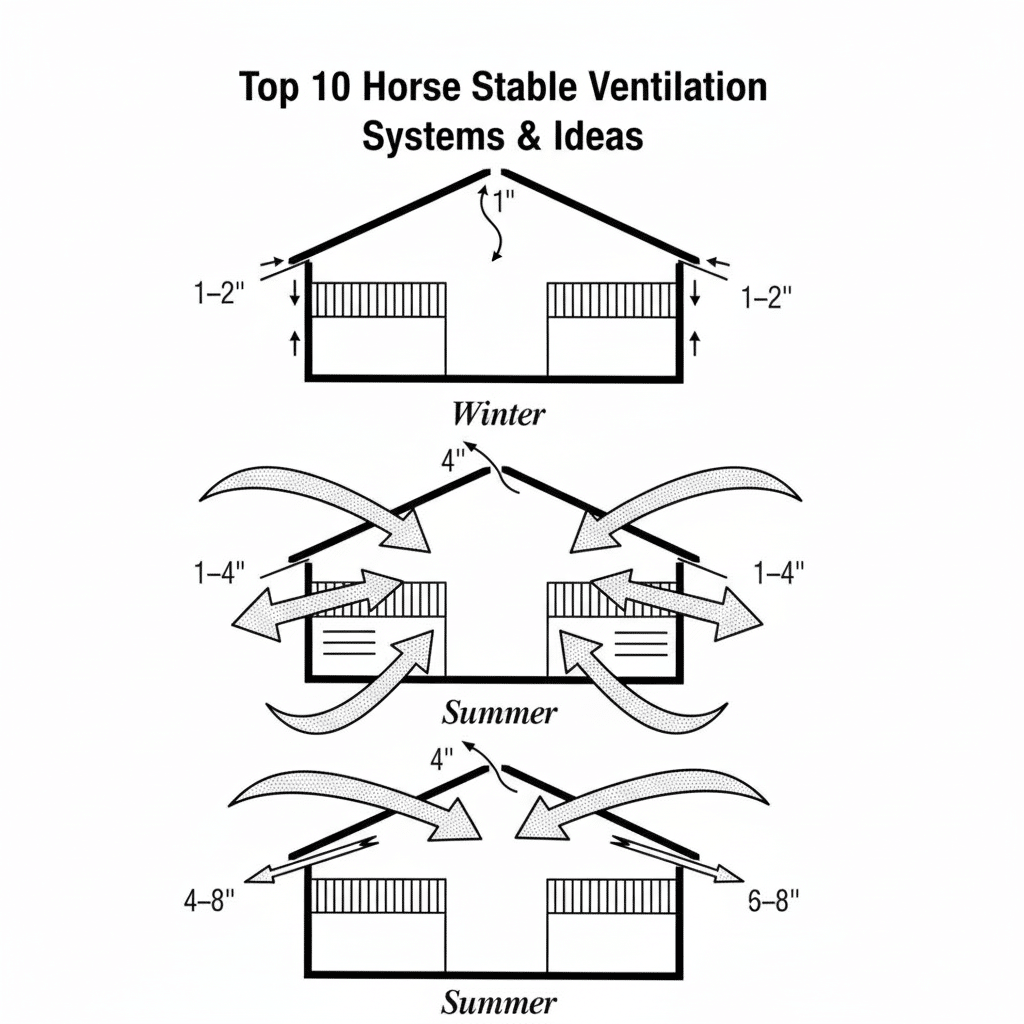
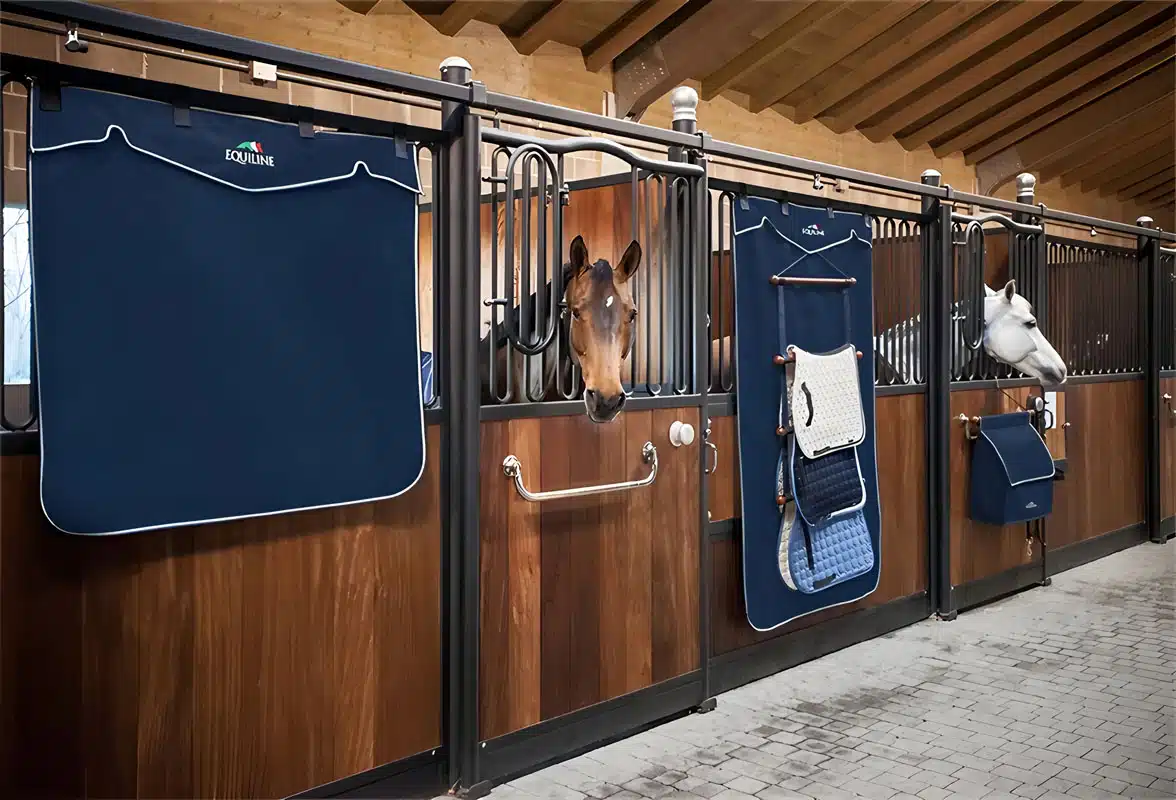
Effective airflow design prevents fungal infections by using features like open-top grills for vertical air circulation. This ‘stack effect’ ventilation stops stagnant, humid air zones where fungi thrive, keeping horses healthier.
Why Stagnant Air Is a Health Risk
Fungal pathogens thrive in stagnant, high-humidity microclimates. An enclosed horse stall in a tropical region creates the perfect environment for them. Without constant circulation, the warm, moist air from a horse’s breath and the humid environment gets trapped, creating “dead spots” with no airflow.
This trapped moisture saturates the air and settles on bedding, walls, and other surfaces. Once humidity levels stay consistently high, it provides an ideal breeding ground for mold and fungi to grow, directly compromising the horse’s respiratory health and the structural integrity of the stable.
Using Open Grills to Create Stack Effect Ventilation
A well-engineered stable front directly counters this problem. Our stable fronts incorporate an open-top grill design specifically to promote continuous, natural air exchange without mechanical systems. This isn’t just for aesthetics; it’s a core engineering feature for equine health.
This structure encourages a process called ‘Stack Effect Ventilation.’ Warm, moist air is less dense, so it naturally rises. The open grill at the top of the stall front gives this stagnant air an escape route. As it exits, it creates a gentle vacuum that pulls cooler, drier air in from the lower levels of the barn aisle. This constant, passive cycle breaks up humid pockets and keeps the stall environment fresh and dry.
Frequently Asked Questions
What materials are best for horse stables in humid or coastal climates?
In humid or coastal areas, you need materials that fight moisture and corrosion. The steel frame must be hot-dip galvanized *after* fabrication to completely seal welds against humidity and salt spray. For the boards, High-Density Polyethylene (HDPE) is the best choice because it’s 100% waterproof and won’t rot or grow mold. High-density strand-woven bamboo is another top-tier option, as its engineering process makes it extremely dense and resistant to moisture absorption.
Does the engineered bamboo board you use rot over time?
No, our high-density strand-woven bamboo is engineered to be highly rot-resistant. The bamboo goes through a thermal treatment and a high-compression process that removes the natural starches and sugars. This eliminates the food source for mold and fungi, while creating an incredibly dense material that blocks moisture penetration. Its lifespan is comparable to tropical hardwoods.
Is the HDPE plastic infill completely waterproof?
Yes, HDPE is 100% waterproof. It’s a non-porous plastic with a water absorption rate below 0.01%. This means it physically cannot swell, delaminate, or rot, even with constant exposure to water. It’s why we call it our ‘Zero Maintenance’ infill solution.
Why do you hot-dip galvanize the steel after fabrication?
We galvanize after fabrication because it’s the only way to protect the welds. Competitors who use pre-galvanized tubes and then weld them together burn off the protective zinc coating at every joint, leaving those spots vulnerable to rust. We build the entire steel panel first, then dip the whole thing in molten zinc. This creates a seamless barrier exceeding 70 microns, fully coating the critical weld points and ensuring long-term rust prevention.
What steel should be used for stables in very cold climates?
For regions with severe winters, we specify our Q345B steel option. This is a low-alloy, high-strength steel with superior low-temperature impact toughness. In freezing temperatures, standard steel can become brittle and fracture from a powerful horse kick. Q345B maintains its structural integrity, preventing these brittle failures and ensuring the stable remains safe year-round.
Final Thoughts
While thinner, pre-galvanized stables reduce initial costs, our 14-gauge steel and post-fabrication galvanizing standard is non-negotiable. This engineering protects your reputation against structural failure and rust claims. Quality inventory is the foundation of long-term dealer trust.
Don’t guess on structural integrity—verify it. We recommend a trial order of 3-5 units to test our material thickness and weld quality firsthand. Contact our engineering team to discuss your project specifications or distributor pricing.

 English
  Spanish
  French
  Arabic
  German
0 Comments