


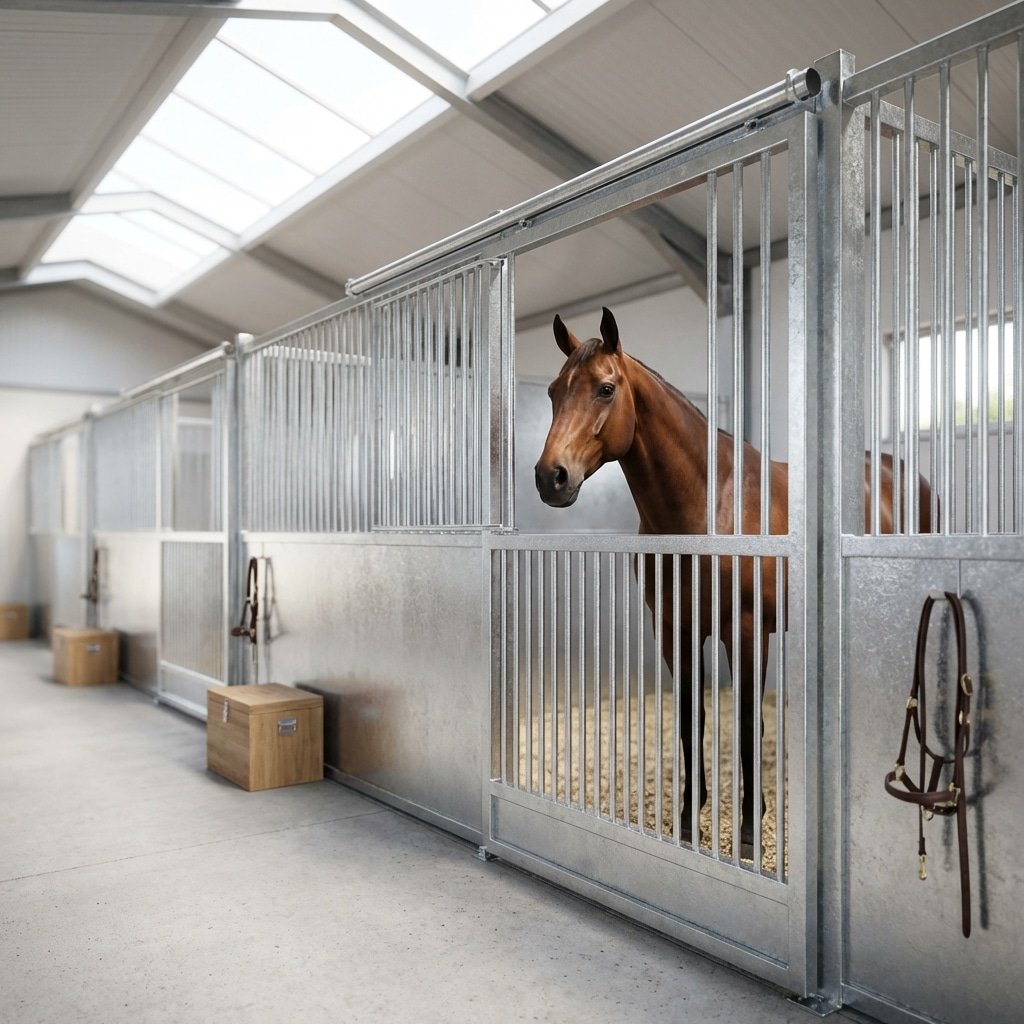
Cleaning Zinc surfaces with abrasive tools destroys the primary asset value of a galvanized stable system. While removing dried manure is necessary for hygiene, aggressive scrubbing strips the sacrificial layer essential for rust prevention. This creates immediate vulnerability, forcing facility managers to spend budget on premature repairs rather than operations.
This protocol aligns with BS EN ISO 1461 standards to preserve the integrity of the 85-micron protective barrier. We detail the specific chemical and physical methods required to neutralize organic acids without abrading the zinc surface. Adhering to these guidelines ensures the cathodic protection remains active, safeguarding the structural steel core against the corrosive stable environment.
The Urge to Scrub: Removing Dried Manure from Steel
Dried manure forms a chemical bond with steel via organic acids. Aggressive mechanical scrubbing strips the protective zinc layer, trading immediate cleanliness for long-term rust vulnerability.
The Adhesion of Organ
ic Waste
Stable operators often mistake dried manure for simple surface dirt. In reality, manure acts more like cement once it hardens on a steel surface. The organic content creates a solid mass that resists simple wiping, leading many maintenance crews to reach for scrapers or wire brushes. This is a mistake.
- Chemical Bonding: Ammonia and uric acid found in waste chemically etch into micropores of the metal surface, creating a bond far stronger than standard mud or dust.
- Physical Hardening: As moisture evaporates, the residue calcifies. Attempts to “chip” this off often result in taking pieces of the surface coating with it.
- Surface Risk: Manual removal with sharp tools frequently gouges the underlying metal structure, creating immediate entry points for oxidation.
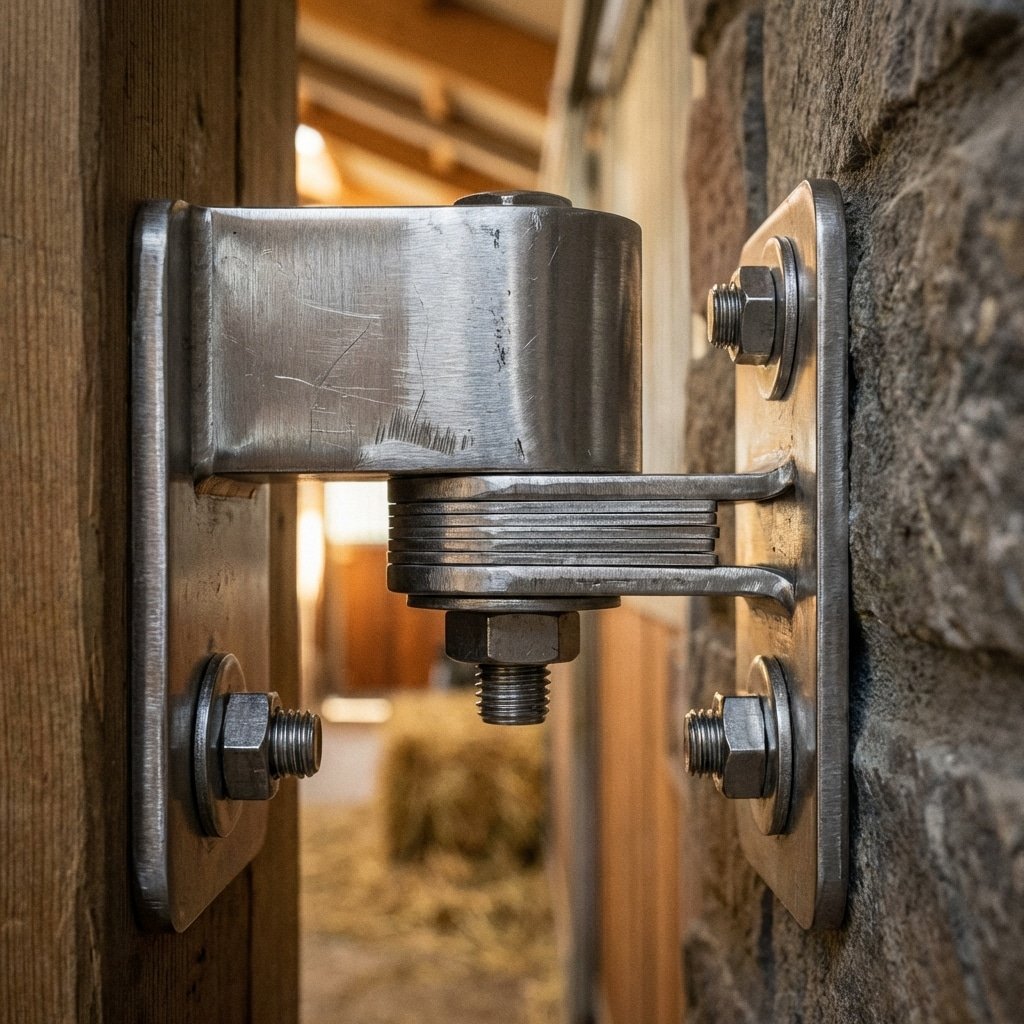
Impact on the 85-Micron Galvanized Layer
The integrity of a DB Stable system relies entirely on the thickness of its zinc coating. We adhere strictly to BS EN ISO 1461 standards, ensuring our structural parts carry an average coating thickness of over 85 microns. This layer is sacrificial, meaning it is designed to corrode slowly to protect the steel. But it is not designed to withstand abrasion.
Zinc is a relatively soft metal compared to the hardened steel of a scraper or the bristles of a wire brush. When you scrub dried manure aggressively, you are effectively sandpapering the finish.
- Micron Loss: Every aggressive scrub strips microns off the 85-micron barrier. Once that number drops, the “Lifetime” rust protection is compromised.
- Accelerated Wear: Repeated abrasive cleaning turns a weather-resistant surface into a vulnerable one, accelerating the need for repairs or cold-galvanizing touch-ups.
- The Soft Metal Factor: Because zinc is softer than the steel tools used to clean it, mechanical force always damages the coating before it removes the bonded manure.
The Danger of Wire Brushes and Abrasive Pads
Executive Summary: Wire brushes strip essential zinc coatings and create serious respiratory and physical hazards for operators. They turn a low-maintenance asset into a rust liability.
Physical Hazards and Operator Safety Risks
Manual cleaning should not result in a workers’ compensation claim, but the use of aggressive wire brushes introduces immediate physical dangers. Research indicates that the high pressure required to remove dried organic matter leads to equipment failure and operator injury. When filaments break under stress, they become high-velocity projectiles capable of penetrating standard work gloves and soft tissue.
- Penetrating Injuries: Flying wire filaments frequently embed in skin or eyes. Clinical data records instances of bristles being ingested or causing deep soft tissue punctures that require surgical intervention.
- Inhalation Risks: Aggressive scrubbing generates airborne dust containing nickel and chromium. These are classified carcinogens and respiratory sensitizers that damage lung function over time.
- Operator Strain: To be effective against hardened manure, operators must apply excessive force. This leads to rapid fatigue and potential vibration-induced injuries from prolonged tool use.
Compromising the Hot-Dip Galvanized Barrier
Our “Lifetime” rust protection relies entirely on the integrity of the zinc barrier. DB Stable products undergo Hot-Dip Galvanization after fabrication to achieve a coating thickness exceeding 85 microns (BS EN ISO 1461 standards). Abrasive tools do not clean this layer; they destroy it. Once you scour through the zinc, you expose the raw steel beneath to the ammonia-rich environment of a stable, guaranteeing rapid failure.
- Zinc Stripping: Wire brushes act as grinders. They remove the sacrificial zinc layer that prevents oxidation, effectively undoing the manufacturing process.
- Exposing the Core: Our frameworks use high-grade Q235B or Q345B structural steel. While strong, this steel will corrode immediately upon contact with urine and moisture if the zinc shield is breached.
- Voiding Protections: Surfaces scratched by abrasives fail ASTM B117 Salt Spray Tests significantly faster than intact surfaces. This damage negates the “Zero Maintenance” benefit we engineer into the product.
Premium Horse Stables Engineered for Longevity
The Safe Method: Soft Bristles and Mild Detergents
Cleaning hot-dip galvanized steel requires a gentle touch. Use soft nylon brushes and pH-neutral detergents to protect the self-healing patina and 85-micron zinc layer from abrasion.
| Cleaning Parameter | The Safe Standard (Recommended) | The Destructive Method (Avoid) |
|---|---|---|
| Physical Tool | Soft Nylon Automotive Brush | Wire Brushes, Scouring Pads |
| Chemical Agent | pH-Neutral Detergent (Car Wash Soap) | Vinegar (Acid), Ammonia (Alkali) |
| Impact on Zinc | Strips Coating, Exposes Steel |
The Physical Approach: Why Soft Nylon Brushes Are Essential
Zinc is physically softer than steel. If you attack it with the same aggressive tools you use on concrete floors or stainless steel troughs, you will gouge the surface. We see facility managers ruin good galvanization by using wire brushes or abrasive scouring pads (like Scotch-Brite) to scrub off manure. This removes the protective zinc layer along with the dirt.
The correct tool is a soft nylon brush, similar to what you would use on a car’s paintwork. These bristles are stiff enough to dislodge dried manure but pliable enough to glide over the zinc surface. Your goal is to clean the steel, not polish it. That matte grey finish—known as the zinc carbonate patina—is exactly what prevents rust. Scrubbing it away until the metal shines silver actually reduces the lifespan of the panel.
The Chemical Standard: Preserving the 85-Micron Coating
DB Stable products leave our factory with an ISO 1461 hot-dip galvanized coating thicker than 85 microns. This is a significant industrial shield, but it is chemically vulnerable to extreme pH levels. Many generic “barn cleaners” are highly acidic (vinegar-based) or highly alkaline (ammonia-based). Both extremes react chemically with zinc, effectively dissolving the coating you paid for.
- Avoid Acids: Vinegar and acidic descalers eat zinc immediately.
- Avoid Alkalis: Strong ammonia or bleach solutions accelerate white rust formation.
- Use Neutral Agents: High-quality car wash soap is the industry gold standard for stables.
For our clients maintaining hundreds of stalls, we recommend a simple regimen: Rinse with water, apply a pH-neutral soap foam, let it dwell to soften the organic matter, and agitate gently with the nylon brush. This maintains the integrity of the >85 micron barrier for decades rather than years.
Healing the Zinc: Understanding Cathodic Protection
Zinc acts as a sacrificial anode, corroding in place of the steel. When scratched, zinc ions migrate to form a protective oxide barrier that seals the damage.
The Sacrificial Anode Mechanism
Cathodic protection is an electrochemical process, not just a physical barrier. In this reaction, zinc acts as the anode and steel acts as the cathode. Because zinc is more chemically active (less noble) than steel, it naturally sacrifices itself to protect the substrate. When the two metals are in contact and moisture is present, the zinc gives up electrons to the steel, effectively corroding so the steel does not.
This mechanism is critical when the stable environment causes surface damage. If a horse kicks a panel or a tool scratches the paint, the underlying steel is exposed. Instead of rusting immediately, the surrounding zinc ions migrate to the exposed area. They react with moisture and carbon dioxide to form zinc oxide and zinc carbonate. This creates a dense, insoluble “scar” that seals the breach and stops rust creepage (sub-surface corrosion) before it starts.
The Reservoir Effect: Why We Mandate >85 Micron Coatings
Cathodic protection works like a fuel tank: once the zinc is depleted, the protection ends. This is why coating thickness is the single most important factor in the lifespan of a stable. Thin coatings, common in pre-galvanized tubing, lack the volume of zinc required to sustain this sacrificial reaction over decades of ammonia and moisture exposure.
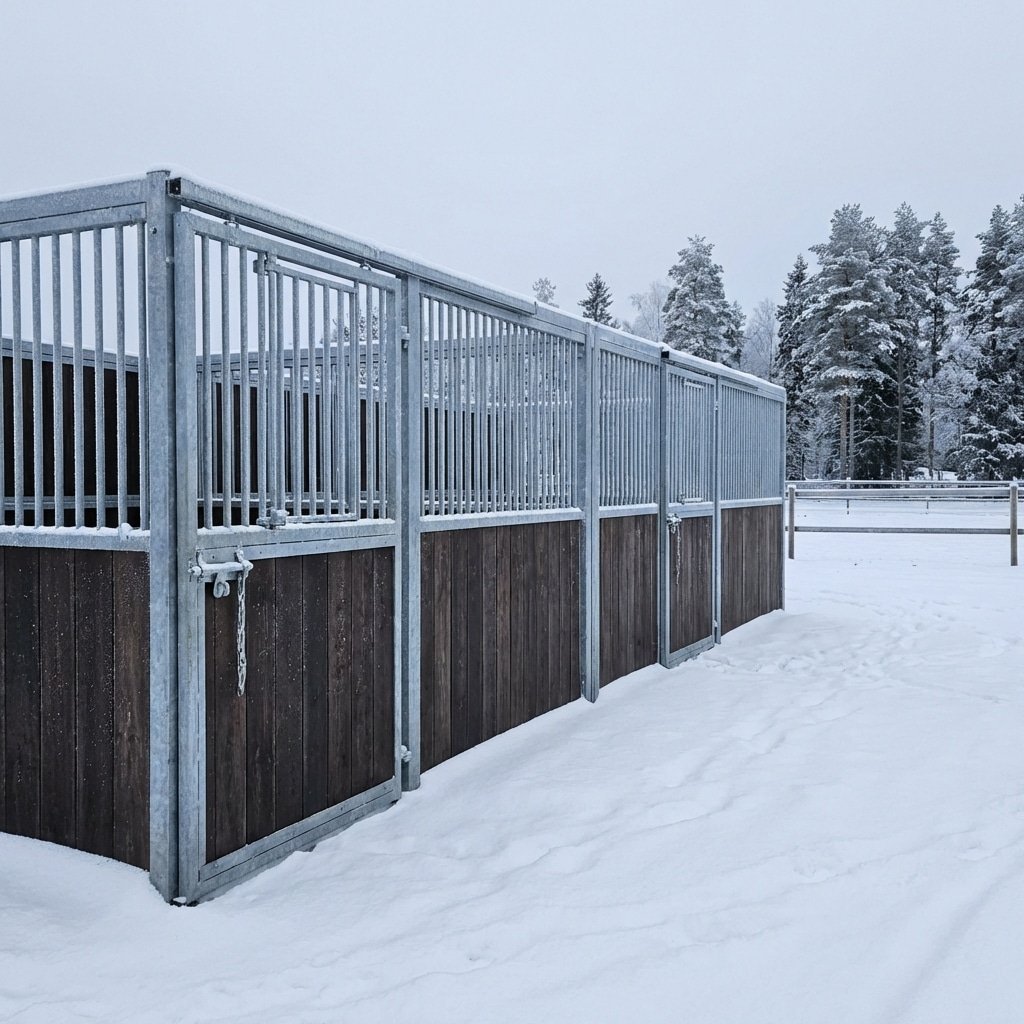
We adhere strictly to BS EN ISO 1461 standards to ensure a massive sacrificial reservoir. By using the “Hot-Dip After Fabrication” method, we submerge the fully welded components into molten zinc, achieving thickness levels that dwarf standard pre-galvanized alternatives.
- Structural Parts (>6mm Steel): We achieve an average coating of >85 microns.
- Tubing (3-6mm Steel): We maintain an average coating of >70 microns.
- Weld Protection: Because we dip after welding, no heat-affected zones or weld seams are left exposed to the elements.
This thick layer provides the necessary zinc volume to heal scratches and resist the corrosive stable environment for years. A thinner coating might look identical on day one, but it will run out of “fuel” rapidly, leading to structural failure.
Frequently Asked Questions
How should I clean galvanized steel stable frames?
Start with warm water and mild soap applied with a soft cloth or sponge. This removes surface contaminants without abrading the zinc layer. For stubborn barn grime, use a soft-bristle brush. If you encounter white rust (wet storage stain), a diluted vinegar solution (1 part vinegar to 10 parts water) is effective. You must rinse the area thoroughly with clean water immediately after cleaning to prevent the acid from eating into the >85 micron zinc coating.
Will using a wire brush damage the zinc coating?
Not if you use mild pressure. Wire brushing is a standard industry method for preparing surfaces for repair or removing heavy oxidation. While it will dull the finish, it does not remove the hot-dip galvanized layer (which adheres to BS EN ISO 1461 standards) or stop the cathodic protection from working. Avoid aggressive grinding that sparks, as that indicates you are cutting into the steel itself.
What is the most efficient way to handle daily manure removal?
Daily removal is critical for hygiene and ammonia control. A single horse produces over 2 cubic feet of waste daily. For smaller stables, manual removal with a pitchfork is the most cost-effective method. Larger commercial facilities should rely on mechanized barn cleaners or tow-behind collectors to reduce labor costs. Ideally, compost the waste at 130–150°F to neutralize pathogens before utilizing it as fertilizer or selling it to local agriculture partners.
Can I use pressure washers on the stall fronts?
Yes, but use low pressure with pure water or specific car wash soaps formulated to minimize corrosion. Avoid high-pressure blasting directly on joints, hinges, or the track systems, as this forces water into moving parts where it stays trapped. Ensure the facility is well-ventilated so the moisture dries quickly. Persistent moisture on galvanized steel leads to wet storage stains and premature dulling of the finish.
Final Thoughts
Preserving the 85-micron zinc barrier is about protecting your warranty liability, not just cleanliness. Aggressive scrubbing strips the value you sold, turning a “Lifetime” asset into a preventable rust claim. Educating your clients on these safe maintenance protocols safeguards both the structural steel and your dealership’s reputation.
True durability starts with the manufacturing process, not the cleaning brush. We invite you to request a sample corner section to inspect our “Hot-Dip After Fabrication” finish firsthand. Contact our engineering team today to discuss securing a container of these high-margin, low-maintenance systems for your inventory.


 English
  Spanish
  French
  Arabic
  German
0 Comments