


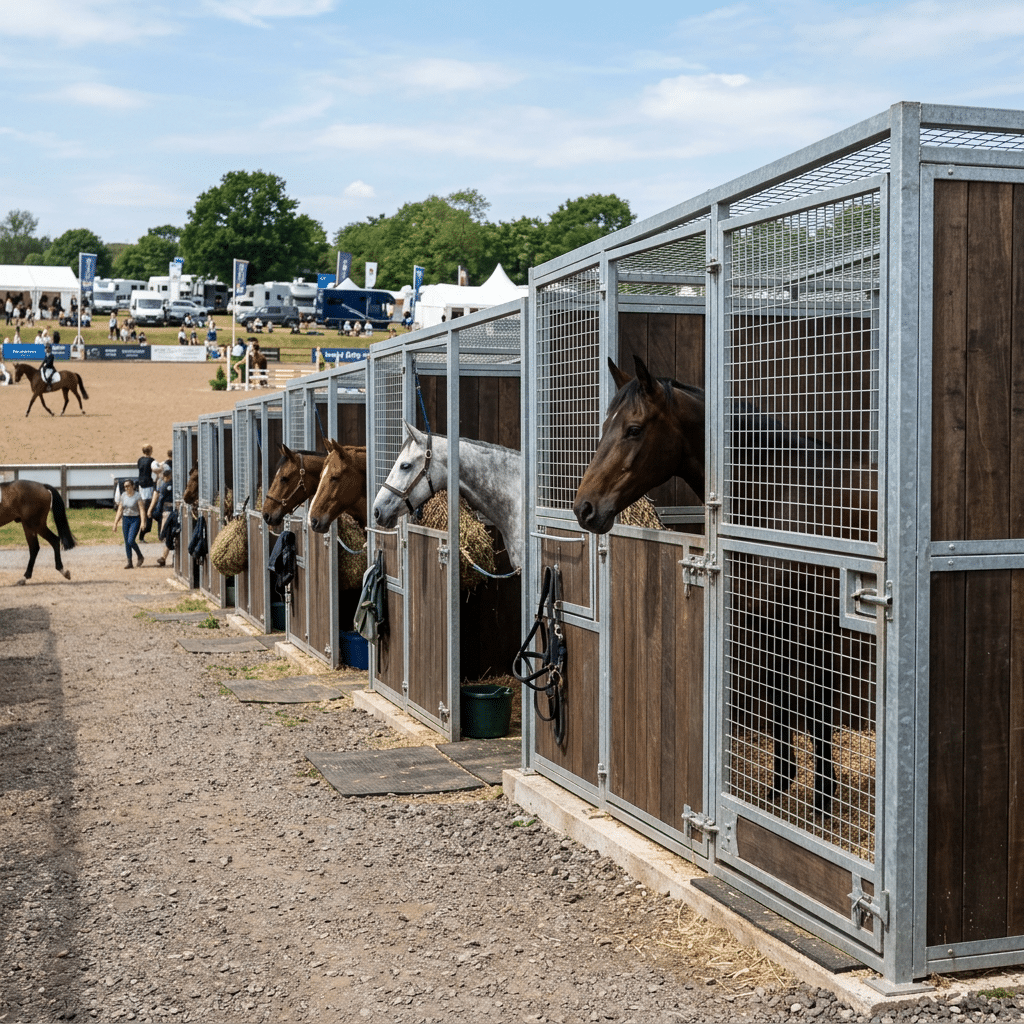
Aisle Width & Flooring decisions directly impact operational safety and labor costs. A miscalculation of just two feet can block machinery access, create high-risk zones for horse kicks, and lead to slip-related injuries—expensive mistakes permanently set in the barn’s foundation.
This analysis defines the functional standards for a safe facility. We evaluate the 14-foot rule for high-traffic operations and specify the material requirements, from non-slip rubber pavers to impact-absorbing stall partitions, needed to engineer a genuinely safe and efficient barn.
The Tractor Test: Sizing the Aisle for Equipment
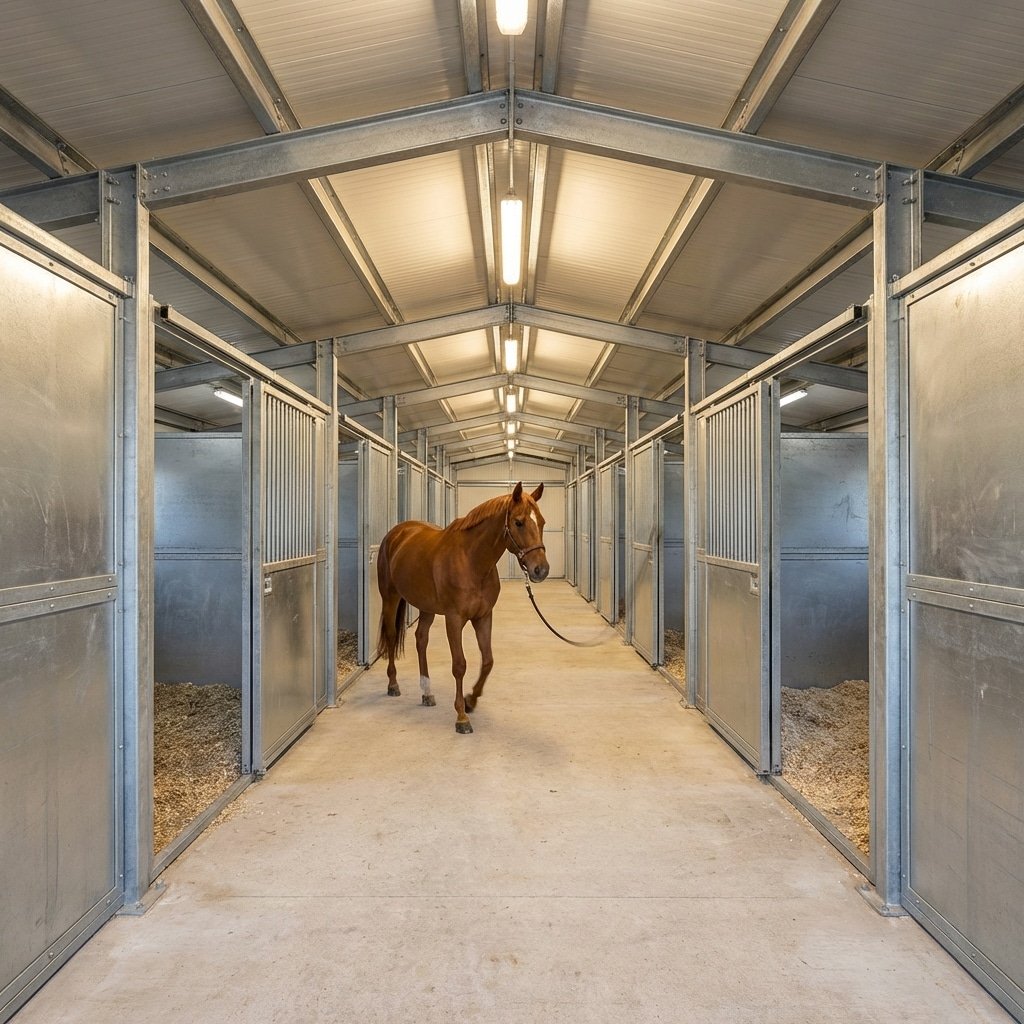
A barn aisle requires a minimum width of 3.6 meters (12 feet) to safely operate small tractors for mucking out and feeding. The wrong door system negates this clearance.
Planning a barn aisle isn’t just about moving horses; it’s about accommodating the equipment needed to run the facility efficiently. The width of your central aisle directly determines whether you can use small utility tractors or skid-steers for daily chores. Getting this wrong creates daily bottlenecks and safety risks. An aisle must pass the “tractor test” from the design phase, not after construction is complete.
| Design Factor | Required Standard | Impact on Operations |
|---|---|---|
| Aisle Width | 3.6 meters (12 feet) minimum | Enables safe passage for small tractors and handlers without risk of collision. |
| Stall Door System | Sliding track system | Preserves 100% of the planned aisle width by eliminating door swing obstruction. |

Establishing Minimum Width for Machinery Access
The functional baseline for a modern barn aisle is 3.6 meters, or 12 feet. This dimension isn’t arbitrary. It’s calculated to provide enough clearance for small utility tractors and their attachments to pass through and maneuver without hitting the stable fronts. This space is critical for routine work like cleaning stalls with a front loader, delivering hay bales, or giving veterinarians and farriers room to work with their vehicles. Anything narrower forces manual labor, increasing time and operational costs.
How Sliding Doors Preserve Usable Aisle Space
A 12-foot aisle is useless if stall doors swing out and block half of it. Hinged doors create dangerous obstructions and reduce your effective working width. DB Stable systems are engineered with sliding doors that move parallel to the stable front on a track. This design choice maintains the full, clear width of the aisle at all times, for both equipment and horse traffic. The hidden track system featured in our Professional Series further improves safety and aesthetics by creating a clean, snag-free pathway down the length of the barn.
The “Passing” Clearance: Preventing Horse Kicks
A 12-foot aisle minimum prevents horse kicks during passing. This space, combined with impact-resistant stalls and non-slip floors, creates a genuinely safe barn environment.
The 12-Foot Rule for Safe Passage
A barn aisle needs a minimum width of 12 feet. This isn’t just a recommendation; it’s the standard for preventing kicks and collisions when horses pass each other or their handlers. Anything less forces animals and people into close quarters, which increases the risk of a defensive kick or spook.
For commercial operations like training centers or boarding facilities, the standard increases to 14 or even 16 feet. This extra space is necessary to safely manage higher traffic and accommodate veterinary equipment or small utility vehicles. The clearance ensures horses can move without feeling confined or agitated, directly reducing the chance of an incident.
Kick-Resistant Stall Partitions
A wide aisle is only half the solution. The partitions bordering that aisle must be able to handle a direct hit. The materials used here are just as critical as the aisle’s width for creating a complete safety system.
- Impact-Absorbing Infill: We specify 28-32mm thick HDPE (High-Density Polyethylene) planks. This material absorbs impact from a kick, protecting the horse’s legs from injury. It’s also a zero-maintenance surface that won’t rot or splinter.
- Cold-Climate Steel: For facilities in colder regions, we use Q345B high-strength steel. Standard steel can become brittle in freezing temperatures, but Q345B maintains its toughness, preventing fractures from a powerful kick in the winter.
- Post-Fabrication Galvanizing: The entire steel frame is welded first and then submerged in molten zinc. This hot-dip galvanization process coats every edge and weld, inside and out, ensuring the frame’s structural integrity stands up to long-term stress without rusting.
Globally Compliant Stables Engineered for Durability
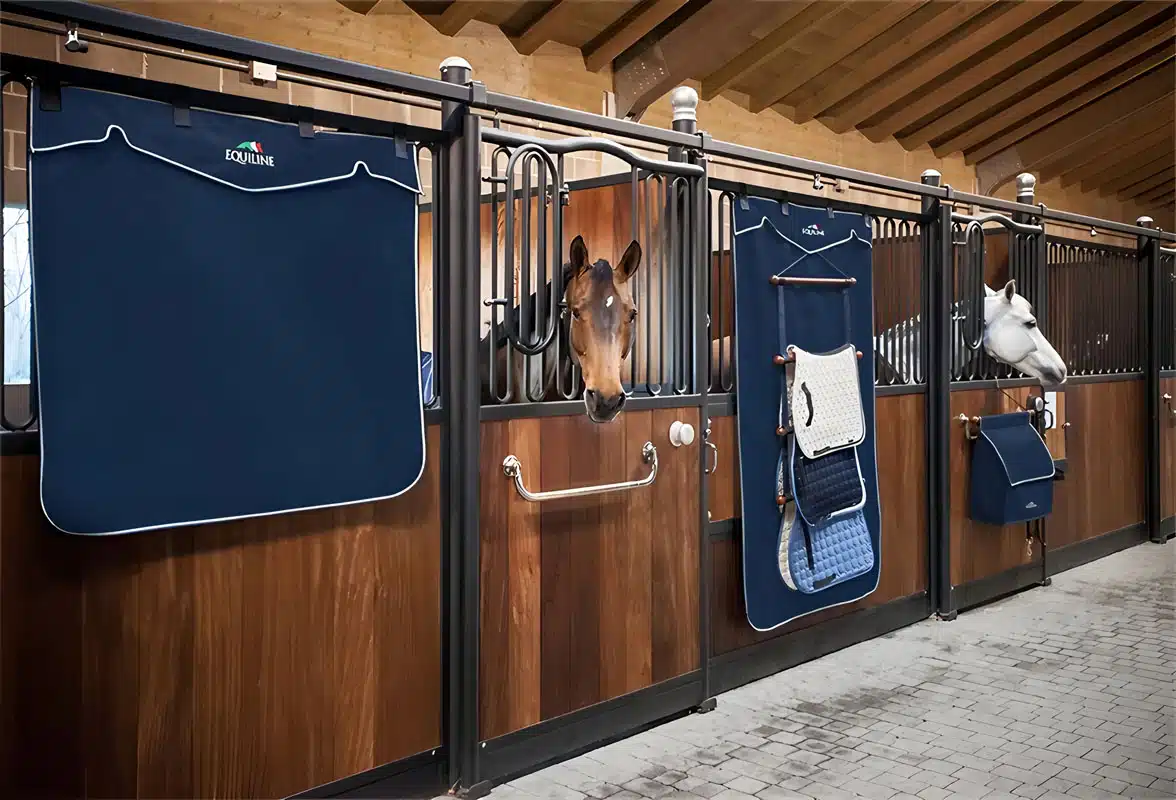
Door Swing Hazards: Why Sliding Doors Save Aisles
Hinged stall doors swing out, creating dangerous blockages in the aisle. Sliding doors move parallel to the wall, keeping pathways clear, saving space, and ensuring safety.
The Aisle Obstruction Problem with Hinged Doors
A traditional hinged stall door creates a temporary, but significant, obstruction every time it opens. It swings directly into the main pathway, instantly reducing aisle width and creating a collision hazard for handlers, equipment, and other horses. This design forces you to dedicate a large, unusable clearance area just for the door’s swing arc.
Maneuvering equipment becomes difficult, and the risk of injury increases. An unlatched swing door can move with a gust of wind or a slight nudge, startling a horse tied nearby or striking someone walking past. It’s an inefficient use of space that compromises the fundamental safety of the barn’s workflow.
How Sliding Doors Maximize Aisle Safety
Sliding doors eliminate the swing hazard entirely. They operate on a track system, moving parallel to the stall front and never protruding into the aisle. This simple design difference keeps the walkway completely clear at all times, which is non-negotiable for safety in high-traffic barns.
A clear path is critical when leading multiple horses or cross-tying for grooming and tacking. Our Professional Series systems improve on this concept with a hidden track system. By concealing the moving parts, we remove potential pinch points and create a cleaner, safer, and more durable stall front that stands up to the demands of a busy equestrian facility.
Flooring Traction: Concrete vs. Rubber Pavers
Rubber pavers provide superior slip resistance and shock absorption over concrete, especially in wet conditions. While durable, concrete’s rigid surface poses a greater risk for slips and injuries.
Grip and Impact Absorption
Rubber pavers are engineered with a textured, non-slip surface that gives horses and handlers secure footing. This grip holds up even when the aisle is wet from washing down or tracked-in water. Concrete becomes slick under the same conditions, creating a ser
ious hazard for falls.
The elastic composition of rubber also absorbs impact. This cushioning reduces daily stress on a horse’s joints and ligaments. If a fall does happen, the softer surface can significantly minimize the severity of the injury, unlike unyielding concrete.
Performance in Different Weather
In cold climates, the porous design of rubber pavers allows water to drain straight through the surface. This prevents dangerous sheets of ice from forming in the aisleway. Concrete, a solid surface, holds water that freezes and thaws, leading to cracking and heaving that degrades the footing and creates trip hazards over time.
Lighting the Aisle: Shadow-Free Designs
A shadow-free aisle uses multiple, well-placed lights for even illumination. This eliminates startling shadows on the floor, preventing trip hazards and improving safety for horses and handlers.
Achieving Uniform Illumination
The goal is to wash the entire aisle floor with consistent light, removing the dark spots and harsh lines that can spook a horse. This isn’t about just making it bright; it’s about making it uniform. Proper design relies on a few key princi
ples to create a safe, visible environment.
- Use multiple light sources placed at different heights. A single, powerful overhead fixture creates sharp, deep shadows. Using several fixtures softens these shadows and fills in potential dark zones.
- Employ a layered lighting system. This combines ambient and other fixtures to ensure light reaches every corner of the floor, creating consistent coverage from one end of the aisle to the other.
- Balance the light distribution. The system should be bright enough for clear visibility but avoid creating uncomfortable glare for either the horse or the handler.
How Open-Grill Fronts Enhance Light Distribution
The physical structure of the stable front is just as important as the lights themselves. A fully solid stable front acts like a wall, blocking light and casting a hard, obstructive shadow across a large portion of the aisle floor. This creates exactly the kind of visual disruption you want to avoid.
Our stable fronts feature an open-top grill design for this reason. This construction allows light from the aisle to pass freely into the stall and, just as important, allows light from within the stalls to spill out into the aisle. This improves horizontal light flow, softening shadows and contributing to a brighter, more evenly lit environment. This design also supports better airflow through a process known as “Stack Effect Ventilation,” making it a dual-purpose safety feature.
Frequently Asked Questions
How wide should a horse barn aisle be?
A minimum of 12 feet is recommended for private barns, but commercial facilities benefit from 14-16 foot aisles. Wider aisles provide safer passage for multiple horses, emergency access, and room for equipment like utility carts.
Can I drive a tractor down a 12-foot aisle?
No, a 12-foot aisle is typically designed for smaller equipment like forklifts, not agricultural tractors. Tractors have a much larger turning radius and require significantly more space to operate safely without damaging stalls.
What is the best flooring for a barn aisle?
The best options balance safety and durability. Rubber pavers offer superior traction and comfort but are more expensive. Interlocking rubber mats are a cost-effective alternative that provides good grip and is easy to clean. Concrete alone is not recommended as it becomes very slippery when wet.
Why choose sliding doors over hinged doors for stalls?
Sliding doors are a major space-saver. They don’t swing out into the aisle, keeping the pathway clear and preventing potential hazards for horses and handlers passing by. This is especially important in busy barns or those with narrower aisles.
Do our sliding door tracks get clogged with dirt?
Yes, any ground-level track can accumulate dirt, hay, and bedding over time. We recommend cleaning the tracks every few months to ensure the doors operate smoothly. Regular maintenance prevents buildup that can make doors difficult to open or cause damage to the rollers.
Final Thoughts
While pre-galvanized stalls seem cheaper, our Hot-Dip After Fabrication standard is the only way to safeguard your reputation against rust claims and structural failures. This engineering-first approach protects your brand from costly callbacks and builds the long-term trust that underpins a profitable dealership.
Don’t guess on material durability or weld integrity. We recommend starting with a trial order to test our flat-pack system and galvanizing quality firsthand. Contact our team to review your project specifications and secure a quote.

 English
  Spanish
  French
  Arabic
  German
0 Comments