

A lunging arena surface takes more concentrated abuse per square foot than almost any other working area on a training yard. The horse repeats the same circle around the same wall, and the footing records that pattern as a ring of wear a riding arena only develops along the track.
DB HorseStable has manufactured galvanized steel lunging pens, fence panels, and heavy-duty rubber mats in Anping, China since 2013, exporting to nine countries. Ground engineering stays outside that scope — surfacing is built by local contractors. The ranges below follow publicly published construction guidance from university extensions and arena builders, not factory specifications. The fence and the footing come from two suppliers, and the failure pattern shows up where they meet.
Key Takeaways
- Typical build: Published guides commonly describe a 2–4 inch working footing over a 4–6 inch compacted aggregate base.
- Drainage baseline: A 1–2% fall or crown is the usual grading figure for outdoor surfaces; wet climates often add buried perimeter drains.
- Wear pattern: Circles grind a ring near the wall. Sand alone demands frequent dragging; fiber blends resist displacement.
- Fence interaction: Kickboards contain the footing; posts must anchor below or outside the loose layer — never within it.
- Factory-verifiable: Panel layout for your diameter, hot-dip galvanizing, gate width, ISO 9001 and CE documents, 4–6 week lead times.
How Lunging Loads Differ From Riding Loads
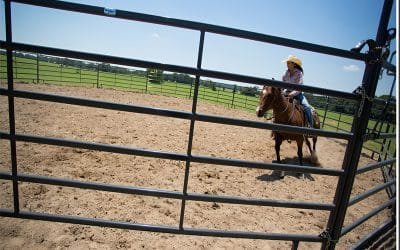
A riding arena wears in bands: rail, centerline, jump stand. A lunging pen wears in a ring. The horse covers the same arc for fifteen to thirty minutes at a constant lateral drift, with no rider weight shifting the load. That ring sits close to the fence — exactly where footing thins against the perimeter and drainage works hardest.
Consistency matters more than depth here. A half-inch ridge of loose material crossing the track line changes foot timing mid-session, and the horse repeats that error hundreds of times per workout. Published surface guidance notes that deep, loose footing can increase effort and strain on tendons — and on the circle, the horse carries that penalty itself.
Our position: for lunging work, firm beats fluffy. Build to the shallower, more supportive end of the published range, and groom for the ring rather than the rectangle.
The Four Layers of a Lunging Arena Surface
Builders describe a riding surface as four layers, and a small pen follows the same logic in miniature. The subgrade is native soil, stripped of topsoil and compacted until it stops moving under the machine. A geotextile fabric — the separator cloth that keeps stone from sinking into soil — sits on top. The base is compacted crushed angular stone, commonly cited at 4–6 inches in open construction guides. The working footing, usually 2–4 inches, is the layer the hoof meets.
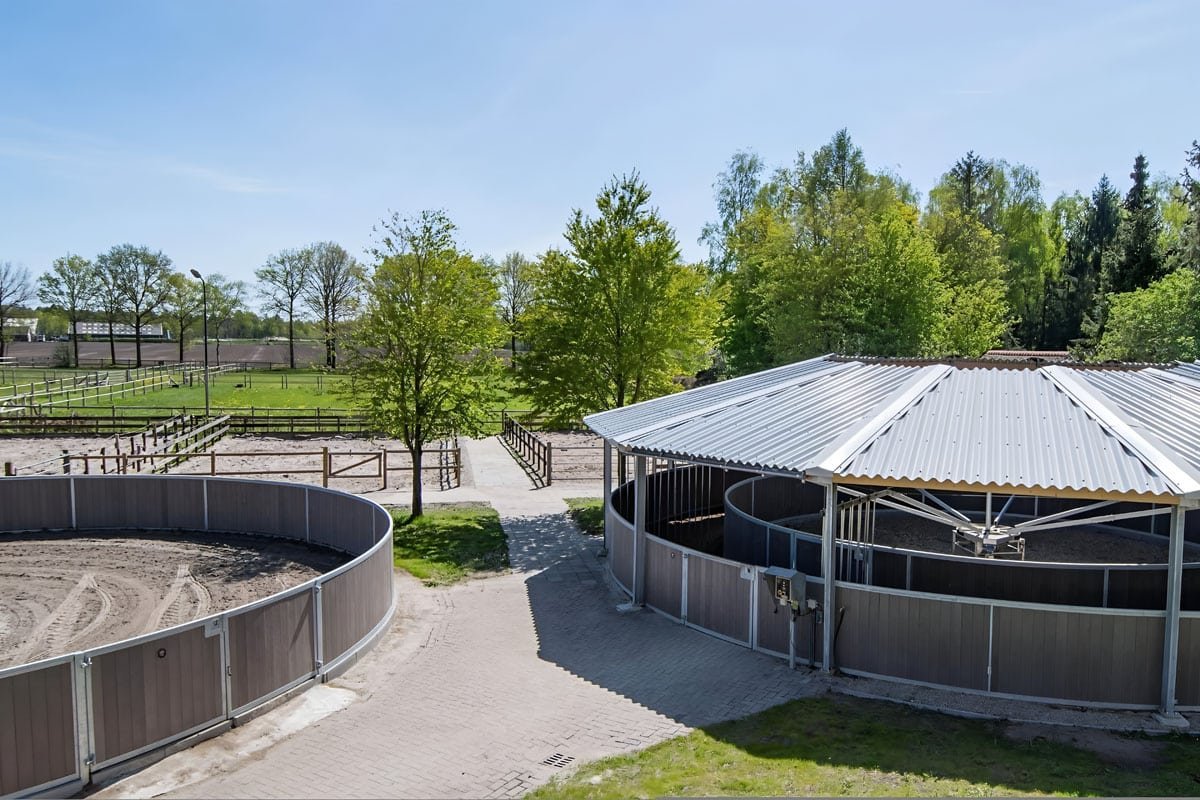
Two checks separate a real build from a sand pit. Proof-roll the base before footing goes down: a loaded truck should cross it without cutting ruts. Then probe finished depth on a grid rather than trusting the eye — a pen loses material to wind, dragging, and hooves faster than its footprint suggests.
Particle shape drives how the top layer behaves. Penn State Extension’s footing guidance recommends sub-angular particles — grains with broken corners that interlock without packing into concrete — in a well-graded, washed sand with low silt and clay. Rounded river sand rides loose; sharply angular manufactured sand locks down hard.
Drainage: The Decision That Dates Every Other Layer
Water is the clock on every other choice. The standard figure across published guides is a 1–2% fall — pitched one way or crowned from the center — so rain sheets off instead of ponding. On clay subsoil or in wet climates, builders typically add buried perimeter drains: perforated pipe in washed stone, wrapped in geotextile so silt cannot clog the system.
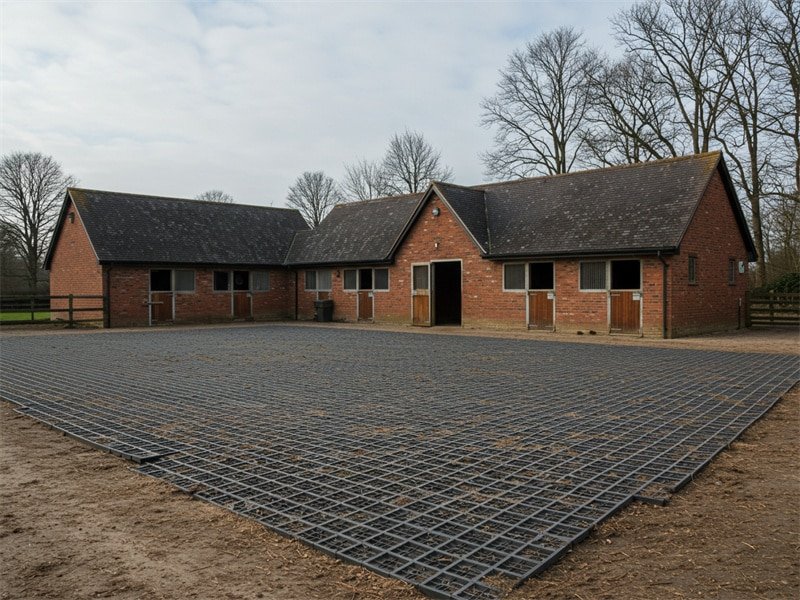
Saturated footing turns slick, tracks ruts, and recovers slowly. In freeze-thaw territories, water trapped in the base adds heave, which cracks surfaces and racks fence lines from below.
The fence line is where drainage planning gets skipped. Perimeter drains run just outside the pen, so post holes and drain trenches need one drawing, not two. Solid panel bases can also hold runoff on the working surface, which is why drained kickboard details show up in so many commercial builds. Base thickness, pipe layouts, and grading are worked through in our horse arena construction guide — hand it to your site builder before pricing footing material.
Surface Materials Compared: Depth, Drainage, and Maintenance
Four footing systems dominate published guidance; a fifth, rubber matting, works below the footing rather than as the riding layer.
| Surface Layer | Typical Working Depth | Drainage Behavior | Maintenance Profile |
|---|---|---|---|
| Washed coarse sand | 2–4 inches over a firm base | Drains between grains; excess fines clog it | Most frequent dragging and watering; dusty if dry |
| Sand with textile fiber blend | 2–4 inches | Fibers bind grains, resisting ruts after rain | Less displacement; occasional tilling to redistribute fiber |
| Sand with rubber-fiber blend | 3–4 inches | Holds moisture longer; drains slower than plain sand | Rubber migrates upward; periodic re-blending |
| Foam-additive sand mix | 2–4 inches | Steadier in wet and dry; less dust and watering | Leveling only; suppliers report long additive life |
| Rubber mats as a base layer | Mat thickness only; footing built on top | Sheds footing migration into the subgrade | Rarely touched once covered; failure shows as dips above |
Depths and behaviors above are general industry guidance compiled from publicly published arena construction resources — a starting point for conversations with your site builder, not specifications DB HorseStable installs or guarantees.
Which to buy? On a properly drained base, the fiber blend is the pragmatic pick: it tolerates ring wear with less dragging than pure sand and does not shed cushion like rubber-heavy mixes. If you are matting the base under a thin footing, our heavy-duty rubber mats ship in formats built for stable and arena floors — confirm the thickness your builder plans to use before grading.
Where the Fence Meets the Surface
Five junction points decide whether a pen ages well or fights its footing every season.
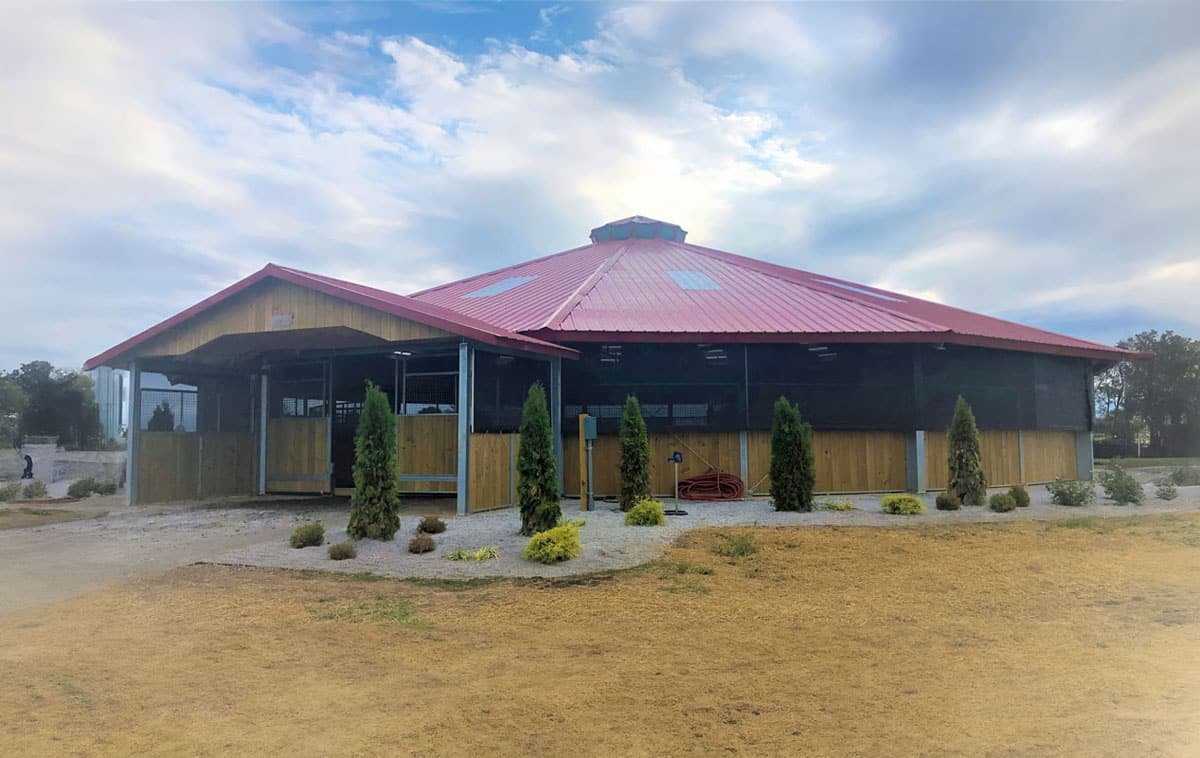
- Post anchoring: Posts belong secured into the compacted base or into concrete footers outside the loose footing. A post collar resting in 3 inches of sand works loose, leans, and funnels water into the base.
- Frost depth: In freeze-thaw climates, published guidance typically sets post footings below the local frost line, because heaved posts pull panel lines out of the circle. Your builder and fence supplier need the same embedment drawing.
- Footing containment: Kickboards — perimeter boards fixed along the fence base — keep the working layer inside the pen and out of the drain line.
- Height above finished surface: Rail height is measured from the footing, not from original grade. Every top-up lowers clearance, so build the fence spec against final surface height.
- Gate clearance: The grooming tractor is a permanent resident of the maintenance plan. Size the gate for it, and keep hinges clear of the ridge dragged against the fence.
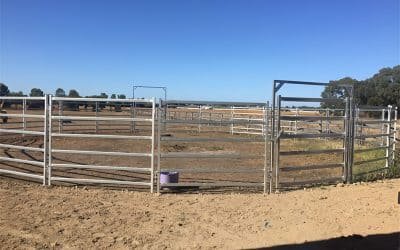
Circle geometry adds a wrinkle. Panels meet a curved pen in chords, not tangents, so post spacing tightens around the bends and the wall reads as a polygon — with footing piling against the inside of each corner. The diameter and wall-height trade-offs are covered in our comparison of lunging pens vs round pens.
What to Confirm With the Factory Before Ordering Lunging Pens
Groundwork stays local, but the fence line carries real, verifiable commitments. Put these questions in writing to any panel supplier — the shortlist we can answer for our product:
- Panel layout at your diameter: Ask for a drawing showing panel count, chord length, and post spacing for the exact pen size — matching your site builder’s circle.
- Anchor interface: State how posts will be set — drive-on shoes, concrete footers, or embedded in the base edge — and confirm which post detail ships with the panels.
- Coating process: Request written confirmation of hot-dip galvanizing after fabrication, the process behind the 20-year rust protection claim on our galvanized steel.
- Hardware position: Bolts and latches should sit where a horse cannot reach them, consistent with your finished surface height.
- Documentation: ISO 9001 and CE certificates should name the same manufacturer as your contract entity — match the names, not the logos.
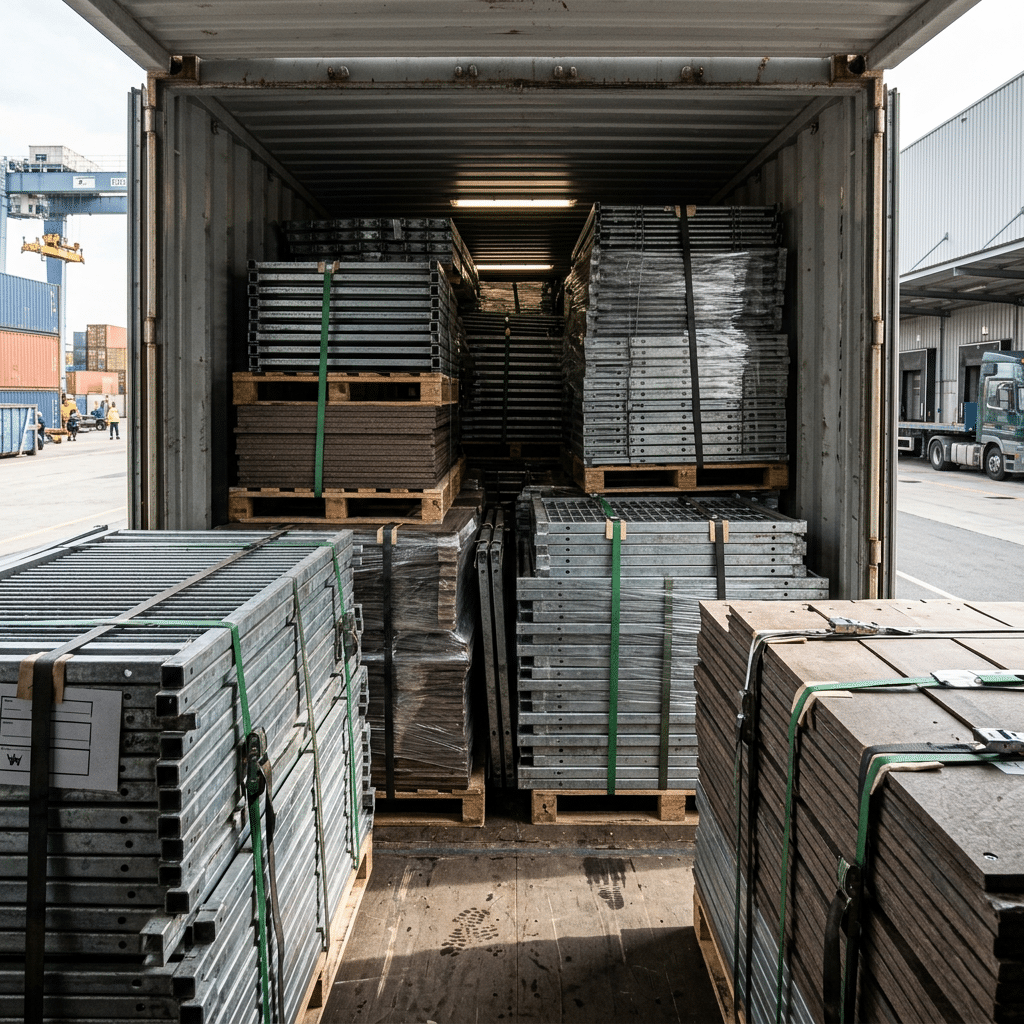
- Commercial terms: Fence panel orders start at 50 panels; lunging pen configurations are quoted case by case; global lead times run 4–6 weeks.
What no fence factory should promise: footing performance. A supplier volunteering drainage guarantees for ground they never surveyed is selling a sentence, not an engineering outcome. Confirm the surfacing scope separately, with the contractor pouring the base.
Frequently Asked Questions
How deep should a lunging arena surface be?
Published guidance commonly describes 2–4 inches of working footing over a compacted base, typically on the firmer side of a riding arena. Probe depth on a grid before adding material — deep, loose footing punishes legs on circles.
Does a lunging pen need buried drainage pipe?
Not always. A 1–2% grade over a free-draining base can shed rain adequately on dry sites, while wet climates and clay subsoils usually call for perimeter drains. Have your local builder confirm before the panels go in.
Where should fence posts sit relative to the footing?
Anchor posts into the compacted base or into concrete footers set outside the loose footing — never rest them in the working layer. Collars standing in soft sand work loose, lean, and funnel water into the base.
What does DB HorseStable supply for a lunging arena?
The factory supplies galvanized steel lunging pens and fence panels, heavy-duty rubber mats, and ISO 9001 and CE documentation, with 4–6 week global lead times. Surface construction stays with your local groundwork contractor.
Conclusion
The surface carries the training; the fence keeps the surface where it belongs. Depth, grade, containment, and anchoring cost less to align on paper than to re-lay after one rainy season moves footing into the drain line.
Take your site builder’s layer spec into the fence conversation, and the panel drawing to the base conversation. Send both trades the same diameter and finished surface height — the ring they excavate should be the ring you fence.

 English
 Spanish
 French
 Arabic
 German
0 Comments