



Sourcing horse stall inventory for Poland requires navigating a specific climate challenge where standard steel becomes brittle and fails. The combination of -35°C temperatures and ammonia accumulation destroys generic pre-galvanized frames, leading to seized hinges and costly warranty replacements within two seasons.
This analysis benchmarks heavy-duty swing door systems against the BS EN ISO 1461 hot-dip galvanization standard. We evaluate cold-climate specifications, including Q345B Low Alloy High Strength Steel and cast-proof engineering, to help distributors secure infrastructure that withstands Eastern European winters without maintenance liabilities.
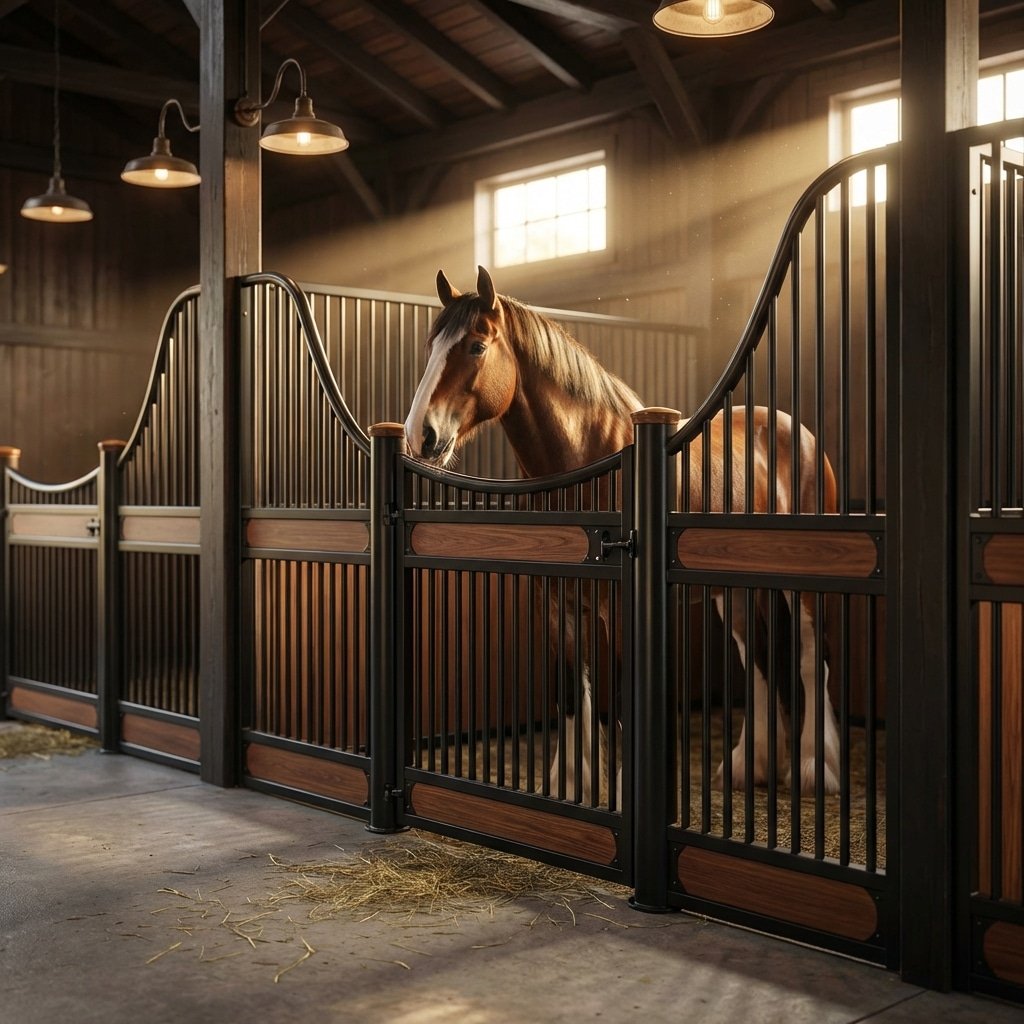
The Polish Equestrian Boom and EU Welfare Laws
Poland’s equestrian market is surging toward $8.2 billion, triggering strict EU compliance demands. We engineer stables specifically to meet these injury-prevention and ventilation mandates.
Market Growth: Poland’s Rise as an Equestrian Hub
The Polish equestrian sector is rapidly professionalizing, moving far beyond hobbyist roots. Market analysis projects the sector will hit a valuation of $8.2 billion by 2033. This financial surge is driven by a tangible infrastructure shift. With over 300,000 horses and 469 licensed clubs currently operating, the legacy stock of traditional wooden barns is failing to meet modern standards. Large-scale investors in the Wielkopolski breeding sector and equestrian tourism are aggressively replacing rotting timber with sanitary, hot-dip galvanized steel facilities to secure long-term asset value.
Aligning with EU Directives: Cast-Proof and Ventilated Designs
European Union welfare regulations are no longer suggestions; they are operational mandates focusing on injury prevention and respiratory health. Standard fabrication often fails these inspections. DB Stable aligns directly with these directives through specific engineering choices that prioritize animal safety and facility compliance:
- Cast-Proof Design (Injury Prevention): Horses rolling in their stalls face a significant risk of getting legs trapped under partition walls. We engineer a strict 50mm bottom gap on all fronts and partitions. This precise clearance prevents hoof entrapment, directly addressing EU liability concerns regarding physical safety.
- Stack Effect Ventilation (Respiratory Health): Closed barns accumulate ammonia and dust, leading to chronic respiratory issues. Our design utilizes open top grills to create Stack Effect Ventilation. This promotes vertical airflow, allowing heat and fumes to escape naturally while drawing fresh air in, satisfying air quality standards without expensive mechanical systems.
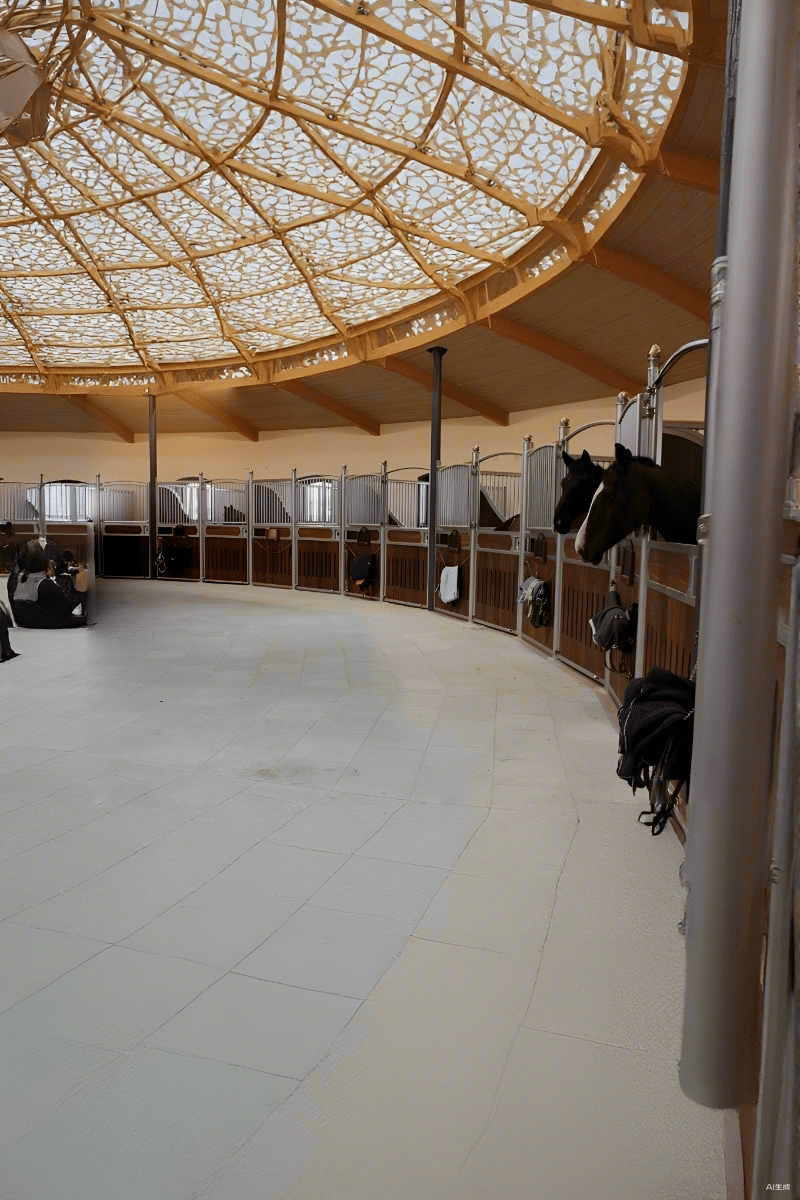
Swing Doors vs Sliding Doors in Freezing Environments
Swing doors offer superior weather sealing with gasket perimeters, making them ideal for strict temperature control. Sliding doors maximize aisle space and workflow but require specialized hidden tracks to prevent ice buildup.
| Feature | Swing Doors | Sliding Doors |
|---|---|---|
| Sealing Capability | Full perimeter gasket (Airtight) | Partial seal (Gap required for movement) |
| Space Impact | Requires clearance arc | Zero footprint (Linear motion) |
| Freezing Risk | Low (Hinges resist ice) | High (Tracks accumulate ice/debris) |
| Best Application | Isolation & Feed Rooms | High-Traffic Main Aisles |
Sealing Capabilities vs. Space Optimization
For facilities operating in extreme cold (-35°C to +15°C), the mechanical differences between door types dictate their performance. Swing doors allow for a continuous gasket seal around the entire frame. This minimizes heat exchange and prevents drafts that can compromise stable temperatures. If insulation is the primary goal, the hinged mechanism provides the necessary compression to keep elements out.
Sliding doors address a different problem: workflow efficiency. They eliminate swing clearance issues, which optimizes floor space in busy barns where aisles must remain clear for machinery and horses. But this mechanical advantage comes with an operational risk. Exposed bottom tracks accumulate ice and frozen bedding, leading to jams if the facility lacks a strict cleaning protocol. We recommend prioritizing swing doors for climate control and sliding doors for operational speed.
Cold-Climate Specifications: Hidden Tracks and Q345B Steel
Standard steel becomes brittle in sub-zero temperatures, increasing the risk of fracture if a horse kicks the door. DB Stable mitigates this by engineering specific cold-climate solutions into our Professional Series. We replace standard structural steel with materials designed to maintain high impact toughness even when frozen.
- Hidden Track System: Our Professional Series utilizes an enclosed upper track system for sliding doors, protecting rollers from snow and ice accumulation that plagues standard exposed tracks.
- Q345B Steel Upgrade: We construct all cold-climate doors using Q345B Low Alloy High Strength Steel. This material resists brittle fractures better than standard Q235B during winter impact events.
- Hot-Dip Galvanization: We galvanize every component after fabrication (welding). This seals the welds against rust caused by melting snow and slush, adhering to BS EN ISO 1461 standards.
- Infill Integration: We use HDPE boards to prevent thermal expansion gaps. Unlike wood, which shrinks significantly in cold dry air, HDPE maintains structural integrity across fluctuating temperatures.
Engineered Stables for Every Global Climate

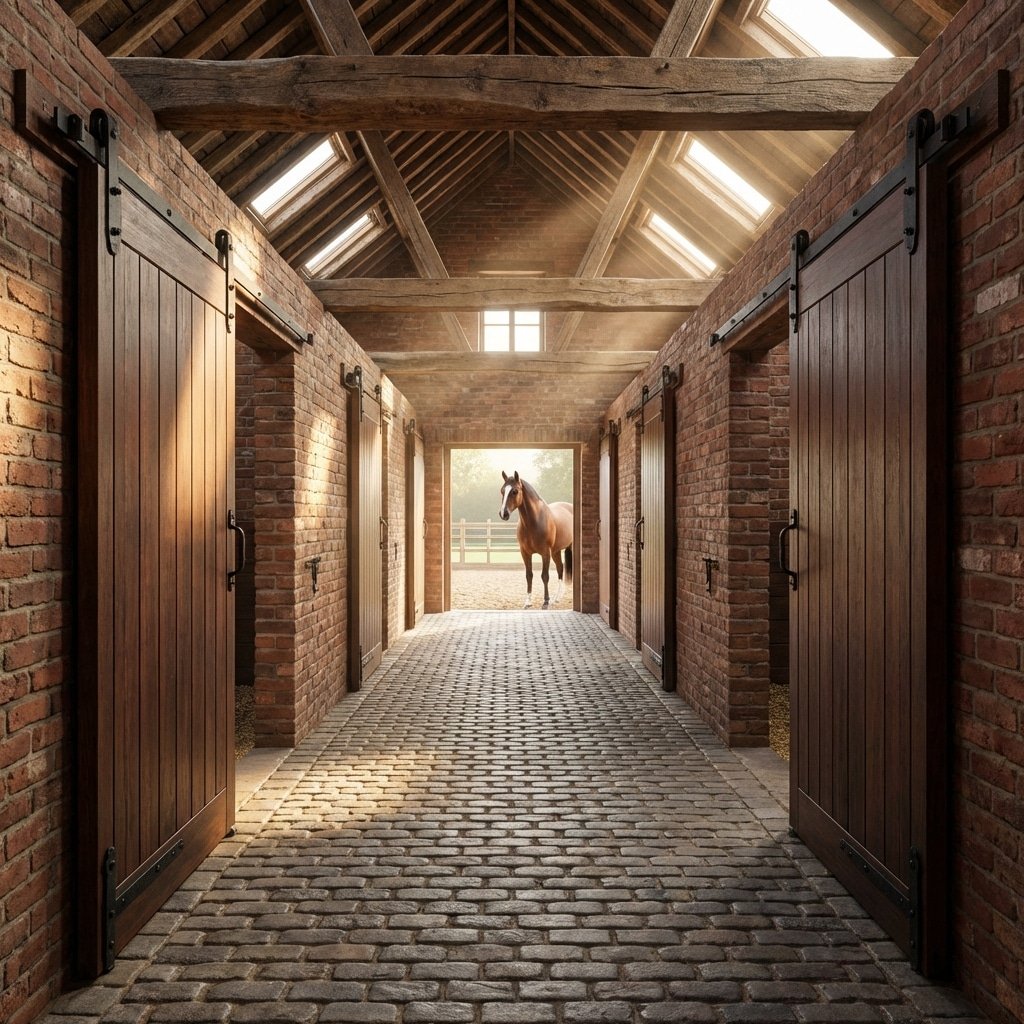
The Heavy-Duty Hinge: 304 Stainless vs. Rust
Quick Take: Ammonia accelerates corrosion in standard steel, causing hinges to seize and creating safety risks. DB Stable eliminates this by using 304 Stainless Steel for all hardware, ensuring smooth operation for the stall’s lifespan.
Why Standard Steel Hinges Seize and Fail
Many manufacturers cut costs by pairing high-quality stall fronts with low-grade, standard galvanized steel hinges. In a dry warehouse, this works. In a horse stable, it creates a maintenance nightmare. The primary enemy is not just water, but ammonia from urine. This chemical creates a highly corrosive atmosphere that penetrates standard zinc coatings rapidly. Once the protective layer fails, the steel oxidizes.
- Chemical Attack: Ammonia vapors act as a catalyst, stripping standard galvanization and attacking the mild steel beneath.
- Mechanical Seizing: Rust takes up more volume than steel. As corrosion builds inside the hinge barrel, it binds the pin, effectively welding the door shut.
- Safety Liability: A seized hinge prevents quick access during emergencies, such as a cast horse or a barn fire.
The 304 Grade Standard in DB Hardware Kits
We refuse to compromise on hardware. As specified in our strict internal manufacturing protocols, every component in the DB Stable installation kit—from the main hinges to the smallest anchor bolts—is machined from 304 Stainless Steel. This material contains high levels of chromium and nickel, forming a passive oxide layer that self-heals when scratched and blocks corrosive elements completely.
- Material Spec: 304 Stainless Steel prevents the chemical reaction between ammonia and metal.
- Oxidation Resistance: Capable of withstanding high-salinity and acidic environments (equivalent to passing rigorous ASTM B117 salt spray tests).
- Operational Longevity: Ensures heavy-duty stall doors swing freely without lubrication or maintenance for decades.
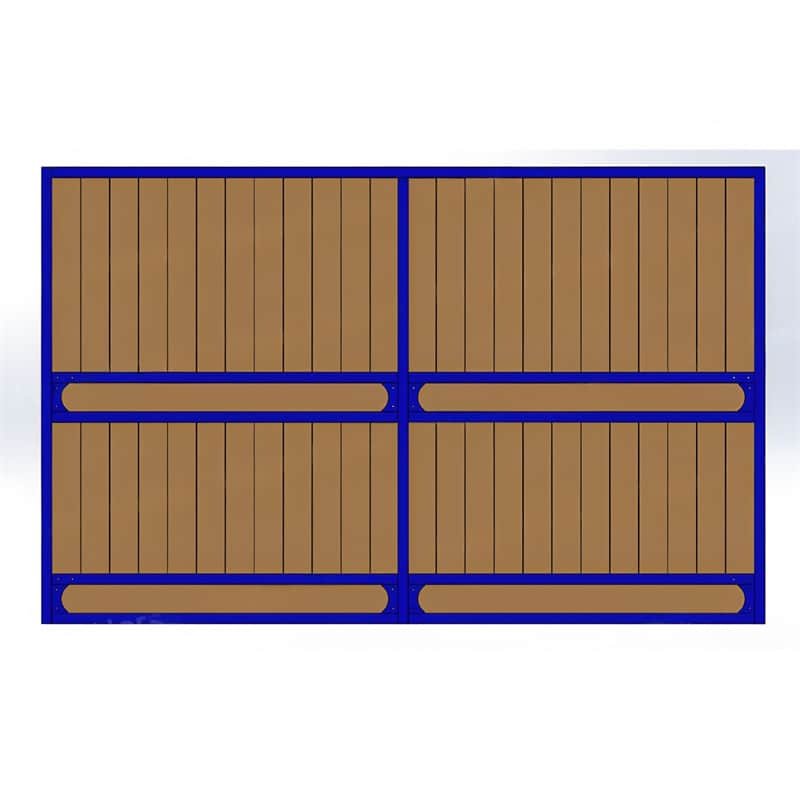
Hot-Dip Galvanized Stall Panels for Snow and Slush
Freezing slush mixes with ammonia to create a corrosive paste that destroys painted steel. We hot-dip frames after fabrication, sealing welds under 85 microns of zinc to prevent this.
The Corrosive Threat of Winter Slush and Ammonia
Winter introduces a specific chemical stress that dry seasons do not. Inside a barn, melting snow tracked in by horses mixes with urine and bedding. This creates a wet “chemical bath” that sits at the base of your stall fronts. This slush is highly acidic due to ammonia concentration, and it actively eats away at standard steel finishes.
The problem compounds when machinery enters the aisle. Tractors and skid steers track in road salt, which accelerates corrosion on the bottom rails. Standard powder-coated or painted steel cannot withstand this. The freeze-thaw cycle expands microscopic cracks in the paint, causing it to peel and exposing the raw steel to the salty, acidic mix.
- The “Pre-Galv” Failure Point: Competitors often buy pre-galvanized tubes and weld them together. The heat from welding burns the zinc off at the joints, leaving the most critical structural points exposed to rust immediately.
- Mechanical Expansion: Water trapped in joint crevices freezes and expands, physically forcing weak welds apart.
ISO 1461 Protection: 85-Micron Hot-Dip Galvanization
To solve the rust issue, we refuse to use pre-galvanized tubing for our frames. Instead, we utilize the “Hot-Dip After Fabrication” method. We weld the entire frame using raw black steel first. Once the structure is complete, we submerge the entire unit into a bath of molten zinc. This ensures the liquid zinc flows over every weld and coats both the inside and outside of the tubes.
This process creates a metallurgical bond that is far harder than paint. Even if a horse kicks the panel, the zinc coating will not chip off like powder coat. We strictly adhere to BS EN ISO 1461 standards, ensuring a coating thickness that exceeds generic industry norms.
- Structural Coating: Average zinc thickness > 85 microns (μm) for main structural parts.
- Tubing Coating: Average zinc thickness > 70 microns (μm) for 3-6mm steel.
- Total Seal: Welding seams are completely encapsulated, preventing the “rust bleed” seen on cheaper panels.
- Chemical Resistance: The zinc patina naturally resists the acidic attack from manure and slush.

Group Stabling: Using Modular Panels for Open Barns
Modular panel systems enable flexible, welfare-compliant group housing while utilizing high-strength steel to withstand the physical demands of open herd environments.
Enhancing Socialization and Airflow in Open Structures
The industry is decisively moving away from solitary confinement models toward group housing. This shift isn’t just about aesthetics; it is driven by hard data on equine welfare. Horses are herd animals, and isolating them often leads to behavioral vices like cribbing or weaving. Shared spaces allow for natural interaction, establishing a hierarchy that reduces stress levels across the herd. When animals can touch, groom, and move together, their baseline cortisol levels drop significantly compared to traditional box stalls.
Beyond behavior, the physical health benefits of open structures are measurable. Enclosed barns often trap ammonia and dust, leading to chronic respiratory issues. Open barn designs leverage “Stack Effect Ventilation,” where body heat generates a thermal updraft that pulls fresh, cool air in from the bottom while venting stale air out through the roof. This passive airflow is far more effective than mechanical fans in maintaining air quality. Strict adherence to welfare standards, such as the German FN guidelines, dictates specific space-per-horse ratios in these setups to prevent overcrowding and ensure every animal has access to resources.
Securing Layouts with Heavy-Duty Hot-Dip Galvanized Panels
Group housing places significantly higher structural stress on barriers than individual stalls. In a herd environment, horses kick, lean, and physically challenge partitions during dominance displays. Standard architectural steel often deforms under this pressure. For open barns, we specify Q345B Low Alloy High Strength Steel. This material offers superior impact toughness, particularly in freezing temperatures where lower-grade steel becomes brittle. This specification provides a “Kick-Proof Guarantee,” ensuring the safety of the animals and the longevity of the facility.
Durability in open environments also requires aggressive corrosion protection. Exposure to rain, snow, and urine creates a corrosive cocktail that strips standard paint in months. We utilize Hot-Dip Galvanization (ISO 1461), immersing the entire welded frame in molten zinc to achieve a coating thickness exceeding 85 microns for structural parts. This metallurgical bond protects the steel from the inside out, unlike surface-level powder coats that chip and rust.
- Q345B Steel Framework: High-strength alloy prevents brittle fractures and withstands aggressive herd interactions.
- ISO 1461 Galvanization: Zinc coating >85 microns ensures decades of rust protection in open, weather-exposed barns.
- Flat-Pack Modularity: Allows facility managers to reconfigure zoning effortlessly as herd sizes or dynamics change.
- Safety Profiles: 50mm x 50mm RHS posts with 2.0mm minimum wall thickness prevent structural failure.
Frequently Asked Questions
Do hinged or sliding doors perform better in freezing Polish winters?
Both function effectively when specified correctly, but they serve different operational needs. Sliding doors are safer for indoor aisles because they do not obstruct walkways or swing into high-traffic zones. However, for external access, outward-swinging hinged doors often struggle against snow accumulation. The critical success factor in freezing climates is material stability. We utilize Q345B steel frames (Cold Climate Option) which resist warping at low temperatures. This ensures latches remain aligned even when the temperature drops to -20°C, unlike standard steel which can distort and jam the mechanism.
Why is hot-dip galvanization (ISO 1461) recommended over powder coating?
Powder coating is essentially paint sitting on top of the metal; it chips easily, allowing moisture to trap underneath and rot the steel from the inside out. In contrast, Hot-Dip Galvanization involves immersing the entire welded frame into molten zinc, creating a metallurgical bond. We adhere strictly to BS EN ISO 1461, ensuring a coating thickness of >85 microns. This process creates a self-healing barrier that withstands ammonia, humidity, and pressure washing for 20 to 30 years. For professional facilities, we only recommend powder coating if applied over a hot-dip galvanized base (Duplex System).
What is the advantage of using adjustable hinges on stall doors?
Barn structures settle over time, and concrete foundations shift with seasonal freeze-thaw cycles. Fixed hinges become a liability when frames move, causing doors to drag or jam. We use heavy-duty adjustable hinges (typically 304 Stainless Steel) that allow facility managers to realign door frames using simple tools. This restores smooth operation immediately without the need for expensive re-welding or re-installation, significantly lowering long-term maintenance costs.
Are modular panels safe for group stabling layouts?
Yes, provided they are engineered for impact. Group housing introduces higher physical stress on partitions due to social hierarchy interactions. Our panels meet strict safety standards, featuring a “Cast-Proof Design” with narrow grill spacing (approx. 50mm) to prevent hoof entrapment and a minimum height of 2.2m to discourage jumping. We also mandate the use of kick-proof materials like HDPE infill and Q345B steel, which absorbs impact energy without fracturing.
How does Q345B steel differ from standard structural steel?
Q345B is a low-alloy, high-strength steel equivalent to ASTM Grade 50. Its primary advantage in equestrian construction is superior impact toughness at low temperatures. Standard carbon steel (like Q235B or A36) often becomes brittle in freezing conditions, making it prone to snapping under the force of a horse kick. Q345B maintains its ductility and structural integrity in sub-zero environments, making it the mandatory standard for our cold-climate clients.
Final Thoughts
Investing in standard steel housing for Polish winters is a financial risk that rarely pays off given the aggressive mix of freezing ammonia and road salt. Our Professional Series, built with Q345B Cold Climate steel and sealed via ISO 1461 Hot-Dip Galvanization, eliminates the structural brittleness and rust liability common in generic alternatives. This specification protects your inventory from early failure and secures your reputation as a supplier of professional-grade infrastructure.
Do not compromise your supply chain with unverified fabrication; validate the quality before you commit. Request our technical catalog today to review our steel certifications and galvanization thickness reports directly. Contact our engineering team to configure a trial flat-pack shipment that aligns with your specific logistics requirements.

 English
  Spanish
  French
  Arabic
  German
0 Comments