


Designing stables for Denmark demands more than just aesthetic appeal; it requires engineering that withstands the hidden financial risks of brittle fracture. Standard construction often fails in these freezing, damp environments, leading to structural shearing and costly veterinary liabilities caused by unchecked floor-level drafts.
We engineer our Cold Climate Option using Q345B Low Alloy High Strength Steel to maintain impact toughness even when temperatures drop below freezing. By combining this metallurgy with Hot-Dip Galvanization After Fabrication exceeding 85 microns, we eliminate the risk of corrosion and ensure your facility remains a low-maintenance asset for decades.
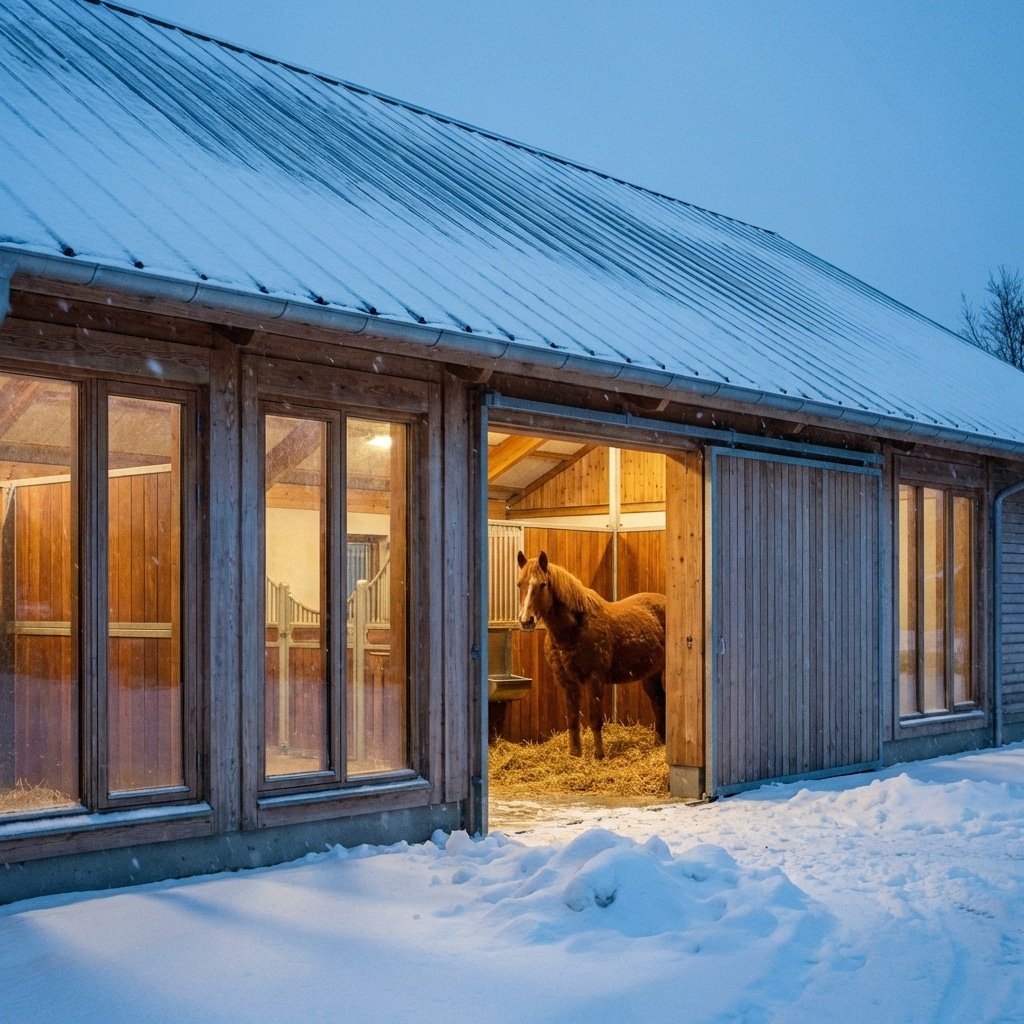
Preparing Your Barn for Freezing Danish Winters
Danish winters require Q345B steel to prevent brittle fractures and “Stack Effect” ventilation to stop condensation without freezing the horses.
Balancing Insulation with Proper Ventilation
Many barn owners make the critical mistake of sealing their stables too tightly in an attempt to retain heat. In Denmark’s damp winter climate, this turns the barn into a moisture trap rather than a shelter. Insulation without airflow leads to rapid condensation on cold surfaces, creating a breeding ground for mold and respiratory issues. You need to manage moisture, not just temperature.
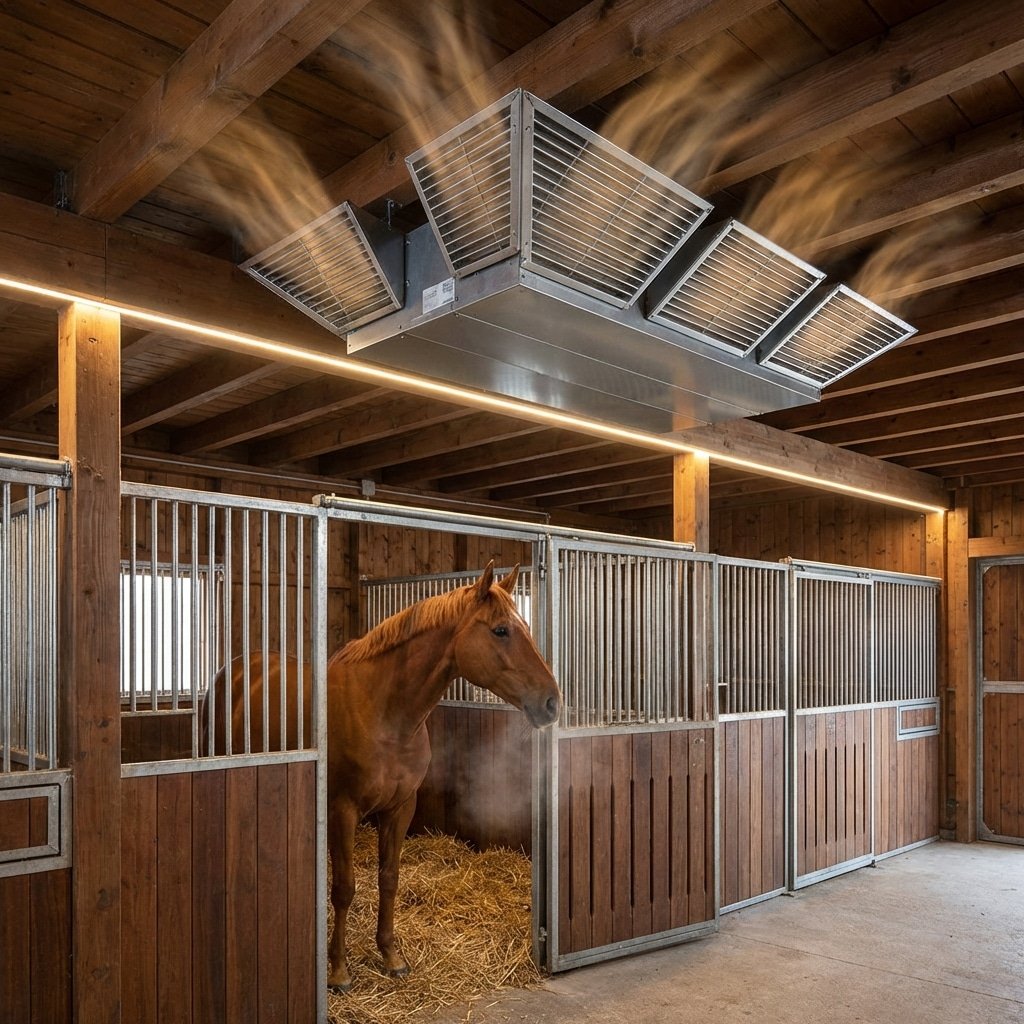
- Utilize Stack Effect Ventilation: We design our stable fronts with open-grill tops to promote vertical airflow. Warm, stale air rises and escapes through roof vents, drawing fresh air in from lower intakes without creating a direct freezing draft at the horse’s level.
- Vapor Control Placement: If you insulate the barn structure, place vapor control layers on the warm side of the insulation. This stops warm, moist air from reaching the cold outer shell, preventing structural damage from freeze-thaw cycles.
- Manage the “Wet” Cold: A dry barn at 0°C is healthier for a horse than a damp barn at 5°C. Ventilation keeps the relative humidity down, allowing the horse’s natural coat to insulate effectively.
Why Q345B Steel is Essential for Freezing Climates
Standard structural steel (Q235B/ASTM A36) creates a hidden safety risk in Scandinavian winters: it loses ductility as temperatures drop. When steel becomes brittle, a sudden impact—like a horse kicking a stall post—can cause the metal to fracture or shear rather than bend. For projects in Denmark, we strictly recommend upgrading to our “Cold Climate Option.”
- Q345B Low Alloy High Strength Steel: Equivalent to ASTM Grade 50, this material maintains superior impact toughness in freezing conditions. It absorbs the energy of a kick without snapping, ensuring the structural integrity of the stall remains intact during a hard freeze.
- Hot-Dip Galvanization (BS EN ISO 1461): Winter barns are often kept closed for longer periods, increasing ammonia concentrations. Our process dips the steel after fabrication to achieve a coating thickness >85 microns on structural parts. This seals the steel against the corrosive mix of high humidity and ammonia that destroys painted or pre-galvanized alternatives.
- Structural Resilience: We forbid tubing thinner than 2.0mm (14-gauge). The combination of thicker steel walls and the Q345B alloy provides the necessary mass to withstand thermal contraction and physical impact simultaneously.

Solid Bottom Horse Stall Panels: Stopping Floor Drafts
Solid bottom panels act as a thermal windbreak at bedding level, blocking freezing drafts to protect recumbent horses while maintaining essential upper ventilation.
| Technical Feature | DB Stable Specification | Cold Climate Benefit |
|---|---|---|
| Infill Thickness | 28mm – 32mm HDPE | High thermal mass barrier |
| Joint Profile | Interlocking Tongue-and-Groove | Eliminates air gaps/drafts |
| Steel Grade | Q345B (Low Alloy High Strength) | Prevents brittle fracture in frost |
| Galvanization | Hot-Dip ISO 1461 (>70μm) | Resists wet bedding corrosion |
Protecting Recumbent Horses from Cold Air Currents
Cold air behaves like water; it sinks to the lowest point of the barn. In a standard stable environment, this means the freezing zone sits directly at the bedding level where horses sleep. While humans standing in the aisle might feel comfortable, the temperature at the floor can be significantly lower.
Horses lying down are vulnerable to these direct drafts. Constant exposure to cold currents creates stiffness in muscles and joints, which impacts recovery and performance. This is particularly critical for older horses or performance animals that need uninterrupted rest.
Solid lower panels create a necessary thermal break. They retain the heat generated by the bedding and the horse’s body, creating a micro-climate at floor level. This design blocks the draft without sealing the entire stable, allowing the “Stack Effect” ventilation to function through the open upper grills.
Technical Specification: 32mm Interlocking HDPE Infill
We engineer our draft barriers using heavy-duty materials designed to withstand abuse and extreme climate fluctuations. Cheap plywood or thin laminate often warps in damp winter conditions, breaking the seal. Our system uses industrial-grade components to ensure a permanent draft block.
- 28mm-32mm High-Density Polyethylene (HDPE): We use thick, impact-absorbing boards that provide a dense thermal barrier. Unlike wood, HDPE does not shrink in the cold, maintaining a constant seal.
- Tongue-and-Groove Profile: Every board locks into the next. This mechanical connection eliminates gaps between planks, preventing cold air infiltration even as the building shifts slightly.
- Q345B Steel Channels: For cold climates, we recommend our Q345B Low Alloy High Strength Steel frames. This material maintains impact toughness in freezing temperatures, ensuring the U-channels clamp the infill securely without becoming brittle.
- Hot-Dip Galvanized Frame: All steel components undergo hot-dip galvanization after fabrication (BS EN ISO 1461). This seals the U-channels against the moisture accumulating at the floor level, preventing rust from compromising the structure.
Factory-Direct Stables With 20-Year Durability
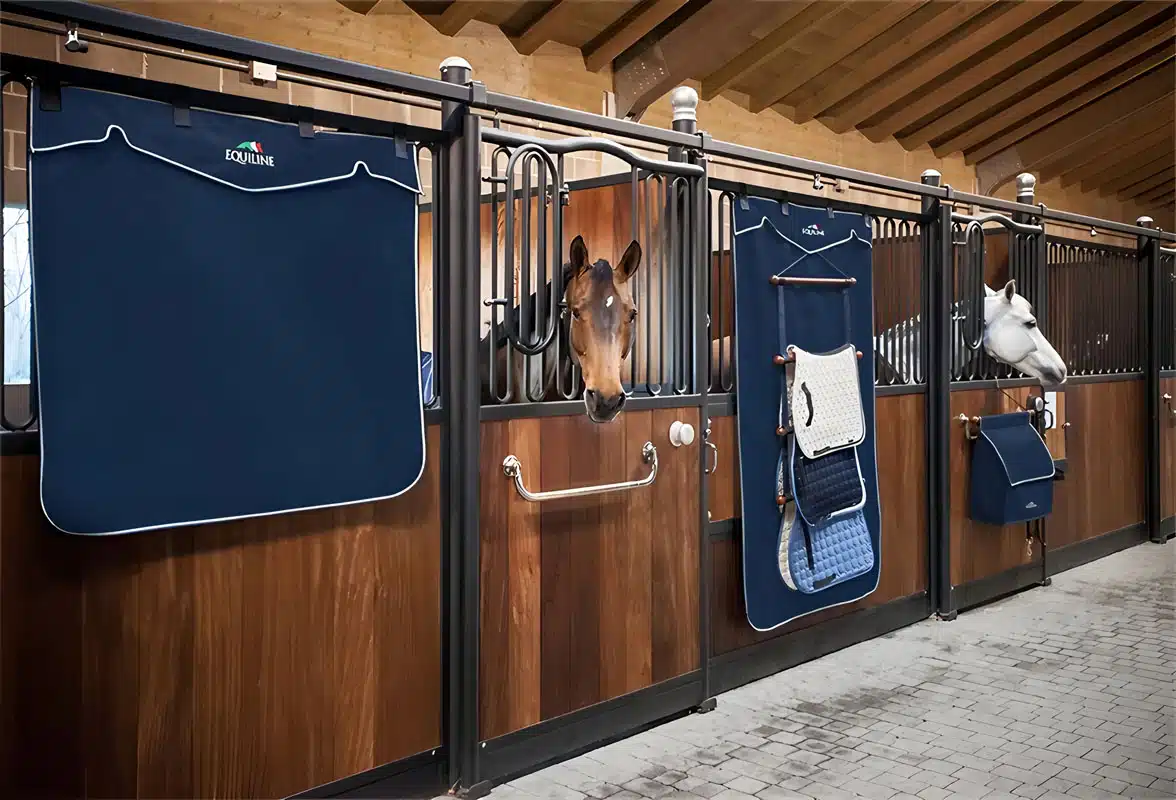
Sealing the Aisle: Heavy-Duty Sliding Barn Doors
Heavy-duty sliding doors prevent the “tunnel effect” in stable aisles. We use Q345B steel and enclosed tracks to ensure reliable operation in freezing Danish conditions.
Industrial Track Systems for Environmental Separation
In professional stable design, the primary enemy during winter isn’t just the ambient temperature; it is the airflow. Open aisles create a “tunnel effect,” accelerating freezing drafts through the facility and stripping heat from the stalls. Sealing the aisle with a heavy-duty sliding door serves as the operational shut-off valve for the building’s climate.
Standard agricultural tracks often fail in these environments because they leave rollers exposed. Dust, moisture, and ice accumulate on the rail, causing the door to jam or jump the track. We utilize fully enclosed industrial track systems that shield the rollers from the elements. This design ensures smooth operation even when the door faces significant wind loads or ice accumulation, maintaining a tight seal between the door panel and the structural frame to minimize air exchange.
The Role of Q345B Steel in Freezing Conditions
Standard structural steel (Q235B or A36) creates a hidden risk in sub-zero climates: brittle fracture. As temperatures drop, standard steel loses ductility. If a horse kicks a door frame at -10°C, a standard steel frame is more likely to crack or snap. For our Nordic and cold-climate clients, we upgrade the framework to Q345B Low Alloy High Strength Steel. This material retains its impact toughness in freezing conditions, ensuring the structural integrity of the barrier remains intact regardless of the weather or animal behavior.
- Material Spec: Q345B High Strength Steel (Cold Climate Option).
- Wall Thickness: 14-Gauge (2.0mm+) minimum to resist deformation.
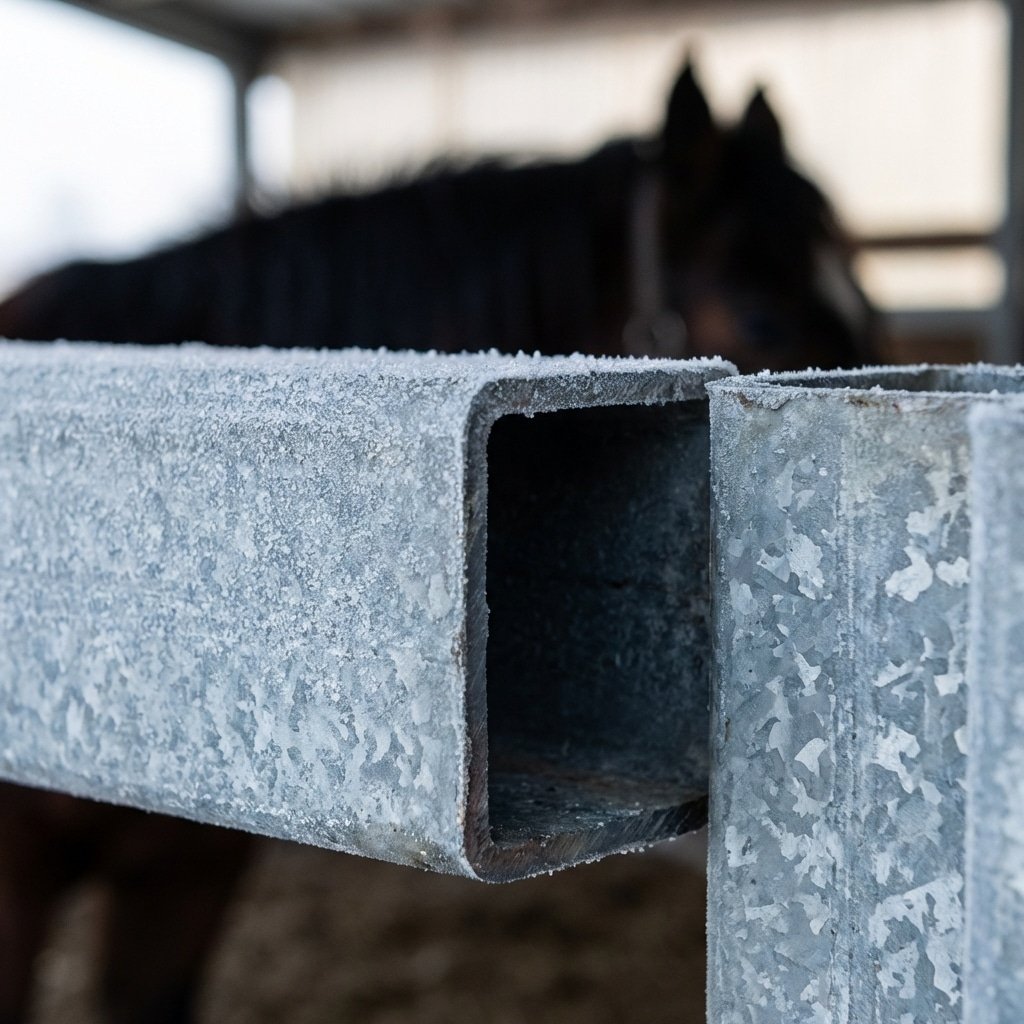
- Corrosion Protection: Hot-Dip Galvanization after fabrication (>85 microns avg.) to withstand condensation and snow melt.
- Hardware: 304 Stainless Steel anchoring kit to prevent rust seizing.
Barn Windows: 6mm Tempered Glass for Safety and Light
6mm tempered glass prevents catastrophic injury by shattering into blunt granules, while hot-dip galvanized frames ensure structural longevity against stable moisture and ammonia.
Impact Resistance: Why 6mm Tempered Glass is Critical
Standard residential glass poses a severe liability in equine environments. When standard glazing breaks, it creates jagged, guillotine-like shards that can sever tendons and arteries instantly. We rely exclusively on 6mm tempered glass because the manufacturing process alters the internal tension of the material. If a horse strikes the window, the pane creates a “crumble zone” rather than a cutting edge.
- Granular Fragmentation: The glass disintegrates into blunt, gravel-like cubes upon impact, eliminating the risk of deep lacerations.
- Superior Thickness: At 6mm, these units withstand significantly higher pressure loads from leaning or minor impacts compared to standard 4mm residential options.
- Regulatory Compliance: This specification meets the strict safety standards required for facility certification in regulated equestrian markets.
Structural Defense: Protective Grills and Galvanized Frames
Glass is only as secure as the steel holding it. We engineer our window frames using Q235B structural steel, protecting them through Hot-Dip Galvanization After Fabrication. This process adheres to BS EN ISO 1461 standards, ensuring a zinc coating thickness greater than 70 microns. This prevents rust from forming at the glass seal points, where condensation typically destroys painted or pre-galvanized alternatives.
- Impact Deflection: Internal steel safety grills act as the primary barrier, preventing horses from making direct contact with the glass surface.
- Rust Immunity: Full immersion galvanization seals every weld joint against the corrosive mix of humidity and ammonia found in stables.
- Ventilation Logic: The tilt-and-turn design supports “Stack Effect” ventilation, allowing hot air to escape near the roofline while maintaining a secure perimeter.
Integrating Auto-Heated Waterers into Steel Posts
We route electrical and plumbing lines through laser-cut access points created before hot-dip galvanization, ensuring internal edges remain rust-proof and structural integrity is maintained.
Choosing Between Electric and Geothermal Systems
Clients typically select one of two watering systems for freezing climates, and this choice dictates how we engineer the steel post profiles. You cannot retrofit these systems easily once the steel is galvanized, so the decision must happen during the CAD drawing phase.
- Electric Heated Waterers: These units utilize 100W heating pads and thermostatic controls. They require protected internal routing for 120V or 220V cables inside the post to prevent horses from accessing live wires.
- Geothermal Frost-Free Units: Systems like the Drinking Post rely on ground heat rather than electricity. These require mounting capabilities that accommodate deep installation below the frost line.
- Physical Protection: Both systems require heavy-duty steel shrouding. Exposed PVC or PEX lines are immediate targets for chewing, necessitating full enclosure within the steel framework.
Factory-Prepared Routing for Cables and Pipes
The most common failure point in stable plumbing isn’t the pipe itself, but the rust that forms where installers drill holes into finished steel. Drilling on-site breaks the protective zinc seal, exposing the raw steel to the ammonia-rich stable environment. We eliminate this risk through our “Hot-Dip After Fabrication” process.
- Laser-Cut Access Points: We cut all necessary plumbing and electrical ports into the Q235B or Q345B steel posts while the metal is still “black” (raw), prior to any finishing work.
- Sealed Edges: By dipping the steel after cutting, the molten zinc flows over the cut edges. This ensures the interior rim of the cable port receives the same >85 micron zinc coating as the exterior face.
- Structural Integrity: Factory cutting ensures the removal of material does not compromise the load-bearing capacity of the 2.0mm-2.5mm thick posts, which can happen with haphazard on-site modifications.
Frequently Asked Questions
Will standard steel rust in the wet, freezing Danish winter?
Standard black steel fails quickly in coastal, freezing environments. We exclusively use Hot-Dip Galvanization After Fabrication, strictly adhering to the ISO 1461 standard. This process ensures a zinc coating of over 70 microns on all tubing and over 85 microns on structural parts. This heavy barrier seals the steel against snow, salt, and humidity, offering protection far superior to pre-galvanized alternatives often found on the market.
Does the steel frame become brittle in extreme cold?
For regions with freezing temperatures, we specify our Q345B Low Alloy High Strength Steel option. Standard carbon steel often loses ductility in the cold, but Q345B retains superior impact toughness even in sub-zero conditions. This prevents the frame from fracturing if a horse kicks it during a cold snap, maintaining our “Kick-Proof Guarantee” regardless of the weather.
How do solid partitions improve winter comfort?
Solid bottom partitions, filled with our 28mm-32mm HDPE or High-Density Bamboo planks, act as a critical windbreak at the horse’s lying-down level. This blocks cold floor drafts effectively. Meanwhile, the open top grill allows “Stack Effect Ventilation” to remove ammonia and stale air without chilling the animal, striking the right balance between warmth and air quality.
Is it safe to install glass windows in a horse barn?
Yes, provided the specifications are correct. We use 6mm tempered glass, which crumbles into small, dull cubes rather than jagged shards if broken. To further ensure safety, we install heavy-duty steel grill guards in front of the glass. This setup prevents the horse from making direct contact with the window while still allowing natural light into the stall.
Can I install automatic waterers on these stall fronts?
Yes. Our standard 50mm RHS posts or 114mm round posts are engineered to support heavy accessories. We can pre-drill mounting holes or provide compatible brackets for automatic heated waterers. This ensures your watering systems are mounted securely and keeps water accessible without freezing issues.
Final Thoughts
Sourcing standard steel for Scandinavian climates is a liability that often ends in brittle fracture and expensive warranty claims. By standardizing on our Q345B Cold Climate option and ISO 1461 galvanization, you eliminate structural risks before they ever reach your customers’ barns. Your market reputation depends on delivering inventory that survives the freeze, not just the shipping container.
Stop guessing on quality and verify the engineering firsthand. We recommend requesting a specialized “Cold Climate” quote or a sample section to test our weld integrity and galvanization thickness against local standards. Contact our technical team today to secure production slots before the winter rush.

 English
  Spanish
  French
  Arabic
  German
0 Comments