


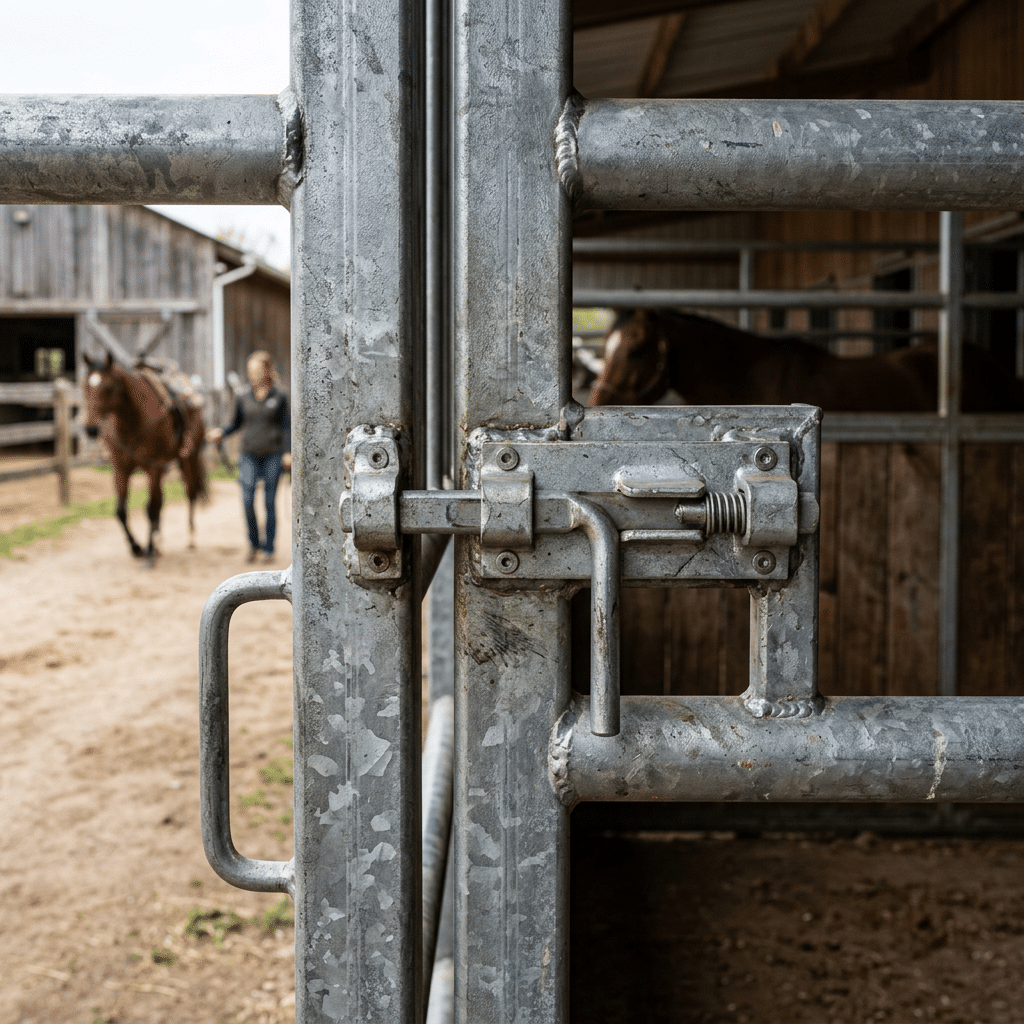
Neglected Aisle Thresholds create immediate liability risks for commercial equine facilities. Installing 45mm rubber pavers over existing concrete without a recessed transition forms a dangerous vertical lip that trips handlers and obstructs feed carts. This installation error stalls daily workflows and invites injury claims that far exceed the cost of proper site preparation.
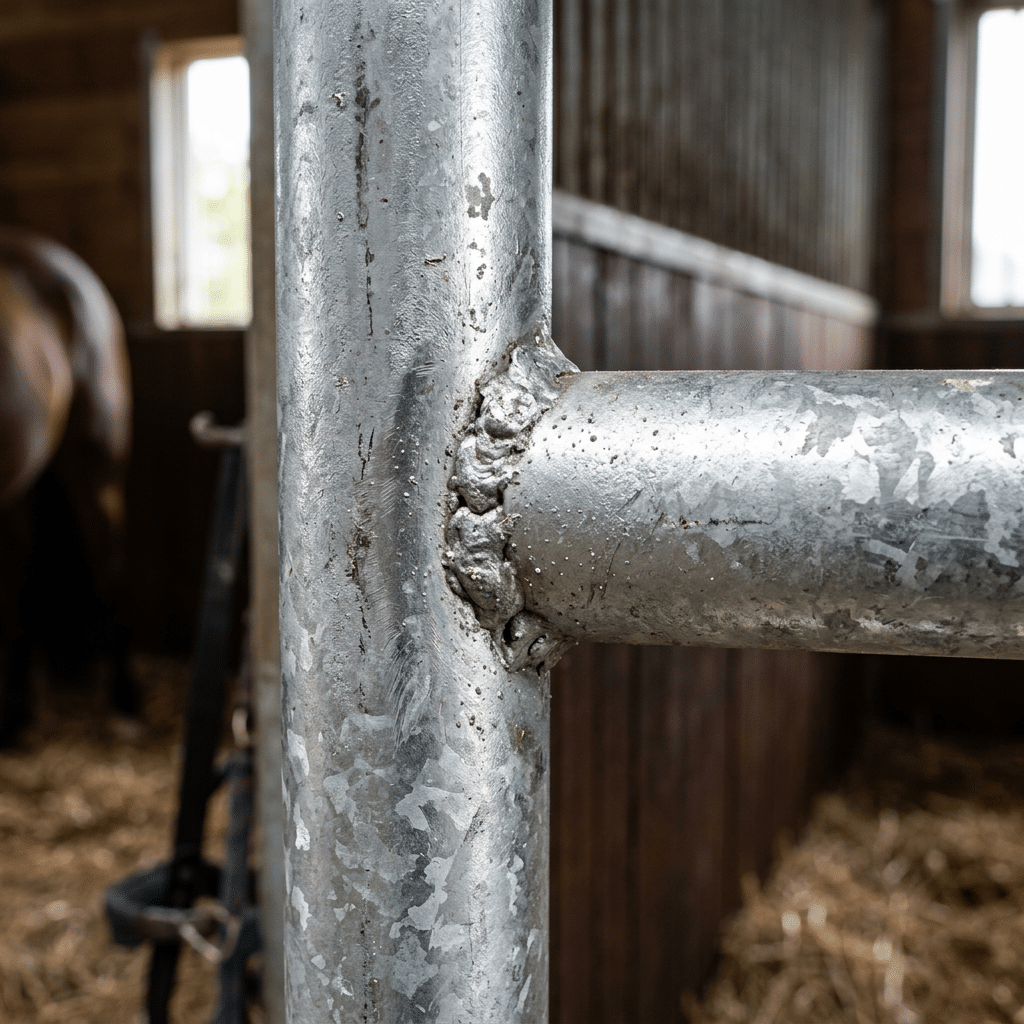
We analyze integrating heavy-duty flooring with the DB Stable Professional Series sliding system. Adjusting the overhead track to maintain the critical 50mm Cast-Proof Design gap prevents door drag and protects the hot-dip galvanization from abrasive wear. Correctly anchoring stainless steel guides through the pavers ensures structural rigidity without compromising the zero-threshold advantage.
The Tripping Hazard of Thick Rubber Aisle Pavers
Thick pavers create dangerous vertical lips if not recessed. Floating installations on uncompacted sand cause shifting, leading to uneven joints and severe stumble points.
Risks of Floating Floors and Exposed Edges
Standard heavy-duty rubber pavers, typically 40mm to 45mm (1-3/4 inches) thick, provide excellent shock absorption but introduce
a significant vertical threshold. If you install these on top of an existing flat slab without a recess or a concrete retention curb, you create a sharp 45mm lip at every doorway. This is a guaranteed trip hazard for handlers and a stumble point for horses entering the stall.
Substrate stability is the second failure point. Many facilities attempt “floating” installations over sand to save on concrete costs. Research and field experience show that without heavy compaction, the sand base shifts under the point-load of a 500kg horse. The result is uneven pavers and separating interlocking joints that catch toes and accumulate debris.
Accommodating Floor Height with the 50mm Cast-Proof Gap
We engineered our door systems specifically to handle the height of modern safety flooring. Unlike generic distributors who sell doors with random clearances, DB Stable’s Professional and Royal Series feature a standardized “Cast-Proof Design” with a defined 50mm bottom gap.
- Calculated Integration: The 50mm gap perfectly accommodates standard 40mm-45mm pavers. This prevents the door from dragging on the rubber while leaving a safe, minimal clearance (5-10mm) that prevents hooves from getting trapped if a horse rolls.
- Structural Rigidity: We use Q235B (or Q345B for cold climates) structural steel frames. This rigidity ensures the frame maintains its squareness and the sliding mechanism remains operational, even if the flooring substrate settles or shifts slightly over time.
- Defined Bottom Clearance: This precise manufacturing spec eliminates the need for on-site modifications or “shimming” the door tracks, which is common with weaker pre-galvanized alternatives that warp under pressure.
The Zero-Threshold Sliding Door Advantage
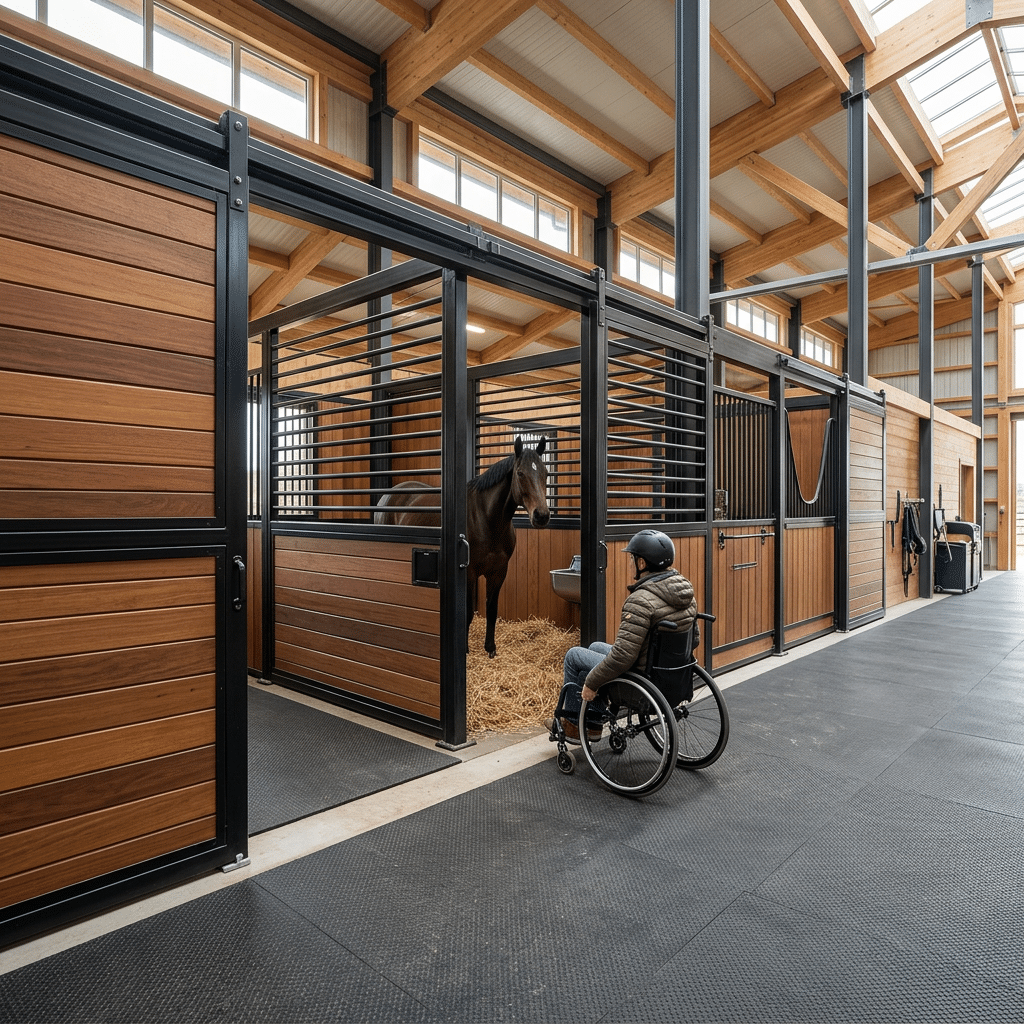
Zero-threshold designs remove the bottom metal bar, eliminating trip hazards and allowing wheelbarrows to roll freely. This system relies on heavy-duty overhead tracks instead of floor rails that collect dirt.
Eliminating Trip Hazards and Cleaning Obstacles
Traditional full-frame doors often utilize a raised metal bottom bar to stabilize the structure. While structurally simple, this creates a stumbling risk for young foals, tired horses, or animals recovering from sedation. A barrier at the floor level forces the horse to step up every time they enter or exit, increasing the chance of clipped hooves or stumbles.
From an operational standpoint, the threshold is a nuisance for stable staff. Mucking out requires pushing heavy wheelbarrows in and out of stalls multiple times a day. A raised bar forces staff to lift the wheelbarrow over the obstacle, adding unnecessary physical strain to the workflow.
Maintenance issues also plague bottom-track systems. Bedding, manure, and sand naturally accumulate in floor grooves. Over time, this debris compacts and jams the rollers, causing cheaper door systems to seize up. A zero-threshold design keeps the floor flush, preventing dirt accumulation and ensuring the mechanical components remain isolated from stall bedding.
The Professional Series Hidden Track System
To remove the bottom bar without sacrificing stability, DB Stable engineers the Professional Series with a top-hung load-bearing system. We shift the structural responsibility from the floor to the header.
- Heavy-Duty Overhead Carriage: The overhead track carries the full 250kg+ weight of the door (Q345 steel frame + Bamboo infill), removing the need for bottom support rollers.
- Cast-Proof Safety Gap: We engineer a specific 50mm gap between the door bottom and the floor. This clearance prevents a rolling horse from trapping a hoof while maintaining enough proximity to keep the horse securely inside.
- Side-Mounted Guides: We use stainless steel floor guides positioned strictly at the side of the door frame. This keeps the actual walkthrough opening 100% clear of hardware, preserving the zero-threshold advantage.
Engineered for 20-Year Durability Worldwide
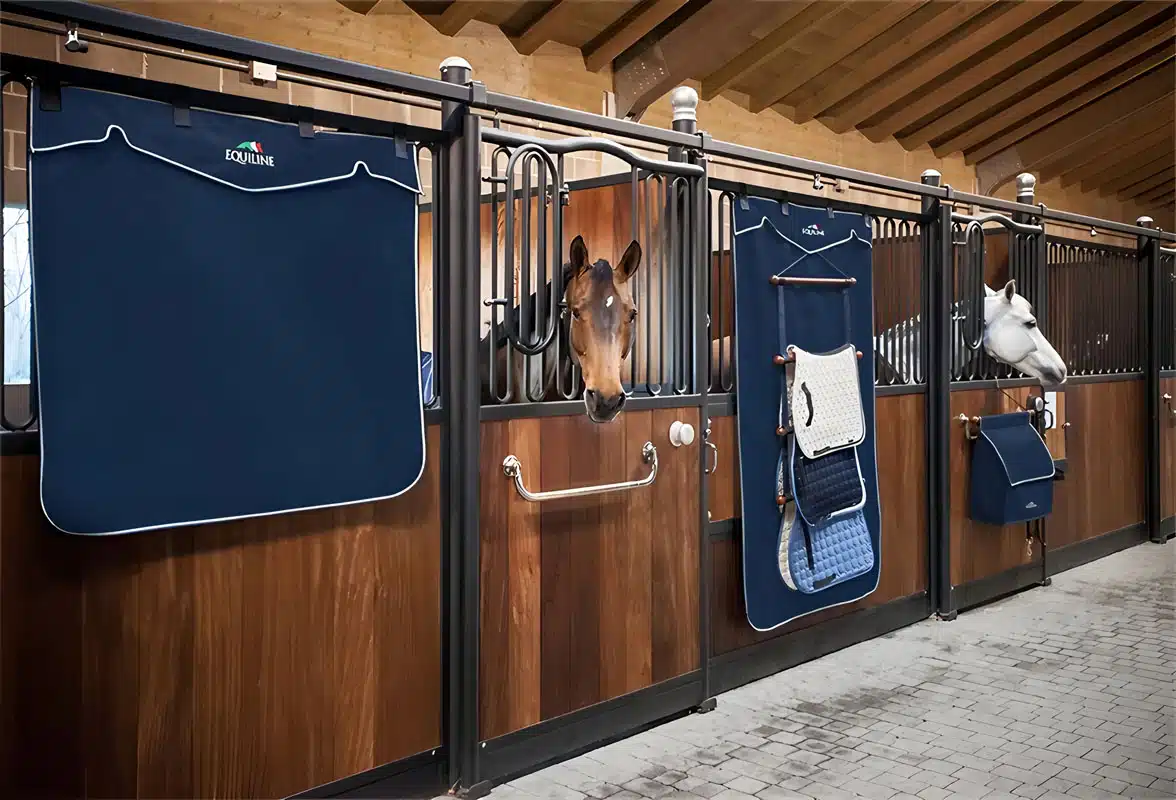
Beveling the Mats at the Stall Entrance
Leaving blunt mat edges creates tripping hazards and obstructs sliding doors. A 45-degree bevel ensures smooth cart access and preserves the critical 50mm safety clearance.
Preventing Tripping Hazards for Horses and Handlers
A standard 17mm or thicker rubber mat creates a significant vertical lip if you leave the edge blunt at the threshold. This 90-degree edge creates three specific operational problems that a simple modification solves.
- Trip reduction: Horses often drag their toes or clip their hooves on raised lips when entering a stall. Beveling the edge eliminates this catch point, allowing the hoof to slide over the transition rather than stumbling against it.
- Cart mobility: Your staff moves heavy feed carts and muck buckets in and out of these stalls daily. A blunt edge acts as a wheel stop, forcing staff to lift or shove equipment to cross the threshold. A ramped edge reduces physical strain and speeds up cleaning workflows.
- Edge preservation: When equipment repeatedly hits a vertical rubber wall, the material eventually separates and curls upward. A beveled profile deflects this impact, preventing the mat from deforming or becoming a permanent trip hazard over time.
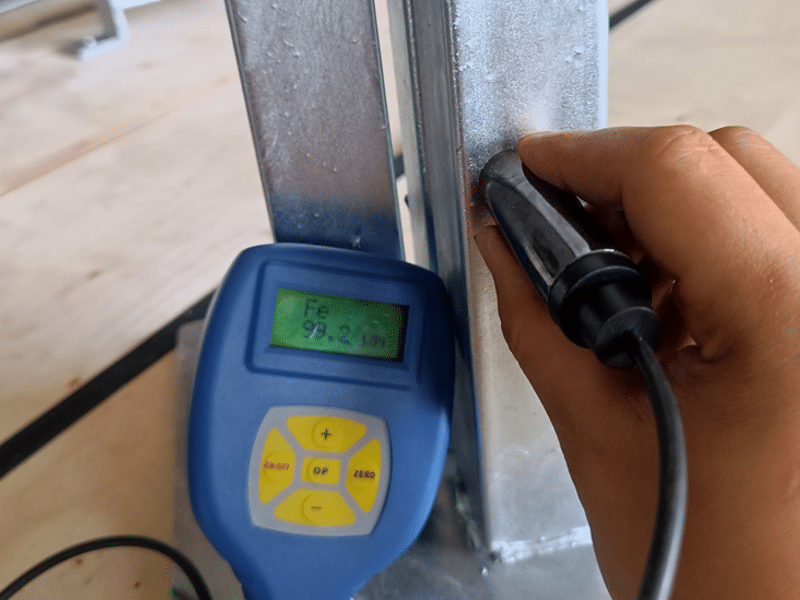
Maintaining Clearance for Sliding Door Guides
Beyond safety, the mat edge directly impacts how DB Stable hardware functions. Our sliding doors utilize a “Cast-Proof Design” that maintains a specific bottom gap (approximately 50mm) to prevent horses from getting a leg stuck while rolling. Improper matting interferes with this engineering.
If you run full-thickness rubber right up to the door line without tapering:
- Clearance obstruction: The mat eats into the safety gap, potentially rubbing against the bottom of the door frame. This friction damages the galvanization and makes th
e door heavy to operate.
- Guide jamming: DB Stable installation kits use floor-mounted guides to keep the door vertical. Rubber that is not recessed or sloped will press against these guides, causing the door to bind or jump its track.
Adjusting DB’s Bottom Door Guides for Paver Clearances
When installing 40mm+ pavers, raise the door via top rollers to maintain the 50mm safety gap and anchor guides directly to the subfloor using extended stainless hardware.
Managing the 50mm Cast-Proof Clearance
Safety in our stables relies on the “Cast-Proof Design” principle. We engineer the gap under the door to be approximately 50mm—large enough for ventilation but small enough to prevent a horse from trapping a hoof if they roll near the entrance. Introducing thick rubber pavers changes this geometry. A standard 40mm or 45mm aisle paver will consume nearly all vertical clearance, causing the door frame to drag across the rubber surface.
- Calculate Total Height: Measure the exact thickness of your pavers plus any bedding sand or adhesive.
- Adjust Top Rollers: Use the adjustment nuts on the overhead trolley system to lift the door panel. This restores the gap without altering the steel frame.
- Verify Safety Gap: Ensure the final gap between the bottom of the door and the new paver surface does not exceed 50mm to maintain anti-cast protection.
Anchoring the Stainless Steel Floor Guide
The bottom guide prevents the door from swinging outward when a horse kicks or leans against it. For these installations, we rely exclusively on our 304 Stainless Steel Hardware Kit to prevent corrosion from aisle moisture and ammonia. Anchoring this guide properly through thick pavers requires specific attention to the subfloor connection.
- The Cut-Out Method (Recommended): Cut a precise relief section in the rubber paver so the guide mounts directly to the concrete subfloor. This offers maximum rigidity and prevents the guide from loosening over time.
- The Through-Bolt Method: If mounting on top of the paver, use extended anchor bolts to penetrate through the rubber and bite deep into the concrete below.
- Channel Engagement: After raising the door, check that the floor guide pin or roller still sits inside the door’s bottom channel by at least 15mm. Less engagement risks the door derailing under impact.
Frequently Asked Questions
How do I create a safe transition from concrete to rubber pavers?
The only professional method is recessing the concrete slab during the initial pour. You drop the concrete level to match the exact thickness of the paver—typically 40mm to 50mm. This creates a completely flush surface with zero tripping hazards. If you are working with an existing slab where recessing is impossible, you must install heavy-duty beveled transition strips to ramp up to the new height. Leaving a blunt 2-inch lip in a high-traffic aisle is a massive liability.
What is a zero-threshold stall door?
A zero-threshold design eliminates the bottom metal track or raised concrete curb at the stall entrance. The door hangs from a heavy-duty overhead system (like our Professional Series hidden track), using wall-mounted guides or low-profile floor nubs instead of a full-width tripping hazard. This allows horses to walk freely without lifting their hooves over an obstruction, significantly reducing hip injuries and making the facility safer for unpredictable animals.
What base preparation is required for aisle flooring?
Your flooring is only as good as the sub-base. You must start by leveling the natural ground and applying 4 to 6 inches of crushed stone or a concrete slab. Compaction is non-negotiable here. Use a vibrating plate compactor to lock the substrate into a dense, non-shifting surface before laying rubber mats or interlocking pavers. If you skip this step, the floor will eventually buckle and hold water, ruining the investment.
Final Thoughts
Ignoring the precise transition between concrete and rubber pavers creates a permanent liability for facility managers. While standard doors bind or trap hooves when flooring height changes, DB Stable’s adjustable Q235B structural steel frames maintain the critical 50mm anti-cast safety gap over any paver thickness. You secure long-term client trust by delivering a safety-compliant, engineered system rather than a dangerous makeshift retrofit.
Do not compromise your next installation with hardware that cannot adapt to professional flooring standards. Request our technical specification guide to verify exactly how our zero-threshold systems integrate with heavy-duty 45mm pavers. Contact our engineering team today to discuss OEM customization or secure a trial order for your upcoming project.

 English
  Spanish
  French
  Arabic
  German
0 Comments