


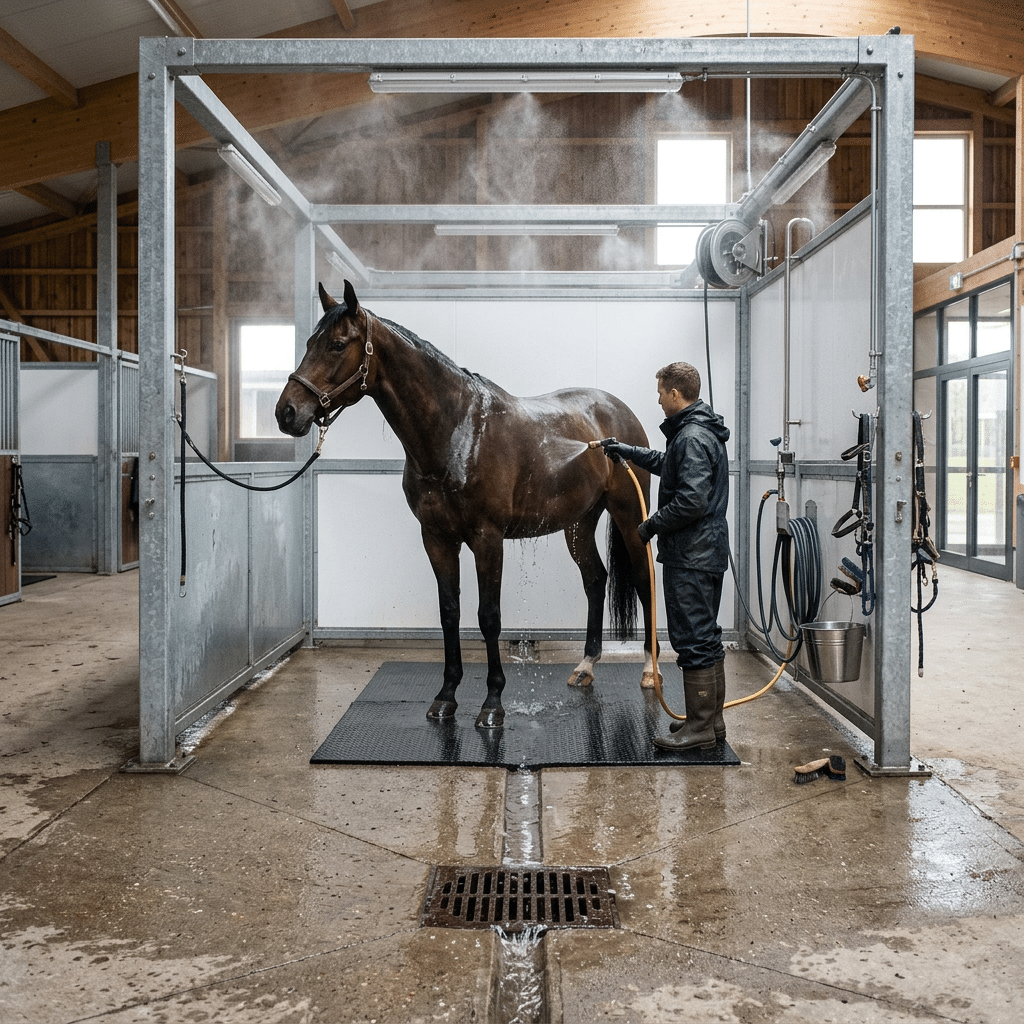
Multi-Species Modular sourcing strategy directly impacts facility safety records and operational flexibility. Standard equine stalls with 76mm gaps create lethal entrapment risks for alpacas and foals, exposing operators to significant liability and veterinary costs.
We benchmark manufacturers against the ISO 1461 Hot-Dip Galvanization standard and Q345B structural requirements. This analysis identifies factories capable of fabricating custom 50mm grill spacing for small livestock safety while offering flat-pack logistics to protect your bottom line.
The Challenge of Housing Mixed Livestock in One Barn
Quick Comparison
| Feature | System Focus | Key Components | Primary Benefit |
|---|---|---|---|
| Interchangeable Components | Barn Configuration | Removable dividers, Swappable feeders | Rapid reconfiguration for different species |
| Configurable Housing Options | Social Welfare Design | Movable center dividers, Group housing setups | Promotes appropriate social interactions |
| Customizable Floor Space | Space Management | Variable cage sizes, Large animal runs | Accommodates species from rabbits to swine |
| Flexible Feeding and Hydration | Nutrition Systems | J-style pellet feeders, Adjustable water systems | Ensures species-specific nutritional access |
| Stainless Steel Construction | Material Durability | Welded stainless steel frames | Withstands high-temperature washing |
| Enhanced Airflow Systems | Environmental Control | Slotted panels, Ventilation integration | Reduces odor and heat buildup |
Interchangeable Components
This design delivers **rapid reconfiguration** by allowing operators to instantly swap doors, floors, and feeders to suit different species.
Features removable doors, floors, feeders, water bottles, and dividers. These components can be swapped across cage positions to match specific animal requirements immediately.
By enabling quick setup changes, the system eliminates the need for permanent structural modifications. This modularity is essential for barns managing diverse livestock rotations.
📊 At a Glance:
- 📍 Context: Barn Configuration
- 🏭 Core Components: Removable dividers, Swappable feeders
- 🌍 Ideal Use: Multi-species Facilities
Why We Picked It:
| ✅ The Wins | ⚠️ Trade-offs |
|---|---|
|
|
Configurable Housing Options
This system supports **adaptive social management**, allowing facilities to toggle between isolation and group housing to meet species-specific welfare needs.
Configurable housing addresses the dynamic social needs of livestock through removable center dividers. By physically altering the enclosure layout, operators can safely manage introductions or separations without relocating animals to different units.
These setups accommodate single, pair, or group configurations within the same footprint. While manual adjustments are necessary, the design ensures structural integrity and promotes compliance with modern animal welfare standards.
📊 At a Glance:
- 📍 Focus Area: Social Welfare Design
- 🏭 Core Features: Movable center dividers, Group housing setups
- 🌍 Key Application: Animal Welfare Compliance
Why We Picked It:
| ✅ The Wins | ⚠️ Trade-offs |
|---|---|
|
|
Customizable Floor Space
This system optimizes barn layouts by providing **scalable housing dimensions** that accommodate everything from rabbits to large swine.
This feature addresses the logistical difficulty of housing mixed livestock by offering adaptable cage sizes. Configurations range from compact 4.2 square foot units for smaller species to spacious 32 square foot runs for larger animals.
It allows facility managers to maximize the utility of their existing footprint. Rather than building separate areas, operators can adjust the floor space to meet the immediate needs of diverse livestock populations.
📊 At a Glance:
- 📍 Location: Space Management
- 🏭 Core Strength: Variable cage sizes, Large animal runs
- 🌍 Key Markets: Diverse Livestock Operations
Why We Picked Them:
| ✅ The Wins | ⚠️ Trade-offs |
|---|---|
|
|
Flexible Feeding and Hydration
This system simplifies livestock care by offering **adaptable feeding and watering components** that instantly adjust to different species’ needs.
The design solves the logistical headache of mixed barns by integrating species-specific hardware. It features J-style pellet feeders and versatile water bottle configurations that can be swapped or adjusted rapidly to suit the animal currently occupying the space.
This flexibility ensures that diverse livestock receive appropriate nutritional access without requiring permanent infrastructure changes. The components prioritize interchangeable utility, allowing facilities to maintain a streamlined inventory while meeting varied animal welfare standards.
📊 At a Glance:
- 📍 Category: Nutrition Systems
- 🏭 Core Strength: J-style pellet feeders, Adjustable water systems
- 🌍 Key Markets: Livestock Care
Why We Picked Them:
| ✅ The Wins | ⚠️ Trade-offs |
|---|---|
|
|
Stainless Steel Construction
Delivers **unmatched durability** for facilities requiring rigorous high-temperature sanitation and biosecurity protocols.
Utilizes fully welded stainless steel to ensure durability across high-temperature washing and autoclaving protocols essential for multi-species environments.
This robust construction eliminates crevices where pathogens often hide, significantly reducing cross-contamination risks. The material maintains structural integrity even under the harsh chemical exposure common in intensive cleaning cycles.
📊 At a Glance:
- 📍 Category: Material Durability
- 🏭 Core Feature: Welded stainless steel frames
- 🌍 Best For: Hygiene-Critical Facilities
Why We Picked It:
| ✅ The Wins | ⚠️ Trade-offs |
|---|---|
|
|
Enhanced Airflow Systems
Improves environmental quality by **reducing odors and heat formation** across all housed species.
Incorporates slotted panel designs to reduce odors and heat formation across all housed species. This approach significantly improves environmental quality within mixed-use facilities.
Designed for robust environmental control, the system utilizes slotted panels and ventilation integration. It specifically targets the needs of indoor barns to maintain a healthier atmosphere.
📊 At a Glance:
- 📍 Category: Environmental Control
- 🏭 Core Features: Slotted panels, Ventilation integration
- 🌍 Application: Indoor Barns
Why We Picked Them:
| ✅ The Wins | ⚠️ Trade-offs |
|---|---|
|
|
Premium Global Stables Built To Last
The Challenge of Housing Mixed Livestock in One Barn
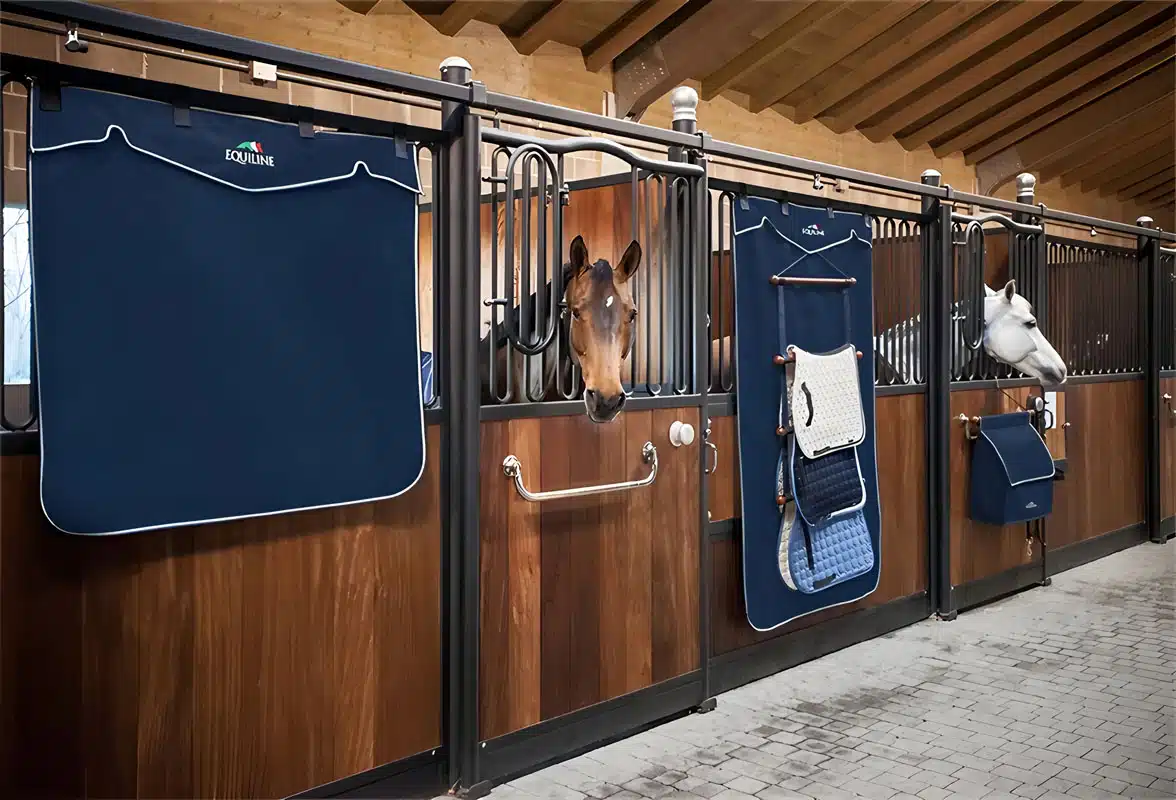
Housing diverse species under one roof requires a delicate balance between heavy-duty containment and small-animal safety. We address this by utilizing modular Q235B steel frameworks that allow for interchangeable partition configurations, ensuring structural integrity and containment standards are met for every animal, from 1,200lb warmbloods to smaller livestock.
Navigating Incompatible Size and Safety Standards
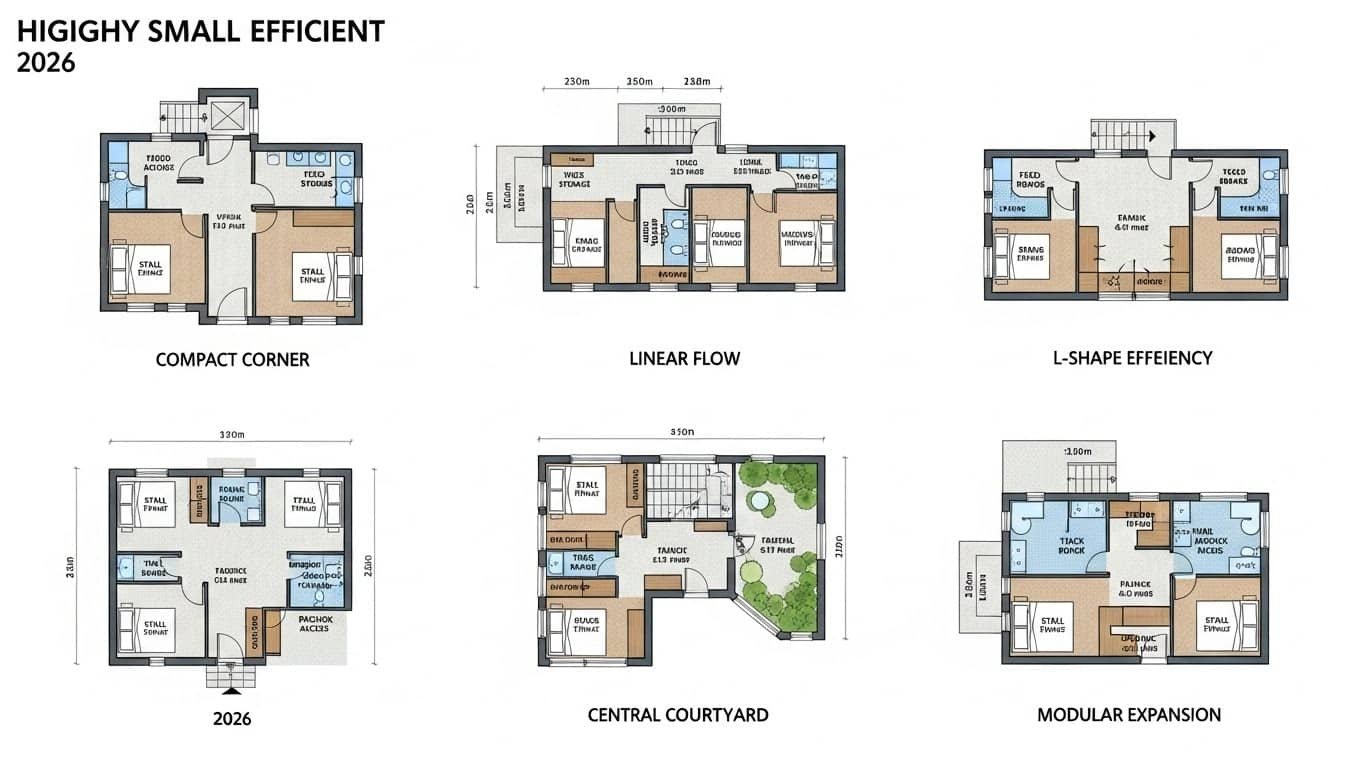
Traditional fixed barn designs often fail in multi-species environments because housing requirements vary drastically between animals. A stall designed strictly for a horse typically features bar spacing and clearances that create significant entrapment risks for smaller animals like goats, alpacas, or sheep. While a standard stall front may safely contain a mare, the same design could allow a smaller animal to slip through or get their head stuck, forcing facility managers to compromise on safety or resort to makeshift modifications.
Our engineering approach prioritizes the highest requirement among the housed animals to ensure universal safety. We utilize Q235B Structural Steel (or Q345B for cold climates) as the standard for our framework, providing the impact resistance necessary to withstand equine kicks. However, unlike rigid welded systems, our manufacturing process allows us to adapt the grill spacing and lower mesh profiles to secure smaller livestock without compromising the airflow provided by our stack effect ventilation designs.
A critical failure point in mixed barns is the bottom door clearance. Our standard Cast-Proof Design maintains a gap of approximately 50mm to prevent horses from getting a leg stuck while rolling. In a mixed barn, this gap must be carefully managed to prevent escape artists like piglets or lambs from squeezing out. We address this through our modular fabrication capabilities, offering adjustable bottom barriers or reduced clearances that maintain the safety of large animals while effectively containing smaller breeds.
Solving Rigidity with Modular Steel Systems
Fixed masonry or welded-in-place stalls limit a facility’s future flexibility, locking you into a single layout that may not serve changing operational needs. Our Professional Series solves this through true modularity. The system allows partitions to be removed or reconfigured efficiently, enabling you to transform standard 12×12 horse stalls into smaller group pens for sheep or isolation units for calves, protecting your investment by ensuring the facility adapts to your business model.
Cross-contamination and hygiene are significant concerns when housing different species, as the acidity levels of animal waste vary. Standard paint or powder coating often peels rapidly in these aggressive environments, leading to rust and bacteria harbors. We mitigate this risk through our Hot-Dip Galvanization After Fabrication process, conforming to BS EN ISO 1461. With an average zinc coating exceeding 85 microns on structural parts, our steel resists corrosion from diverse waste sources, ensuring a “Lifetime” standard of protection that mixed-use barns require.
To further support biosecurity, we recommend utilizing our HDPE infill planks in these multi-use environments. Unlike wood, which can absorb moisture and retain pathogens, our 28mm-32mm UV-stabilized HDPE is impervious to bacteria and moisture. This Zero Maintenance material allows for high-pressure washing and sterilization between different animal occupants, ensuring that a stall used for a sick goat one week can be safely sanitized for a horse the next.
Safety Grills: Why Standard 3-Inch Gaps Trap Foals and Alpacas
Standard 76mm (3-inch) bar spacing, while safe for adult horses, creates a dangerous entrapment zone for foals, alpacas, and miniature breeds. We mitigate this risk by engineering custom 50mm (2-inch) grill spacing using high-strength structural steel, ensuring barriers prevent head entry entirely while maintaining necessary ventilation.
The Geometry of Entrapment: Risks for Small Skulls
The industry-standard 3-inch (approx. 76mm) bar spacing is calculated based on the head width of an adult horse. However, in mixed-species barns or breeding facilitie
s, this dimension creates a hazardous “one-way valve” for animals with smaller skeletal structures. Foals and alpacas can often push their narrow muzzles and skulls through these gaps out of curiosity or to reach food.
The critical failure occurs during retraction. The wider rear section of the jawbone or the ears often catch on the bars, locking the head in place. Unlike a mechanical latch, this physical entrapment triggers immediate panic. As the animal struggles to pull free, the leverage applied to the neck can cause severe soft tissue trauma, spinal compression, or fatal fractures. This risk is amplified if the steel tubing bends under the struggle, further tightening the grip around the animal.
Engineering Safer Barriers: The 50mm Custom Solution
We address this safety gap by customizing grill spacing to 50mm (2 inches) for facilities housing younger or smaller stock. This dimension is physically too narrow for a foal or alpaca to insert their head, eliminating the risk of entrapment at the source. Unlike lighter-duty alternatives, we do not compromise on material density to achieve this tighter spacing.
Our production lines utilize 14-gauge Q235B structural steel for these high-density grills, ensuring they withstand high-impact forces without deforming. For projects in regions with severe winters, we upgrade this to Q345B low alloy steel to maintain impact toughness in freezing temperatures. Furthermore, because narrowing the gaps increases the number of weld points, our “Hot-Dip Galvanization After Fabrication” process is critical. By dipping the entire panel into molten zinc after welding (BS EN ISO 1461), we ensure every joint is sealed and smooth, preventing sharp burrs that could cut an animal rubbing against the bars.
Custom OEM Spacing: Specifying 2-Inch Grills for Small Heads
Standard 76mm (3-inch) bar spacing poses significant entrapment risks for foals and smaller livestock like alpacas. By customizing internal grill gaps to a tighter 50mm profile, we eliminate strangulation hazards while maintaining critical airflow, utilizing advanced hot-dip galvanization techniques to ensure rust protection remains consistent even in denser steel configurations.
The Geometry of Safety: Why 50mm Gaps Are Crucial
Standard equestrian manufacturing typically utilizes 76mm (3-inch) spacing, which acts as an effective barrier for adult warmbloods. However, in mixed-use facilities housing foals, alpacas, or goats, this standard dimension creates a dangerous “entrapment zone.” Small heads can often slip through these wider bars but fail to retract due to the width of the jawbone, leading to panic, injury, or potential strangulation.
To resolve this, we offer OEM customization that reduces the internal clear gap to approximately 50mm (2 inches). This modification effectively blocks head insertion for smaller species while preserving the “Stack Effect Ventilation” necessary for respiratory health. By engineering this tighter profile, we allow our distributors to supply a universal barrier that is safe for multi-species housing without requiring secondary mesh retrofits.
Manufacturing Tighter Profiles with Hot-Dip Integrity
Customizing for mixed-use barns requires precise fabrication using 14-gauge Q235B or Q345B steel to maintain structural rigidity despite the significantly denser bar count. A common manufacturing defect in tighter grills is “zinc bridging,” where surface tension causes molten zinc to web between bars during galvanization, creating rough edges that can injure animals.
We overcome this by utilizing specialized dipping techniques during the ISO 1461 Hot-Dip Galvanization process. This ensures liquid zinc flows freely between the narrower 2-inch gaps, guaranteeing that every inch of tubing receives our standard coating of >70 microns. This process delivers a “Lifetime” rust-proof finish that prevents the “shadow rusting” often seen in cheaper pre-galvanized alternatives, ensuring the safety of the stable is matched by its longevity.
DB’s V-Drop Doors: Adjustable Heights for Different Breeds
Our V-Drop system bridges the gap between equine security and small livestock visibility. By engineering a variable-height front panel, we provide the structural containment required for warmbloods while opening vital sightlines for foals and alpacas, ensuring a single facility can adapt to diverse occupants without compromising safety.
Optimizing Sightlines for Alpacas and Foals
Standard horse stalls often create isolation for smaller livestock, as high solid walls block the visual contact necessary for herd animals like alpacas and weanlings to feel secure. The engineered “V-Drop” profile significantly lowers the central observation point, allowing these smaller animals to socialize comfortably with neighbors while the outer frame maintains the secure containment heights required for larger horses.
Complex designs with angled joints, such as the V-Drop, often fail at weld points where moisture collects. To prevent this, we apply our Hot-Dip Galvanization process strictly after fabrication. By dipping the fully welded door into molten zinc, we seal every V-joint and intersection with an average coating of over 85 microns. This ensures that the intricate steelwork remains rust-free, even in humid stable environments or coastal regions requiring superior salt spray resistance.
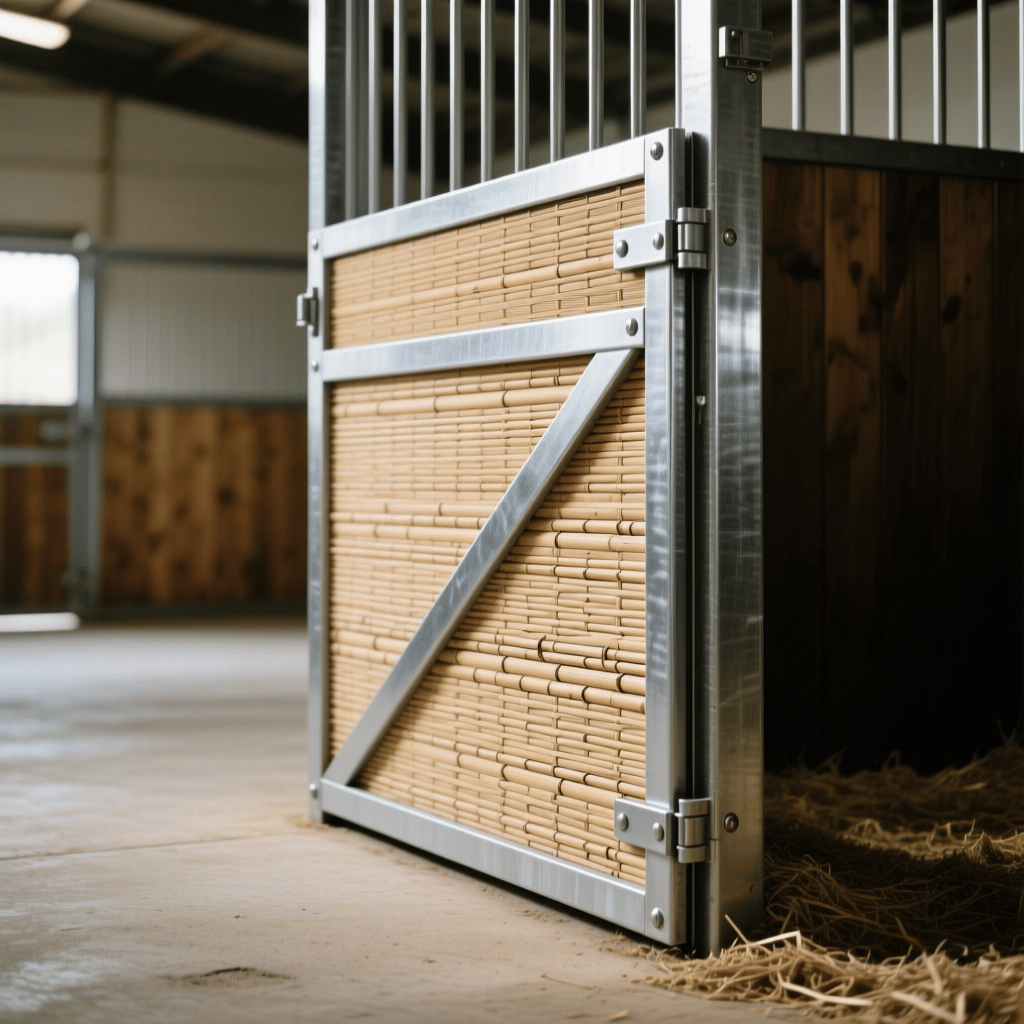
Safety extends to the infill materials as well. Each door integrates either 28mm-32mm UV-stabilized HDPE or 28mm-38mm High-Density Bamboo. These materials create a barrier capable of withstanding impact from diverse breeds without the splintering risks associated with softwood. The result is a specialized door system that meets the rigorous demands of professional breeding farms and multi-species facilities while eliminating the maintenance burden of traditional painted steel.
Final Thoughts
Sourcing generic equine panels for mixed-livestock clients invites significant liability risks, from entrapment injuries to rapid corrosion in high-ammonia environments. By standardizing on our Q235B modular systems with custom 50mm spacing, you provide a versatile solution that secures everything from foals to alpacas without compromising structural integrity. This adaptability protects your inventory value, ensuring your stock meets the diverse safety demands of modern ag-tourism operators.
Stop estimating compatibility and start verifying the engineering behind our “Kick-Proof” and “Cast-Proof” designs. We recommend scheduling a brief consultation to review your specific customization needs, whether you require high-volume flat-packs or specialized V-Drop profiles for smaller breeds. Reach out to our technical team today to discuss securing your region’s exclusive access to these professional-grade systems.
Frequently Asked Questions
Can you keep alpacas in a horse stall?
Yes, our modular horse stalls adapt easily for alpacas. We recommend adjusting the vertical bar spacing to prevent heads from getting trapped and using our kick-proof HDPE infill, which handles impact while remaining smooth, hygienic, and safe for smaller livestock.
Safe bar spacing for miniature horses and goats?
For miniature horses and goats, we engineer custom grill spacing significantly tighter than standard horse dimensions. As an OEM manufacturer, we fabricate specific profiles using Q235B steel to ensure small heads cannot pass through, preventing injury while maintaining necessary stack effect ventilation.
Best modular barns for multi-species farms?
Our Professional Series serves multi-species farms best due to its heavy-duty Q345B frame and flexible partition options. The modular flat-pack design allows you to reconfigure layout sizes easily, while the hot-dip galvanized finish ensures resistance to the varied ammonia levels of different animals.
How to customize stable grills?
As a B2B source factory, we specialize in OEM customization. You specify the exact bar spacing and feed opening styles, and we fabricate the raw black steel before hot-dip galvanizing. This ensures even custom welds receive our lifetime rust protection standard (BS EN ISO 1461).
Multi-purpose livestock stabling?
We design multi-purpose stabling using durable Q235B frames and HDPE infill for easy cleaning. Our flat-pack system allows distributors to stock versatile panels that work for horses, isolation units, or mixed livestock, utilizing secure latching systems and adjustable door heights to accommodate different breeds.

 English
  Spanish
  French
  Arabic
  German
0 Comments