


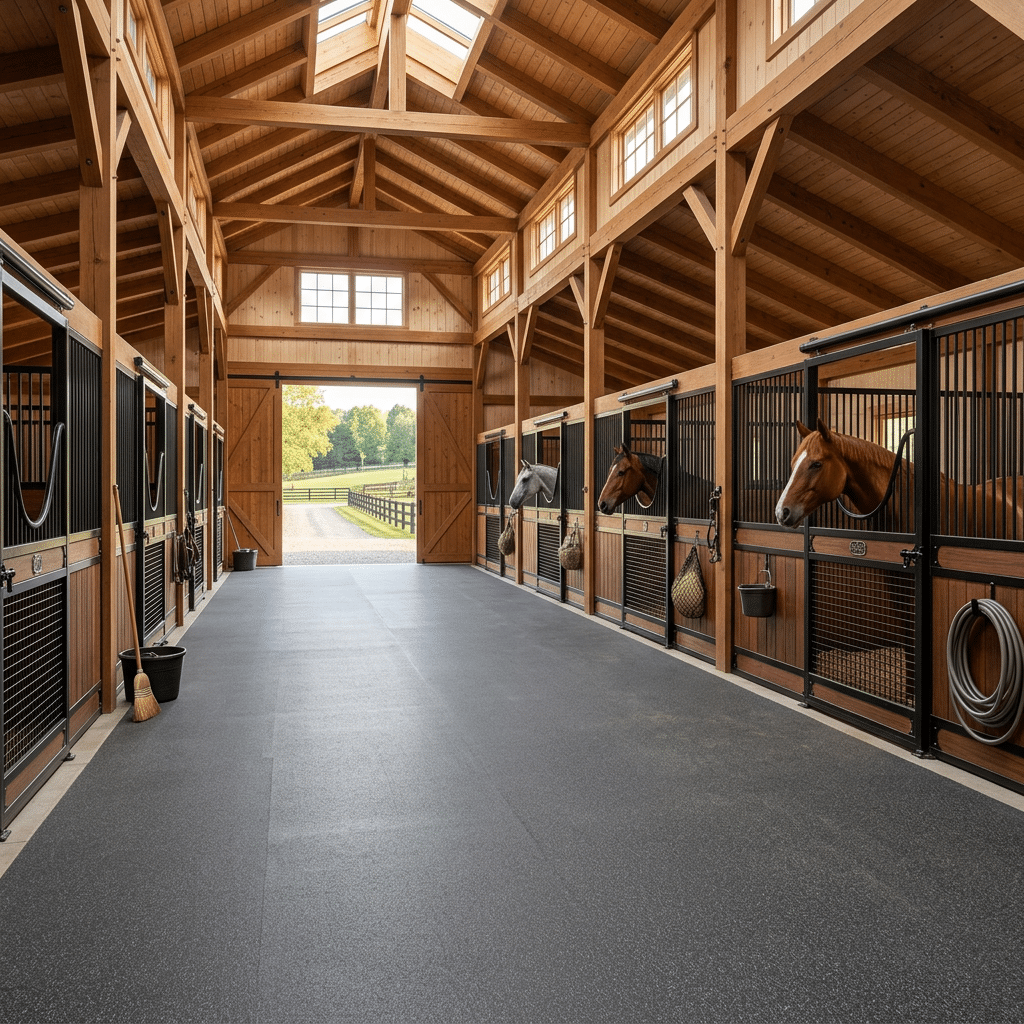
Termites & swarms make chemically treated wood a high-risk material, especially in humid climates where moisture compromises the treatment. This failure cycle leads to costly structural repairs and diminishes the long-term asset value of agricultural buildings.
This analysis benchmarks treated wood against inedible alternatives: Q235B structural steel frames and HDPE infill. We use the ‘Hot-Dip After Fabrication’ standard to evaluate true durability, comparing materials on their ability to eliminate maintenance costs and infestation risk from the design phase.
The Rot Cycle in High-Humidity Environments
High humidity softens wood, making it a target for fungal decay and termite infestation. Both problems trap more moisture, creating a self-reinforcing cycle of structural damage.
How Moisture Fuels Wood Decay and Attracts Pests
The entire cycle starts with moisture. In stables with poor ventilation, especially in humid climates, the air becomes saturated. Wood structures absorb this moisture from the air, causing the fibers to swell and soften. This creates the perfect breeding ground for fungal rot, which breaks down the wood from the inside out.
This softened, decaying wood is a dinner bell for pests. Termites actively seek out wood with a moisture content over 20% because it’s easier for them to chew and digest. As they tunnel through the compromised timber, they introduce even more moisture, accelerating the rot and making the structure weaker and more inviting to the rest of the colony.

High-Density Bamboo: The Mold and Rot-Resistant Infill Solution
The most effective way to stop this cycle is to use a material that doesn’t absorb moisture in the first place. Our stable systems use a 28mm-38mm high-density strand-woven bamboo infill. This isn’t raw bamboo, which would rot. It’s an engineered material that has its natural sugars and starches removed through a thermal treatment process, making it inedible to mold and fungi.
This material offers a Janka hardness over 3000 lbf, creating a dense physical barrier that termites can’t chew through. By using an infill that is naturally resistant to mold, rot, and pests, you break the destructive cycle before it can even begin. The material simply doesn’t give moisture a foothold to start the degradation process.
Material Comparison for Tropical Climates
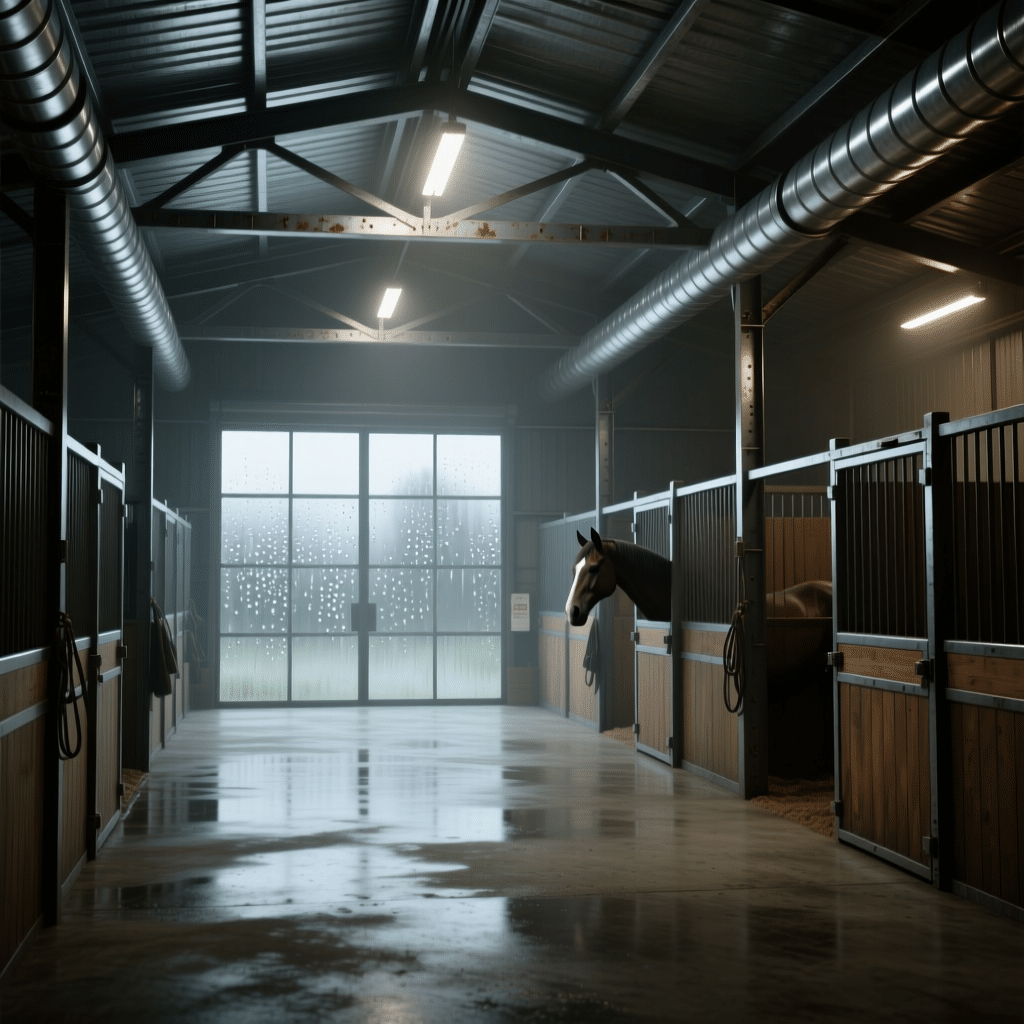
Material choice in tropical climates is a battle against moisture. Engineered options like strand-woven bamboo and HDPE outperform treated pine by fundamentally resisting water absorption and rot.
In tropical regions, humidity consistently exceeds the 60% threshold where mold growth accelerates. Spores can multiply within 24 hours of moisture exposure, making material selection a critical factor in long-term structural integrity. The primary goal is to choose materials that either don’t
absorb water or are specifically treated to be inert to fungal growth.
| Material | Moisture Resistance | Mold/Rot Resistance | Key Weakness |
|---|---|---|---|
| Treated Pine | Poor (Absorbs 18-22% water by weight) | Low (Requires constant ventilation and maintenance) | High water retention creates a permanent food source for mold. |
| Strand-Woven Bamboo | Excellent (Absorbs ~0.4% water in 24 hours) | High (Thermal treatment removes sugars that fungi consume) | Can still warp with prolonged, direct water submersion. |
| HDPE (High-Density Polyethylene) | Absolute (Waterproof, <0.01% absorption) | Complete (Non-organic material offers no food source) | Requires UV stabilization for outdoor applications to prevent brittleness. |
Treated Pine: A Losing Battle
Treated pine is a common building material, but it’s a poor fit for tropical environments. Its cellular structure naturally absorbs significant moisture. This creates ideal conditions for mold growth, turning the wood itself into a substrate for fungus. While chemical treatments resist insects and some decay, they don’t stop water absorption. This makes treated pine a high-maintenance choice that relies on perfect ventilation to survive—a condition rarely met in persistently humid climates.
Engineered Materials: Designing for Durability
Engineered materials solve the moisture problem at the source. They are manufactured to have properties that naturally repel water and deny mold the conditions it needs to thrive.
- High-Density Strand-Woven Bamboo: This isn’t natural bamboo. It’s an engineered board created by compressing bamboo fibers under immense heat and pressure. The process removes the natural sugars and starches, effectively eliminating the food source for mold and rot. With a Janka hardness over 3000 lbf, it’s extremely dense and durable, making it suitable for high-end applications like our Professional Series stables.
- HDPE (High-Density Polyethylene): As a non-porous plastic, HDPE is completely waterproof. It offers zero organic material for mold or mildew to colonize, making it a true “zero maintenance” solution. For B2B clients, this means a lower lifetime cost and fewer warranty issues. We use UV-stabilized HDPE in our Economy Series stalls specifically for its impact absorption and inability to rot, no matter the humidity.
For any project in a tropical climate, specifying materials based on their water absorption rate and organic content is the most reliable way to prevent long-term issues with mold and decay. Porous, organic materials like pine introduce a point of failure, while engineered, non-absorbent options design the problem out from the start.
Engineered Horse Stables for Any Climate
Airflow Design to Prevent Tropical Fungal Infections
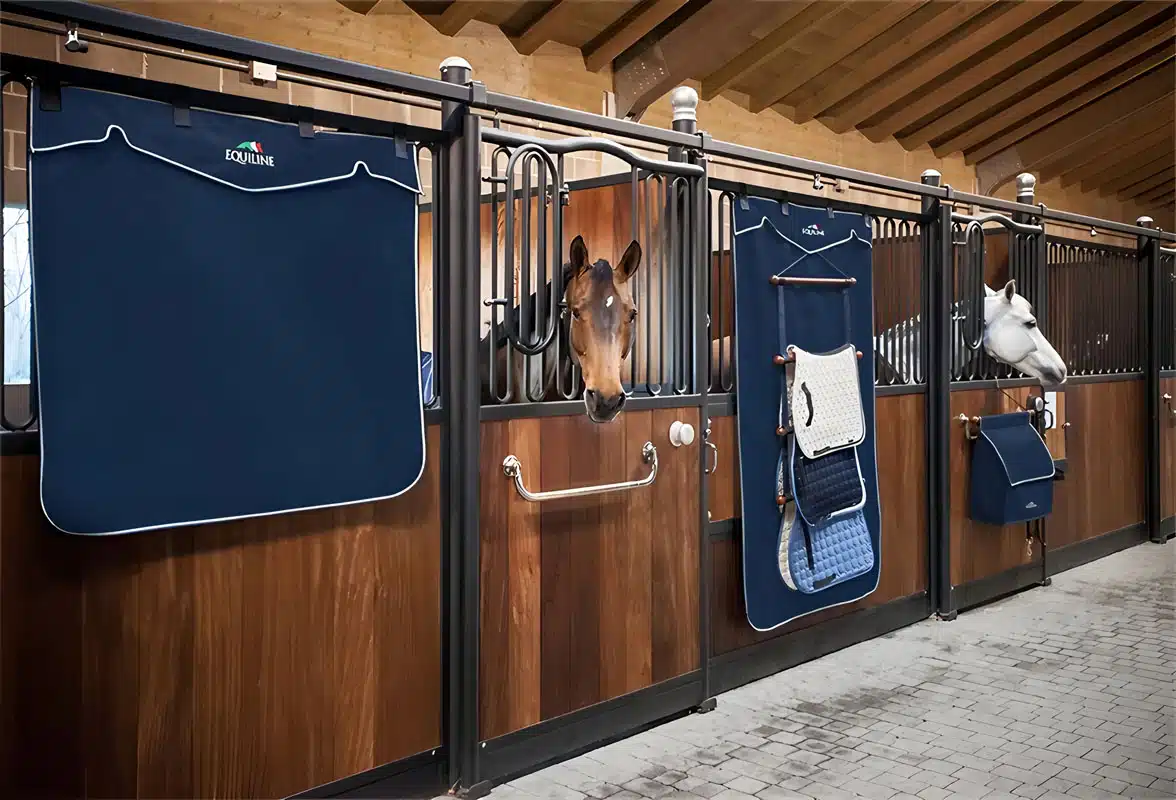
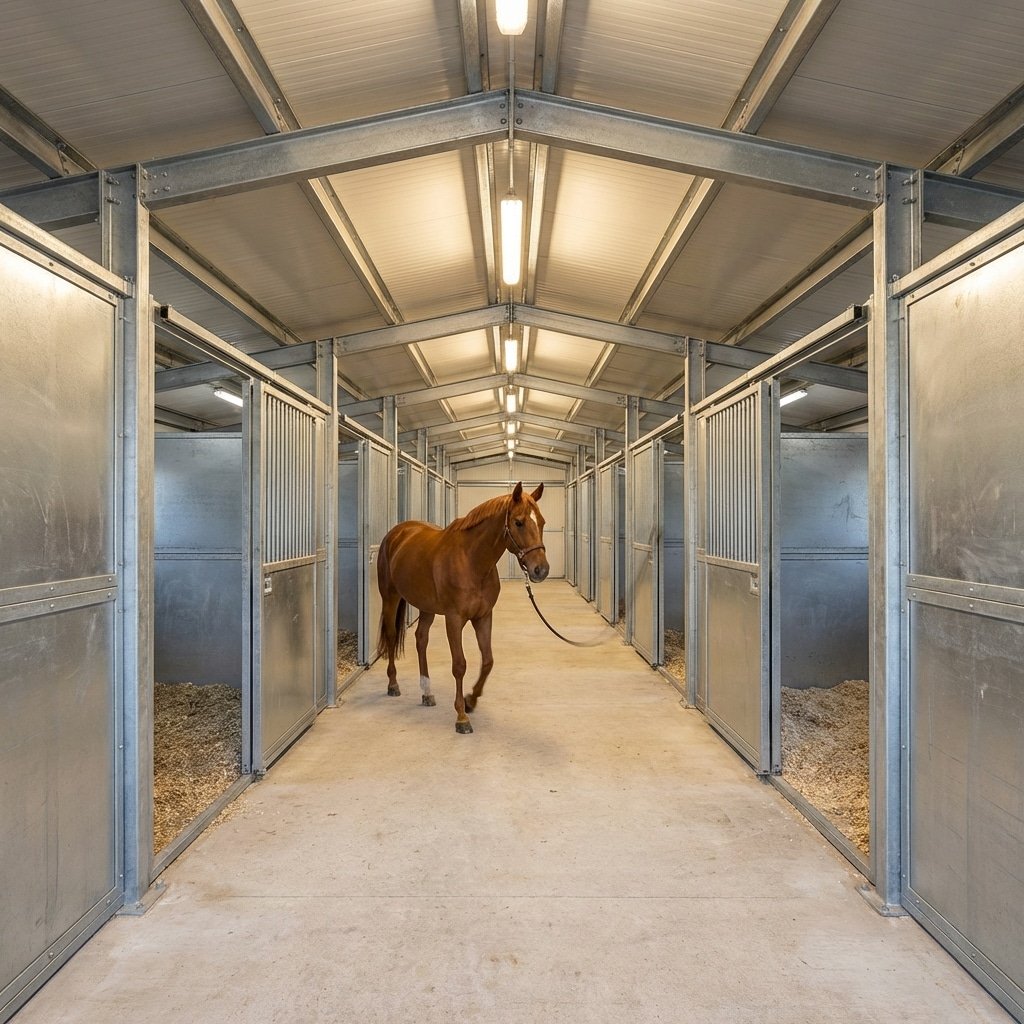
Open-grill stable fronts create natural vertical airflow. This ‘stack effect’ stops stagnant, humid pockets where tropical fungi and mold grow, keeping bedding dry and the air healthy.
Why Stagnant Air Creates a Fungal Hazard
Tropical fungi and mold need specific conditions to grow: stagnant, humid air. In a poorly ventilated stable, these conditions create microclimates where moisture from humidity, respiration, and waste accumulates in bedding and on surfaces. Without constant circulation, these damp pockets allow harmful spores to settle and multiply.
This directly leads to health problems for horses, including chronic respiratory issues from inhaling spores and persistent skin infections from contact with contaminated bedding.
Using Open Grills to Promote Stack Effect Ventilation
Our stable fronts and partitions are engineered with open top grill designs to solve this problem. This isn’t just for aesthetics; it facilitates constant, natural air movement throughout the stall.
This design promotes a principle known as ‘Stack Effect Ventilation.’ As the horse’s body heat and warm, moist air from breathing rise, they escape through the upper grills. This movement pulls cooler, drier air in from below, creating a continuous, gentle airflow that disrupts the stagnant zones where fungus and mold would otherwise thrive.
Frequently Asked Questions
What materials are best for horse stables in high-humidity climates?
For high-humidity areas, you need a Hot-Dip Galvanized steel frame with HDPE infill boards. We galvanize the entire steel frame after it’s been welded, which fully protects it from rust caused by constant moisture. HDPE is completely water-resistant, won’t absorb moisture, and stops rot or mold from growing. This combination creates a hygienic, zero-maintenance environment.
Does the high-density bamboo board used in your stables rot?
No, our high-density, strand-woven bamboo is engineered to be rot-resistant. Unlike raw bamboo, our boards go through a high-pressure treatment that makes them extremely dense. This process gives them superior resistance to moisture, mold, and insects, ensuring they last for the long term.
How do your stable designs help with ventilation?
Our stable fronts and partitions have an open-top grill structure. This design promotes natural airflow through the ‘stack effect’—warm, stale air rises and escapes through the top, while cooler, fresh air is drawn in from below. This constant air exchange is key to lowering humidity and keeping the air quality high for respiratory health.
Are your steel frames protected against rust?
Yes. We use a method called Hot-Dip Galvanization After Fabrication. We fully weld the steel frame first, then dip the complete structure into molten zinc. This creates a thick, durable coating conforming to BS EN ISO 1461, with an average zinc thickness over 70 microns. It provides superior, long-lasting protection against rust and corrosion.
Is HDPE a good choice for horses that kick their stalls?
HDPE is an excellent choice due to its impact resistance. It’s a tough but flexible material that absorbs the force of kicks without cracking or shattering like wood often does. Paired with our strong Q235B or Q345B steel frames, it creates an exceptionally safe and resilient stall.
Final Thoughts
Buying on price alone means dealing with future customer complaints about rot and rust. Our system—built with Hot-Dip Galvanized steel and inedible infill—eliminates these issues at the source. This protects your brand’s reputation and prevents costly warranty claims.
The specifications guarantee performance, but your final decision should be hands-on. Contact us to arrange a sample kit or a small trial order to evaluate our engineering. From there, we can develop an OEM container plan for your market.

 English
  Spanish
  French
  Arabic
  German
0 Comments