


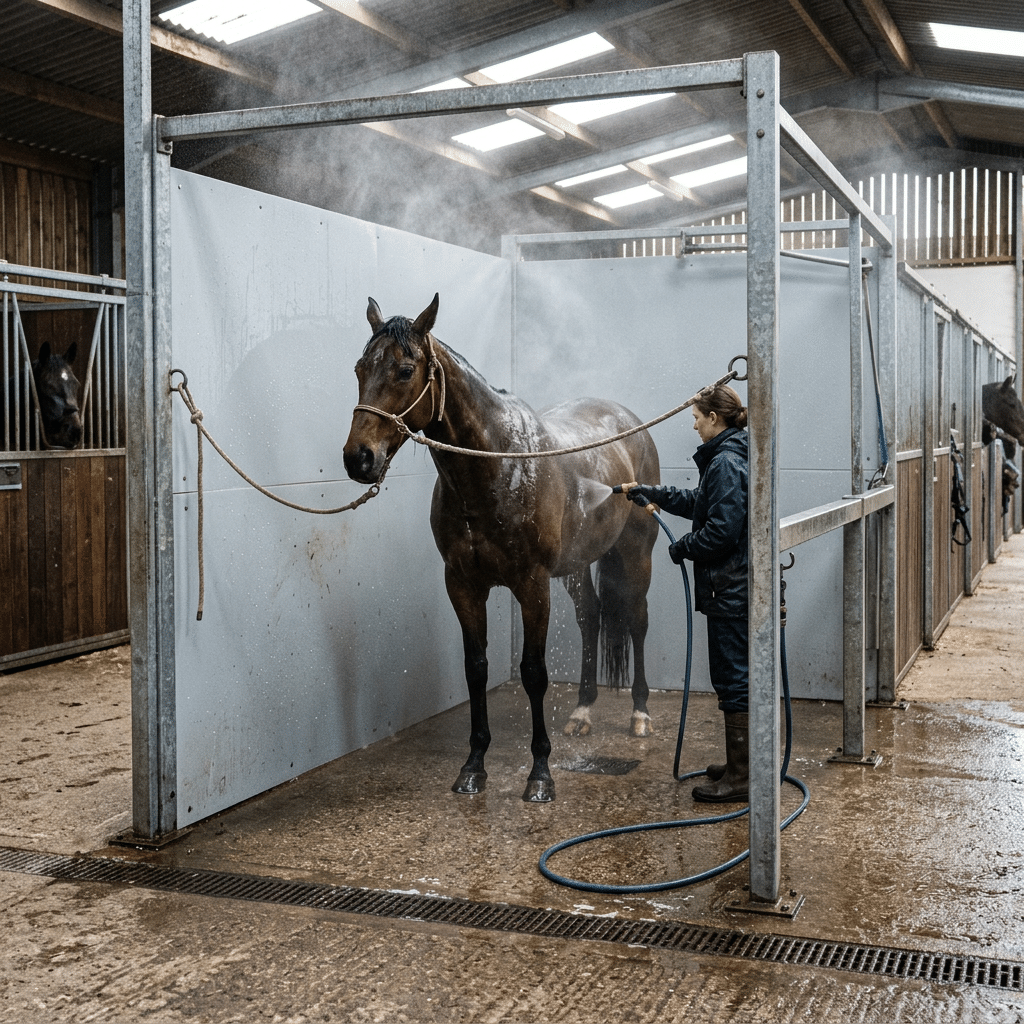
Effective Border Quarantine infrastructure fails the moment porous materials enter the facility. Relying on standard timber or painted steel invites immediate rejection from USDA inspectors, turning minor biosecurity gaps into costly repatriation liabilities.
We benchmark manufacturers against strict isolation protocols requiring non-porous HDPE infills and ISO 1461 Hot-Dip Galvanized steel. This analysis prioritizes suppliers capable of delivering cast-proof designs and flat-pack logistics to secure high-volume import centers.
Top Facilities and Their Chosen Manufacturers
Institutional facilities prioritize engineering specifications over ornamentation. Government quarantine centers demand absolute biosecurity through hot-dip galvanization and non-porous HDPE, while commercial logistics hubs focus on high-impact steel grades and efficient freight density to protect operational margins.
Government-Run National Quarantine Centers
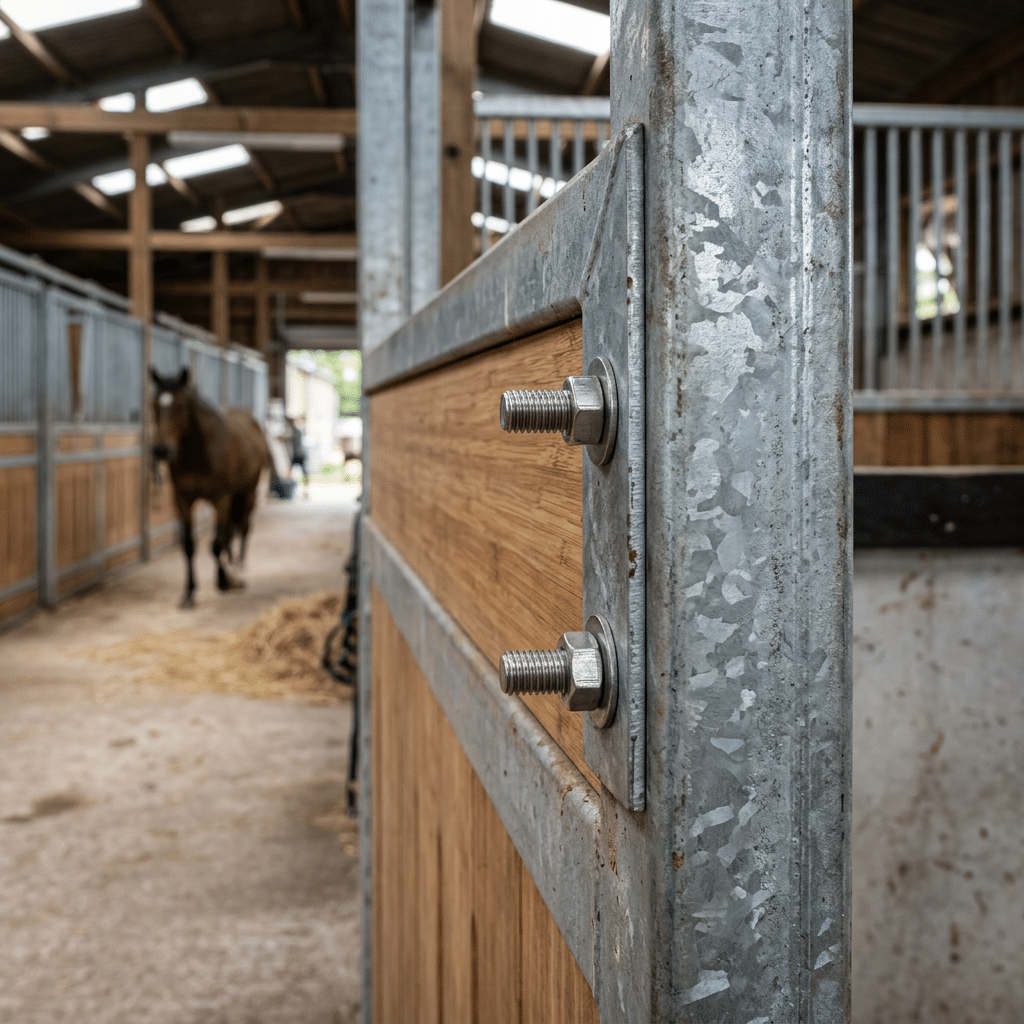
Federal biosecurity stations operate under strict infection control protocols that prioritize function over form. These high-security environments face daily chemical washdowns using aggressive disinfectants to prevent pathogen retention. To meet these rigorous demands, facility managers specify Hot-Dip Galvanized Steel conforming to BS EN ISO 1461. Our process of galvanizing after fabrication ensures that even welded joints receive a zinc coating thickness exceeding 70 microns, providing a self-healing barrier against corrosion.
For the infill, wood is strictly prohibited due to its porous nature. Instead, we supply 100% HDPE (High-Density Polyethylene) profiles. This “Zero Maintenance” material is chemically inert, impact-absorbing, and impervious to moisture, preventing the survival of bacteria or viruses within the stall structure. The preferred configuration is our Economy Series, which features open top grills to promote “Stack Effect Ventilation,” ensuring constant airflow to reduce respiratory risks for isolated animals.
Commercial Aviation & Logistics Hubs
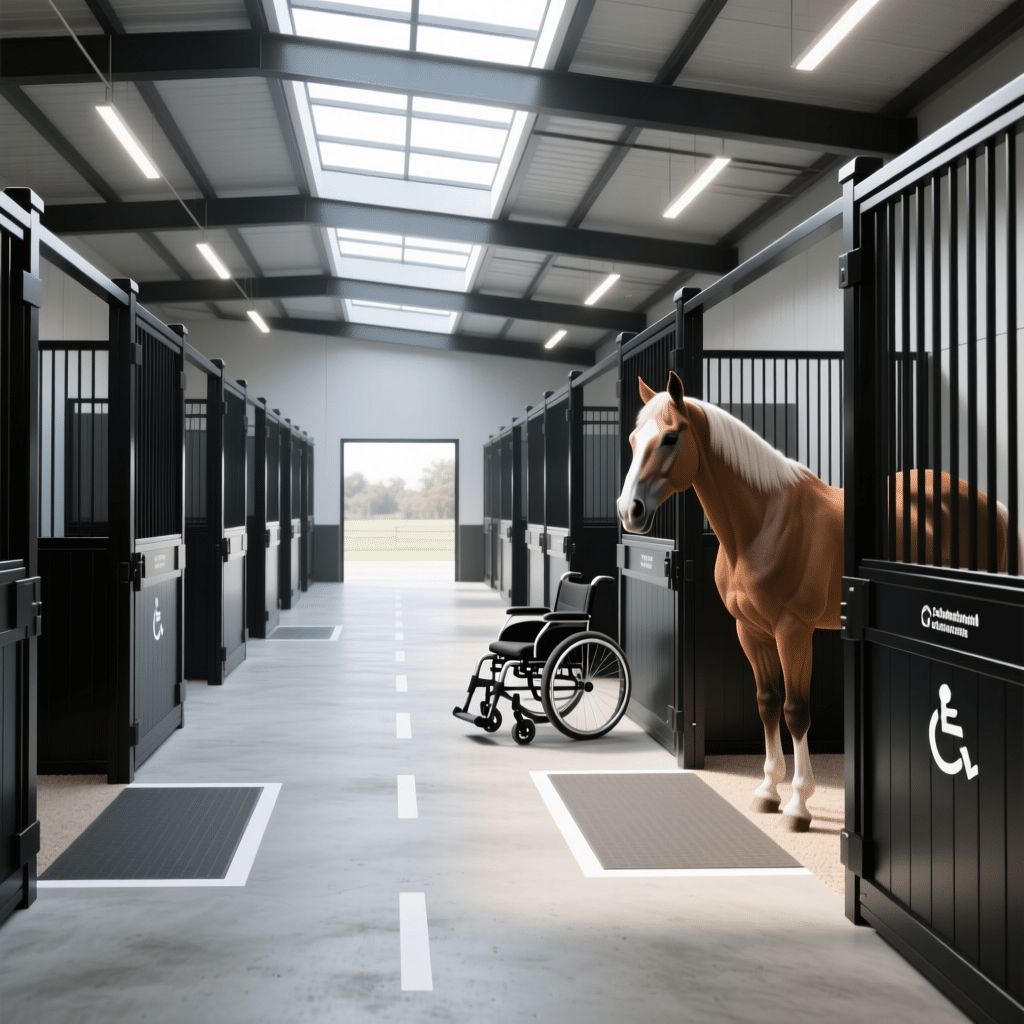
Private export centers and airport holding facilities manage a high volume of transient horses, ranging from calm ponies to high-energy thoroughbreds. In these high-traffic zones, structural failure is not an option. We recommend and supply Q345B Low Alloy High Strength Steel for these projects. This cold-climate option offers superior impact toughness compared to standard steel, ensuring the framework remains “Kick-Proof” even during winter operations or when housing stressed animals.
Operational efficiency is equally critical for these commercial entities. Our Flat-Pack System is a key driver for “Profit Protection” in this sector. Unlike traditional fully welded units that limit container capacity, our engineered flat-pack design allows for loading 30-45 sets per 40HQ container. This logistical advantage significantly reduces the landed cost per unit, allowing hub operators to invest more in 14-Gauge (2.5mm) tube walls for long-term durability.
| Facility Type | Primary Focus | Steel Specification | Infill Material | DB Series Choice |
|---|---|---|---|---|
| National Quarantine | Biosecurity & Sanitation | Q235B + ISO 1461 HDG | HDPE (Non-Porous) | Economy Series |
| Aviation/Logistics Hub | Impact Safety & Logistics | Q345B High Strength | HDPE or Bamboo | Professional Series |
Engineered for Safety and 20-Year Durability

The High Stakes of International Equine Border Quarantine
International equine transport operates on a zero-tolerance basis where biosecurity failures result in immediate entry denial and significant financial loss. With isolation periods extending up to 60 days for high-risk origins, the physical infrastructure must provide absolute containment and safety. We engineer our hot-dip galvanized systems and non-porous HDPE infills to meet these rigorous federal standards, ensuring facilities remain easy to sanitize while protecting the asset value of high-performance horses during confinement.
Strict Import Protocols and Disease Risk Classifications
The duration and intensity of quar
antine are dictated entirely by the disease risk profile of the origin country. While horses arriving from the EU may face a standard 3-day hold, those originating from regions flagged for African Horse Sickness endure a rigorous 60-day isolation at designated federal centers. Authorities also enforce specific 7-day protocols for livestock from Central and South American regions reporting Venezuelan Equine Encephalomyelitis (VEE).
Federal mandates require negative results for high-consequence diseases, including Glanders, Equine Piroplasmosis (EP), and Equine Infectious Anemia (EIA), before any animal is released. This process is unforgiving; a single positive test result triggers automatic entry denial. Importers are then forced to remove the animal from the country within 10 days, turning a logistical challenge into a critical financial liability. Our infrastructure supports these strict protocols by providing surfaces that are impervious to moisture and capable of withstanding the aggressive chemical disinfectants used after every rotation.
The Economic and Operational Cost of Non-Compliance
Successful transit begins long before the horse reaches the border. Mandatory 28-day pre-export isolation in vector-proof facilities necessitates planning months in advance to avoid costly shipment rejections. The financial stakes extend far beyond transport fees; biosecurity failures can lead to significant penalties, mandatory repatriation costs, and long-term trade restrictions that cripple operations.
Maintaining animal health during these high-stress confinement periods is equally critical. High-density holding environments demand infrastructure that supports “stack effect ventilation” to maintain air quality and reduce the risk of airborne pathogen transmission. Furthermore, anxious horses in isolation are prone to rolling and behavioral stress. We address this with our “cast-proof design,” ensuring minimal bottom gaps of approximately 50mm to prevent horses from getting their legs trapped. This engineering focus protects the physical value of the horse while ensuring the facility remains compliant with animal welfare standards.
Why USDA/EU Inspectors Reject Wood and Porous Materials
Inspectors prioritize biosecurity above all else. Wood and porous organic materials are systematically rejected because they act as natural vectors for invasive pests and cannot be fully sterilized. Even with treatment certification, deep-grain biological risks remain, prompting officials to favor impermeable synthetic solutions like HDPE in quarantine zones.
Non-Compliance with ISPM 15 and Biological Risks
Border officials and agricultural inspectors strictly enforce International Standards for Phytosanitary Measures No. 15 (ISPM 15). We see immediate rejection of shipments where materials display missing, illegible, or incorrect compliance stamps. For global logistics, a single unverified timber component can halt an entire container, causing significant delays and demurrage costs.
Visual inspections frequently reveal that wood acts as a natural host for boring pests. Research indicates that even timber marked with compliant stamps often harbors live larvae deep within the grain, shielded from surface treatments. Fraudulent certification is a known issue in the industry, leading inspectors to treat organic packaging and structural materials with extreme skepticism.
Since officials cannot microscopically examine 100% of a facility’s structure or every pallet in a shipment, they view any porous, organic material as a potential vector for invasive species. To mitigate risk, they restrict its use in high-stakes environments like quarantine zones, preferring materials that offer zero biological harbor.
The Failure of Porous Surfaces in Sterilization Protocols
Quarantine stations require surfaces that withstand aggressive virucidal washdowns daily. Wood absorbs moisture and chemical agents, which leads to rot rather than true sterilization. Once the organic fiber becomes saturated, it creates a breeding ground for mold and fungi, counteracting the very purpose of the isolation facility.
Inspectors also flag “mixed” wood conditions—where new sapwood is combined with old lumber—as a major biosecurity risk. This inconsistency makes it difficult to verify treatment history or predict how the material will retain pathogens. In contrast, the 100% HDPE infills used in our Professional Series provide a chemically inert barrier that fluids cannot penetrate.
Porous materials trap biological fluids and bacteria, such as EHV-1, deep within their structure. This makes it impossible for facility managers to guarantee a disease-free environment after a rotation of horses. By utilizing non-porous HDPE, we ensure that surface contaminants remain on the exterior where they can be effectively neutralized, protecting the facility’s certification status.
The 100% HDPE Requirement for Federal Isolation Wards
Federal isolation protocols demand surfaces that are completely impervious to moisture and biological fluids. We engineer our quarantine-ready stables using 28mm-32mm High-Density Polyethylene (HDPE) infills paired with ISO 1461 hot-dip galvanized frames, creating a sealed environment that withstands aggressive virucidal washdowns without degrading.
Zero-Porosity Standards for Bio-Security
Effective biosecurity relies entirely on the integrity of the physical barrier. Federal isolation protocols strictly prohibit porous materials, such as untreated or standard timber, because they act as reservoirs for pathogens like EHV-1 and Strangles. Once organic matter penetrates the grain of wood, complete sterilization becomes impossible, creating a permanent risk of cross-contamination between occupants.
To eliminate this vector, we utilize 28mm-32mm High-Density Polyethylene (HDPE) infills. Unlike wood or rubber mats that may harbor bacteria in micro-fissures, our HDPE boards present a completely sealed surface. This zero-porosity characteristic ensures that biological fluids, nasal discharge, and waste remain on the surface where they can be effectively neutralized, rather than absorbed into the stable wall.
This material specification is the only compliant option for high-turnover quarantine facilities. By installing a “Cast-Proof” system with sealed HDPE, facility managers ensure that the risk of disease transfe
r between successive quarantine lots remains at absolute zero.
Resilience Under Aggressive Sterilization Protocols
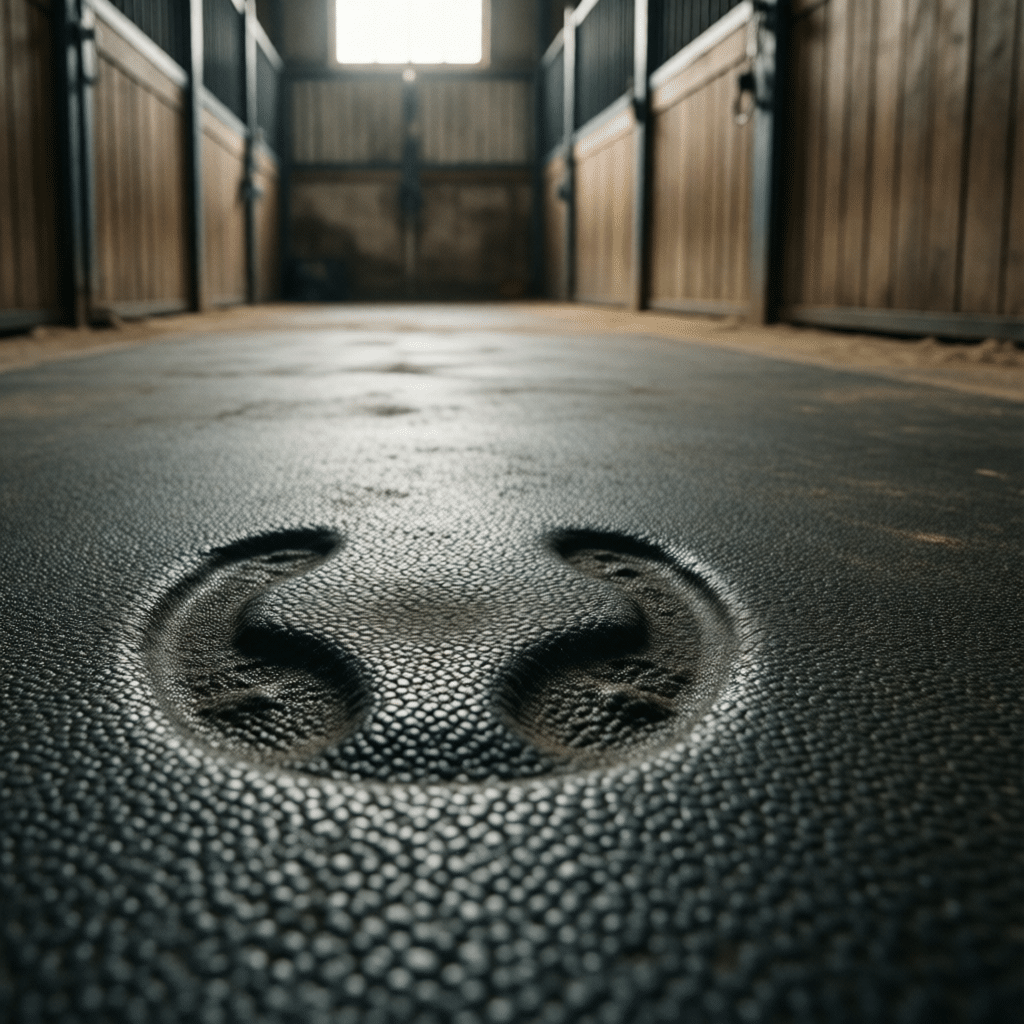
Isolation wards operate under a unique maintenance stress profile: daily deep cleaning with harsh chemicals. Veterinary sanitation crews frequently utilize strong phenolic disinfectants and virucidal agents to ensure sterility. While these chemicals are necessary for health safety, they rapidly bleach, crack, and structurally weaken organic timber and lower-grade powder coatings.
Our HDPE boards are engineered to withstand this chemical attack without losing structural integrity or aesthetic value. The material does not react with standard agricultural disinfectants, preventing the brittleness and surface crazing often seen in inferior plastics. This durability allows for frequent high-pressure washdowns, a standard operating procedure in any federally approved import center.
We pair these chemically resistant boards with our signature hot-dip galvanized steel frames, processed according to BS EN ISO 1461 standards. By galvanizing the steel after fabrication, we ensure that even the welds and internal tube surfaces are coated in zinc. This dual-defense system—impervious HDPE and corrosion-proof steel—forms the core of our “Economy Series,” specifically targeted at farms and isolation units where function, sanitation, and profit protection are the priorities.
HDG Steel: Surviving Daily Virucidal Washdowns
Quarantine facilities demand aggressive cleaning protocols that strip standard paint. We utilize Hot-Dip Galvanization according to ISO 1461 standards, creating a metallurgical bond with a strength of 3,600 psi. This integrated alloy layer withstands high-pressure virucidal washdowns, ensuring the structural steel remains isolated from corrosive agents and preventing the formation of bacterial harbors common in peeling paint.
The Metallurgical Bond Against High-Pressure Sprays
Commercial quarantine operations often rely on high-pressure sprayers to strip organic matter from surfaces. Standard powder coatings or paints rely on a mechanical bond of only 300-600 psi. Under daily abuse, these coatings chip and flake, exposing the steel to rapid oxidation. Our Hot-Dip Galvanized process creates a metallurgical bond significantly stronger than the base steel itself.
We apply a zinc coating averaging over 85 microns for structural parts, creating an abrasion-resistant barrier that protects the underlying Q235B or Q345B steel framework from physical damage during intense cleaning cycles. This ensures the facility maintains biosecurity standards without requiring frequent maintenance or repainting to cover rust spots.
Self-Healing Properties for Continuous Chemical Exposure
Physical impact from hooves and equipment in isolation wards is inevitable. HDG steel offers a self-healing advantage where the surrounding zinc acts as a sacrificial anode. If the surface sustains a deep scratch, the zinc corrodes preferentially to seal the breach, preventing rust creep that typically undermines painted finishes.
Furthermore, our “Hot-Dip After Fabrication” technique ensures total immersion. Unlike pre-galvanized tubing that leaves internal welds exposed, our process coats the interior of every 50mm RHS post and 114mm round column. This internal protection stops invisible rot caused by trapped condensation and chemical runoff, preserving the structural integrity of the stable system regardless of humidity levels or washdown frequency.
Final Thoughts
Cutting corners on isolation infrastructure guarantees biosecurity failure and costly federal rejections. Investing in our ISO 1461 Hot-Dip Galvanized frames and non-porous HDPE infills ensures your facility withstands daily virucidal attacks without degrading or harboring pathogens. This “Zero Maintenance” standard protects your operational license and asset value against the inevitable risks of global equine transport.
Secure your supply chain by verifying our “Cast-Proof” engineering and flat-pack logistics efficiency firsthand. We recommend requesting a consultation to optimize your container load density, fitting up to 45 sets per 40HQ to maximize your landed margin. Contact our technical team today to align your import center with the highest international biosecurity standards.
Frequently Asked Questions
What are the requirements for an equine quarantine facility?
Quarantine facilities demand non-porous surfaces and strict isolation protocols to prevent pathogen transfer. We recommend our Economy Series featuring hot-dip galvanized steel and solid HDPE infill. This combination withstands aggressive daily virucidal washdowns without rusting or absorbing contaminants, meeting rigorous international biosecurity standards.
USDA approved materials for horse stalls?
Regulatory bodies strongly favor non-porous materials that cannot harbor bacteria or fungi. We utilize recycled HDPE boards and hot-dip galvanized steel (certified to ISO 1461) to create impermeable surfaces. These materials resist moisture penetration and satisfy the hygiene requirements typically inspected by USDA and EU officials.
Best stall material to prevent EHV-1 spread?
Non-porous HDPE (High-Density Polyethylene) is the superior choice for disease control. Unlike wood, which traps the EHV-1 virus in grain and cracks, our UV-stabilized HDPE planks create a sealed surface. This allows for complete sanitization between horses, significantly reducing cross-contamination risks in high-turnover isolation wards.
Are HDPE stable boards chemical resistant?
Yes, our HDPE infill is engineered to withstand harsh chemical exposure. You can use strong disinfectants, bleach solutions, or virucidal cleaners required for biosecurity protocols without damaging the material. The boards will not degrade, bleach, or absorb fluids, maintaining their structural integrity even with frequent sterilization.
Building an airport equine holding center?
For high-traffic logistics hubs, durability and installation speed are critical. We supply heavy-duty, hot-dip galvanized systems delivered via our flat-pack method, which fits 30-45 sets per container. This ensures rapid deployment and long-term resilience against the heavy wear and tear typical of transient equine populations.

 English
  Spanish
  French
  Arabic
  German
0 Comments