


The persistent ammonia smell in horse stalls is a direct indicator of urine absorption into porous flooring and walls. This trapped moisture not only fuels bacteria but also causes structural rot and corrosion, leading to costly repairs and compromising the long-term asset value of the facility.
This analysis explains how to solve the issue at a material level. We focus on non-porous infills like UV-stabilized HDPE and rust protection standards like Hot-Dip Galvanization after fabrication, which prevent the absorption and corrosion that cause chronic ammonia problems.
Why “Deep Cleaning” Doesn’t Stop the Ammonia Smell
Ammonia smells persist because urine soaks deep into porous materials like concrete and wood. Surface cleaning can’t reach this hidden source, allowing bacteria to thrive.
The Problem with Porous Surfaces
Many stables are built with materials that act like sponges. Concrete floors and traditional wooden stall walls are porous, meaning they have microscopic holes that absorb liquids. When a horse urinates, the liquid doesn’t just sit on the surface; it seeps deep into the material where it gets trapped.
Once urine is absorbed, you can’t wash it out. This trapped moisture becomes a permanent breeding ground for bacteria. These bacteria feed on the urea in the urine and continuously release ammonia gas as a byproduct. You can scrub the surface all day, but you’re only removing the superficial grime. The real odor factory is operating deep inside the material, completely untouched.

The Advantage of Zero-Maintenance HDPE Infill
This is exactly why we use HDPE (High-Density Polyethylene) infill in DB Stable systems. HDPE is a completely non-porous polymer. It has a zero-absorption rate, so urine, bacteria, and moisture can’t penetrate its surface. Nothing gets in.
Because nothing soaks in, the source of the ammonia stays on the surface. This makes cleaning truly effective. A simple wipe-down or rinse removes the urine completely, starving the bacteria of their food source. This eliminates the ammonia problem at its root, which is the core principle behind our “Zero Maintenance” infill.
The Concrete Trap: Sponging Up Equine Urine
Concrete acts like a sponge, trapping urine deep in its pores. Bacteria feed on this trapped moisture, creating a constant source of harmful ammonia that surface cleaning can’t reach.
How Porous Concrete Becomes an Ammonia Factory
Even the best bedding can’t contain the volume of liquid a horse produces. Urine inevitably seeps thr
ough and penetrates deep into the porous concrete floor. This saturated substrate becomes the perfect breeding ground for bacteria.
These bacteria colonize the concrete, using the trapped urea from urine as a constant food source. They metabolize this urea and release ammonia gas as a byproduct. This creates a self-sustaining ammonia factory that operates long after the stall has been mucked out. Surface disinfectants can’t penetrate deep enough to stop the cycle.
Respiratory Health Risks from Ground-Level Ammonia
Ammonia is a severe respiratory irritant. As a gas heavier than air, its concentration is highest near the stall floor—exactly where horses rest their heads and breathe for hours. Documented ammonia levels in some facilities have reached 450 ppm, a dangerous concentration for lung health.
Sustained exposure to these fumes can compromise lung function, leading to chronic respiratory issues and directly hurting an equine athlete’s performance. The only effective solution is to break the cycle at its source with non-porous flooring. By preventing urine absorption, you starve the sub-floor bacteria of the urea they need to produce ammonia.
Future-Proof Your Facility with Durable Stables

Flat Mats vs. Interlocking Pavers: The Drainage Debate
Flat mats trap corrosive urine, creating ammonia hotspots that destroy steel stall frames. Permeable interlocking pavers allow drainage, reducing odor and protecting the structure’s base.
| Feature | Flat Stall Mats | Interlocking Pavers |
|---|---|---|
| Drainage Mechanism | Non-permeable surface; traps all liquids. | Permeable design; allows liquids to drain through. |
| Ammonia Risk | High. Pooled urine feeds bacteria, creating concentrated ammonia gas. | Low. Urine drains away from the surface, starving bacteria. |
| Impact on Steel Structure | Highly corrosive. Trapped moisture aggressively rusts the base of stall panels. | Minimal. Keeps the base of the steel frame dry and protected. |
How Solid Mats Create Surface Pooling and Ammonia Hotspots
Standard flat rubber mats create an impermeable seal over the stall floor. Every drop of urine or water sits on top of this surface with nowhere to go. The liquid pools until absorbed by bedding or it finds a path to the only place it can escape: the seams between mats and the edges along the stall walls.
These seams become collection channels for urine. Bacteria thrive in these hidden, wet areas, breaking down urea and releasing concentrated ammonia gas. The result is a persistent odor problem and a corrosive sludge that remains trapped under the mat, even after the stall is mucked out.
Why Floor-Level Rust Protection is Non-Negotiable
The constant moisture trapped by flat mats directly attacks the steel at the base of the stall panels. This is the most vulnerable point of the entire structure. Once rust takes hold here, the integrity of the panel is compromised from the ground up. This isn’t just a cosmetic issue; it’s a fundamental structural failure waiting to happen.
We engineer our stable systems to counteract this reality. Every steel component undergoes a ‘Hot-Dip After Fabrication’ process. We weld the entire panel first, then dip it in molten zinc. This process completely seals every weld, corner, and edge, creating a zinc coating that conforms to BS EN ISO 1461. For the critical tubing, this coating averages over 70 microns thick, providing the necessary defense against the corrosive environment created by poor flooring drainage.
Wall Rot: How Pine Boards Absorb Toxic Moisture
Pine acts like a sponge, absorbing moisture until saturation. Past 20-25% moisture content, fungi break down the wood, causing structural failure and rot.
The Science of Fungal Decay in Timber
Pine boards are naturally porous and absorb moisture from the environment. The wood’s fibers continue to soak up water until they reach a saturation point, which is typically between 25-35% moisture content. Below this level, the wood remains structurally sound.
Once the moisture content passes this critical threshold, conditions become perfect for fungal growth. Fungi begin to actively consume the wood’s core structural components—cellulose and lignin. This biological process breaks down the material from the inside out, turning a once-strong pine board into a soft, brittle plank that can’t withstand kicks or even basic pressure.
High-Density Bamboo: A Rot-Resistant Solution
Pine is a
common choice, but its susceptibility to rot makes it a liability in any stable environment. The engineered alternative is high-density strand-woven bamboo. Its dense composition makes it naturally resistant to mold and rot, so it doesn’t absorb moisture the way pine does.
With a Janka Hardness rating over 3000 lbf, this material is three times harder than oak. It provides a durable and fundamentally sound infill that eliminates the risk of decay from the start, protecting the structural integrity of the stall wall for the long term.
The HDPE Solution: 0% Absorption Rates Explained
HDPE is non-porous, unlike wood which acts like a sponge for urine and ammonia. With a water absorption rate under 0.01%, it prevents toxic buildup and rot.
How HDPE Resists Moisture and Ammonia
The reason wood stall walls rot and stink is simple: they soak up urine. Wood is porous, so it traps moisture and the bacteria that convert urea into ammonia gas. High-Density Polyethylene (HDPE) solves this problem at a molecular level. It’s a polymer engineered to be fundamentally non-porous, making it a permanent barrier against liquids and chemicals.
- Near-Zero Water Absorption: HDPE has a water absorption rate of less than 0.01% over a 24-hour period. It actively repels liquid instead of absorbing it.
- Chemical Resistance: The material’s structure gives it excellent resistance to ammonium hydroxide, the chemical compound found in horse urine. It doesn’t degrade or break down from prolonged exposure.
- Non-Porous Surface: Liquids stay on the surface of HDPE, unable to penetrate. This prevents the deep-set odors and structural rot that plague traditional wooden boards and makes cleaning effective with a simple wipe-down.
DB Stable’s UV-Stabilized and Impact-Absorbing Boards
We don’t just use any HDPE. Our stable systems are built with boards specifically engineered for the high-stress equestrian environment. This material choice is a core part of our commitment to durability and long-term value for stable operators.
- Engineered Thickness: Our systems use 28mm-32mm thick HDPE planks. This thickness provides significant impact absorption to withstand kicks and abuse without cracking.
- UV Stabilization: Each board is infused with UV stabilizers during manufacturing. This is critical for preventing the material from becoming brittle or fading from sun exposure, a non-negotiable requirement for markets like Australia.
- ‘Zero Maintenance’ Standard: This is our key selling point for HDPE. The boards never need painting, sealing, or replacement due to rot. For a distributor or large facility, this eliminates a major long-term operational cost.
Frequently Asked Questions
What causes the ammonia smell in horse stalls?
The ammonia smell doesn’t come from fresh urine. It’s produced when bacteria in the bedding and subfloor break down urea, a compound in horse urine. Porous surfaces like unsealed concrete or wood trap urine, creating a continuous source for bacteria to produce ammonia gas, which is most concentrated near the floor where horses breathe.
Why are my wooden stall walls rotting at the bottom?
Stall walls rot at the bottom from constant moisture exposure. Urine often seeps under stall mats and gets trapped against the base of the wooden walls. This creates a permanently damp environment that encourages fungal growth, leading to wood decay. Poor external barn drainage can also make the problem worse.
How do I clean urine that gets under stall mats?
To clean under stall mats, you must first lift them completely. Remove any soaked debris and use a pressure washer to clean the floor. For tough odors, use a suitable disinfectant. The best long-term solution is prevention with enough absorbent bedding to soak up urine before it can seep underneath.
Are interlocking mats better than flat mats for drainage?
Neither standard interlocking mats nor flat mats are designed for drainage; they are meant to be a barrier. For drainage, you need perforated mats with holes that allow liquid to pass through. Standard interlocking mats excel at creating a stable, seamless surface but do not inherently solve moisture problems underneath.
What is the best stall flooring for a barn with poor ventilation?
For a barn with poor ventilation, a sealed, non-porous flooring system is the ideal choice. These systems prevent urine from seeping into the subfloor, which stops the hidden buildup of ammonia-producing bacteria. Since ventilation can’t clear the air, preventing the source of the ammonia is critical.
Final Thoughts
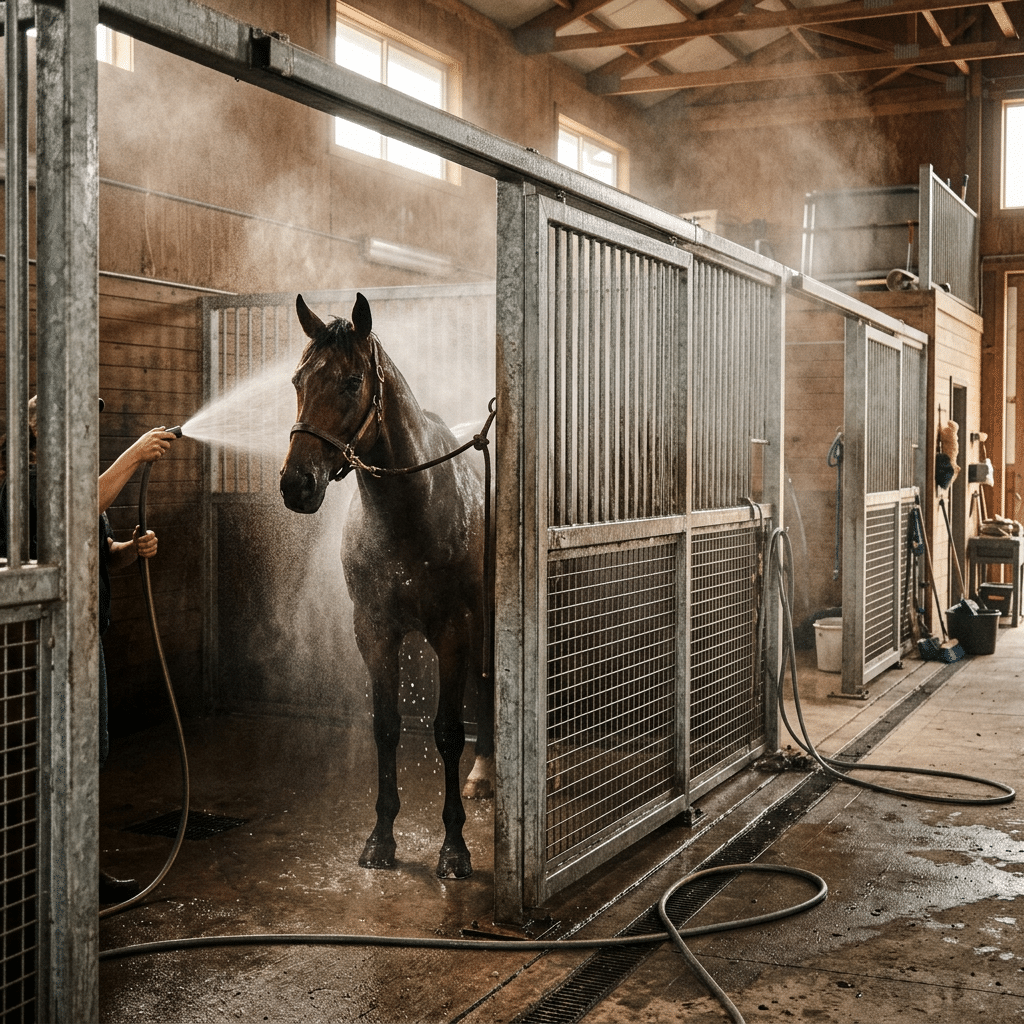
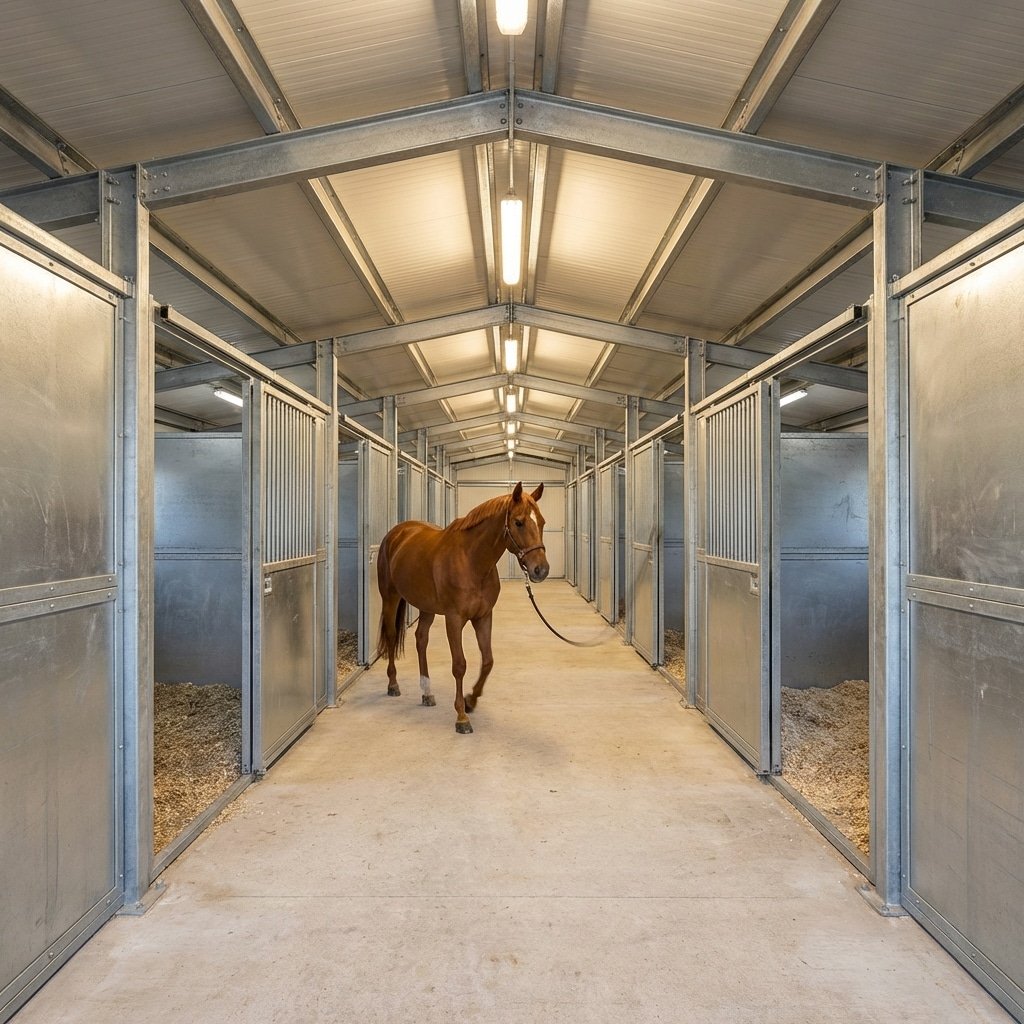
While pine boards and unsealed concrete lower the initial quote, they guarantee the rot, rust, and ammonia issues your customers are trying to solve. This liability leads directly to warranty claims and damages a dealer’s reputation. Our system, built with non-porous HDPE and post-weld hot-dip galvanized steel, is engineered to prevent these failures from the start.
The next step is to verify the engineering firsthand. We recommend a trial order to confirm the material quality and the shipping advantages of our flat-pack system. Contact our team to discuss container specifications and private label opportunities for your market.

 English
  Spanish
  French
  Arabic
  German
0 Comments