Evaluating toxicity & chewing risks is a primary liability for any equestrian facility sourcing new stalls. Unverified powder coatings and plastics can expose horses to lead, cadmium, or phthalates, creating significant financial risk from vet bills and premature material failure.
This analysis benchmarks common materials against key safety specifications, including ISO 1461 for hot-dip galvanizing and the use of non-toxic, phthalate-free HDPE. We examine the structural differences between cosmetic paints and dual-protection systems to establish a clear standard for safe infrastructure.
The Inevitability of Horses Chewing Their Environment
A horse’s constant chewing is a biological need to buffer stomach acid. This makes safe, splinter-proof stall materials like high-density bamboo and HDPE essential for preventing injury.
A Biological Need, Not a Bad Habit
Horses are designed to chew almost constantly. This isn’t a bad habit or a sign of boredom; it’s a core physiological function. A horse chews up to 60,000 times a day, stimulating the saliva production needed to buffer the 36 liters of stomach acid it produces daily.
This instinct drives them to chew on any available surface in their stall, from wood panels to metal bars. While natural, this behavior creates a significant risk when stall materials are not chosen carefully. Common materials like pressure-treated lumber can cause serious harm, leading to oral splinters, colic from ingested wood chips, and exposure to chemical toxins.
The Importance of Safe and Durable Infill Materials
Engineering a safe stable environment means selecting materials that can withstand this natural chewing behavior. High-density strand woven bamboo is an effective solution. With a Janka hardness over 3000 lbf, it’s three times harder than oak, which effectively resists damage from chewing and eliminates the risk of dangerous splintering.
Another proven option is our non-toxic, UV-stabilized HDPE (high-density polyethylene) board. It provides a completely safe surface for horses to be around. It also offers an impact-absorbing and zero-maintenance benefit, a key operational advantage for any large-scale equestrian facility.
Heavy Metals (Lead/Cadmium) in Cheap Powder Coating
Feature
Low-Cost, Unverified Coatings
Certified Dual-Protection System
Material Source
Unverified suppliers using cheap pigments & stabilizers
Safe formulations managed under an ISO 9001 system
Heavy Metal Risk
High risk of Lead or Cadmium toxicity if ingested
Negligible; primary zinc layer is biocompatible
Protective Layers
Single, thin cosmetic layer
Dual-layer: Hot-dip galvanizing + powder top coat
Compliance Standard
Unknown; frequently fails to meet RoHS standards
Meets ISO 1461 for galvanizing and ISO 9001 for process
Health Risks and Regulatory Concerns
The primary issue with cheap powder coating from unregulated sources is the potential inclusion of heavy metals like lead and cadmium. These are sometimes used as low-cost pigments or stabilizers. For facilities housing animals prone to chewing, this presents a direct and serious safety liability.
Ingesting even small amounts of lead or cadmium from coated surfaces can lead to toxicity in horses, causing organ damage and severe neurological issues.
International standards like RoHS (Restriction of Hazardous Substances) exist to eliminate these materials. But non-certified suppliers often ignore these rules to cut costs.
Waste and runoff from these coatings can also contaminate the surrounding land, creating a long-term environmental problem for farm and land management.
The Dual-Protection Standard: Powder Coat Over Galvanizing
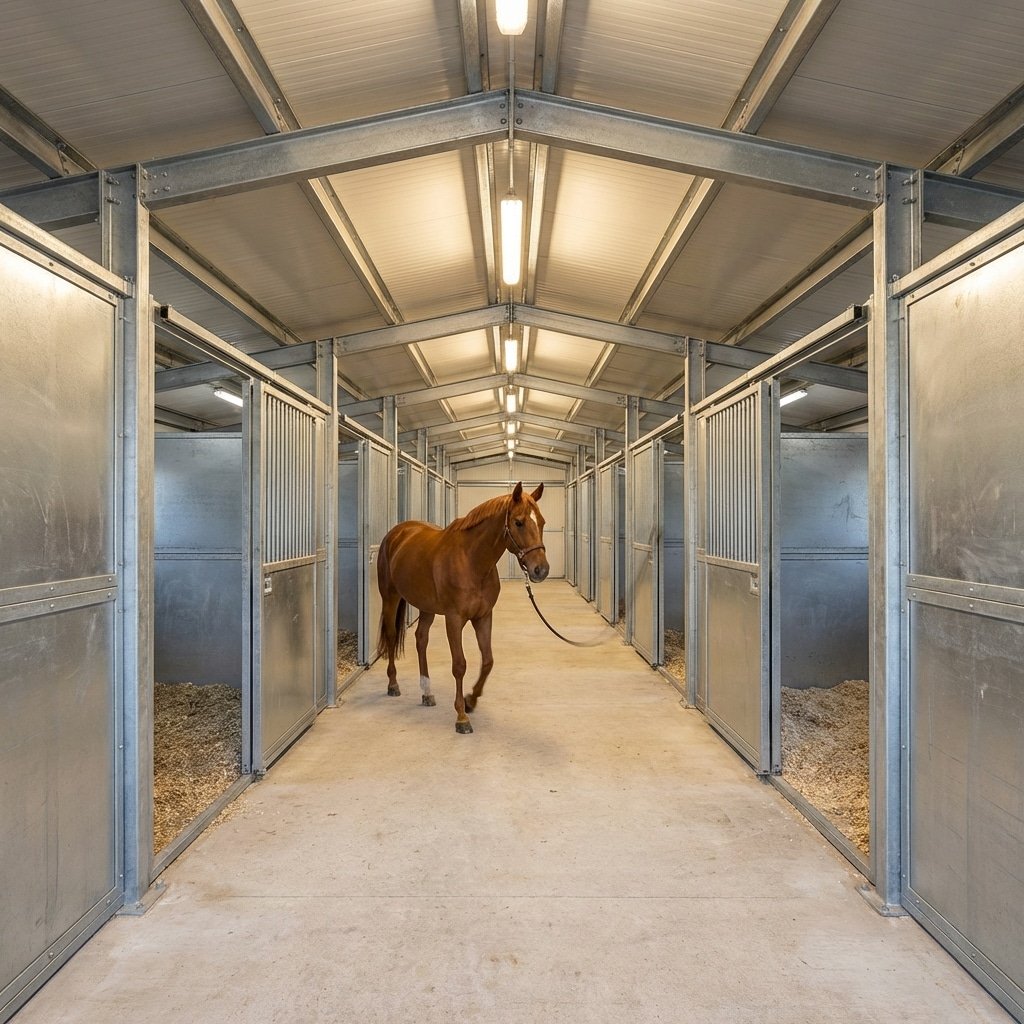
A far safer approach is a dual-protection system, which we specify for our premium Royal Series stables. This method addresses the root safety problem by creating a biocompatible barrier between the steel and the animal. The entire steel structure is first hot-dip galvanized according to ISO 1461, completely sealing it in a protective layer of zinc.
Only after this primary protection is in place do we apply the powder coating. This secondary layer provides aesthetics and further weather resistance, using safe, compliant materials managed under our ISO 9001 quality system. The result is a finish that eliminates the risk of heavy metal exposure, even if a horse manages to wear through the top cosmetic layer over many years.
Globally Compliant Stables Built for Decades
Our stables feature hot-dipped galvanized steel for a 20-year rust-proof lifespan, ensuring maximum return on your investment. With a modular design that cuts installation time by 30%, you can reduce labor costs and get your facility operational faster.
PVC fencing releases chemical plasticizers (phthalates) and creates sharp, dangerous splinters as it degrades from sun exposure, posing both toxic and physical risks to horses.
The Dual Risk of Chemical Leaching and Brittle Splinters
Many common PVC materials used in fencing and panels rely on chemical plasticizers called phthalates to achieve flexibility. These chemicals are not permanently bonded to the plastic and can leach into the surrounding environment over time. Research identifies these compounds as endocrine disruptors, linking them to reproductive issues and respiratory problems like asthma in both animals and humans.
The physical danger is just as significant. Constant UV radiation from sunlight makes PVC hard and brittle. A board that was once flexible can become prone to cracking and shattering under impact. When a horse kicks or chews on this degraded PVC, it doesn’t bend—it breaks into sharp splinters that can cause serious lacerations to the mouth, tongue, or body.
We avoid these risks by using 100% non-toxic HDPE (High-Density Polyethylene) for our stall infill boards. This material is inherently free of phthalates, eliminating the chemical leaching hazard from the start.
To solve the splintering problem, our HDPE boards are UV-stabilized during manufacturing. This process protects the material’s integrity, ensuring it won’t become brittle or crack from long-term sun exposure. HDPE is also naturally impact-absorbing. When a horse kicks it, the board flexes to absorb the energy instead of shattering, providing a much safer and more durable surface for any stable environment.
The Safety of Zinc: Why Hot-Dip Galvanizing is Biocompatible
Hot-dip galvanizing is biocompatible because it uses zinc, an essential mineral, to create a stable, inert protective coating. This barrier doesn’t flake, making it non-toxic for horses.
Zinc as an Es
sential Mineral in Nature
Zinc isn’t an artificial or toxic chemical; it’s a naturally occurring element. It is an essential mineral required for biological health in virtually all life, including horses and humans. This is the foundation of its biocompatibility.
In its solid, finished state as a galvanized coating, zinc is completely inert and is not classified as a hazardous material. The potential issues with zinc arise from fumes during high-temperature work like welding or from dust created by grinding—not from the solid, stable product installed in a barn.
How ISO 1461 Galvanizing Creates a Stable, Non-Toxic Barrier
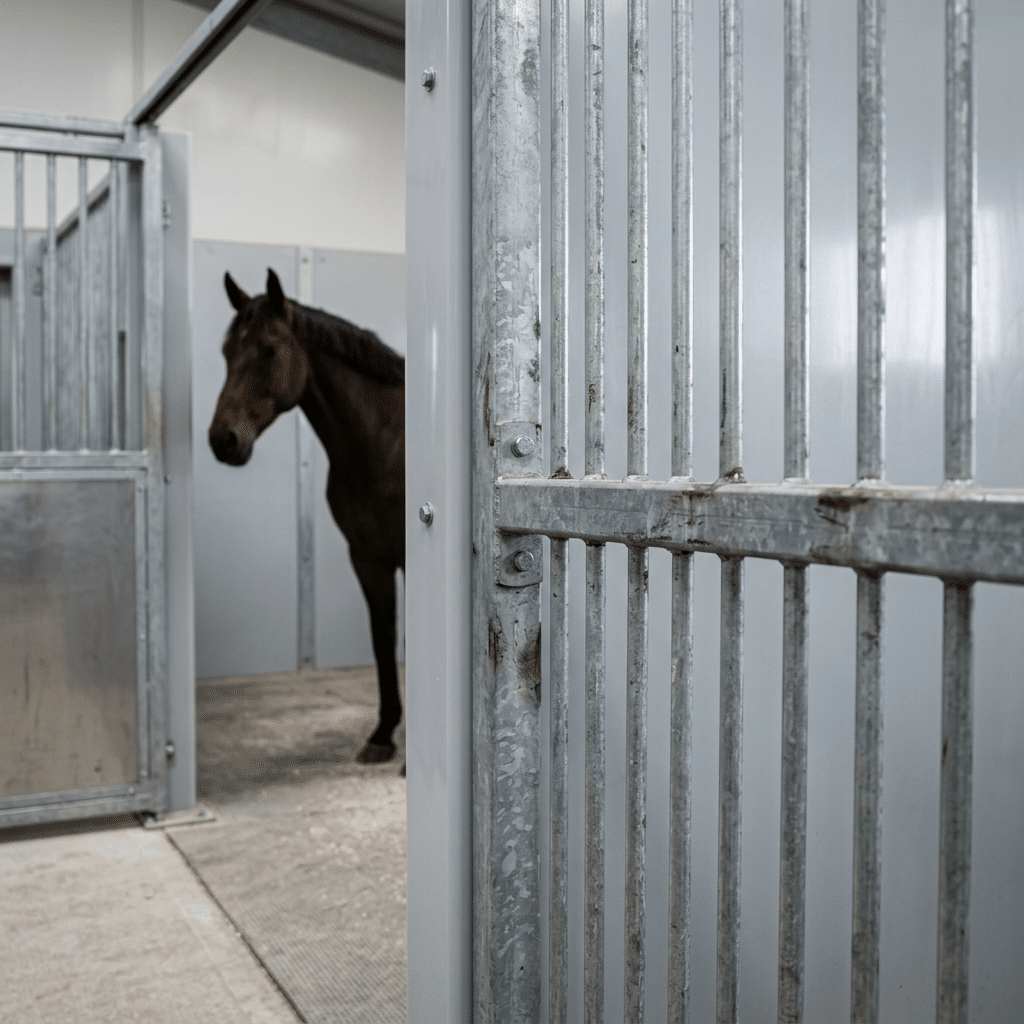
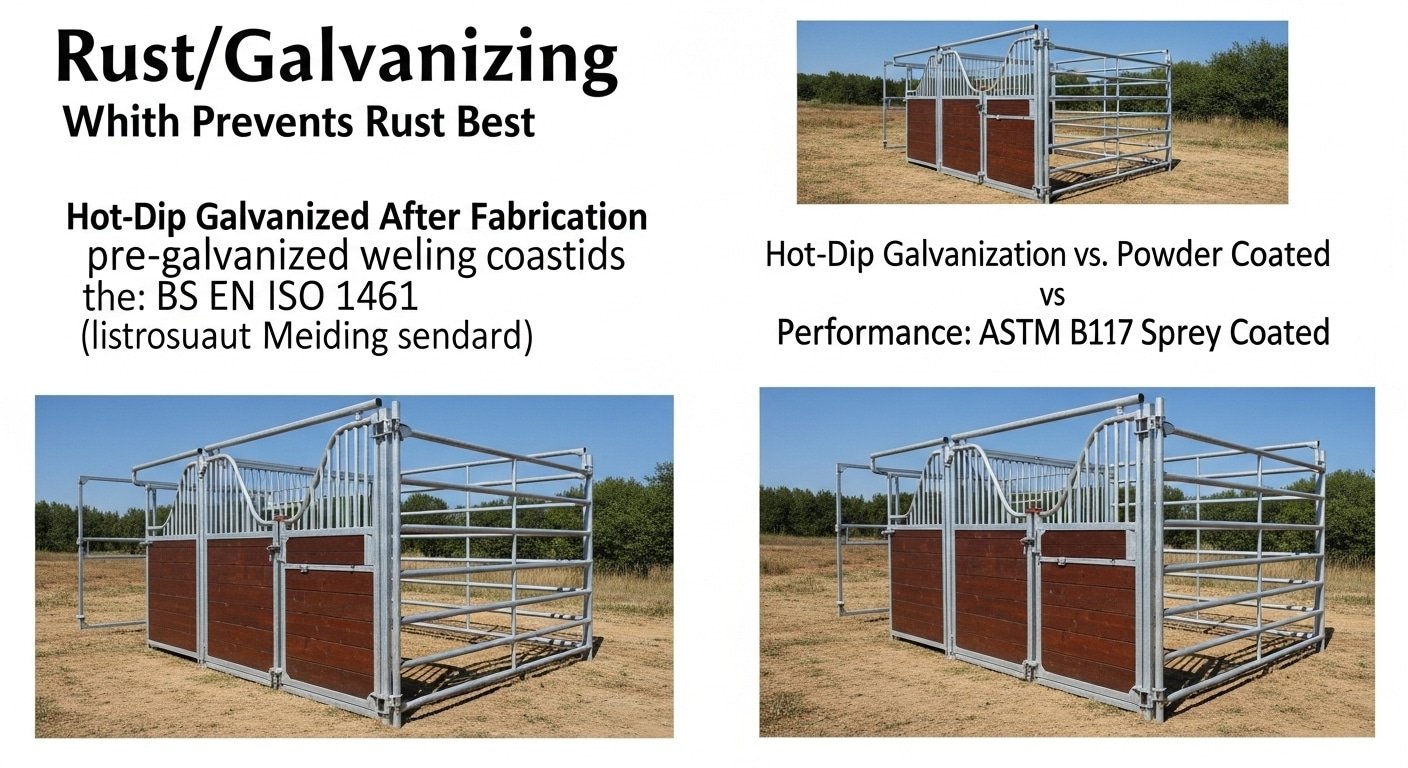
Our galvanizing process adheres strictly to the BS EN ISO 1461 standard. This means every steel component is fully fabricated—cut, welded, and drilled—before being submerged in molten zinc. This “hot-dip after fabrication” method ensures a seamless, complete zinc coating over the entire part, including welds and edges.
This process achieves a thick, metallurgically-bonded coating of over 70 microns. This creates a tough and durable barrier that physically resists chipping, peeling, or flaking. The zinc stays bonded to the steel, preventing it from becoming loose particles that a horse could ingest.
DB’s 100% Non-Toxic HDPE Boards
DB Stable uses 100% non-toxic, UV-stabilized High-Density Polyethylene (HDPE) boards for stall infills. This material is safe for horses that chew, as it is inert, splinter-proof, and does not leach chemicals.
Addressing Cribbing and Chewing with an Inert Material
Horses have a natural instinct to chew, creating a significant safety risk within the stable. Treated wood can release chemicals and create dangerous splinters that injure a horse’s mouth or digestive system. Any material used for stall walls must be able to withstand this behavior without becoming a hazard.
We use High-Density Polyethylene (HDPE) because it is a stable, inert polymer. The material does not leach chemicals, even when scratched or chewed. It is also completely splinter-proof, providing a safe and durable surface for horses prone to cribbing and eliminating the physical risks associated with wood infills.
Specifications for UV-Stabilized, Impact-Absorbing Infill
Our HDPE boards have a standard thickness of 28mm-32mm. This robust profile provides excellent impact absorption and is the foundation of our ‘Kick-Proof Guarantee’. The material is engineered to handle the daily stress of an equine environment without cracking or failing.
Each board is also UV stabilized to resist degradation from sunlight, a critical feature for longevity in markets like Australia. This engineering results in a ‘Zero Maintenance’ infill that never requires painting, will not rot, and is simple to clean with a pressure washer.
Frequently Asked Questions
Is powder coated steel safe for horses to chew?
No, it is not considered safe. Powder coatings can contain heavy metals like lead. If a horse chews and ingests flakes of the coating or underlying corroded metal, it can lead to serious health issues, including colic and neurological damage. There is also a risk of lacerations from sharp, damaged edges.
Is PVC a safe material for horse stalls or fencing?
While the material in PVC is non-toxic, it is not a safe choice for horse enclosures. PVC can become brittle and shatter upon impact from a kick. This creates sharp, dangerous shards that can cause serious puncture wounds or lacerations to a horse.
Is hot-dip galvanized steel safe around horses?
Yes, finished hot-dip galvanized products are safe for equine use. The risk of zinc poisoning comes from an animal ingesting loose flakes of zinc, which is not a practical risk with solid steel stable panels. The zinc coating is bonded to the steel, providing critical rust protection without posing a health hazard to the horse.
How can I stop my horse from chewing on their metal stall?
Horses chewing on solid metal stalls is uncommon, as they typically prefer to chew on softer materials like wood. This behavior often points to underlying issues such as boredom, stress, or a nutritional imbalance. We recommend consulting with your veterinarian to identify and address the root cause.
Final Thoughts
Sourcing unverified stalls might lower initial costs, but it exposes your business to liability from material toxicity and structural failure. Our ISO 1461 galvanizing and non-toxic HDPE infills are engineered to eliminate these risks entirely. This protects your reputation and ensures compliance with the safety standards your clients demand.
Verify our engineering and material standards yourself. We suggest a trial order to evaluate our ISO-compliant finish and the logistical savings of our flat-pack system. Contact us to get the technical data sheet and discuss your market’s specific OEM requirements.
Hey, I’m Frank Zhang, the founder of DB Stable, Family-run business, An expert of Horse Stable specialist. In the past 15 years, we have helped 55 countries and 120+ Clients like ranch, farm to protect their horses. The purpose of this article is to share with the knowledge related to horse stable keep your horse safe.




 English
  Spanish
  French
  Arabic
  German
0 Comments