


Die Art der in einem stabilen System verwendeten Verbindungen bestimmt direkt die Frachtkosten und die Skalierbarkeit. Herkömmliche vollverschweißte Rahmen wirken zwar robust, sind aber eine logistische Belastung, da die Containerladungen oft auf nur 12-15 Sätze begrenzt sind. Diese ineffiziente Raumnutzung treibt die Versandkosten um mehr als 60% in die Höhe und schmälert die Gewinnspanne des Händlers, bevor das Produkt überhaupt ankommt.
In dieser Analyse werden geschweißte Strukturen mit modularen Systemen verglichen, die für den Flat-Pack-Versand entwickelt wurden. Wir bewerten die langfristige Integrität von Schraubverbindungen mit Beschlägen aus rostfreiem Stahl 304 und vergleichen ihre Auswirkungen auf die Ladekapazität von Containern. Ziel ist es, ein System zu finden, das sowohl die strukturelle Sicherheit als auch den logistischen Gewinn schützt.
Der Aufpralltest: Pferdehufe vs. chemische Beschichtungen
Der Huf eines Pferdes ist zwar von Natur aus stark, aber er kann wiederholten Tritten nicht standhalten. Unsere Boxen bestehen aus stoßabsorbierendem HDPE und hochfestem Q345B-Stahl, der speziell dafür entwickelt wurde, Tausende von Stößen zu überstehen.
Die natürlichen Grenzen der Hufwandstärke
Die Hufwand eines Pferdes erhält ihre strukturelle Integrität durch eine dichte Zusammensetzung von Proteinen und Mineralien. Diese chemische Zusammensetzung sorgt für die Festigkeit und Flexibilität, die für die Fortbewegung in abwechslungsreichem, natürlichem Gelände erforderlich ist.
Aber diese biologische Konstruktion hat klare Grenzen. Ein Huf ist nicht dafür gedacht, wiederholt gegen unnachgiebige Oberflächen wie Stahlstangen zu stoßen. Ständiges Treten gegen hartes Boxenmaterial kann zu strukturellen Schäden an der Hufkapsel führen und wird mit Sicherheit die Box selbst beeinträchtigen.
Die Technik hinter unseren ‘Kick-Proof’-Materialien
Wir wählen Q345B-Stahl wegen seiner hervorragenden Kälteschlagzähigkeit. Dies ist entscheidend, um Sprödbrüche durch kräftige Tritte im Winter zu verhindern, eine bekannte Fehlerquelle für minderwertigen Stahl.
Unsere Stallsysteme kombinieren diesen robusten Rahmen mit einer stoßabsorbierenden HDPE-Füllung. Dieses wartungsfreie Material blockiert nicht nur einen Aufprall, sondern leitet die Energie von Tausenden von wiederholten Stößen sicher ab und gewährleistet sowohl die Sicherheit der Pferde als auch die langfristige Haltbarkeit der Boxen.
Nasse Farbe: Der schnelle und schmutzige Irrtum
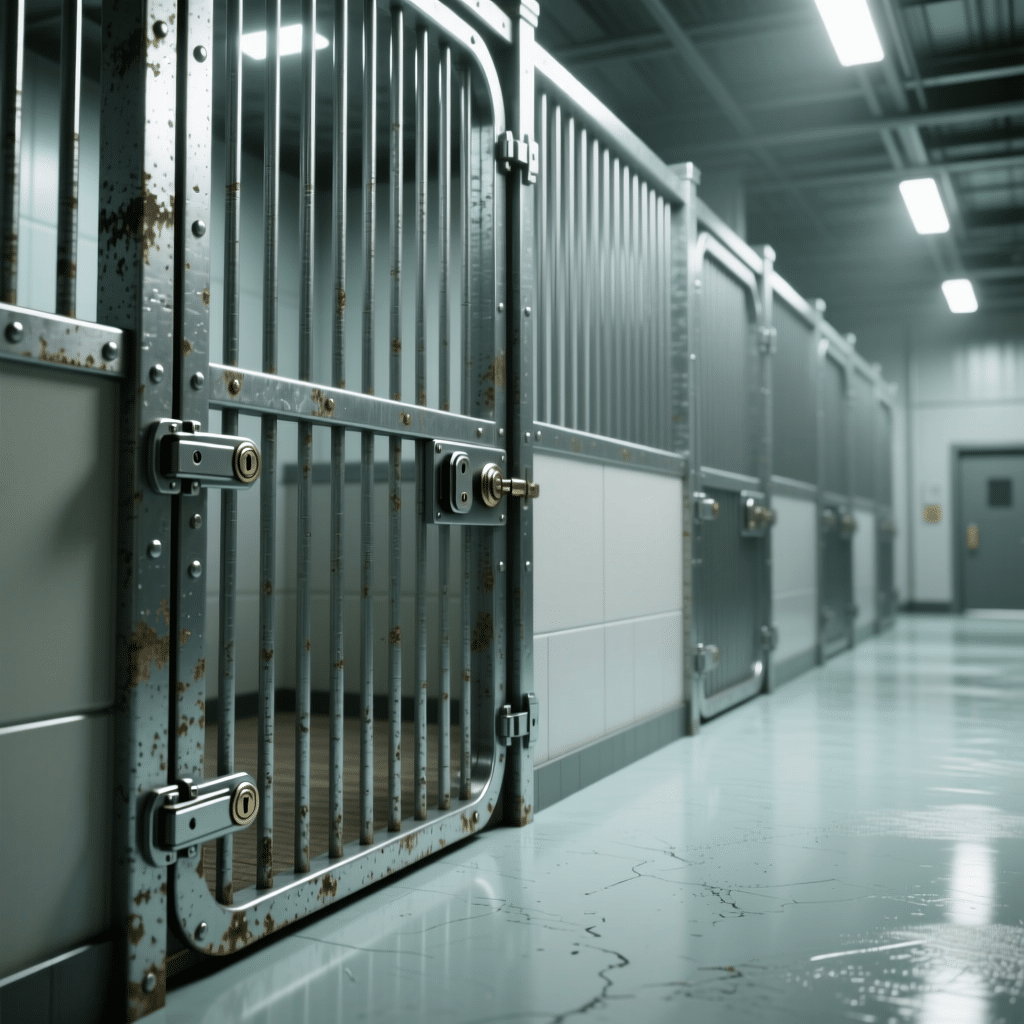
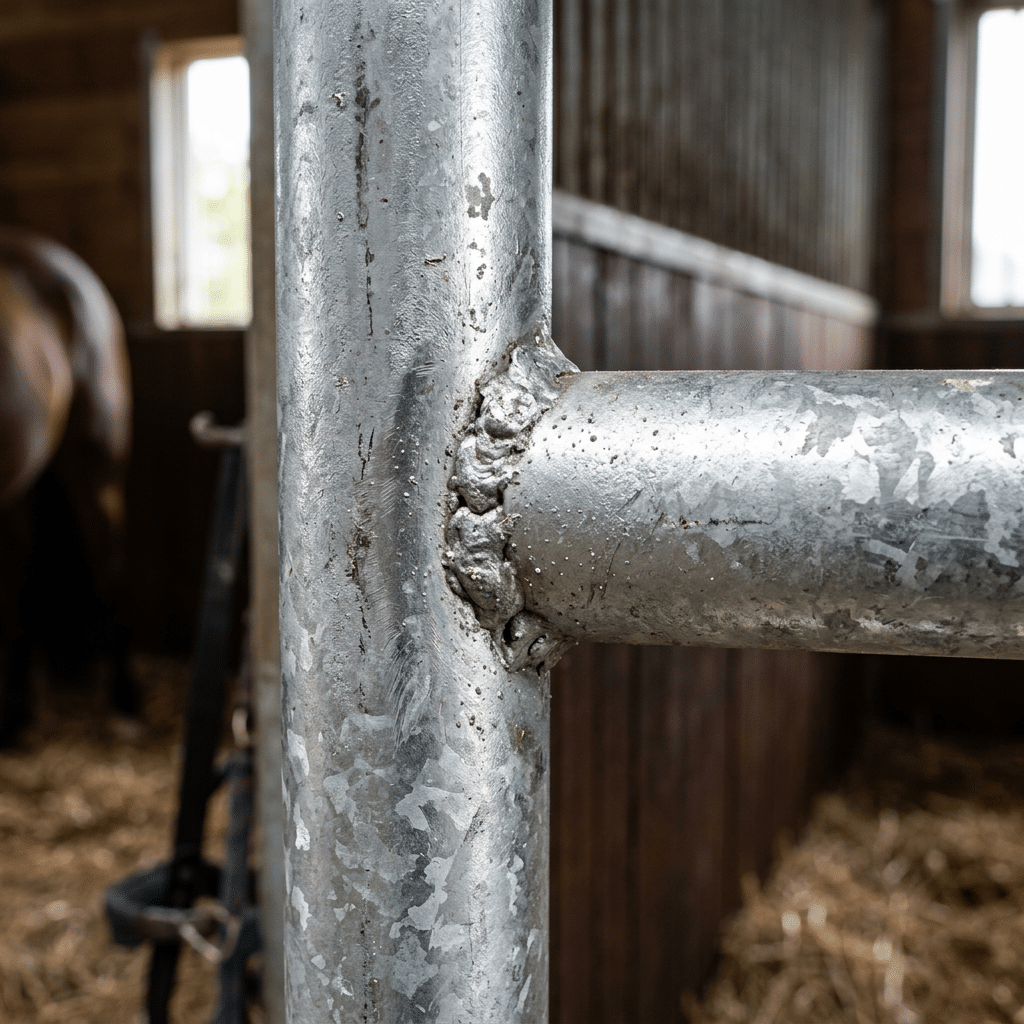
In der Stallindustrie besteht der Fehler der ‘Nasslackierung’ darin, dass die Hersteller vorverzinkte Rohre schweißen und die verbrannten, anfälligen Schweißnähte einfach mit zinkhaltiger Farbe überziehen. Diese kosmetische Korrektur verdeckt eine unvermeidliche Roststelle.
Die Zinkspray-Illusion bei vorverzinkten Schweißnähten
Eine gängige Abkürzung in dieser Branche ist die Verwendung von vorverzinkten Stahlrohren. Wenn diese Rohre zusammengeschweißt werden, brennt die starke Hitze die schützende Zinkschicht an jeder Stelle ab.
Verbindung. Die Schweißnaht liegt frei und ist anfällig für Korrosion.
Um diese Schäden schnell zu kaschieren, sprühen einige Hersteller einfach eine silberne oder zinkhaltige Farbe auf. Das sieht auf den ersten Blick gut aus, ist aber nur eine kosmetische Verschleierung. Die überlackierte Schweißnaht wird zur Hauptschwachstelle der gesamten Konstruktion, an der sich unweigerlich Rost bildet.
Echte Langlebigkeit: Pulverbeschichtung über einer verzinkten Basis
Wir machen die Dinge anders. Unser Verfahren basiert auf der Feuerverzinkung der gesamten Konstruktion *nach* Abschluss aller Fertigungs- und Schweißarbeiten. Wir bauen die Boxenfront oder Trennwand aus Rohstahl und tauchen dann das gesamte fertige Teil in geschmolzenes Zink gemäß der Norm BS EN ISO 1461. Diese Methode gewährleistet, dass jede Ecke, jeder Spalt und jede Schweißnaht vollständig versiegelt ist.
Bei unserer Premium-Serie Royal fügen wir eine weitere Schutzschicht hinzu. Eine haltbare Pulverbeschichtung wird über die bereits verzinkte Basis aufgetragen, wodurch ein doppeltes Schutzsystem entsteht. Diese Methode stellt sicher, dass keine Schweißnaht freiliegt und sorgt für eine nahtlose, robuste Oberfläche, die nicht nur eine Saison, sondern Jahrzehnte lang hält.
Global einsetzbare Ställe für jedes Klima

Standard-Pulverbeschichtung: Warum sie schließlich abblättert
Standard-Pulverbeschichtungen versagen aufgrund schlechter Haftung. Mikroskopische Verunreinigungen und unangepasste Ausdehnungsraten verursachen Mikrorisse, durch die die darunter liegende Feuchtigkeit Blasen wirft und die Beschichtung abblättert.
Der Versagensprozess: Von Mikrorissen bis Peeling
Der häufigste Grund für das Abblättern der Pulverbeschichtung vom Stahl ist ein Fehler auf der grundlegendsten Ebene: der Haftung. Wenn der Rohstahl nicht perfekt vorbereitet ist, hat die Beschichtung keine Chance. Jede mikroskopisch kleine Öl-, Feuchtigkeits- oder Staubschicht, die von der Handhabung oder Bearbeitung herrührt, bildet eine Barriere und verhindert, dass das Pulver eine feste molekulare Verbindung mit dem Metall eingehen kann.
Eine vollkommen glatte, glänzende Stahloberfläche wirkt sich ebenfalls negativ auf ein gutes Finish aus. Die Pulverbeschichtung braucht eine gewisse Textur - ein Oberflächenprofil -, um mechanisch zu haften. Ohne sie liegt die Beschichtung einfach nur auf und kann bei Belastung abplatzen. Diese Belastung entsteht oft durch Temperaturschwankungen. Stahl und die Polymerbeschichtung dehnen sich unterschiedlich schnell aus und ziehen sich zusammen. Über viele Zyklen des Erhitzens und Abkühlens hinweg führt dieses Missverhältnis zu winzigen Spannungsrissen, die schließlich wachsen und es der Feuchtigkeit ermöglichen, darunter zu gelangen und den Ablösungsprozess einzuleiten.
Die zweischichtige Lösung: Pulverbeschichtung über verzinktem Stahl
Der richtige Weg, um eine dauerhafte Pulverbeschichtung auf Stahl zu erzielen, besteht darin, sie überhaupt nicht auf rohen Stahl aufzutragen. Der Prozess muss mit der Feuerverzinkung des gesamten gefertigten Rahmens gemäß den Normen BS EN ISO 1461 beginnen. Dieser entscheidende erste Schritt schafft eine grundlegende, metallurgisch gebundene Zinkschicht, die den Stahl vor Korrosion schützt.
Diese verzinkte Zinkschicht verhindert vollständig, dass sich darunter Rost bildet. Rost ist das, was typischerweise eine Pulverbeschichtung von unten her ablöst. Indem diese Möglichkeit ausgeschlossen wird, wird die Aufgabe der Pulverbeschichtung auf die ästhetische Farbe und die oberste Schicht der Abriebfestigkeit vereinfacht. Diese doppelte Schutzmethode, die für unsere Premium-Ställe der Royal-Serie verwendet wird, kombiniert die industrielle Korrosionsbeständigkeit der Galvanisierung mit der sauberen, ästhetischen Oberfläche einer Pulverbeschichtung. Das Ergebnis ist eine Oberfläche, die lange hält.
DB's “Dual Finish”: Pulverbeschichtung OVER Feuerverzinkung
Ein Duplex-System trägt eine dauerhafte Pulverbeschichtung über der grundlegenden Feuerverzinkung auf. Diese synergetische Barriere verlängert die Lebensdauer um das 2,3-fache und sorgt für ultimative Korrosionsbeständigkeit und eine hochwertige Ästhetik.
| Merkmal | Standard Pulverbeschichtung | DB Dual Finish (Duplex-System) |
|---|---|---|
| Schutzmechanismen | Einzelne Sperrschicht. | Zwei Schichten: Opferzink (Verzinkung) + Polymer-Schutzschicht (Pulverbeschichtung). |
| Primäre Schwachstelle | Ein einziger Kratzer oder Span kann den Stahl direkt der Feuchtigkeit aussetzen, was zu Rost kann darunter kriechen und die Beschichtung abblättern. | Wenn die Pulverbeschichtung durchbrochen wird, bietet die darunter liegende Zinkschicht weiterhin einen Opferschutz und verhindert so das Entstehen von Rost. |
| Typische Lebenserwartung | 3-7 Jahre, je nach Umgebung und Oberflächenvorbereitung. | 1,5- bis 2,3-fache Lebensdauer der beiden Beschichtungen zusammen. Kann 20 Jahre übersteigen. |
| Beste Anwendung | Kontrollierte Innenräume oder unkritischer Außeneinsatz. | Hochwertige Güter in rauer Umgebung: Küstenregionen, erstklassige Anwesen und stark frequentierte Reitsportanlagen. |
Wie das Duplex-System einen synergetischen Schutz schafft
Dabei handelt es sich nicht nur um einen Farbanstrich auf verzinktem Stahl. Ein echtes Duplex-System erzeugt einen Synergieeffekt, bei dem die beiden Schichten zusammenwirken, um den Stahl weit besser zu schützen, als es jede für sich könnte. Das System setzt an der grundlegenden Schwachstelle einer einzelnen Beschichtung an: Sobald sie durchbrochen ist, beginnt die Korrosion. Hier schützen sich die beiden Schichten gegenseitig.
- Die grundlegende feuerverzinkte Schicht bietet einen Opferzinkschutz. Wenn ein tiefer Kratzer den Grundstahl freilegt, korrodiert das umgebende Zink zuerst und schützt den Stahl chemisch vor Rost.
- Die äußere Pulverbeschichtung fungiert als robuste, physikalische Barriere. Sie schützt die verzinkte Schicht vor Abrieb, UV-Zersetzung und direktem Kontakt mit korrosiven Elementen und bewahrt das Zink, wenn es wirklich gebraucht wird.
- Diese Kombination verlängert die Gesamtlebensdauer um das 1,5- bis 2,3-fache gegenüber der Summe der Einzellebensdauer der einzelnen Beschichtungen.
Die Royal-Serie Standard: Wo Ästhetik auf Langlebigkeit trifft
Dieses Doppelschutzsystem ist die Standardausführung für unsere Premium-Ställe der Royal-Serie. Es wurde speziell für Privatanwesen und erstklassige Gestüte entwickelt, bei denen sowohl Spitzenleistung als auch kompromisslose Ästhetik gefragt sind. Die duroplastische Pulverbeschichtung bietet eine glatte, hochwertige Oberfläche, die eine Feuerverzinkung allein nicht bieten kann, und liefert eine Oberfläche, die genauso gut aussieht wie sie funktioniert.
- Es bietet eine überragende Widerstandsfähigkeit gegen Absplitterungen, Kratzer und Verblassen, wie sie in stark frequentierten Reitumgebungen üblich sind.
- Das Verfahren ermöglicht eine breite Palette an kundenspezifischen Farben unter Verwendung des RAL-Systems, was eine perfekte Anpassung an die bestehende Architektur und das Branding der Immobilie ermöglicht.
- Es kombiniert den industriellen Korrosionsschutz der ISO 1461-Verzinkung mit einer erstklassigen Oberflächenbehandlung in Automobilqualität.
Passende Immobilienfarben (RAL-Codes)
Das RAL-System verwendet universelle Codes für eine exakte Farbabstimmung. Wir wenden es bei unseren Ställen der Royal Series an, indem wir eine Pulverbeschichtung über verzinktem Stahl aufbringen, die zu jeder Immobilienfarbe passt.
Das RAL System: Eine universelle Sprache für Farbe
Das RAL-System ist ein internationaler Standard für die Identifizierung und Reproduktion von Farben. Es macht Schluss mit dem Rätselraten und der Subjektivität bei der Farbauswahl und bietet eine präzise Sprache, die für verschiedene Materialien und Lieferanten gilt.
Jede Farbe hat einen eindeutigen vierstelligen Code, wie RAL 6010 für Grasgrün. Mit diesem Code werden Verwechslungen zwischen Architekten, Bauherren und unserem Werk ausgeschlossen. Bei großen Anwesen schafft die Verwendung von RAL-Codes eine dauerhafte Aufzeichnung. So ist gewährleistet, dass neue Ställe oder künftige Wartungsarbeiten perfekt mit dem ursprünglichen Farbschema übereinstimmen und ein einheitliches und professionelles Erscheinungsbild erhalten bleibt.
Zweifacher Schutz: Pulverbeschichtung über Verzinkung
Unsere Ställe der Royal-Serie zeichnen sich durch eine Premium-Oberfläche aus, bei der wir eine Pulverbeschichtung direkt auf den feuerverzinkten Stahlrahmen auftragen. Dieses Verfahren mit doppeltem Schutz bietet Ihnen zwei entscheidende Vorteile: vollständige Individualisierung und verbesserte Haltbarkeit.
Sie können jede Standard-RAL-Farbe wählen, um sicherzustellen, dass sich die Ställe perfekt in die einzigartige Ästhetik Ihres Anwesens einfügen. Die Pulverbeschichtung bietet eine dauerhafte, UV-beständige dekorative Schicht. Die darunter liegende Feuerverzinkung entspricht der Norm ISO 1461 für Rostschutz. Sie erhalten sowohl das von Ihnen gewünschte Aussehen als auch die Langlebigkeit, die für eine erstklassige Reitanlage erforderlich ist.
Häufig gestellte Fragen
Können Ihre Pferdeboxen pulverbeschichtet werden?
Ja. Die Pulverbeschichtung ist die Premium-Oberfläche, die wir für unsere Royal-Serie verwenden. Bei diesem Verfahren wird elektrostatisch ein haltbares Pulver auf einen vollständig verzinkten Stahlrahmen aufgetragen, das dann in einem Ofen ausgehärtet wird. Auf diese Weise entsteht eine dicke, gleichmäßige Beschichtung, die resistent gegen Abplatzungen und Kratzer ist und sowohl eine hervorragende Ästhetik als auch eine zusätzliche Schutzschicht über der Verzinkung bietet.
Kann pulverbeschichteter Stahl rosten?
Die Pulverbeschichtung selbst bildet eine schützende kunststoffähnliche Barriere. Der darunter liegende Stahl ist nur dann gefährdet, wenn die Beschichtung tief eingedrückt wird und das Metall der Feuchtigkeit ausgesetzt ist. Unser Standard ist ein duales Schutzsystem, bei dem wir die Pulverbeschichtung über eine feuerverzinkte Basis auftragen (gemäß ISO 1461). Diese Kombination macht Rost extrem unwahrscheinlich, selbst bei erheblichem Oberflächenverschleiß.
Ist eine Pulverbeschichtung besser als eine herkömmliche Farbe für einen Stall?
Ja, die Pulverbeschichtung ist für den Einsatz in Ställen weitaus besser geeignet. Sie ist viel dicker und haltbarer als Nasslack und damit widerstandsfähiger gegen Abplatzungen, Kratzer und UV-Strahlung. Auch wenn die Anschaffungskosten für Farbe niedriger sind, bietet die Pulverbeschichtung langfristig einen viel höheren Wert, da sie länger hält und fast keine Wartung erfordert.
Was ist die beste Ausstattung für einen luxuriösen Pferdestall?
Für einen hochwertigen Stall ist die beste Option ein Doppelschutzsystem, das einen feuerverzinkten Sockel mit einer Pulverbeschichtung kombiniert. Dies ist der Standard für unsere Royal-Serie. Dieser Ansatz bietet Ihnen den ultimativen Rostschutz durch die Feuerverzinkung zusammen mit dem schönen, glatten Aussehen der Pulverbeschichtung. Eine seidenmatte oder halbglänzende Oberfläche ist ideal, da sie sowohl haltbar als auch leicht zu reinigen ist.
Abschließende Überlegungen
Ein niedrigerer Preis für Ställe bedeutet fast immer, dass bei der Verarbeitung Abstriche gemacht werden, z. B. durch übermalte Schweißnähte oder Pulverbeschichtung auf rohem Stahl. Unser Dual-Finish-System - eine Pulverbeschichtung über einer verzinkten Basis nach ISO 1461 - ist so konzipiert, dass es keine Probleme mit Rost und Abblättern gibt, die den Ruf eines Händlers zerstören. Der Verkauf eines Produkts, das lange hält, ist die einzige Möglichkeit, langfristiges Kundenvertrauen aufzubauen.
Setzen Sie nicht auf Qualität, wenn es um Ihre Marke geht. Fordern Sie ein Eckmuster an, um das Dual Finish aus erster Hand zu sehen und den Unterschied in der Verarbeitungsqualität zu spüren. Kontaktieren Sie unser Team, um den vollständigen Katalog der Royal Series zu erhalten und die RAL-Farboptionen für Ihr nächstes Projekt zu besprechen.

 German
  English
  Spanish
  French
  Arabic
0 Kommentare