


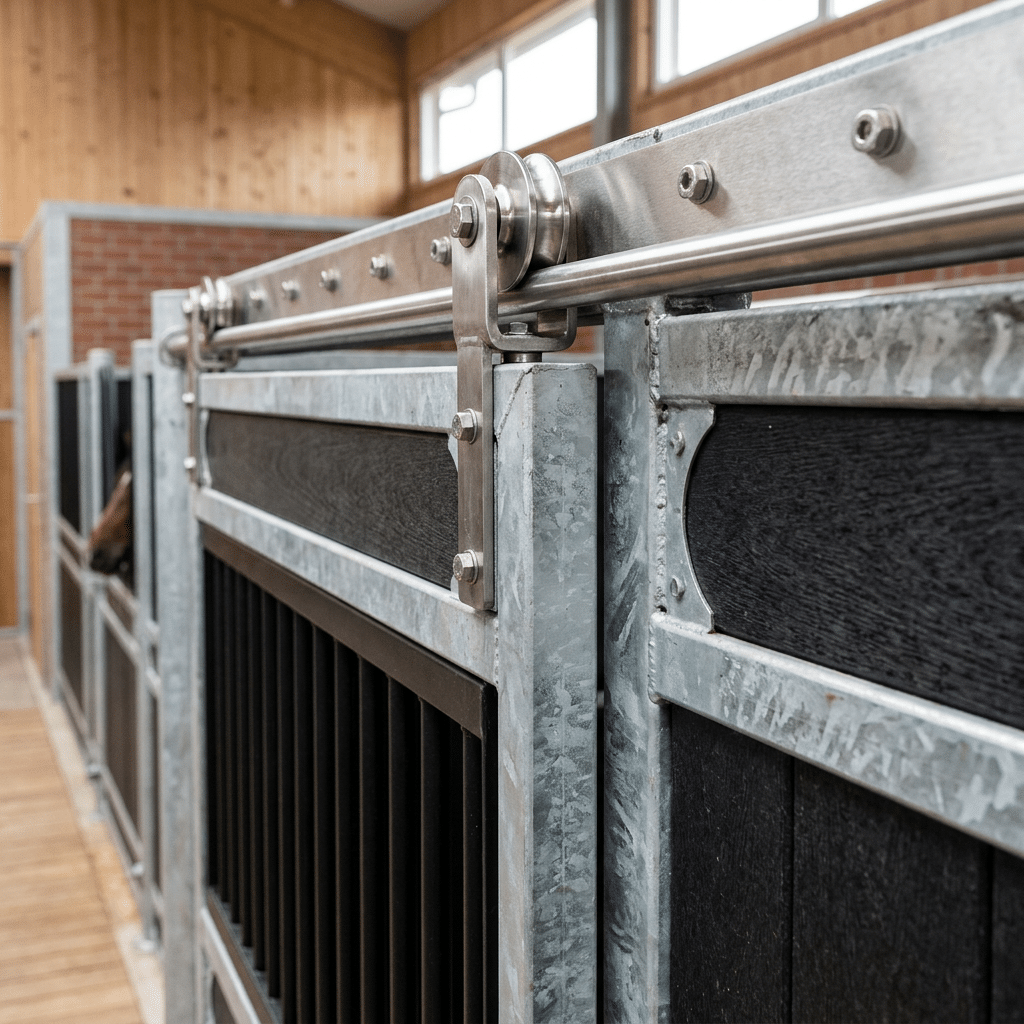
Betrug bei der Bambusdichte ist ein schwerwiegender Fehler bei der Materialbeschaffung, der sich direkt auf die Projektbudgets und die Sicherheit der Tiere auswirkt. Lieferanten ersetzen die strukturellen Füllungen durch billige, laminierte Möbelplatten, was zu katastrophalen Versagen durch Stöße oder Feuchtigkeit führt. Diese falsche Materialauswahl führt zu kostspieligen Ersatzprojekten und gefährdet die Integrität der Anlage.
Diese Analyse liefert den technischen Maßstab für die Auswahl eines geeigneten Materials. Wir wenden den Janka-Härtetest an, bei dem ein Wert von über 3000 lbf erforderlich ist, um zwischen gefälschten Platten und echtem, hochdichtem, stranggewebtem Bambus zu unterscheiden, der für den Einsatz im Reitsport unbedenklich ist.
Der Siegeszug von Bambus in hochwertigen Reitanlagen
Stranggewebter Bambus mit hoher Dichte erfreut sich in Luxus-Verkaufsständen zunehmender Beliebtheit. Seine Janka-Härte, die dreimal so hoch ist wie die von Eiche, sorgt für überragende Haltbarkeit, Feuchtigkeitsbeständigkeit und eine edle Optik.
Der Reiz natürlicher Materialien im modernen Scheunendesign
Anlagenbesitzer tendieren zunehmend zu Materialien, die Funktionalität mit einer bestimmten Optik verbinden. Bambus bietet eine elegante, hochwertige Optik, die zur Ästhetik des luxuriösen Scheunendesigns passt und sich vom rein zweckmäßigen Charakter traditioneller Hölzer oder Kunststoffe abhebt.
Zudem wird damit ein starkes Gefühl von Nachhaltigkeit vermittelt. Im Vergleich zu langsam wachsenden traditionellen Harthölzern gilt Bambus aus verantwortungsvoller Herkunft als umweltbewusstere Wahl, was bei vielen modernen Besitzern von Reitanlagen Anklang findet.
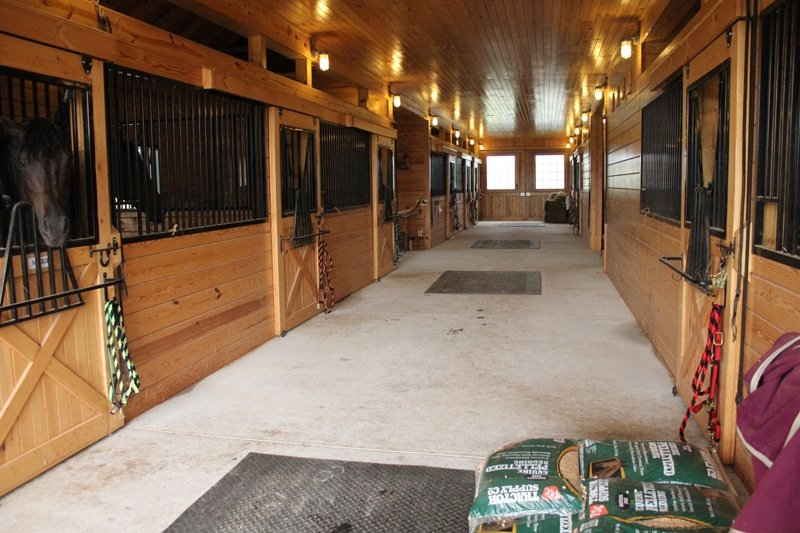
Spezifikation für den Einsatz im Reitsport: hochdichtes, stranggewebtes Bambusgewebe
Nicht jeder Bambus eignet sich für Pferdeställe. Das einzige Material, das die Sicherheits- und Haltbarkeitsstandards erfüllt, ist hochdichter, stranggewebter Bambus. Dabei handelt es sich nicht um dasselbe Produkt, das man als Bodenbelag in Wohnräumen findet. Es ist ein Material in Industriequalität, das speziell für extreme Umgebungsbedingungen entwickelt wurde.
Die entscheidende Kennzahl ist hier der Janka-Härtewert. Echter Bambus in Reitsportqualität weist einen Janka-Härtewert von über 3000 lbf auf und ist damit etwa dreimal so hart wie Eiche. Diese Dichte sorgt für extreme Schlagfestigkeit gegen Tritte. Durch den Herstellungsprozess werden die Fasern zudem so stark verdichtet, dass die Dielen formstabil werden, wodurch Verziehen, Fäulnis und Splitterbildung verhindert werden, wie sie bei Holz in feuchten Stallumgebungen häufig auftreten.
Der Betrug: Laminierte Möbel – Bambus vs. stranggewebt
Der Betrug besteht darin, billiges laminiertes Bambusfurnier so zu verkaufen, als handele es sich um hochdichten, stranggewebten Bambus. Stranggewebter Bambus ist ein festes, extrem dichtes Material, das für Stallungen geeignet ist; laminierter Bambus hingegen nicht.
Viele Käufer machen die Erfahrung, dass sie sich täuschen, wenn sie alle “Bambus”-Produkte als ein und dasselbe Material betrachten. Tatsächlich bezeichnet der Begriff zwei völlig unterschiedliche Produkte mit sehr unterschiedlichen Eigenschaften. Das eine eignet sich für einen Couchtisch im Wohnzimmer, das andere ist so konstruiert, dass es den Belastungen durch ein 1.200-Pfund-schweres Tier standhält. Das eine mit dem anderen zu verwechseln, ist für jede Reitanlage ein kostspieliger Fehler.
| Attribut | Laminierter Bambus (Möbelqualität) | Hochdichtes, stranggewebtes Material (stabile Qualität) |
|---|---|---|
| Bauwesen | Ein dünnes, dekoratives Bambusfurnier, das auf einen Kern aus Sperrholz oder Faserplatte geklebt ist. | Massive Bambusfasern, die zerkleinert und unter extremer Hitze und extremem Druck mit Klebstoff verpresst werden. |
| Härte (Janka) | Gering; hängt vom schwachen Kernmaterial ab, nicht vom Bambusfurnier. | Extrem hoch, Nennwert über 3000 lbf. |
| Dauerhaftigkeit | Anfällig für Delaminierung, Wasserschäden und Bruch durch Stöße. Hält einem Pferdetritt nicht stand. | Beständig gegen Tritte, Feuchtigkeit, Fäulnis und Schimmel. Speziell für Umgebungen mit hoher Beanspruchung entwickelt. |
| Hauptverwendungszweck | Innenmöbel, Dekorplatten. | Auskleidungen für Pferdeställe, strapazierfähige Bodenbeläge und Terrassendielen für den Außenbereich. |
Wie bei der Herstellung zwei verschiedene Materialien entstehen
Laminierter Bambus ist im Grunde genommen eine Verbundplatte. Die Hersteller kleben eine dünne, dekorative Deckschicht aus Bambus auf einen kostengünstigen Träger wie Sperrholz oder Faserplatte. Die strukturelle Festigkeit wird durch den Kern gewährleistet, nicht durch den Bambus selbst. Dieses Verfahren eignet sich zwar für Haushaltsgegenstände mit geringer Beanspruchung, führt jedoch zu einer kritischen Schwachstelle – der Klebeschicht –, die der Feuchtigkeit oder den Belastungen in einer Scheune nicht standhalten kann.
Bei der Herstellung von stranggewebtem Bambus werden zunächst rohe Bambusstängel verwendet. Wir zerkleinern die Stängel zu faserigen Strängen, mischen diese mit einem speziellen Klebstoff und pressen die gesamte Mischung anschließend unter enormer Hitze und hohem Druck zusammen. Dadurch verschmelzen die Stränge zu einer einzigen, monolithischen Platte, die durchgehend dicht ist. Es gibt keinen schwachen Kern und kein Furnier, das sich ablösen könnte. Das Endprodukt ist ein massives, extrem hartes Material – von oben bis unten.
Der DB Stable-Standard: Stranggewebte Füllung mit hoher Dichte
Für alle unsere Einstreuungen in Pferdeställen verwenden wir ausschließlich hochdichten, stranggewebten Bambus. Dies ist keine stilistische Entscheidung, sondern eine technische Anforderung, die der Sicherheit und Langlebigkeit dient. Dieses Material ist die einzige Bambusart, die unseren Leistungsstandards für Reitanlagen entspricht.
Unsere Bambusbretter erreichen einen Janka-Härtewert von über 3000 lbf. Zum Vergleich: Das ist mehr als dreimal so hart wie Eiche, das traditionell in Ställen verwendete Holz. Diese Dichte macht sie äußerst widerstandsfähig gegen Beschädigungen durch Tritte und Nagen. Durch den Pressvorgang werden zudem die natürlichen Zucker entzogen, wodurch ein Material entsteht, das von Natur aus gegen Schimmel, Feuchtigkeit und Fäulnis resistent ist. So wird sichergestellt, dass es sich in der feuchten Stallumgebung weder verzieht noch verrottet.
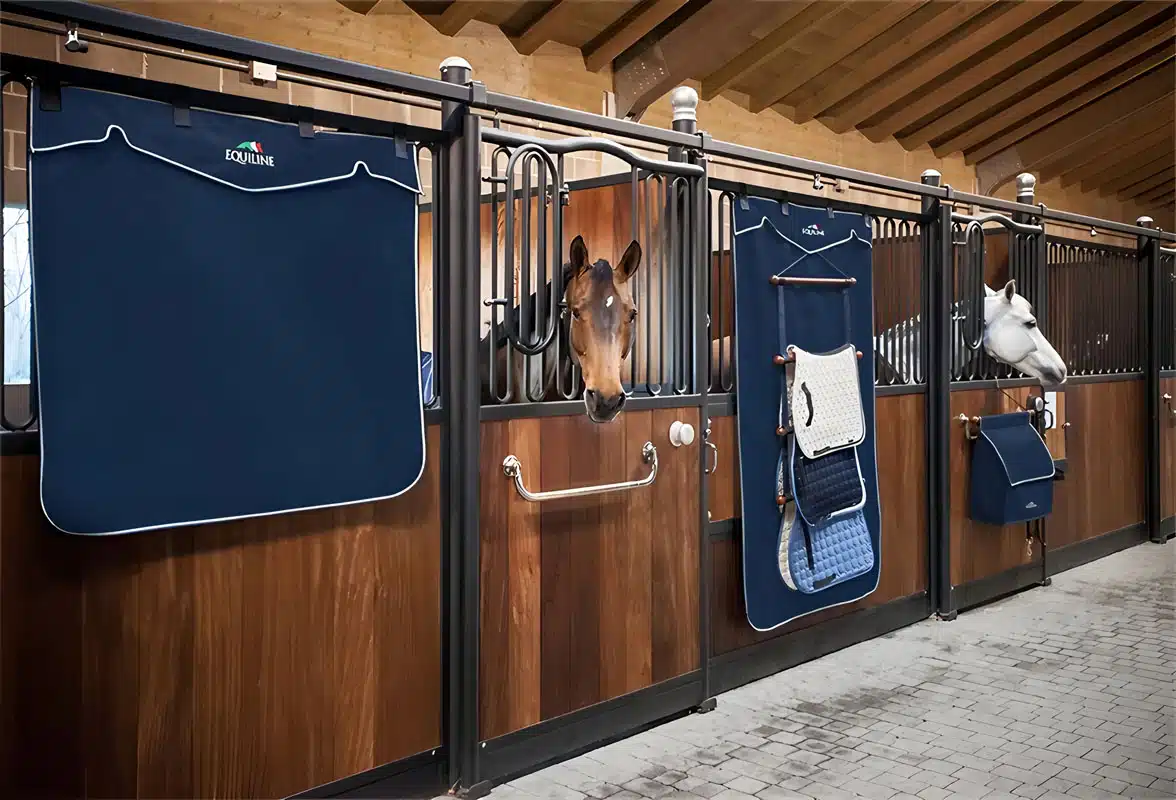
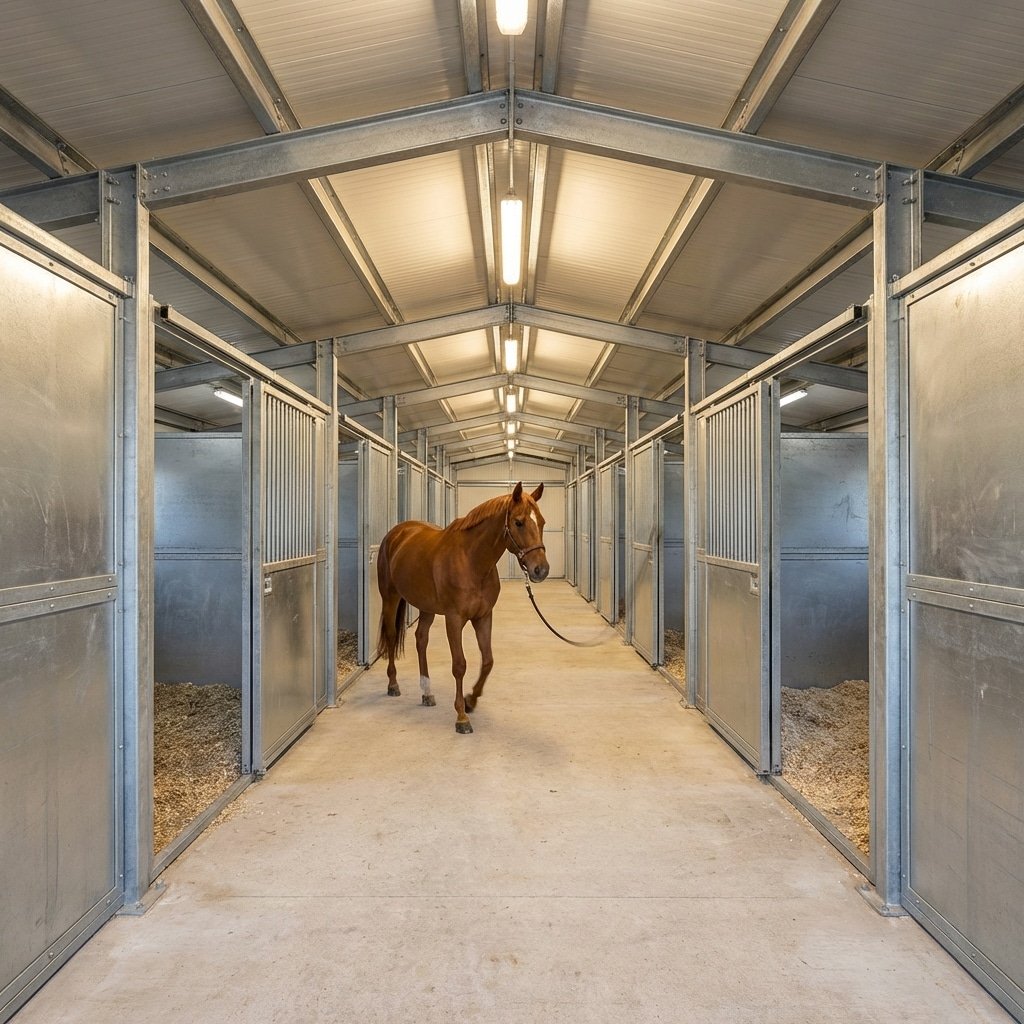
Hochwertige Pferdeställe – auf Langlebigkeit ausgelegt.
Der Janka-Härte-Test: Nachweis der Dichte
Der Janka-Test misst die Kraft, die erforderlich ist, um eine Stahlkugel in ein Material einzudrücken, und liefert so einen eindeutigen Härtewert. DB Stable verwendet stranggewebten Bambus mit einer Härte von über 3000 lbf, wodurch er dreimal härter ist als Eiche.
Wie die Janka-Skala die Materialfestigkeit misst
Der Janka-Test ist eine einfache mechanische Prüfung und keine subjektive Einschätzung. Er quantifiziert die Kraft in Pfund-Kraft (lbf), die erforderlich ist, um eine 11,28 mm große Stahlkugel genau bis zur Hälfte in ein Materialstück zu drücken. Dieser Vorgang liefert einen zuverlässigen, standardisierten Wert, der die tatsächliche Widerstandsfähigkeit eines Materials gegen Eindrücke, Verschleiß und direkte Stöße angibt.
Unser Standard: Bambus mit hoher Dichte von über 3000 lbf
DB Stable verwendet stranggewebten Bambus mit einer Janka-Härte von über 3000 lbf. Zum Vergleich: Herkömmliche Eiche erreicht etwa 1300 lbf. Dieser Wert bestätigt, dass unser Bambus mehr als dreimal so hart ist, wodurch sichergestellt ist, dass er die erforderliche Rohdichte aufweist, um Pferdetritten und der ständigen Abnutzung in einer stark frequentierten Stallumgebung standzuhalten.
Der “Water Sink”-Test: So überprüfen Sie die hohe Dichte
Der Wassertest ist ganz einfach: Bambus mit hoher Dichte nimmt fast kein Wasser auf, was seine Langlebigkeit beweist. Poröser Bambus minderer Qualität saugt Feuchtigkeit schnell auf, was zeigt, dass er anfällig für Fäulnis ist.
Wasseraufnahme als einfacher Dichteindikator
Stellen Sie sich das wie einen Schwamm vor. Poröser Bambus mit geringer Dichte hat eine schwache innere Struktur voller Hohlräume, sodass er Wasser fast augenblicklich aufnimmt. Ein wirklich dichtes Material weist nur sehr wenige dieser inneren Hohlräume auf, wodurch Wasser nur schwer eindringen kann.</
p>
Wenn man beobachtet, wie sich ein Bambusmuster im Wasser verhält, erhält man einen direkten visuellen Eindruck von der Verarbeitungsqualität. Man braucht keine spezielle Laborausrüstung, um eine schlecht gefertigte Platte zu erkennen.

Wie hochdichtes, stranggewebtes Bambusmaterial Feuchtigkeit widersteht
Unser hochdichtes, stranggewebtes Bambusmaterial wurde so entwickelt, dass es nur minimal Wasser aufnimmt. Durch den extremen Druck, der bei der Herstellung ausgeübt wird, werden innere Hohlräume verschlossen, wodurch das Material nahezu undurchlässig für Feuchtigkeit wird. Dabei handelt es sich nicht nur um eine Oberflächenbehandlung, sondern um einen wesentlichen Bestandteil der Struktur der Platte.
In einem feuchten Stall verhindert genau diese natürliche Widerstandsfähigkeit, dass sich Schimmel und Fäulnis festsetzen. Die Dielen behalten ihre strukturelle Integrität und ihre Janka-Härte bei, sodass es nicht zu dem Aufquellen und der Delaminierung kommt, unter denen billigere, porösere Alternativen leiden.
Verhinderung von Delaminierung in feuchten Ställen
Billiger laminierter Bambus quillt in feuchten Scheunen auf und blättert ab, wenn der Klebstoff nachlässt. Hochdichter, stranggewebter Bambus ist eine massive, nicht laminierte Platte, die Feuchtigkeit und Fäulnis standhält, ohne nachzulassen.
Wie Feuchtigkeit zum Versagen von Verbundplatten führt
Scheunen sind raue Umgebungen mit konstant hoher Luftfeuchtigkeit. Wenn man billige, laminierte Platten verwendet, ist ein Versagen vorprogrammiert. Die einzelnen Holz- oder Bambusstreifen nehmen Feuchtigkeit aus der Luft auf, was dazu führt, dass sie
aufquellen. Diese ständige Ausdehnung und Kontraktion belastet die Klebstoffe, die die Schichten zusammenhalten. Minderwertige Klebstoffe versagen schließlich unter der anhaltenden Feuchtigkeit und verlieren ihre Haftkraft. Die Folge ist eine Delaminierung – die Schichten lösen sich voneinander, wodurch die Platte unbrauchbar wird.
Die Haltbarkeit von hochdichtem, stranggewebtem Bambus
Dieses Problem haben wir durch unsere Konstruktion aus unserem System beseitigt. Unsere Füllung besteht aus hochdichtem, stranggewebtem Bambus, bei dem es sich nicht um ein mehrschichtiges Produkt handelt. Es handelt sich um eine massive, monolithische Platte, die durch das Verpressen von Bambussträngen unter extremer Hitze und extremem Druck entsteht. Durch diesen Prozess entsteht ein Material, das von Natur aus schimmel- und verrottungsbeständig ist. Mit einer Janka-Härte von über 3000 lbf ist es dreimal härter als Eiche. Da es keine Schichten gibt, die sich ablösen könnten, behält es selbst unter feuchtesten Bedingungen seine strukturelle Integrität bei.
Häufig gestellte Fragen
Ist Bambus tatsächlich stabil genug für eine Pferdebox?
Ja. Hochdichter, stranggewebter Bambus ist außergewöhnlich robust und weist einen Janka-Härtewert auf, der häufig 3.000 lbf übersteigt. Damit ist er mehr als doppelt so hart wie herkömmliche Eiche und äußerst widerstandsfähig gegen Tritte, Stöße und die allgemeinen Abnutzungserscheinungen in einer Reitsportumgebung.
Wodurch unterscheidet sich stranggewebter Bambus von herkömmlichen Bambusböden?
Herkömmliche Bambusprodukte bestehen oft aus laminierten Streifen. Stranggewebter Bambus ist ein Verbundwerkstoff, bei dessen Herstellung Bambusfasern zerkleinert, mit einem unbedenklichen Klebstoff vermischt und unter extremem Druck verpresst werden. So entsteht eine Platte, die unglaublich dicht (über 1,1 g/cm³), stabil und widerstandsfähig gegen Feuchtigkeitsaufnahme ist.
Verrotten oder verziehen sich Bambusbretter in einer feuchten Scheune?
Nein, hochwertiger, stranggewebter Bambus wird so hergestellt, dass er verrottungsbeständig ist. Bei diesem Verfahren werden natürliche Zucker entfernt, die Schimmel und Pilze begünstigen. Dank seiner hohen Dichte kann kein Wasser in die Platte eindringen, sodass sie auch bei Temperatur- und Feuchtigkeitsschwankungen stabil bleibt.
Wie kann ich sicher sein, dass ich Bambus mit hoher Dichte erhalte und keine billige Imitation?
Ein einfacher Test ist der “Wassertest”: Ein kleines Stück echter Bambus mit hoher Dichte sinkt im Wasser, da seine Dichte größer ist als die von Wasser. Laminierte Produkte minderer Qualität schwimmen wahrscheinlich. Fordern Sie von Ihrem Lieferanten stets die technischen Spezifikationen an, insbesondere die Dichte (g/cm³) und die offiziellen Ergebnisse des Janka-Härte-Tests.
Abschließende Überlegungen
Laminierter Bambus senkt zwar den ursprünglichen Angebotspreis, stellt jedoch für jeden Händler ein enormes Risiko dar. Schon ein einziger Fall von Durchtreten oder Delaminierung untergräbt Ihren Ruf und Ihren Gewinn. Die Verwendung von hochdichtem, stranggewebtem Bambus mit einer Janka-Härte von über 3000 lbf ist der einzige Weg, um dauerhafte Leistung zu gewährleisten.
Verlassen Sie sich nicht auf Vermutungen hinsichtlich der Materialintegrität – überprüfen Sie diese. Fordern Sie ein Muster unseres stranggewebten Bambus an, um den Wasserversinktest selbst durchzuführen. Wenden Sie sich an unsere Ingenieure, um die technischen Datenblätter zu erhalten und OEM-Optionen für Ihre Marke zu besprechen.

 German
  English
  Spanish
  French
  Arabic
0 Kommentare