


Horse riding arena fencing height is one of those decisions that looks cosmetic until the day it isn’t. The boundary of a dressage arena is a visual frame the horse works within; the boundary of a jumping arena is an obstacle a fresh horse can genuinely decide to leave over. Fence a dressage court like a jumper ring and you wall the rider in; fence a jumper ring like a dressage court and you find out mid-round why the difference matters. Height, in short, follows discipline — and it is cheaper to plan than to learn.
This guide sets out the height logic for dressage, jumping and multi-use arenas, with the rail and layout details that make a height decision work in practice. Industry guidance puts most arena fences between 4 and 5 feet (roughly 1.2 to 1.5 meters), and the discipline decides where in that range you land. DB HorseStable supplies galvanized horse fence panels and UV-resistant PVC arena fencing across nine export markets, and the height conversation is where most horse riding arena fencing orders begin.
Key Takeaways
- The standard range is 4–5 feet (about 1.2–1.5m): industry guides put most arena fences in this band, with discipline choosing the exact figure.
- Dressage can run at about 4 feet (1.2m): controlled flatwork needs a visual frame, not a containment wall — though yards with young or fresh horses often step up to 4.5–5 feet.
- Jumping arenas commonly specify 5 feet (about 1.5m): a jumper can treat a lower boundary as clearable, so containment has to be real.
- Multi-use arenas usually land at 5 feet: when lessons, flatwork and jumping share one surface, the taller height is the versatile choice.
- Two or three rails is the norm: rail spacing must keep hooves from slipping through and the bottom rail low enough to discourage ducking under.
- Keep height uniform around the whole perimeter: a fence that reads shorter from a downhill angle invites the exact escape it was built to prevent.
Why Height Follows Discipline
Arena fencing does two jobs at once, and the mix shifts with the discipline. The first job is visual: horses are fenced-in animals that read a boundary and generally respect it, so a consistent, visible line helps the horse understand the working space — especially important in dressage, where the geometry of the work depends on the rider’s awareness of the arena around them. The second job is physical containment: on the day a horse spooks, crowds a corner or gets fresh, the fence is what stands between a bad moment and a loose horse on the road.
Dressage asks the first job to dominate; jumping asks the second to. A horse in collected flatwork is unlikely to attempt a 1.2-meter boundary, while a horse landing off a fence in company, or a young horse in its first season, may test any line it can see over. Industry guidance from fencing specialists such as Derby Fence’s arena fence height guide reflects exactly this split, and the numbers in the sections below follow that guidance.
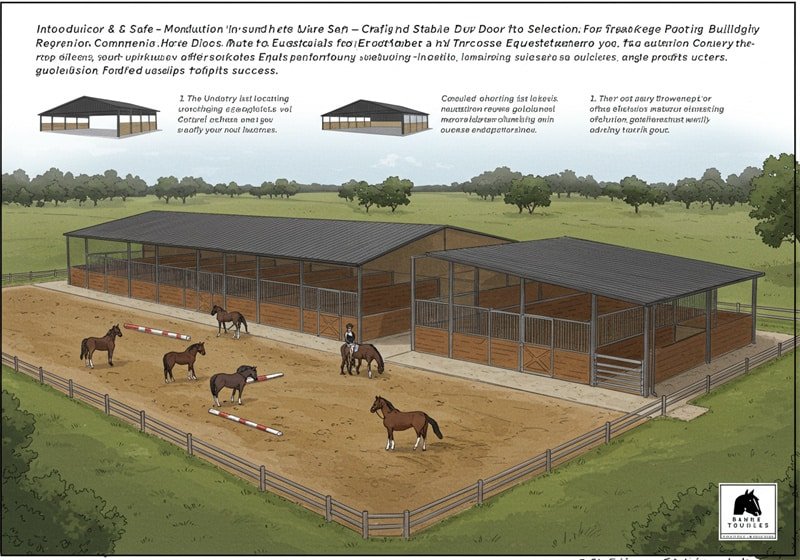
Dressage Arenas: The Visual Frame
The dressage arena is a defined space: the standard competition arena measures 20 by 60 meters, with the small arena at 20 by 40 meters, and letters marking the working points along its length. The fence around a dressage arena serves that geometry — a frame that keeps horse and rider oriented and marks the boundary of the movements. Because flatwork is controlled work, industry guidance finds a 4-foot fence (about 1.2 meters) often sufficient, especially in private facilities with experienced riders.
The caveat is the horse, not the discipline. Facilities schooling young, recently imported or particularly fresh horses commonly step up to the 4.5–5 foot range, trading a little openness for security. That is a training-herd decision: a yard whose population turns over — dealers, breaking yards, competition stables stringing together a season — should buy its fence height for the most difficult horse it will hold this year, not the median one.
Jumping Arenas: Containment That Counts
Jumping changes the math in two ways. A horse that jumps for a living is physically capable of treating a low boundary as another obstacle, and a horse in jumping fitness carries the speed and confidence to commit. Industry guidance therefore commonly recommends a 5-foot fence (about 1.5 meters) for hunter and jumper arenas.
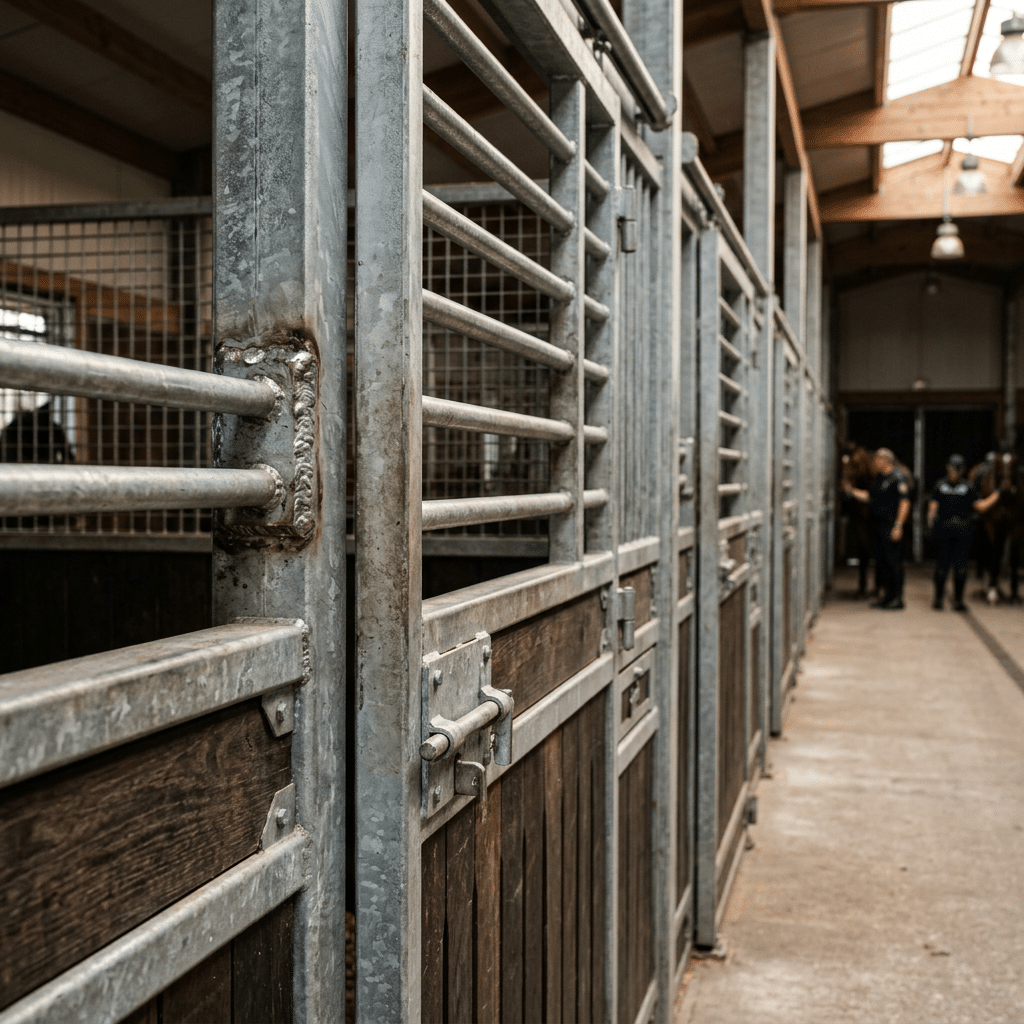
The fence line also interacts with the jumping work itself. Wings and fillers sit inside the arena, so the boundary needs enough standoff that a run-out doesn’t become a collision with the fence — and enough visibility that horse and rider read the arena edge at speed. Galvanized panel fencing suits this duty well: a rigid, uniform line that reads clearly and takes a knock, which matters in a discipline where the boundary’s job is to be the thing that stops being optional.
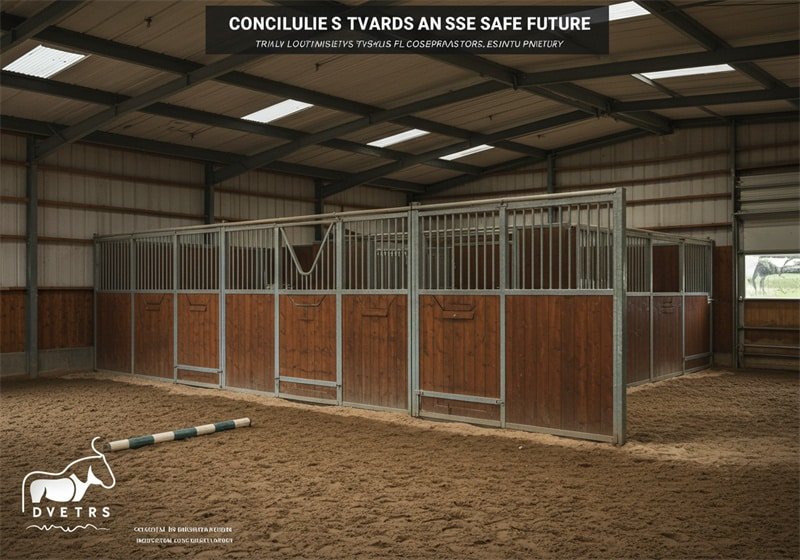
Multi-Use Arenas: The Versatile Height
Most facilities do not have the luxury of one arena per discipline. When lessons, flatwork and occasional jumping share a surface, industry guidance is direct: 5 feet is often the most versatile choice, because it answers the containment question for every activity the arena hosts while still reading as an open working space for flatwork. The compromise costs little — a 1.5-meter rail line is not a wall — and it removes the scenario where a shared arena is safely fenced for exactly the lessons that were scheduled before noon. The same logic covers western and ranch work, where guidance lands in the 4.5–5 foot band: enough containment for speed and sliding stops, with sightlines kept open.
Multi-use planning extends past height into layout: gate placement that serves both the mounting area and the jump store, corners that flow for flatwork, and a boundary that pairs with lunging and round-pen work nearby. Our lunging pens versus round pens guide covers the circular-work side of that arrangement.
Rails, Corners and Layout Details
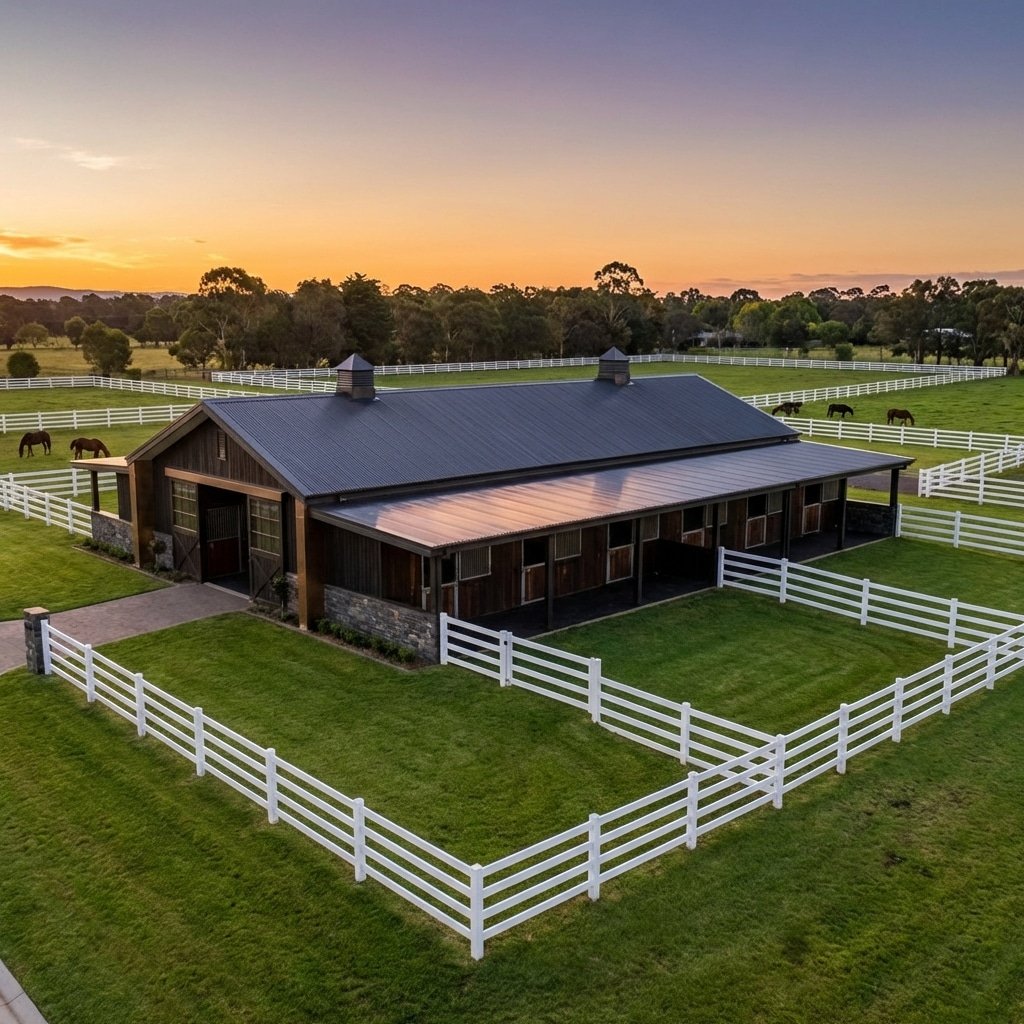
Height is the headline, but three details decide whether it works. Rail count and spacing: most arena fences run two or three rails, and the spacing rules are safety rules — gaps must not admit a hoof, and the bottom rail sits low enough to discourage ducking under while clearing the footing. Uniformity: height should stay consistent around the whole perimeter, and on sloping ground that means grading, because a fence read from a downhill angle appears shorter than it is. And the boundary style itself: open rail fencing is generally preferred over solid walls outdoors, because a solid face blocks sightlines and invites spooking, while rails let horse and rider see the world beyond the arena.
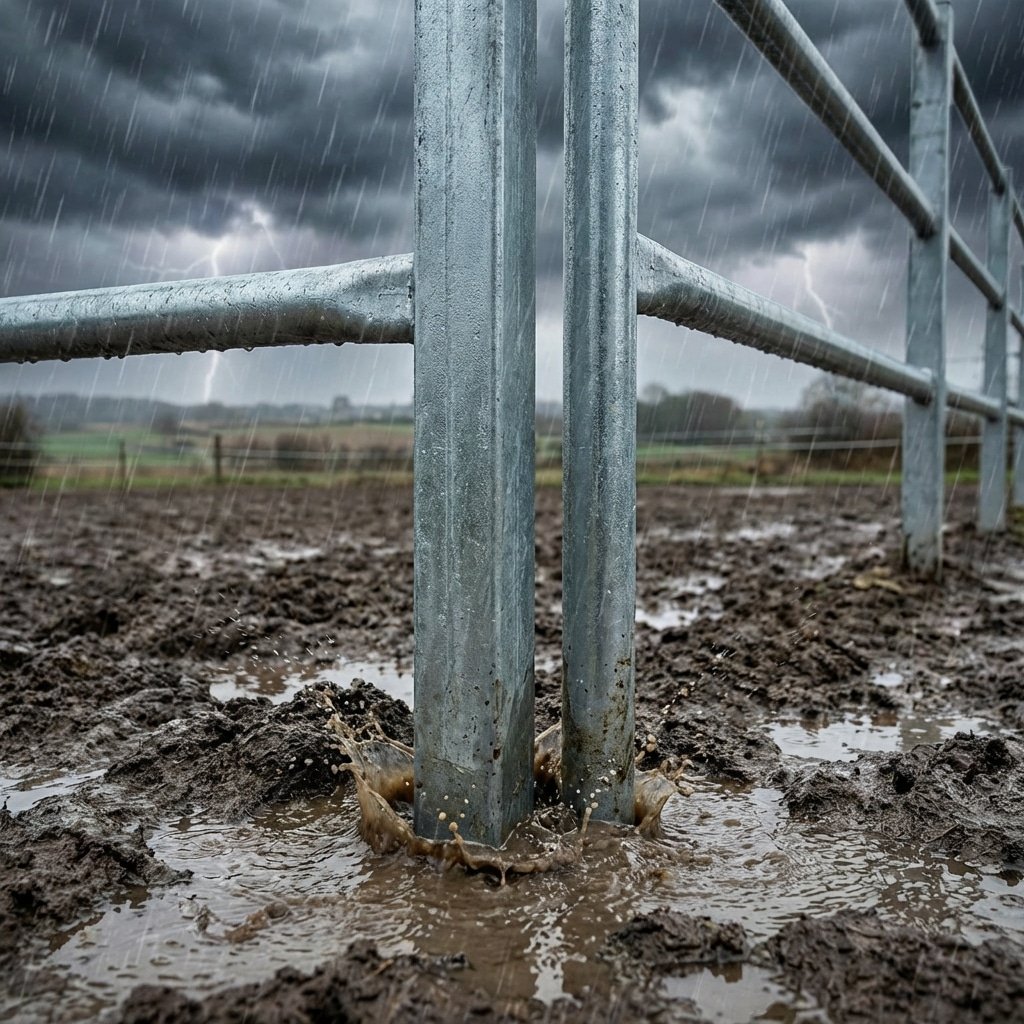
Two product notes for the specification stage. UV-resistant PVC arena fencing suits the visual-frame duty — a three-rail white line that stays white through hot-climate UV exposure, which is why it leads the specification in markets like Australia and Spain. Galvanized steel panels suit impact duty and wind-exposed sites; if your arena fence doubles as a windbreak on an open property, the post and panel engineering in our arena fencing for wind-exposed sites guide is the companion reading to this one.
Häufig gestellte Fragen
What is the standard riding arena fence height?
Most arena fences run 4 to 5 feet (about 1.2 to 1.5 meters). Dressage arenas often work at 4 feet; jumping and multi-use arenas commonly specify 5 feet.
How high should a dressage arena fence be?
About 4 feet (1.2m) is often sufficient for dressage, since flatwork needs a visual frame rather than a containment wall. Yards with young, imported or fresh horses commonly step up to 4.5–5 feet.
Why do jumping arenas need taller fencing?
A jumping horse is physically capable of clearing a low boundary and may treat it as an obstacle. Five feet (about 1.5m) is the common recommendation for hunter and jumper arenas.
How many rails should an arena fence have?
Two or three rails is the norm. Spacing must keep hooves from slipping through, the bottom rail should sit low enough to stop a horse ducking under, and height should stay uniform around the whole perimeter.
Schlussfolgerung
Arena fence height follows discipline: about 4 feet for dressage where the fence is a visual frame, 5 feet for jumping where it is containment, and 5 feet for multi-use arenas that must answer both. Add the rail-spacing safety rules, keep the height uniform on graded ground, and choose the boundary style — open rails over solid walls — that keeps the arena a calm working space.
When you have your height and layout penciled, match it against the product lines: review the arena fencing options from galvanized panels to UV-resistant PVC, and confirm post spacing and gate positions for your discipline before ordering.

 German
  English
  Spanish
  French
  Arabic
0 Kommentare