


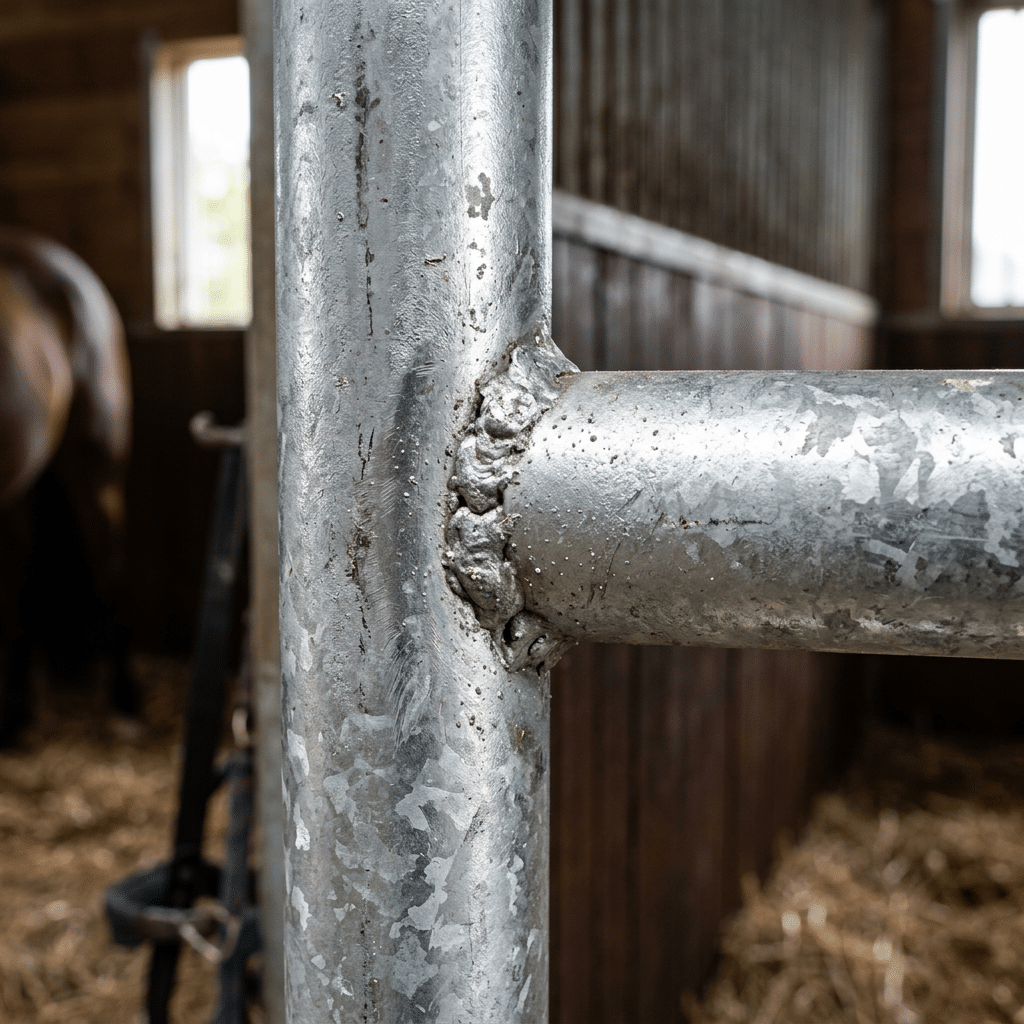
Sourcing from qualified Middle East suppliers is the primary defense against premature structural failure from extreme heat and salinity. Specifying incorrect materials, such as pre-galvanized steel, leads directly to corrosion at weld points, triggering expensive replacement projects and damaging contractor reputations.
This analysis benchmarks manufacturers on non-negotiable desert specifications. We evaluate suppliers based on their adherence to the ISO 1461 ‘Hot-Dip After Fabrication’ standard and their ability to supply materials, like UV-stabilized HDPE, engineered to perform in 50°C environments.
Top List
Schneller Vergleich
| Hersteller | Standort | Kernkraft | Urteil |
|---|---|---|---|
| Soorty | Karachi | Vertically integrated with massive production capacity (144M meters annually) and leadership in sustainable practices. | An industry leader for large-scale, sustainable denim production, supplying major global brands. |
| Artistic Milliners | Karachi | High-capacity production (108M meters fabric, 30M garments) with a strong focus on innovation and design. | A top-tier choice for high-profile fashion clients seeking innovative and design-forward denim manufacturing. |
| Interloop | Faisalabad | Diversified production (denim and hosiery) in a LEED Platinum-certified facility focused on ethical manufacturing. | Excellent for buyers seeking a supplier with proven ethical practices and high-level sustainability credentials. |
| Naveena Denim (NDL) | Karachi | Specializes in innovative, high-quality denim fabrics using advanced techniques and environmental responsibility. | A go-to manufacturer for brands prioritizing premium, innovative denim fabric with a strong eco-friendly focus. |
| US Denim Mills | Lahore | Significant production capacity with a strong reputation for quality and eco-friendly manufacturing processes. | A reliable partner for a diverse range of international brands seeking quality denim from sustainable sources. |
| Crescent Bahuman | Pindi Bhattian | Large-scale, vertically integrated facility providing end-to-end solutions from spinning to finished garments. | Ideal for global retailers needing a comprehensive, one-stop-shop for large-volume denim production. |
Soorty
Soorty is a leading choice for its huge scale and focus on sustainable practices, offering an end-to-end solution for global brands.
Soorty is a vertically integrated denim company based in Pakistan. With an annual production capacity of 144 million meters of fabric, it stands as one of the largest players in the industry. The company has become a key supplier for major global brands by focusing on large-scale, reliable production.
The company’s operations are built around sustainability, emphasizing clean energy and resource conservation. This focus on eco-friendly technology and processes makes it a strong partner for brands that prioritize environmental responsibility. Their integrated model allows them to manage the entire production chain, from fabric to finished garments.
📊 Auf einen Blick:
- 📍 Standort: Karachi, Pakistan
- 🏭 Kernkraft: Denim Fabric, Jeans, Garments
- 🌍 Wichtige Märkte: USA, Europe
Warum wir sie ausgewählt haben:
| ✅ Die Siege | ⚠️ Abwägungen |
|---|---|
|
|
Artistic Milliners
Artistic Milliners stands out for its strong focus on innovation and sustainable design, making it a go-to partner for major fashion brands worldwide.
Based in Karachi, Artistic Milliners is a globally recognized leader in the denim industry. The company is renowned for its commitment to sustainability, advanced design, and serving high-profile fashion clients. Their massive scale is backed by an annual production capacity of over 108 million meters of fabric and 30 million garments.
Their operations are built around cutting-edge technology and creative development, allowing them to produce a wide range of premium denim fabrics and finished garments. This focus on advanced techniques attracts top-tier brands from major fashion capitals. They have the infrastructure to handle large-volume orders for a diverse global clientele.
📊 Auf einen Blick:
- 📍 Standort: Karachi, Pakistan
- 🏭 Kernkraft: Denim Fabric, Garments
- 🌍 Wichtige Märkte: Global, including major fashion capitals
Warum wir sie ausgewählt haben:
| ✅ Die Siege | ⚠️ Abwägungen |
|---|---|
|
|
Interloop
Interloop stands out for its LEED Platinum-certified manufacturing, making it a top choice for brands prioritizing ethical and sustainable production.
Originally known for its hosiery, Interloop has grown into a major denim manufacturer. The company successfully leveraged its expertise to produce both denim fabric and finished garments for a global client base.
Production is centered around its advanced, LEED Platinum-certified facility, which highlights a deep commitment to ethical and sustainable practices. This focus on resource conservation is a core part of their operations for international markets.
📊 Auf einen Blick:
- 📍 Standort: Faisalabad, Pakistan
- 🏭 Kernkraft: Denim Fabric, Jeans, Hosiery
- 🌍 Wichtige Märkte: USA, Europe
Warum wir sie ausgewählt haben:
| ✅ Die Siege | ⚠️ Abwägungen |
|---|---|
|
|
Naveena Denim (NDL)
Naveena Denim stands out for its innovative and high-quality denim fabrics, driven by advanced production techniques and a strong environmental commitment.
Naveena Denim Limited (NDL) is a prominent manufacturer based in Pakistan, widely celebrated for its premium and inventive denim. The company has carved out a strong reputation in the global market by focusing on quality and forward-thinking textile design.
NDL leverages advanced production techniques to create its fabrics. A core part of its operation is a deep commitment to environmental responsibility, making them a go-to partner for brands that prioritize sustainable sourcing.
📊 Auf einen Blick:
- 📍 Standort: Karachi, Pakistan
- 🏭 Kernkraft: Specialized Denim Fabrics
- 🌍 Wichtige Märkte: International
Warum wir sie ausgewählt haben:
| ✅ Die Siege | ⚠️ Abwägungen |
|---|---|
|
|
US Denim Mills
US Denim Mills is a top choice for brands seeking a reliable partner that combines high-quality denim production with a strong focus on sustainability.
US Denim Mills stands as a leading denim producer in Pakistan, recognized for its quality and reliability. The company serves a diverse portfolio of international brands, leveraging its significant production capacity. Their core specialization lies in creating high-grade denim fabric and garments.
The company’s operations are built around a commitment to eco-friendly manufacturing. They employ sustainable processes to minimize environmental impact while delivering consistent products. This focus makes them an ideal partner for brands prioritizing responsible sourcing.
📊 Auf einen Blick:
- 📍 Standort: Lahore, Pakistan
- 🏭 Kernkraft: Denim Fabric, Denim Garments
- 🌍 Wichtige Märkte: Global
Warum wir sie ausgewählt haben:
| ✅ Die Siege | ⚠️ Abwägungen |
|---|---|
|
|
Crescent Bahuman
Crescent Bahuman stands out by offering a fully vertical, end-to-end manufacturing solution, managing everything from spinning to finished garments for major global retailers.
Based in Pindi Bhattian, Pakistan, Crescent Bahuman is a massive, vertically integrated denim facility. The company is known for its large-scale production capabilities and commitment to sustainable initiatives. Their model provides a complete supply chain solution, making them a strategic partner for well-known retailers.
The core of their operation is an end-to-end process that covers every stage of production, from raw cotton to finished jeans. This integrated system allows them to function as a reliable one-stop shop for international brands. Their infrastructure is built to handle high-volume orders efficiently.
📊 Auf einen Blick:
- 📍 Standort: Pindi Bhattian, Pakistan
- 🏭 Kernkraft: Denim Fabric, Finished Jeans
- 🌍 Wichtige Märkte: USA, Europe
Warum wir sie ausgewählt haben:
| ✅ Die Siege | ⚠️ Abwägungen |
|---|---|
|
|
Globally Compliant Stables, Built to Last
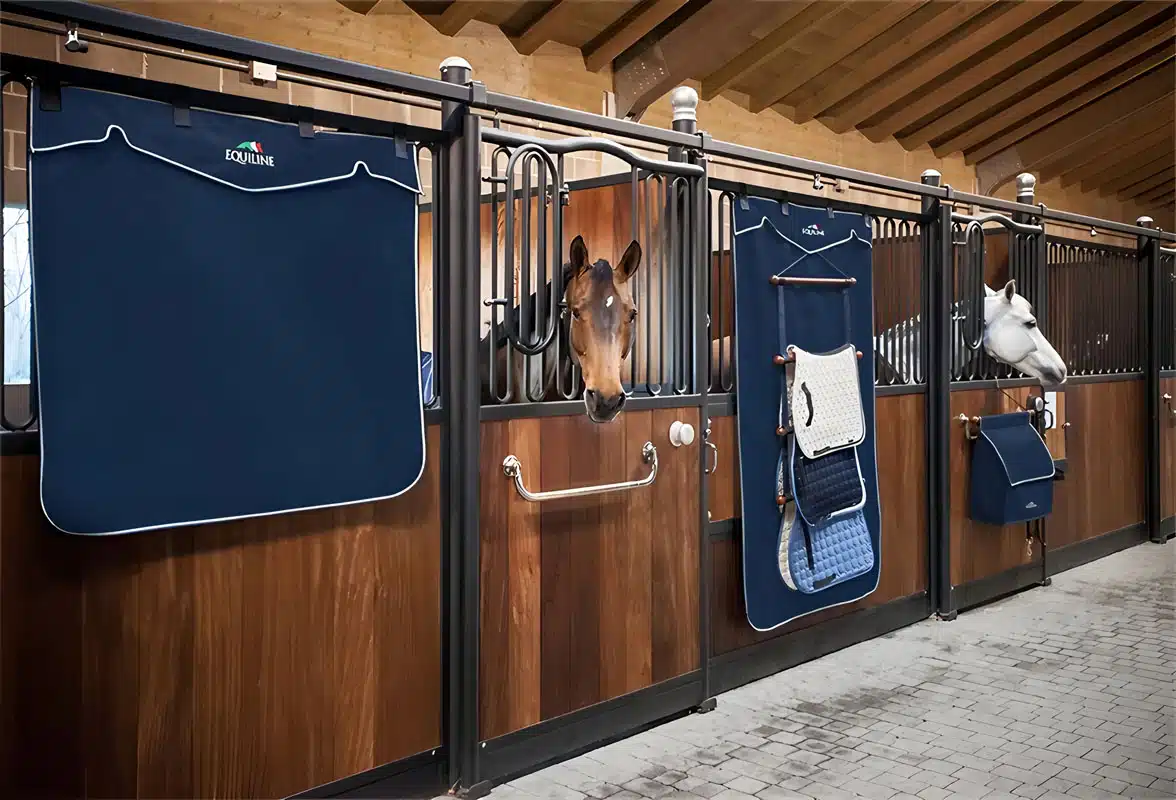
The Desert Challenge: Extreme Heat and High Salinity
We engineer our stable systems to thrive in extreme desert environments by using materials that resist both thermal degradation and high-salinity corrosion. This ensures long-term structural integrity and protects our partners’ investment by minimizing maintenance and replacement costs.
Combating Material Degradation from Extreme Heat
Stable structures in desert climates must endure sustained temperatures that can exceed 50°C. Our designs prioritize materials specifically engineered to resist thermal degradation and prevent structural failure under these harsh conditions.
To counter intense, prolonged sunlight, we use UV-stabilized HDPE infill panels. This material is formulated to prevent warping, cracking, or becoming brittle, which ensures horse safety and delivers a zero-maintenance lifespan for the facility owner.
The structural integrity of the Q235B steel framework remains unaffected by thermal cycling. It handles expansion and contraction without compromising the safety or stability of the stable system, providing reliable performance year after year.
Ensuring Longevity Against High Salinity Corrosion
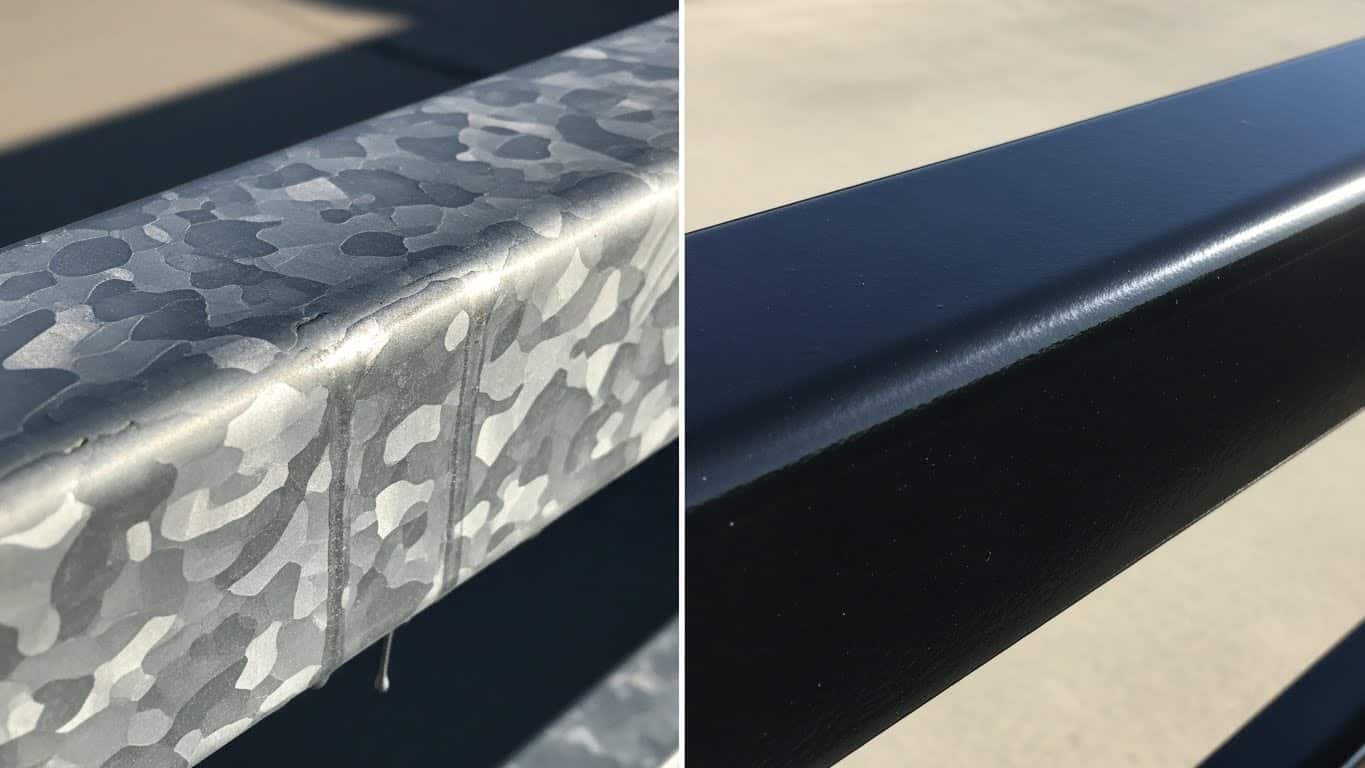
Coastal and desert air carries corrosive salts that aggressively attack unprotected steel. Our core defense is a ‘Hot-Dip After Fabrication’ galvanizing process, where the entire panel is submerged in molten zinc after all welding and fabrication is complete.
This process conforms to BS EN ISO 1461 and creates a thick, metallurgically bonded zinc coating of over 70 microns. It is fundamentally superior to using pre-galvanized tubing where the critical weld points are left exposed to rust.
Our stable systems are validated through the ASTM B117 salt spray test for over 96 hours without showing red rust, confirming their suitability for the most demanding saline environments and protecting your asset’s longevity.
The “Hot Metal” Problem: Why Thick Roofs Matter (0.8mm Colorbond)
In climates with extreme heat, standard
metal roofing (often 0.42mm or 0.48mm thick) fails due to rapid expansion and contraction. This thermal stress damages fasteners and coatings. A thicker 0.8mm base metal thickness (BMT) provides greater thermal mass, slowing temperature changes and improving structural integrity for a longer lifespan.
Thermal Stress and Expansion in Thin Metal Roofing
Standard roofing often uses thinner gauges like 0.42mm or 0.48mm, which struggle in climates with extreme heat. High surface temperatures, which can exceed 70°C in desert regions, cause the metal to expand and contract rapidly. This constant thermal cycling puts immense stress on fasteners, causes micro-fractures in the steel, and leads to premature failure of the protective coating. Over time, this process weakens the entire roof system, compromising its integrity and weather resistance.
The 0.8mm BMT Standard for Structural Integrity
A 0.8mm base metal thickness (BMT) provides greater thermal mass, which slows down the rate of temperature change and reduces stress on the material. This thicker gauge significantly improves wind pressure capacity, a key benefit for buildings in regions prone to sandstorms. Materials like COLORBOND® and ZINCALUME® at a 0.8mm thickness offer a longer lifespan by better resisting physical damage, corrosion from salt spray, and UV degradation.
Infill Battle: Why Bamboo Survives Better Than Plastics in 50°C
In climates reaching 50°C, the physical properties of an infill material determine its lifespan. Our high-density strand woven bamboo maintains its shape due to its incredible density. Standard plastics, including HDPE, naturally expand and contract with heat, which can lead to warping inside the steel frame over time.
The Density Advantage: How Strand Woven Bamboo Resists Warping
Our strand woven bamboo is engineered by compressing natural fibers under extreme pressure. This process creates a dense, heavy plank that is far less susceptible to thermal expansion. With a Janka Hardness rating over 3000 lbf, this material is three times harder than oak and maintains its structural integrity. It resists bending or bowing even in the sustained, high temperatures found in markets like Australia and the Middle East, ensuring a long service life and reducing replacement costs for stable operators.
Thermal Expansion Risks with Standard Plastic Infill
Plastics like HDPE have a higher coefficient of thermal expansion. This means the material physically swells in high heat and shrinks as it cools. In peak desert temperatures, this movement can cause the planks to bow or bulge within the rigid steel frame. While our HDPE infill is UV-stabilized for sun exposure, the constant cycle of intense heat creates physical stress. The dense, natural structure of bamboo inherently overcomes this challenge, making it the superior choice for facilities where thermal stability is a primary concern.
Ventilation: Engineering for the Gulf Climate
Our stable systems are engineered to manage the Gulf’s extreme climate by combining smart design and durable materials. We use an open-grill structure to create natural “stack effect” ventilation, which continuously cycles fresh air. To combat high humidity and salinity, we use steel that is hot-dip galvanized after fabrication to ISO 1461 standards and pair it with no
n-porous HDPE infill that resists moisture and simplifies cleaning.
Promoting Natural Airflow with the Stack Effect
Effective stable design relies on creating a natural convection current, especially in hot climates. Our open grill stable fronts allow hot, stale air generated by the horse to rise and escape through the top. This process, known as **”Stack Effect Ventilation,”** continuously draws cooler, fresher air into the stable from lower levels. This improves respiratory health and animal comfort without the cost or complexity of mechanical systems, providing a reliable, passive cooling solution.

Material Choices for a Corrosive, Dusty Environment
To combat the high humidity and salinity common in coastal Gulf regions, all our steel frames undergo **hot-dip galvanization after fabrication**. This critical step ensures every weld and cut is sealed. The resulting zinc coating averages over 70 microns and conforms to ISO 1461, providing decades of protection against rust and corrosion. This specification protects your investment and reduces claims for your clients.
We specify non-porous, UV-stabilized HDPE for the infill panels. Unlike wood, HDPE does not absorb moisture, warp, or trap the fine dust prevalent in the region. This simplifies cleaning, helps maintain a healthier, low-allergen environment for the horses, and delivers on our promise of a **”Zero Maintenance”** material solution.
Abschließende Überlegungen
While pre-galvanized stables offer a lower upfront price, they leave critical welds exposed to rust in saline environments. Our ‘Hot-Dip After Fabrication’ process to ISO 1461 is the only way to prevent corrosion claims and protect your reputation in the Gulf market. This engineering standard is non-negotiable for long-term asset protection.
The specifications prove the design, but the physical product confirms it. We recommend a trial order to validate our material quality and precision fitment for your projects. Contact our team to get a detailed quote and discuss the logistics for your first container.
Häufig gestellte Fragen
What are the best stables for hot desert climates?
For desert climates, we engineer our stable systems with a dual-protection approach. The steel frame is hot-dip galvanized after all welding is complete, conforming to ISO 1461 standards. This process provides a thick zinc coating that offers maximum defense against the humidity and high salinity common in coastal desert regions. We pair this frame with our UV-stabilized HDPE infill, which is specifically designed to resist degradation and warping from intense, prolonged sun exposure.
Does your HDPE infill warp in extreme heat?
No, it is engineered to resist warping. Our high-density polyethylene (HDPE) planks include high-grade UV stabilizers, a requirement for demanding markets like Australia and the Middle East. The 28mm-32mm thick boards maintain their structural integrity and color in high temperatures, providing a true zero-maintenance solution that will not warp, crack, or become brittle under the desert sun.
How do your stables help cool a barn in climates like Dubai?
Our stable designs contribute significantly to passive cooling. The fronts feature an open-grill top section, which is critical for encouraging natural airflow. This design creates a “stack effect,” allowing hot air generated by the horses to rise and escape the stall efficiently. While this is part of a larger facility strategy that includes high, reflective roofing and mechanical fans, our stall design provides the foundational ventilation needed to reduce heat load on the animals.
Are you one of the top stable builders in the UAE?
We operate as a global B2B OEM/ODM manufacturer, so we are the source factory behind the builders. We partner with and supply our engineered stable systems to the top equestrian project contractors and distributors in the UAE. Our role is to provide the high-performance, precision-manufactured components, while our local partners manage the on-site construction and project delivery, ensuring everything meets regional codes and client specifications.
What is the best roof material for a horse barn in hot weather?
A light-colored, reflective roofing material is essential for reducing heat in hot climates. Insulated metal sandwich panels or steel roofing with a high solar-reflectance finish are excellent choices. These materials work by reflecting a significant amount of solar radiation away from the building, which directly lowers the internal barn temperature and reduces the heat stress on the horses inside.

 German
  English
  Spanish
  French
  Arabic
0 Kommentare