Choosing the right truck for your stable delivery involves a key trade-off: the full weather protection of an enclosed dry van versus the unloading flexibility of an open flatbed. One keeps your materials perfectly dry, but the other lets you unload with a forklift...
Ordering horse stalls from one supplier is straightforward, but adding fencing or flooring from another factory complicates the shipping process. You can end up managing multiple less-than-container loads (LCL), each with its own costs, paperwork, and timeline. This...
Generic layout templates often ignore local climate variables, leading to rapid material degradation and inefficient workflows. Properly engineered customization reduces daily labor requirements by 30-50% while preventing rust through climate-specific material...
Eine Diskrepanz zwischen dem baulichen Fortschritt und der Finanzberichterstattung führt häufig dazu, dass stabile Bauprojekte aus der Bahn geraten. Nach dem Standard ASC 606 basiert die Umsatzrealisierung auf dem „Cost-to-Cost“-Ansatz, was bedeutet, dass Lieferverzögerungen von 4 bis 6 Wochen nicht nur den Zeitplan beeinträchtigen – sie...
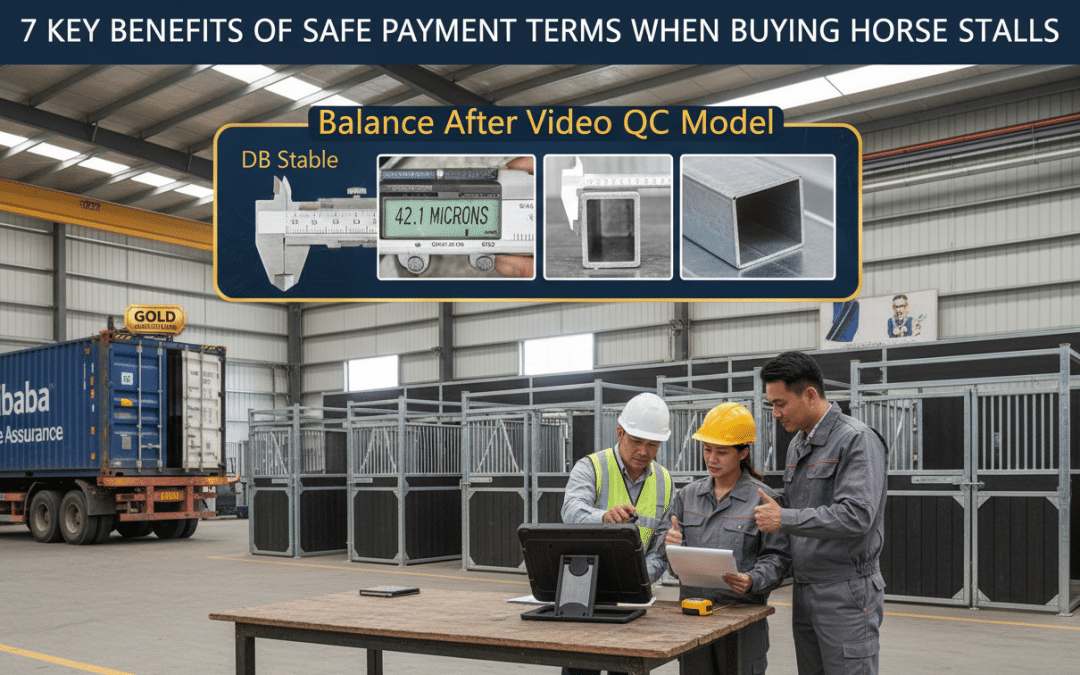
Custom manufacturing carries unique financial risks, as bespoke stable configurations possess zero resale value if orders are abandoned. Factories require upfront deposits to lock in volatile commodity prices, specifically for premium materials like 42-micron hot-dip...
Calculating total landed cost requires looking beyond the base FOB price. Direct imports can reduce project expenses by 45% compared to turnkey local builds, but overlooking mandatory surcharges like the Merchandise Processing Fee creates significant budget variances....





 German
  English
  Spanish
  French
  Arabic