


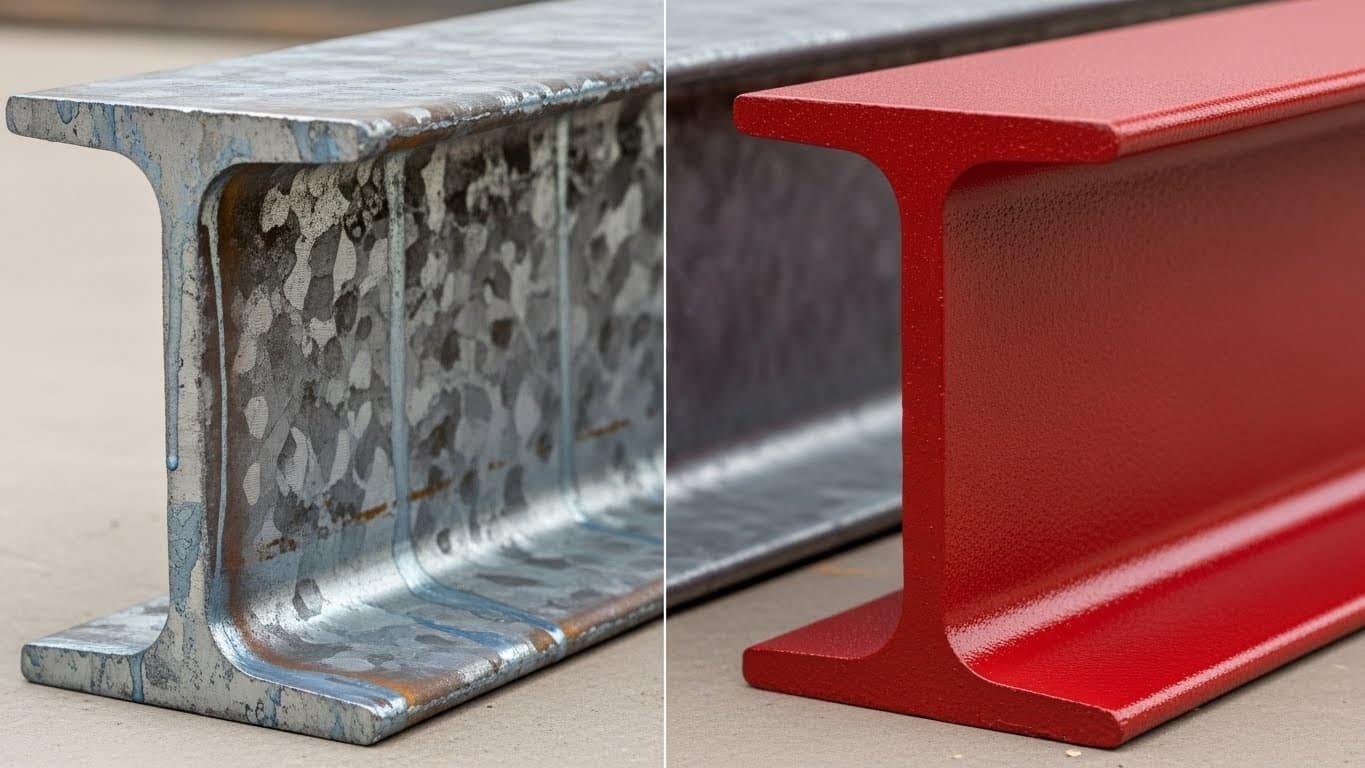
Die Entscheidung zwischen feuerverzinktem und vorverzinktem Stahl ist der erste Punkt, den Käufer klären sollten, bevor sie einen Lieferanten, ein Budget oder einen Produktionstermin genehmigen. Die Wahl zwischen vorverzinktem und feuerverzinktem Stahl für Zaunelemente für Pferde Das ist kein unbedeutendes Detail in der Spezifikation. Es entscheidet darüber, ob Ihr Paddock zwanzig Jahre lang stabil bleibt oder schon vor dem dritten Winter an den Schweißnähten zu rosten beginnt. Für Käufer, die große Reitplätze in Küstenregionen oder Gebieten mit hohen Niederschlagsmengen betreiben, macht sich dieser Unterschied in konkreten Ersatzkosten und Arbeitsstunden bemerkbar.
Vorverzinkter Stahl gelangt mit einer dünnen Zinkschicht – etwa 60 Gramm pro Quadratmeter – in die Fertigungshalle. Diese Beschichtung ist bei flachen Blechen wirksam, doch sobald das Paneel geschweißt wird, verdampft die Hitze das Zink im Bereich der Schweißnaht. Der freiliegende Stahl wird dann zum Ausgangspunkt für Spaltkorrosion. Bei der Feuerverzinkung wird der Prozess umgekehrt: Die gesamte geschweißte Konstruktion wird anschließend in ein Bad aus geschmolzenem Zink getaucht, wodurch sich etwa 275 g/m² Zink ablagern und jeder Schnitt, jede Ecke und jede Schweißnaht durch eine metallurgische Verbindung versiegelt wird. Das praktische Ergebnis? Vorverzinkte Paneele versagen in feuchten Klimazonen oft bereits nach 3 bis 5 Jahren, während feuerverzinkte Konstruktionen bei minimalem Wartungsaufwand regelmäßig zwei Jahrzehnte oder länger halten. Genau diesen Unterschied beleuchtet dieser Artikel – mit Beschichtungsstärken, Korrosionsmechanismen und der Kostenrechnung, die beim Großeinkauf eine Rolle spielt.
Die Lüge vom vorverzinkten Stahl: Warum er so schnell rostet
Vorverzinkte Zäune rosten von den Schweißnähten aus nach innen, nicht von den Zaunelementen.
Vorverzinkter Stahl entsteht aus Blech, das vor dem Schneiden und Schweißen durch ein Zinkbad geführt wird. Dadurch erhält man eine Zinkbeschichtung von etwa 60 g/m² – etwa ein Viertel des in der Norm ISO 1461 festgelegten Mindestwerts für die Feuerverzinkung. Das Problem liegt im Schweißvorgang. Der Lichtbogen erreicht 1.500 °C, wodurch das Zink an jeder Verbindungsstelle verdampft. So entsteht genau an den Stellen, an denen die Bleche aneinanderstoßen und sich Feuchtigkeit ansammelt, blanker Stahl.
- Spaltkorrosion: Regenwasser dringt in die Mikrorisse an den Schweißnähten ein, an denen das Zink abgetragen ist. Die eingeschlossene Feuchtigkeit bildet eine sauerstoffarme Zelle, die den Stahl von innen heraus zerfrisst. In feuchten Klimazonen tritt innerhalb von 12 bis 18 Monaten sichtbarer Rost auf, und die Tragfähigkeit der Konstruktion geht verloren, lange bevor auf den Oberflächen der Paneele orangefarbene Flecken sichtbar werden.
- Strukturelle Schwäche: An stark frequentierten Paddocktoren und Auslaufpaneelen werden diese verrosteten Schweißnähte zur Schwachstelle. Ein 500 kg schweres Pferd, das sich gegen einen Pfosten mit einer korrodierten Schweißnaht lehnt, kann die Verbindung zerreißen. Vorverzinkte Paneele müssen in der Regel alle 3 bis 5 Jahre ausgetauscht werden, da Küstenregionen oder Regionen mit hohen Niederschlagsmengen — nicht aufgrund von Plattenverrottung, sondern aufgrund eines Schweißnahtbruchs.

Feuerverzinkung: Der Industriestandard
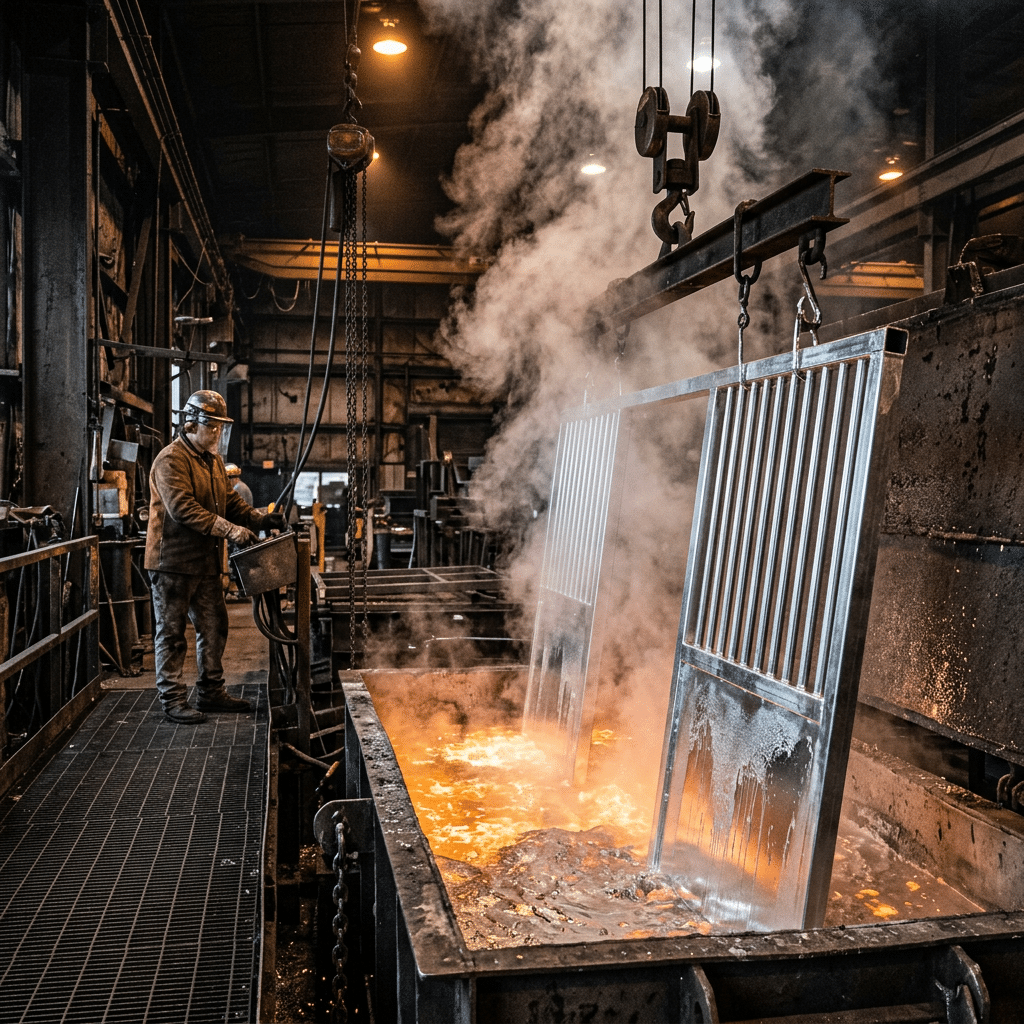
Durch das Eintauchen nach dem Schweißen werden alle Schweißnähte, Schnittkanten und das Rohrinnere vollständig versiegelt.
Beim Feuerverzinken wird die gefertigte Stahlkonstruktion – nachdem alle Schweiß- und Schneidarbeiten abgeschlossen sind – in ein Bad aus geschmolzenem Zink mit einer Temperatur von etwa 450 °C getaucht. Dadurch wird eine Diffusionsreaktion ausgelöst, bei der sich Zink an die Stahloberfläche bindet und eine Reihe von intermetallischen Schichten bildet, die metallurgisch mit dem Grundmetall verschmolzen sind. Das Ergebnis ist nicht nur eine bloße Beschichtung, sondern eine legierte Schutzschicht.
- Gamma-Schicht: Die innerste Schicht, bestehend aus 75%-Zink und 25%-Eisen, bildet die härteste und verschleißfesteste Barriere direkt am Stahl.
- Sigma-Ebene: Eine dünne, spröde Übergangsschicht mit der Zusammensetzung FeZn₇, die die innere Gamma- und die äußere Delta-Zone miteinander verbindet.
- Zeta-Schicht: Eine grobe, säulenförmige Schicht aus FeZn13, die den größten Teil der Beschichtungsdicke ausmacht und eine hervorragende Schlagfestigkeit gewährleistet.
- Delta-Schicht: Die äußerste Schicht aus reinem Zink, die als Opferanode dient; sie korrodiert vorrangig, um den darunterliegenden Stahl zu schützen.
Da die Badlösung in jeden Spalt eindringt, umhüllt die Feuerverzinkung Schweißnähte, Schnittkanten und die Innenflächen von Hohlrohren vollständig – genau an den Stellen, an denen vorverzinkte Bleche versagen. In vorverzinkte Zäune, Bei der Fertigung verbrennt das Zink an den Schweißnähten, sodass blanker Stahl zurückbleibt, der durch Spaltkorrosion von innen heraus rostet. Bei der Feuerverzinkung gibt es kein ungeschütztes Metall, das freigelegt werden könnte.
Die Norm ISO 1461 legt für typischen Baustahl eine Mindestmasse der verzinkten Beschichtung von 275 g/m² fest – dies entspricht einer durchschnittlichen Dicke von etwa 85 μm auf beiden Oberflächen eines 6-mm-Profils. Diese Norm gilt als Maßstab für die Haltbarkeit in feuchten Umgebungen und Küstengebieten. Vorgalvanisiertes Blech weist dagegen typischerweise nur 60 g/m² auf – eine Beschichtung, die so dünn ist, dass sie an Schweißstellen keinen Schutz bietet und in Weideflächen mit hoher Luftfeuchtigkeit bereits nach weniger als 5 Jahren versagt. Die 20-jährige Lebensdauer der Feuerverzinkung ist keine bloße Behauptung – sie ist eine direkte Folge der metallurgischen Bindung und des durch internationale Spezifikationen vorgeschriebenen Beschichtungsgewichts.
Klimaspezifische Haltbarkeit: Küstengebiete vs. Binnenland
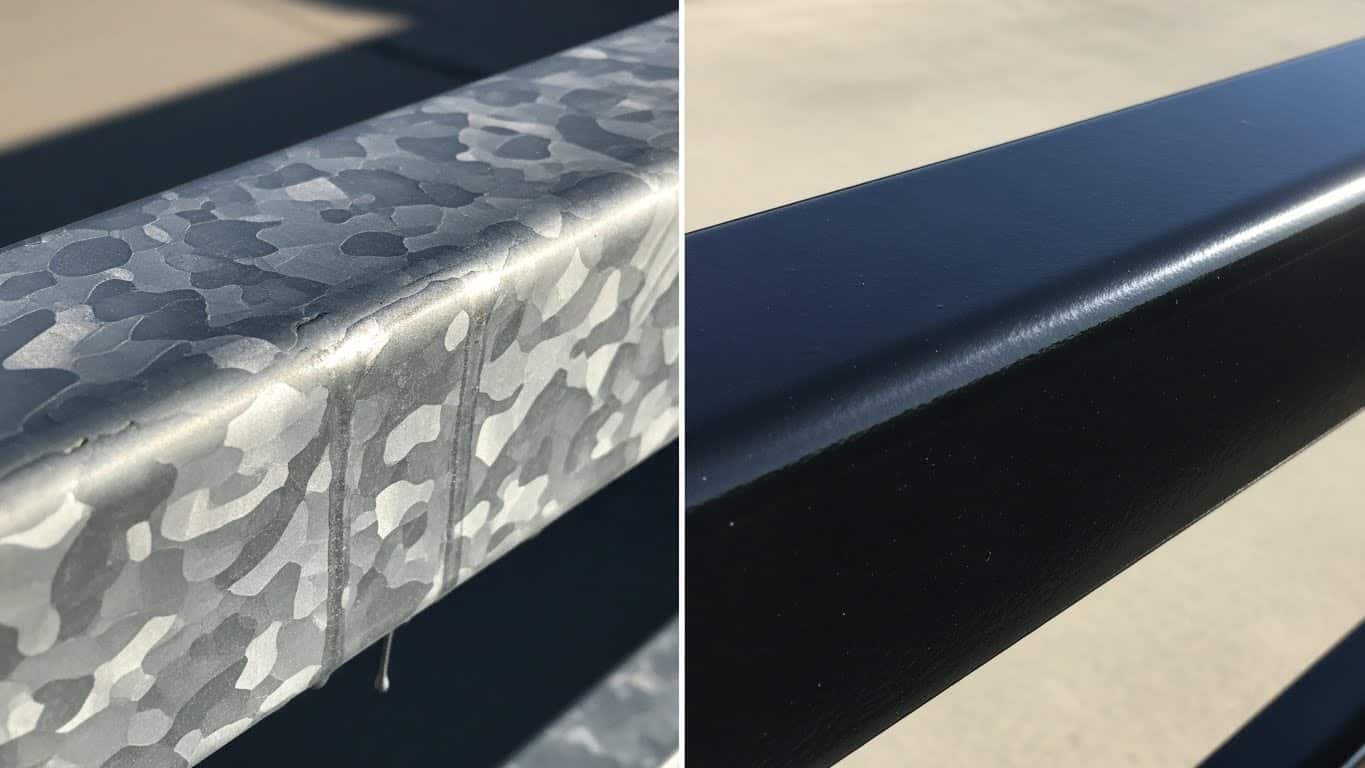
In Küstenklimata versagt Zink mit einer Dicke von 60 g/m² bereits nach weniger als 5 Jahren.
Vorverzinkte Paneele in feuchten Winterklimazonen wie Großbritannien, Neuseeland, oder Polen versagen von innen heraus. Die dünne Beschichtung mit 60 g/m² brennt bei jeder Schweißnaht während der Fertigung ab. Regenwasser dringt in diese unbeschichteten Nähte ein und führt zu Spaltkorrosion, die den Stahl vollständig durchfrisst. Was im zweiten Jahr wie Oberflächenrost aussieht, ist im vierten Jahr bereits ein struktureller Verfall.
Salzluft verändert die Rechnung völlig. Entlang der australischen Küste oder an den Golf- und Atlantikküsten der USA beschleunigen Chloridionen die Korrosionsrate im Vergleich zur Luftfeuchtigkeit im Landesinneren um das 5- bis 10-Fache. Eine Beschichtung von 60 g/m², die im Landesinneren möglicherweise 8 Jahre hält, kann am Strand bereits nach 3 Jahren durchlöchert sein. Die Feuerverzinkung nach ISO 1461 sorgt für eine 275 g/m² dicke Zinkschicht, die jede Schweißnaht und jede Schnittkante durch eine metallurgische Verbindung versiegelt – die einzige Beschichtung, die dauerhaftem Salznebel standhält.
- 60 g/m² vorverzinkt (für feuchtes Binnenklima): 8–12 Jahre, bevor Rost an der Schweißnaht die Integrität des Karosserieteils beeinträchtigt.
- 60 g/m², vorverzinkt (Küstenluft mit Salzgehalt): 3–5 Jahre bis zum Versagen der Konstruktion. Ein Austausch ist zweimal pro Jahrzehnt erforderlich.
- 275 g/m² feuerverzinkt (für jedes Klima): Seit über 20 Jahren bewährt. Keine Korrosion an den Schweißnähten. Kein Abblättern der Beschichtung. Besteht die Biege- und Haftfestigkeitsprüfungen gemäß ISO 1461.
| Attribut | vorverzinkt | Feuerverzinkt | Leistung an der Küste | Inland-Leistung |
|---|---|---|---|---|
| Zinkbeschichtungsgewicht | ~60 g/m² | ~275 g/m² | Rostschäden in 3–5 Jahren | Rostschäden in 5–8 Jahren |
| Schutz der Schweißzone | Zinkabbrand; freiliegender Stahl | Vollständige metallurgische Verbindung nach dem Schweißen | Spaltkorrosion innerhalb weniger Monate | Lokalisierte Rostbildung an Schweißnähten |
| Salzsprühbeständigkeit | Mangelhaft; Beschichtung zu dünn | Ausgezeichnet; ISO 1461 konform | Weißrost im ersten Jahr; Rotrost im dritten Jahr | Seit über 15 Jahren keine nennenswerte Korrosion |
| Erwartete Lebensdauer (max.) | ~8 Jahre | 20+ Jahre | 3–5 Jahre | 8–12 Jahre |
| Primäre Ausfallart | Abschmelzen der Schweißnaht → Spaltkorrosion | Gleichmäßige Oberflächenverwitterung (nicht strukturell) | Schnelle strukturelle Schwächung | Langsamer ästhetischer Verfall |
Schlussfolgerung
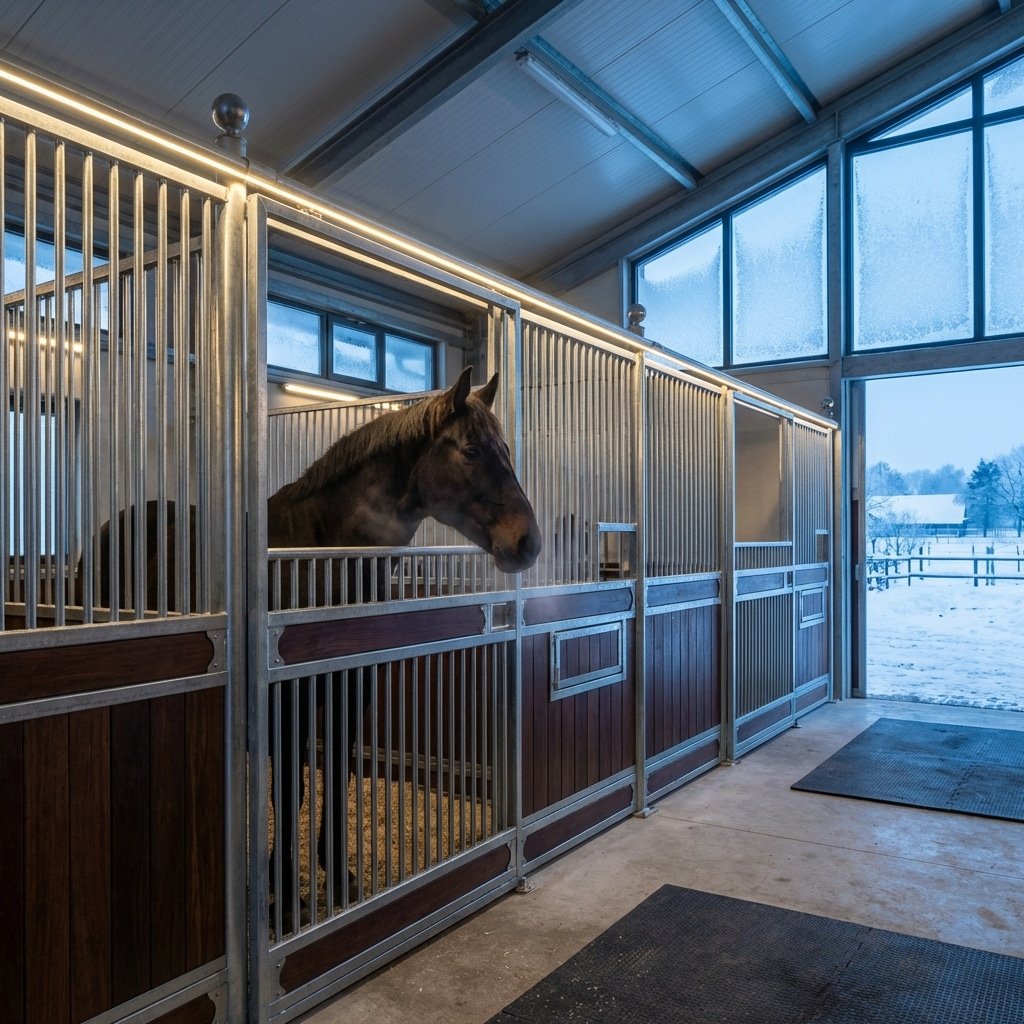
Der Unterschied im Zinkauftragsgewicht – 275 g/m² gegenüber 60 g/m² – entscheidet darüber, ob Ihre Zaunelemente 20 Jahre halten oder bereits nach drei Jahren ausgetauscht werden müssen. Vorverzinkte Paneele An den Schweißnähten treten Mängel auf, da sich dort das Zink ablöst und Feuchtigkeit eindringen kann. Durch die Feuerverzinkung werden diese Verbindungsstellen vollständig versiegelt, wodurch die schwächste Stelle der gesamten Konstruktion beseitigt wird.
Bei einer großen Koppel oder Reitbahn in einem feuchten Klima oder in Küstennähe ist die Entscheidung einfach: Überprüfen Sie die ISO 1461 Achten Sie auf die Zertifizierung im Datenblatt des jeweiligen Lieferanten und fordern Sie Prüfberichte zur Zinkbeschichtung an, bevor Sie sich festlegen. Sehen Sie sich den aktuellen Katalog an, um feuerverzinkte und vorverzinkte Varianten direkt miteinander zu vergleichen, oder fordern Sie ein Schweißprobenstück an, um die Beschichtungsqualität selbst zu überprüfen.
Häufig gestellte Fragen
Worauf sollten Käufer achten, wenn sie zwischen feuerverzinkten und vorverzinkten Produkten wählen?
Achten Sie auf eine nach dem Schweißen durchgeführte Feuerverzinkung mit Zertifizierung nach ISO 1461 – vorverzinkte Platten rosten an den Schweißnähten innerhalb von 3–5 Jahren. In Küstenregionen oder feuchten Klimazonen versagen vorverzinkte Platten sogar noch schneller. Verlangen Sie stets Prüfberichte zur Schichtdicke.
Wie lassen sich Werkszertifikate für feuerverzinkte und vorverzinkte Produkte überprüfen?
Überprüfen Sie die Zertifizierung nach ISO 1461 für die Feuerverzinkung; Lieferanten von vorverzinkten Produkten bieten selten Garantien für die Schweißnahtabdeckung an. Fordern Sie Beschichtungsdickenberichte von unabhängigen Stellen an, um die Einhaltung des Standards von 275 g/m² zu bestätigen. Bestehen Sie in Ihrem Vertrag auf der Einhaltung der Norm ISO 1461.
Wie lauten die üblichen Mindestbestellmengen für Großhandelsaufträge?
Die Mindestbestellmenge für den Großhandel beginnt bei 50 Zaunelementen oder 10 Ställen, wobei gestaffelte Rabatte von 5% bis 15% gewährt werden. Für kleinere Testmengen erkundigen Sie sich bitte bei den regionalen Niederlassungen in Sydney oder Warschau nach der Verfügbarkeit. Bestätigen Sie die Mindestbestellmenge, nachdem Sie die Abmessungen der Zaunelemente festgelegt haben.
Wie wickelt man den internationalen Versand und die Zollabfertigung ab?
Arbeiten Sie mit dem Logistikteam des Werks zusammen; dieses kümmert sich um den Versand und stellt die für den Zoll erforderlichen Dokumente bereit. Nutzen Sie die regionalen Umschlagplätze in Sydney oder Warschau, um eine schnellere Lieferzeit von 1–2 Wochen zu erzielen. Fordern Sie eine Proforma-Rechnung mit HS-Codes für den Zoll an.
Welche Qualitätsprüfungsstandards gelten vor dem Versand?
Die Prüfung umfasst die Beschichtungsdicke gemäß ISO 1461, die Schweißnahtabdeckung sowie die Maßgenauigkeit gemäß Ihrer Bestellung. Vor dem Versand kann eine Prüfung durch eine unabhängige Stelle veranlasst werden. Bestehen Sie auf einem Prüfbericht vor dem Versand.

 German
  English
  Spanish
  French
  Arabic
0 Kommentare