
A horse barn insurance survey is not a fire inspection. Nobody is grading how tidy your aisles are. The surveyor is buying three pictures for an underwriter: what the building is made of, how fire or theft would move through it, and what putting it back would cost. Everything else on the visit is decoration.
What is on paper about an imported barn is thinner than owners assume. Stabling ships with bamboo, HDPE or pine liners in adjustable sizes, hot-dip galvanized steel carries a stated 20-year rust-resistance figure, UV-resistant PVC is stated at 15 years, and the design briefs reference BHS, ASPCA and EU Directive 98/58/EC — with no certificate numbers published. Absent: a fire-resistance rating, a coating thickness, a price. The survey is where that gap gets charged to you.
Key Takeaways
- The visit prices three things: construction description, hazard exposure, reinstatement cost. Organize evidence around those, not around cleanliness.
- Provability beats condition. A surveyor credits only what they can see or what you hand them; a spotless barn with no records reads as an unverifiable risk.
- Value drift is a recurring finding. Owners insure the building as bought, then add stall fronts, mats and fence lines without touching the schedule.
- Ask what the schedule names — your building, or a generic class of agricultural buildings. That decides which arguments are open to you.
- Photograph the concealed parts once, before linings and doors cover the frame. Reopening a finished barn costs more than the survey.
- Sort every finding three ways: a physical fix, a paperwork fix, or a market change. Only the first is yours to close.
What the visit is actually deciding
Insurers price stables badly because they price them as farms. A barn holds animals that cannot be walked out quickly, sits next to dry feed and fuel, and is often a long drive from a water supply and a fire brigade. The surveyor’s questions are blunt: what is it built of, what makes a loss big, and what makes a loss likely.
Those questions map onto parts of your policy you have probably never read. Construction description usually drives the rate and the reinstatement basis. Exposure — what stands beside the barn, and how a vehicle reaches it — drives conditions, and sometimes a protection warranty, which is a promise you must keep rather than advice. Occupancy and practice drive the excess on a claim and how often the file reopens. Requirements vary by insurer, product and country, so treat this as a reading guide for your own wording.
Most owners document the wrong thing: they document housekeeping, when the file that changes terms is a bill of materials.
The order a surveyor walks a barn

They start outside, and not at your door. A surveyor records how an appliance reaches the building: gate width, turning room, whether the ground holds a loaded truck in a wet month, distance to a water supply. Ask what distance your market treats as material rather than guessing. Then they look at what stands beside the barn — hay, straw, fuel, a timber stack, a parked trailer. Exposure is cheap to fix and rarely is.
Only then does the envelope come in: roof face and substrate, wall lining, and every opening that lets fire or a person through. Ventilation sits here, and it is the classic barn trap — the same slots that keep ammonia down keep oxygen in. If you run a prevention routine for wiring, hay storage and escape routes, put it in the file as a dated record; our barn fire safety and hay storage checklist covers the field side.
Inside, the walk is short and the questions are old: how many horses, how they are housed, what the aisle stores, where batteries charge. Occupancy reality outranks occupancy intent. A plan showing twelve horses in ten stalls can read as a finding before it reads as a welfare problem.
As built, as invoiced, as insured
The most expensive part of the visit is arithmetic nobody did. The schedule was written against the building you ordered. Then the site grew: a second fence line, ventilated stall windows, aisle matting, a lunging pen, a walker on a pad. Each was an invoice; none was a policy change. On a claim, an undisclosed structure can be excluded, reduced or held up, depending on how the wording treats non-disclosure.
| Line item | What the survey records | Where owners lose the point |
|---|---|---|
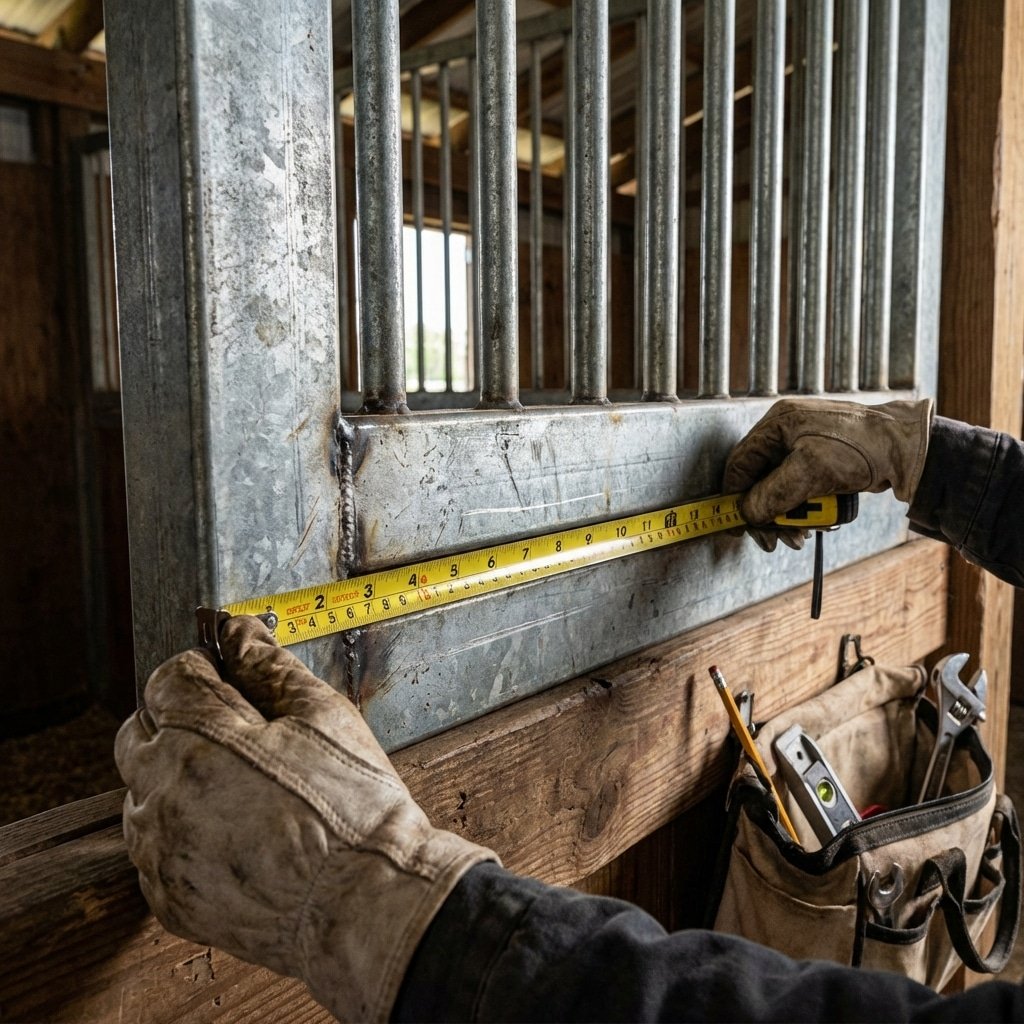
| Structure and lining | Frame material, roof face, wall make-up, openings | “Metal frame” covers several very different buildings |
| Additions since the quote | Extra stalls, windows, doors, fencing, equipment | Invoices filed, schedule never amended |
| Site works | Access, pads, drainage, water supply, detached storage | Counted as landlord work, left off the declared value |
| Provenance | Who supplied it, to what stated standard, when | Marketing PDFs instead of an order specification |
Provenance is where an importer’s paperwork can beat a farmer’s. A purchase specification for 50 fence panels or 10 stall systems names the process — hot-dip galvanized rather than pre-coated sheet — and a stated 20-year figure is at least a dated claim you can point at. The same specification will not carry a coating thickness or a fire-test number, because neither is published. The protection record pack — sprinkler and detection evidence, zone drawings, what a manufacturer can honestly attest to — is walked document by document in our barn sprinkler and fire-zone records article, so it is not repeated here.
Working the findings list
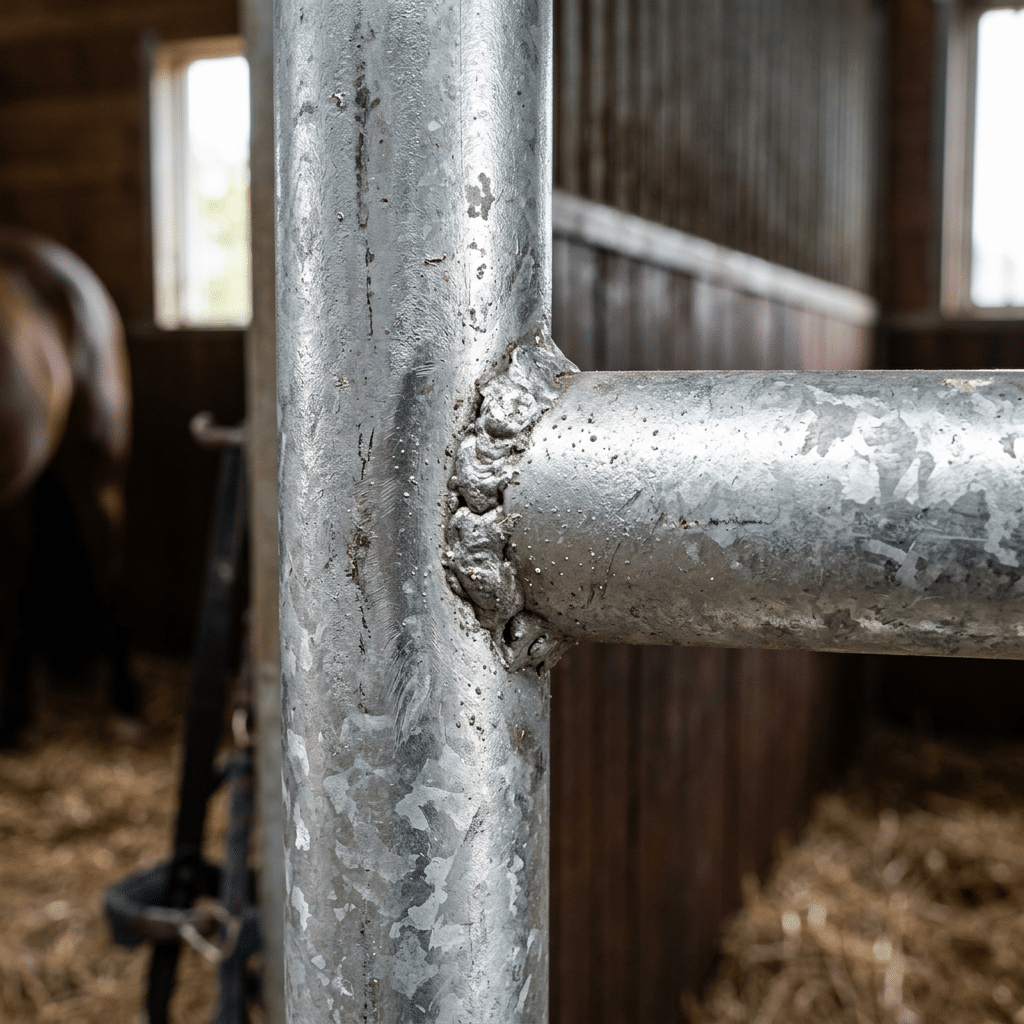
When the report arrives, sort every line into one of three buckets before you react. A physical fix is something you can buy and install: move the hay, close an opening, put a charger on its own circuit, stand a trailer off the wall. These close findings fastest, and they are usually the cheapest per point of terms recovered.
A paperwork fix is about evidence rather than condition. The surveyor could not tell what the wall is made of, or assumed the worst because nothing was labeled. Answer it with the purchase specification, the dated assembly photographs, and one page stating what went in when. Send that to the broker and ask for amended wording, not a verbal “that should be fine”.
A market change is the bucket owners refuse to accept. A manufacturer’s certificate rarely closes a finding about the site itself — approach distance, an adjoining occupier, a building class the market will not write. That is a placement conversation. Ask early what would have to change for the answer to change.
Where paperwork comes from matters less than whether it is dated and specific. A supplier that states capacity at 500-plus sets a month, with 4-6 week lead times and 1-2 weeks expedited from Sydney or Warsaw, can also say in writing what a replacement stall line is specified as and when your order was built. Ask before renewal, not after a surveyor has written “undetermined”.
Häufig gestellte Fragen
What should I have ready before a horse barn insurance survey?
A building description you can point at, a schedule of what was added since the quote, dated assembly photographs of concealed frame and lining details, and accurate numbers for horses, staff and equipment. Have the site unlocked and the aisles clear.
Does a 20-year galvanized steel claim reduce a premium?
Not directly. Corrosion life is a maintenance and replacement argument, not a protection feature, so it may support a construction description but rarely moves a rate on its own. Ask your underwriter what evidence they credit.
Do fencing, an arena or a walker need to be declared?
Usually yes, as site structures or insured items, and the definitions are narrower than owners guess. Read what the schedule says counts, then declare the fence lines and training equipment you paid for.
What if I disagree with a survey finding?
Challenge it with evidence, in writing, through the broker. A finding that says “construction undetermined” is a documentation gap you can close with a specification; a finding about access or a neighbor is not yours to argue.
How long does a survey file stay useful?
Until the building changes. Re-inspection intervals differ by insurer and by what the first visit found, so keep the specification, invoices and assembly photos on file and update them the week you install something new.
Schlussfolgerung
Read the survey as a pricing event with three inputs and the preparation stops being a clean-up day. Construction, exposure and reinstatement cost are decided by what you can point at, so the durable advantage is a file: the specification behind the frame, the photographs taken before linings covered it, and a schedule matching the barn standing today.
If a finding depends on what your building is made of, get that into the order papers rather than the marketing pack. Our stabling systems page lists the published liner and coating claims, so you can see which fields your survey file can genuinely cite.


 German
 English
 Spanish
 French
 Arabic
0 Kommentare