


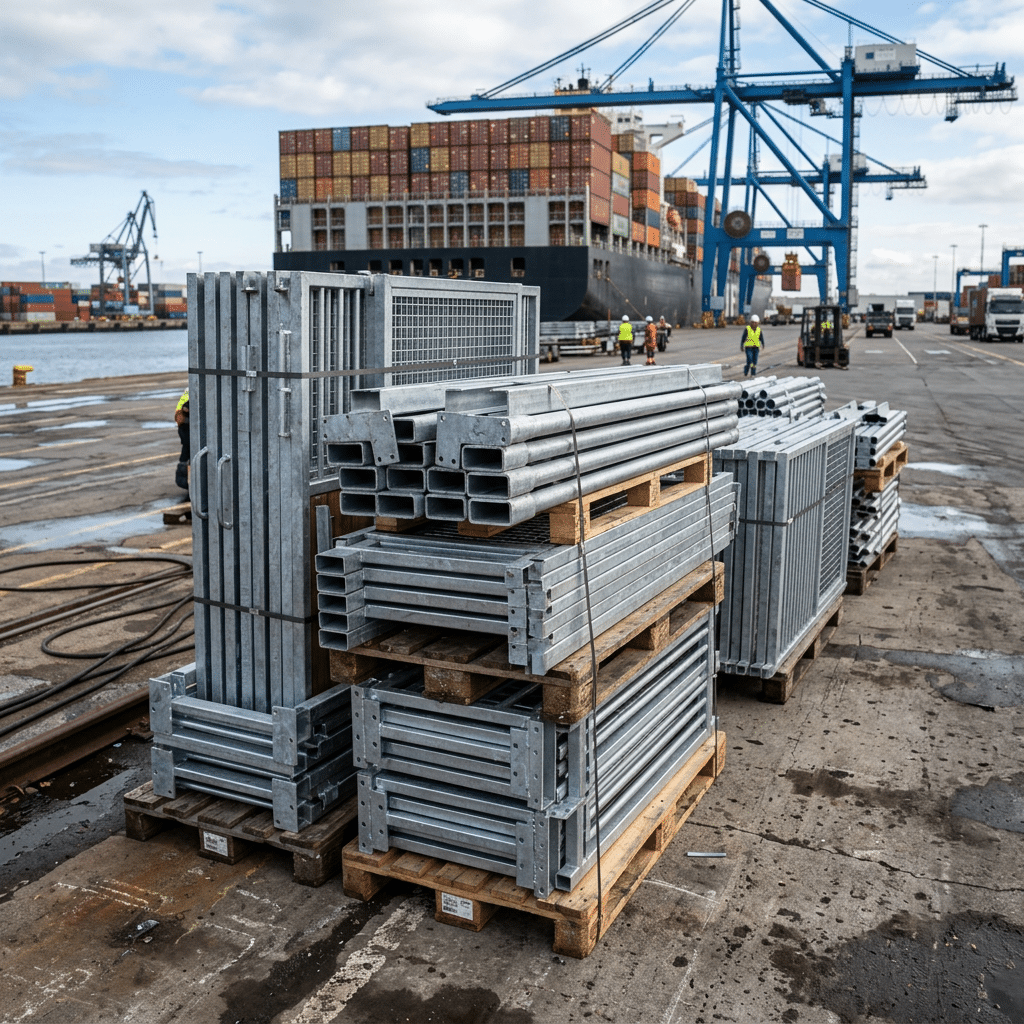
Alibaba Sourcing for horse stables frequently connects buyers with trading companies, not factories, selling products made from pre-galvanized steel. This shortcut leaves welded joints unprotected, leading to inevitable rust and costly warranty claims that damage distributor profit margins and brand reputation.
This report benchmarks suppliers against the correct engineering standard: Hot-Dip Galvanization After Fabrication. We analyze verifiable specifications, including Q235B steel grade and 14-Gauge tube thickness, to identify the top OEM source factories and those who fail basic due diligence.
Top 5 der geprüften OEM-Quellenfabriken
Finding a true OEM source factory for horse stables requires a strict verification process, not just choosing from a list. It involves confirming material specifications, auditing production processes, and analyzing logistics to protect your investment and ensure long-term product safety.
Production Capability & Material Verification
Before committing to an order, you need to verify that a supplier has the technical ability and material integrity to build a safe, durable product. Use these benchmarks to separate genuine manufacturers from trading companies or low-quality workshops.
| Verification Point | Our Standard (The Benchmark) |
|---|---|
| Third-Party Certifications | Ask for current **ISO 9001** (Quality Management) and **BS EN ISO 1461** (Galvanizing) reports. A real factory will provide these without hesitation. |
| Structural Steel Grade | The minimum should be Q235B (ASTM A36). For cold climates, we use **Q345B** for its superior impact toughness to prevent fractures from kicks. |
| Tube Wall Thickness | Mandate a **14-Gauge (2.0mm)** minimum wall thickness. We prohibit anything thinner, as it represents a serious compromise on horse safety. |
| Process Transparency | Request a live video audit to see their raw steel inventory and fabrication process. A genuine manufacturer has nothing to hide. |
Galvanization Process & Logistics Efficiency
A supplier’s process for rust protection and shipping directly impacts your total cost of ownership and profit margins. Inefficient logistics can erase any savings from a low unit price.
| Verification Point | Our Standard (The Benchmark) |
|---|---|
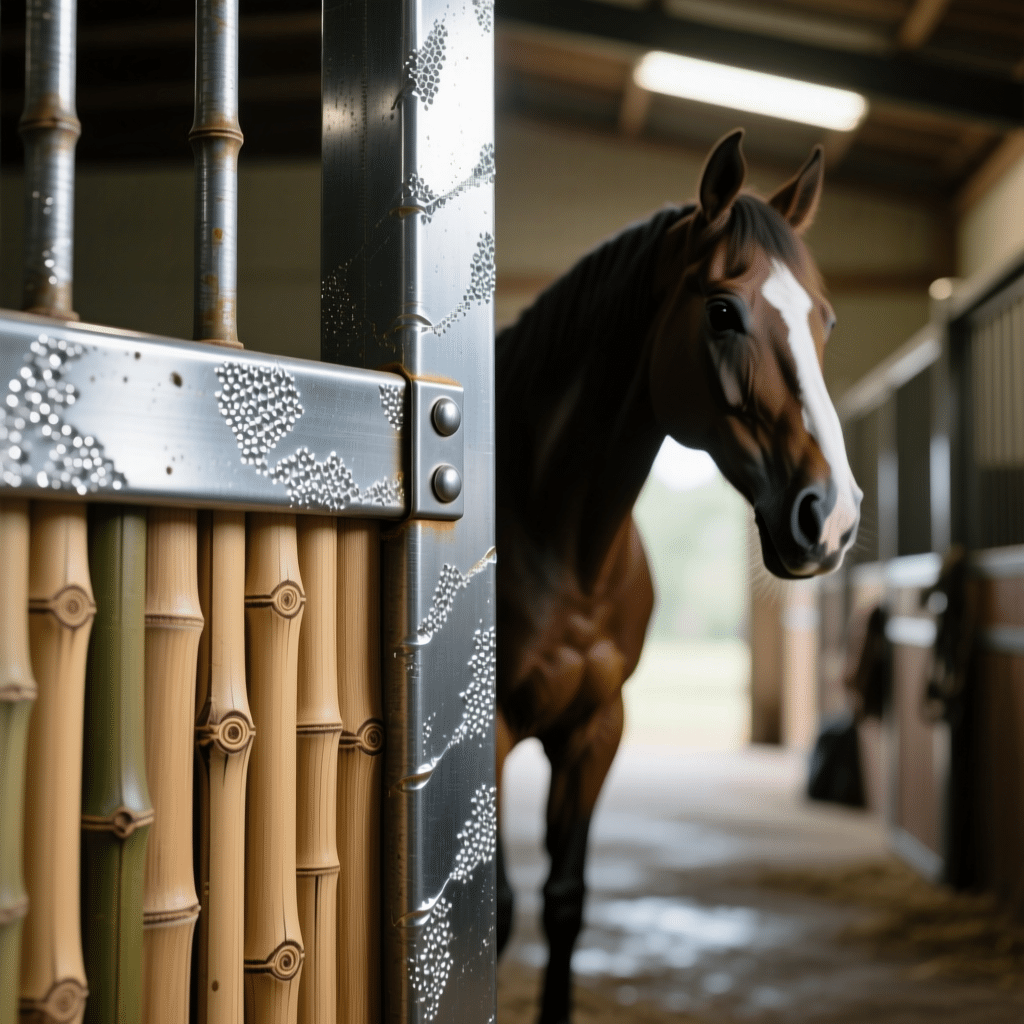
| Rust Protection Method | Insist on **’Hot-Dip Galvanization After Fabrication.’** This is our core differentiator, as it completely protects the welds where rust starts on cheaper, pre-galvanized products. |
| Zinc Coating Thickness | The coating must meet ISO 1461. We ensure an average thickness of over **70 microns (μm)** on all tubing for long-term protection. |
| Packaging for Transit | Professional factories use **steel pallet flat-packs**. This prevents transit damage and makes unloading at your facility safer and more efficient. |
| Container Loading Efficiency | Our flat-pack design fits **30-45 sets in a 40HQ container**, saving over 60% on freight compared to 12-15 fully-welded sets. This directly protects your profit margin. |
Durable, Compliant Stables Built for Any Climate

Die Alibaba-Falle: Als Fabriken getarnte Makler
Sourcing on platforms like Alibaba often leads to dealing with trading companies posing as direct manufacturers. This creates significant risks for distributors, including inflated costs for inferior products, communication breakdowns, and an inability to verify critical safety and material specifications.
The Hidden Costs of Dealing with Middlemen
Working with brokers introduces hidden markups and communication gaps that
directly impact your profitability and reputation. You end up paying a premium for lower-quality materials, such as stables built from thin, pre-galvanized tubes that are simply welded black pipe. These inevitably rust at the welds, leading to customer complaints and costly warranty claims. A middleman lacks the technical depth to manage customization. They cannot guarantee crucial engineering details, like upgrading to Q345B steel for its superior impact toughness in cold climates or ensuring the galvanization process meets the stringent ISO 1461 standard for rust prevention. This disconnect puts your projects and your brand’s quality promise at risk.
Three Red Flags That Expose a Trading Company
You can protect your investment by spotting the warning signs of a broker versus a true factory partner. These three checks help separate professional manufacturers from opportunistic resellers.
1. Vague Technical Answers: Ask for specific data. A real factory can instantly confirm the steel grade (e.g., Q235B Structural Steel), wall thickness (we use 14-Gauge, 2.0mm minimum), and the average zinc coating thickness in microns. A broker will hesitate, deflect, or provide generic answers because they don’t control the production line.
2. No Production Footage: Request a live video call or recent footage of their workshop. A genuine manufacturer like us can show you our steel stock, welding stations, and products being prepared for “Hot-Dip After Fabrication.” A broker’s gallery is limited to polished photos of finished products, as they have no factory floor to show.
3. Unverified Certifications: Ask for copies of their quality and process certifications. A legitimate factory will provide its ISO 9001 (Quality Management) and ISO 1461 (Hot-Dip Galvanizing) certificates. A trading company often cannot produce these documents under their own name or may present expired or irrelevant papers. Verifying these documents is a critical step in due diligence.
The “Pre-Galvanized” Scam: Why Cheap Quotes Rust
Pre-galvanized steel is a manufacturing shortcut where zinc-coated tubes are welded together. This process burns off the rust protection at every weld, creating guaranteed points of failure. True longevity requires “Hot-Dip After Fabrication”—our standard process where the fully welded stable frame is submerged in molten zinc to meet the strict BS EN ISO 1461 standard.
What is Pre-Galvanized Steel and Why Does it Fail?
Suppliers using pre-galvanized material offer attractive low prices because the process is fast and cheap. They weld tubes that are already coated with a thin layer of zinc. The problem is that the extreme heat from welding vaporizes this protective zinc at every joint, leaving the raw Q235B steel completely exposed. These unprotected weld seams are the first place rust begins, leading to structural weakness and costly warranty claims for our distribution partners.
The ISO 1461 Standard: Hot-Dip Galvanizing After Fabrication
Our engineering standard is built on the correct industrial process: we weld the entire raw steel frame first, then submerge the completed structure in molten zinc. This “Hot-Dip After Fabrication” method conforms to the BS EN ISO 1461 standard. It ensures a thick, continuous zinc coating of over 70 microns across all surfaces, including the welds and inside the tubing. This is the only way to deliver genuine, long-term rust protection and the structural integrity that protects your business’s reputation.
How to Request a Live Video Audit of the Zinc Bath
A live video audit of the galvanizing plant is a crucial due diligence step to confirm a supplier uses the “Hot-Dip After Fabrication” method, ensuring all welds and cuts are protected. This verification protects your investment by confirming compliance with standards like BS EN ISO 1461 and preventing the delivery of inferior “pre-galvanized” products that rust at the joints.
What to Specify in Your Audit Request
When you request a video audit, being specific is key to getting the proof you need. Start by clearly stating that the purpose of the call is to verify their galvanizing process is genuinely **”Hot-Dip After Fabrication.”** This simple phrase separates legitimate manufacturers from suppliers who weld pre-galvanized tubes, leaving the joints vulnerable to rust. Reference the exact quality standard you expect your product to meet, such as our adherence to **BS EN ISO 1461**. Finally, ask if they can demonstrate a zinc coating thickness measurement during the call. For our steel tubing, we ensure the average coating is over **70 microns (μm)**, and a transparent factory will have the tools and data to prove it.
Present the live audit request as a final, professional step before committing to a significant order, such as a 20GP container project. This shows you are a serious buyer conducting proper due diligence. Ask to schedule the call to coincide with their production run at the galvanizing plant. This may require some planning, as we know coordinating with galvanizers is a necessary part of ensuring quality. The most important visual evidence you can ask for is to see a fully welded stable front or partition being lifted directly from the molten zinc bath. This single view confirms the entire structure was submerged as one piece, guaranteeing complete corrosion protection on every surface, including the critical weld points.
DB’s Direct B2B Pricing vs. Alibaba Markups
Sourcing through platforms like Alibaba can introduce hidden costs from intermediaries and trading companies, masking the true Total Cost of Ownership. Our direct B2B model eliminates these markups, offering transparent factory pricing and protecting distributor profit margins through engineered logistics.
The Alibaba Markup Model: Total Cost vs. Unit Price
Many listings on platforms like Alibaba are posted by trading companies, not the actual manufacturers. These intermediaries add a layer of markup to the product’s price. A low unit price can be misleading, as it often hides a much higher Total Cost of Ownership (TCO). This total cost includes the risks of inconsistent quality, communication delays, and dealing with a third party who has no control over the production line. These factors can lead to higher defect rates and unexpected expenses that erode your project’s profitability.
Source Factory Pricing: Eliminating Intermediary Costs
As a B2B source factory, our pricing is direct and transparent. We remove the broker commissions and hidden fees common in third-party platform transactions. This model provides clear costs for our distributors and partners managing large projects. We also engineer for “Profit Protection” with our steel pallet flat-pack shipping system. This design allows 30-45 stable sets to fit in a single 40HQ container, compared to the 12-15 sets of traditionally welded products. This simple change cuts our partners’ freight costs by over 60%, directly improving their bottom line.
Abschließende Überlegungen
While brokers on Alibaba offer low unit prices, their pre-galvanized products create unacceptable risk. Our ‘Hot-Dip After Fabrication’ standard is the only way to protect your brand from rust complaints and warranty claims. Your reputation depends on the engineering choices you make before the container leaves the port.
Don’t guess on quality—verify it. Schedule a live video audit to see our ISO 1461 galvanizing process and confirm our material specs firsthand. Contact our B2B team to configure a trial order for your market.
Häufig gestellte Fragen
Is it safe to buy horse stalls on Alibaba?
Buying on Alibaba presents risks because many listings are from trading companies, not actual factories. This adds hidden costs and reduces quality control. To ensure safety and protect your investment, partner with a verified B2B OEM/ODM manufacturer. We recommend requesting live video tours of the workshop and steel inventory to confirm you’re dealing with the source. As a factory, we welcome this transparency to showcase our ISO 9001-certified processes.
How to find a real factory on Alibaba?
To find a genuine factory, go beyond simple verification badges. Insist on a live video audit of their production facility, including their steel stock, welding stations, and galvanizing prep area. A real manufacturer will gladly provide this. We offer live video tours to demonstrate our complete OEM/ODM manufacturing capabilities and quality control, from raw Q235B steel to the final packaged product.
What is a pre-galvanized horse stall?
A pre-galvanized stall is built using steel tubing that was galvanized *before* being cut and welded. This leaves the welded joints exposed and vulnerable to rust, a critical failure point. We never use this method. Our process is **Hot-Dip Galvanization After Fabrication**, where the entire finished panel is submerged in molten zinc. This guarantees complete, seamless rust protection for every surface, including welds, which is essential for long-term durability.
How to verify ISO 1461 certification?
To verify a supplier’s ISO 1461 certification, request two things: the certificate itself and a quality inspection report detailing the zinc coating thickness. True compliance isn’t just a paper; it’s measurable data. Our panels conform to BS EN ISO 1461, with an average zinc coating over **70 microns (μm)** on tubing and **85 microns** on structural parts. This verifiable thickness is what guarantees long-term performance and prevents rust, especially in high-salt or humid environments.
Alibaba Trade Assurance for steel products?
Alibaba Trade Assurance is an excellent tool for protecting your payment and ensuring shipment timelines are met. It acts as an escrow service. However, it does not guarantee the *technical quality* of the steel products, such as the galvanizing thickness, steel grade (Q235B vs. Q345B), or weld integrity. The ultimate guarantee of product quality comes from the manufacturer’s own systems and certifications, like our ISO 9001 for quality management and adherence to ISO 1461 galvanizing standards.


 German
  English
  Spanish
  French
  Arabic
0 Kommentare