


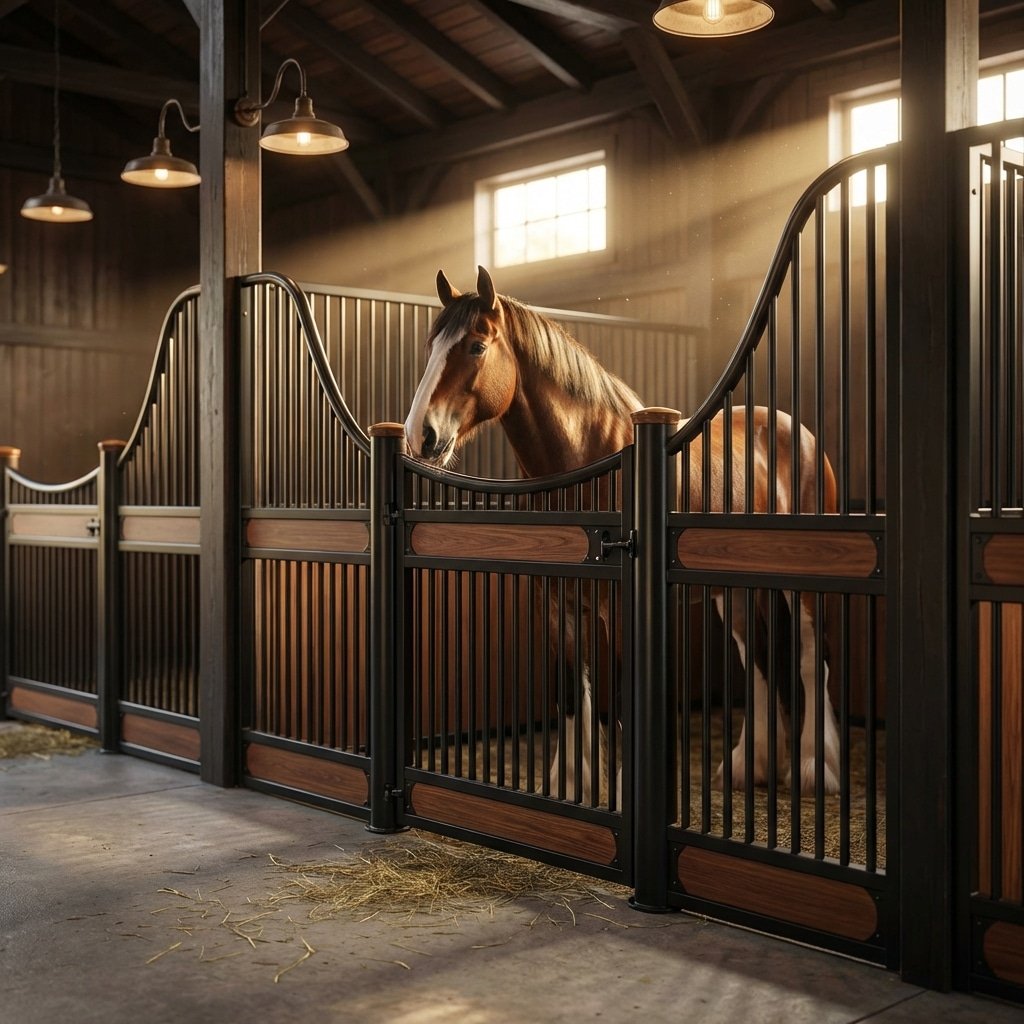
Housing draft horses in standard agricultural fencing creates an immediate liability risk for breeders and facility managers. When a 2,400lb animal leans against typical 1.6mm tubing, the structural failure often results in catastrophic injury and expensive veterinary claims.
This protocol establishes the 14er-Spur Q345B structural steel standard as the non-negotiable baseline for heavy breeds. We analyze why upgrading from commercial mild steel to high-tensile alloys prevents brittle fracture and ensures the containment integrity required for massive livestock.
The Weight Factor: 2000lb Horses vs Standard Steel
Standard 1.6mm agricultural fencing risks catastrophic buckling under the 2,400lb impact of draft breeds. Heavy-breed safety requires Q345B structural steel with minimum 14-gauge thickness.
Draft breeds like Shires and Belgians present a kinetic energy problem that standard agricultural infrastructure cannot handle. These animals weigh between 1,800 and 2,400 lbs, more than double the mass of a standard riding horse. When a draft horse kicks or leans into a fence, they generate lateral impact forces equivalent to a low-speed collision with a small vehicle.
Most retail-grade corral panels and budget stable fronts utilize 1.5mm or 1.6mm (16-gauge) tubing to cut shipping weights and manufacturing costs. While acceptable for lighter livestock, this specification fails under draft horse loads. Upon heavy impact, thin-walled tubing does not simply bend; it tends to crumple or shear completely. This structural failure creates jagged steel edges capable of inflicting career-ending lacerations or deeper trauma.
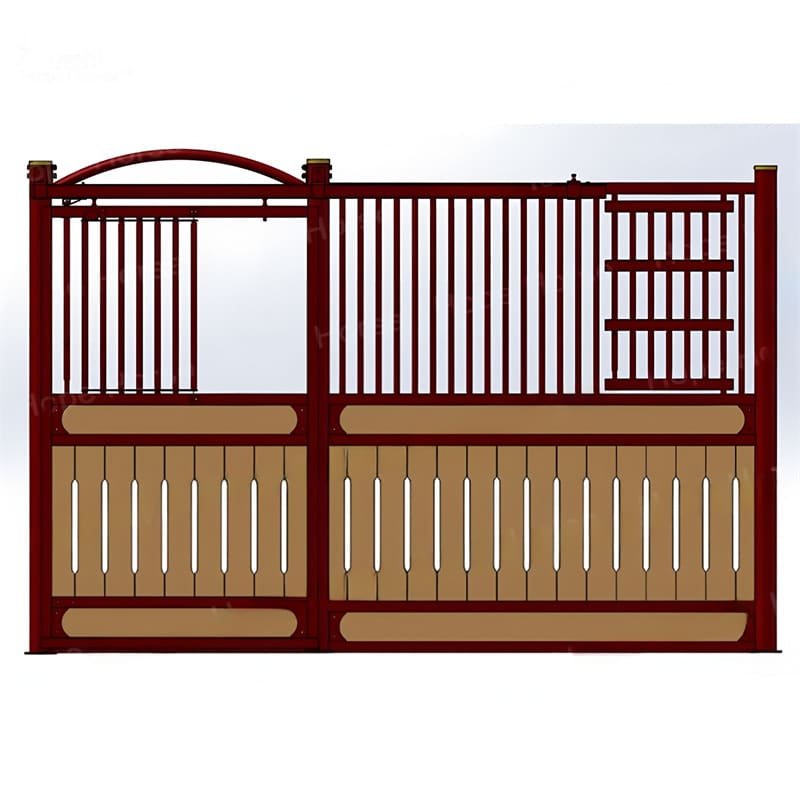
The Q345B Advantage: Engineering for Heavy Breeds
To mitigate these risks, we upgrade the material composition from standard mild steel to Q345B Low Alloy High Strength Steel. This material is the equivalent of ASTM Grade 50, providing superior yield strength compared to the industry-standard Q235B. This upgrade allows the frame to absorb significant shock loads without permanent deformation.
- Mandatory Thickness: We strictly enforce a 14-gauge (2.0mm – 2.5mm) wall thickness on all structural tubing for draft horse applications.
- Cold Weather Resilience: Q345B steel retains high impact toughness in freezing temperatures, preventing the brittle fractures common in standard steel during winter kicks.
- Kick-Proof Integrity: The combination of higher tensile strength and increased wall thickness ensures the “Kick-Proof” design holds up against repeated high-force impacts.
The 14-Gauge Rule for Draft Horse Stalls
The 14-gauge (2.0mm) standard is the non-negotiable minimum for draft horses, preventing structural failure where thinner economy steel buckles under massive impact forces.
| Merkmal | Economy Standard (Avoid) | DB Stable Draft Standard |
|---|---|---|
| Wanddicke | 16-Gauge / 18-Gauge (1.2mm – 1.5mm) | 14-Gauge (2,0mm - 2,5mm) |
| Stahlsorte | Standard Mild Steel | Q345B High Strength (ASTM Grade 50) |
| Impact Risk | High (Buckling/Deformation) | Kick-Proof Guarantee |
| Winter Performance | Prone to Brittle Fracture | High Impact Toughness |
Why 2.0mm is the Safety Threshold for Heavy Breeds
Draft breeds like Clydesdales, Shires, and Percherons typically weigh between 1,800 and 2,400 pounds. When an animal of this mass leans against a partition or kicks out in frustration, the force generated exceeds the yield strength of standard “economy” steel. Many retail competitors cut costs by utilizing 16-gauge (1.5mm) or even 18-gauge (1.2mm) tubing, which works for light riding ponies but poses a catastrophic failure risk for draft stock.
At DB Stable, we enforce a strict prohibition on tubing thinner than 2.0mm for these applications. The 14-gauge baseline ensures the steel absorbs impact energy without permanent deformation. Using thinner steel results in bent bars, popped welds, and sharp metal edges that can severely injure the animal.
- Mass Resistance: Supports the leaning weight of 2,000lb animals without bowing.
- Absorption von Stößen: Resists high-velocity kicks that would puncture or crimp 16-gauge tubing.
- Structural Longevity: Maintains square alignment of door tracks and latch points over decades of heavy use.
Engineering Resilience: Q345B Steel and Galvanization
Thickness is only half the equation. For professional draft horse facilities, particularly those in cold climates (Europe, North America), the chemical composition of the steel matters. Standard steel can become brittle in freezing temperatures, leading to “brittle fracture” if a horse kicks a frozen post. To counter this, our Professional and Royal Series utilize Q345B Low Alloy High Strength Steel.
This material is equivalent to ASTM Grade 50 and offers superior low-temperature impact toughness. We combine this high-grade alloy with our “Hot-Dip After Fabrication” process. Unlike competitors who weld pre-galvanized tubes (leaving rusty, painted seams), we dip the entire welded frame into molten zinc. This creates a metallurgical bond that seals the thick steel against ammonia and moisture indefinitely.
- Materialspezifikation: Q345B Low Alloy High Strength Steel (Cold Climate Optimized).
- Zinc Standard: BS EN ISO 1461 compliant.
- Dicke der Beschichtung: Averages > 70 microns (μm) on tubing and > 85 microns on structural parts.
- Salt Spray Test: Exceeds 96 hours with zero red rust (ASTM B117).
Ställe direkt ab Werk mit einer Lebensdauer von 20 Jahren

Custom OEM Sizing (14×14 and 16×16 Panels)
Standard 12′ stalls create casting risks for 2,000lb draft breeds. Our OEM fabrication delivers reinforced 14′ and 16′ panels using Q345B steel to prevent structural sagging.
Accommodating the Draft Horse Turning Radius
Most retail stabling is standardized to 12×12 Fuß (3.6m), which functions well for Quarter Horses or Thoroughbreds but creates a dangerous environment for draft breeds. When a horse exceeding 17 hands—such as a Shire or Clydesdale—attempts to lie down or roll in a standard stall, the limited diagonal space often leads to “casting.” This occurs when the animal gets trapped against a wall with no leverage to stand back up, a situation that causes panic and severe injury.
A 14×14 foot (4.2m) layout is the biological minimum required to provide a safe turning radius for a 2,000lb animal. This increased footprint allows the horse to fully extend its legs while sleeping without impacting the partition walls. For larger operations managing draft stallions or foaling mares, we recommend 16×16 foot configura
tions. These dimensions provide the necessary square footage for the animal to move freely, reducing stall stress and the wear on facility infrastructure caused by confined, anxious animals.
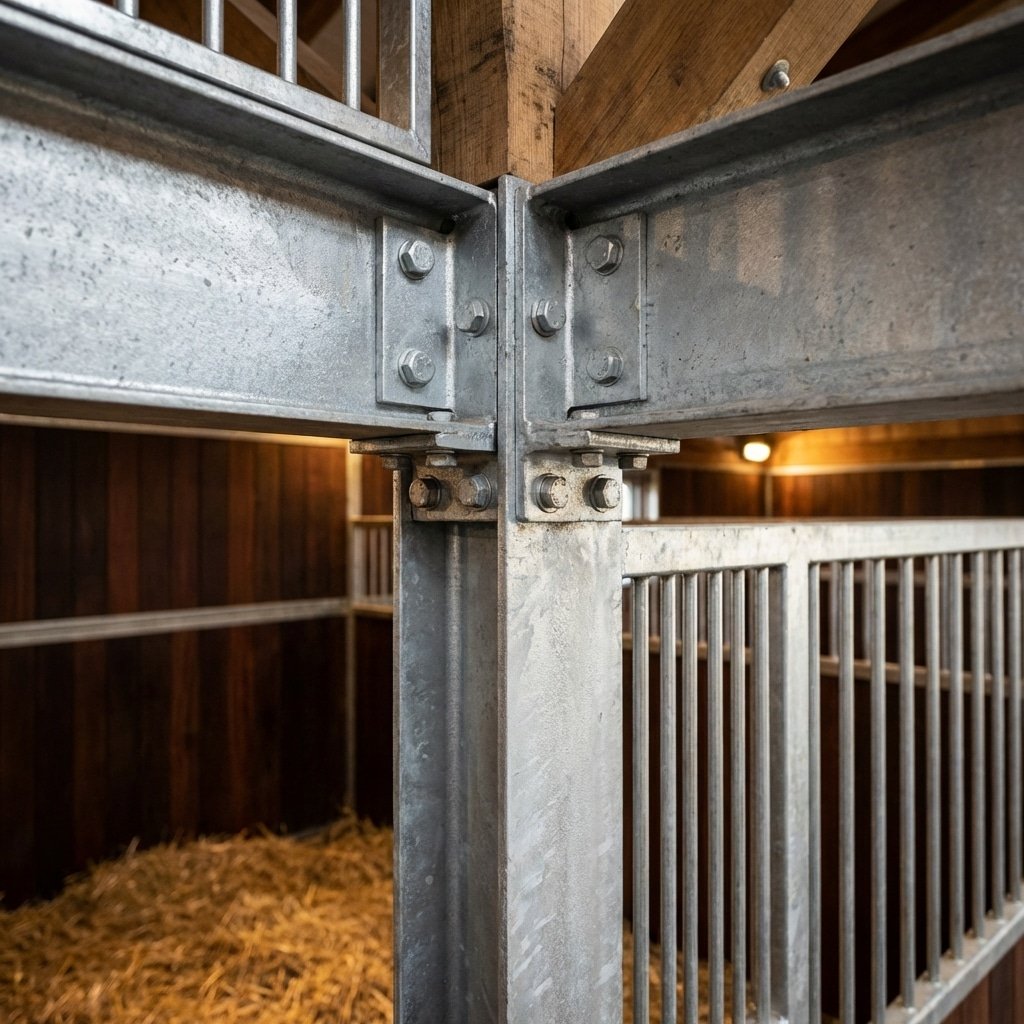
Engineering Wide Spans with Q345B Structural Steel
Simply stretching a standard panel design to 14 or 16 feet introduces significant structural risks. As the horizontal span increases, the bending moment—the stress placed on the center of the rails by gravity and impact—multiplies. A standard steel grade that holds up at 12 feet will likely sag or bow at 16 feet under the leaning weight of a heavy draft horse. To mitigate this, we alter our material specifications for all custom wide-span orders.
- Q345B Structural Steel: We upgrade from standard Q235B to Q345B (equivalent to ASTM Grade 50) for these spans. This low-alloy high-strength steel resists deformation and maintains rigidity over long distances.
- Strict 14-Gauge Standard: We strictly adhere to a 2.5mm (14-gauge) wall thickness for main structural components. We do not use 16-gauge or 18-gauge tubing in draft horse applications, as it cannot withstand the kinetic energy of a kick from a large breed.
- Millimetre Precision: Unlike retail panels that come in fixed increments, our OEM process allows us to fabricate panels to exact millimetre measurements. This ensures the panel fits your existing columns perfectly without the need for unsafe filler kits or gaps.
Sliding Door Widths for Large Breeds
Standard 4-foot doors create liability risks for draft breeds. Safety demands 4.5 to 5-foot openings supported by reinforced Q345B steel frames to handle the massive load increases.
Defining the ‘Draft Standard’: 4.5ft to 5ft Openings
The industry default of 4-foot (1.2m) stall doors is a “hip-check” hazard for any horse exceeding 17 hands. When a broad-chested Percheron or Clydesdale attempts to navigate a standard opening, they often catch their hips on the door frame. This physical restriction triggers a panic response in large animals, leading to them rushing the gap and damaging both the door frame and themselves.
- The Safety Standard: Research dictates a minimum width of 4.5ft to 5ft (1.37m – 1.52m) for safe clearance.
- Panic Prevention: Wider openings eliminate the “trapped” sensation that causes large horses to bolt through entryways.
- Veterinary Impact: Proper clearance prevents chronic hip bruising and shoulder injuries common in undersized facilities.
Structural Support: Heavy-Duty Tracks and Q345B Steel
Expanding a door to 5 feet significantly increases the panel’s leverage and deadweight. Standard mild steel frames will warp under this load, leading to alignment issues within months of installation. To counter this, we bypass standard Q235B steel and utilize Q345B Low Alloy High Strength Steel for all draft-sized panels. This material offers superior impact toughness, critical for cold climates where standard steel becomes brittle.
- Materialspezifikation: Q345B Steel prevents the sagging and warping common in wider, heavier doors.
- Track System: Unser Professional Series Hidden Track System uses heavy-duty rollers designed to handle the increased static load without grinding.
- Derailment Safety: High-tolerance track engineering prevents the door from jumping the rail when opened aggressively by a 2,000lb animal.
Häufig gestellte Fragen
What is the ideal stall size for a draft horse?
While 12’x12′ serves as an absolute minimum, most experts and professional facilities standardize on 14’x14′ or 16’x16′ for heavy breeds like Clydesdales and Percherons. This increased square footage is critical to prevent the horse from becoming “cast” (stuck) against walls and ensures they can lie down and stand up without physical restriction.
Is 14-gauge steel actually necessary for draft horse stalls?
Yes. 14-gauge (approx. 2.0mm – 2.5mm) is the non-negotiable safety standard for large breeds. Thinner materials found in budget kits, such as 16-gauge or 18-gauge, frequently fail under the massive weight and impact force of a draft horse. Using thinner steel creates a direct liability risk regarding structural bending or collapse during normal use.
What are the strongest infill materials for heavy horses?
Hochverdichteter Bambus and UV-stabilized HDPE (High-Density Polyethylene) vastly outperform traditional softwood. Bamboo provides extreme hardness (three times harder than oak), while HDPE is specifically engineered to absorb impact shock without splintering. Both materials offer the “kick-proof” durability required for animals weighing over 2,000 lbs.
How do I ensure the steel frame resists rust in wet stable environments?
You must specify “Hot-Dip Galvanization After Fabrication” (ISO 1461 standard) rather than using pre-galvanized tubing. Pre-galvanized steel leaves weld points exposed to corrosion. “After Fabrication” involves dipping the fully welded door into molten zinc, which seals every joint and weld, preventing rust from forming inside the tubes.
Abschließende Überlegungen
While economy 16-gauge panels offer lower upfront costs, they become a distinct liability the moment a 2,000lb Clydesdale strikes. Adopting our mandatory 14-gauge Q345B standard is the only way to safeguard your reputation against structural failure and expensive veterinary claims. Investing in our “Kick-Proof” engineering ensures your facility handles heavy breeds without risk.
Do not gamble on steel specifications; verify our Feuerverzinkung and weld integrity firsthand. We recommend requesting a structural sample or booking a consultation to discuss custom 14-foot OEM fabrication for your specific layout. Contact our engineering team today to secure production priority for your next project.

 German
  English
  Spanish
  French
  Arabic
0 Kommentare