


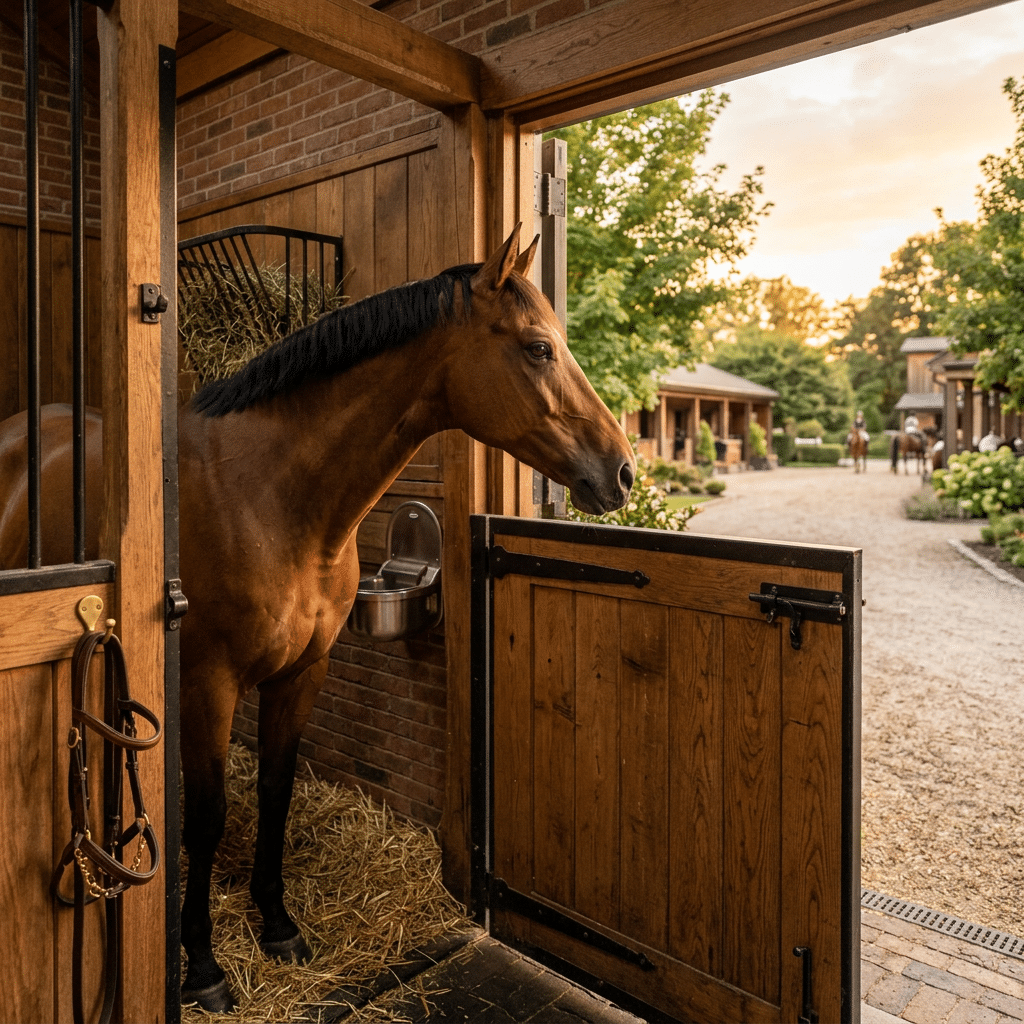
Stable maintenance cost is more than just replacing chewed pine boards; it’s an operational liability. The predictable cycle of lumber replacement and labor fees erodes profit margins, but the true financial risk is a single vet bill for splinter colic—an emergency that can cost over $10,000 and erase any savings from using softwood.
This cost analysis benchmarks the perpetual expense of pine against a one-time investment in chew-proof materials. We calculate the break-even point using high-density strand woven bamboo, with a Janka hardness over 3000 lbf, to show when a stall upgrade stops being an expense and becomes a fixed asset.
The Vicious Cycle: Why Pine Fails in Horse Stalls
Pine’s poor absorption creates a costly cycle. High ammonia harms horse respiratory health, while constant, labor-intensive mucking and replacement erases any initial savings on the lumber.
Ammonia, Moisture, and the High-Maintenance Loop
Pine boards and shavings simply don’t absorb moisture effectively. Trapped urine quickly releases ammonia gas, with concentrations reaching levels known to damage equine respiratory health. This forces a constant, expensive maintenance routine.
The poor absorption means staff must replace bedding far more frequently. Mucking out heavy, saturated material takes longer, directly increasing labor costs. Any residual moisture or sap left in the wood can also promote mold growth or cause skin irritation in sensitive horses, adding potential vet bills to the operational drag.

How Non-Porous Materials Break the Cycle
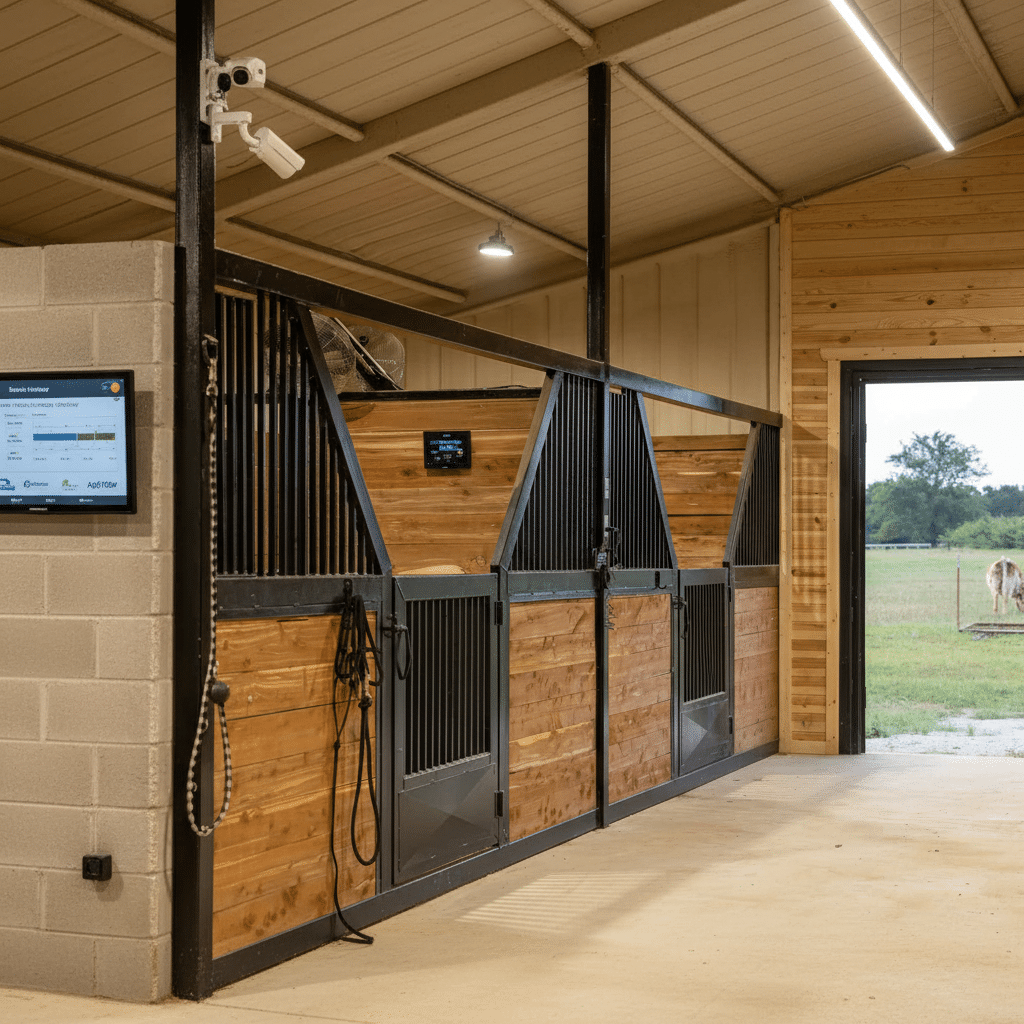
Switching to a non-porous infill material solves these problems at the source. It eliminates the cycle of saturation, health risks, and high labor costs.
- HDPE Infill: This material provides a non-absorbent surface that prevents urine saturation entirely. It simplifies cleaning down to a basic wipe-down, offering a ‘Zero Maintenance’ solution that cuts labor time dramatically.
- Hochdichter, stranggewebter Bambus: This option offers extreme durability and is naturally resistant to the mold and rot that plagues damp pine. It won’t break down from constant exposure to moisture, ending the need for frequent board replacement.
The Annual Cost of Replacing Pine (Lumber + Labor)
Replacing pine in horse stables is a recurring operational expense. Costs are driven by materials up to $40 per square foot and labor averaging $55 per hour.
Breaking Down the Two Core Expenses
Every year, stable operators face two unavoidable costs when using pine: the wood itself and the skilled labor needed to replace it. These expenses create a predictable drain on the budget.
Pine lumber costs can range from $5 to $40 per square foot. On top of that, professional carpentry rates typically fall between $35 and $100 per hour. The final bill depends on the extent of the damage, scaling from minor patch repairs to replacing entire wall sections chewed or kicked through by horses.
The Alternative: Zero-Maintenance HDPE Infill
The constant cycle of repair is a major operational liability. This is why our HDPE infill is engineered as a one-time investment that stops the financial bleed.
Our UV-stabilized planks absorb impact and resist wear from kicking or chewing. They don’t require annual painting, sealing, or replacement due to rot or weather damage. This approach directly contrasts with the recurring material and labor costs required to maintain pine stalls, turning a variable expense into a fixed asset.
Globally Compliant Stables That Last Decades
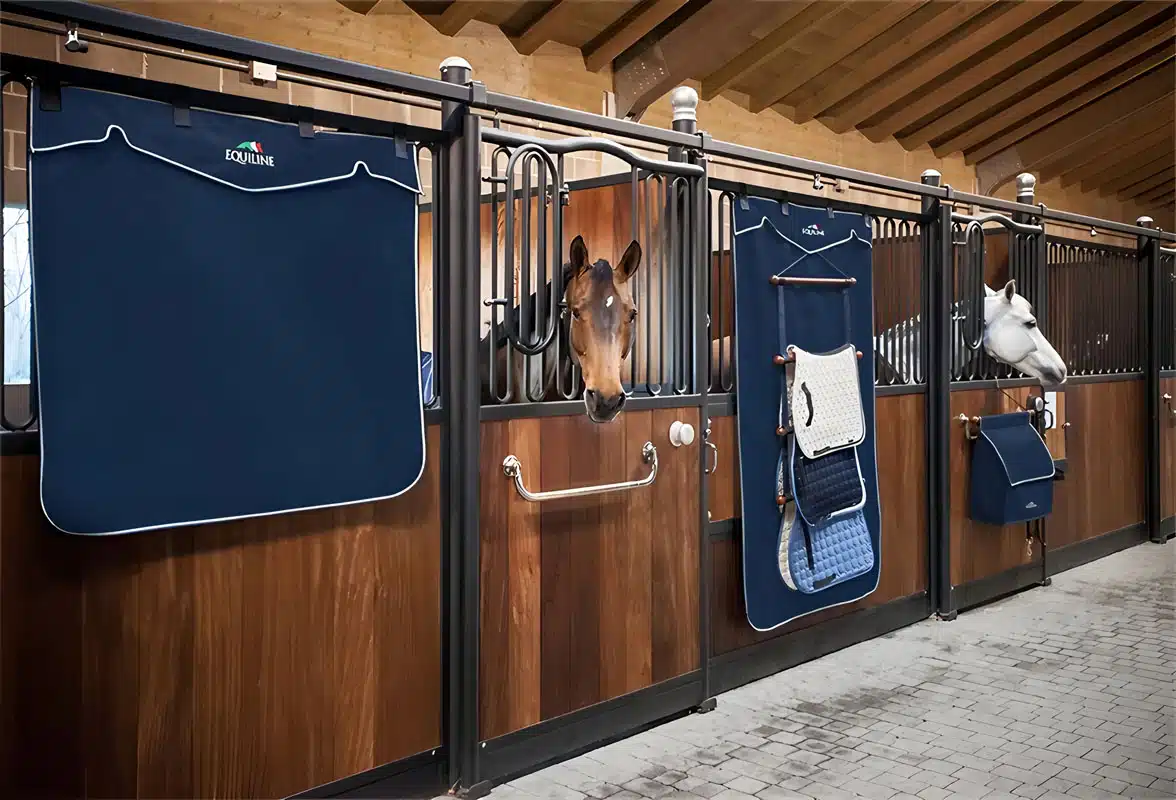
The Hidden Medical Cost: Splinter Colic and Vet Bills
Splinter colic is a serious equine emergency with vet bills that can spiral from hundreds to over $10,000 for surgery, often exceeding insurance limits.
The Financial Reality of Colic Treatment
Colic isn’t just a health crisis; it’s a financial one. Basic medical management for a colic episode can average over £1,500. If surgery is needed, costs jump dramatically, frequently landing between $5,000 and $10,000 in the US.
The real shock comes when insurance falls short. Data shows that most surgical colic cases generate costs that surpass the typical £5,000–£7,500 coverage limit of standard equine policies. This leaves stable owners holding a substantial, unexpected bill.
Preventing Ingestion with Chew-Resistant Infill
The most effective way to prevent splinter colic is to remove the source: chewable wood. The choice of stall infill material is the most direct preventative measure a facility can take.
High-density strand woven bamboo is a prime example. With a Janka hardness over 3000 lbf, it is three times harder than oak, making it highly resistant to chewing and cribbing. Unlike softwoods that splinter when kicked or chewed, durable materials like our bamboo or impact-absorbing HDPE directly mitigate the risk of a horse ingesting sharp, dangerous fragments.
The Bamboo Solution: A Chew-Proof, Safer Alternative
Bamboo’s extreme density makes it chew-proof. Unlike pine, this non-toxic material prevents splinter injuries and colic, cutting both replacement costs and potential vet bills.
Why Extreme Density Deters Chewing
Horses chew on stalls out of boredom or stress, but they quickly learn to avoid materials they can’t easily damage. Bamboo’s dense, fibrous structure is inherently unappealing and resistant to chewing. Since the materi
al is non-toxic, there are no safety concerns with direct contact.
The primary safety advantage over woods like pine is the elimination of splinters. Pine boards can fracture into sharp shards, creating a risk for oral injuries and splinter colic. Bamboo doesn’t fail this way, which directly removes a common and costly medical risk from the stable environment.
High-Density Strand Woven Bamboo: A Toughness You Can Measure
The material used in DB Stable systems is not standard bamboo. We use a specific engineered product—high-density strand woven bamboo—chosen for its measurable performance in demanding equestrian environments.
- Hardness: It has a Janka Hardness rating over 3000 lbf. For context, that is three times harder than oak, making it exceptionally resilient to kicks and wear.
- Langlebigkeit: The manufacturing process yields superior mold and rot resistance, a critical feature for dealing with the constant humidity inside a stable.
Break-Even Point: When Bamboo Pays for Itself
The break-even point for high-density bamboo infill typically occurs within the second year, offsetting the higher initial investment by eliminating annual lumber replacement, labor, and vet bills.
| Financial Factor | DB Stable High-Density Bamboo | “border: 1px solid #ddd; padding: 12px; text-align: left; background-color: #f2f2f2; color: #7E6849;”>Traditional Timber (Pine/Softwood) |
|---|---|---|
| Erstinvestition | Higher one-time capital cost. | Lower initial material cost. |
| Annual Replacement & Labor | $0 | $500 – $2,300+ per year for repairs. |
| Annual Veterinary Risk Cost | $0 (Eliminates splinter colic risk). | Variable, potential $5,000 – $10,000+ per incident. |
| Expected Payback Period | Within 24 months. | No payback; it’s a perpetual expense. |
Calculating the Payback Period: Investment vs. Savings
The math behind choosing bamboo is straightforward. You are buying your way out of the endless cycle of repairing and replacing chewed or rotted wood panels. By calculating the total annual cost of dealing with wood, you can see exactly when the bamboo upgrade pays for itself and starts generating a positive return.
- Initial Investment: This is the one-time, upfront cost to outfit your stalls with the DB Stable high-density bamboo system.
- Annual Savings: Add up what you spend yearly on replacement lumber, the labor hours to install it, and the potential cost of a single colic surgery caused by wood splinters. This is the money you stop spending.
- Break-Even Formula: (Initial Bamboo Upgrade Cost) / (Annual Wood-Related Costs) = Years to Payback.
High-Density Bamboo: The Spec That Stops Ongoing Costs
The financial savings are a direct result of the material’s core properties. Unlike softwoods that horses can easily destroy, our high-density bamboo is engineered to withstand the stable environment permanently. This material science is what stops the cash bleed from maintenance.
- Material Hardness: With a Janka hardness rating over 3000 lbf, our strand-woven bamboo is three times harder than oak. Horses simply cannot chew it, which stops the damage before it starts.
- Langlebigkeit: The planks are incredibly dense and resistant to mold and rot. This eliminates the need for yearly board replacement caused by moisture, chewing, or decay.
- One-Time Solution: This durability fundamentally changes your accounting. Stall maintenance shifts from a recurring operational expense to a single capital investment with a clear, predictable return.
Häufig gestellte Fragen
Why do horses chew on their stalls?
Horses often chew on wood due to boredom, stress, or a diet lacking sufficient forage. This behavior is a natural response to stall confinement and an instinct to chew. Providing more turnout, constant access to hay, and social interaction can significantly reduce the habit.
What are the most durable materials for horse stalls?
Dense hardwoods like white oak offer excellent durability. For a maintenance-free and kick-proof alternative, HDPE (High-Density Polyethylene) is a superior choice as it won’t crack, splinter, or absorb moisture. High-density strand-woven bamboo is another excellent option, being three times harder than oak and naturally resistant to mold.
Is bamboo a cheaper option than traditional wood?
Yes, bamboo lumber typically has a lower upfront cost per square foot compared to hardwoods like oak. This is because bamboo is a rapidly renewable resource that matures in just 3-5 years. While oak may offer a longer lifespan through refinishing, bamboo provides exceptional hardness and durability at a more accessible price point.
How can I stop my horse from chewing wood?
The most effective way is to address the root causes. Ensure your horse has constant access to forage, gets plenty of turnout time with other horses, and is not suffering from gastric ulcers. Using stall materials that are unappealing to chew, like HDPE or dense bamboo, can also physically prevent the damage.
What is the average cost to replace stall boards?
Costs can vary widely. A basic DIY replacement with simple lumber might only be a few hundred dollars in materials. However, purchasing full pre-fabricated stall kits generally costs between $1,000 and $2,500 per stall, with professional installation adding several hundred dollars more.
Abschließende Überlegungen
Pine offers a low entry price, but it locks your clients into a cycle of replacement labor and vet bill liability. Our high-density bamboo is a one-time capital expense engineered to stop that financial drain. Investing in a chew-proof solution protects your customers’ assets and your reputation as a quality supplier.
The next step is to see the material difference for yourself. A trial order lets you test our engineering and durability firsthand before committing to a full container. Contact us to configure a sample set and get a quote that includes our margin-saving flat-pack shipping.

 German
  English
  Spanish
  French
  Arabic
0 Kommentare