


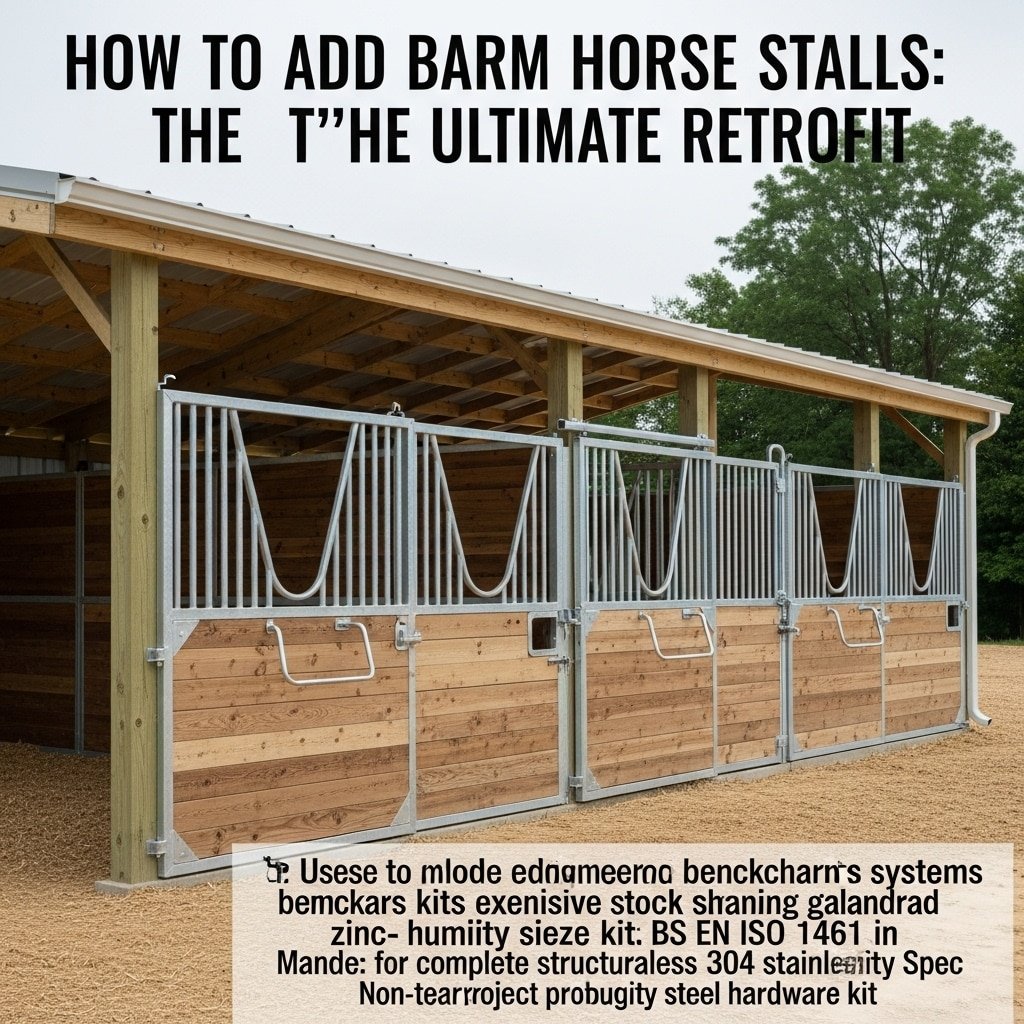
A 20×20 pole barn structural fail isn’t a freak accident. It’s the predictable outcome of designing a horse shelter with the same steel specs used for a garden shed. The problem starts before the first post goes in the ground.
Most DIY kits ship with 18 to 20-gauge steel. That material yields at roughly 30 to 36 ksi. A 1,200-pound horse leaning against a wall or kicking a partition generates dynamic live loads that push thin steel past its plastic deformation point. Once the metal takes a set, it doesn’t come back. The frame bends, the roof rack twists, and the whole structure starts to lean. Repair costs for a collapse run between $5,000 and $15,000. That’s three to four times the cost of a preemptive structural upgrade using proper steel.
The fix isn’t complicated. It requires switching from A36 mild steel to Q345B low-alloy high-strength steel with a 50 ksi yield. That’s a 40% increase in yield strength. It also means specifying hot-dip galvanizing to ISO 1461 standards instead of the pre-galvanized coating that scrapes off during transport. Those two changes turn a shelter that lasts two to five years into one that holds up for two decades. The rest is just execution.

Why 20×20 Pole Barn Collapse: The 20 Gauge Trap
18-20 gauge steel yields at 30 ksi—a 1200 lb horse leaning against the wall exceeds that limit instantly.
The typical 20×20 DIY pole barn kit ships with 18 or 20 gauge steel tube. That material has a yield strength of 30-36 ksi. A 1200 lb draft horse leaning, kicking, or rubbing against the wall applies a dynamic live load that spikes local stress well past that threshold. The steel doesn’t fail gradually—it undergoes plastic deformation immediately, creating a permanent bend that weakens the entire frame.
Worse, these kits are designed exclusively for static wind and snow loads per IRC residential codes. They never account for the repetitive, off-center impact of an animal. Each cycle of loading and unloading drives work hardening in the thin wall, making the steel more brittle. After a few seasons, the tube cracks at the weld zone or buckles at the corner gusset.
- Steel gauge scam: Many 20 gauge kits actually measure 17 gauge (0.045 in) instead of the labeled 14 gauge (0.075 in). That 40% reduction in wall thickness cuts load capacity by roughly 30%—enough to turn a borderline-safe shelter into a collapse risk.
- Work hardening failure: Thin steel under repeated horse impact develops micro-cracks at the bend radius. Within 2-3 years, these cracks propagate through the wall, causing sudden snap failure—not a slow sag.
- Repair cost reality: A 20×20 pole barn collapse repair runs $5,000 to $15,000. That’s 3x the cost of a pre-emptive upgrade to 14 gauge Q345B steel, which yields at 50 ksi and resists plastic deformation under horse load.
The fix isn’t patching the column or adding a brace—that treats the symptom. The root cause is the steel spec itself. Professional equestrian stables use 14 gauge Q345B low-alloy high-strength steel, which provides the torsional rigidity needed to handle a 1200 lb animal leaning into the wall day after day. No amount of post-repair reinforcement can compensate for a frame that was underspec from day one.
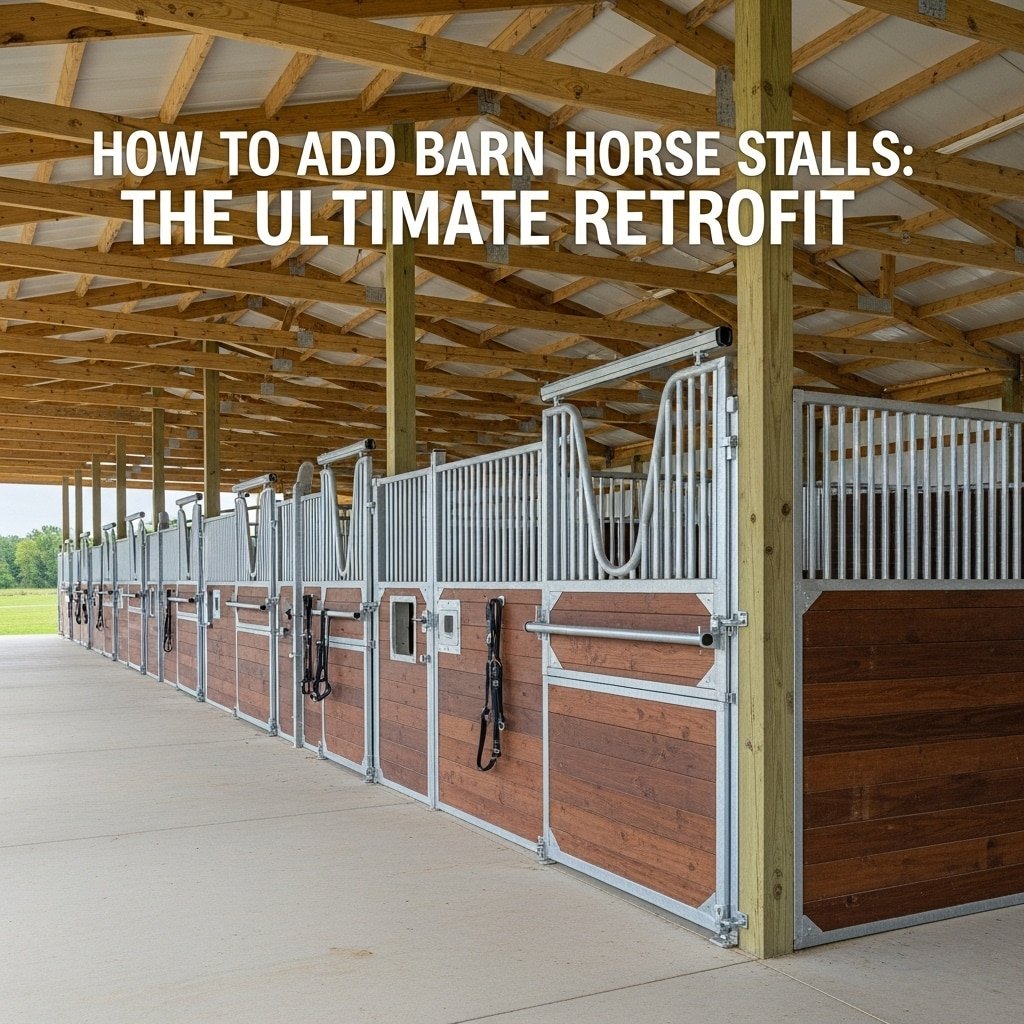
Q345B Steel: Draft-Horse-Hugged Structural Strength
Q345B steel yields at 50 ksi — 39% higher than A36, preventing permanent racking under 1200 lb horse load.
The root cause of a 20×20 pole barn structural failure is almost always the steel spec. Standard 18–20 gauge A36 steel yields at 30–36 ksi. A 1200 lb horse leaning into a panel or kicking a post generates peak dynamic loads that push thin A36 past its elastic limit. Once the steel takes a permanent bend, the frame loses geometric stability — doors jam, walls rack, and the barn accelerates toward collapse.
Q345B is a low-alloy high-strength structural steel with a minimum yield strength of 50 ksi. That 39% margin over A36 means the frame stays elastic under loads that would permanently deform a standard kit. It also delivers better torsional resistance — critical when a horse throws its weight against a corner post. The frame twists less, so welds and bolted connections stay intact.
- Yield strength: Q345B: 50 ksi vs A36: 36 ksi. Permanent deformation threshold is raised by 14 ksi — the difference between a panel that springs back and one that stays bent.
- Gauge deception: DIY 20×20 kits often advertise ’14 gauge’ but deliver 17 gauge (0.054 in). A true 14 gauge Q345B panel is 0.075 in. That 39% thickness increase directly multiplies section modulus and bending resistance.
- Hot-dip galvanizing (ISO 1461): Q345B frames are hot-dip galvanized per ISO 1461 — minimum 85 µm zinc coating, fully penetrating weld zones. Pre-galvanized tube (20–30 µm) leaves bare steel at every weld and cut end. In a wet stable environment, rust-through at welds appears in 2–5 years. ISO 1461 galvanizing delivers 20+ years to first maintenance.
The ‘steel gauge scam’ is standard across budget pole barn kits: a 20-gauge wall labeled as ‘heavy-duty’ that measures 17 gauge under calipers. That alone cuts load capacity by 30%. When you combine that with A36’s lower yield and pre-galvanized coating, the failure sequence is predictable: surface rust at welds → section loss → plastic hinge at the post-to-rail connection → wall collapse. Q345B with ISO 1461 hot-dip galvanizing eliminates every step in that chain.
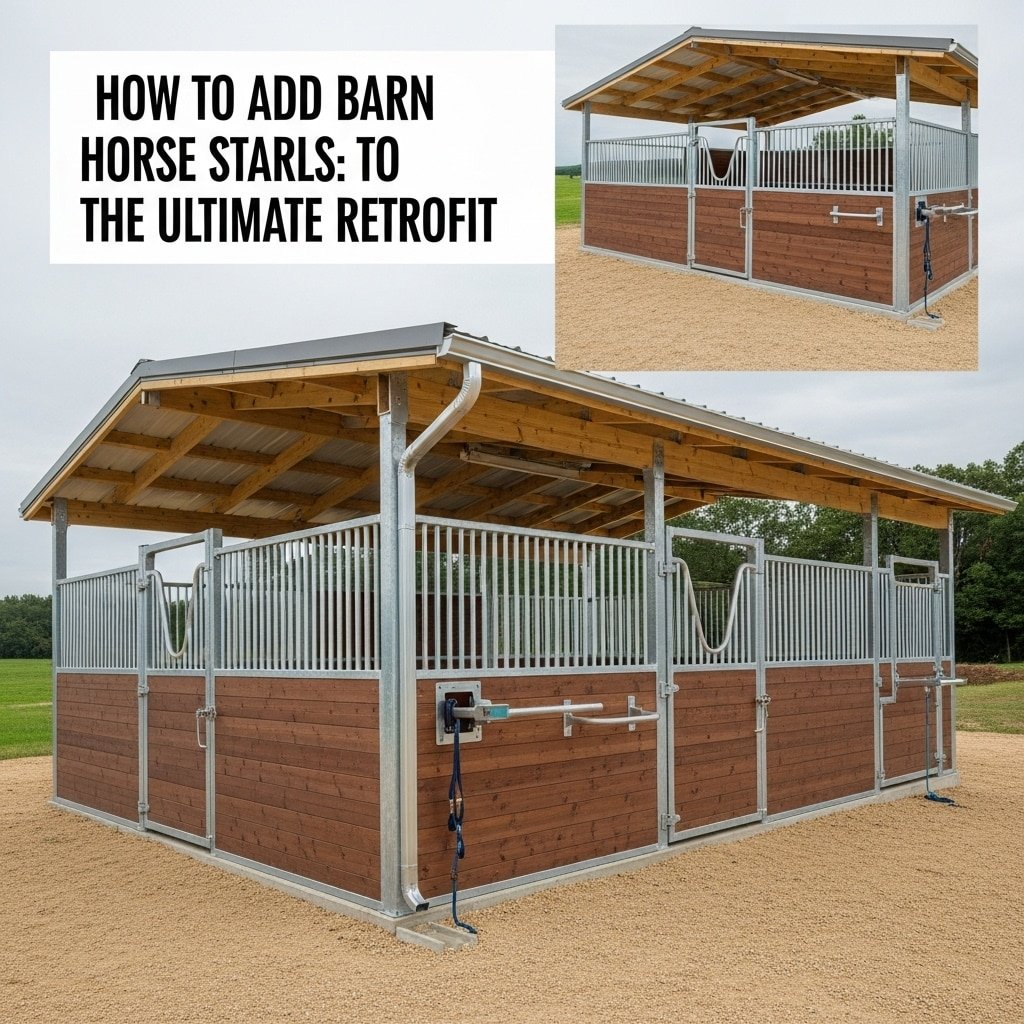
Foundation vs Clay: Beating the Ground
36-inch footings stop frost heave.
The physics is simple: wet clay soil expands when it freezes. That expansion exerts up to 1,500 lbs of upward lift force per footing. A 20×20 pole barn typically has 9 footings. Multiply that — you are fighting 13,500 lbs of heave every winter. A lightweight DIY kit with 12-inch-deep footings doesn’t stand a chance. The posts lift, the frame racks, doors jam, and the lean becomes permanent.
- 36-inch footing (frost-prone clay): Extends below the frost line. Counteracts 1,500 lbs uplift per post. Required in USDA zones 5 and below. This is the minimum for any permanent equestrian structure.
- 24-inch footing (sandy loam, mild winter): Adequate where frost depth stays under 18 inches. Sandy soil drains fast and exerts less heave force — roughly 800 lbs per footing. Still, 36 inches is safer for horse loads.
- 12-inch footing (DIY kit standard): Sits inside the freeze zone. In clay, this guarantees 1–2 inches of lift per cycle. After 3–5 winters, the barn is structurally compromised. Repair cost: $5,000–$15,000.
The fix is not a bracket or a brace. Those treat the symptom. The root cause is inadequate depth. For any 20×20 structure housing horses, specify 36-inch poured concrete footings with a 12-inch diameter bell at the base. That geometry resists both downward settling and upward heave. If your supplier recommends less, ask for their frost-depth map for your zip code. If they cannot produce one, walk.
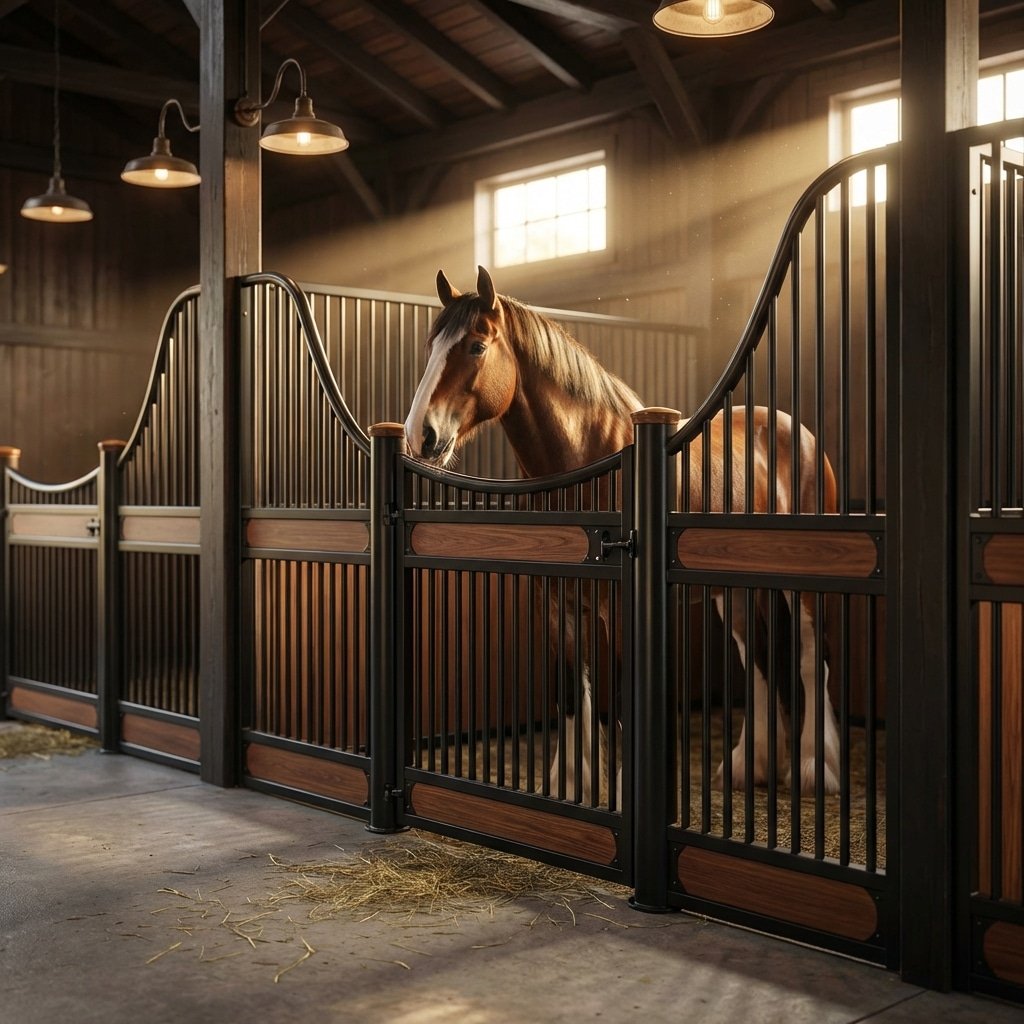

DIY Kit vs Professional Stable: Total Cost of Ownership
A 20×20 DIY kit costs 40% less upfront but 3x more over 20 years.
Die 20-year total cost of ownership reveals the real math. A standard 20×20 DIY pole barn kit runs $4,000–$8,000. But 50% of those structures show structural damage within 5 years according to trade literature. Repairing a collapse costs $5,000–$15,000 — often exceeding the original kit price. By year 10, you are into a second rebuild or a major reinforcement. Total: $12,000–$25,000.
Now run the numbers on a professional-grade stable built with 14-gauge Q345B steel (50 ksi yield) and hot-dip galvanized per ISO 1461. A wholesale order of 10 units from DB Stable lands at $6,500–$12,000 per stable, with tiered discounts of 5%–15% on bulk orders. That upfront premium buys one structure that carries a 20-year rust warranty and zero structural creep under a 1,200 lb horse leaning on a wall.
The gap is not just steel thickness. It is the corrosion protection. Pre-galvanized coatings on DIY kits measure 20–30 microns and scrape off at weld zones during transport. Hot-dip galvanizing penetrates weld zones and delivers 85+ microns. That difference alone turns a 2–5 year rust-through timeline into a 20-year service life. For a facility manager who has already pulled a leaning barn apart once, the choice is arithmetic.
- 20-year DIY total: $12,000–$25,000 (kit + repair + rebuild).
- 20-year Q345B stable total: $6,500–$12,000 per unit (wholesale, 10-unit MOQ, tiered pricing).
- Rust protection delta: Pre-galvanized fails at welds in 2–5 years vs hot-dip ISO 1461 with 20-year warranty.
| Kostenfaktor | DIY 20×20 Pole Barn Kit | Professional Q345B Stable (DB Stable) | Total Cost Impact (20 Years) |
|---|---|---|---|
| Initial Purchase Price | $4,000 – $8,000 | $6,500 – $12,000 (10-unit MOQ) | Professional costs 1.5x–2x upfront |
| Steel Gauge & Yield Strength | 18-20 Gauge A36 (30-36 ksi yield) | 14 Gauge Q345B (50 ksi yield) | DIY steel bends/snaps under 1200lb horse load |
| Corrosion Protection (Zinc Coating) | Pre-galvanized (20-30 micron) | Hot-dip galvanized ISO 1461 (85+ micron) | DIY rusts through welds in 2-5 years; professional lasts 20 years |
| Foundation Requirement | Shallow posts (prone to frost heave) | 36-inch concrete footings (resists 1500 lbs lift) | DIY leaning & door misalignment within 3 years |
| Structural Failure Rate (5 years) | 50% show structural damage | <1% (engineered for dynamic horse load) | DIY collapse repair: $5,000–$15,000 |
| Preemptive Upgrade Cost | N/A (repair only) | $2,500–$5,000 (structural reinforcement) | Professional upgrade saves 3x vs. repair |
| Warranty & Lifespan | 2-year limited (rust-through) | 20-year rust warranty (ISO 1461) | DIY requires full replacement in 5-10 years |
Schlussfolgerung
A 20×20 pole barn that leans or collapses isn’t a bad build — it’s a bad spec. The root cause is almost always 18-20 gauge steel that can’t handle the dynamic load of a 1,200 lb horse, combined with a pre-galvanized coating that fails at the weld zone within 2-5 years. Switching to 14 gauge Q345B steel with Feuerverzinkung (ISO 1461) and 36-inch concrete footings eliminates both the structural and corrosion failure modes at the specification level.
Review the Q345B Draft Horse Stall specs to compare yield strength, coating thickness, and footing requirements against the kit you’re currently evaluating. That comparison will tell you whether you’re buying a shelter or a future repair bill.
Häufig gestellte Fragen
How long does a pole barn post last in the ground?
A hot-dip galvanized steel post lasts 20+ years in the ground, while a pre-galvanized or untreated wood post can fail in under 5 years. The difference is the zinc coating thickness—ISO 1461. Specify hot-dip galvanized posts to avoid early rot or rust.
How much does a 40×60 pole barn cost with concrete?
A 40×60 pole barn with a concrete slab typically costs $25,000 to $45,000 for the kit and labor, depending on steel gauge and foundation depth. Adding 36-inch frost footings and a 4-inch. Get a line-item quote for steel, concrete, and labor separately.
Is it cheaper to build a pole barn or buy a kit?
Buying a kit is usually cheaper than a custom build because kits bundle engineered steel, fasteners, and plans at wholesale pricing. However, a kit using 18-20 gauge steel will fail. Compare total cost including foundation and reinforcement, not just the kit price.
What is the average pole barn lifespan?
A pole barn built with hot-dip galvanized steel and a proper concrete foundation lasts 20 to 30 years with minimal maintenance. A barn using pre-galvanized steel or untreated wood posts may need major. Lifespan depends on steel coating quality and foundation depth.

 German
  English
  Spanish
  French
  Arabic
0 Kommentare