

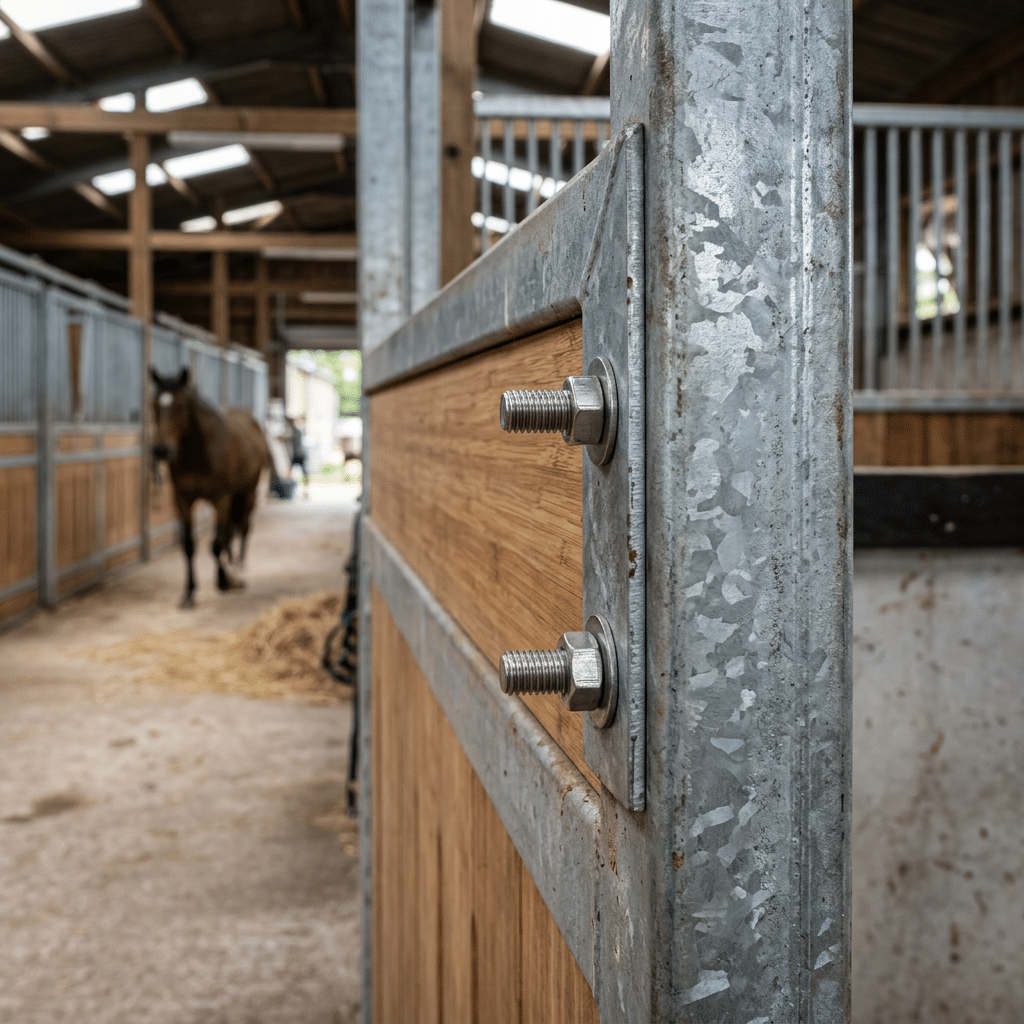
In regions prone to desert sandstorms, the choice of stable partition directly impacts both airflow and material longevity. An incorrect specification leads to poor ventilation, accelerated abrasion on components, and increased facility maintenance costs, ultimately affecting animal health and operational budgets.
This analysis compares half-mesh versus solid HDPE designs using empirical data. We evaluate each system against key performance metrics, including impact-absorbing UV-stabilized HDPE and الجلفنة بالغمس الساخن to BS EN ISO 1461, to define the most durable and effective solution for arid climates.
صعود الحوكمة البيئية والاجتماعية وحوكمة الشركات في مجال الإنشاءات
ESG is no longer optional in construction. By 2026, it’s a mandatory standard that directly impacts a company’s financial performance, project access, and risk profile.
ESG as a Mandatory Operational Standard
ESG compliance is quickly shifting from a competitive edge to a basic license to operate. The construction sector is under intense pressure, as it accounts for roughly 34% of global CO₂ emissions. This urgency makes strong ESG performance a critical business function, not just a marketing talking point.
- By 2026, ESG compliance is the expected baseline for any serious operator in the industry.
- A strong ESG track record provides direct access to green financing options that are unavailable to others.
- It also significantly reduces a project’s risk profile in the eyes of investors and insurers.
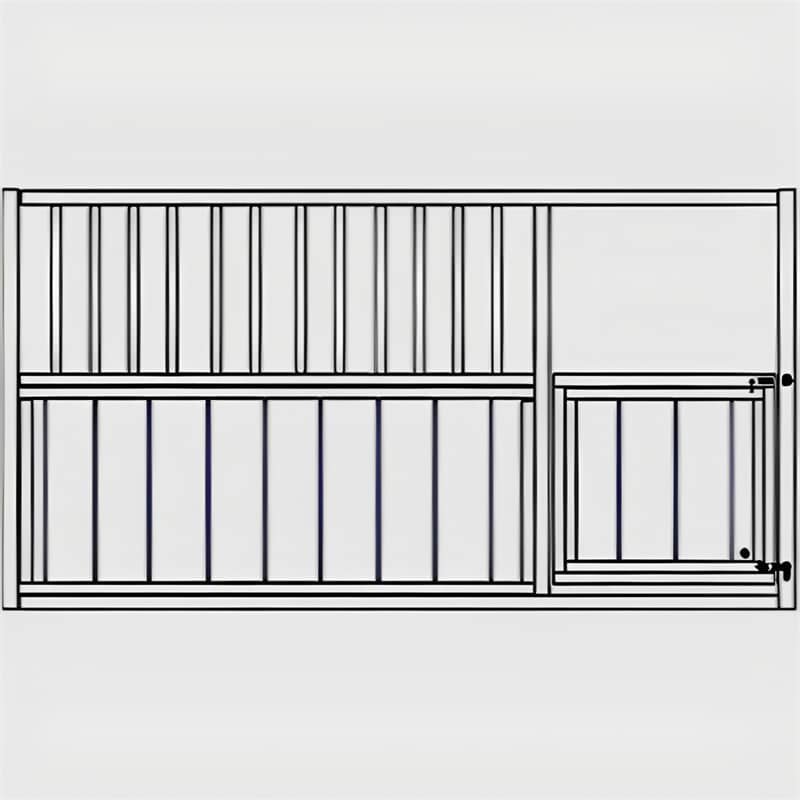
Reducing Carbon Footprints with Flat-Pack Logistics
A major part of a product’s environmental impact is its “embodied carbon,” which includes all emissions from manufacturing and transportation. Reducing these emissions is a key ESG metric that engineering can solve directly. Logistics is one of the biggest and easiest targets for improvement.
The difference between smart and outdated logistics is huge. For example, traditional fully welded stable systems are bulky and inefficient to ship. DB Stable’s نظام التجميع الذاتي was designed specifically to fix this, which creates a measurable environmental and financial advantage.
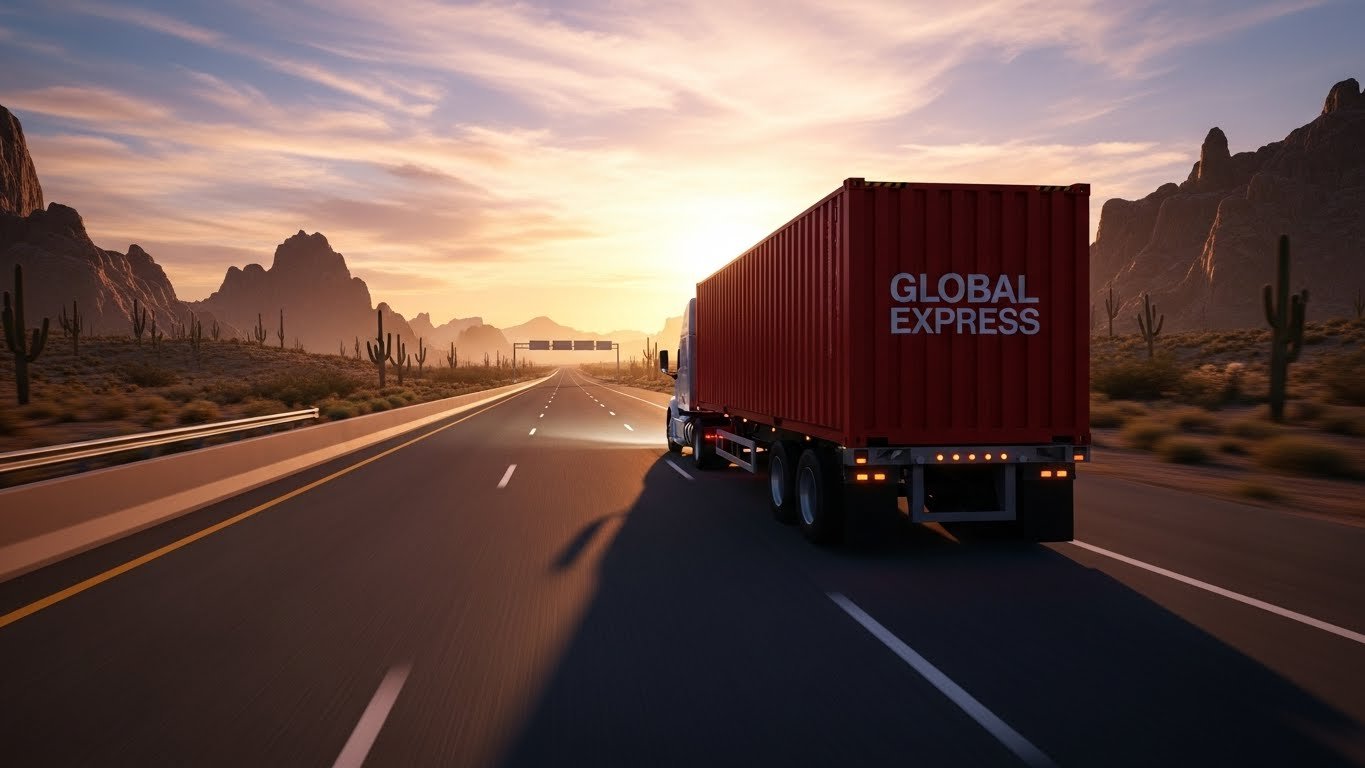
- Traditional Welded Sets: Only 12-15 stable sets can fit into a 40HQ حاوية شحن.
- DB Stable Flat-Pack System: 30-45 stable sets fit into the exact same 40HQ container.
- The Result: This design cuts freight requirements and fuel consumption by over 60% per unit shipped, directly lowering the product’s embodied carbon.
الابتعاد عن أخشاب الغابات القديمة (البلوط/الصنوبر)
Old-growth timbers face sustainability and maintenance issues. Modern stables use engineered materials like high-density bamboo (3x harder than oak) or zero-maintenance HDPE for better longevity and safety.
The Problems with Traditional Stable Woods
The use of old-growth oak and pine for stables is becoming unsustainable. These trees t
ake decades to mature, contributing to deforestation. Sourcing them no longer aligns with the responsible practices expected in modern construction.
Practically, these woods are a liability. They absorb moisture from urine and humidity, which leads to rot, mold, and warping. This compromises the structural integrity of the stall and creates an unhealthy, unhygienic environment for the horse.
High-Density Bamboo: The Superior Alternative
High-density, strand-woven bamboo is the engineered solution to traditional timber’s failures. Our bamboo boards have a Janka hardness rating over 3000 lbf, making them three times harder and more kick-resistant than oak. This density translates directly to a safer, more durable stall.
Bamboo is a fast-growing grass, not a tree, making it a highly renewable resource. It matures in just a few years. The material is also naturally resistant to mold and insect damage, which helps maintain a healthier stable environment without chemical treatments.
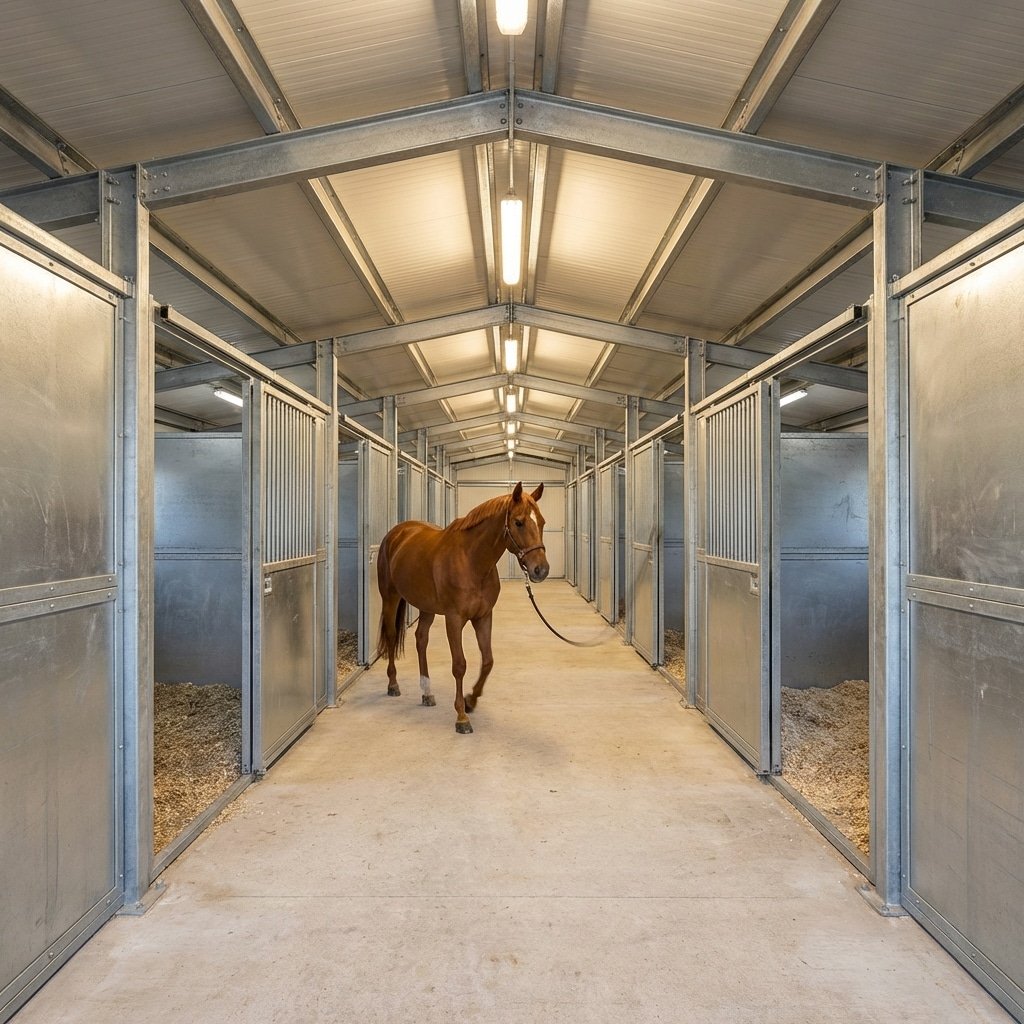
Custom Stables Engineered for Any Climate

أفضل المصانع التي تتبنى المواد المستدامة
Top factories set new benchmarks by integrating renewable energy, circular economy principles, and digital monitoring to achieve resource efficiency and zero-waste operations.
| Rank | Factory | الموقع | Key Sustainability Features |
|---|---|---|---|
| 1 | Siemens Electronics Works Chengdu (SEWC) | الصين | WEF Sustainability Lighthouse; 24% energy reduction, 48% waste reduction, and 3,000 tonnes annual CO₂ reduction since 2019 using digital twins and AI. |
| 2 | Nestlé Surčin | Serbia | Achieved zero waste to landfill, with all waste being recycled or recovered. |
| 3 | Unilever Facilities | India, UK | Flagship facilities that showcase environmental responsibility in sustainable manufacturing. |
| 4 | Procter & Gamble Taicang | الصين | Runs on 100% renewable electricity with advanced water management and zero manufacturing waste to landfill. |
| 5 | Lego Factory | فيتنام | Scheduled for 100% clean energy by 2026, powered by rooftop solar panels and large-scale battery storage. |
| 6 | Schneider Electric Network | US, China, Spain | Barcelona facility achieved zero CO₂ status with an integrated microgrid. Wuxi facility recognized as a WEF Advanced Lighthouse. |
| 7 | IKEA Zbąszynek | بولندا | Over 400 factories and suppliers switched to 100% renewable electricity by 2023, targeting net zero by 2050. |
| 8 | Ferrari E-Building | غير محدد | Employs advanced sustainability design. |
| 9 | Tesla Gigafactory | الصين | Advanced manufacturing processes minimize waste and enhance energy efficiency in EV production. |
| 10 | Google Facilities | غير محدد | Frequently listed in top sustainable factory rankings. |
The global move toward sustainable manufacturing is clear. These facilities show a heavy emphasis on renewable energy, circular economy models, digital tracking, and zero-waste goals. Investments often reach billions of dollars, reflecting a serious commitment to building climate-resilient operations with maximum resource efficiency.
خيزران منسوج من الخيزران: بالوعة كربون عالية الإنتاجية
Bamboo forests absorb more CO2 than typical forests. We lock this captured carbon into a durable, high-density product, creating a material with a negative carbon footprint.
How Bamboo Forests Capture Atmospheric Carbon
Bamboo forests are incredibly efficient carbon sinks. They sequester approximately 12 tons of carbon per hectare each year, far outpacing the 6–8 tons absorbed by typical forests. A single bamboo culm can pull 50–60 kilograms of CO2 from the atmosphere during its growth. After harvesting, the extensive root system remains, continuing to store carbon in the soil and support new growth.
High-Density Planks: Locking Carbon into a Durable Material
Our manufacturing process creates high-density strand-woven bamboo planks that lock sequestered carbon into a long-lasting product. With a Janka Hardness exceeding 3000 lbf, this material is three times harder than oak. Its high tensile strength allows it to replace emissions-intensive materials in various applications. This substitution provides “avoided emissions” while ensuring the captured carbon remains safely stored for decades.
Q235B Steel: The 100% Recyclable
إطار العمل
Q235B is a robust structural steel, equivalent to ASTM A36, valued for its strength and weldability. It is 100% recyclable, allowing the framework to be repurposed indefinitely.
The Structural Properties of Q235B
We use Q235B structural steel for our frameworks because it provides a reliable and safe foundation. It’s the international equivalent to ASTM A36, offering predictable yield and tensile strength that structural engineers depend on. Its excellent weldability is also critical, as it allows for strong, permanent joints during the fabrication process, ensuring the integrity of the final structure.
As a material, steel is fully recyclable. This isn’t just a minor benefit; it’s a core component of a circular economy. At the end of a stable’s long service life, the entire steel framework can be melted down and reused without any degradation in quality. This eliminates landfill waste and reduces the demand for virgin resources.
Ensuring Longevity with Hot-Dip Galvanization
Raw steel needs protection to last. Every Q235B component we produce undergoes Hot-Dip Galvanization After Fabrication. This means we weld the complete structure first, then immerse the entire piece in molten zinc. This process creates a complete, seamless protective barrier that covers every surface, corner, and weld.
Our galvanization process complies with the BS EN ISO 1461 standard, guaranteeing a thick zinc coating that averages over 70 microns. This metallurgical bond provides superior rust protection against moisture, ammonia, and physical abrasion. It is the only way to ensure the stable’s structural lifespan is maximized, even in the most demanding farm environments.
الأسئلة المتداولة
Is bamboo a sustainable choice for stable infill?
Yes, it’s a top-tier sustainable material. Bamboo is the world’s fastest-growing plant, reaching structural strength in 6-9 years—a fraction of the 25-75 years timber needs. It absorbs 35% more CO₂ than an equivalent stand of trees and regenerates from its own roots after harvesting, so it doesn’t need replanting. The high-density strand-woven bamboo we use is also three times harder than oak, making it both eco-friendly and extremely durable.
How does a galvanized steel stable compare environmentally to a wood barn?
Each has its trade-offs. Wood has a lower carbon footprint during initial production. But steel is 100% recyclable and can be reused over and over without losing any structural integrity. This high recyclability rate minimizes end-of-life waste, a big advantage over wood, which often ends up in a landfill. Steel construction also avoids any potential for deforestation.
What makes your steel frames suitable for cold climates?
For colder regions in Europe and North America, we upgrade the frames to Q345B steel. This is a low-alloy, high-strength steel with superior low-temperature impact toughness. It prevents the metal from becoming brittle and fracturing from horse kicks during freezing winter temperatures. This ensures the stable remains safe and durable all year round.
What does ‘Hot-Dip Galvanization After Fabrication’ mean?
This is our core standard for rust protection. It means we fully weld all the black steel components of a panel first. Then, the entire completed panel is submerged in molten zinc. This process creates a thick, consistent zinc coating (over 70 microns) that covers every surface, including the welds. This provides decades of rust-free life, unlike cheaper pre-galvanized tubing that has unprotected welds.
الأفكار النهائية
Choosing stable systems based on ESG compliance and logistics efficiency is no longer optional; it’s a direct investment in your project’s viability. While cheaper, fully welded options exist, our flat-pack design cuts freight costs by over 60% per unit. This protects your margins and aligns your supply chain with modern environmental standards.
The technical specifications confirm the value, but seeing the product is the final step. Request a pro-forma invoice for a 20GP trial order to validate our engineering firsthand. Our team can also provide the ISO 1461 galvanization reports and material datasheets required for your project tenders.

 Arabic
  English
  Spanish
  French
  German
0 تعليق