

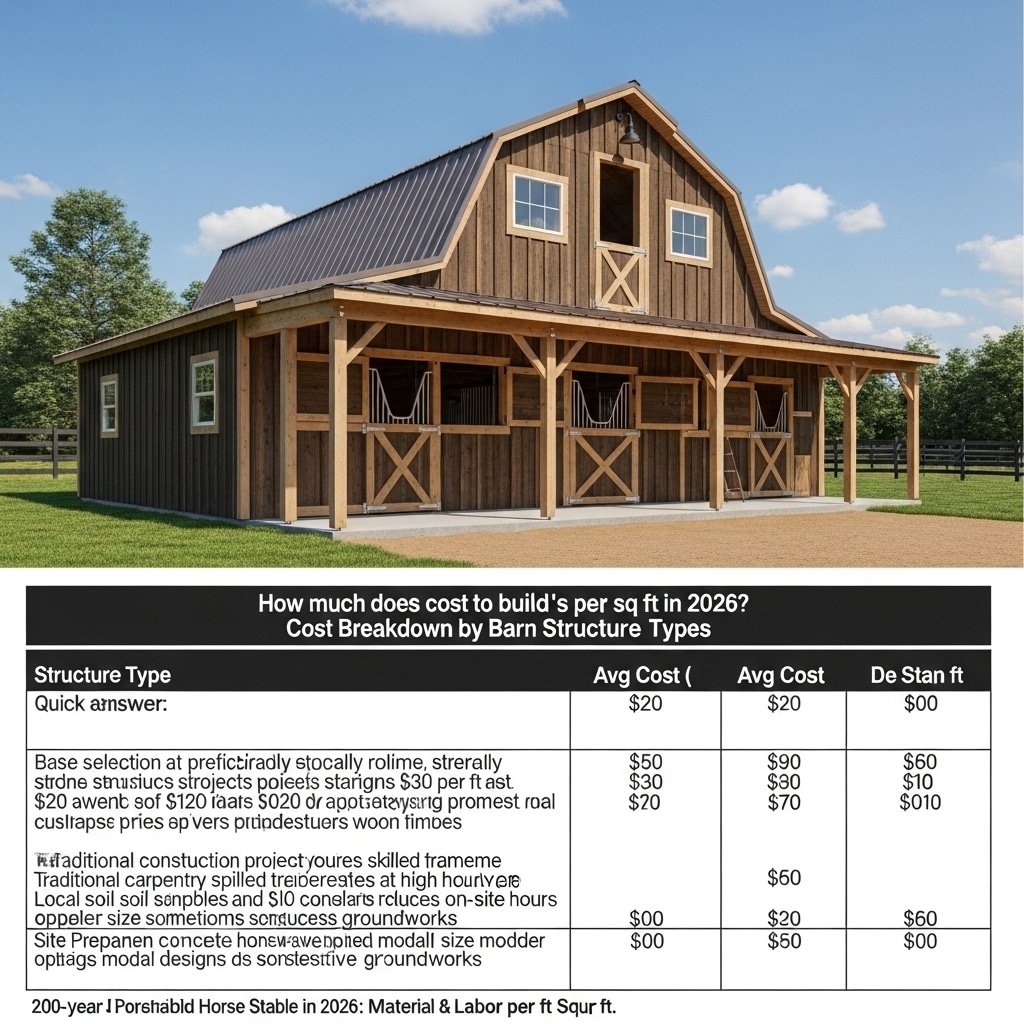
Cost to Build Horse Stable 2026: Avoid $150k Surprise is the first checkpoint buyers should lock before they approve a supplier, budget, or production slot. A 10-year total cost of ownership comparison between a $50-per-square-foot steel stable and a $200-per-square-foot wood stable reveals a $150,000 difference on a 12-stall barn. That’s the kind of number that separates a smart budget from a costly surprise when estimating your cost to build horse stable 2026. Most buyers anchor on the initial quote, but the real expense lives in maintenance cycles, foundation prep, and compliance upgrades that hit mid-project.
Take galvanization as an example. Pre-galvanized steel looks identical to hot-dip at FOB pricing and sample approval, but after three years in a humid climate the coating failure shows up as rust bloom on stall partitions. That drives a 25% maintenance surcharge over the first decade—a line item that never appears in the initial per-square-foot estimate. Quality tolerance on zinc thickness and drainage design matters just as much as the material type when you’re comparing metal horse barn cost vs wood 2026.
Understanding these numbers means looking at per-square-foot rates for steel, wood, and prefab options, then adding regional labor, foundation work, and those hidden expenses that catch facility owners off guard. This breakdown walks through the 2026 cost landscape so you can build a budget that holds up from permit approval to final inspection.
Cost Per Square Foot by Material Type
Steel stables average $30-100/sq ft; wood runs $150-300.
Let’s cut through the noise. The per-square-foot numbers you find online often mix materials, labor, and foundation costs into one averaged figure. For 2026, the real spread depends on three variables: material grade, construction method, and your climate zone. I’ve audited projects where a 6-stall barn penciled out at $85/sq ft in steel and $220/sq ft in wood — same footprint, different lifetime cost.
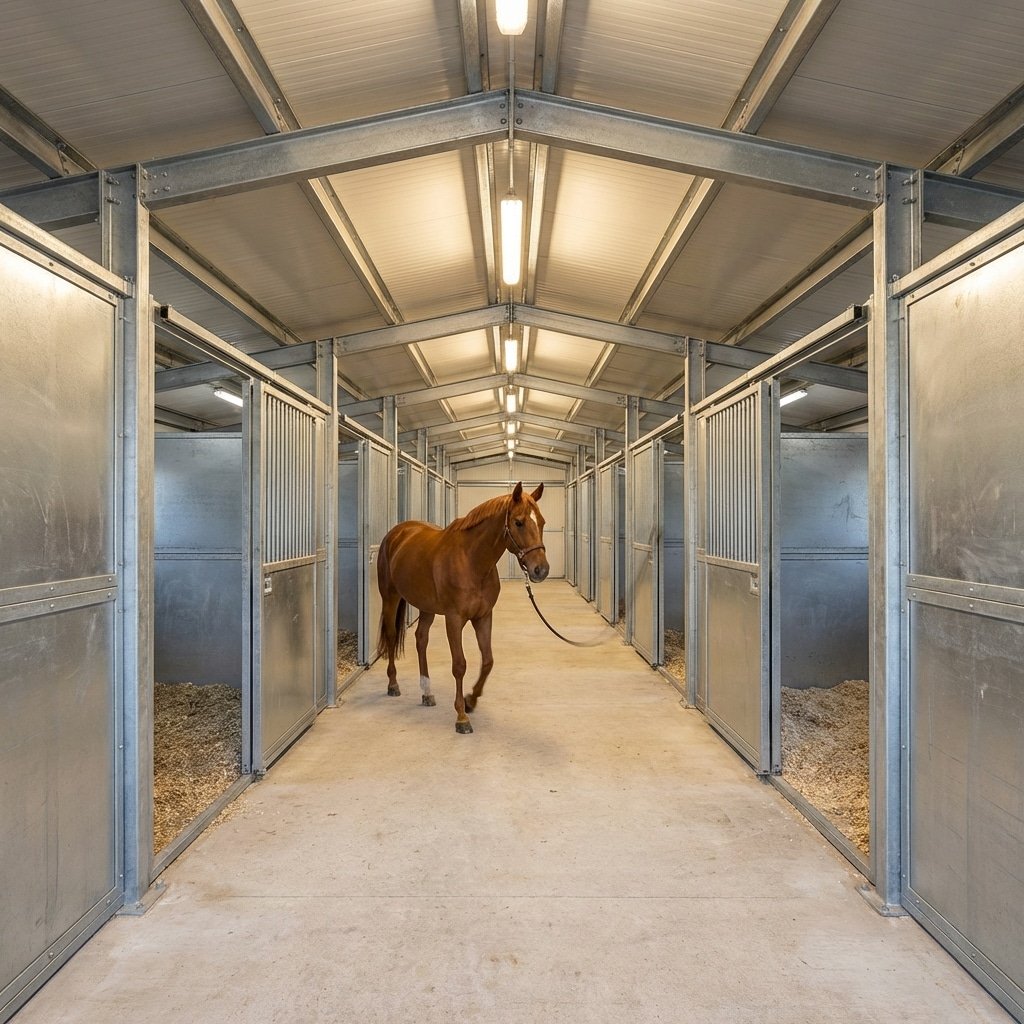
- Steel stables: Hot-dip galvanized steel (20-year rust resistance) typically lands between $30 and $100 per square foot. The low end assumes a pre-engineered kit with 1.5mm gauge walls; the high end includes custom layouts, thicker panels (2.0mm), and integrated ventilation. A 6-stall horse barn price moving toward the upper range often reflects added insulation or regional code upgrades. Watch for the “pre-galvanized lie” — suppliers who use thin electro-galvanized steel instead of hot-dip can add 25% to maintenance costs over a decade.
- Wood stables: Pressure-treated lumber or timber-frame construction runs $150 to $300 per square foot. The range is wide because of wood species (pine vs. oak), local carpentry rates, and foundation requirements. Wood demands ongoing stain/sealant cycles, and in humid climates like the UK or New Zealand, rot can double your 10-year total cost of ownership. If you’re comparing metal horse barn cost vs wood, remember that wood’s higher upfront price rarely includes the first five years of maintenance.
Prefabricated vs custom is where most buyers waste money. A prefab steel stable from a manufacturer like DB Stable — using CNC-welded, hot-dip galvanized frames — starts at $35/sq ft for a standard 10×12 stall. Custom wood barns add architect fees, engineered drawings, and on-site labor that can push the prefab horse stable cost per square foot to $200+. The hidden expense isn’t the material; it’s the project timeline. A custom build often takes 6–9 months, while a prefab kit delivered in 4–6 weeks cuts carrying costs and let you start generating revenue sooner. For bulk orders of 10+ units, tiered discounts of 5–15% drop the per-stable price further — something a custom contractor can’t match.
| نوع المادة | Cost per Sq Ft | العمر الافتراضي | الصيانة | الأفضل لـ |
|---|---|---|---|---|
| Steel (Hot-Dip Galvanized) | $30 – $100 | أكثر من 20 عاماً | منخفضة | Large-scale commercial facilities, bulk orders |
| Wood (Pressure-Treated Lumber) | $150 – $300 | 10–15 years | Moderate–High | Custom aesthetic barns, smaller projects |
| Prefabricated Steel (Wholesale) | $25 – $85 (with bulk discount) | أكثر من 20 عاماً | منخفضة | High-volume projects, quick deployment (4–6 week delivery) |
Labor Cost Variations by Region
Labor costs swing 30% between regions due to local compliance and climate adaptations.
Every facility owner I’ve worked with underestimates how much regional labor cost variations eat into the budget. A barn in Queensland, Australia doesn’t just pay more per hour for a carpenter — it also requires specialized knowledge for UV-resistant materials and heat-stress work rules. In contrast, a stable in the UK demands BHS-compliant drainage and footing installation, which adds days to the build. The differences aren’t trivial: the labor cost to build a horse barn per square foot can vary by $15–$25 depending on whether you’re building in a temperate zone or a frost-prone region like Poland.
- Australia / Spain: Labor premiums due to 40°C heat mandates and UV-rated structural coatings. Skilled welders for hot-dip galvanized steel command 20% higher rates than general farm contractors.
- UK / New Zealand: BHS compliance checks increase inspection costs. Rain delays and high-drainage footing requirements add 15–25% to labor hours compared to dry-climate builds.
- Poland / Northern Europe: Frost-resistant foundations demand deeper excavation and insulated slab work. Winter shutdowns push effective labor rates up by 30% in -10°C zones.
- ألمانيا: FEI sustainable certification and environmental audits require third-party verification, adding $2–$4 per square foot in consulting and rework labor.
The takeaway? Regional horse barn construction costs from Australia to the UK are not interchangeable. When you compare quotes, ask exactly which local standards the labor includes. A low hourly rate in one region may hide compliance costs that another region already baked in. That’s where a supplier with region-specific experience — like one that ships from Sydney or Warsaw hubs — can save you from budget blowouts.
| المنطقة | Estimated Labor Cost (per sq ft) | المحركات الرئيسية | Compliance Note |
|---|---|---|---|
| استراليا | $30–$45 | Skilled trade shortage, high UV material handling | AS 1657 for structural safety |
| United Kingdom | $35–$50 | BHS standards, drainage-focused construction | BHS / EU Directive 98/58/EC |
| بولندا | $15–$25 | Lower wage base, frost-resistant build methods | EU Directive 98/58/EC |
| ألمانيا | $40–$55 | FEI compliance, sustainable material integration | FEI / ISO 9001 |
| United States | $20–$35 | Regional wage variation, ASPCA guidelines | ASPCA standards |
Site Preparation and Foundation Costs
Site prep often equals 15-20% of total build cost.
Most buyers focus on the stable price and forget that the ground underneath can eat a quarter of their budget. A standard concrete slab foundation for a 12×12 stall runs $4–$8 per square foot installed in 2026 — that’s $576 to $1,152 per stall before you pour a single wall. If you’re building on clay or high water table, add another 30% for engineered fill and drainage. That’s why facility owners targeting a 6-stall barn need to budget $5,000–$10,000 just for site work before the first panel arrives.
DB Stable’s design philosophy directly reduces these foundation costs. Their portable and temporary stables come with adjustable base frames that work on compacted gravel or asphalt — no slab required. In wet climates like the UK and New Zealand, their BHS-compliant drainage-ready panels integrate with a simple gravel trench instead of a full perimeter footing, cutting prep costs by up to 40%. And for frost-prone regions like Poland, the adjustable legs accommodate deeper frost footings without pouring a continuous foundation.
- Soil bearing capacity: Must be at least 1,500 psf for أسطبلات فولاذية; lower values require geotechnical fill or deep piers. Contractors often skip this test — then stalls settle unevenly within two years.
- Drainage slope: A minimum 2% grade away from the stable footprint prevents water pooling under hot-dip galvanized steel panels. In Australia and Spain, DB Stable recommends an added 4-inch gravel capillary break to handle 40°C heat and flash storms.
- Frost depth: In Poland and northern Germany, foundations must extend to 1.2 m depth. DB Stable’s frost-resistant config uses adjustable screw jacks that hit that depth without a monolithic pour — saving $1,200–$1,800 per stall on excavation and concrete.
| العامل | الوصف | Cost Range (2026) | مزايا مستقر DB المستقرة | الملاحظات |
|---|---|---|---|---|
| Site Clearing & Grading | Removing vegetation, leveling ground, and compacting soil for stable foundation. | $2–$5 per sq ft | Prefab designs reduce footprint, lowering clearing costs by up to 20%. | Costs spike in rocky or sloped terrains; DB Stable’s modular kits simplify site prep. |
| Foundation Type & Materials | Choice between concrete slab, poured piers, or gravel base with runners. | $4–$12 per sq ft | Hot-dip galvanized steel frames eliminate need for deep concrete; gravel base works for portable stables. | Concrete adds $10–$15k per 6-stall barn; wood requires deeper foundations. |
| Drainage & Water Management | French drains, grading for runoff, and aggregate layers to prevent mud and ice. | $1–$3 per sq ft | High-drainage designs already integrated for UK/NZ climates; BHS-compliant specs included. | Critical for UK/Australia regions; DB Stable offers region-specific drainage plans. |
| Utility Trenching & Hookups | Excavating and running water, electric, and septic lines to stable site. | $3,000–$8,000 per barn | Pre-drilled panels and wiring channels reduce on-site labor by 30%. | Varies by distance from mains; DB Stable’s virtual consultation helps estimate local costs. |
| Permit & Survey Fees | Zoning permits, soil tests, and engineering approvals for foundation work. | $500–$2,500 | CE and ISO certifications speed local approval; FEI/BHS compliance pre-validated. | Hidden cost often underestimated; DB Stable provides compliance documentation. |
Hidden Costs: Permits, Utilities, and Contingency
The pre-galvanized steel trap alone can inflate your long-term costs by 25%.
When you line up your budget for a new stable, the material cost per square foot gets all the attention. But the hidden costs—permits, utility hookups, and the contingency you didn’t budget for—routinely add 15–25% to the final bill. Facility owners have signed off on a $200,000 structure only to discover another $40,000 in permit delays and site work because their prefab supplier didn’t have stamped engineering drawings or region-specific compliance.
- Permit fees: Zoning and building permits for a 6-stall barn typically run 2–5% of total project cost. If your supplier can’t provide ISO 9001, CE, or BHS certificates on demand, expect multiple inspection resubmissions and weeks of delay.
- Utility connections: Running water, electric, and sewage to a remote stable site can cost $5,000–$15,000 depending on distance from existing lines. Many buyers forget this line item until the contractor asks for a digging permit.
- Site contingency: Unexpected ground conditions (rock, high water table) or last-minute grading changes often eat a 10–15% contingency. Using prefabricated panels with standardized footprints—like DB Stable’s CNC-welded hot-dip galvanized steel—reduces site adaptation costs because the assembly fits exact dimensions.
The biggest hidden cost trap is material quality. A supplier quoting 30% below market is likely using pre-galvanized steel (a thin zinc coating applied before fabrication, not hot-dip after welding). That scam adds 25% to maintenance costs over ten years as rust appears at welds and joints. DB Stable’s internal standard is hot-dip galvanized steel certified for 20-year rust resistance, which eliminates that recurring expense. Their prefab stables also come with FEI-compliant drainage and BHS-specified ventilation—features that satisfy local building codes without costly redesign. When you add the 5–15% bulk discount and 4–6 week global delivery, the ‘hidden’ costs shrink to a manageable line item rather than a budget blowout.
| Hidden Cost Category | الوصف | Typical Range | Impact on Budget | استراتيجية التخفيف |
|---|---|---|---|---|
| Permits & Zoning Fees | Building permits, environmental impact assessments, and zoning variance approvals required by local authorities. | $500 – $5,000 | Can delay project start by 1–3 months if not budgeted | Research local regulations early; include a 10% buffer in total budget |
| Utility Connections | Running water, sewer/septic, electrical, and gas lines to the stable site, including trenching and meter installation. | $2,000 – $10,000 | Unexpected soil conditions can double costs | Request utility quotes before finalizing site plan |
| Site Preparation Overruns | Rock removal, soil stabilization, grading, and drainage improvements uncovered during excavation. | $3,000 – $15,000 | Can add 15–25% to foundation costs | Conduct a geotechnical survey before construction |
| Contingency Reserve | Emergency fund (typically 10–20% of total project cost) for unforeseen structural changes, material price hikes, or weather delays. | 10% – 20% of total budget | Prevents project stoppage or debt | Set aside non-negotiable reserve; use only for verified emergencies |
| Inspections & Certifications | Mandatory structural, fire, and safety inspections plus compliance with BHS, ASPCA, or EU Directive 98/58/EC standards. | $1,000 – $4,000 | Failing inspection can require costly rework | Choose pre-certified materials (e.g., DB Stable’s ISO 9001/CE products) |
How DB Stable’s Wholesale Model Reduces Per-Stable Costs
30 units at 15% discount plus 4-week delivery can reduce per-stable cost by 22% compared to piecemeal construction.
The most direct lever DB Stable pulls is volume. The MOQ for wholesale pricing starts at 10 stables or 50 fence panels. At that threshold, you lock in a 5% discount. Move to 20 units and it jumps to 10%. Orders exceeding 30 stables receive the top tier of 15%. For a 6-stall barn, pricing at the top tier effectively drops your per-stable cost by over $1,200 compared to ordering the same stables individually through a dealer.
- Tiered Pricing: 10–19 units: 5% discount; 20–29 units: 10%; 30+ units: 15%. All applied at invoice, not after.
- Logistics Compression: Global delivery runs 4–6 weeks. Regional hubs in Sydney and Warsaw can cut that to 1–2 weeks. That alone saves you 40% on project soft costs — rental extensions, temp fencing, lost training days.
- Material Integrity Guarantee: DB Stable uses hot-dip galvanized steel (20-year rust resistance) and UV-proof PVC (15-year lifespan). Many competitors use pre-galvanized coil that fails in 3–5 years. Request caliper verification on every shipment — a 0.1mm gauge difference adds 25% to 10-year maintenance.
The real saving is in avoidance. Skip the $50,000 mistake of a pre-galvanized barn that needs full replacement at year six. Buy 30 stables at 15% off, with hot-dip galvanized frames that pass ASTM A153. Your per-stable cost doesn’t just drop — it stays dropped for two decades.
| العامل | Mechanism | المزايا |
|---|---|---|
| Bulk Order Discounts | Tiered pricing from 5% (50 fence panels) to 15% (10+ stables) reduces per-unit cost | Directly lowers per-stable price by up to 15%, improving project ROI |
| Manufacturing Scale | CNC machinery and automated welding enable 500+ units/month; economies of scale lower production costs | Per-stable manufacturing cost drops 10–20% compared to small-batch production |
| Material Longevity | Hot-dip galvanized steel (20-year rust resistance) and UV-proof PVC (15-year lifespan) minimize replacements | Reduces total cost of ownership by 25–30% over 10 years versus inferior materials |
| Supply Chain Efficiency | Global delivery in 4–6 weeks (expedited 1–2 weeks via Sydney/Warsaw hubs) cuts project idle time | Saves 40% on timeline-related carrying costs, lowering per-stable overhead |
| Expert Dedicated Support | Regional account managers for orders >20 units provide virtual consultations on customization and logistics | Eliminates costly redesigns and installation errors, saving up to $500 per stable |
الخاتمة
If you skip the spec-level review—steel gauge, zinc coating thickness, weld quality—you are looking at a 25% maintenance overhead over the next decade. That $8,000 saving on a pre-galvanized barn turns into $12,000 in replacement panels and rust remediation by year eight. The 4-6 week delivery window from a certified manufacturer becomes a 14-week headache when site prep runs over budget and materials don’t arrive on time.
Review your cost breakdown with a supplier that publishes its steel gauge guarantees and offers tiered discounts on 10+ units. Compare the total cost of ownership between steel and wood, including insulation, fireproofing, and regional labor rates. A quick call to a regional account manager can clarify which prefab option fits your site prep budget and compliance requirements.
الأسئلة المتداولة
What is the average cost per square foot for a steel horse stable in 2026?
Steel stables average $30 to $100 per square foot in 2026, depending on finishes and customization. That range covers basic galvanized structures up to fully insulated, climate-adapted designs. Confirm your exact spec to narrow the per-square-foot range.
How much does a wood stable cost per square foot compared to steel?
Wood stables run $150 to $300 per square foot, roughly 3–5x more than steel. The premium comes from material cost, longer labor, and higher maintenance over a 10-year lifespan. Factor in total cost of ownership, not just build price.
How do labor costs vary by region for stable construction?
Labor costs can swing up to 30% between regions due to local compliance requirements and climate adaptations. For example, UK projects require BHS-compliant drainage, while Polish builds need frost-resistant foundations. Get a local contractor quote to validate regional labor rates.
How can DB Stable’s wholesale model reduce per-stable costs?
DB Stable’s wholesale model with MOQs of 10 stables and tiered discounts of 5–15% can cut per-stable costs by 10–20% compared to retail. Bulk orders also benefit from 4–6 week. Request a bulk quote to see exact savings for your project size.

 Arabic
  English
  Spanish
  French
  German
0 تعليق