


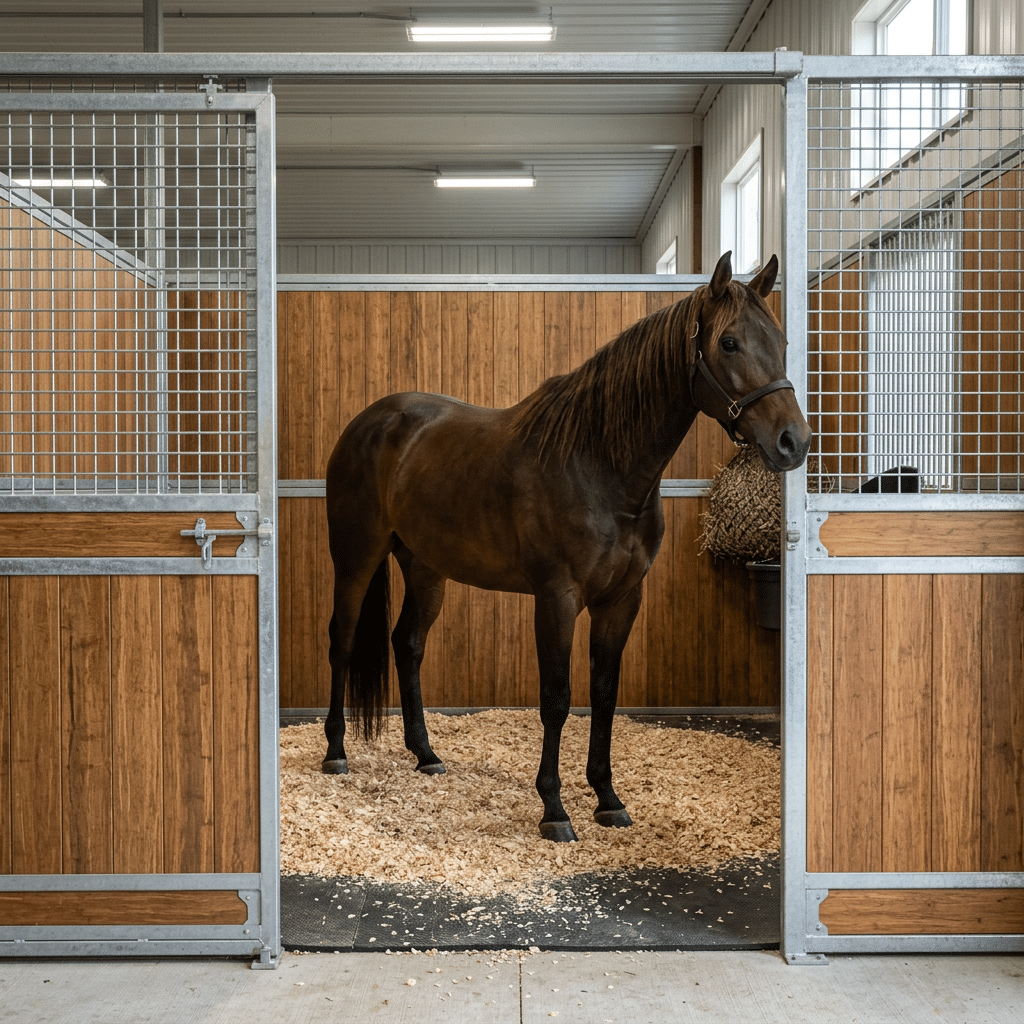
Police/Military HQ stabling projects demand infrastructure that survives abuse, not just weather. While traditional timber specifications fit the aesthetic, they fail the total cost of ownership test when 1,200-pound tactical equines begin cribbing or kicking. Relying on standard consumer-grade softwood for government contracts creates a cycle of constant maintenance and rapid depreciation that busts long-term facility budgets.
This briefing benchmarks institutional stabling against the ISO 1461 Hot-Dip Galvanization standard to ensure a 50-year lifecycle. We analyze how High-Density Strand Woven Bamboo with a Janka Hardness over 3000 lbf outperforms oak, and how flat-pack logistics reduce freight costs by 60 percent for large-scale government bids.
صعود الحوكمة البيئية والاجتماعية وحوكمة الشركات في مجال الإنشاءات
By 2026, ESG is a mandatory framework demanding low-carbon materials, strict animal welfare designs, and transparent supply chains, shifting from a trend to a regulatory requirement.
The 2026 Mandate: Decarbonization and Animal Welfare
Construction projects now face strict carbon budgets. The industry has moved past voluntary “green” labels to enforced
embodied carbon limits. This necessitates materials with lower environmental footprints from the extraction phase through to installation. Ignoring these limits risks financing challenges and regulatory penalties.
The “Social” aspect of ESG often gets lost in corporate jargon, but in our sector, it prioritizes user safety—specifically, high animal welfare standards. Designs must actively prevent injury and stress. Governance requirements now demand absolute traceability in the supply chain. You must prove labor compliance and material authenticity, ensuring that the steel and timber specified are exactly what arrives on site.
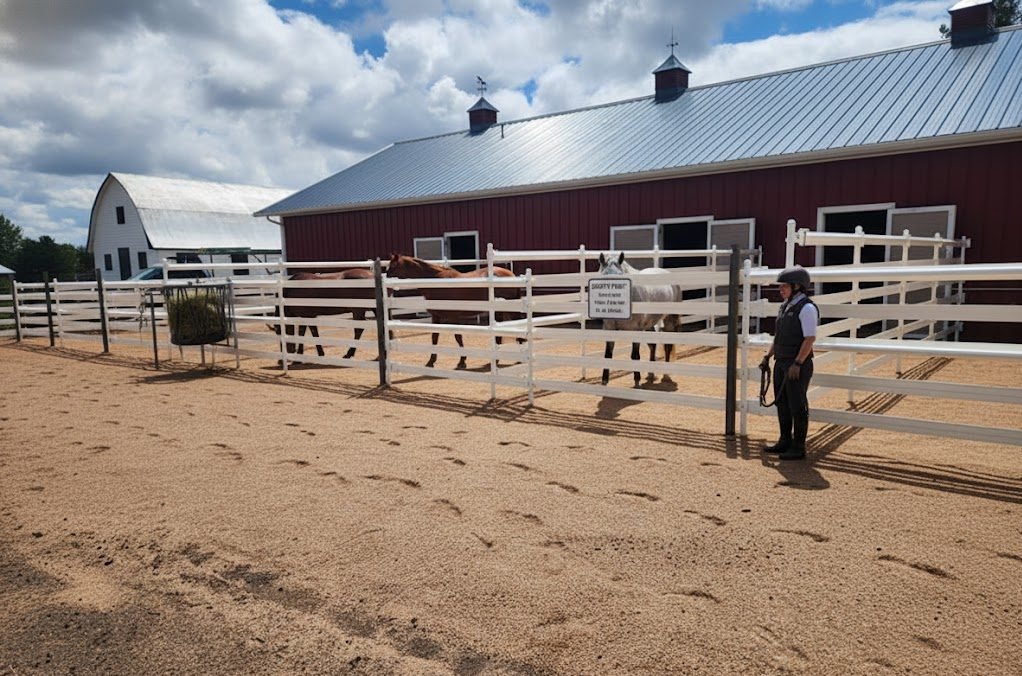
Material Solutions: Renewable Bamboo and Recyclable HDPE
Meeting these stricter ESG goals requires moving away from traditional materials that carry high carbon debts or maintenance loads. We align manufacturing with these standards through specific material engineering:
- خيزران عالي الكثافة: This is a rapidly renewable resource that matures in 3-5 years, unlike slow-growth hardwoods. With a Janka Hardness > 3000 lbf, it offers superior durability without the deforestation impact of Oak or Pine.
- HDPE Infill: Our high-density polyethylene is fully recyclable and requires zero maintenance. This eliminates the lifecycle chemical load associated with the paints, stains, and varnishes required for traditional wood.
- Lifecycle Efficiency: We utilize Q345B Low Alloy High Strength Steel for critical structural components. This extends the facility’s lifespan and reduces replacement frequency, directly supporting circular economy principles.
الابتعاد عن أخشاب الغابات القديمة (البلوط/الصنوبر)
Traditional softwoods rot, warp, and encourage cribbing in damp stable environments. The industry standard has shifted to High-Density Strand Woven Bamboo and HDPE for zero maintenance and superior hardness.
Structural Limitations: Why Oak and Pine Fail Over Time
Many traditionalists still request Oak or Pine for the “classic look,” but functional reality often disappoints them within the first 24 months. A horse stable is a hostile environment for natural softwood. It is damp, acidic due to ammonia, and houses 1,200-pound animals that get bored. Relying on soft timber in this setting creates three specific liabilities for facility managers.
- Susceptibility to Cribbing: Pine is soft. Bored horses chew rails, destroying the aesthetic and compromising the partition’s structural integrity. Once a horse starts cribbing on soft timber, it is nearly impossible to stop without covering every edge in metal strips.
- Hygiene and Rot: Natural timber is porous. It absorbs moisture, urine, and cleaning fluids. Over time, this creates a breeding ground for bacteria and mold deep within the grain that power washing cannot remove.
- The Maintenance Trap: Natural wood requires regular stripping, staining, and sealing to maintain its appearance. For a facility with 40+ stalls, this represents hundreds of labor hours annually that modern materials eliminate entirely.
The Engineered Advantage: Strand Woven Bamboo vs. Natural Timber
To solve the durability issues of softwood without losing the aesthetic warmth of wood, DB Stable specifies High-Density Strand Woven Bamboo. This is not the hollow bamboo used in garden furniture. It is an engineered material where fibers are compressed under extreme pressure using heavy-duty resin, creating a board that behaves more like steel than wood.
- Superior Density: Our bamboo infill carries a Janka Hardness rating > 3000 lbf. For context, Red Oak sits around 1,290 lbf. This makes our engineered bamboo approximately three times harder than traditional hardwood, rendering it effectively impervious to teeth and hooves.
- مقاومة الصدمات: Dry pine becomes brittle over time and can shatter into dangerous splinters under a heavy kick. Strand Woven Bamboo’s dense, fibrous structure absorbs impact energy, preventing catastrophic failure and reducing injury risks.
- Sustainability without Sacrifice: Bamboo is a rapidly renewable grass that matures in 3-5 years, compared to the 50-100 years required for Oak. This allows projects to meet modern environmental standards while actually upgrading the physical durability of the facility.
20-Year Rust Resistant Modular Horse Stables
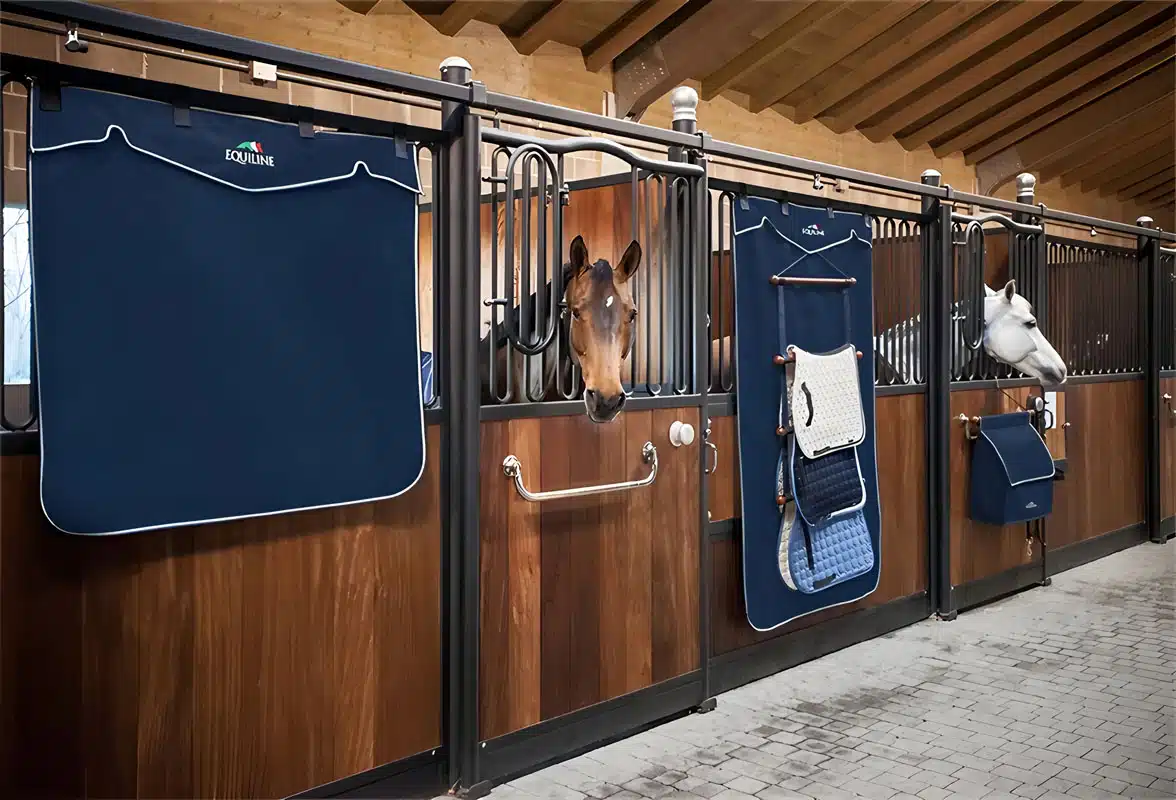
أفضل المصانع التي تتبنى المواد المستدامة
ESG compliance is now a capital requirement, not a PR strategy. Leading manufacturers leverage digital twins and recyclable infrastructure to secure supply chains and reduce operational costs by over 20%.
In 2026, the distinction between “green manufacturing” and “standard manufacturing” is vanishing. Regulatory pressure from the EU and SEC, combined with the $1.37 trillion green building market, has forced a pivot. We are seeing a move away from single-use construction toward circular economy principles, where factories are built as material banks for the future.
Global Leaders in Green Manufacturing
The following facilities have moved beyond basic compliance (ISO 14001) to set new benchmarks in energy independence and waste reduction.
| Factory / Operator | الموقع | معلم رئيسي في مجال ESG |
|---|---|---|
| Siemens Electronics Works (SEWC) | تشنغدو، الصين | Reduced production waste by 48% using digital twins; WEF Sustainability Lighthouse. |
| Lego Group | فيتنام | $1bn investment in carbon-neutral operations; powered by 12,400 rooftop solar panels. |
| شنايدر إلكتريك | Barcelona, Spain | Achieved Zero CO2 status via integrated microgrids and battery storage systems. |
| IKEA | Zbąszynek, Poland | Transitioned 408 factories and suppliers to 100% renewable electricity. |
| Tesla Gigafactory | Shanghai, China | Advanced waste minimization processes integrated directly into the production line. |
The Material Shift: Steel & Bamboo
These factories are not just powered differently; they are built differently. The construction of modern industrial facilities relies heavily on materials that lower embodied carbon without sacrificing durability.
- Q235B Structural Steel Frameworks: Unlike concrete, which has a massive carbon footprint, Q235B Steel (equivalent to ASTM A36) is 100% recyclable. It allows facilities to claim “circular economy” credits because the structure itself can be re-smelted indefinitely without losing tensile strength. This is why we strictly utilize Q235B (or Q345B for cold climates) in our own manufacturing—it creates a recoverable asset rather than landfill waste.
- High-Density Strand Woven Bamboo: For interiors and non-structural partitioning, factories are abandoning slow-growing hardwoods like Oak (100-year maturity) for bamboo. Strand Woven Bamboo matures in just 3-5 years and, when processed correctly, achieves a Janka Hardness > 3000 lbf—making it three times harder than Oak and highly resistant to industrial wear.
Why Digital Twins Matter
Siemens and Schneider Electric highlight the role of data. By creating a “Digital Twin” of the factory floor, operators can simulate energy consumption before a machine is even turned on. This prevents over-engineering of HVAC systems and optimizes the usage of materials like hot-dip galvanized steel, ensuring that zinc coatings (typically >85 microns for structural parts) are applied efficiently to maximize lifespan and minimize replacement cycles.
خيزران منسوج من الخيزران: بالوعة كربون عالية الإنتاجية
Strand-woven bamboo acts as a massive carbon sink, sequestering up to 600kg of CO2 per cubic meter while delivering a density exceeding 1,080 kg/m³—three times harder than oak.
Lifecycle Carbon Sequestration
Traditional hardwood sourcing requires patience that the current climate crisis does not afford. An oak tree takes 40 to 60 years to reach harvest maturity. In that same window, a bamboo grove regenerates 10 to 12 times. Moso bamboo reaches full structural maturity in just 3 to 5 years, allowing for rapid, selective harvesting that leaves the root system intact to prevent soil erosion.
This biological efficiency creates a verifiable carbon sink. Analysis of the strand-woven bamboo lifecycle reveals a negative carbon footprint of approximately -600 kg CO2-eq/m³. By locking carbon into the fiber structure and displacing energy-intensive materials like concrete, steel, or slower-growing timber, bamboo significantly lowers the embodied carbon of a stable project. For developers managing strict ESG carbon budgets, specifying this material provides immediate emission offsets without altering the construction timeline.

Structural Density and 3000 lbf Hardness
Standard timber often fails under the physical abuse of a stable environment. Horses chew soft pine and can kick through low-grade plywood. DB Stable engineers the Professional and Royal Series using High Density Strand Woven bamboo boards, typically 28mm to 38mm thick. We do not use raw bamboo culms; we strip the fibers, boil them to remove sugars (eliminating the food source for pests), and compress them with resin under immense pressure.
- Density: Exceeds 1,080 kg/m³, making it denser than water and significantly heavier than standard hardwoods.
- Janka Hardness: Rated > 3000 lbf. Compared to Red Oak (~1290 lbf), this material is nearly three times harder.
- Resilience: The high-pressure resin compression renders the board impervious to moisture absorption, rot, and mold,
even in wash bays.
This density serves a critical safety function: impact resistance. A kick from a warmblood exerts massive force. The >3000 lbf rating ensures the partition absorbs the energy without shattering, protecting both the animal and the facility’s investment. This creates a “Kick-Proof” barrier that withstands daily equine impact better than any natural timber on the market.
فولاذ Q235B: إطار 100% القابل لإعادة التدوير
Q235B is a low-carbon structural steel equivalent to ASTM A36, offering 235 MPa yield strength. It is 100% recyclable and protected by ISO 1461 galvanization for a 20+ year lifecycle.
Material Composition: Q235B vs. ASTM A36 Standards
Structural integrity starts with the raw material. We utilize Q235B structural steel because it chemically and mechanically mirrors the American ASTM A36 standard. This equivalence provides a guaranteed minimum yield strength of 235 MPa, ensuring the frame withstands the dynamic loads typical in equestrian environments without the unpredictability associated with lower-grade alloys.
- حد الخضوع: 235 MPa, matching ASTM A36 performance specifications.
- سماكة الجدار: We strictly adhere to a مقياس 14 (2.0mm – 2.5mm) standard for all post profiles to prevent deformation.
- Weldability: Consistent chemical composition allows for deep, reliable structural welds that do not crack during cooling.
Safety in the stable often comes down to how metal behaves under impact. Unlike cast iron or high-carbon steels which can be brittle and snap, Q235B possesses high ductility. If a horse kicks the frame with massive force, the steel is engineered to deform and absorb the energy rather than shattering. This ductility prevents the creation of sharp, jagged edges that could cause catastrophic injury to the animal.
Sustainable Lifecycle: ISO 1461 Durability and Reclamation
Steel is a cornerstone of the circular economy. Our Q235B framework is 100% recyclable at the end of its service life, contributing to government green procurement mandates that penalize single-use materials. Once the building is decommissioned, the material can be re-smelted without losing its properties, reducing landfill impact compared to mixed-material waste.
- ISO 1461 Protection: Hot-dip galvanization بعد fabrication extends the product lifecycle to over 20 years.
- Zinc Coating Specs: Structural parts receive an average coating > 85 microns, far exceeding standard pre-galvanized sheets.
- Chemical Safety: Steel eliminates the toxic leaching issues associated with the disposal of chemically treated timber.
Sustainability is ultimately a function of durability. By applying a thick zinc coating through the hot-dip process, we prevent rust and degradation for decades. This reduces the frequency of replacement cycles—lowering the carbon footprint associated with manufacturing, shipping, and installing new stables every few years.
الأسئلة المتداولة
Why is Hot-Dip Galvanized Steel preferred over wood for government infrastructure?
Government projects prioritize Total Cost of Ownership (TCO). Wood degrades, rots, and demands frequent chemical treatments to survive outdoors. In contrast, our Hot-Dip Galvanized steel (ISO 1461) bonds zinc to the steel at 450°C, creating a metallurgical barrier that lasts 50-70+ years with zero structural maintenance. Steel is also 100% recyclable, whereas treated lumber often ends up as hazardous landfill waste.
Is bamboo infill durable enough for large police or military horses?
Yes. We utilize High-Density Strand Woven Bamboo, engineered to a Janka hardness exceeding 3000 lbf—making it 3x harder than Oak. It withstands heavy impact from tactical animals without splintering. This material combines the “Kick-Proof” resilience required for safety with the sustainability of a resource that regenerates in just 5-7 years, compared to decades for hardwoods.
How does the flat-pack delivery system support sustainability goals?
Logistics efficiency directly impacts your carbon footprint. Traditional fully welded stalls waste volume, allowing only 12-15 sets per container. Our engineered flat-pack system allows us to load 30-45 sets per 40HQ container. This creates a 200%+ increase in shipping density, significantly lowering fuel consumption and transport emissions per unit while protecting your profit margins on freight.
What maintenance is required for the HDPE infill options?
Our UV-stabilized HDPE infill is strictly “Zero Maintenance.” It is impervious to moisture, rot, and bacteria, meaning you never need to paint, stain, or seal it. Cleaning involves a simple water wash-down. This eliminates the need for harsh cleaning chemicals or solvents in the facility, creating a healthier environment for the horses.
Does the stable design support passive ventilation?
Yes. Our open top grill designs actively promote “Stack Effect Ventilation.” Hot, stale air naturally rises and escapes through the top grill, which draws fresh, cool air in from the bottom safety gap (approx. 50mm). This continuous natural airflow reduces ammonia levels and humidity without relying on energy-consuming electric fans or HVAC systems.
الأفكار النهائية
Institutional projects operate on Total Cost of Ownership, where initial savings on softwood often result in expensive maintenance failures. Specifying Q235B structural steel and High-Density Bamboo eliminates the recurring repair costs that drain municipal budgets. This “Kick-Proof” standard ensures your infrastructure survives the hostile environment of a working police stable for decades.
Government tenders demand absolute precision, so validating material compliance is your priority. Request a technical sample kit to verify our ISO 1461 galvanization thickness and bamboo density against your bid requirements. Contact our engineering team today to lock in your specifications before stricter ESG mandates take full effect.

 Arabic
  English
  Spanish
  French
  German
0 تعليق