


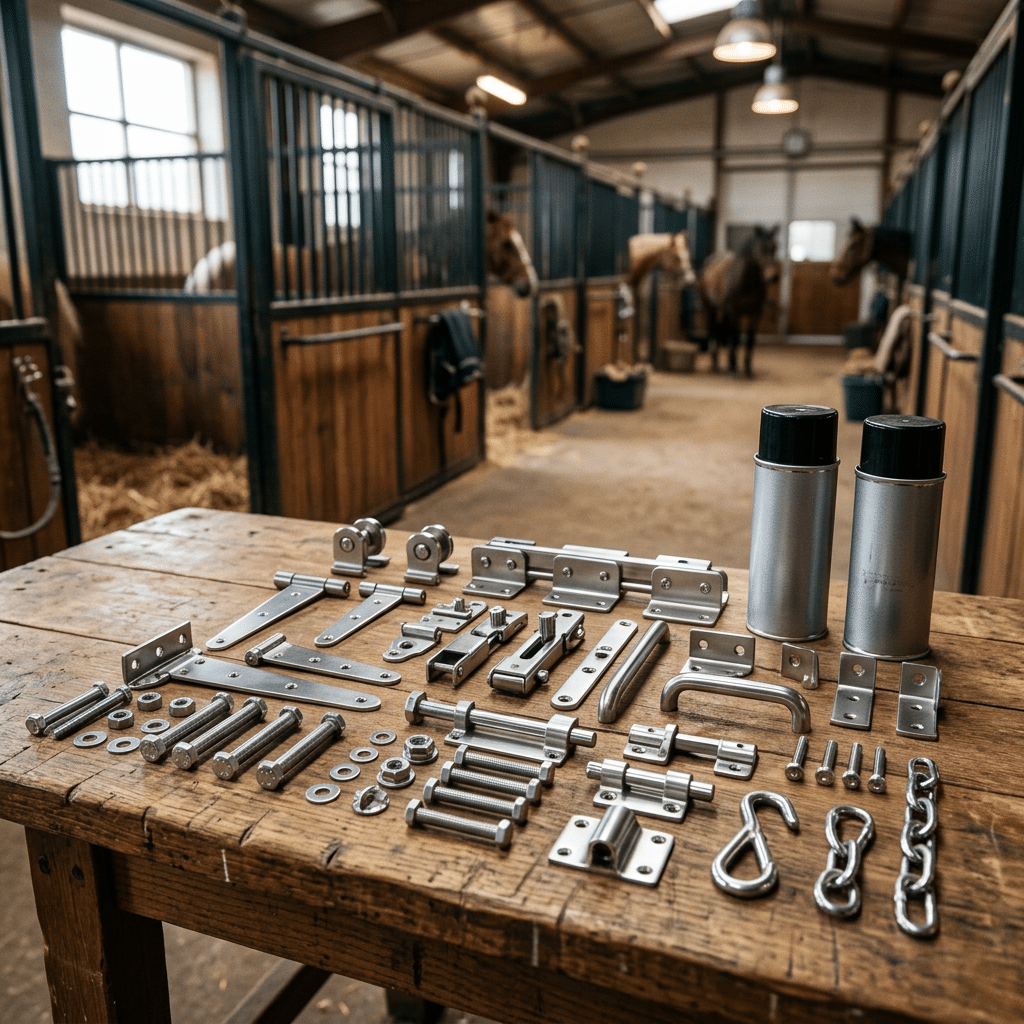
Flat-pack shipping math is what separates distributors who actually make money from those who don’t. Weld stalls together and you max out at 15 sets per container. That empty space you’re paying freight for? It eats your gross margin on every single unit.
Let’s run the container numbers. Welded stalls are low-density cargo. A steel pallet flat-pack system? It loads 45 sets into a 40HQ container. The per-stall freight cost difference isn’t trivial—it’s the difference between a healthy bottom line and a bleeding one.

The Logistics Nightmare of “Fully Welded” Stalls
Fully welded stalls are bulky, non-stackable units that create massive shipping inefficiency. They fit far fewer units per container, which inflates freight costs and hurts distributor margins.
The Problem of Cubic Volume and Dead Space
Welded stalls ship as one rigid piece. Can’t break them down. Can’t stack them tight. That structure leaves dead space inside every container. Freight lines charge you for that wasted volume. You’re literally paying to ship air, and that cost lands directly on your unit cost.
That inefficiency follows you into the warehouse, too. Pre-welded stalls are bulky and awkward. They eat floor space that could hold profitable inventory. For a distributor, that’s higher overhead and less room for products that actually move.
Drastically Reduced Container Loading Capacity
Here’s the brutal math. A standard 40-foot high-cube container fits 12 to 15 welded stall sets. That’s it. Low loading density like that kills any import business. It’s a cost problem baked into the design.
Split the ocean freight cost across that tiny unit count and the per-stall shipping charge goes through the roof. That squeezes your margin as a distributor and jacks up the price for the farm buyer. Makes the whole product harder to sell.
The Flat-Pack Solution: Steel Pallet Engineering
Flat-pack engineering transforms bulky horse stalls into modular parts stacked on a custom steel pallet. This system dramatically increases container capacity and protects distributors’ profit margins by slashing freight costs.
Modular Design for Maximum Shipping Density
Shipping fully-welded horse stalls is a logistics nightmare. You’re paying to move massive amounts of empty air, which kills your per-unit cost. Instead of a bulky pre-assembled structure, we engineer each stall as a system of individual components: front panels, side partitions, and infill planks. That modular design lets every part nest and stack flat.
The result is a huge gain in shipping density. A standard 40HQ container might fit 12 to 15 fully-welded stalls. With our flat-pack system, that same container holds between 30 and 45 sets. That’s not a small improvement — it fundamentally changes the economics for our distributors.
The Custom Steel Pallet Packaging Method
Breaking down the stalls is only half the battle. We precisely arrange the components for multiple stalls and strap them onto a single heavy-duty steel pallet. This creates one solid, secure unit that forklifts handle easily. No loose loading — that’s a major cause of damage and loss during transit.
This method protects the product from scratches and warping. It also ensures a safe, organized unloading process at the final destination. Your warehouse team gets a clean, manageable unit — not a chaotic pile of loose parts. That streamlines inventory and gets the product ready for distribution faster.
Engineered Horse Stables for Any Climate.
The Math: 15 Sets vs. 45 Sets in a 40HQ
Welded stalls max out around 15 sets per 40HQ container. Our flat-pack system fits up to 45 sets, tripling capacity and slashing your per-unit freight costs.
| Shipping Metric | Traditional Welded Stalls | نظام DB Stable القابل للتفكيك والتركيب |
|---|---|---|
| Container Type | 40HQ | 40HQ |
| Max Capacity (Approx.) | 12-15 مجموعة | 30-45 مجموعة |
| Container Space Utilization | Low (Significant ‘Dead Air’) | High (Maximized Cube) |
| Landed Cost Impact | Extremely High | Dramatically Lower |
The Problem with Welded Stalls and ‘Dead Air’
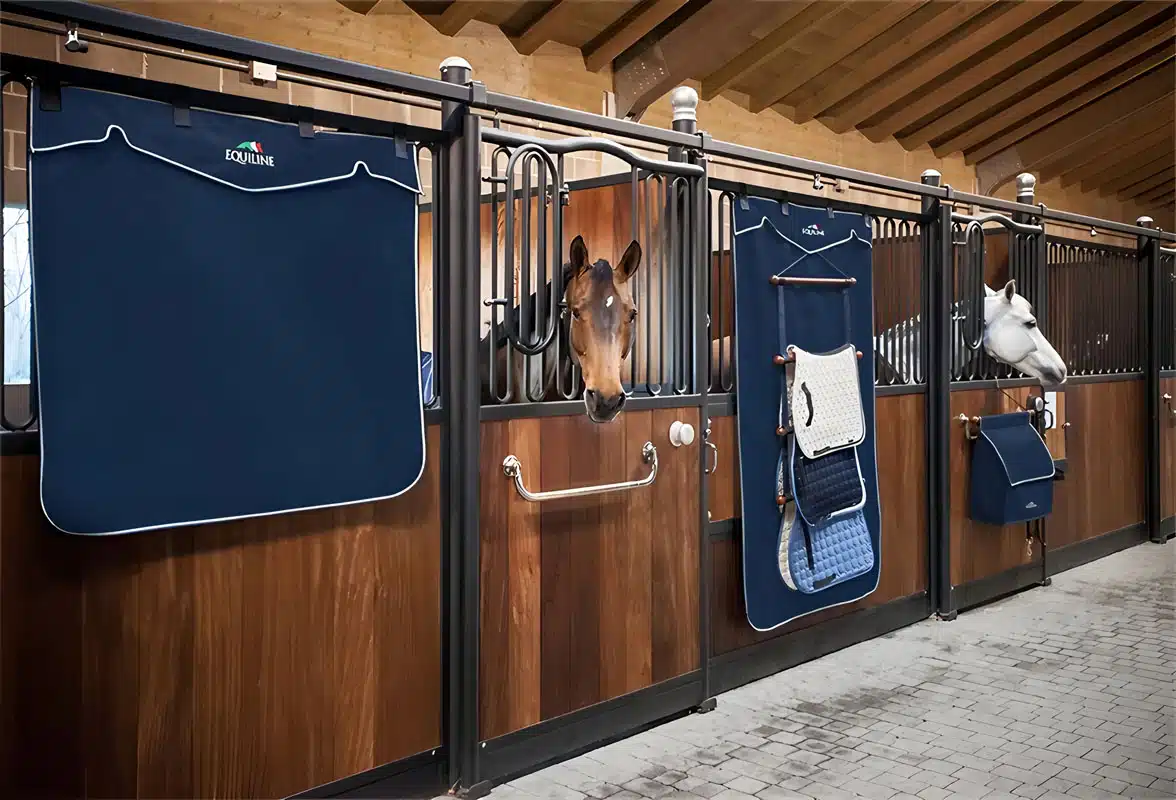
A fully welded horse stall front ships as a single, enormous steel frame. This bulky structure traps a huge volume of unusable empty space — what we call ‘dead air’ — inside the shipping container. It’s like shipping a giant empty box.
Because of this massive inefficiency, a standard 40HQ container is completely full after loading just 12 to 15 stall sets. That drives up per-unit freight cost, eats into your margins, and makes it tough to stay competitive on pricing.
The Flat-Pack System: How 45 Sets Fit
We fixed the empty-space issue. Flat-pack design breaks each stall down to panels, doors, and infill planks. These parts stack tight on custom steel pallets. Dense packing keeps cargo secure during transit.
This method eliminates wasted space entirely. You can fit 30 to 45 complete stall sets into a single 40HQ container. That capacity jump exceeds 200%. Lower freight charges mean better margins for you on every shipment.

Calculating Your True “Landed Cost” per Stall
Your landed cost is the total expense per stall, from factory to farm. Calculating this reveals how our high-density flat-pack shipping directly lowers your final price per unit.
The Key Components of Your Total Cost
Factory price is just the baseline. To set profitable retail prices, you must calculate the full التكلفة عند الوصول. This number covers every expense needed to get the product into your warehouse.
- Product Cost: The initial EXW or FOB price per stable set from our factory.
- **Shipping & Freight:** The total cost to move the container. Divide this by the number of stalls to get the per-unit freight charge.
- **Customs, Duties & Taxes:** Fees tied to the product’s HS Code (7308.90 for our structures) and your country’s import laws.
- **Local Handling & Delivery:** All charges after the container hits port. This includes unloading, customs clearance, and final trucking to your site.
How Flat-Pack Design Lowers Your Per-Unit Freight
Freight is the variable that kills your margin. Engineering fixes that. We design for shipping density.
Our flat-pack steel pallets pack 30-45 stable sets into one 40HQ container. Competitors ship bulky, welded stalls that squeeze only 12-15 sets into the same space. Their per-unit freight cost ends up two or three times higher.
This isn’t luck. It’s a deliberate strategy to protect distributor margins. Maximizing container space attacks the highest variable cost, securing your profit before the cargo even arrives.
Unloading Efficiency at the Farm Gate
How stables are packaged dictates unloading efficiency. Loose, welded panels risk damage and require heavy machinery. Our steel pallet flat-pack system ensures safe, quick unloading with a standard forklift.
The Challenge of Handling Loose-Loaded Panels
Loose-loaded, fully welded frames create immediate handling nightmares. They are heavy, awkward, and demand specialized equipment or extra labor just to move safely.
That turns a standard delivery into a high-risk logistical nightmare before construction starts.
The main issues with this approach are predictable:
- Handling panels by hand invites damage. Scratches, dents, and compromised galvanized coatings happen instantly. One dinged piece halts the whole installation.
- Loose parts mean chaos. Sorting components against packing lists wastes hours. Missing hardware is a certainty, not a possibility.
- Heavy-duty telehandlers aren’t standard equipment. Most farms don’t have them on standby. Renting special machinery spikes costs and kills your schedule.
How Steel Pallet Packaging Simplifies On-Site Handling
DB Stable engineered around these realities. We ship in custom Steel Pallet Flat-Packs. This isn’t just packaging; it is the logistical backbone. It protects your investment and keeps timelines intact.
- Designed for standard forklifts. The entire stable set locks to a single steel pallet. One operator can unload a container safely in minutes. No special skills required.
- Manual handling is eliminated. The risk of transit damage vanishes. Components arrive in factory-fresh condition. That is how you guarantee durability.
- All hardware and fittings are packed by section, labeled, and bagged together. That cuts your on-site inventory time to nearly zero. No digging through boxes for missing bolts. You unpack and start assembly the same day.
For distributors and project managers, that packing discipline protects your margin. Less labor on-site. Fewer damage claims. No delays waiting for a missing part. A clean handoff from crate to install keeps the job profitable from the start.
الأسئلة المتداولة
How many horse stalls can I fit in a 40HQ shipping container?
The number depends entirely on the stall’s design. With traditional fully-welded stalls, you can typically only fit 12-15 sets in a 40HQ container due to their bulk. Our flat-pack system, however, allows for loading 30 to 45 sets into the same container. This high-density packing significantly reduces the shipping cost per unit.
Are flat-pack stalls weaker than fully welded ones?
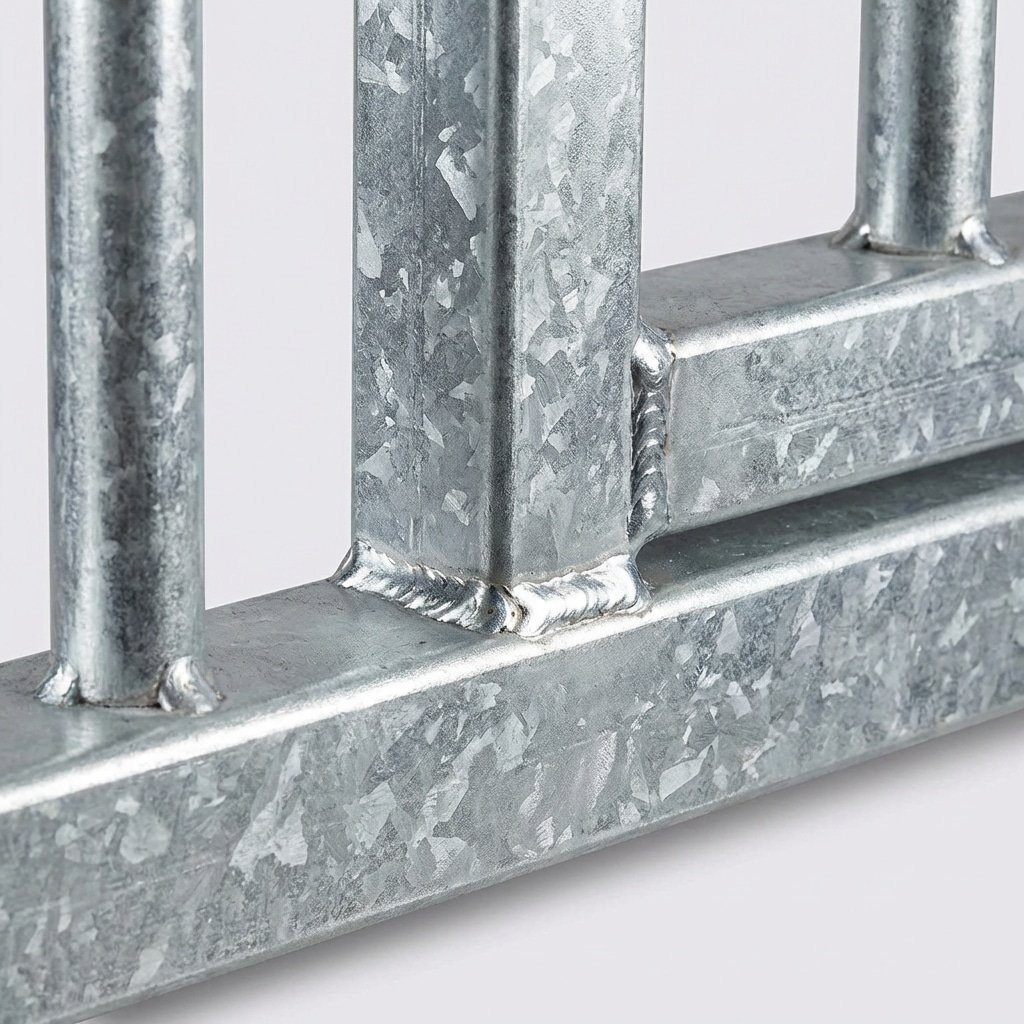
While cheap, bolt-together kits can be weak, a professionally engineered flat-pack system provides excellent structural integrity. We use heavy-duty Q235B or Q345B steel and perform all welding before the hot-dip galvanizing process. This ‘Hot-Dip After Fabrication’ method ensures every weld is protected from rust. The system is assembled with high-strength 304 stainless steel hardware, creating a secure and durable stall without the maintenance issues of budget options.
How do I calculate my final ‘landed cost’ per stall?
Your landed cost is the total expense to get the stalls from our factory to your warehouse. To calculate it, you add the product cost, ocean freight, customs duties, insurance, and any local handling fees. The factory price is just one part of the equation; the final landed cost reveals the true cost of your inventory, which is essential for accurate pricing.
What is the best way to unload the steel pallets from the container?
Our stalls arrive on steel pallets for safe and efficient handling. The recommended method is to use a forklift to pull the entire pallet out of the container as a single unit. This approach is much safer and faster than unloading individual loose components and minimizes the risk of scratches or damage during unloading.
الأفكار النهائية
The welded-stall price tag can trick you. What actually matters is how many units fit in a container. That’s your real landed cost. Flat-pack engineering is built to maximize shipping density and keep your bottom line intact.
The numbers work on paper, but you’ll want to verify the fit and finish yourself. Start with a small LCL trial order. Test the assembly, check the hardware, then scale up. Reach out for a quote and distributor pricing.

 Arabic
  English
  Spanish
  French
  German
0 تعليق