

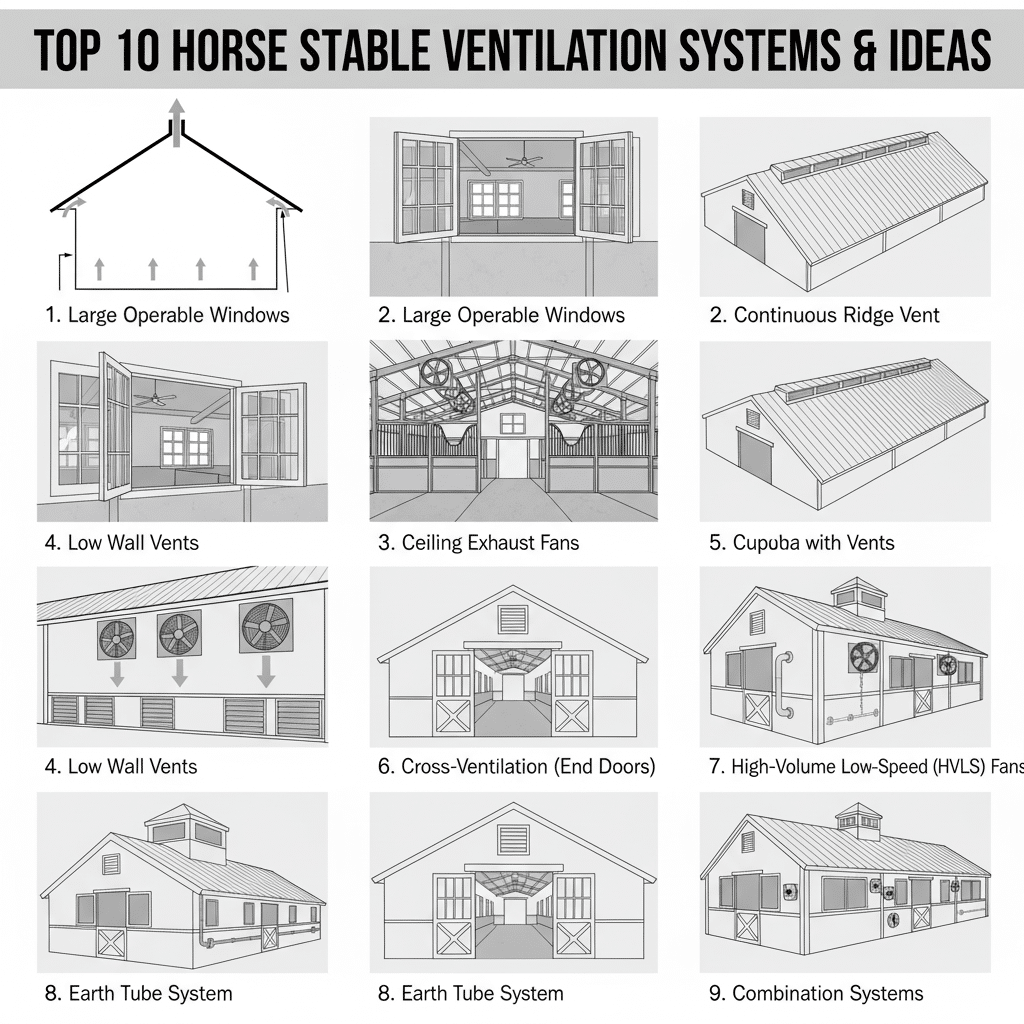
Why Ventilation Matters in Horse Stables
Ventilation directly influences equine health, asset longevity, and operating efficiency. Addressing airflow in the design or retrofit stage reduces veterinary costs, boosts performance, and limits structural degradation. A well-engineered system sustains optimal conditions year-round, preventing the expensive fallout of poor air control.
Health Risks from Poor Ventilation
Dust, ammonia, mold spores, and bacteria in stagnant air compromise the respiratory function of horses. Even minor جودة الهواء issues hinder exercise recovery, heighten illness risk, and trigger behavioral problems such as restlessness, loss of appetite, and irritability—undermining productivity and asset performance.
Core Principles of Effective Stable Ventilation
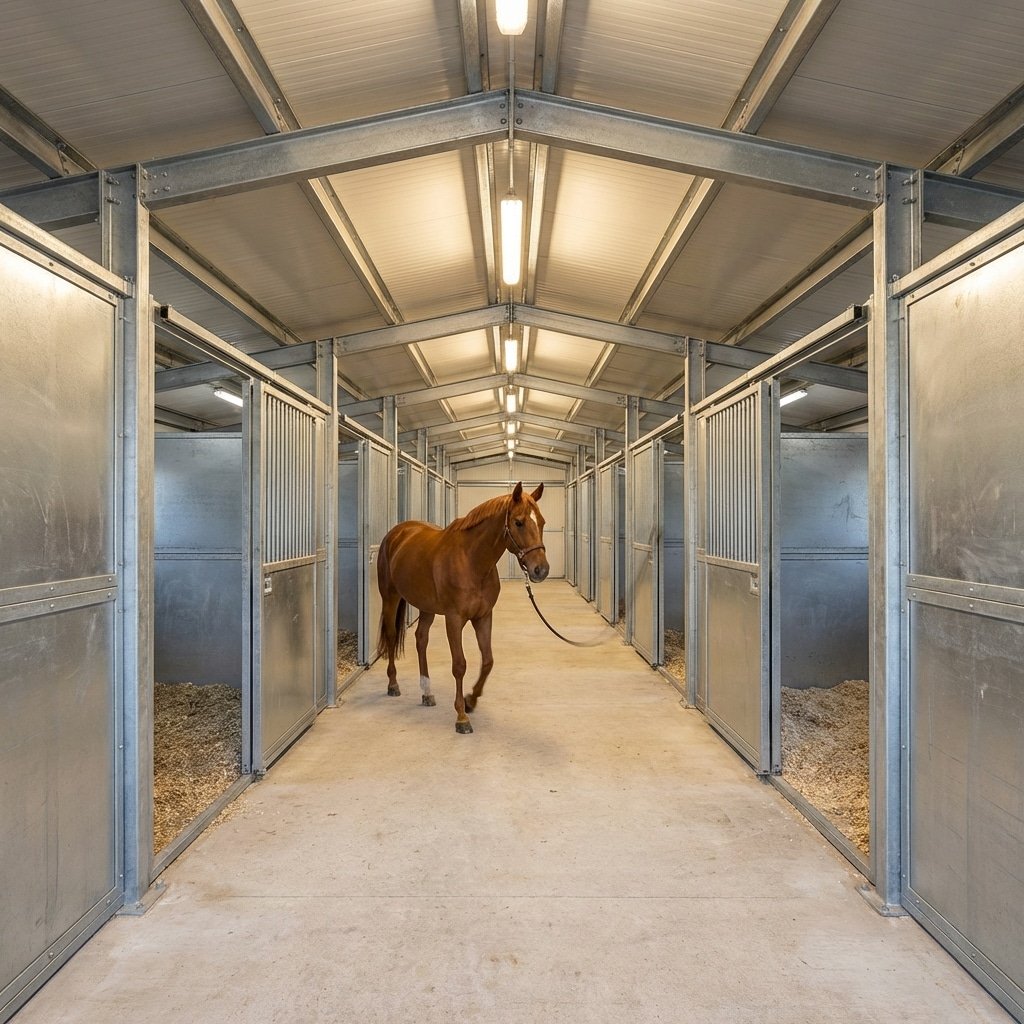
Maintain continuous air exchange to expel contaminants. Install fixed openings at eaves and ridges, supported by windows, large doors, and open partitions to drive natural flow. Use mechanical aids like high-volume, low-speed fans for humidity and temperature control, ensuring environmental stability across climates without dependence on outdoor conditions.
Seasonal Ventilation and Climate Control
In summer, remove excess heat to prevent fatigue and performance loss. In winter, control ammonia and moisture without exposing animals to cold stress, suppressing pathogens and mold. Balanced seasonal airflow also protects infrastructure from corrosion and decay.
B2B Considerations for Stable Owners and Builders
Integrate ventilation into every build or upgrade plan to safeguard stock value and reduce lifetime operating costs. Moisture management cuts repairs for frames, roofing, and panels, preserving high-capital installations. Combining robust natural airflow with mechanical systems ensures consistent جودة الهواء, protecting assets and strengthening your credibility in the equine industry.
Types of Ventilation Systems
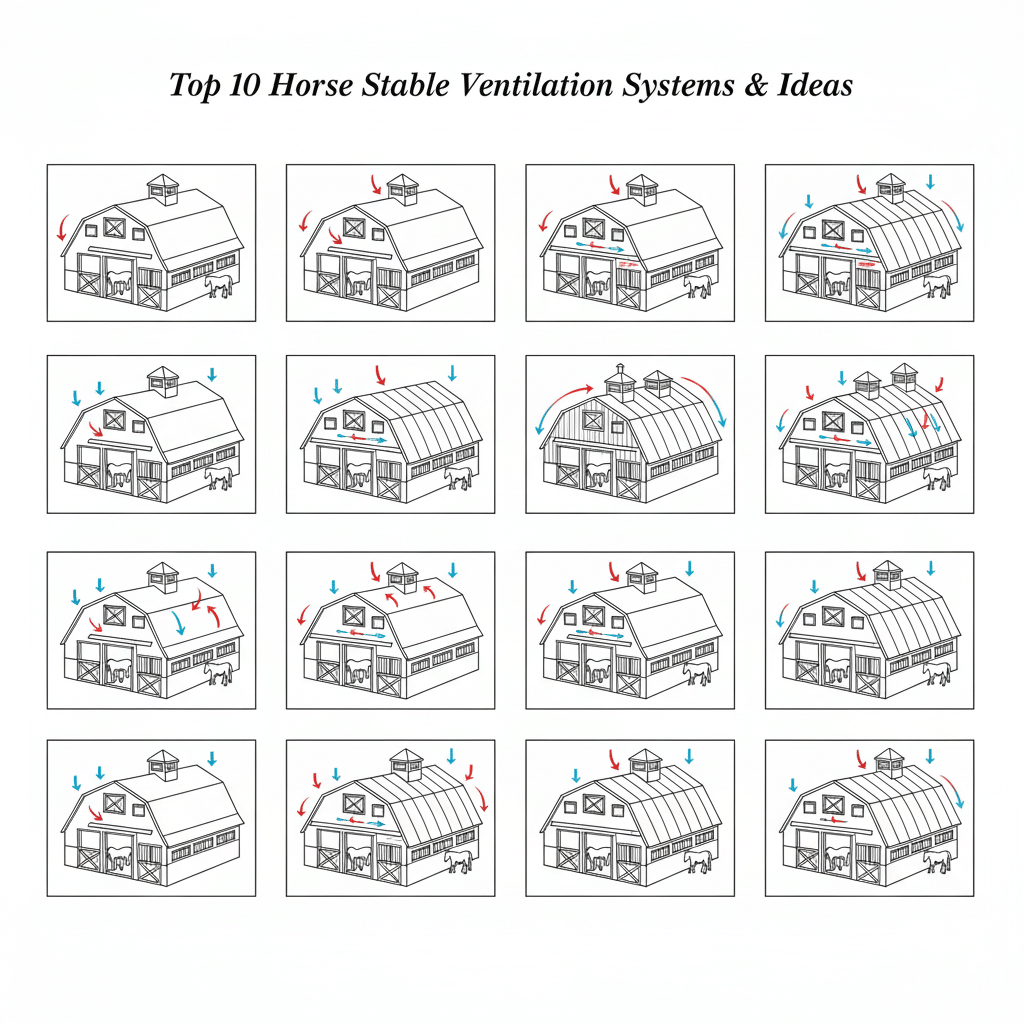
Selecting the right ventilation system is critical when building or retrofitting إسطبلات الخيول. Poor airflow causes condensation, ammonia buildup, and respiratory strain—issues that lead to higher vet bills, reduced performance, and costly repairs. You need a system that maintains clean air, operates cost‑effectively, and adapts to seasonal changes. Below is a breakdown of the primary system types, with guidance on when each delivers the best results.
Natural Ventilation Systems
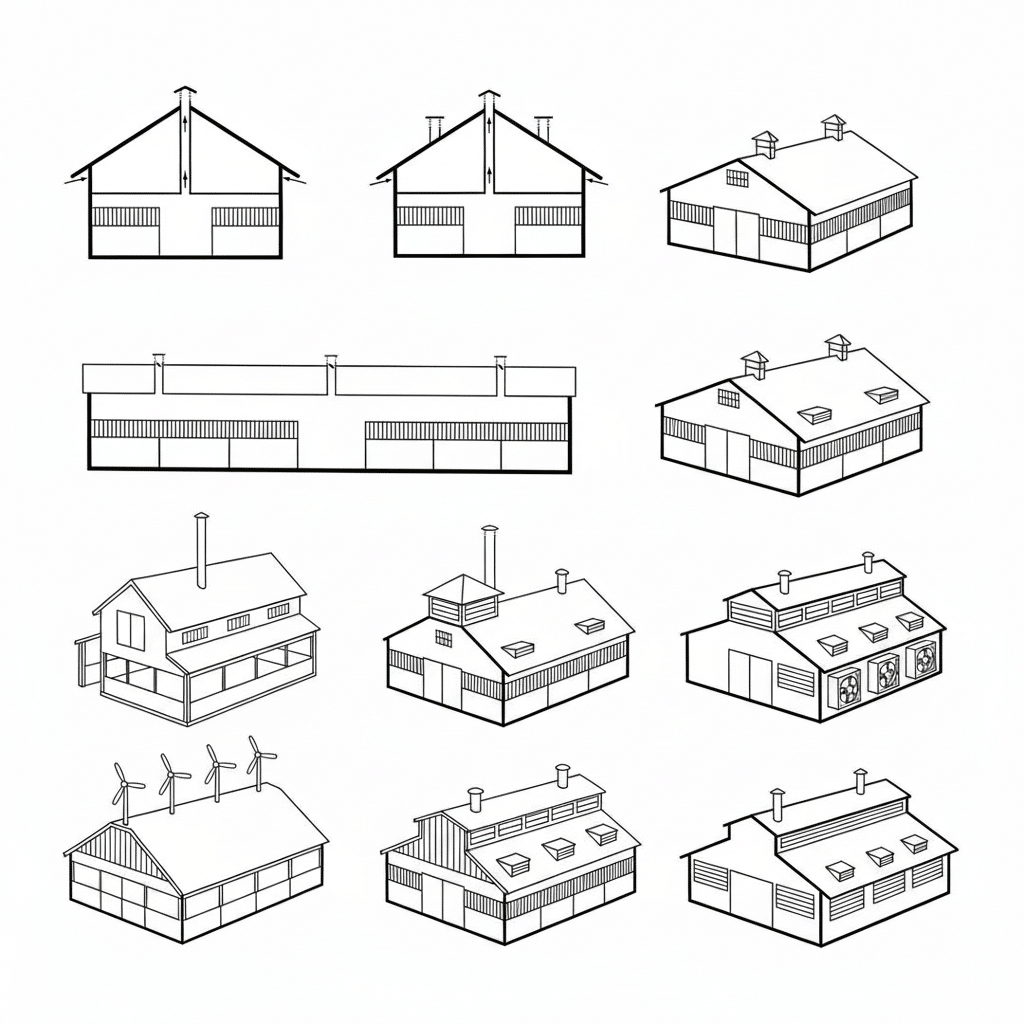
Natural ventilation uses wind and thermal rise to move air without motors. Ridge vents at the roof peak release heat and stale air while sidewall openings bring in fresh air. Tall ceilings accelerate upward flow, and doors, windows, louvers, or open واجهات الأكشاك can guide cross‑ventilation. This approach keeps energy and maintenance minimal, especially where breezes are consistent, but provides less control in sudden weather shifts. In areas with irregular wind or extreme seasons, horses may face hours of poor air quality, increasing health risks—so walk the stable in varying conditions before finalising this choice.
Mechanical Ventilation Systems
Mechanical systems use fans and ductwork to actively move air. Exhaust units remove moisture and odors in airtight or heated builds, while circulation fans keep air consistent indoors and misting fans add cooling in hot climates. Ducted inlets can target fresh air to problem zones. These systems allow precise control—essential for stables housing horses with respiratory sensitivities or valuable breeding stock—but bring higher upfront, power, and servicing costs. Match fan capacity to stable volume and use simple filters to protect motors from dust.
Hybrid Ventilation Approaches
هجين systems blend natural airflow with mechanical support for unpredictable climates. You might run exhaust fans during humid spells to assist فتحات التلال or install powered louvers for controlled intake without opening large panels. This delivers low‑energy operation in fair conditions and dependable airflow when weather turns harsh. Choice should reflect building layout, regional extremes, horse health needs, and budget flexibility. Hybrids excel in transitional climates where natural ventilation works most of the year but needs mechanical backup during seasonal peaks.
Choosing the Right Ventilation System for Your Stable
Begin by mapping تصميم مستقر against prevailing wind and seasonal patterns. If open spans catch regular breezes, natural ventilation may suffice; for airtight or heated builds, mechanical systems offer control natural methods cannot. Consider lifetime costs—installation, electricity, routine servicing, and replacements all add up. Hybrids merit attention if you need both efficiency and flexibility. Regardless of setup, ensure continuous removal of moisture and ammonia to safeguard horse respiratory health and protect facility longevity.
Natural vs. Mechanical Solutions
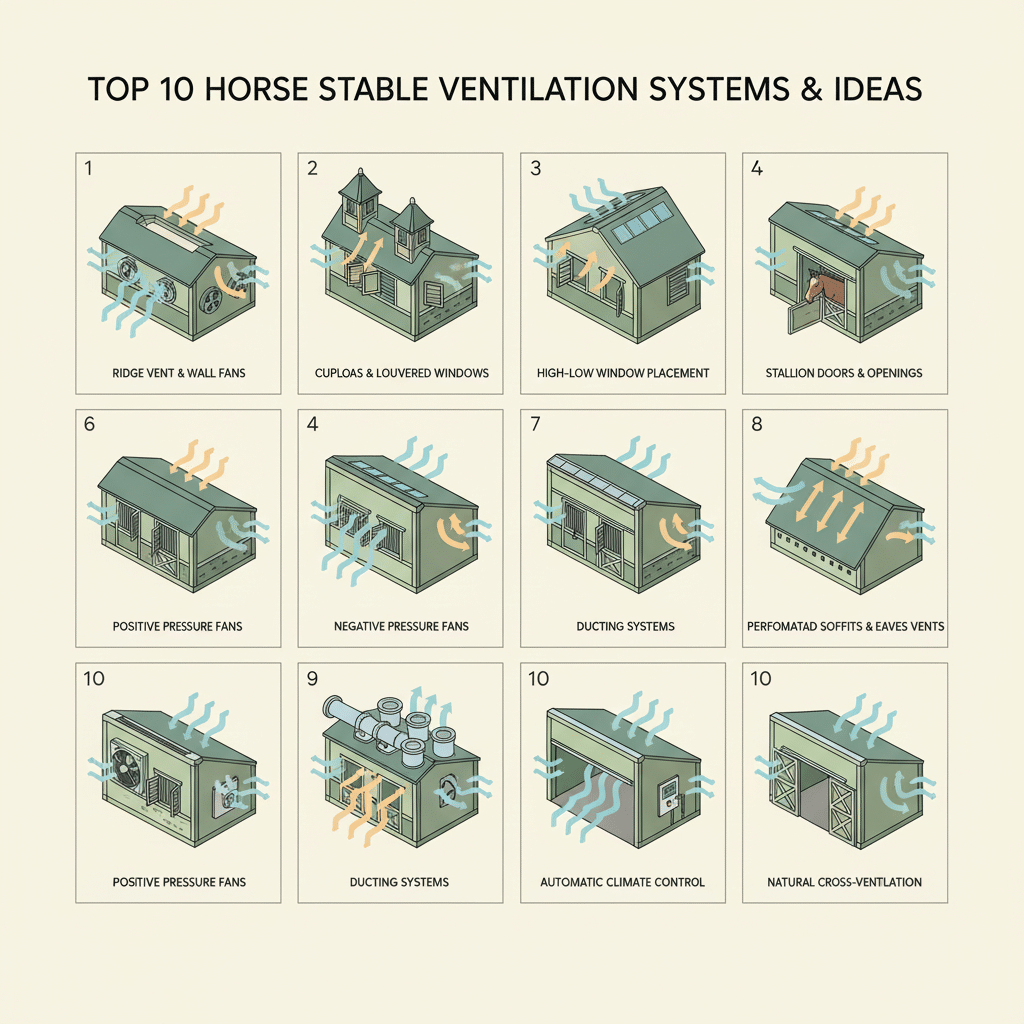
Selecting between natural and mechanical ventilation for إسطبلات الخيول is a strategic choice that hinges on control, capital costs, and ongoing management. A clear comparison accelerates decisions and prevents expensive design changes later. The table below distills operational and performance trade-offs, grounded in field data, so procurement teams and builders can align ventilation strategy with climate, facility size, and long-term operating plans.
| الجانب | الاعتبارات الرئيسية |
|---|---|
| Principles and System Design | Natural systems harness wind and thermal buoyancy via strategically placed sidewall and ridge openings aligned to building orientation. Mechanical systems deploy powered fans, ducting, and louvered inlets/outlets to maintain target air exchange rates in any weather. This choice directly affects airflow predictability and reliability during adverse conditions. |
| Cost, Maintenance, and Operational Considerations | Natural solutions require lower upfront and maintenance spend but rely on manual adjustments to sustain airflow. Mechanical systems demand higher capital investment, constant energy input, and scheduled servicing. They need trained oversight to retain efficiency, while natural designs depend more on robust initial engineering and consistent attention from stable staff. |
| Effectiveness and Impact on Stable البيئة | In temperate, unheated barns with steady breezes, natural ventilation can perform well but struggles in still or extreme conditions. Mechanical systems achieve consistent air quality, extracting ammonia, CO₂, allergens, and particulates—vital for respiratory health. Natural layouts are quieter and allow more daylight; mechanical designs may introduce noise and shade unless mitigated in planning. |
| Best Use Cases and Hybrid Solutions | Natural systems fit mid-sized, unheated barns in regions with dependable wind, offering simplicity and low operating costs. Mechanical options align with large heated barns in cold or stagnant-air zones needing strict climate control. Hybrid configurations combine passive airflow with mechanical backup to manage seasonal transitions and rapid weather shifts efficiently. |
Stable Solutions Built for Every Climate
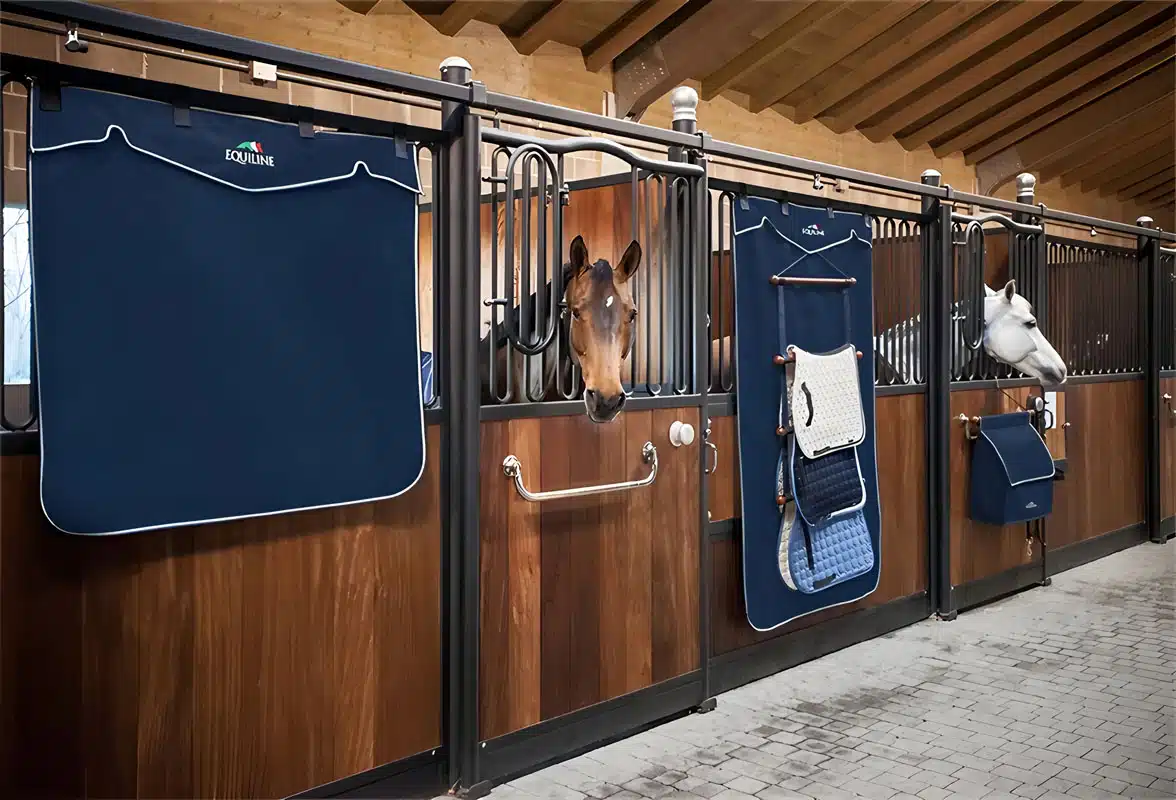
Explore durable, customizable إسطبلات خيول مصممة to provide safety, comfort, and long-lasting performance across the globe. Engineered with premium materials and tailored to meet regional standards, DB Stable offers smart solutions that protect your horses all year round.
Design Tips for Fresh Air Flow
Effective fresh air circulation in إسطبلات الخيول depends on integrating structural ventilation features with daily operational practices. The objective is to maintain airflow patterns that safeguard respiratory health while controlling moisture and dust. Drawing on our experience supplying الإسطبلات المتنقلة for diverse climates, these strategies should be built in from the outset to avoid expensive retrofits. The following design principles give stable owners the flexibility to adapt to seasonal shifts without compromising ventilation efficiency.
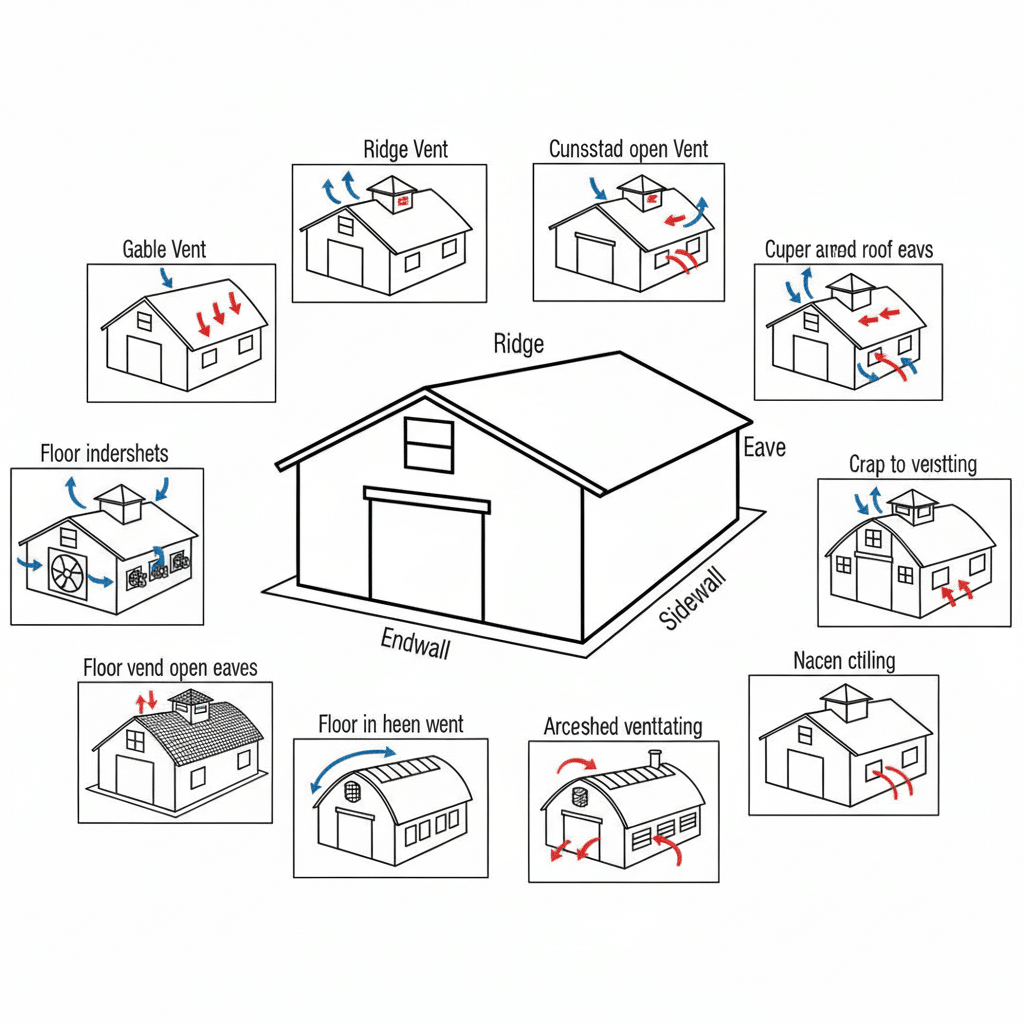
Key Ventilation Openings: Ridge Vents and Eave Openings
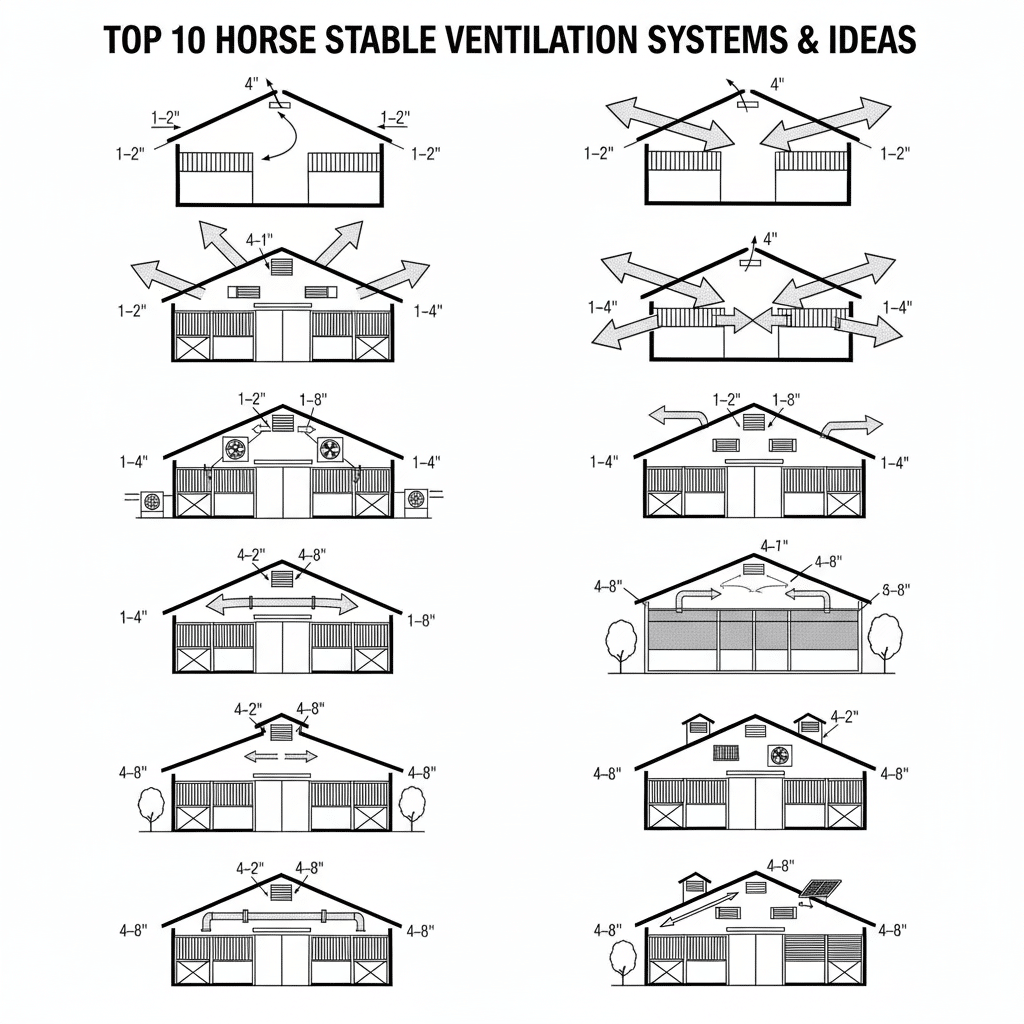
Install ridge vents along the entire roof peak to release warm, humid air before it settles. Pair them with eave openings at the roof–sidewall junction so cool, clean air enters from below. Continuous openings along the full building length balance airflow across stalls, reduce stagnant areas, and help control ammonia odors.
Prioritizing Sidewall Openings and Maintaining Draft-Free Ventilation
If construction limits other options, prioritize permanent sidewall (eave) openings. Each stall should have at least 1 sq ft of open space at the eave, positioned to bring in fresh air without creating drafts at horse height. A continuous slot above eye level maintains comfort year-round while keeping ventilation stable and predictable.
Harnessing Natural Forces: Wind and Thermal Buoyancy
Align opening placement with prevailing winds, using entry points on the windward side and exits on the leeward. A higher roof boosts thermal buoyancy, allowing warm air to rise and exit via ridge vents and maintaining steady flow when winds drop. Let airflow direction respond naturally to shifting winds to ensure consistent air exchange.
Maintaining Proper Air Exchange and Seasonal Flexibility
Maintain 4–8 air changes per hour to control humidity, dust, and ammonia. In winter, avoid over-sealing; keep interior temperatures within 5–10 °F of outside to prevent condensation. In summer, open windows and doors alongside permanent vents to boost airflow and eliminate dead zones.
Additional Design Considerations: Orientation and Roof Height
Position the stable to face prevailing winds whenever possible for optimal passive airflow. Ensure roof height supports the stack effect for efficient hot air removal. Together, these measures preserve air quality and reduce maintenance caused by moisture.
Signs of Problematic Ventilation
Stable managers and builders who identify ventilation issues early can prevent costly veterinary bills and avoid damage to the facility. Poor airflow compromises comfort, accelerates health risks, and can lead to structural decay. Pay close attention to both animal condition and environmental cues, addressing them before they escalate.
Health Indicators in Horses
Early signs include persistent coughing and nasal discharge that routine cleaning does not resolve. Progression can bring labored breathing, wheezing, and asthma-like symptoms, most common in enclosed barns during colder months. If ignored, airborne irritants can cause chronic respiratory conditions such as recurrent airway obstruction or pneumonia, requiring prolonged treatment and downtime. Declining energy or reluctance to work are clear signals to investigate ventilation immediately.
Environmental and Facility Indicators
Condensation on walls or high humidity indicates trapped moisture, fostering mold and bacterial growth that contaminates bedding, hay, and feed. Dampness also degrades wooden structures, risking load-bearing integrity. Persistent ammonia odors point to inadequate air exchange, increasing respiratory irritation for both horses and staff. Dust build-up—often worsened in winter—signals lingering particulates and spores at harmful levels.
Importance of Regular Monitoring
Implement structured checks for changes in breathing and behavior, and log recurring signs of distress. Conduct systematic barn walk-throughs to spot damp areas, odors, and visible mold early. Rapid response—adjusting airflow, eliminating moisture sources, and replacing compromised bedding or feed—protects equine health, preserves infrastructure, and reduces unplanned repair costs.
FAQs About Stable Ventilation
Ventilation design has a direct bearing on horse health, facility longevity, and ongoing operating costs. Addressing core questions allows stable owners and builders to choose solutions that safeguard الرفق بالحيوان while driving efficiency.
Why is good ventilation so important for horses?
Consistent airflow controls moisture and ammonia, keeping stalls dry and protecting both surfaces and horses’ respiratory health. Reducing dust, mold, and bacteria lowers the risk of respiratory illness, avoiding costly downtime. Stable temperatures improve comfort, reduce summer heat stress, and keep conditioning programs on track.
What is the difference between passive and active ventilation?
Passive systems use ridge vents, cupolas, or windows to harness wind and thermal lift. They perform best when the building layout aligns with prevailing winds. Active systems use fans or blowers to precisely manage air exchange, essential in climates with limited natural airflow or complex stable layouts. Select based on whether energy savings or airflow control is the higher priority.
Are cupolas effective for ventilation?
Cupolas vent warm, stale air at the highest point, driven by natural buoyancy. They deliver best results when matched with sidewall inlets to sustain convection. Correct sizing and positioning are critical; when integrated into a well-engineered plan, they cut heat and humidity without adding to energy costs.
Where is the best place to install exhaust fans?
Install exhaust fans near the ceiling or roofline, targeting areas where heat and contaminants collect. Design airflow to draw fresh intake through lower vents or doors and maintain continuous movement across stall rows. Account for wind direction and internal barriers to prevent dead zones and uneven circulation.
How can I improve ventilation in an existing older stable?
Add adjustable vents or open windows to create more intake and exhaust points, and reinforce weak airflow with portable or fixed fans where air stagnates. Remove obstructions such as dust, cobwebs, and debris, and maintain routine cleaning to lower airborne particles and extend the life of your infrastructure.
Optimal Ventilation for Long-Term Stable Health
Prioritize ventilation that prevents respiratory stress, keeps interiors dry, and maintains structural integrity. Combine ridge vents, eave openings, and stall-front access with mechanical backup when natural airflow or thermal lift is inadequate.
Build ventilation into new structures to cut operating costs and avoid retrofits; in existing barns, eliminate stagnant zones with targeted fans and keep vents unobstructed. Anticipate climate shifts and adopt a hybrid system to ensure consistent air quality—protecting both horse performance and facility value.

 Arabic
  English
  Spanish
  French
  German
0 تعليق