
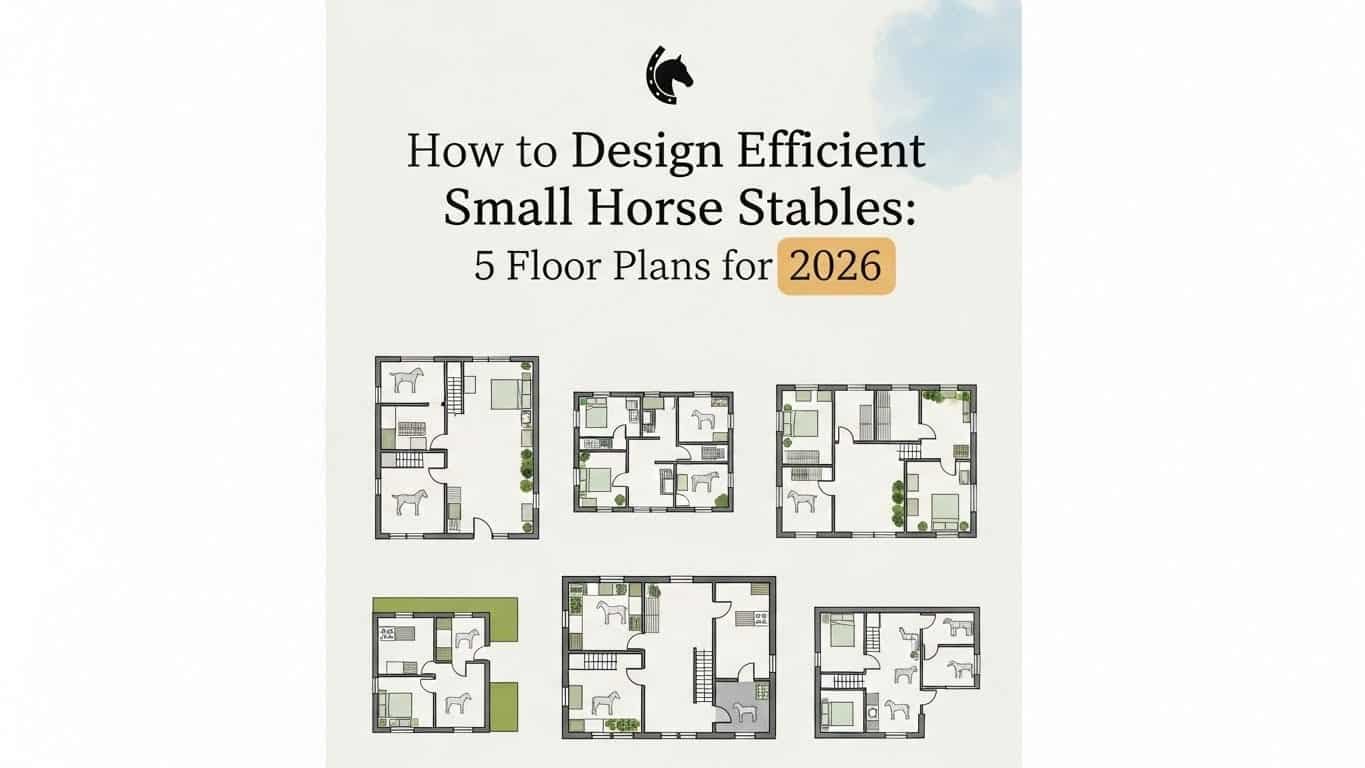
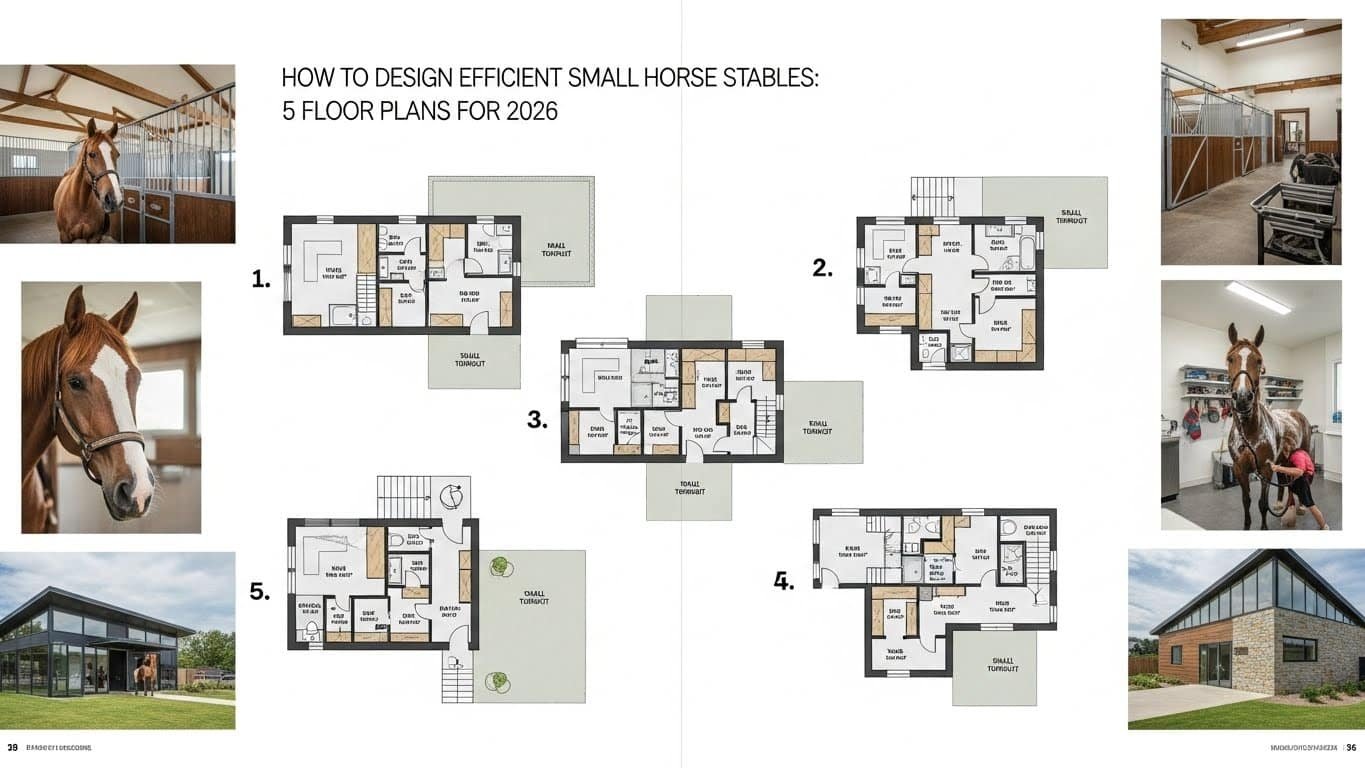
Effective small horse stable floor plans mitigate the two biggest project risks: poor ventilation and inefficient logistics. Choosing a system without engineered airflow leads to chronic respiratory issues, while bulky, welded components can inflate freight costs by over 60%, draining the budget before construction begins.
This guide benchmarks five layouts against critical engineering standards. We analyze each plan for its ability to create ‘Stack Effect Ventilation’ and its compatibility with a flat-pack system, providing the data needed to design a stable that is both safe for horses and logistically profitable.
Why is Ventilation the #1 Design Priority?
Ventilation is the top design priority. It removes the harmful ammonia, moisture, and airborne pathogens that cause serious respiratory issues in horses.
Controlling Moisture and Respiratory Health
A sealed stable traps moisture and ammonia from waste. This environment becomes a breeding ground for bacteria and mold, leading to respiratory infections. Constant exposure to poor air quality causes chronic irritation and can lead to long-term damage to a horse’s sensitive lungs.
How Open Grills Create Stack Effect Ventilation
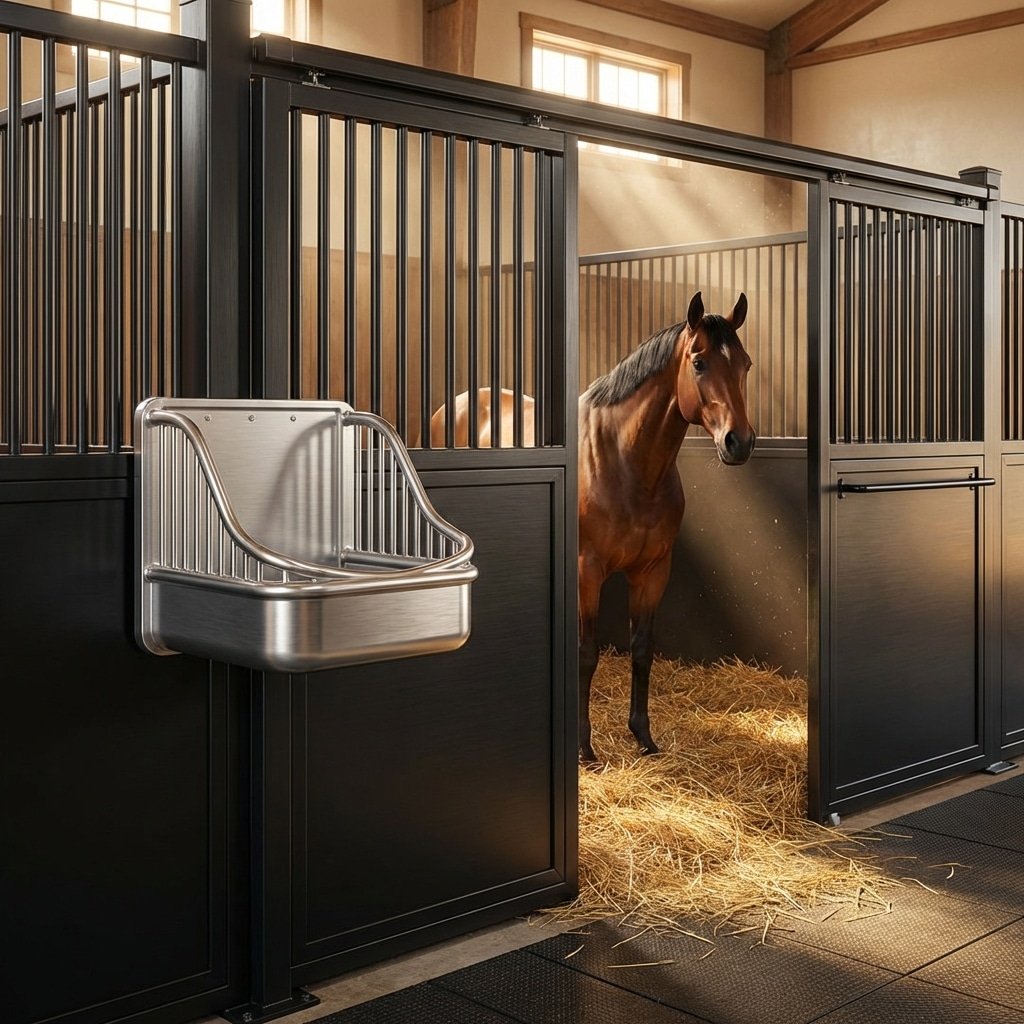
Our stable fronts and partitions are built with open top grills to promote ‘Stack Effect Ventilation’, a core safety feature. This design uses the horse’s body heat to warm the surrounding air. The warm, stale air rises and escapes through the top grills, which pulls fresh, cooler air in from the bottom of the stall, ensuring constant circulation.
Is the Classic Center Aisle Layout Right for You?
A center aisle layout improves workflow and protects from weather. Its biggest barrier is cost, which flat-pack systems solve by drastically cutting freight expenses for large projects.
The center aisle barn is the go-to layout for professional training and boarding facilities. It centralizes operations and provides an all-weather work environment. But the decision to build one often comes down to two factors: initial construction cost and the logistics of shipping materials to the site. Understanding both is key.
Center Aisle Barn: Benefits vs. Reality
Operationally, the layout is efficient. A central walkway keeps staff and horses out of the rain, snow, and sun. Utilities like water and electricity are easier to run. But there are physical and financial trade-offs.
- Workflow Efficiency: A sheltered indoor corridor allows for efficient feeding, grooming, and daily tasks, regardless of weather.
- Centralized Utilities: Running water and electrical lines is streamlined, reducing complexity in large-scale facilities.
- Ventilation Demands: The enclosed design requires careful engineering to create ‘Stack Effect Ventilation,’ ensuring warm, stale air rises and exits through ridge vents to prevent respiratory issues.
- Higher Upfront Cost: It requires a larger roof structure and more materials than simple shedrow layouts, leading to a higher initial build cost.

Optimizing Logistics with a Flat-Pack System
For distributors and developers, the main hurdle isn’t just materials—it’s freight. Shipping large, fully welded stable components is expensive and inefficient. This is where the engineering of the system itself dictates project profitability. We call this logistical advantage ‘Profit Protection’.
| System Type | Sets per 40HQ Container | Freight Impact |
|---|---|---|
| Traditional Fully Welded | 12–15 Sets | Extremely High Cost/Unit |
| DB Stable Flat-Pack | 30–45 Sets | Over 60% Freight Savings |
By designing our systems to be flat-packed, we more than double the loading capacity of a standard 40HQ container. This isn’t a small detail; it fundamentally changes the cost structure for any large-scale equestrian project. Every component arrives secured on a steel pallet, which simplifies unloading and inventory management on a busy construction site.
When Should You Choose the U-Shape Courtyard Layout?
The U-shape layout excels on large properties needing a central, protected workspace. It offers clear sightlines for supervision and separates zones, boosting biosecurity for professional facilities.
| Layout Feature | U-Shape Courtyard | Single Row / L-Shape |
|---|---|---|
| Ideal Scale | 10-20+ Horses | 2-8 Horses |
| Supervision | Excellent (Central view) | Good (Linear view) |
| Central Workspace | Protected & Contained | Exposed / Linear Aisle |
| Biosecurity | High (Natural Zone Separation) | Moderate (Shared Airspace) |
For Properties Prioritizing Supervision and a Central Workspace
A U-shaped layout is a practical choice for facilities where daily operations and safety are top priorities. The design naturally forms a three-sided, sheltered courtyard, which is perfect for tacking up, grooming, or vet checks away from poor weather. This configuration gives staff clear, unobstructed sightlines across all stalls from a single point, making horse monitoring far more efficient.
The layout also creates logical separations for different functions. You can dedicate one wing to stalls, another to feed and tack rooms, and the third to wash bays or quarantine areas. This separation is not just for workflow; it’s a built-in biosecurity measure that helps minimize the spread of potential contaminants across the entire facility.

How Flat-Pack Systems Make Large Layouts Feasible
A U-shaped stable project typically involves 10 to 20 or more stable sets, making logistics a major budget item. Shipping fully welded, bulky stables is expensive and inefficient. This is where the commercial viability of the project gets tested. Our Flat-Pack System is engineered specifically to address this cost barrier.
A standard 40HQ container can only fit about 12-15 fully welded stable sets. With the DB Stable flat-pack design, we can load between 30 and 45 sets into that same container. This massive increase in shipping density cuts freight costs by over 60%. For distributors and project managers, this is a direct “Profit Protection” feature, making large-scale, professional layouts financially practical instead of prohibitively expensive.
Get Custom Horse Stables Built to Last Decades
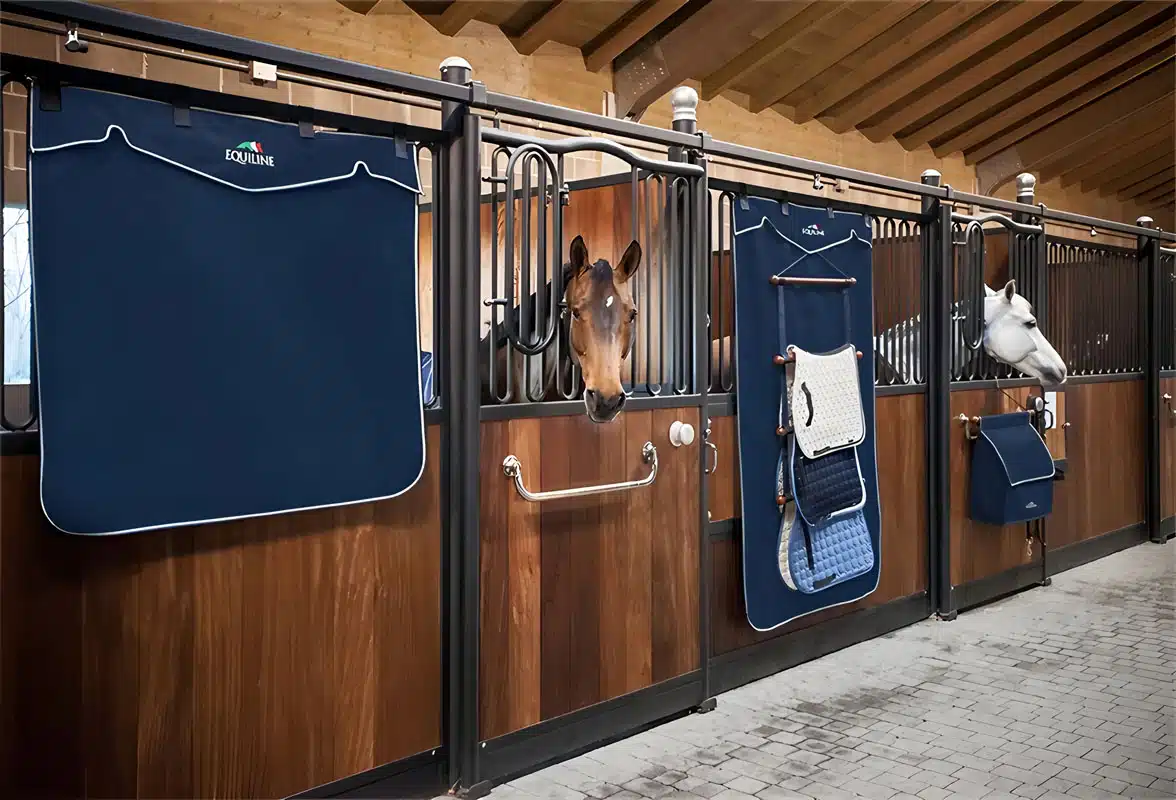
Should You Choose Round (114mm) or Square (50mm) Posts?
Square posts offer a modern, versatile frame. Round posts provide a classic European look with safer, smooth edges ideal for premium projects.
Aesthetics and Safety Considerations
The decision boils down to visual style and animal safety. The 50mm square post provides a clean, modern look that fits most barn designs. It’s a highly versatile and structurally efficient profile. In contrast, the 114mm round post delivers a traditional, robust European appearance often specified for high-end estates. Its key functional advantage is safety—the smooth, continuous surface eliminates sharp corners, reducing the risk of injury to horses.
Matching Post Profiles to Project Tiers
We align post options with our stable series to match project requirements and budget. Both profiles receive the same level of rust protection, meeting BS EN ISO 1461 standards through hot-dip galvanization after all fabrication is complete.
- 50mm Square Posts: This is the standard framework for our Economy and Professional Series stables due to its structural efficiency and modern aesthetic.
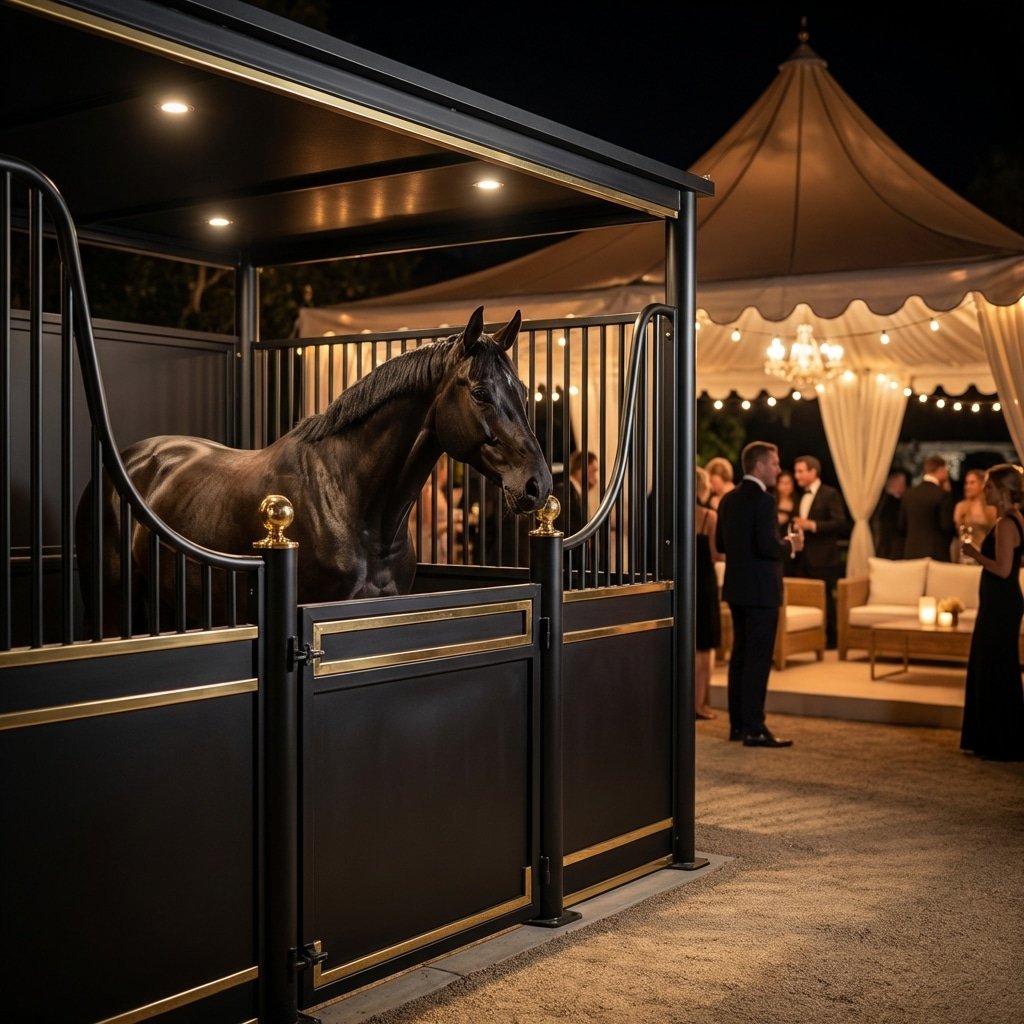
- 114mm Round Posts: A popular upgrade for our Royal Series, this post complements custom designs like European arches and decorative brass finials.
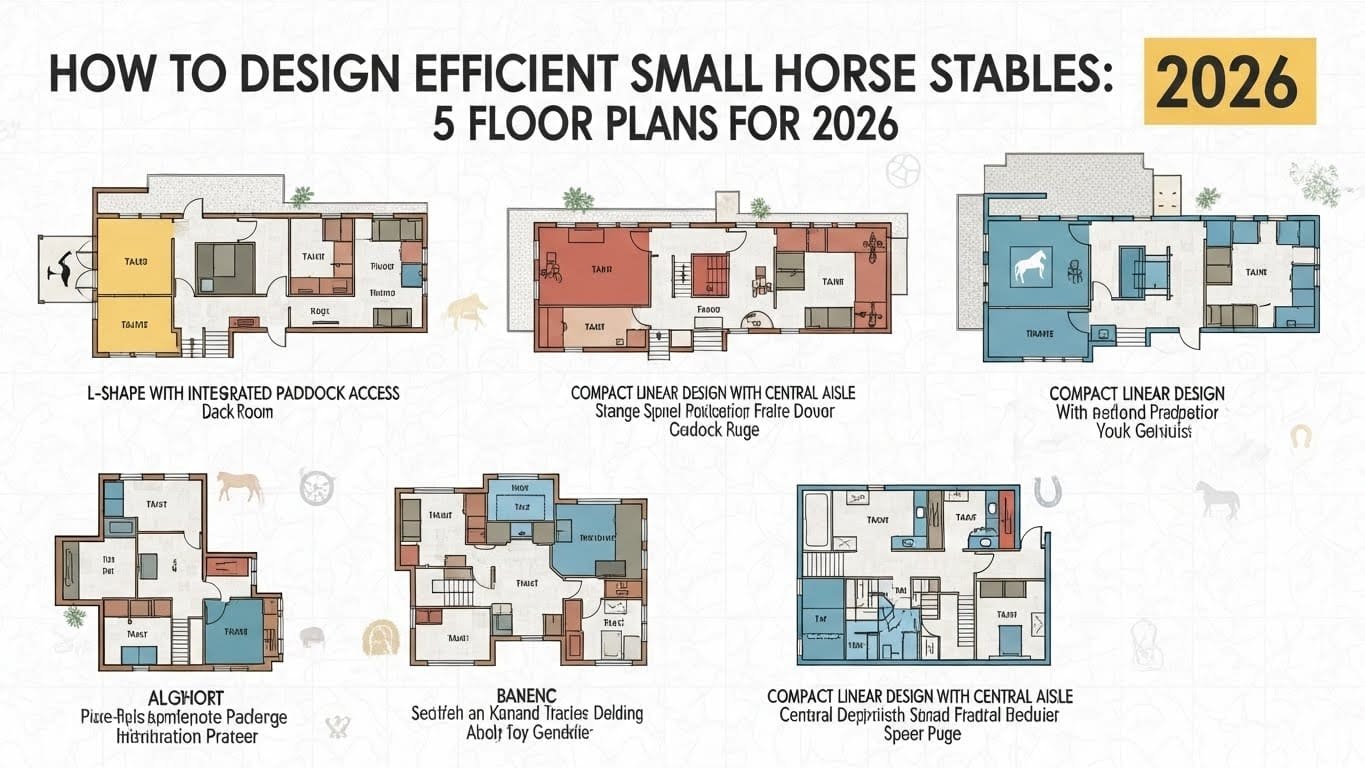
Ready to Start? Where Can You Download Free CAD Plans?
Generic online plans are for ideas. Real construction requires precise CAD drawings from the manufacturer, which we provide to our B2B partners for every project.
Generic Layouts vs. Engineering-Specific Drawings
You can find plenty of free floor plans online. They’re useful for brainstorming general layouts, like how many stalls fit or how wide an aisle should feel. But they are just concepts, not blueprints.
An engineering-specific drawing is a different tool entirely. It contains the non-negotiable details for assembly: material specs, precise connection points, and manufacturing tolerances. You can’t build a safe, prefabricated structure without it.
Technical Drawings for B2B Partners and Projects
As a B2B factory, we don’t post our technical drawings publicly. We supply them directly to our distributors and large project clients as part of the package. These documents are core to a successful commercial installation.
Our CAD files map out the entire flat-pack system. They ensure every component—from the Q235B steel frame to the specific infill planks—is accounted for. This guarantees your assembly team can work efficiently and accurately on-site.
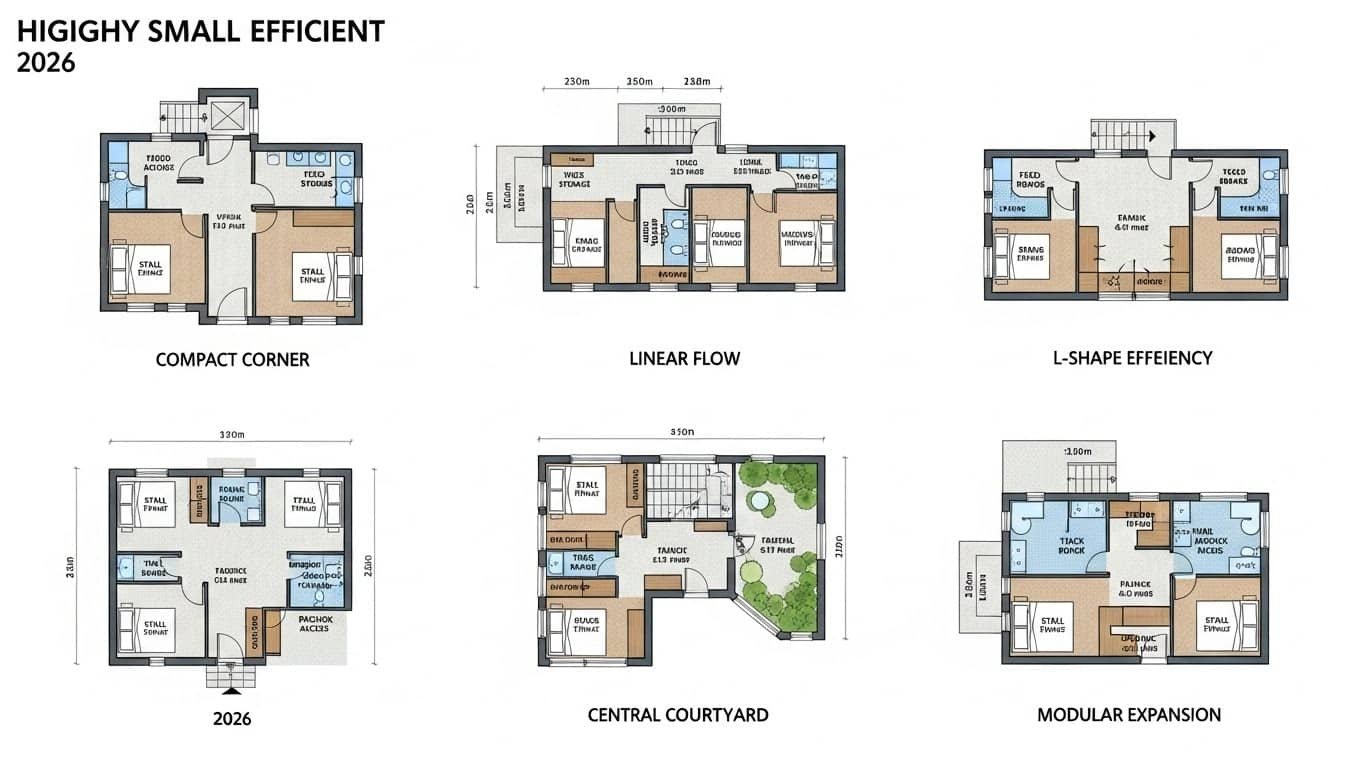
Final Thoughts
A functional layout is only half the battle. Our flat-pack system directly addresses the biggest commercial risk: freight costs. This engineering provides over 60% freight savings, protecting your project margins and making large-scale layouts financially viable.
The next step is to verify the build quality yourself. Contact our B2B team to request manufacturer-direct CAD files and spec sheets for your project. This is the fastest way to confirm our system meets your standards before discussing a trial order.
Frequently Asked Questions
Is a 10×10 stall too small for a 17hh Warmblood?
A 10×10 foot stall is considered undersized for a 17-hand Warmblood. The industry standard minimum for a horse of this size is 12×12 feet, with 12×14 feet or larger being preferable. A smaller stall restricts a large horse’s ability to safely lie down, roll, and get back up without risk of getting cast.
What is the ideal aisle width for safety?
The minimum recommended aisle width for safety in a private stable is 12 feet. For commercial facilities or barns with high traffic, wider aisles of 14 to 16 feet are better. This width ensures two horses can pass safely, provides ample room for equipment, and allows for emergency access.
Should stable doors open inwards or outwards?
For safety, hinged stable doors should always open outwards into the aisle. An inward-opening door can trap a person inside the stall if a horse rushes forward or panics. Sliding doors are another common and safe alternative as they don’t obstruct the aisle space.
Can I customize the plans for a pole barn?
Yes, pole barn plans are highly customizable. There are no fixed standard dimensions, so each building can be tailored to your specific needs regarding size, height, post spacing, and interior layout. This flexibility allows them to be adapted for anything from a small private stable to a large training facility.
How many air changes per hour (ACH) do I need for good ventilation?
The industry guideline for healthy horse stable ventilation is 4 to 8 air changes per hour (ACH). This rate helps prevent the buildup of moisture, ammonia, dust, and airborne pathogens that can lead to respiratory problems. Good ventilation requires both replacing stale air and distributing fresh air evenly throughout each stall.
Are stable plans typically in metric or imperial units?
Most stable plans, particularly in North American and Australian markets, use imperial units (feet and inches). Common industry standards, like a 12’x12′ stall, are all based on the imperial system. While some design software can convert units, imperial measurements remain the convention for construction.

 English
  Spanish
  French
  Arabic
  German
0 Comments