



Arranging a large freight delivery to a residential address can be a gamble. You’re left hoping the 80,000 lb truck can navigate narrow lanes and tight corners without causing damage or getting stuck. A failed delivery attempt means unexpected delays and extra costs for your project, turning a simple shipment into a logistical headache.
This guide provides the practical details you need for successful residential access. We cover the exact space requirements, explaining that a standard truck needs a 50 to 60-foot outside turning radius and a minimum 10-foot clearance from overhead lines. You’ll also learn the difference between standard curbside delivery and using a shuttle service, helping you plan your logistics and budget with confidence.
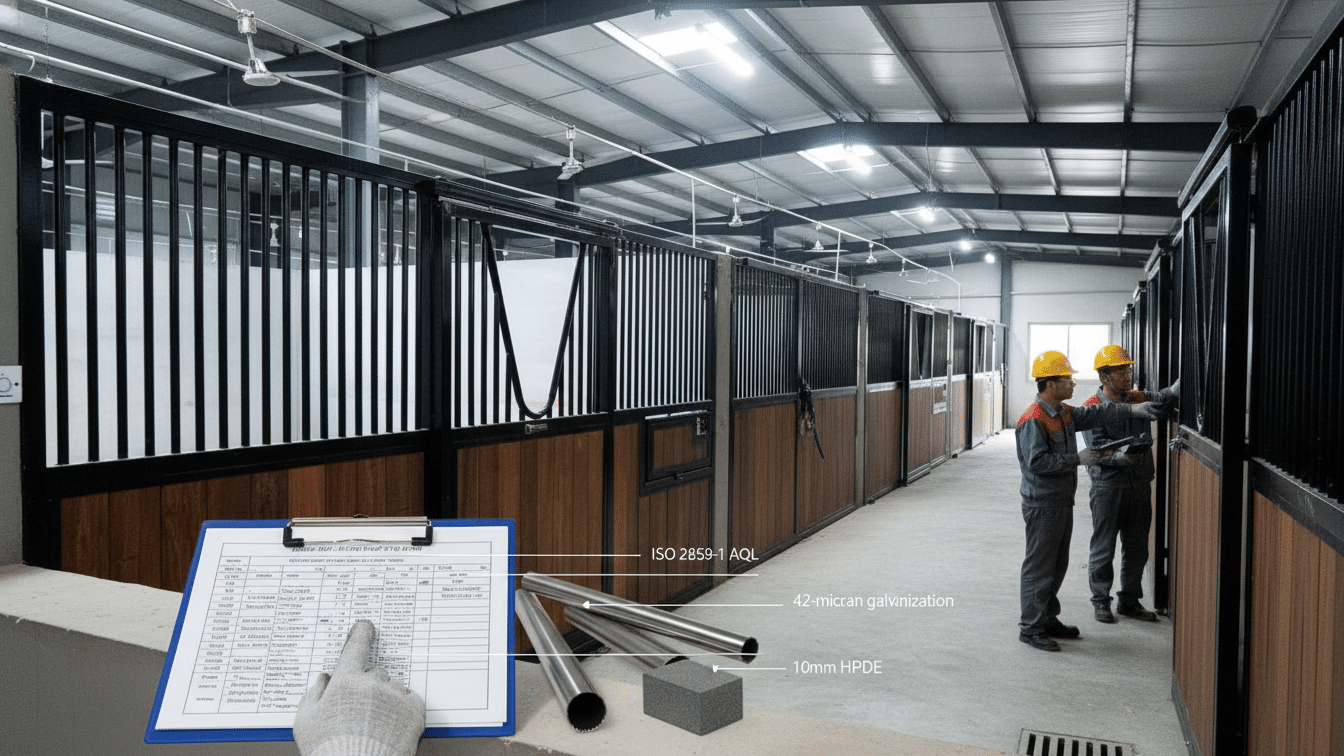
The Turning Radius of a 53ft Trailer
A standard 53-foot tractor-trailer requires an outside turning radius of 50 to 60 feet. For a complete 180-degree turnaround on your property, you will need a clear circular area with a diameter of at least 100 to 120 feet for the truck to maneuver.
| Vehicle Configuration | Required Outside Turning Radius | Required Turnaround Diameter (180°) |
|---|---|---|
| Standard Tractor + 53ft Trailer | 50–60 feet | 100–120 feet |
| Long-Wheelbase Tractor + 53ft Trailer | 70–90 feet | 140–180 feet |
Required Radius for a Standard Rig
A standard highway tractor connected to a 53-foot trailer forms a vehicle combination that measures between 70 and 80 feet long. To turn safely, this setup requires an outside turning radius of 50 to 60 feet. This measurement defines the minimum clear path needed for the front, outermost corner of the tractor to complete a turn without striking obstacles like buildings, fences, or trees.
Practical Dimensions for Property Access
When preparing your property for a delivery, the most critical measurement is the space needed for a full turnaround. A complete 180-degree turn requires a clear circular area with a diameter of 100 to 120 feet. Some long-wheelbase tractors need an even larger outside radius, up to 70 or 90 feet. When planning or modifying driveways, yard loops, or gate openings, you should design them with at least a 50 to 60-foot outside radius, ensuring the entire path is free of all trees, posts, and parked equipment.
Low Wires and Tree Branches
Utilities mandate specific clearance zones around power lines, typically requiring 8 to 15 feet of space. Safety regulations also prohibit non-qualified personnel from operating within 10 feet of energized lines, which affects how drivers must navigate access routes with low-hanging wires or overgrown branches.
Safety Distances and Clearance Envelopes
Utility companies establish three-dimensional vegetation-clearance envelopes around power lines to prevent contact from tree branches. Safety rules based on OSHA standards require all non-qualified personnel, including delivery drivers and farm staff, to maintain a minimum 10-foot approach distance from energized overhead lines. This 10-foot safety rule is not just for high-voltage primary lines; it also applies to the 120/240V service drop that connects directly to a residence.
Clearance Dimensions and Maintenance Responsibility
A standard utility clearance envelope often specifies 8 feet of space to each side of a line, 10 feet below it, and 15 feet above it. Companies like National Grid aim to maintain 10–15 feet of clearance after pruning is complete to allow for regrowth. The responsibility for maintaining this space is divided. The utility company prunes trees around high-voltage main distribution lines. The property owner, however, is responsible for managing trees and branches that affect the low-voltage service drop running from the pole to their building.
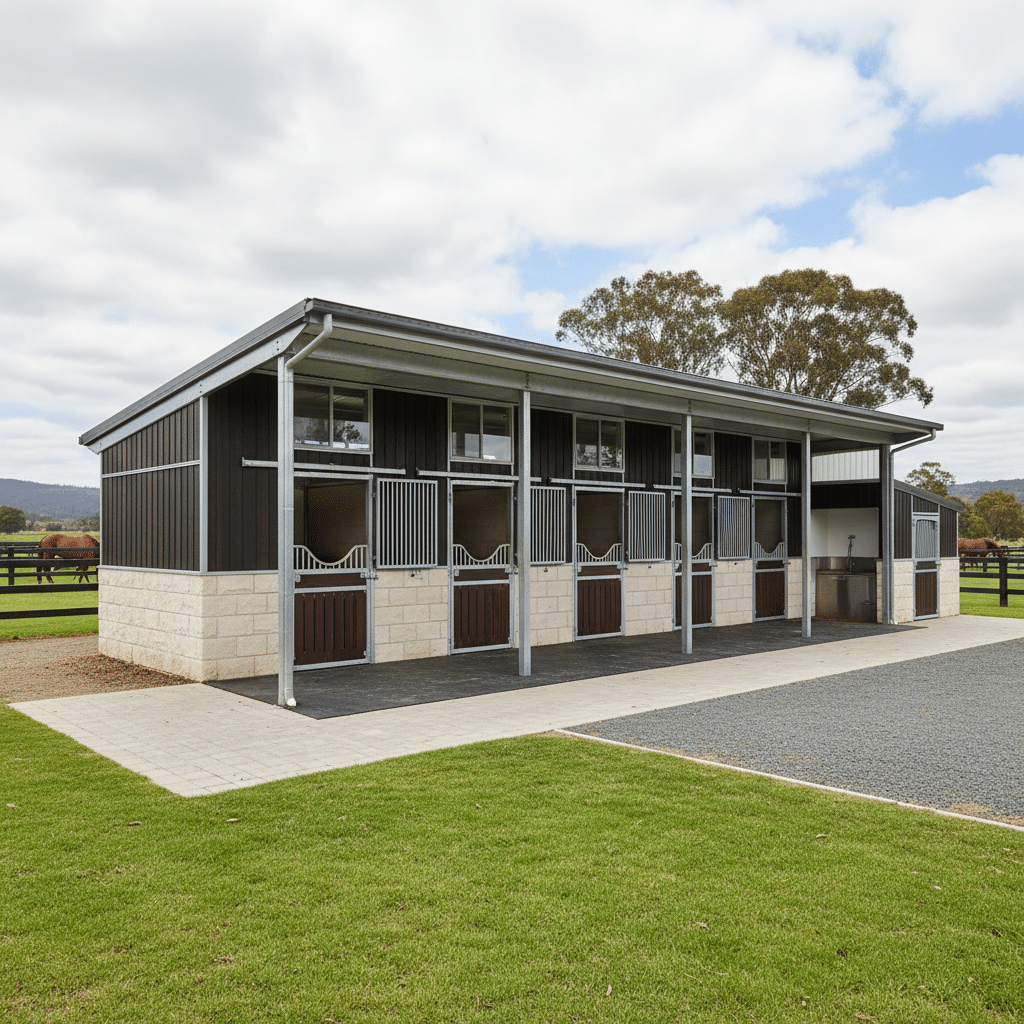
“Curbside Delivery” Defined
Curbside delivery means the freight carrier unloads your shipment at the edge of your property, such as the end of your driveway or the roadside. The driver is not responsible for bringing items onto your property, unpacking, or assembly. Responsibility for the stables transfers to you once they are off the truck.
Where Carrier Responsibility Ends
The carrier’s responsibility ends once your goods are unloaded at the edge of your property. This could be the end of your driveway, the roadside, or a sidewalk. Drivers are not required to bring shipments onto private land, like up a long farm driveway or into a barn. This practice is standard for freight deliveries because it limits the carrier’s liability on private property. Once the items are safely off the truck, the risk and responsibility for the goods transfer to you.
Included Equipment and Excluded Services
Freight carriers typically use a trailer’s liftgate and a pallet jack to unload your shipment. Standard curbside delivery does not include unpacking, assembly, or setting up the stables. You are responsible for moving the freight from the curb to its final location. If you need assistance with placement and setup, you must arrange for separate services like ‘inside delivery’ or ‘white-glove service’ ahead of time.
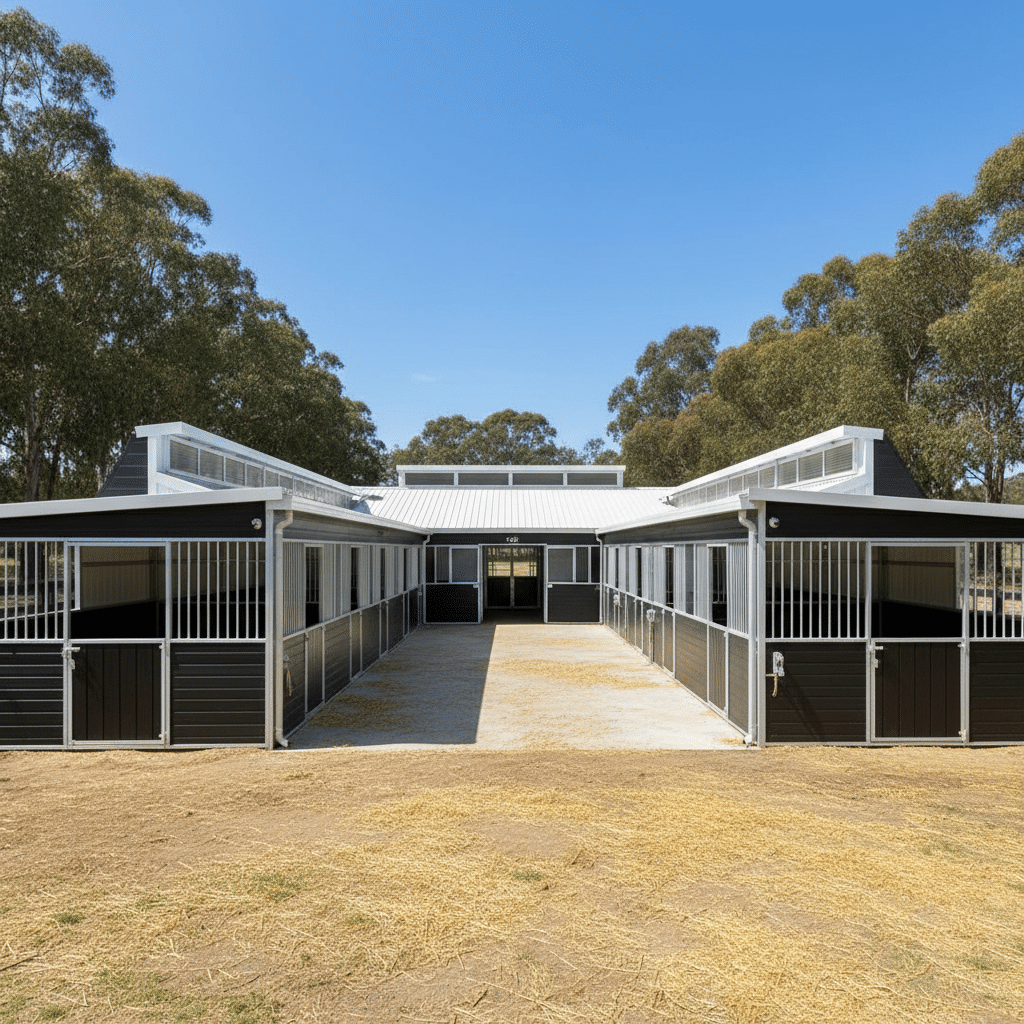
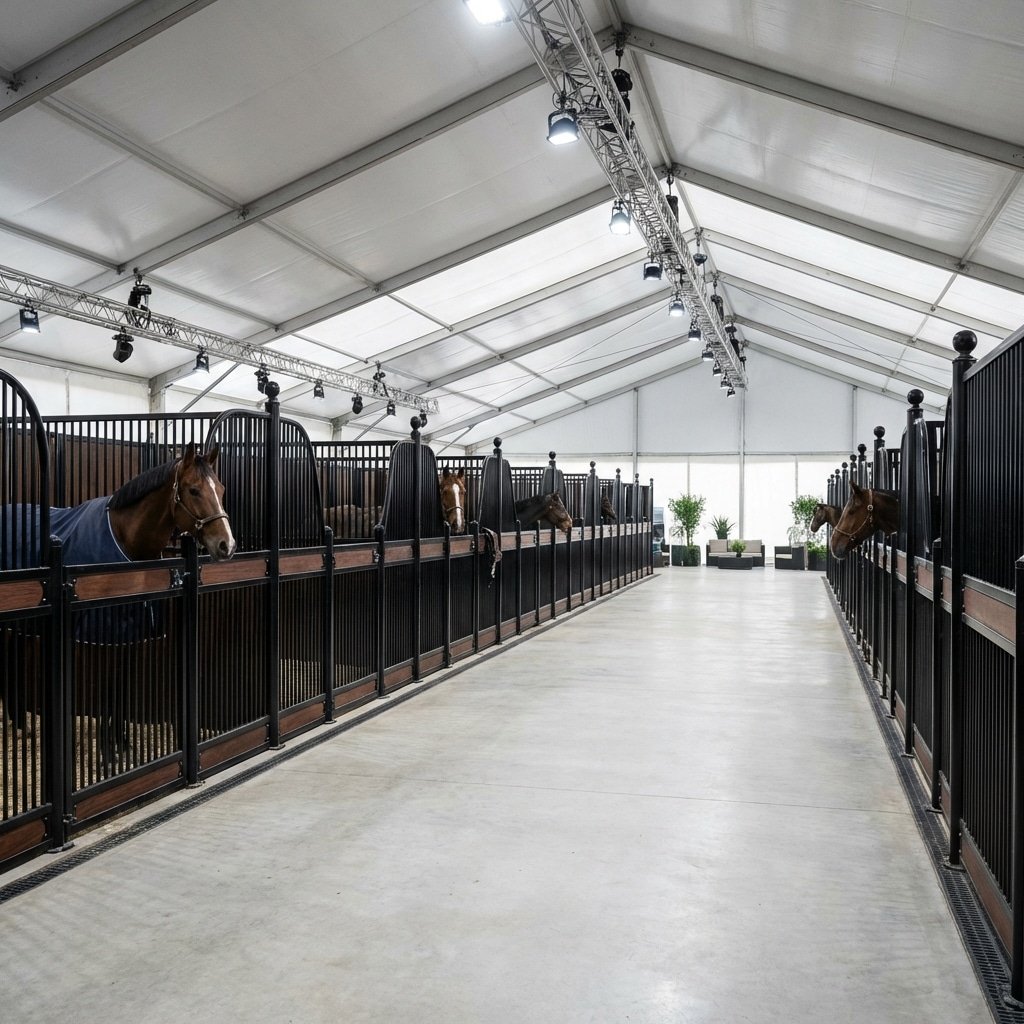
Horse Stables Engineered for Any Climate, Built to Last
Shuttle Service: Moving to a Smaller Truck
A shuttle service involves transferring goods from a standard 53ft semi-trailer to a smaller box truck, often 20-28 feet long, at a nearby staging area. This is necessary for final-mile delivery to residential farms or properties with narrow lanes, tight turns, or weight-restricted surfaces that cannot accommodate an 80,000 lb vehicle.
Defining the Shuttle Process for Site Access
A shuttle service is the process of transloading freight from a large 53-foot semi-trailer onto a smaller, more maneuverable truck. This service becomes necessary when the delivery location has access constraints like narrow roads, tight gates, sharp turns, or weight-limited bridges that prevent the entry of a full-size tractor-trailer. The line-haul truck parks at a safe, accessible location, or staging area, while the smaller shuttle truck completes the final-mile journey to the property, ensuring the cargo reaches its destination without damaging the site.
Comparing Shuttle Vehicle Specifications
The vehicles used for shuttle services vary based on the level of site restriction. Standard shuttle trucks are typically Class 4-5 box trucks, such as an International CV-Series, with a Gross Vehicle Weight Rating (GVWR) between 15,000 and 23,500 pounds and a body length of 20 to 28 feet. These trucks are suitable for most farm lanes. For properties with extreme constraints, operators use micro-trucks like a Kei-class vehicle. These trucks are only about 11 feet long with a turning radius under 12 feet, but their payload is limited to around 770 pounds. The primary advantage of a shuttle truck is its reduced size and weight compared to a standard semi-trailer, which can weigh up to 80,000 pounds and measure 102 inches wide.
| Vehicle Type | Common Dimensions | Gross Vehicle Weight Rating (GVWR) |
|---|---|---|
| Standard 53ft Semi-Trailer | Length: 53 ft, Width: 102 in | 65,000–80,000 lbs |
| Shuttle Truck (Class 4-5) | Length: 20–28 ft, Width: 96 in | 15,000–23,500 lbs |
| Micro-Truck (Kei-class) | Length: ~11 ft, Width: ~58 in | ~3,000 lbs (Payload ~771 lbs) |
Flagging Traffic on Narrow Roads
When a delivery truck blocks a narrow road, traffic control requires flaggers at each end who communicate via radio. Warning signs must be placed far enough in advance for drivers to stop safely. Distances range from 100 feet on slow residential streets to over 600 feet on faster rural highways.
Flagger Roles and Communication Protocols
When a road is reduced to one lane, a flagger must be positioned at each end of the constricted section, with one person acting as the coordinator. If the flaggers cannot see each other, they are required to use two-way radios or another reliable communication method. A single flagger is only allowed if the one-lane zone is short, traffic volume is low, and the entire area is visible from one end to the other. For maximum visibility, flaggers should stand on the shoulder opposite the blocked lane. Jurisdictions may also impose time limits; for example, California limits these temporary closures to a maximum of 20 minutes.
Warning Sign Placement and Required Distances
The placement of advance warning signs depends on the road’s speed limit. On low-speed residential streets, a single sign may be placed as close as 100 feet from the work area. For faster rural highways, the first warning sign should be positioned at a distance of 8 to 12 times the speed limit in feet, which can be over 600 feet in a 55 mph zone. These distances must provide enough stopping sight distance for approaching drivers, which is about 200 feet at 30 mph and nearly 500 feet at 55 mph. During the day, each sign must display at least two 16×16-inch orange or fluorescent red-orange flags. At night, flashing beacons are required for visibility.
Final Thoughts
Successfully navigating a 53-foot truck onto your property comes down to careful planning. You need to account for the truck’s wide turning radius and ensure there’s enough clear space for it to maneuver without hitting anything. It’s also critical to check the entire route for low-hanging power lines or tree branches that could block access. Failing to prepare for these challenges can lead to a failed delivery and extra costs.
The best approach is to be proactive. Before your scheduled delivery, contact the freight company and discuss any potential access issues at your property. Sending photos or even a short video of your driveway, gate, and any tight turns can be very helpful. This gives the carrier a chance to arrange a shuttle service or find another solution, ensuring your shipment arrives without delay or unexpected fees.

Frequently Asked Questions
Can a semi-truck deliver to my house?
A full semi-truck, which is about 70 feet long, needs wide roads that can support 80,000 pounds to legally reach a residence. If the roads do not meet these requirements, the delivery company will use a smaller box truck for the final part of the journey.
What if my driveway is gravel?
Delivery trucks can use a gravel driveway if it is built to specific standards. This usually means having a compacted base of 8–12 inches of gravel, with stones no larger than 1.5 inches. The driveway also needs at least a 2% slope for drainage. If these conditions are not met, the delivery will likely be made at the roadside.
What is a shuttle fee?
A shuttle fee is an extra charge for using a smaller vehicle to move a shipment from the main truck to a location that is hard to access, such as a home. This fee covers the cost of this short-distance transfer when a standard delivery is not possible.
Do drivers help unload?
No, truck drivers typically do not help with unloading residential deliveries. The responsibility for unloading the shipment belongs to the person receiving it. The driver’s role is usually just to be on-site during the process.
Can they back up a steep hill?
Yes, delivery trucks can back up steep hills on paved surfaces. A fully loaded truck can generally handle a grade of up to 24%. Some specialized vehicles can manage even steeper grades under the right conditions.
How wide does the gate need to be?
For a driveway that needs to fit delivery trucks, the gate should be between 12 and 14 feet wide. A 10-foot width is the minimum, but 16 feet is better if you expect larger trucks or trailers.

 English
  Spanish
  French
  Arabic
  German
0 Comments