


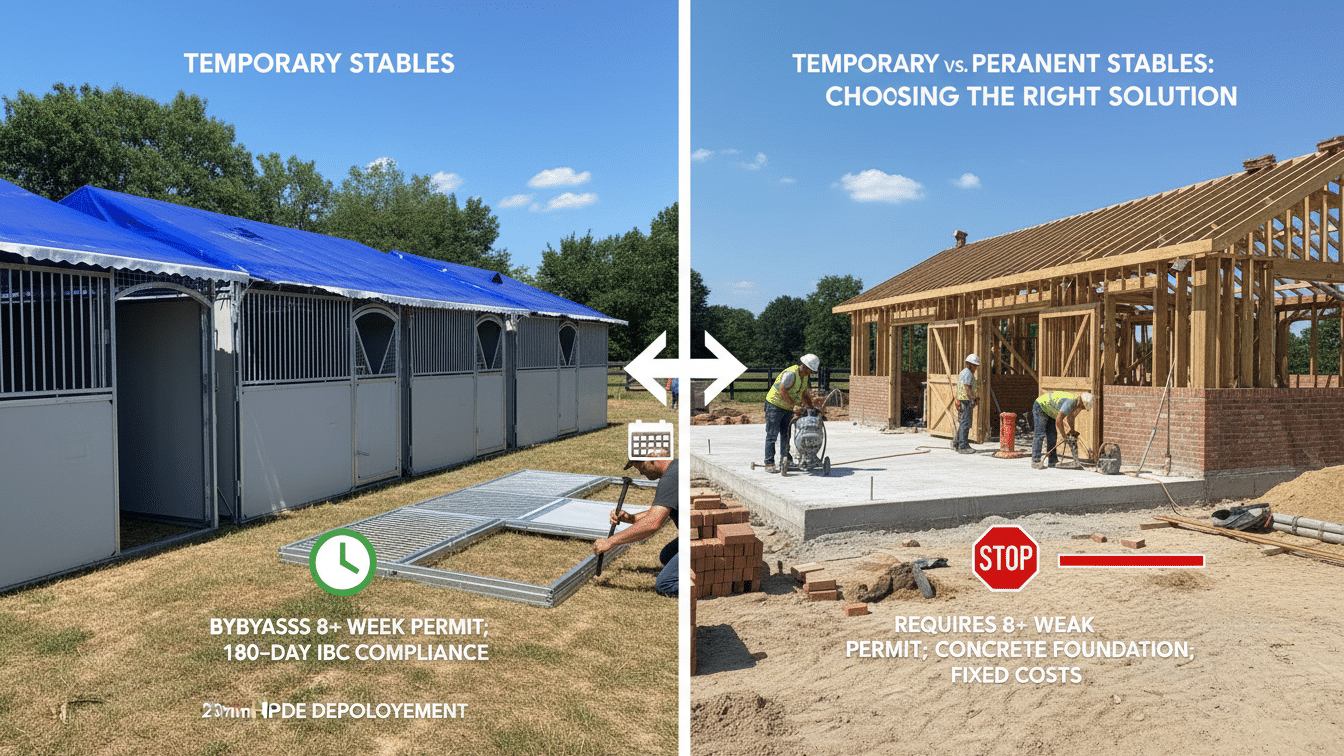
This guide examines the engineering behind portable durability. We compare the asset liquidity of structures using 42-micron galvanization and 10mm HDPE boards against the fixed costs and timelines of permanent builds.
Defining Temporary vs. Permanent Structures
The primary difference between temporary and permanent structures lies in their intended duration of use, not their construction materials. A temporary structure, as defined by codes like the IBC, is typically used for less than 180 days. This classification allows for different engineering standards based on the lower probability of extreme weather events occurring during its short service life.
| Defining Aspect | Key Details | Practical Implication |
|---|---|---|
| Core Distinction | A structure’s legal status depends on its planned duration of use. Because the deployment period is short, engineering standards can account for a lower risk of extreme weather events. | A highly durable building, engineered to last over 20 years, can still be legally classified as “temporary” if its use agreement is for a short period. |
| Regulatory Timeframes | Legal definitions for “temporary” vary by location:
| Event organizers and property owners must check local codes, as a structure considered temporary in one region may require permanent permits in another. |
| Safety Standards | Safety is ensured through operational controls rather than permanent construction standards. This includes controlled occupancy limits, clear emergency action plans, and specific hazard mitigation strategies per ANSI E1.21-2020. | Instead of building a structure to withstand a 100-year storm, managers ensure safety by evacuating it if a severe storm is forecasted during the short event period. |
| Portable Design Needs | Portable structures require materials that endure frequent assembly and transport. DB Stable uses hot-dip galvanized steel frames with a coating over 42 microns. This process creates a thick, rust-proof barrier, essential for resisting wear. UV-resistant HDPE boards prevent warping from sun exposure. | Materials that resist environmental stress are crucial for a portable structure’s lifespan, ensuring it remains safe and functional each time it is relocated and set up. |
The Permit Advantage of Portable Stables
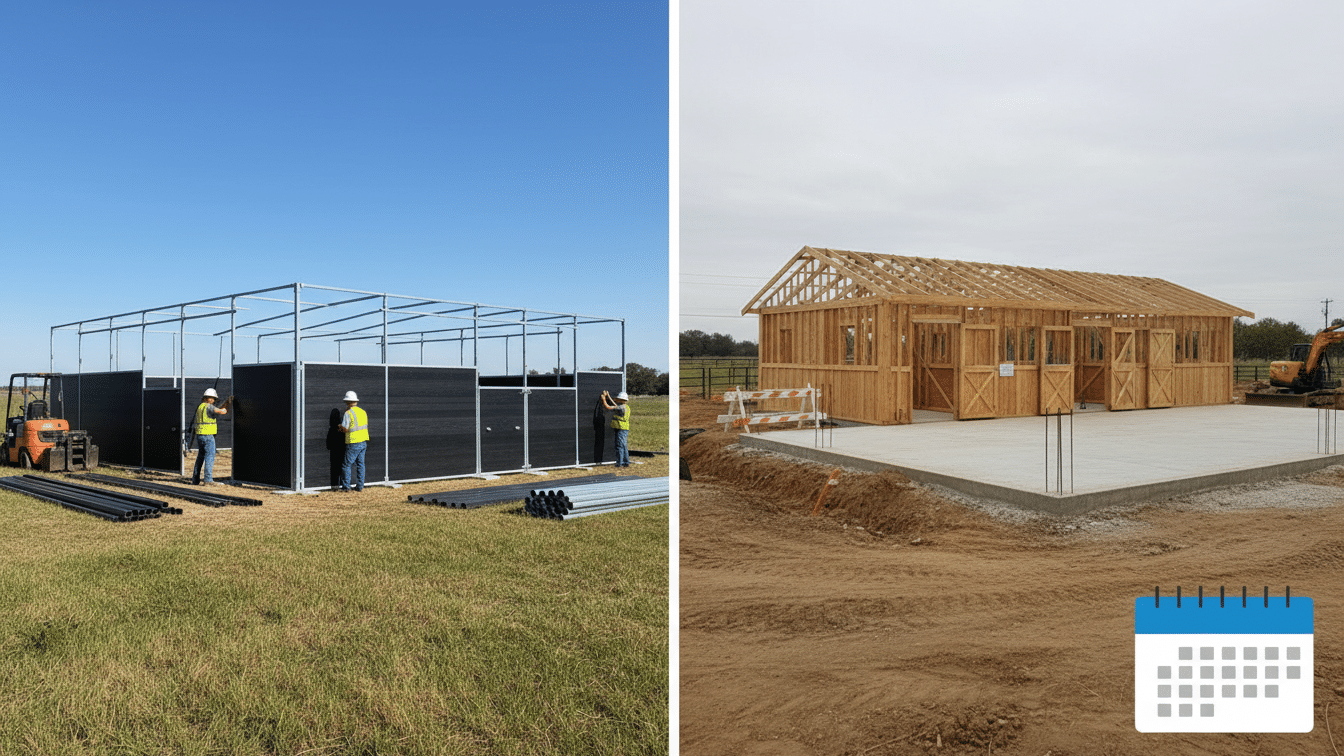
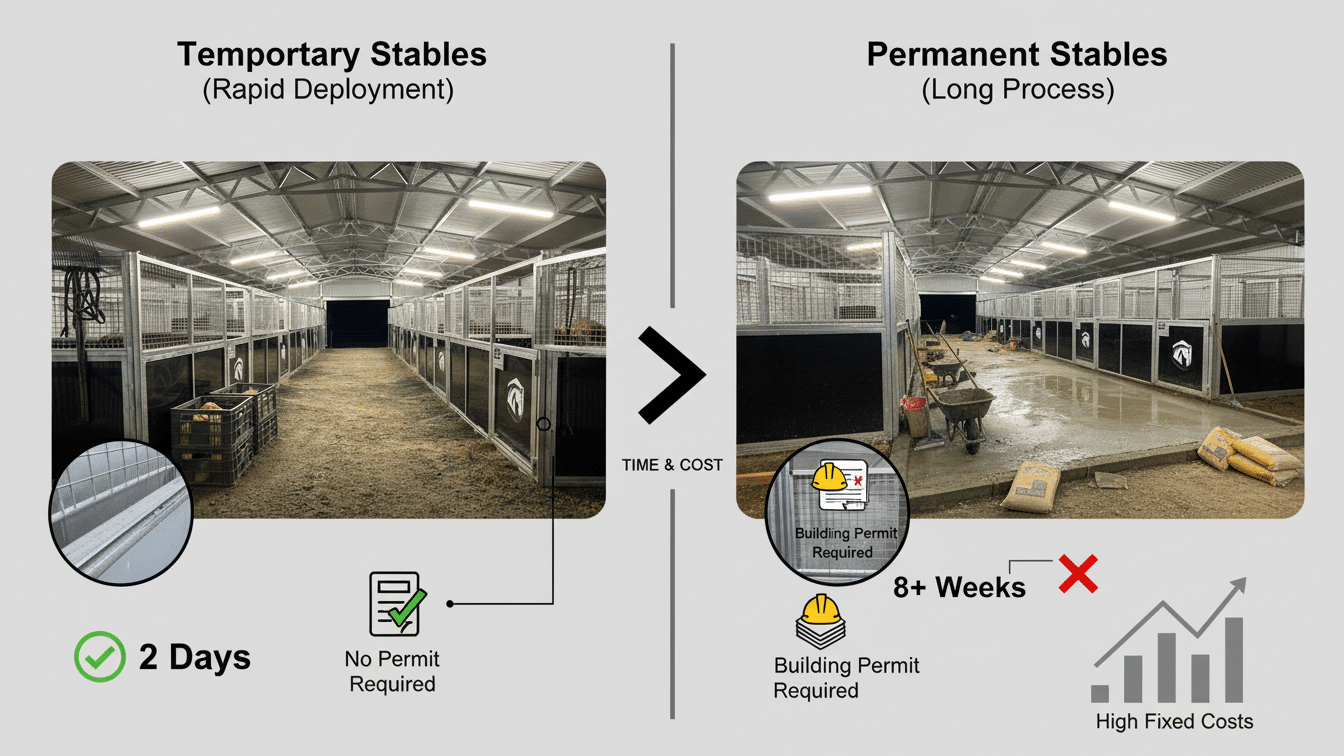
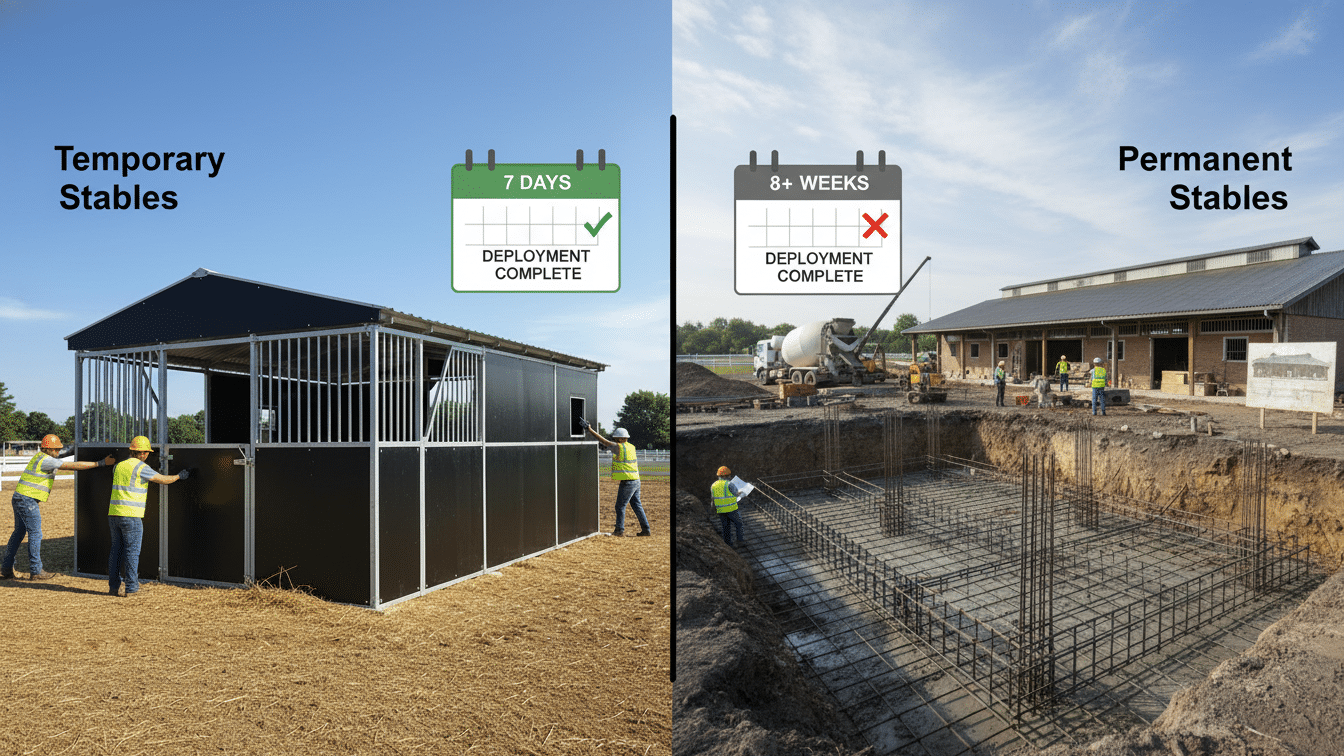
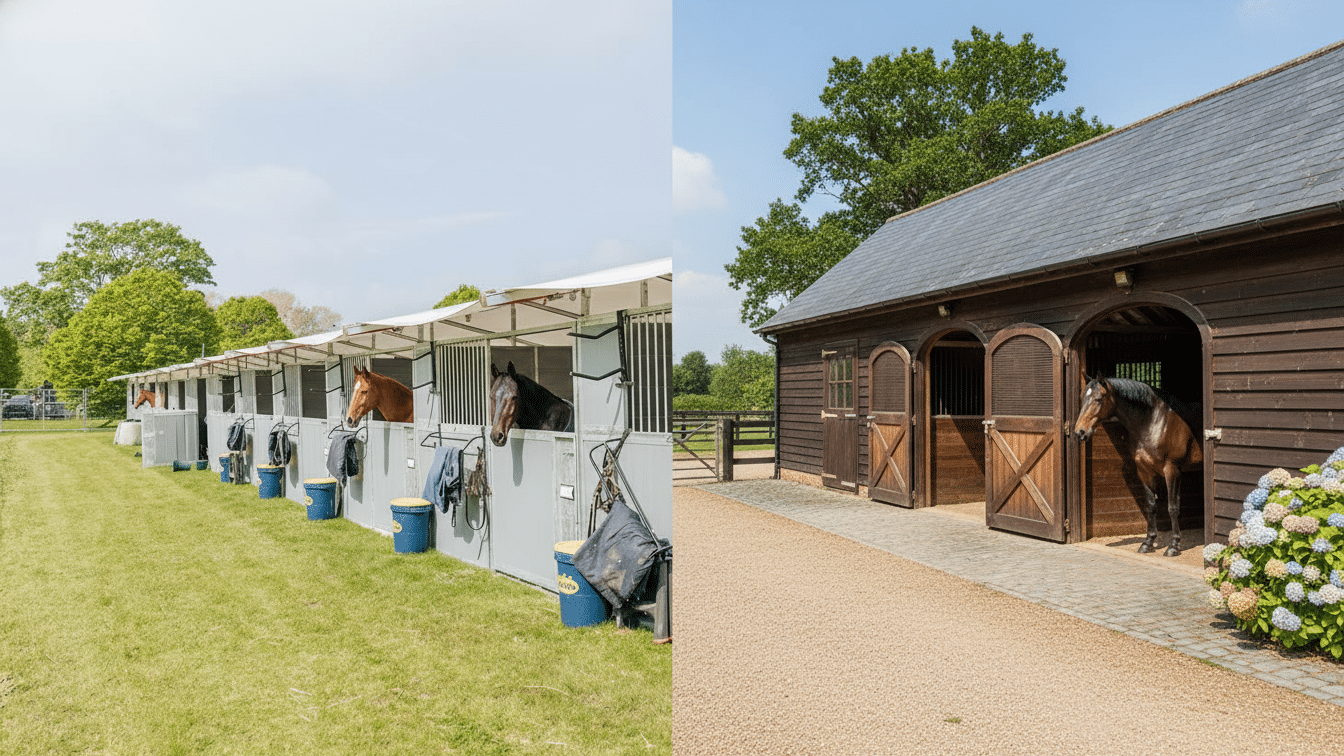
Portable stables typically bypass standard building permit requirements because they are classified as temporary structures, not permanent installations. This distinction often eliminates the need for planning applications and foundation approvals, allowing for deployment in days instead of the 8+ weeks required for fixed stables.
Regulatory Classification: Why Portable Stalls Avoid Building Codes
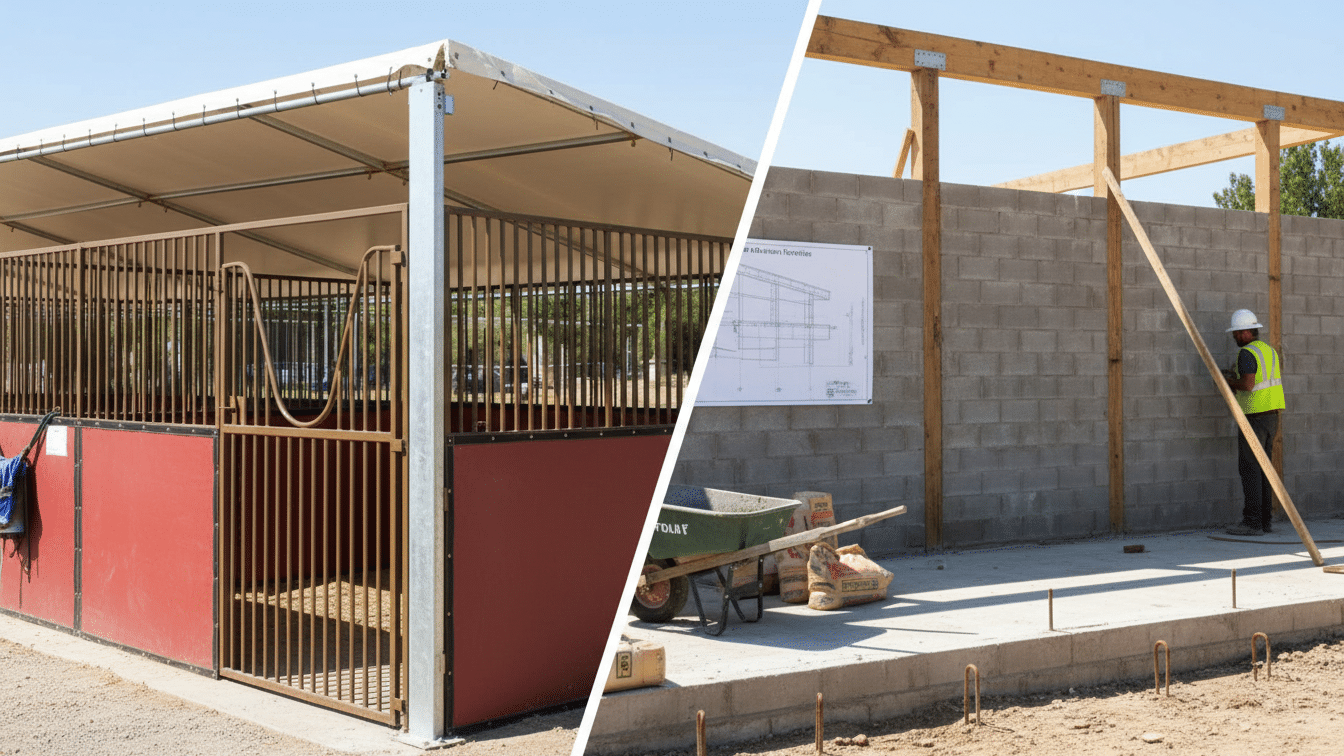
In most jurisdictions, portable stables are considered temporary buildings. This classification is key, as it places them outside the scope of building codes that govern permanent structures. Unlike fixed stables, mobile units do not require a permanent concrete foundation, which is a primary factor authorities use to define a building as temporary. This status allows you to avoid formal planning applications and the regulatory fees and delays that come with them.
Timeline Comparison: Fixed vs. Portable Stable Deployment
The time difference between installing a fixed stable and a portable one is significant. A permanent stable requires a planning application that takes around eight weeks to get approved. After that, you need another week for its concrete foundation to cure before you can even start building. In contrast, portable stables can be ordered and assembled in just a few days because they skip the permit and foundation stages entirely.
Jurisdictional Exceptions and Permitted Development
While portable stables offer a permit advantage, the rules are not universal. Land designated for agricultural use often has “permitted development rights,” which simplifies the process for adding structures like temporary stables. Stables placed near existing buildings on specially designated land, such as a Green Belt or a conservation area, might still need official consent. It is always best to check with your local zoning authority, as regulations can differ from one area to another.
How DB Stable’s Design Aligns with Permit-Free Deployment
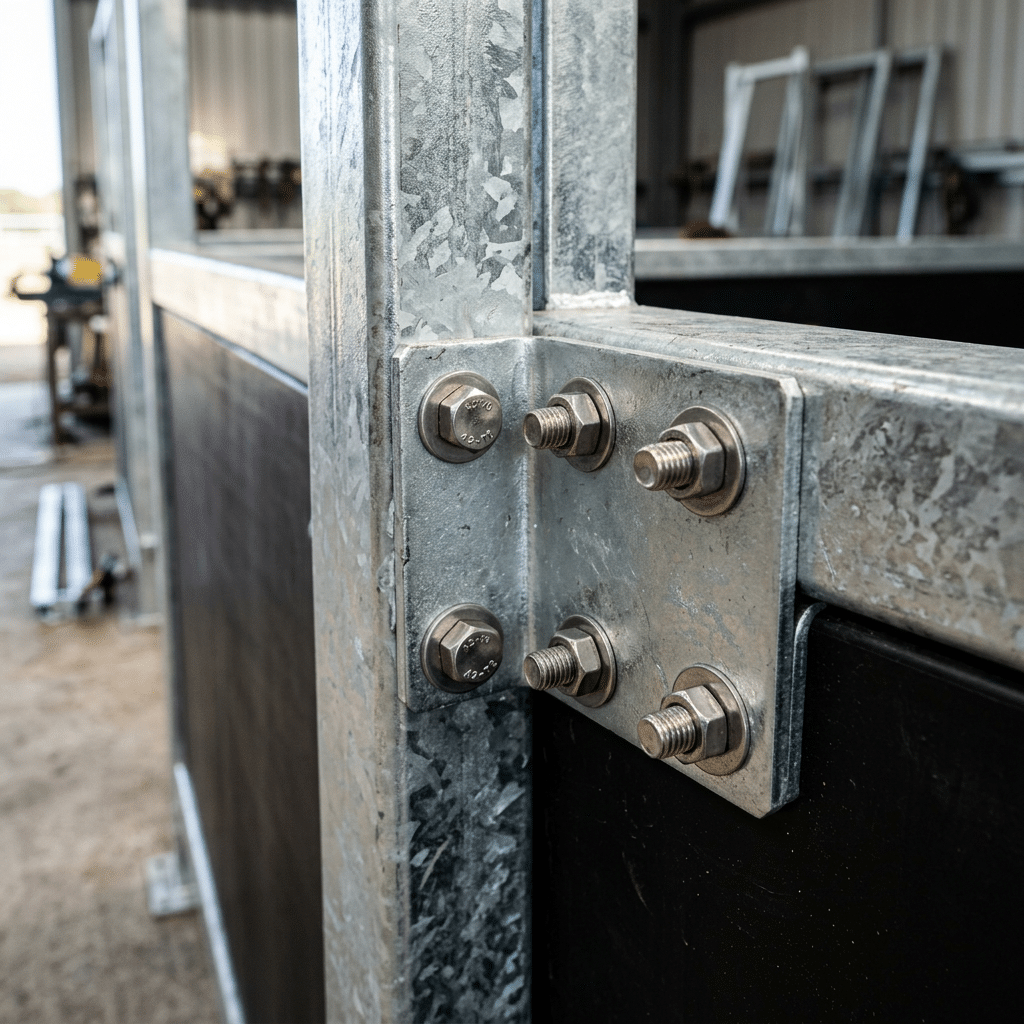
DB Stable units are specifically designed to support rapid, permit-free installation. The stables are prefabricated, meaning they arrive ready for quick setup. The system relies on strong, hot-dip galvanized connect way pins and plates to join panels securely. This creates a structurally sound stall without needing a permanent foundation, directly aligning with the temporary classification. This portability gives you the flexibility to use the stables for seasonal needs or move them across different sites without filing new permit applications each time.
Structural Integrity: Can Portables Handle Weather?
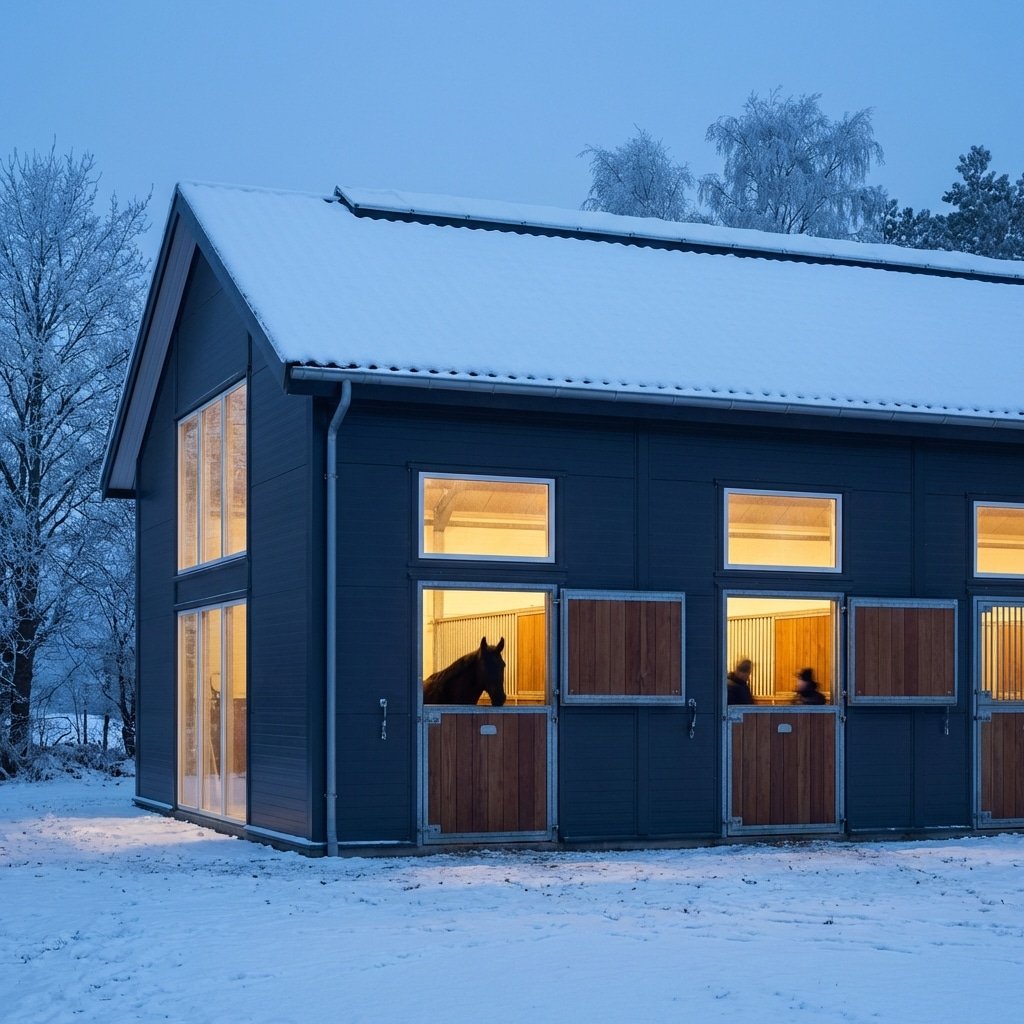
Portable structures built from shipping containers are highly weather-resistant due to their industrial-grade corten steel construction and watertight seals. They are engineered to handle extreme wind, rain, and temperatures. While technically water-resistant rather than waterproof, their durability is ensured through proper maintenance and can be enhanced with upgrades.
Core Features of Weather-Resistant Design
The resilience of portable structures starts with their core material, Corten steel. Think of it as a special type of steel that develops a stable, rust-like layer when exposed to weather. This layer acts as a natural shield, preventing deeper corrosion and extending the structure’s life.
When properly maintained, these structures earn a “Wind and Watertight” classification. This means their seals and surfaces are intact, effectively keeping wind and rain out. A key component of this design is the set of double-hinged steel doors, which use tightly fitted rubber seals to create a secure closure against the elements.
Key Engineering Standards for Durability
Specific standards define how tough these structures are. The steel walls are typically 1.2mm or 1.6mm thick, with the thicker steel used on the sides and doors to better resist impacts. This thickness contributes directly to the unit’s overall strength.
Fire safety is also built-in. According to ISO 1496 requirements, the structure must withstand an open flame for at least 10 minutes before its internal temperature rises above 139°C. Inside, maintaining a humidity level between 30% and 50% is ideal for preventing condensation, which can lead to moisture damage over time.
Maintenance for All-Weather Performance
To keep a portable structure weather-resistant for the long term, a few simple maintenance steps are essential. Regularly check the rubber gaskets around the doors for any cracks or damage and replace them to maintain a proper seal. If you notice any small gaps elsewhere, applying a weatherproof caulk can prevent water from seeping in.
For better climate control, adding insulation like spray foam or rigid foam boards is a great solution. Insulation helps manage internal temperature swings and stops condensation from forming on the walls, protecting both the structure and its contents.
How DB Stable Builds for Longevity
DB Stable applies these principles of durability to its portable horse stables. The frames are made from hot-dip galvanized steel, a process that coats the metal in a protective zinc layer over 42 microns thick. This coating is designed to prevent rust for at least 10 years.
For the walls, DB Stable uses 10mm thick HDPE boards with built-in UV resistance. This ensures the panels won’t become brittle or fade from constant sun exposure. Finally, the structures are topped with powder-coated steel board roofs, available in 0.4mm and 0.8mm thicknesses, providing reliable overhead protection from rain and sun.
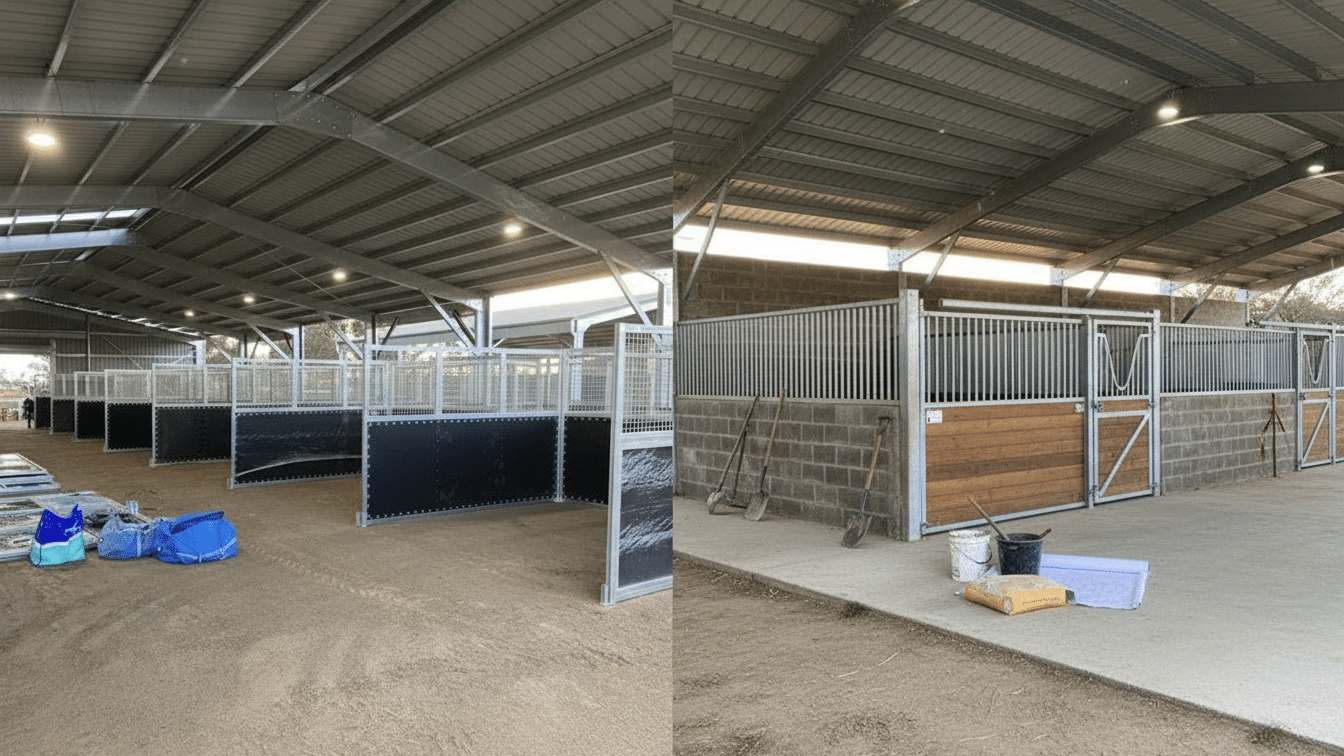
Engineered for Your Climate, Built for Life.
Our stables are precision-engineered with rust-proof steel and climate-specific materials to ensure unparalleled safety and 20-year durability. Tell us about your project, and we’ll provide a custom quote for a solution built to last.
Asset Liquidity: Reselling Your Stables
Asset liquidity for stables refers to how easily the structure can be sold and converted to cash without losing significant value. Unlike permanent buildings, portable stables with durable, high-quality materials and modular designs have higher liquidity because they can be easily disassembled, moved, and resold.
Defining Liquidity for Physical Equestrian Assets
The liquidity of a horse stable is its ability to be sold quickly at a fair market price. Think of it like selling a car versus selling a house. A permanent, custom-built barn is part of the property and has low liquidity; its value is tied directly to the land. Selling it means selling the entire property.
Portable and modular stables, on the other hand, are treated more like equipment. Because they can be disassembled and moved, they have a separate value. Key factors driving their liquidity are portability, ease of disassembly, and demand in the second-hand market. This makes them a flexible asset for renters, event organizers, and property owners who may want to reconfigure their layout later.
Material and Design Standards Affecting Resale Value
A stable’s resale value depends heavily on its condition and construction. Materials and design that resist wear and tear make a stable a much more attractive asset to a second-hand buyer. Specific features are engineered to preserve this value over time.
- Frame Durability: A hot-dip galvanized steel frame is crucial. This process involves dipping the steel in molten zinc, creating a protective coating that chemically bonds to it. A coating over 42 microns thick prevents rust for more than a decade, preserving the frame’s strength.
- Panel Quality: Infill panels made from 10mm thick High-Density Polyethylene (HDPE) with UV resistance hold their value. The UV treatment acts like sunscreen for the material, preventing sunlight from making it brittle, warped, or faded.
- Structural Integrity: Strong connection points ensure the stable can be taken apart and put back together without losing stability. Fully welded 40*40mm square metal tubes provide the necessary strength for multiple assemblies.
- Design Modularity: Prefabricated panel systems allow a new owner to set up the stable easily or change its configuration. This flexibility broadens the pool of potential buyers, making it easier to sell.
How DB Stable’s Construction Boosts Asset Liquidity
DB Stable builds its structures with resale value in mind. The company ensures longevity by applying a hot-dip galvanization coating of over 42 microns to all frame tubes and connectors. This protection against rust means the core structure remains sound and valuable for years.
The use of 10mm thick HDPE boards with built-in UV resistance also helps preserve the stable’s appearance and integrity, which is a key factor for second-hand buyers. Because DB Stable focuses on a prefabricated, portable design, owners have a tangible asset they can easily sell and relocate, completely separate from their property. This turns the stable from a permanent fixture into a liquid asset.
Best Use Cases for Temporary Stabling
Temporary stabling is ideal for situations where permanent structures are impractical. Key applications include equestrian events requiring rapid setup, farms needing flexible capacity for seasonal peaks like foaling, and emergency scenarios such as natural disasters, barn renovations, or disease quarantine where immediate, secure shelter is critical.
| Use Case | Primary Need | Typical Cost (Per Stall) | Common Dimensions |
|---|---|---|---|
| Event Deployments | Speed and Scalability (2-4 hr setup) | $500 – $1,000 | 3m × 3m (FEI-compliant) |
| Seasonal Peaks | Flexible Capacity (Foaling, Training) | $600 – $1,200 | 3m × 4m (Barn-style) |
| Emergency Scenarios | Rapid Shelter (Disasters, Quarantine) | Varies (Risk-mitigation value) | Modular and adaptable |
Event-Driven Deployments
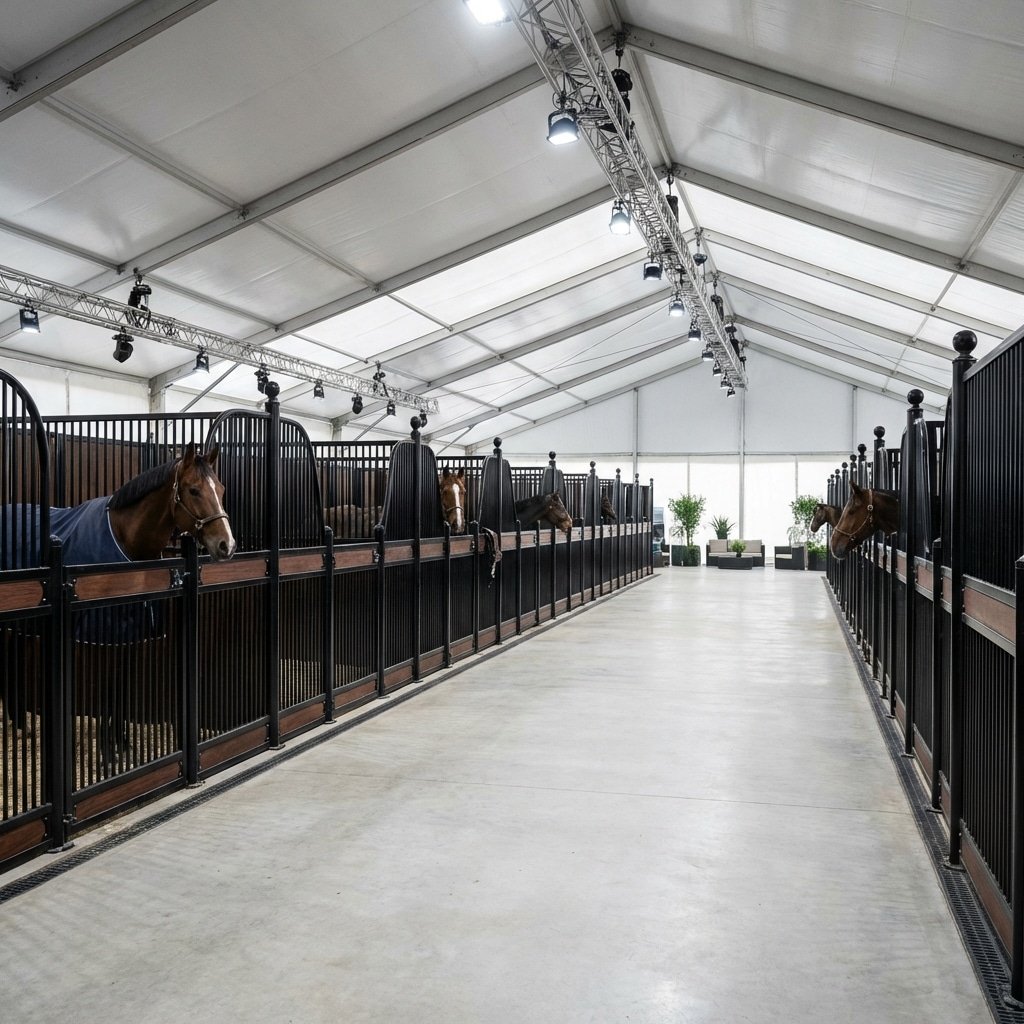
For equestrian competitions, shows, and clinics, speed is essential. Temporary stalls are designed for rapid deployment, often without needing any site preparation. Because the panels are modular, a complete stall can be assembled in just 2 to 4 hours. This allows event organizers to scale their facilities for a single weekend, adding capacity only when they need it.
Seasonal and Operational Peaks
Farms often face predictable surges in demand, like during foaling or peak training seasons. Instead of building expensive permanent barns that sit empty for half the year, temporary stables offer a flexible solution. They can be set up to expand capacity when needed and then stored away, optimizing both space and budget. Barn-style options give mothers and foals extra room.
Emergency and Transitional Scenarios
In an emergency, you need a solution now, not in a few months. Temporary stabling provides immediate shelter during natural disasters, sudden evacuations, or essential barn renovations. The modular design is also perfect for creating isolated quarantine zones to manage disease outbreaks. They are a valuable risk-mitigation tool because they bypass the lengthy delays from permitting and site engineering.
Technical Standards for Reliable Performance
Not all temporary stables are built the same. Key engineering standards ensure safety and durability across different use cases. These specifications determine how well a stall resists weather, withstands use, and keeps a horse comfortable.
| Specification | Industry Standard | Performance Range | What It Means |
|---|---|---|---|
| Corrosion Resistance | ISO 1461:2022 | Hot-Dip Galvanized Steel | A protective zinc coating that prevents rust for longevity. |
| Structural Integrity | 2.0mm Pipe Wall | Varies by model | Thicker steel provides better stability and durability against impact. |
| Material Lifespan | 15-25 years | Up to 25 years | Reflects the quality of materials and construction. |
| Ventilation (CFM) | 300 CFM | 200–400 CFM | Cubic Feet per Minute of air exchange for respiratory health. |
| Insulation (R-Value) | R-10 | R-6 – R-12 | Measures thermal resistance; higher values mean better insulation. |
How DB Stable Ensures Durability for Demanding Use Cases
DB Stable engineers its stalls to meet the demands of events, seasonal work, and emergencies. The materials and construction methods directly address the need for long-term, reliable performance.
- ✅ Frame Construction: The steel frames are hot-dip galvanized with a zinc coating over 42 microns thick. This process meets ISO standards and creates a barrier that stops rust, ensuring the stalls hold up in any weather.
- ✅ Infill Panels: The panels use 10mm thick, UV-resistant HDPE boards. This material is tough enough to handle kicks and resists warping or cracking from sun exposure.
- ✅ Robust Connections: Connections are a common weak point, so DB Stable uses fully welded connect way pins with 6mm steel plates. This design creates a rigid and secure structure that remains stable even with frequent assembly and disassembly.
Anchoring Solutions for Temporary Setups
Temporary anchoring solutions are engineered for non-permanent setups, emphasizing removability and load adjustment. These systems typically use seven-wire strands with specific bond lengths (3-10m) and are classified by their ability to be modified or removed, while meeting safety standards like OSHA’s 5,000 lbs capacity requirement.
Defining Temporary Anchors and Their Classifications
Unlike permanent fixtures, temporary anchors are designed for flexibility. Their main job is to allow for load adjustments and easy removal once they are no longer needed. They are categorized based on how they function. Some are fixed, while others can be re-stressed, adjusted, or even fully de-stressed to change the load they support. For setups that must be completely removed, type CR anchors use a special rupture body that allows the entire steel tension member to be pulled out of the ground. Partially removable anchors (type PR) allow for some components to be taken out while the remaining parts maintain 100% of their load-bearing strength.
Key Technical Specifications and Material Standards
The core of most temporary anchors is a seven-wire steel strand, typically with a cross-sectional area of 100 mm² or 150 mm². To get a secure grip in soil or rock, these anchors require a bond length—the part that’s firmly embedded—of at least 3 meters but no more than 10 meters. Post-injection lances, which help set the anchor, are commonly sized at 13 x 2 mm or 16 x 2 mm. The choice of material affects lifespan. Standard galvanized wire offers a design life of 20 to 30 years, which is suitable for most temporary projects. For longer-term needs or harsher conditions, stainless steel can extend the design life up to 120 years.
Load Capacity and Safety Requirements
Safety is a critical part of any anchoring system. Regulations like OSHA standard 1926.502 provide clear guidelines. For fall arrest systems, each anchor point must be able to support a minimum of 5,000 pounds for every worker attached. If not rated for that specific weight, the anchor must be engineered as part of a complete system that maintains a sufficient safety factor, typically supporting at least twice the maximum expected load.
Ensuring Stability for DB Stable Portable Setups
Proper anchoring is fundamental to the safety and stability of portable structures, like those from DB Stable. Setting up portable horse stables on varied ground conditions requires a reliable anchoring method to keep them secure. The principles of durable temporary anchoring directly apply here. DB Stable’s use of hot-dip galvanized steel provides a 10-year lifespan, aligning with material standards for rust resistance and longevity. This ensures the connection points and frame components resist corrosion and maintain their strength, providing a stable and secure environment for the horses.
Converting Temporary Stalls to Permanent
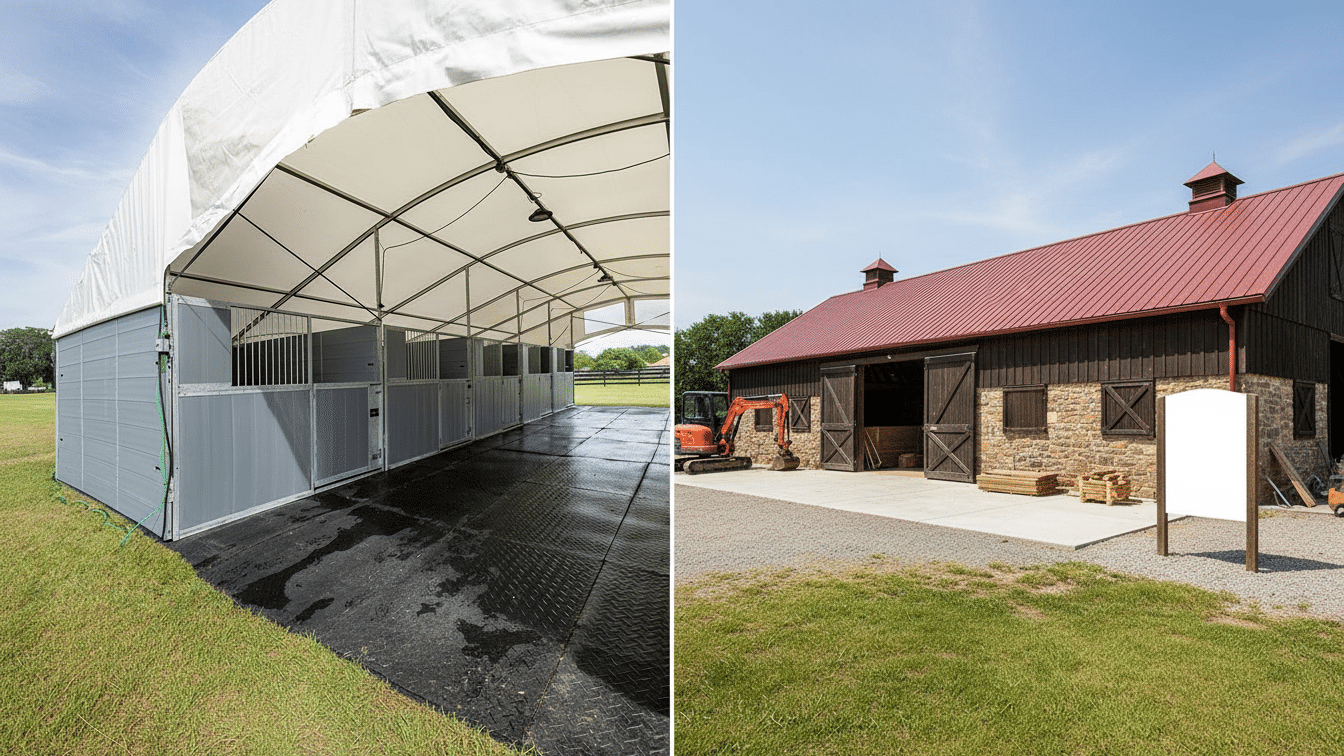
Converting a temporary stall to a permanent one involves upgrading its structural integrity to meet long-term safety and durability standards. This typically requires adding a permanent foundation, using weather-resistant materials, and ensuring the structure complies with local building codes, a process that differs significantly from assembling a portable stall.
Defining the Scope of a Temporary-to-Permanent Conversion
Turning a temporary stall into a permanent fixture is more than just leaving it in one place. It involves a fundamental change in its structure to ensure it can safely withstand years of use and weather. The process requires careful planning across several key areas.
- Foundation Requirements: A temporary stall might sit on level ground, but a permanent one needs a solid footing, like a concrete slab, to prevent shifting and ensure long-term stability.
- Material Upgrades: Components designed for short-term use often need to be replaced with materials that can endure constant exposure to sun, rain, and wind without degrading.
- Regulatory Compliance: Permanent structures must follow local building codes, zoning laws, and structural engineering standards. This often involves obtaining permits and passing inspections.
- Cost and Feasibility: It is important to analyze whether the total cost of materials, labor, and permits for a conversion is more effective than building a new permanent structure from scratch.
DB Stable’s Focus on High-Quality, Portable Solutions
While converting a temporary stall is an option, it can involve significant cost and regulatory hurdles. DB Stable designs its portable stalls to offer long-term durability without the commitments of permanent construction. This approach provides a robust alternative that blends resilience with flexibility.
- ✅ Frame Durability: We use hot-dip galvanized steel frames. This process creates a protective zinc coating over 42 microns thick, acting like permanent armor against rust for years, all without a permanent installation.
- ✅ Resilient Infill Panels: The walls are made from 10mm thick, UV-resistant HDPE boards. This is a tough, dense material that won’t crack or fade when exposed to the elements.
- ✅ Engineered for Portability: The entire system is designed for straightforward assembly and relocation, giving you the freedom to move or reconfigure your setup as needed—a key advantage over fixed structures.
- ✅ Robust Connections: Stability comes from fully welded 40*40mm square metal tube connectors, which create a strong, secure frame that stands firm without being permanently anchored to the ground.
Cost Comparison: Kit vs. Brick-and-Mortar
For a comparable 2,400 sq ft structure, a prefabricated steel building costs approximately $45,000-$50,000, while a traditional brick-and-mortar shell costs around $89,500-$90,000. This makes prefab kits nearly twice as cost-effective, primarily due to immense savings on specialized labor and more efficient material usage.
Primary Cost Drivers: Labor and Materials
The main reason for the huge price gap comes down to two things: labor and materials. Traditional construction requires skilled workers on-site for months, while prefab kits use factory-made parts that assemble quickly with a smaller crew.
- Labor Costs: Bricklaying is a specialized skill that costs around $40 per hour. For a 2,400 sq ft building, that one task can take 475 hours and cost nearly $19,000.
- Material Costs: Steel kit materials average about $8 per square foot. Traditional building materials are almost double that, at around $14 per square foot.
- Construction Timeline: A prefab steel structure can be put up in just a few hours. A similar brick building often takes 8 to 14 months to complete, adding significantly to labor expenses.
Cost Breakdown: 2,400 sq ft Building Shell
Here’s a direct comparison showing how the costs stack up for a simple 2,400 sq ft building shell.
| Feature | Prefabricated Steel Kit | Traditional Brick-and-Mortar |
|---|---|---|
| Total Shell Cost | $45,000 – $50,000 | $89,500 – $90,000 |
| Total Savings with Prefab | $40,000 – $45,000 | |
How DB Stable’s Design Reflects Prefab Efficiency
The same principles that make large prefab buildings so efficient also apply to our portable horse stables. DB Stable uses a modular, pre-engineered design to deliver a high-quality product without the high cost and long timeline of a custom build.
Each component is built for durability and easy setup. The frame uses hot-dip galvanized steel with a coating over 42 microns thick. Think of this as a permanent, heavy-duty shield against rust. Combined with tough, UV-resistant HDPE boards, the parts fit together quickly and securely, reducing on-site labor and getting your stable ready in far less time.
Rental Income Potential
Rental income potential is the revenue a property can generate when leased. For temporary structures like portable horse stables, this creates an opportunity for landowners or event organizers to earn money by renting out stalls. It offers a flexible and scalable income source compared to permanent barns.
Comparing Short-Term and Long-Term Rental Models
Choosing the right rental model is the first step. Short-term rentals, often for events or clinics, can bring in higher per-day rates. This model requires more hands-on management due to frequent turnover, similar to running a hotel.
Long-term rentals, like full-time boarding, provide a steady and predictable monthly income. This approach involves less daily administrative work once a stall is occupied, much like leasing an apartment. Your choice impacts everything from how you set prices to your daily workload and maintenance schedule.
Key Factors Driving Rental Profitability
Several key factors determine whether a stable rental business succeeds. Managing these variables helps maximize your return on investment.
- Occupancy Rate: The percentage of time your stalls are filled directly controls your revenue. A higher occupancy rate means more income.
- Pricing Strategy: Your rental rates must be competitive yet profitable. Prices should reflect your location, the quality of your facilities, and local demand for daily, weekly, or monthly boarding.
- Management and Maintenance: Ongoing costs for cleaning, repairs, and administration must be factored into your budget. These operational expenses will affect your net profit.
- Tax Implications: All rental income is taxable. Keeping clear financial records is essential for proper reporting and managing your tax obligations.
How DB Stable’s Design Supports a Rental Business
A successful rental operation relies on durable and flexible equipment. DB Stable’s portable stalls are engineered to meet these demands, making them a practical asset for generating income.
The stalls are built for high turnover. They use hot-dip galvanized steel with a coating over 42 microns thick and 10mm UV-resistant HDPE boards. This construction resists wear and tear from frequent use, minimizing repair costs and downtime.
Their portable design also offers incredible flexibility. You can easily add, remove, or reconfigure stalls to match fluctuating demand for a weekend event or seasonal boarding. This scalability ensures you are never over or under-equipped.
As a direct factory supplier, DB Stable helps reduce the initial investment needed to start. A lower upfront cost improves your potential return and shortens the time it takes to become profitable. Finally, the robust design ensures a safe environment for horses, protecting your reputation and giving renters peace of mind.
Frequently Asked Questions
Do portable horse stables require a building permit?
Typically, portable stables do not require a building permit, but this rule changes from place to place. The decision depends entirely on your local government’s regulations.
Many areas exempt small structures, often those under 200 square feet, from permit rules. However, some local codes are stricter. For instance, a place like Richlands, NC, has specific rules about minimum lot size and stall dimensions. The only way to know for sure is to contact your local zoning office before you set up the stable.
What are the wind load ratings for temporary structures?
Temporary structures have lower wind load requirements than permanent buildings. Since they are not exposed to the elements for as long, the standards are adjusted for the shorter timeframe.
According to the engineering standard ASCE 37, a structure in place for less than six weeks only needs to handle 56% of the wind load required for a permanent building. Similarly, European standards often rate temporary event structures to withstand wind speeds up to 100 km/h (about 62 mph).
How can you anchor a temporary stable without concrete?
You can anchor a temporary stable without concrete using systems like ground anchors or soil anchors. These systems secure the structure directly to the earth.
The most important safety rule, set by standards like OSHA, is about strength. Each anchor point must support a minimum load of 22 kN, or 5,000 pounds. Think of it this way: each anchor has to be strong enough to hold the weight of a small car. These systems often use durable materials like stitched polyester webbing certified to safety standards like EN795.
Can portable stables be converted into permanent fixtures?
No, portable stables are not engineered for permanent conversion. They are designed for flexibility and transport, not to be permanent buildings. Trying to convert one is like trying to turn a high-quality tent into a brick house; the basic design and materials are just not the same.
Portable stables lack the deep foundational systems needed for a permanent structure. Their materials are designed for a lifespan of 15-25 years, while permanent barns are built to last 30 years or more. Building codes for temporary and permanent structures are completely different, so a conversion would not meet legal or safety standards.
Final Thoughts
The choice isn’t about permanence, but performance. A “temporary” stable built with industrial-grade hardware offers the structural integrity of a permanent building. The label refers to its flexibility, not its strength or lifespan.
Investing in superior materials like hot-dip galvanized steel means your stable is a secure, long-term asset. This focus on durability delivers safety and resale value far beyond a single season, providing a reliable solution for years.

 English
  Spanish
  French
  Arabic
  German
0 Comments