



This guide analyzes the 25:1 strength-to-weight ratio of steel, evaluates 42-micron hot-dip galvanization for coastal corrosion resistance, and examines 10mm HDPE infill as a shatterproof, fire-retardant solution for modern equestrian facilities.

Steel vs. Wood: A Structural Integrity Comparison
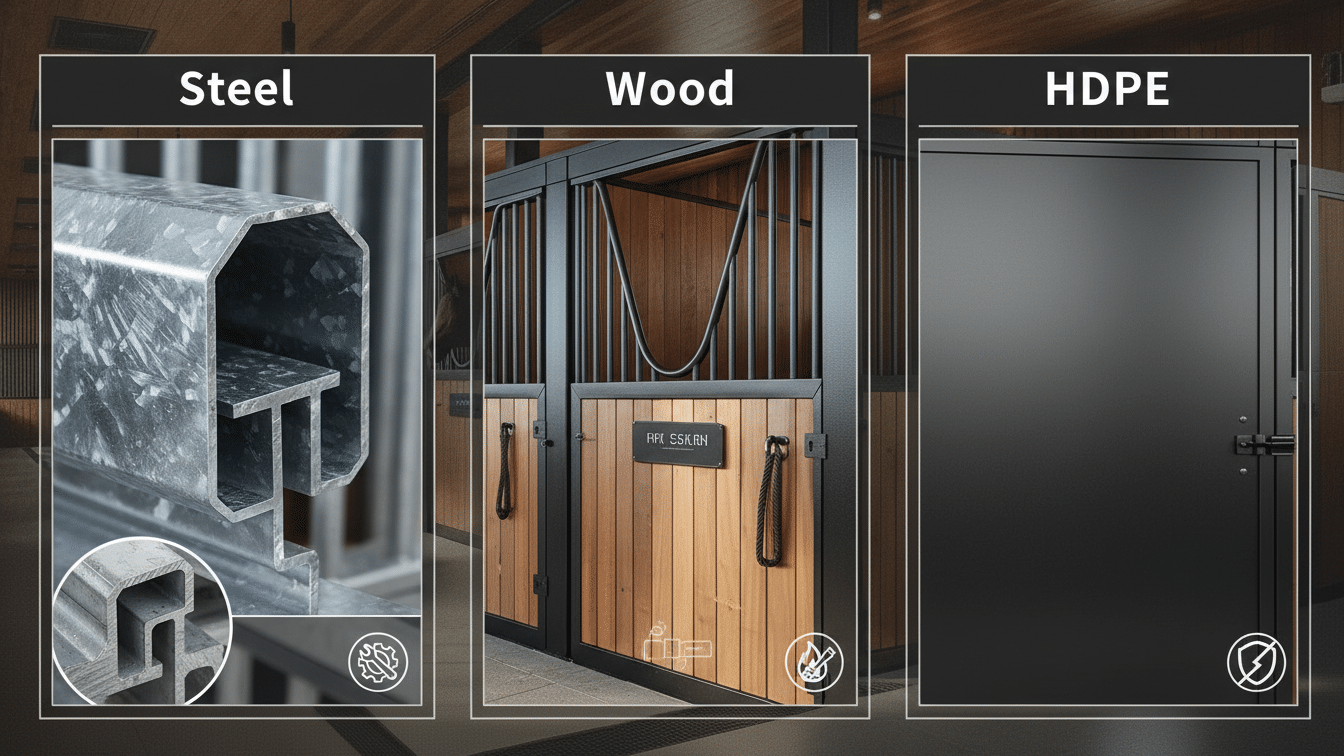
Steel provides superior structural integrity with a 25:1 strength-to-weight ratio compared to wood. While wood offers natural insulation, it suffers from warping, cracking, and biological decay. Galvanized steel ensures longevity and weather resistance, reducing maintenance burdens, though it requires insulation to manage thermal conductivity efficiently.
Material Strength and Load-Bearing Capacity
When you look at the raw engineering data, steel is fundamentally different from timber. It offers a strength-to-weight ratio that is roughly 25 times higher than wood. This means you can build large, open structures without needing as many support columns to hold the roof up. This creates what engineers call a clear-span design, giving you more usable space inside the stable for your horses and equipment.
Wood is a natural material, which means it reacts to its environment. Over time, wooden beams tend to warp, twist, or bow as they dry out or absorb moisture. Steel frames remain dimensionally stable. Once you bolt a steel frame together, it stays in that exact shape indefinitely. You do not have to worry about the structure shifting or doors sticking because the frame has settled.
To protect this strength, modern steel is galvanized. Think of galvanization as a permanent raincoat made of zinc. This coating bonds to the steel and prevents rust from ever reaching the metal core. Unlike wood, which can rot from the inside out if moisture gets trapped, galvanized steel repels water and keeps its structural strength intact for decades.
Resilience Against Weather and Biological Threats
The environment is the biggest enemy of any outdoor structure. Engineered steel frames are designed to withstand extreme forces, including hurricane-force winds up to 180 mph. Wood typically lacks this level of predictability and can crack or fail under sudden high-wind pressure.
Biological threats are another major factor. Wood is a food source for termites, carpenter ants, and other boring insects. Owners of wooden barns often need to perform monthly inspections to catch infestations early. Steel is inorganic. It is naturally immune to all pests. You never need to spray chemicals or check for termite damage with a steel stable.
Moisture control is also simpler with steel. In humid or coastal areas, wood acts like a sponge. It absorbs water, which encourages mold and mildew growth. This can lead to rapid decay and unhealthy air quality for the horses. Steel is non-porous and does not absorb water. Additionally, steel is non-combustible. While wood is flammable and adds fuel to a fire, steel resists burning, offering a significantly higher safety rating.
Maintenance Cycles and Thermal Considerations
Owning a stable involves ongoing work, but the material you choose dictates how much work is required. Wood structures generally demand an annual cycle of scraping, painting, and sealing to stop moisture from getting in. If you skip a year, the wood begins to deteriorate. Steel is different. It requires only periodic visual checks and perhaps a wash down to keep it looking clean.
There is a trade-off regarding temperature. Steel has high thermal conductivity, meaning it transfers heat and cold very efficiently. If it is freezing outside, uninsulated steel will feel cold to the touch. Wood naturally insulates better. To fix this, steel stables usually require the installation of insulation materials to keep the internal temperature stable.
Weight is another operational consideration. Steel doors and components are heavier than their wooden counterparts. This density is good for durability, but it means the hardware must be robust. You need heavy-duty hinges and tracks to ensure the doors open smoothly without straining the operator.
| Feature | Wood Construction | Steel Construction |
|---|---|---|
| Strength-to-Weight | Lower; requires more supports | 25:1 ratio; allows clear-span |
| Pest Resistance | Vulnerable to termites/ants | Naturally immune |
| Moisture Reaction | Absorbs water, warps, rots | Impervious; resists rust |
| Maintenance | Annual painting/sealing | Periodic wash/check |
| Fire Safety | Combustible fuel source | Non-combustible |

How DB Stable Optimizes Steel Construction
We understand the specific challenges of steel and have engineered our stables to address them directly. To combat rust effectively, DB Stable uses hot-dip galvanized steel with a coating thickness of over 42 microns. This is significantly thicker than standard coatings, ensuring the metal remains rust-free for over 10 years, even in challenging climates.
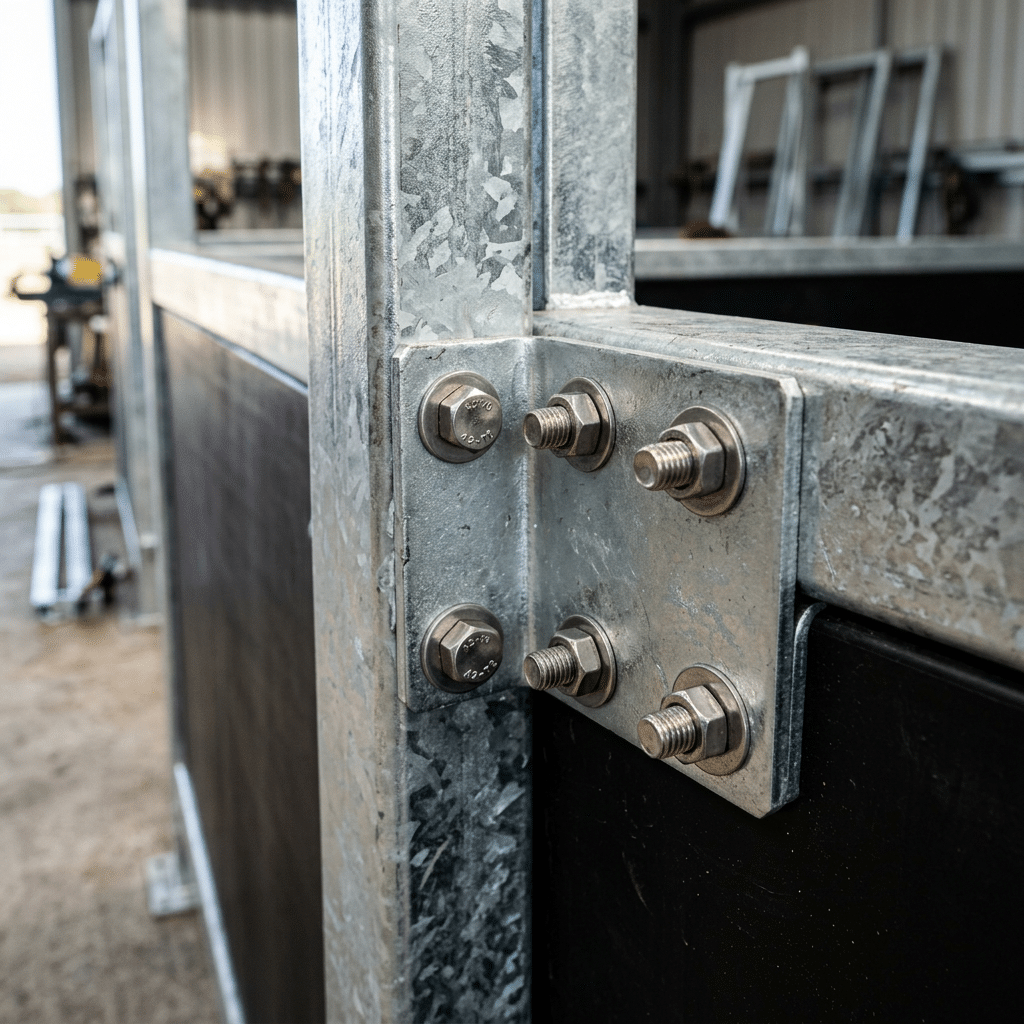
To ensure the structure is rigid, we focus on the connection points. We use 40x40mm square metal tubes that are fully welded with 6mm steel plates. This creates a joint that is incredibly stiff. Unlike bolted connections that might loosen over time due to vibration or movement, our welded connections maintain the frame’s integrity permanently.
Finally, we solve the issue of infill materials. Instead of wood, which expands and contracts with temperature changes, we integrate 10mm UV-resistant HDPE boards. These high-density polyethylene boards offer the look of quality finishing without the maintenance. They do not suffer from thermal expansion issues, meaning your stable walls stay flat and secure regardless of the weather.
HDPE Infill vs. Traditional Timber
HDPE infill provides superior durability compared to timber by eliminating rot, splintering, and the need for protective staining. While traditional Southern Yellow Pine or Brazilian Hardwood offers a classic aesthetic, HDPE utilizes 100% virgin polyethylene with UV stabilizers to remain non-brittle down to -60°F. For equestrian facilities, HDPE offers impact absorption without the injury risks associated with splintering wood.
| Feature | HDPE Infill | Traditional Timber |
|---|---|---|
| Durability | Impervious to rot and decay | Susceptible to moisture and insects |
| Safety | Absorbs impact, no splintering | Can shatter or splinter when kicked |
| Maintenance | Wash with water, no painting | Requires staining and sealing |
| Climate Resilience | Stable down to -60°F | Warps with humidity changes |
Material Composition and Durability Differences
The primary difference between High-Density Polyethylene (HDPE) and timber lies in their fundamental reaction to the environment. HDPE is composed of 100% high-density polyethylene mixed with continuous UV stabilizers. You can think of UV stabilizers as a permanent sunscreen built directly into the material, preventing the sun from making the plastic brittle or faded over time. Because it is synthetic, it completely eliminates biological issues such as rot, decay, and insect damage that eventually affect all organic materials.
Traditional wood options vary in quality. Southern Yellow Pine usually consists of 2-inch by 8-inch tongue-and-groove boards that rely on chemical treatments to resist rot. Brazilian Hardwood, often called Tiger or Zebra wood, uses thinner 1-inch by 6-inch boards. While the hardwood offers better natural insect resistance than pine, it comes at a much higher financial cost and still remains an organic material susceptible to nature.
Structural Integrity and Temperature Resilience
Physical stress and extreme weather reveal significant performance gaps between the materials. HDPE is engineered to remain non-brittle in temperatures as low as -60°F. Unlike PVC, which can shatter like glass in freezing conditions, or timber which holds moisture and freezes, HDPE maintains its flexibility. The engineered posts are also approximately 25% lighter than solid wood but utilize double-reinforced internal ribs to maintain high strength.
- ✅ Cold Weather Performance: HDPE withstands extreme freeze cycles without cracking.
- ✅ Moisture Resistance: Completely resists water infiltration, preventing the swelling common in wood.
- ✅ Dimensional Stability: Timber expands and contracts with humidity, which often loosens fasteners over time.
Safety Profile and Maintenance Requirements
For facility owners, the choice of material impacts both horse safety and daily workload. HDPE is designed to absorb the energy of a full extended leg kick from any horse breed without shattering. This elasticity prevents the sharp, dangerous splintering often seen when a horse kicks through a wooden board. This makes HDPE a preferred choice for veterinary clinics where sanitation and safety are critical.
Maintenance creates a clear distinction between the two. Wood surfaces require a cycle of stripping, sanding, and re-staining to prevent degradation. In contrast, HDPE is virtually maintenance-free. It can be washed down with water and standard disinfectants without absorbing fluids, making it easy to maintain high hygiene standards without the labor of refinishing.
How DB Stable Optimizes HDPE Infill
DB Stable implements specific engineering choices to maximize the benefits of HDPE material. We utilize 10mm thick HDPE boards that are specifically formulated with UV resistance to handle long-term outdoor exposure in harsh climates like Australia and New Zealand. To address the natural movement of materials, we use a “9 Parts Stable Panel” configuration. This involves using several smaller boards rather than one large sheet, acting like expansion joints in a bridge to negate thermal expansion issues.
To ensure the frame lasts as long as the infill, we pair these boards with hot-dip galvanized steel frames. This process involves dipping the steel into molten zinc to create a coating over 42 microns thick. This acts as a sacrificial shield that prevents rust for over a decade, ensuring the structural skeleton matches the longevity of the HDPE boards.

The Science of Hot-Dip Galvanization (42+ Microns)
Hot-dip galvanization achieves a 42+ micron threshold through controlled immersion in molten zinc, creating a metallurgical bond superior to mechanical adhesion. This process delivers sacrificial corrosion protection and self-healing at damaged edges. With a service life up to 80 years (Z600 rating), it offers 20 times the longevity of electrodeposited coatings, ensuring structural integrity in demanding environments.
Metallurgical Bonding vs. Mechanical Adhesion
Most standard paints or electroplated coatings work like a sticker. They rely on mechanical adhesion, which simply means the coating sticks to the surface of the steel. If that surface gets scratched, the bond breaks, and rust begins to spread underneath the paint. Hot-dip galvanization works differently because it creates a metallurgical bond. Instead of just sitting on top, the zinc reacts with the steel at an atomic level to form a new alloy.
Think of this process like welding rather than gluing. The zinc and steel fuse together during immersion. This creates a sacrificial barrier where the zinc corrodes preferentially to protect the base steel. Even if the coating is scratched down to the bare metal, the surrounding zinc will sacrifice itself to heal the wound and prevent rust from forming on the steel.
- Bond Strength: Forms a diffusion reaction for an atomic-level bond rather than just surface stickiness.
- Dual Protection: Acts as both a physical shield and a sacrificial cathode to stop rust chemically.
- Self-Healing: Exposed zinc at cut edges or deep scratches actively protects the adjacent steel.
- Service Life: Lasts up to 20 times longer than standard electrodeposited B633 coatings which are usually much thinner.
Thickness Specifications and Governing Standards
The longevity of a stable structure depends directly on the thickness of the protective zinc layer. In the industry, we measure this in microns (µm). While standard electroplating might only offer 25 µm, hot-dip structural materials typically range from 45 µm to 100 µm depending on the thickness of the steel itself. Thicker steel retains heat longer in the zinc bath, allowing a thicker protective layer to develop.
A Z600 coating specification refers to a total coating weight that translates to roughly 42 µm on each side of the steel. In standard atmospheric conditions, this specific thickness can provide a service life of approximately 80 years. This reliability is why strictly regulated standards exist to ensure manufacturers meet these minimums for safety and durability.
- Typical Range: Structural coatings usually fall between 45 µm and 100 µm (1.8 to 3.9 mils).
- Longevity Metric: A Z600 coating (42 µm per side) offers roughly 80 years of protection in normal air.
- Global Standards: Compliance includes ASTM A123 (US), AS/NZS 4680 (Australia/NZ), and EN 10346.
- Material Physics: Thicker steel parts, like 6.35 mm structural shapes, naturally develop thicker coatings around 100 µm.
How DB Stable Applies the 42+ Micron Standard
We apply these industrial standards directly to the parts of the stable that face the most stress. At DB Stable, every frame tube, connector pin, and cleek undergoes hot-dip galvanization to exceed the 42-micron threshold. This ensures that the primary skeleton of the stable resists rust for over a decade, even in humid or coastal environments common in Australia and New Zealand.
Our engineering team focuses heavily on the connection points. We use 40x40mm square metal tubes that are fully welded to a 6mm steel plate before the galvanization process. By welding first and dipping second, we ensure that even the weld seams are fully encapsulated in the protective zinc alloy. This method creates a maintenance-free structure compatible with UV-resistant HDPE infills.
- Critical Components: Frame tubes and connector pins are galvanized to over 42 microns for 10+ years of resistance.
- Robust Connections: Uses 40x40mm tubes welded to 6mm plate for maximum bond integrity.
- Export Compliance: Designed specifically to meet rigorous Australian and New Zealand durability standards.
- Full Coverage: Welding occurs prior to dipping to ensure no raw steel is left exposed at the joints.
Engineered for Safety and Durability
Secure your horses with premium stables built to withstand extreme climates, from Australian heat to Polish winters. Our hot-dipped galvanized steel frames and impact-resistant panels offer 20 years of rust protection and full international compliance. With modular bolt-on designs, you can install a professional facility 30% faster.


Fire Resistance Ratings by Material
Fire resistance in equine facilities is quantified by flame spread ratings, where concrete (0) represents the non-combustible standard and raw red oak (100) represents the baseline for combustibility. Effective fire management relies on materials like fire-retardant-treated wood, which reduces flame spread by 75%, and structural components like firewalls that provide a minimum one-hour containment rating to comply with NFPA 150 standards.
Understanding Flame Spread and Thermal Conductivity
Engineers rate construction materials using a comparative scale to determine how quickly fire travels across a surface. Concrete sits at 0 because it does not burn, while untreated red oak sits at 100 to serve as the baseline for flammability. Most stable materials fall somewhere between these two points. Understanding this scale helps you choose materials that buy you more time during an emergency.
Metal siding creates a unique situation in fire safety physics. While metal itself has a very low flame spread rating, it has high thermal conductivity. Think of this like a frying pan; the pan does not catch fire, but it transfers heat rapidly to whatever food is touching it. In a barn, metal walls can transfer intense heat to the inner wood layers, potentially causing ignition inside the wall cavity even if the exterior looks fine.
To combat this, manufacturers use fire-retardant treatments. These chemical applications activate when temperatures hit 300-400°C. Upon activation, the chemicals release non-combustible gases that dilute the oxygen around the wood. They also create a hard carbon layer known as char. This char acts like a scab or a callous, insulating the core of the wood and slowing down the burning process.
Material Performance: Treated Wood, Timber, and Gypsum
Selecting the right materials changes how a building reacts during the critical first minutes of a fire. Different construction elements offer varying levels of protection based on their density, treatment, and composition.
- ✅ Treated Lumber: Wood treated with fire retardants lowers flame spread by 75% compared to raw lumber and remains effective for at least 30 years.
- ✅ Heavy Timber: Large wood beams rely on their volume for safety. The outer inch turns to charcoal, which shields the inner wood and keeps the structure standing longer.
- ✅ Gypsum Board: This material acts as a heat barrier. It must meet a one-hour fire rating to effectively trap flames within a specific zone or room.
- ✅ Roofing Classifications: Roofs are rated by UL 790 standards. Class A materials offer the highest defense against fire coming from outside the building.
NFPA 150 Classifications and Safety System Requirements
The National Fire Protection Association (NFPA) sets the rules for animal housing based on the size of the facility and how it is used. They divide barns into three categories: Class A for large facilities over 5,000 square feet, Class B for smaller commercial barns, and Class C for small, family-owned stables with five or fewer horses.
Safety requirements increase as the facility gets larger or if humans sleep on the premises. Knowing your classification helps ensure you install the correct suppression and containment systems.
- ✅ Sprinkler Systems: Any Class A or Class B facility with sleeping quarters must install sprinklers with quick-response heads to suppress flames immediately.
- ✅ Firewalls: These barriers must provide one hour of protection and extend 18 inches above the roof to stop fire from jumping over the wall to the next section.
- ✅ Manual Suppression: Fire extinguishers with a minimum 2-A:10-B:C rating must be placed so that a person never has to travel more than 50 feet to reach one.
How DB Stable Designs for Structural Fire Safety
DB Stable addresses these safety concerns by utilizing materials that inherently resist combustion. The structural frame uses hot-dip galvanized steel tubes rather than traditional timber. This significantly lowers the fuel load of the building because the primary support structure is non-combustible. The steel is coated with a zinc layer exceeding 42 microns, which protects the metal integrity even in harsh conditions.
The roofing systems align with non-combustible principles by using steel boards available in 0.4mm or 0.8mm thickness. This metal barrier helps limit vertical fire spread better than asphalt or wood shingles. Additionally, the assembly relies on mechanical connections like heavy-duty pins and cleeks rather than adhesives. In high-heat scenarios, glues can fail and cause collapse, whereas steel mechanical joints maintain structural stability much longer.

Chew-Proofing Your Stable: Fact vs. Fiction
Effective chew-proofing relies on three engineering tiers: material substitution, physical barriers, and chemical deterrents. While chemical sprays offer temporary taste aversion, permanent protection requires structural changes—either capping wood with 1.2mm steel guards and 20-gauge galvanized strips or replacing timber entirely with high-density polymers like HDPE and PVC.
Managing a horse that chews involves understanding why they do it and selecting the right engineering controls to stop it. Many owners start with quick fixes, but long-term success usually comes from structural changes. We analyze the three main approaches to protecting your investment, ranking them from temporary patches to permanent engineering solutions.
| Protection Tier | Method Strategy | Longevity | Key Weakness |
|---|---|---|---|
| Tier 1: Material Substitution | Replace wood with Polymer/HDPE | Permanent | Higher initial cost |
| Tier 2: Physical Barriers | Install steel caps over wood | High | Underlying wood rot/structural failure |
| Tier 3: Chemical Aversion | Apply bad-tasting sprays | Temporary | Requires constant reapplication |
The Engineering Hierarchy of Chew Deterrents
Not all prevention methods are created equal. We categorize solutions based on how long they last and how they interact with the horse.
- Material Substitution (Tier 1): This approach removes the temptation entirely. By replacing tasty wood with High-Density Polyethylene (HDPE) or PVC, you eliminate the organic texture that horses love to chew. Think of HDPE as a synthetic cutting board material that is too dense for teeth to grip. ✅
- Physical Barriers (Tier 2): This involves installing metal caps or strips over existing wood. It acts like a suit of armor for the stall. While effective, the wood underneath can still degrade over time if moisture gets trapped behind the metal shield. ⚠️
- Chemical Aversion (Tier 3): These are proprietary sprays designed to taste terrible. This relies on behavioral modification, hoping the horse learns to dislike the surface. It has the highest failure rate because the spray evaporates or wears off, requiring you to spray the stall constantly. 🛑
Technical Specifications for Protective Barriers
If you choose to install physical barriers (Tier 2), buying the correct hardware is vital. Thin metal will bend under the pressure of a horse’s jaw.
- Steel Guard Thickness: Effective metal chew guards use a minimum 1.2mm wall thickness. This specific thickness provides enough rigidity to resist deformation when a horse bites down with force.
- Strip Dimensions: Galvanized anti-chew strips should adhere to a 20 gauge standard. These are typically sold in lengths ranging from 1080mm (42.5 inches) to 1220mm (48 inches) to fit standard stall doors perfectly.
- Edge Protection: For corners, look for aluminum angle trim measuring 1-1/2 inches by 1-1/2 inches. This covers the soft corners of lumber where horses can easily gain leverage to rip off splinters.
Safety Implications of Material Choices
Preventing chewing is not just about saving money on repairs. It also impacts the overall safety profile of your barn.
- Fire Resistance: Splintered wood creates dry tinder that catches fire easily. In contrast, PVC and HDPE panels often feature self-extinguishing properties, meaning they do not fuel a fire in the same way traditional timber does.
- Impact Absorption: Polymer materials are designed to absorb energy. If a horse kicks the wall, the material flexes slightly without shattering. Wood, once compromised by chewing, can splinter into sharp projectiles that may injure the animal.
- Mounting Protocols: Proper installation matters. Commercial steel guards use pre-drilled mounting holes to ensure fasteners sit flush. This prevents loose screws or nails from sticking out, which could cut a horse if they try to crib on the guard.
How DB Stable Engineers Chew-Resistant Stalls
At DB Stable, we focus on Tier 1 and Tier 2 solutions to ensure longevity for our clients in Australia and New Zealand. Our manufacturing specifications are designed to withstand aggressive behavior.
- Complete Material Substitution: We utilize 10mm thick HDPE infill boards. These boards are UV resistant and completely remove the wood grain texture that stimulates chewing behavior in bored horses. ✅
- Galvanization Durability: Our frame tubes and connectors feature hot-dip galvanization exceeding 42 microns. Think of this as a super-thick zinc shield that bonds to the steel, creating a hard surface that resists tooth scratches and prevents rust from forming. 🛡️
- Heavy-Duty Connections: To prevent structural movement during cribbing, we employ 6mm steel plates and fully welded joints. This construction withstands the physical force of a cribbing horse much better than spot-welded alternatives found in lighter stables. 🏗️
Thermal Performance: Insulating Against Heat and Cold
Thermal performance in stables relies on balancing insulation with ventilation rather than trapping heat. Engineering standards recommend maintaining indoor temperatures just 5-10°F above exterior levels to prevent condensation, while ensuring 50-75% humidity. Effective design requires specific airflow rates (CFM) and durable materials that resist thermal expansion.
The Engineering Balance: Ventilation Over Heat
Many owners mistakenly try to seal their stables to keep horses warm, similar to how we heat our homes. This approach often leads to respiratory issues for the animals. A horse stable functions best when it breathes. Think of it like wearing a high-quality raincoat; if the coat blocks rain but traps your body heat and sweat, you eventually get wet from the inside. Stables work the same way. The primary goal is to remove moisture generated by the horses, not to trap heat.
Engineering standards suggest prioritizing air quality over human-centric comfort. The interior temperature should remain no more than 5-10°F warmer than the outside air. When the temperature difference exceeds this range, condensation forms on cool surfaces. This moisture buildup encourages mold and bacterial growth. The target relative humidity is 60 percent, with a safe range between 50 and 75 percent. If you see condensation dripping from the roof when it is below 35°F outside, your ventilation system is likely insufficient.
Critical Ventilation Sizing and Flow Rates
Proper airflow is calculated using Cubic Feet per Minute (CFM), which measures the volume of air moving through the space. To maintain healthy lungs and manage moisture, the design must meet specific metrics based on the weight of the animal and the season.
- ✅ Cold Weather Base Rate: A standard 1,000-lb horse needs 25 CFM to control moisture buildup.
- ✅ Hot Weather Rate: Requirements increase to 350 CFM per horse to remove excess heat.
- ✅ Inlet Dimensions: Designs should include a continuous-slot opening of at least 1 inch for every 10 feet of building width.
- ✅ Outlet Sizing: You need at least 1 square foot of ridge or eave vent opening per horse to allow warm air to escape passively.
- ✅ Chimney Scale: For effective drafting, chimneys or cupolas on single-story buildings must be at least 2×2 feet.
Insulation Materials and Heating Safety
Insulation acts as a barrier to heat flow, measured by its R-value. While insulation helps regulate temperature spikes, it must be paired with safety protocols, especially regarding heating sources. Wood is a traditional insulator with a natural R-value ranging from 0.71 to 1.41, depending on whether it is a softwood or hardwood species. This natural resistance helps moderate internal temperatures without the need for synthetic foams in mild climates.
When supplemental heating is necessary, safety is the priority. Radiant infrared heaters are efficient because they heat the object (the horse) rather than the air, but they must be rated to resist combustion up to 600°F. Furthermore, if a chimney passes through an attic space, it requires R-10 insulation to prevent the warm exhaust from cooling too quickly and creating condensation on the shaft. For heated zones like tack rooms, builders must install waterproof vapor barriers on all sides to protect the structure from rot.

How DB Stable Ensures Thermal Durability
Thermal fluctuations cause materials to expand and contract, which can warp cheaper plastics and metals over time. DB Stable addresses this physical challenge by utilizing materials engineered to withstand temperature cycling. The 10mm thick HDPE infill boards are specifically designed to resist thermal expansion. Unlike standard plastic that might bow in the summer heat or crack in the winter cold, these boards maintain their shape and structural integrity.
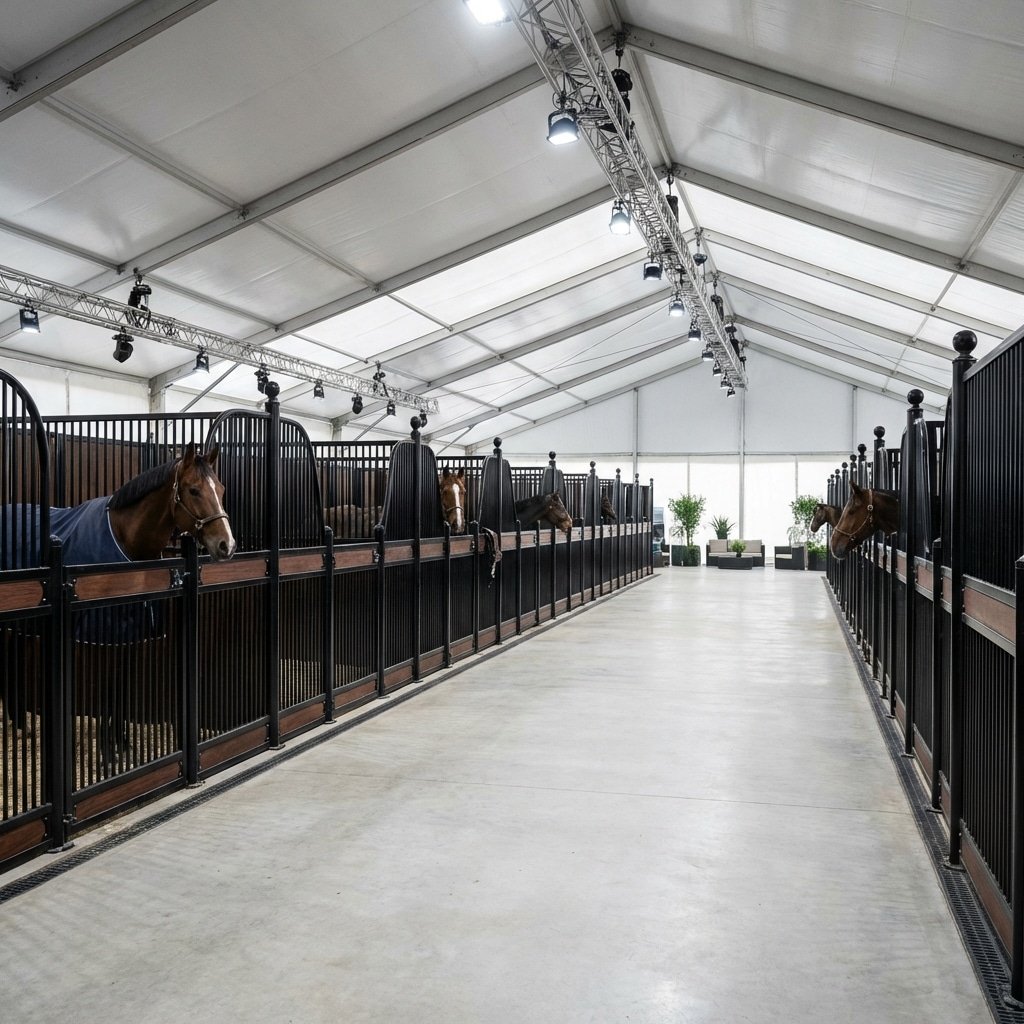
The portable modular design also supports the ventilation requirements discussed earlier. The stables allow for open configurations using galvanized mesh or bars, which facilitates the necessary airflow naturally. Additionally, the roofing is constructed from 0.4mm to 0.8mm steel board. Steel withstands harsh weather cycles and sheds snow or rain more effectively than porous alternatives, reducing the risk of moisture permeating the roof structure. The inclusion of UV-resistant materials ensures that despite constant exposure to sun and heat, the stable retains its strength for years.
Sustainability and Recyclability
Sustainable stable design balances material longevity with operational efficiency. While mass timber offers a structure approximately 5x lighter than concrete with carbon sequestration benefits, operational sustainability relies on managing the 35–50 lbs of manure produced daily per horse and utilizing geothermal baselines of 50–60°F.
Material Impact: Mass Timber vs. Concrete
Choosing the right structural material affects the carbon footprint of your stable. Builders often compare mass timber against traditional concrete to determine which offers better physical efficiency and lower environmental impact.
- ✅ Mass Timber Performance: Cross-Laminated Timber is approximately 5x lighter than concrete but maintains comparable structural strength.
- ✅ Concrete Limitations: Concrete carries high embodied energy and significant weight compared to renewable timber options.
- ✅ Data Gaps: Current industry search results often lack specific Environmental Product Declarations or ASTM recyclability percentages for standard stable flooring.
Operational Sustainability: Energy and Waste Metrics
True sustainability extends beyond building materials into how the facility runs daily. Engineering systems that account for waste volume and natural energy sources reduce the long-term environmental cost of the stable.
- ✅ Geothermal Potential: You can utilize the earth’s constant temperature of 50–60°F at 10 feet below the surface for passive heating and cooling.
- ✅ Waste Volume: Effective design includes composting systems to handle average production rates of 35–50 pounds of manure per horse per day.
- ✅ Foundation Requirements: Ensuring longevity requires meeting minimums like 4-inch concrete thickness for stalls or 2-inch asphalt for driveways.
How DB Stable Engineers for Longevity
At DB Stable, we view durability as a core component of sustainability. By building products that last longer, we reduce the waste associated with frequent replacements and repairs. This approach ensures that materials stay in use rather than ending up in a landfill.
- ✅ Extended Lifecycle: We use hot-dip galvanized steel with a 42-micron coating. Think of this as a permanent zinc armor that ensures a 10+ year lifespan by blocking rust.
- ✅ Material Stability: Our 10mm HDPE boards come with UV resistance to prevent degradation. This stops the boards from cracking under the sun, minimizing plastic waste over time.
- ✅ Reusability: The prefabricated, portable design allows owners to relocate structures rather than demolishing them when needs change.
Maintenance Costs: 10-Year ROI Analysis
A 10-year Return on Investment (ROI) analysis for horse stables reveals that initial material quality is the primary driver of long-term value. While pressure-treated wood or painted steel may offer lower upfront costs, they often incur 30-50% higher cumulative maintenance expenses over a decade due to repainting, rot repair, and chewing damage. Conversely, hot-dip galvanized steel and HDPE infills typically amortize their higher initial cost within 3-5 years by virtually eliminating recurring structural maintenance.
The Economics of Stable Maintenance (CAPEX vs. OPEX)
To understand the true cost of stable ownership, it is necessary to distinguish between the initial price of the structure and the ongoing cost to keep it functional. In financial terms, this is the difference between Capital Expenditure (CAPEX) and Operating Expenditure (OPEX). Research indicates that annual horse ownership costs range significantly, and facility maintenance represents a large variable in that total.
Calculations for the Total Cost of Ownership (TCO) must account for the facility failure rate, which is the frequency of repairs needed for items like stall doors, latches, and kickboards. Choosing low-grade materials effectively transfers costs to the future. Saving 15% on initial construction often results in a 200% increase in maintenance labor hours over a 10-year period. Additionally, operational downtime costs accumulate when a stall requires significant repair, such as replacing rotted wood or rusted frames, as the loss of facility utility adds to the financial burden.
Critical Durability Metrics: Steel and Infill Performance
Specific technical benchmarks determine whether a stable will last ten years without a major overhaul. These metrics define the physical limits of the materials used in construction.
- Steel Corrosion Resistance: For a 10-year ROI, steel frames require hot-dip galvanization rather than standard powder coating alone. The zinc coating acts as a sacrificial anode. Think of it as a protective shield that corrodes in place of the steel, preventing structural rust.
- Infill Stability: Traditional wood expands and contracts with thermal changes, much like a sponge absorbing and releasing water. This movement leads to gaps and rot. HDPE (High-Density Polyethylene) offers superior ROI as it resists moisture absorption and physical damage.
- Coating Thickness Standards: Industrial standards suggest zinc coatings exceeding 40 microns are necessary to withstand the ammonia-rich environment of a horse stable for a decade.
- Impact Resistance: Materials must withstand kicks, known as impact load, without shattering or permanently deforming. High impact resistance reduces the frequency of panel replacement.
Cost Projection Scenario: Wood vs. Galvanized/HDPE
A practical financial comparison over a decade highlights where budget is consumed. The premium paid for superior materials like HDPE and galvanized steel is usually recovered by Year 4 through savings on labor, paint, and replacement parts.
- Years 1-3: Wood stables typically require re-staining or painting to prevent weather damage. Painted steel often shows early signs of rust at weld points.
- Years 4-7: Wood infills often need partial replacement due to cribbing, where horses chew the wood, or moisture rot at the base. Standard steel hinges may seize or degrade during this period.
- Years 8-10: Non-galvanized structures may face structural integrity issues requiring major capital injection. In contrast, heavy-gauge galvanized steel typically requires only basic cleaning.
How DB Stable Maximizes Infrastructure ROI
Our specific manufacturing specifications are engineered to align with the 10-year ROI model, ensuring the infrastructure supports long-term financial value.
- ✅ Galvanization Spec: DB Stable utilizes hot-dip galvanized steel with a coating thickness exceeding 42 microns, explicitly engineered to last 10+ years without rusting.
- ✅ HDPE Durability: The use of 10mm thick HDPE boards eliminates maintenance costs associated with wood rot, thermal expansion, and UV degradation.
- ✅ Structural Integrity: Connectors feature 40x40mm square metal tubes fully welded with 6mm steel plates, ensuring the hardware survives daily use without needing frequent replacement.
- ✅ Value Engineering: By acting as a direct factory supplier, DB Stable reduces the initial CAPEX barrier. This allows facility owners to access these high-ROI materials at a competitive price point compared to domestic distributors.
Materials for Humid/Coastal Climates
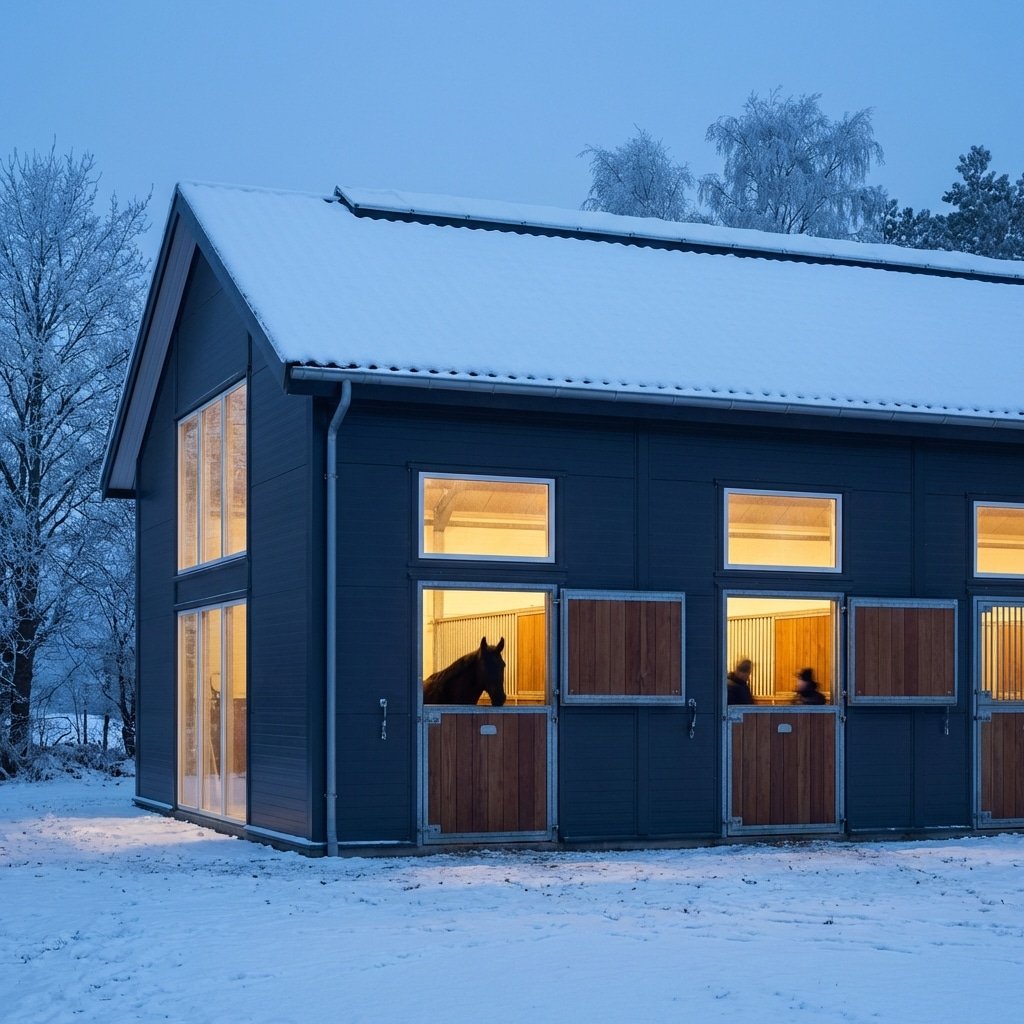
In humid or coastal environments, standard materials often fail due to salt-accelerated corrosion and rot. The most durable solution involves hot-dip galvanized steel frames—often treated with zinc primer—capable of exceeding a 30-year lifespan. Design must also prioritize moisture management, requiring stall floors elevated 12 inches above grade and extensive ventilation features like open mesh fronts to prevent bacterial growth.
Corrosion Resistance: Steel vs. Elements
In coastal regions, salt air acts as a catalyst for oxidation, breaking down untreated metals significantly faster than in dry climates. To withstand this, steel framing requires a process called hot-dip galvanization. Think of this process like dipping a strawberry into melted chocolate; the steel is submerged entirely in molten zinc to create a thick, bonded shield that completely seals out moisture and oxygen. Without this barrier, standard steel will begin to degrade rapidly.
- Longevity: Properly treated galvanized or painted steel frames can achieve a lifespan exceeding 30 years, far outlasting wood which is prone to rot in damp air. ✅
- Extra Protection: For extreme coastal conditions, a zinc primer application is recommended to enhance rust resistance beyond standard options. ✅
Foundation and Drainage Specifications
Preventing moisture damage starts at the ground level. If a stable sits flat on the natural grade, groundwater will seep into the bedding like a sponge. The goal of the foundation is to create a physical separation between the moist earth and the dry stall floor. Engineering the ground with specific layers ensures that water flows away from the structure rather than pooling underneath it.
- Elevation: Stall floors must be built at least 12 inches above the outside ground level to ensure gravity assists with drainage. ✅
- Layering: The recommended base consists of compacted subsoil, covered with 4 to 5 inches of gravel for drainage, followed by 2 inches of sand or pea gravel for a soft footing cushion. ✅
- Slope: The surrounding ground surface must maintain a slope of 5% away from the stable to divert rainwater. ✅
Ventilation Design for Moisture Control
High humidity traps airborne contaminants like ammonia and bacteria, creating a heavy atmosphere that is hard on a horse’s lungs. Effective design acts like a constant breeze, flushing out stagnant air and replacing it with fresh air. This is achieved through strategic openings that allow air to move vertically and horizontally through the structure.
- Airflow Components: Features like ridge vents and louvered windows are essential to maintain constant air exchange. ✅
- Low-Level Venting: Using 1/4 inch solid steel mesh on the bottom of stall fronts increases airflow at the ground level, reducing ammonia near the horse’s nose. ✅
- Hygiene: Smooth steel surfaces allow for aggressive cleaning methods like pressure washing, which prevents the fungal growth common in porous materials. ✅
How DB Stable Adapts to Coastal Conditions
We specifically engineer our portable horse stables to withstand the rigors of the Australian and New Zealand climates, where coastal salt and humidity are common challenges. By selecting materials that are chemically resistant to moisture, we eliminate the common failure points found in traditional wooden barns.
- Heavy Galvanization: DB Stable uses steel frames with a hot-dip galvanized coating thicker than 42 microns, designed to resist rust for over 10 years. ✅
- Rot-Proof Infill: We utilize 10mm HDPE boards instead of wood; these high-density plastic panels are immune to rot, absorb zero water, and resist UV damage. ✅
- Rust-Proof Fittings: Accessories like our Aluminium Swivel Feeder are chosen specifically because aluminium does not rust, ensuring longevity even in wet stable environments. ✅
Frequently Asked Questions
Does 42-micron galvanization prevent rust in coastal areas?
No, a 42-micron coating is generally insufficient for long-term rust prevention in coastal environments. Industry standards like AS/NZS 4680 recommend a minimum average thickness of 85 to 100 microns for areas with high salinity. A 42-micron layer provides approximately half the protection required for these zones, meaning the protective zinc could deplete within 5 to 10 years rather than the expected 20 years.
Think of galvanization like sunscreen for steel. A thin layer might work for a cloudy day inland, but the intense exposure of a coastal environment requires a much thicker application to prevent the underlying steel from getting burned by corrosion. While 42 microns is adequate for rural or inland settings, the salt spray near the ocean aggressively eats through zinc, requiring double the standard thickness for adequate lifespan.
Why is HDPE infill considered safer than treated pine?
High-Density Polyethylene (HDPE) is considered safer primarily because it is chemically inert and does not splinter. Treated pine typically undergoes pressure treatment with copper-based pesticides to resist rot, which introduces chemical toxicity risks if a horse chews the wood. Furthermore, when wood breaks, it creates sharp splinters that can cause internal or external injuries, whereas HDPE is designed to absorb impact without shattering.
You can compare the two materials to a plastic milk jug versus a chemically treated plank. The plastic is smooth, non-toxic, and simply bends if you bite it. The treated plank contains preservatives to kill bugs and turns into sharp shards when broken. For an animal enclosure where chewing is common, the non-toxic and shatterproof nature of HDPE eliminates the health hazards associated with chemically preserved timber.
What is the lifespan difference between powder coating and galvanizing?
Hot-dip galvanizing typically offers a superior lifespan of 50 years or more in rural areas, while powder coating usually lasts between 15 and 25 years. The primary advantage of galvanizing is its self-healing ability; the zinc sacrifices itself to protect scratches. Powder coating acts as a barrier but lacks this sacrificial property, meaning rust can spread underneath the paint if the surface is chipped.
To visualize this, imagine galvanizing as a biological skin that heals over small cuts, while powder coating is like a raincoat. If the raincoat gets a tear, the water gets in and stays in. However, applying powder coating over galvanized steel creates a duplex system that can extend the service life up to 2.5 times longer than either method alone, combining the self-healing base with a protective outer shell.
Is bamboo composite truly stronger than oak for stalls?
While strand-woven bamboo rates significantly higher on the Janka hardness scale than oak, it is often less durable in the specific environment of a horse stable. Bamboo composites rely on glues and lamination that can degrade when exposed to the constant moisture and ammonia found in stalls. Oak, particularly White Oak, has natural tyloses that seal its pores against water, making it structurally superior for damp environments despite being technically softer.
Hardness measures resistance to denting, but durability measures resistance to failure. Think of bamboo like a ceramic plate: it is extremely hard but can be brittle and relies on glue to hold together. Oak is like a leather boot; it might scuff easier, but it handles moisture and movement without falling apart. For stable longevity, resistance to moisture and separation is more valuable than raw surface hardness.
How do fire ratings differ for steel vs wood barns?
Steel buildings generally achieve a Class A fire rating because steel is a non-combustible material. Wood structures typically fall under Class C, as wood is naturally combustible and contributes fuel to a fire. While wood can be treated with retardants to improve its rating, steel inherently meets strict safety standards without additional chemical processing.
The difference is similar to building a fireplace out of stone versus building it out of logs. The stone structure contains the fire without becoming part of it, whereas the log structure eventually becomes fuel. This non-combustible nature often results in lower insurance premiums for steel barns compared to their wooden counterparts.
Can horses chew through 10mm HDPE boards?
Horses cannot effectively chew through 10mm HDPE boards. The material is dense, impact-resistant, and has a smooth surface that prevents horses from gaining the leverage necessary to bite into it. Unlike wood, which offers grain and texture for teeth to grip, HDPE remains slippery and hard, discouraging cribbing behaviors.
Attempting to chew HDPE is like trying to bite into a smooth bowling ball. There is simply no purchase for the teeth to grab onto. Because the material does not splinter or crack under pressure, it removes the satisfaction horses get from destroying wood, effectively stopping the behavior while preventing the ingestion of harmful splinters.
Final Thoughts
Building a stable requires looking past the initial price tag to the Total Cost of Ownership. While wood offers a traditional aesthetic, it demands a perpetual cycle of sealing, painting, and repair that quietly drains operational budgets over time.
Investing in hot-dip galvanized steel and HDPE infill eliminates these recurring costs, transforming a maintenance burden into a long-term asset. This engineering approach secures structural integrity and safety for decades, ensuring your capital serves your business rather than funding constant repairs.

 English
  Spanish
  French
  Arabic
  German
0 Comments